Sunday, June 17, 2018

Intimate


There is a box of decants that I kept from the days when perfume trading was fun and exciting, and collecting more vials than I will ever need in my lifetime didn't feel burdensome. There was the thrill of the hunt, and the wonderful feeling of being taken care of when someone you only knew by their screen name and fragrance wardrobe sent you a surprise in the mail with vintage perfumes that smelled like nothing you ever smelled before... That was of course, before I smelled too many perfumes, before each year offered over 500 new releases, and I became too jaded and selective about what I put under my nose.

In a moment of olfactory boredom last night, I unearthed a roll-on with vintage Intimate in its vintage form (Revlon, 1955). The concentration is not specified, but judging from it lasting well into the next morning, I imagine it's at least an eau de toilette.

Intimate is a softly-spoken echo Miss Dior's green-floral-animalic-Chypre; a hazy mirror image of its New Look glam. There are green aldehydes at the top, but they've lost their sharp edge (possibly through aging and mellowing, but even still, comparing to the vintage Miss Dior I have they are less intense).

Intimate is definitely from the same genre (Chypre Floral Animalic, and sporting some definitive green notes), yet has a softer, powderier character right from the the start (a trait that is only evident in Miss Dior if you really pay close attention somewhere around the second act). It has edgy, woody-herbaceous notes peeking underneath, making the greenery less obvious. There is an aldehdic wisp at the opening as well. Mingled with the orris this creates a blending illusion, like smudging and blending pastel crayons that obscures the shapes of jasmine and rose that were just drawn moments ago. One can't quite tell when the jasmine and rose end and the oakmoss, sandalwood and cedarwood begin. The woods create a dry feel, a sort of temporary cleanliness. An animalic power roars from underneath, with the carcass of castoreum and the concentrated piss of civet create a dark, musky-sweet epilogue.

This phase dissipates faster than I would have liked it to, turning into a vintage Revlon lipstick scent, like the ones I would try on from my grandmother's dresser. My grandma always dressed elegantly, so lipstick was the only way to tell she's going somewhere importatn (work included, and she worked well into her 70s, and continued freelancing even after she officially retired). And if it was somewhere social, there will also be a dap of perfume or some Eau de Cologne splashing. I never was happy with any of her shades of lipstick - they were either too red or too nude, and most importantly, made my lips dry and tasted awful. The smell is nice and nostalgic, but synthetic fatty-violet-rose-aldehydic floral is not something I'd like tasting on my lips for too long.

The drytdown (as observed the next morning) has a sweet and smooth amber and a musk compound that bears some fruity, berry-like qualities. Oakmoss is still there as well as a hint of greenery. Overall, there is a soft, close-to-the-skin feeling that's exactly what I would like in a perfume from the night before: a sweet reminder that something wonderful happened last night, but without having all your clothes reeking of it or making you want to wash it off. You could easily apply something else on top, or go for a second round.

Intimate is beautifully constructed and elegant, and smells sexy in a down-to-earth kind of way. If I didn't know who made it I would think it is a French perfume - it skips the loud statements that American fragrances so often have (both in sillage and tenacity) and instead offers a more nuanced perfume that even if it isn't a groundbreaker for its time, it is very well done and wonderfully enjoyable. The bottle in the ad shown perfectly conveys its style and class, which will be evident even if you are blindfolded and can't see it. So while many perfume advertisements are total utter nonsense, this seems quite truthful indeed.

Top notes: Green Aldehydes, Bergamot
Heart notes: Jasmine, Rose, Orris, Cedarwood, Sandalwood
Base notes: Oakmoss, Civet, Castoerum, Musk, Amber

Labels: , , , , , , , , , , , ,

Sunday, May 01, 2016

New Perfume: Lost Lagoon

 Inspired by a hidden garden of azaleas

Lost Lagoon

Happy May Day!
I'm excited to share with you my new perfume for spring and summer: Lost Lagoon.

Every spring, the rhododendrons awaken - first slowly, building anticipation. By early May, they simply burst with colour and aroma, some of the bushes so dense with flowers that you can't even see their leaves and branches...

These fragrant azaleas paint the edges of Lost Lagoon with myriads of flowers of tropical colours and exotic scents as versatile as the number of hybrids planted there: some are reminiscent of lily, others are like ylang ylang and some smell like cool suntan lotion. Bluebells, violets and other bulb flowers and annuals are planted among them; and magnolia, lilac and syringa contribute their luscious perfume to the already fragrant air. Freshly cut grass from the Pitch & Putt is the only reminder you're still in the Northern Hemisphere and not in the tropics...

Lost Lagoon

In case you can't experience this extravagant botanical explosion in person - don't be sad: I've bottled that scent especially for you!

Lost Lagoon is the third installation in "Perfume For A Place" series, which is inspired by my favourite places in Vancouver. This perfume will transport you to a secret lagoon surrounded by tropical flowers. Lost Lagoon is a refreshing Chypre with exotic floral notes of magnolia and ylang ylang and loaded with bergamot and green notes of rhododendron buds, violet leaf and galbanum.


Top Notes: Bergamot, Lemon, Galbanum, Violet
Heart Notes: Rhododendron, Magnolia, Ylang Ylang
Base Notes: Oakmoss, Amber, Iris


Labels: , , , , , , , , , , , , , ,

Thursday, October 08, 2015

Cured: The Science & Art of Decay

Orris Root

The challenge of some raw materials is that they might be rather unpleasant in their original state. At best, they lack any aroma and depth whatsoever. The cure for that lies in a process called curing (pun intended). Curing takes many shapes and forms. Sometimes the process is long and at times it's rather short. Either way, the results are nothing short of magic that tantalizes the palate and the olfactory bulbs!

We've all heard of curing meats and tobacco leaves, and it's common knowledge that wine gets better with age. But the culinary world is not the only one that benefits from time and fermentation. For some fragrant crops, growing and harvesting them is only a tiny portion of the process to make them edible, smellable or worth any mention at all. The starting material may be extremely stinky, bitter, astringent, or just plain flavourless at best. The processes by which the desired result is achieved is usually referred to as "curing" or "aging". It ranges from a few days, weeks or months and up to several years. The extra time and care that is invested in those crops makes all the difference in the world. And this will be evident and felt in the raw material itself as well as the finished product where it will be used - in our case, perfume.

Several aromatic botanicals used in perfumery require a fair amount of processing before being used (or extracted). For example: vanilla beans must be left in the sun to cure to bring out the vanillin; patchouli leaves must be dried and matured for quite some time to improve their scent; and iris rhizomes must be peeled, dried and stored for 3 years before they are extracted to produce orris butter.  Let's explore some of these unusual raw materials in more detail, as they specifically relate to the world of perfume and aromatics:
Oakmoss

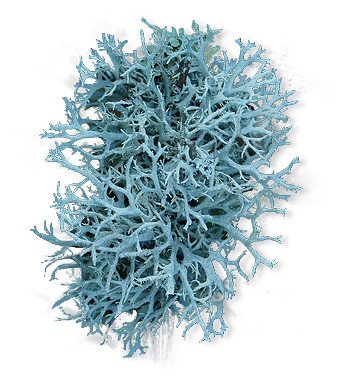
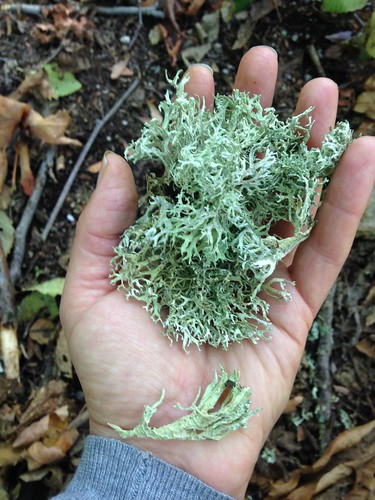
Oakmoss (Evernia prunastri) actually is a lichen native to former Yugoslavia, and which also grows in the rainforests of the Pacific Northwest. You may know it under the name Antlered Perfum; however, it is practically odourless when found fallen on the forest floor. Once placed in hot alcohol, and undergoes a process of extraction - a fragrance that personifies the aroma of the forest floor's dark and mysterious hidden life emerges - fungi, decay, moss and undergrowth. No wonder Chypre, the most beloved fragrance family that relies on oakmoss, is strongly associated with fall.
Perfumes that give oakmoss its proper due are far and few - so reach out for vintage of Miss Dior,  Vol de Nuit or Chamade; or check out some of my Chypre (and Fougère) fragrances, namely Ayalitta, Megumi, Rainforest and Autumn.
Chawan with Matcha

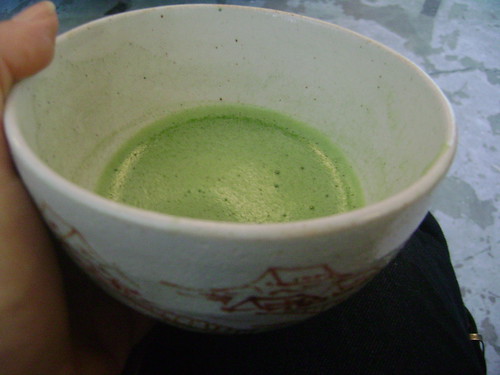
Tea is so unusually diverse - there are white, yellow, green, blue (AKA oolong), red and black teas - that it's hard to believe it comes from only one plant: Camellia sinensis. It is the process of  curing - namely, oxidation, fermentation, roasting, and sometimes even smoking, that creates the unique effects of texture, aroma and nuanced flavours in tea. Some teas are even left to age for decades and up to a hundred years!
Tea leaves come in all sizes, shapes and forms, at times they are twisted to break the cells and release the enzymes that will start the oxidation process (as in oolong teas), other times they are rolled into little balls (dragon pearls or jasmine pearls), hand-tied to look like a flower that will open its "petals" once steeped in water, to reveal a colourful real flower in the heart, and many other ancient traditions involving teas. In perfume, we use tea notes rarely, because they are so subtle. The first "tea" perfume was Bulgari's Au Parfumeé au Thé Vert (which utilized ionone in conjunction with hedione to create the effect of freshly steeped green tea) and the series continued to even include a "red tea" scent based on rooibos (not from the tea plant).  But my favourite is, not surprisingly, the Bulgari Black, which is based on Lapsang Suchong (pine-smoked tea), and even more so - l'Artisan Parfumeur's Tea for Two, which is a more refined play on the same tea leaf. If you're a tea love, taste a sip of Kinmokusei, our osmanthus-scented tea with hints of tobacco, Gaucho (with the tannin South American Maté) or The Purple Dress (black tea).
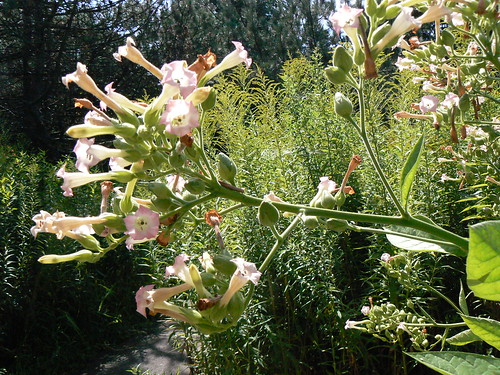

Tobacco Flowers

Few other ingredients stir the imagination as much as tobacco. The raw leaves have a bitter taste and not a particularly pleasant smell either. After all, nicotine, the substance that gives tobacco most of its medicinal (and addictive) properties, is meant to protects it from insects. Although the raw leaves have medicinal uses, it is hardly the sophisticated aromatic that we have learned to recognize as tobacco. This is achieved via a careful drying process that takes several days to a week, and usually followed by an additional fermentation period of about 8 weeks. This will develop the characteristic tannin,  full-bodied chocolate-vanilla undertones and hints of coumarin, violet and tea notes in tobacco products that some of us are so fond of (or hooked on). Additionally, tobacco leaves are treated with various perfume and flavour materials to enhance and accentuate this character. If you like your tobacco leaf clean and dry - try Sabotage  The tobacco in or Rebellius is exotic and spicy-sweet, not unlike shisha,  To experience pipe tobacco or Cuban cigar in all their glory, dab some Espionage.
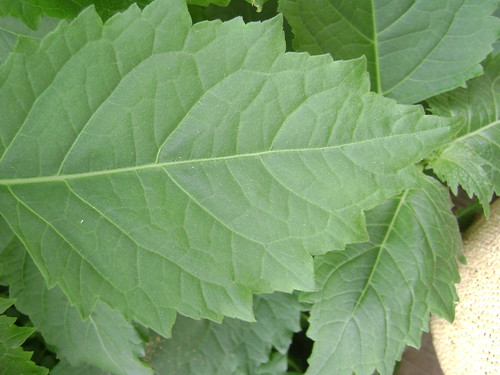
Patchouli Leaves

Patchouli leaves, an odd member of the mint family, do not smell like much when they're green and fresh. The sun-dried leaves are ideally stacked and occasionally turned in a process of interrupted fermentation. This way they will yield 2.5-3 times more oil than the green leaves. This process helps to rupture the cell walls and release the oil. However, that is not sufficient to develop their charactesritic aroma of patchouli. Exceptional patchouli oils undergo an additional step of aging, in which all the off notes (grassy, oily, tar-like) dissipate and make room for rounded, warm precious-wood aroma that you'll find in fine quality patchoulis - which can take another 1-4 years. Patchouli really does get better with age, and when this desired effect is achieve - the scent will remind one of both dark red wine, oak barrels and the cellar where it is kept. Patchouli is earthy, woody, musky, a tad funky, spicy and dark-chocolate-like. Examples of this can be found in  Patchouli Magique and Patchouli AntiqueFilm NoirRazala, and Palas Atena (Ayala Moriel).

Ambergris

Ambergris is a rare secretion that occurs in about 1% of sperm whales to heal their stomach from the scratches of the cuttlefish they swallow. This sticky mass floats on the ocean, and by exposure to the sun and the salty water it changes its originally foul smell into one of the most delicate and sought after fragrances: Ambergris. Ambergris is sweet, soft and slightly powdery. We use ambergris only occasionally – when we can find ethically harvested ambergris that was beach harvested. It is than tinctured and used as a base note in oriental and floral compositions. Best scents to experience this though are LesNez' mystical l'Antimatiere  by Isabelle Doyen; and my own Orcas, Etrog and Razala.
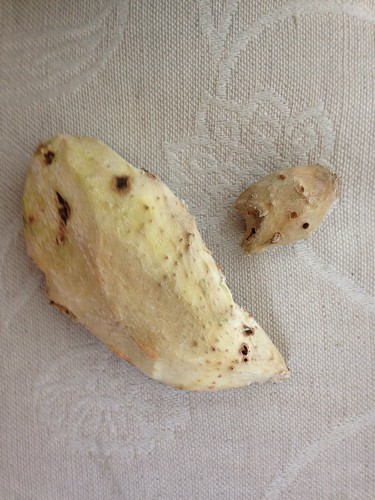
IMG_8605

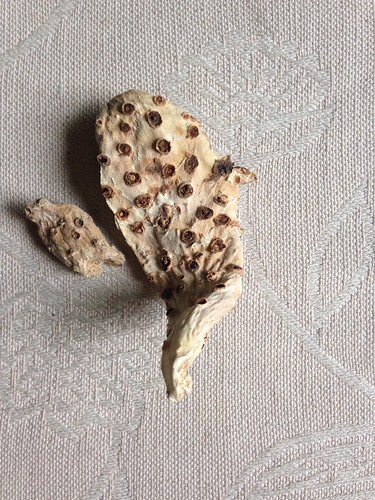
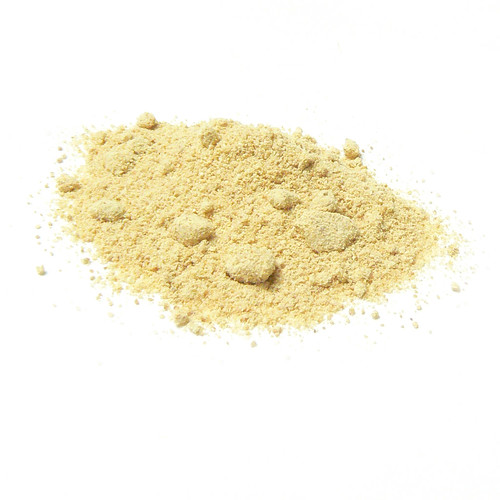
Orris Root: Orris root essential oil (AKA Orris Butter) is one of the most precious perfume materials. The roots need to be peeled and aged for three years before extraction or distillation. During this time, the glucosides in the rhizome gradually metabolize into irone - the violet-like molecule that gives orris root its desired violet-blossom aroma. It is invaluable in perfumery for its delicate powdery delicate aroma and ability to fix lighter scents. Orris is a welcome addition to any perfume whenever a delicate softness is required. Orris butter is both powdery, milky and smooth - reminiscent of a baby’s head and soft skin. Experience the highest quality of orris, with 15% irone (the unique orris molecule) in Sahleb parfum. For a lighter, paper-thin iris, try Hiris, and for a more sophisticated, abstract, modern yet old-fashioned you must experience Après l'Ondée!
Iris (Iris pallida)

Coumarin has may sources, and in all of them, it is not felt all that much in the original product but only appears after a process of drying or curing takes place. Tonka is soaked in rum and then dried, to coax the coumarin crystals out of the "beans". Liatrix (deer's tongue) smells like nothing when it's fresh, and like hay - needs to be dried and even slightly fermented to bring out the coumarin potential locked within them, which smells like "new mown hay". Classic coumarin examples are YerbamateBiche Dans l'Absinthe. and Brut. To experience natural coumarin try l'Herbe Rouge, Sabotage or White Potion.
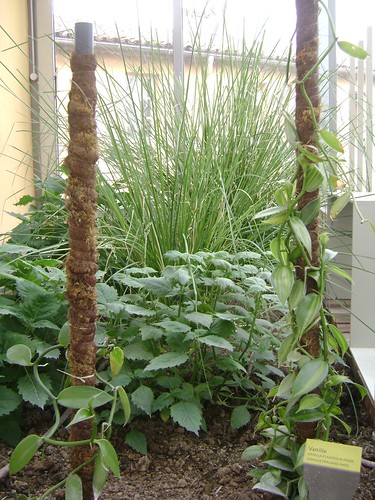
Climbing Vanilla Orchids, Patchouli and Vetiver

Vanilla Beans are left to cure in the sun so that they turn from green to black and develop their vanillin content. But vanillin is only one component that makes vanilla so special. In reality, this is one of the most compelling and complex natural aroma, inimitable by any manmade compounds.  Some 100 molecules were identified in vanilla (Vanilla planifolia), in addition to vanillin (4-hydroxy-3-methoxybenzaldehyde), including: Guaicol, creosol, acetovanillone, vanillyl alcohol and methyl salicylate and vitispiranes.

Tahitian vanilla (Vanilla tahitensis) has a much lower content of vanillin, and has a scent reminiscent of heliotropin - but contrary to some literature, this is not a compound that naturally occurs in it. Rather, it's the anisyl compounds that are responsible for its soft, floral, almond-like, sweet heliotrope-like nuances, including anisyl alcohol, anisaldehyde, dianisyl ether and anisyl ethyl ether. (Bo Jensen). To experience true vanilla absolute in perfume, try Shalimar (the extrait has handcrafted vanilla tincture), My Vanilla (Anna Zworykina),  Vanille Galante (Hermessences), Espionage and Immortelle l'Amour (the latter has 5 types of vanilla, including absolute, CO2 and handmade tinctures by yours truly).


Labels: , , , , , , , , , ,

Monday, June 15, 2015

Polo

POLO_ARMY VERSUS STEVE COLLINS ALL STARS_24

Long time ago, in a country far away, I was a nanny in a busy household in which both parents had a career in filmmaking and production. I would show up at their place at 8:30 (which was a huge lifestyle improvement for me comparing to the first job, the year prior, which started at 8), and by 9am the parents and older brother were gone and I was left with the adorable one year old I took care of for the day.

It's a privilege to be entrusted with a child's life at such a tender age, not to mention being welcomed into a home like this and become almost like a family member; yet also a bit of an odd situation to be entering a family's daily life in a rather intimate moment - preparing for the day and saying goodbye to each other as they set off on their long day adventures. When I came in everyone were still at different stages of dressing, showering, eating breakfast and so on.

Because, not surprisingly, I was oddly interested in fragrance even back then - I will always remember certain things about their home, including the soap they used (it was Dove - which was a rather exotic thing in the early 90s in Tel Aviv - and for sure the dad brought it back from his many business trips to L.A.). There was also a bottle of Obsession in the bathroom, which he bought for his wife and she never wore (unfortunately, she's really not into perfumes whatsoever) and then there was the green bottle with a horse and a rider holding a strange long stick, clouds of which wafted every morning after the dad shaved.

Polo in the Dark

I've never worn Polo and I can't say I have an intimate connection with it, but I did remember it as smelling good. So with Fathers' Day approaching and me feeling the urge to cover some more masculine fragrances on SmellyBlog - I set on trying it out for two days in a row now. The first time it was only semi-planned: I went to the drugstore to scout for some more cheap drugstore colognes and aftershaves. But I did not find what I was hoped for (Canoe). So I remembered that odd number and decided to try it on one wrist, and Eau Sauvage on the other. The latter was unfortunately a spoiled tester (too much light, folks!) while Polo simply won my heart almost immediately.

It's strong, bold and in your face so I'm glad I was wearing it sparingly. What one smells at first is that wonderful melange of patchouli, oakmoss and honeyed-animatic civet blooming in their warmth. And there is a decidedly leathery undercurrent that makes it really intriguing (and not wanting to scrub it off even though it is rather on the strong side). There are also many other things going on but these are the ones that I immediately pick up. Then as it unfolds on the skin, more fougere-like qualities pop out. Artemisia and other herbs mingle. I read that there are also thyme, basil and marjoram in this - but I can't really pick them out. There is just an overall feeling that is both sunny and warm like the Mediterranean garrigue - but also dark and looming against the leather. There is on one side a very smooth interplay of those rather distinctive elements. It's true that they go really well together in a red pasta sauce, a stew or even on bread with olive oil; but as perfume raw materials all these herbs are rather at odds with each other when combined with so many other perfume-y materials. They just don't like to behave!

There is also pine, which gives it a very distinctively masculine aura, as if to reassure you that all that civet is not going to turn floral on you. As Polo dries down on the skin, more of the dryness that comes out, accentuating the patchouli, and less of the civet notes (which are just this close to becoming as impolite as Kouros). Virginian cedar wood comes to the fore and mellows the more animalic elements, giving them a reliable context for an alibi (just in case someone walks by and suspects them of misbehaving).

Polo (1978) is at once sweaty, carnal, earthy, dirty, fresh, sexy, bold, distinctive, unique yet unmistakably manly. But what I adore the most about Polo is the dry down. Oh, the patchouli and the oakmoss, when they mellow on the skin after hours, and there is a bit of musk to connect them and balance the tartness of oakmoss and the dirty of patchouli. Why did they stop making scents like this for guys?!

Top notes: Pine, Lavender, Bergamot, Juniper, Coriander, Cumin
Heart notes: Carnation, Geranium, Jasmine, Rose, Basil, Marjoram, Thyme
Base notes: Patchouli, Oakmoss, Civet, Leather,  Amber, Musk, Frankincense 

Labels: , , , , , , , , , , , , ,

Tuesday, January 21, 2014

Diorella


Before I begin, I have two announcements to make: First of all, I want to thank the generous Joanna for sharing a decant of vintage Diorella with me. This review is based on my subsequent wearings of this beautiful rendition, prior to the oakmoss banning days. My second confession is that some ten or so years ago, when Diorella was quite widely available (and before oakmoss was so ridiculously restricted) and it did not quite capture my heart. While I liked its freshness and similarity to the brilliant Eau Sauvage, here was something about it that I disliked - a combination of the heaady floral note of honeysuckle, and the soapy aldehydes at the opening. Time perhaps has been kind with Diorella, because she has aged gracefully. Or perhaps it is an even earlier formulation of the same one. But it is certainly different from the scrubbed and lathered version you’ll find on the Dior counters nowadays.

Way before its time, Roudnitska was at ease incorporating fruit salad elements in his fragrances in a most refreshing, light-weight manner... created in 1972, Roudnitska’s fruit has thankfully no affinity with the syrupy, unbearably sweet fruity-gourmand florals of the new millenia; but rather posessed a cheerful lightness paired with complex substance from more earthy and floral notes of natural raw materials. So again, these are far superior to the light, watery fruity-florals of the 90‘s, though these were strongly influenced by the asthetics that Roudnitska developed with the creation of Eau Sauvage, which introduced the concept of space and expansion to modern perfumery.

Diorella is munching on a honeydew melon (or is it a cantaloupe?). It is ripe, juicy yet somehow still crisp, as it is brilliantly paired with citrusy notes of lemon and bergamot and a touch of spicy-sweet green basil. Her peach-toned skin emanates a scent that is similar to white peach’s delicate, milky and slightly nutty aroma, due to the use of peach aldehyde and peach lactone. These unique fruity notes were both brilliantly used in a non-edible way (as Edmound Roudnitska explains beautifully in Michael Edward’s book, Perfume Legends - French Feminine Fragrances). Rather, it brings freshness and a unique texture to the jus. It is brilliantly paired with effervescent, ethereal and soapy honeysuckle, crushed basil leaves and a tad of the oily aldehydic notes backed with ionones, that simultaneously give the clean impression of triple-milled soap, and the dirty allusion to hosiery that’s been worn and sweated in for at least half a day. That dichotomy between anti-bacterial herbs and animal/human secretion seems to be at the core of Diorella.

The oily aldheyde and peach notes fades rather quickly, allowing the basil and citrus notes more breathing room. Orris butter is present yet very subtle, giving a soft-focus background to the composition, and making it somehow smell more feminine. What truly moves to the forefront is jasmine. Pure, unadulterated, indole-rich jasmine at its best. And it is that indole that will accompany Diorella throughout her strut on the skin and the surrounding air - first an ethereal jasmine, and later on a full, unabridged indolic jasmine, with its fruity, jammy peach-like and earthy and animalic character beautifully showcasing this gorgeous phenomenon. The similarity to Le Parfum de Thérèse as well as Eau Sauvage are striking; but what surprised me what the affinity I discovered with Eau d’Hermes. Also a perfume that is all about jasmine, yet from a very different point of view - more warm, sweet-earthy and spicy. It is probably the juxtaposition of jasmine with ionones that creates that olfactory connection for me.

Last but not least, it’s time to talk about the base notes, the foundation of Diorella. No matter how much Roudnitska denies any connection to Eau Sauvage, the similarity is striking, despite the differences. There is definitely oakmoss, but not nearly as much as in Eau Sauvage, which gives it more of a green, dry and woody character rather than a dense, brown-earthy and musky feel. Vetiver also supports it in this direction. Even the patchouli, which appears in both, seems to be toned down and instead of the big-warm-oily patchouli hug you get in some feminine Chypres such as Miss Dior - there is just a single brush stroke of it, done in aquarelle. Last but not least, where Eau Sauvage has a generous dose of hay, which gives it an almost-fougere quality, Diorella has a subtle sprinkle of tonka bean (or perhaps just pure synthetic coumarin - in reality there is a very small difference between the two), giving it a slightly bitter finish, but with that feminine soft-focus that reflects the orris from earlier on.

Diorella is a very Mediterranean perfume, and truly reminds me of Grasse and the surrounding area, including the perfumer’s home and garden (which I visited in 2009). It also reminds me of a perfume that his son, Michel Roudnitska created way into the future - Eau Emotionelle - also playing on the cantaloupe-jasmine-ionone theme, but in oil-pain strokes rather than the sheer aquarelle of his father's. The culture in that area is greatly influenced by Italy and Spain, and there is something very Italian about it, especially in the opening notes. If Diorella was a woman, she would be one with a very outgoing, young spirit. A woman that loves to laugh and enjoy life’s pleasures, and just goes with the flow - but isn’t audacious or dominant by any means, and is very kind, generous and open but without ever being vulgar in the least. There is something truly carefree, open, fun, bursting with life and joie de vivre about it. In case you didn’t know already - it’s a true masterpiece. It has been relatively recently re-introduced along with the other classic retro Dior-fumes: Diorling, Dioressence, Diorama... I’m sure the new version pales in comparison but I’m nevertheless intrigued to find out what they’ve done to it to overcome the restrictions on jasmine levels and the industry’s new (low) standard of avoiding oakmoss at all costs (even though it is still allowed - the washed-down version of atranol-free absolute, and at only very low percentage).

Top notes: Bergamot, Lemon, Basil, Melon, Aldehydes, Peach
Heart notes: Jasmine, Honeysuckle, Hedione, Orris, Violet
Base notes: Oakmoss, Patchouli, Vetiver, Coumarin

Labels: , , , , , , , , , , , , ,

Wednesday, January 08, 2014

Bal à Versailles

Versailles by Ayala Moriel
Royal Boudoir, a photo by Ayala Moriel on Flickr.
Smelling Jean Desprez's Bal à Versailles is what I can imagine Jean-Louis Fargeon (Marie Antoinette's personal perfumer) would concoct especially for her: in his dusty apothecary in Paris, he would measure into the beaker with much abundance the costliest of all extracts: tuberose, jasmine and jonquil enfleurage from Grasse, attar of rose from Morocco, shipped across the Mediterranean, aged orris root tincture, tincture of vetiver, oakmoss from the Albanian forests, collected by wolverines in the moonlight, and every animal extract he could get a hold of: Ambergris? you got it! Tonquin musk? Oh yeah. Civet? Sure, but only a little bit...

Although I've been reading a lot of reviews that go on and on about the civet being the star of the show, I beg to differ. Bal à Versailles, although I still think agree that it could have been more aptly named - my suggestion would not be "Orgie de Versailles" (which is what it would have been if civet were the star of the show - as it is in Tabu, for instance), but rather more delicately, as in "Boudouir de Versailles".

The Eau de Toilette I have on hand is vintage, probably from the 90's, or late 80's at the most. It is redolent of black pepper, opulent flowers and dry, musky oakmoss. While it has a definite carnal energy about it, it is not due to civet, but rather, musk and white flowers. I was scratching my head for a while trying to recall what it reminds me of. And when I got it, I was a bit surprised - more than anything at all, it reminds me of my very first version of Schizm, when I was so naive that I thought that the "black musk" that was sold at the Persian Arts jewellery and antique store in Pacific Centre were in fact vintage perfume bases (hence containing synthetic musks, including the defunct musk ambrette and deliciously animalic musk ketone). The old Schizm was just like this - a surge of pepper, tuberose, narcissus, oakmoss and musk, with a bit of cedarwood accentuating the dry aspect at first, and turning into something sweet (taken over by the oakmoss) in the end.
And sure enough, the drynenss of oakmoss' top notes, the cedar and pepper bows and lets the sweeter song of raspberry-lined musks to make their coiffed entrance, powdered wigs and all. Vanilla, dark and real, is not too loud but makes its presence known, like a seasoned seductress partly hiding behind a black laced fan. And just like this confident woman in black, which does not need find the urge to flash her assets to be noticed, you'd also find a hint of the leathery, a nuance of fur and purring with its dry breath of isobutyl quinoline.

This early version of Schizm was never sold commercially, therefore I realize this comparison is not the most relateable. To give you a more familiar point of reference, I'd say that Bal à Versailles, despite it being a child of the 60's (launched in 1962) reminds me of the good old Caron fragrances: it has the same dry-peppery feel as Poivre and the delicious muskiness of Parfum Sacré
(well, this is not really old, it's from the 90's yet it has the same vintage feel), yet at the same time an underlining dark, almost dirty, boudoir feel of Nuit de Noël. In short: don't let it scare you. While very old-fashioned in feel, it is neither dense nor overbearing. It is very easy to wear, although I would definitely reserve it for special occasions, or at least for the evening, when you can truly savour it, sipped slowly like a glass of spicy Syrah.

Top notes: Black Pepper, Cedarwood, Citrus 
Heart notes: Tuberose, Jasmine, Orange Blossom, Narcissus, Orris Butter
Base notes: Oakmoss, Musk, Patchouli, Vanilla, Amber, Leather

Labels: , , , , , , , , , ,

Wednesday, November 06, 2013

Chypre Birds

Chypre Bird by Ayala Moriel
Chypre Bird, a photo by Ayala Moriel on Flickr.
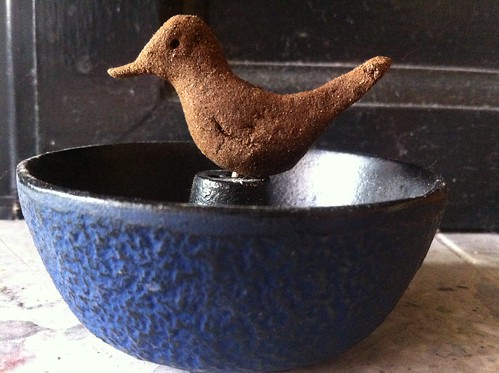
Oyselets de Chypre ("chypre birds") historically preceded chypre perfumes. Made of a mixture of herbs and resins (labdanum, styrax, calamus) and glued together with gum tragacanth - they were place in homes as potpourri, or burnt for fumigating the space. They became popular in Europe after the crusaders arrived in the island of Cyprus (in the 12th century), and didn't turn into an alcohol-based "Eau de Chypre" till the 14th century - way before Coty's Chypre (1917).

In my Chypre course a couple of years ago, I've tried to retrace the steps of making Oyselets de Chypre based on this very vague information. We've used gum arabic as the binder to put together Mediterranean aromatics such as labdanum resin, sage, dried rose petals, calamus and patchouli. The material was difficult to work with and the gum arabic was not sticky enough to hold the shapes together. So only one student was able to make hers to look like a bird... The rest of the students left their "chypre balls" behind, in much frustration. Such is the life of the experimenting perfumer... Not all formulas work!

Oakmoss (Evernia prunastri)

2 years later, I've decided to go back to those balls (which, by the way, make wonderful sachets to scent linens, stationary or drawers). I also had some left over powder of the herbs we mixed together before we added the water. I've decided to add a more reliable binder, as well as neroli water and a two other off-beat ingredients: a piece of dried oakmoss lichen, and a crumpled cigar.

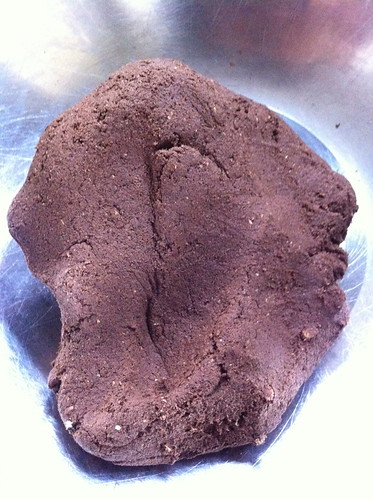
Chypre Tobacco Incense Paste

Working with the material was like working with wet clay, and smelled similar - wet and earthy, and a little like a wet cigarette. After a bit of molding, it dries on the fingers and personally makes me rather uncomfortable - itchy between my fingers and impatient to get on with the task... So I took a little break before I was able to go through the entire batch of "clay" (I covered the "clay" with plastic wrap to prevent it from drying).

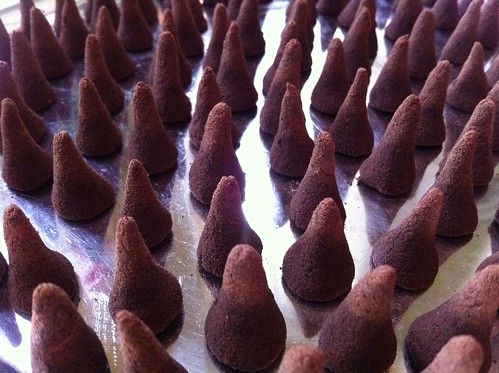
Drying Chypre Tobacco Incense Cones

Once I shaped most of the paste into little incense cones, I made one shaped like a bird. Just for fun, and decoration. The incense is a mistake that turned into a happy accident: the oakmoss and tobacco in it really do the trick and make it smell wonderful... Assertive, woody, dry, masculine and smoky in a good way. I wish I could turn this into a perfume. It's kind of like how the moss Poivre Samarcand smells like underneath all the pepper. Truly wonderful stuff, and if my witch doctor is right, the tobacco helps to protect, encourage confidence and push away any negativity you don't need in your life.

If you want to learn how to make incense, you can book incense-cone making workshop with me (up to 6 people), or you can also learn how to make Egyptian Kyphi. 


Labels: , , , , , ,

Tuesday, October 12, 2010

Moss


Moss & Trees, originally uploaded by Ayala Moriel.

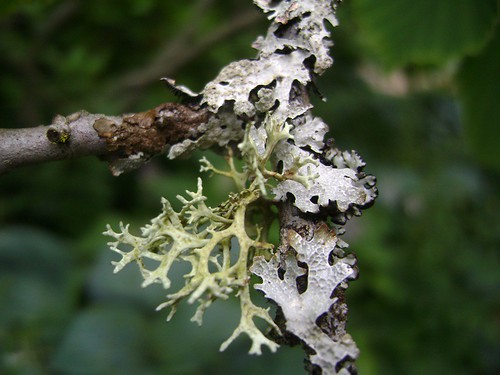
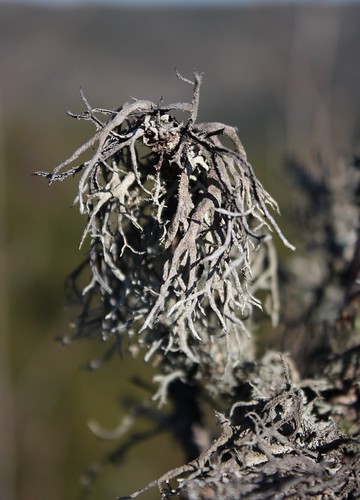
In continuation of the autumn aromas theme... Here comes moss, in all its glory and various forms it comes in. The moss used in perfumery not the true, green moss (as seen in the photo above) - but the gloomy looking lichen that hangs out of trees and usually looks silvery-grey and mushroom green at best (see photo below).

There are several types of the so-called "mosses" used in perfumery, and they vary slightly. The most famous one is oakmoss, which has the richest and most versatile fragrance. Oakmoss has a scent reminiscent of the forest floor in Autumn, which is why Chypres are always considered so suitable fo rthe season. It is somewhat musky at first but develops into a sweeter, almost ambery scent. Oakmoss can also be reminiscent of the seashore and seaweed with a hint of saltiness that is more apparent in the current EU regulated absolute that undergoes a mandatory process to remove the atranol from it.

It is taken from moss that likes the trunks of oak trees and grows primarily in former Yugoslavia. There is brown oakmoss and green oakmoss, and both are quite similar in scent, actually. The brown is perhaps more on the ambery side, and the green one is a bit more salty. Both are equally important because of their essential presence in Chypre, Fougere and literally every fragrance family imaginable benefits from having a little oakmoss thrown in for extra good measure... Not only for its fixative qualities but also for creating an interesting depth even in very low concentrations - in citrus, florals, woodsy types and also in Oriental perfumes.


Moss 30-06-2007, originally uploaded by Ayala Moriel.

But Oakmoss is not the only fragrant moss!
There are less known mosses that are used in perfumery, and although they are harder to find, they provide an interesting backdrop to perfumes that need that extra mossy boost, yet with their own special nuance that sets them apart from what could become an inevitable oakmossal cliché...

Cedarmoss has the dryness of cedar, and is more wody and less sweet than oakmoss. It is more salty as well and I love how it works out in l’Ecume des Jours with the seaweed oil – it’s an element that certainly saved this perfume from being a mishmash of expensive florals drowned in a bucketful of lichen.

Another moss that I’m yet to use in perfume is Pine Moss. This is a bit more difficult and actually more dark and also opaque in character, not to mention painfully sticky (or more rock-like, actually). The scent itself is more of a challenge: resinous, sweaty, reminiscent of immortelle absolute. I’ve finally tinctured this monster down recently after having it in the vault, completely ignored, for years and years and years. I think it will make a beautiful autumn perfume with immortelle absolute. It is just waiting for the right moment of inspiration, I guess.

Labels: , , , , ,

Wednesday, July 07, 2010

Mossy Whale


Mossy trees, originally uploaded by Ayala Moriel.

The moss sculpts its way on the tree trunks and branches along the Wild Pacific Trail. And I’ve heard it has something to do with how crisp and clean the air is there… The mosses and lichen love it and adorn the trees with their moss-green velvety ropes and silvery laces… And nearby, whales spit a mist of water from their lungs which towers abaove the water and they weave in and out of its depths along the rocky shores.

I wanted to play on these themes of moss and marine creatures in the 4th mod. As it turns out, I went a little too far though… I was a little adventurous, and rather than adjusting the formula a bit by changing only an element or two, I added many different elements and nuances.

First, I wanted to see what happens if I add some more violety notes, so I added even omre cassie absolute, which has a wet-wood and leather quality to it and also boronia absolute, which I find to have a certain oceanic quality about it that is hard to explain, but if you smell it you will understand what I’m talking about. And added even more Haitian vetiver!

Remembering the rotting squids also made me want to add something animalic and marine to the mix – and that’s when the ambergris joined the game. My original concept of making this a simple and not crazy expensive perfume (except for the seaweed, which is essential) pretty much flew out of the window right that moment.

I should have probably stopper right than and there to see what transpires of my efforts. But I was unhappy of whatever result was going, and added a little more of this and that – which included more citrus (lime) and more woodsy notes (juniper, cypress). But where everything went out of control was when I decided to go with nothing else but cherry cedar, which is distilled locally, and I thought would be very appropriate for this British Columbian theme. What I added accounts for just about 2% of the formula was clearly too much. All I could notice now was cedar, cedar, cedar… Red, local, whatever…! It was too much.

I let it rest for just one week. I came back to it yesterday, and the thing has transformed into the craziest berry-cedar perfume I’ve ever smelled in my life. And than it turns interestingly salty with the seaweed and boronia and the moss. It’s not bad at all. But it’s not Orcas yet - unless you are imagining a killer whale that picks wild berries and carves canoes from cherry cedar.

Labels: , , , ,

Rosemary & Sea


Rosemary & Sea, originally uploaded by Ayala Moriel.

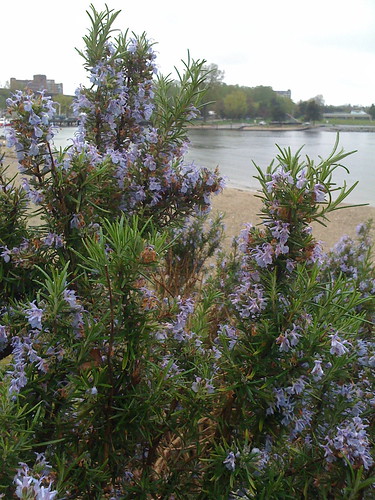
Before I went on to another bottle, I made some adjustments to what I told you about earlier. I sharpened and accentuated a few ideas – i.e.: increasing the seaweed a bit, as well as the spruce absolute and added some cypress to flesh out the woody element and in hopes of making it more “masculine” so to speak. I also increased the violety presence by adding a smidgeon of cassie absolute. I also added some citrus notes – bergamot and lemon – to brighten things up a bit and give the whole thing a lift. Egyptian geranium was necessary for added body at the heart notes, and to accompany it - a bit of a very high quality palmarosa, which added a clean yet floral freshness, expansive airiness to the composition. This still remained true to the original concept but just a little more developed.

I was also hoping to increase the salty levels in the composition by adding some atranol-free oakmoss, which I find to be more sheer and marine-like than the nearly ambery-musky full-profile oakmoss absolute (all oakmoss absolute sold these days have the atranol removed. It’s part of EU regulations, and since all oakmoss is produced in Europe – usually harvested in former Yugoslavia and extracted in Grasse) that’s all we’ve got, unless we stashed some oakmoss away.

At the same time, I felt that the rosemary was still quite strong, and the seaweed was not enough present. Which is quite strange given how potent it always seems on its own and how light the rest of the notes were.

Labels: , , , , ,

Monday, April 06, 2009

The Boy who Cried Wolf


The Boy who Cried Wolf, originally uploaded by bris1969.

The Boy who Cried Wolf, originally uploaded by bris1969.

Rather than let panic rule my actions, reactions and emotions, following the Perfume Shrine's intelligent commentary on the supposed threat on oakmoss and perfumery as we know it, as well as personal correspondence from Helg for an official statement, I decided to visit again one of my favourite websites - IFRA.org, to check out the status on Oakmoss. I also immediately contacted my suppliers to see if they know of any change in the supply of oakmoss in the near and not so near future.

As of the end of last year, neither of my oakmoss suppliers were no longer carrying complete oakmoss absolute. The sensitizing elements were removed, as per IFRA's regulations. Which is not surprising, since oakmoss is grown and harvested in the EU (mostly in former Yugoslavia), and most of the perfume industry at large is still concentrated on that continent. To my pleasant surprise, even at this manipulated state, oakmoss still presented the full spectrum of performance it always had, and was just as good as ever for creating chypres, fougeres and adding nuances to florals, orientals and citrus (oakmoss, in case you didn't know, is used in all fragrance categories for both its fixative qualities, and its fragrance profile - adding a dry, salty, mossy, earthy and edgy nuance to any composition) and having a powerful diffusiveness.

According to IFRA's "Fragrance Material Specifications" on the Oakmoss pages in the 43rd amendment:

"Oak moss extracts used in fragrance compounds

must not contain added tree moss, which is a source of resin acids.
Traces of resin acids may be carried over to commercial qualities of oak moss in the
manufacturing process. These traces must not exceed 0.1% (1000 ppm) dehydroabietic
acid (DHA) in the extract.
The concentration of resin acids in oak moss can be measured with an HPLC Reverse
Phase – spectrofluorometry method.

Further, levels of atranol and chloroatranol should each be below 100 ppm in oak moss
extracts".

Another interesting point is, that oakmoss was last reviewed in 2008, and the next review date is scheduled for 2013. If IFRA is planning anything drastic for changes in oakmoss regulations in 2010, they surely aren't saying anything about it on their 43rd ammendment.

For all I know and care, oakmoss will still be in production and in use by the perfume industry at large at least until 2013, although its designation as a restricted substance (meaning: for many applications oakmoss canbe only used in 0.02-0.1% concentration, depending on if it's used for products that have skin contact or not). While this certainly has implications on the economy of oakmoss production, making harvesting and distilling less feasible - this is not the end of this building block as it is still so widely in use (even if to a lesser concentration), and it's importance indispensable. And since I don't live in Europe, I intend to keep using oakmoss the same way I've always have. This is the least I can do to support the oakmoss distillers and to ensure that they can keep producing oakmoss absolutes and that entire families of fragrances will not be erased from the face of the earth.

What I found may be enough to comfort you oakmoss lovers (and chypre and fougere wearers in particular); but as much as I agree with the author this time (and this it would have been a great response IF indeed oakmoss levels were to be further lowered next year) - also leaves one with puzzlement about the motives for posting such doom and gloom claims in a magazine. Bad news do sell more papers though I heard.
Or perhaps, just like in the story about the boy who cried wolf, eventually no one will listen and that's when oakmoss will quietly disappear? I will leave this to the conspiracy theorist to figure out.

Evernia prunastri (Oakmoss lichen) (?), originally uploaded by OK Thomassen.

Labels: , ,

Sunday, April 29, 2007

Chamade


I Surrender, originally uploaded by Ana Santos.


Chamade. A perfume like no other. Green. Fruity. Floral. Aldehydic. Mossy. Balsamic.
When I first read about it in the Guerlain pamphlet I received at The Bay, I did not expect to like it at all because it was described as an aldehydic floral. But to sum it up as belonging to one category or another would be missing the whole point: Chamade is Chamade. You must enjoy it for what it is rather than attempt to classify and categorize it. This would be likened to locking a beautiful songbird in a cage, or a free spirited woman in a house and tell her what to wear, eat or do. If you love Chamade you should know better than that!

Yet, the magic of Chamade is not so much in the fact that it is so versatile, but rather, in the unusual assembly of notes that are so different, yet harmonize perfectly with one another. Notes that seemingly contradict each other so much you wouldn’t think they’ll get along at all: the briskness of galbanum and the caramely sweetness of vanilla; the fruitiness of black currant buds and the acrid oakmoss; Not to mention the florals and aldehydes in between which on the paper create an unresolved olfactory mess.

Yet in the Cupid’s arrow-stricken reversed heart bottle, these elements form a balanced tension that leads from the briskness of galbanum and fruity sharpness of cassis to an oily-urinal aldehydes combines with the above mentioned berries. Creamy and hot, pulsating floral notes of ylang ylang mingle with the powdery, green yet sweet hyacinth creating an impression of a flower warmed in a sunny spring garden. And this all leads to a base that is first mossy, slightly acrid-bitter-dry-woody of sandalwood and oakmoss. Hourse later, the magical vanilla that only the dynasty of Guerlain could use so appropriately without making it seem banal or overdone. The same vanilla of Shalimar parfum – dark, resinous-sweet and sexy in the most intimate, close-to-the-skin tastefulness of the classic parfum extrait of this house.

I’ve been fortunate to wear Chamade in a few concentrations and vintages: vintage EDT from the generous Char (I won a contest, can you believe it?), a Parfum Extrait from eBay, in a pristine 30ml sealed bottle; and of course, a brand new EDT, which is delicious and quite true to the original I think (though this will probably change any minute because of the strict oakmoss regulations in the EU and by IFRA). The new Chamade of course smells fresher, and the top notes are more apparent. It shows its vanillic face faster than the vintage I would say. Yet I can still feel the same Chamadeness beating in there. The vintage EDT is fantastic, the top notes are less pronounced, but you can still feel them, and overall the perfume feels much softer, rounder, and goes form phase to phase seamlessly. The powderiness of the aldehydes and ylang ylang is more pronounced, and there is also a bit of a note that I can only liken to the Mousse de Saxe of Caron, or otherwise to Peru Balsam essential oil (rather than the balsam itself). The parfum extrait is a completely different story altogether. It has such pronounced notes of rose and jasmine (and wow! what a jasmine!) that is barely resembles what I learned to know as Chamade from the other two versions. There is some of the galbanum though, but hardly any cassis (if at all) or ylang ylang at first. Which makes me think, it was probably reformulated after all, though I will not be able to give you any dates. The reformulation primarily seems to be downplaying the rose and jasmine to insusceptible quantities and replacing them mostly by the more cost-effective ylang ylang (probably from Guerlain's own plantations; I wonder in which year they got these...).


Top notes: Galbanum, Black Currant Buds, Aldehydes

Heart notes: Ylang Ylang, Hyacinth

Base notes: Oakmoss, Vanilla, Sandalwood


A few words about the timing for this perfume: designed by Jean-Paul Guerlain, the last in the line of the Guerlain heritage of exemplary high-class perfumery (which lasted for almost two decades and was brutally interrupted only in recent years by globalization and greed). The timeless beauty of Chamade only got to show you that Jean-Paul did not lack inspiration before LVMH got into the picture (rather, stole the picture) and perhaps than it was finances that designed the fragrances more than its own talented nose. Chamade was launched in 1969, marking the beginning of the 70's, which in the perfume world was significantly characterized by the emergance of soapy and green compositions, such as No. 19, Private Collection, Silences, Ivoire, Diorella, and very much influenced AnaisAnais which launched almost a decade later, as well as the much later excellent celebrity perfume Deneuve by Catherine Deneuve.

Labels: , , , , , , , , , , , ,

Tuesday, November 07, 2006

The Dawn of Pink Chypres


Since the early 90’s, IFRA and other European regulatory organization have gradually tightened their embargo on the use of oakmoss in perfumes. Ever since than, slowly but surely, the rich heritage of Chypre is gradually collapsing. First, with the sneaky reformulation (partially rumours from devoted Chypre consumers, partially official statements from renown houses) of what seems to be all the mainstream chypre classics; Currently, the minimum amount of oakmoss allowed in a fragrance have reached the lowest of lows: a mere 0.1%. Reformulating all the classics – Miss Dior, Jolie Madame, Mitsouko – must have taken a few good years. It is now a sad but true common knowledge amongst fragrance aficionado that the chypre of today is not what we learned to love and cherish. This article, however, is about what we are gradually conditioned to perceive as the Chypre of Tomorrow.

The motives and the reasoning behind the IFRA regulations is something I prefer not to delve in. It opens up issues that are complex and quite puzzling, full of contradictions and conflict. Unfortunately, the recent developments in the Chypre world force me to open this Pandora Box at least a tiny bit, and I hope I will not be tempted to look back as I might just petrify right there and than. I will, however, refer you to this article on Cropwatch, which addresses some of the issues that every modern perfumer that is interested in using certain natural aromatics is now facing.

Until very recently (perhaps just until last year), perfume labels were mysterious and vague. They usually looked like this:

Alcohol, Parfum (as shown on my box for Miss Dior parfum extrait from 4 years ago). If it happened to be an EDT or an EDP, there will also be “Aqua” in there. Occasionally, maybe, also a name of one other the other colouring agents.

Now they look like that:
Alcohol, Parfum (Fragrance), Aqua (Water), Hydroxycitronellal, linalool, alpha-isomethyl ionone, hydroxyisohexyl 3-cyclohexene carboxaldehyde, cinnamyl alcohol, coumarin, limonene, benzyl benzoate, benzyl alcohol, evernia furfuracea (treemoss) extract, citronellol, geraniol, evernia prunastri (oakmoss) extract, hexyl cinnamal, eugenol, amylcinnamal, cinnamal, benzyl salicylate.

(This is from the package of the Miss Dior EDT I bought a few weeks ago; and no, this is not the actual formula for the perfume inside the bottle, it’s just a list of all the ignredietns that are suspicious as allergens or sensitizers). My apologies for any spelling mistakes in the above list. Neither me or my computer know chemistry well enough to run a spell check through it.
To read more about the oakmoss ban, I urge you to read through the Cropwatch site, as well as read Elena's excellent article on Perfume Shrine.

But if you think that the solution for that lies in reformulation alone, you are mistaken. In the 90’s we have witnessed a new trend in perfumery, that was at first silent and polite towards the old-timers Chypres that we have learned to know and love (and spend lots of money on because they deserve it). Compositions that are not quite floral; not quite musky; not quite anything that we know really, and contain a safe 0% concentration of oakmoss; yet they have a certain appeal to the exact same perfume-user-group that adores Chypres. I can’t point out which scent has started it all, but lets just assume it was Agent Provocateur (2000), a stunning seductress that gives off the impression of a classic floral-animalic Chypre of yesteryear, without using as much as a single drop of oakmoss or even labdanum for that matter. Agent Provocateur uses a combination of aldehydes, along with spicy and floral notes over a base of vetiver and musk to create a seamless, old-fashioned shamelessly erotic scent that fits with the Femme Fatale image of the lingerie brand that created it. Though the first impression of Agent Provocateur is very Cypre, in the last phase of dry down, there is none of the typical forest-floor, decay and earth-like warmth that is always found at the bottom of each true Chypre. Instead, we find a new kind of musk. A sensual musk, nevertheless, yet a clean and dry one, rather than the heavily warm and powdery suffocating musks of the era that Agent Provocateur reflects in its first phases of development.
What is to follow in the next seven years is a slowly but steadily growing number of releases that use the word chypre either as their classification or as a note. Yet there is no oakmoss (or labdanum) to be detected, and unlike Agent Provocateur, which ironically lived up to its name as a provocateur of the so-called new concept of Chypre. Lets assumed it was just sent out there to test the waters: would people notice if we DON’T use oakmoss? Would they still think it’s a Chypre? The answer is yes. But this is because Agent Procovateur is so well crafted and also has enough natural ingredients in it to resemble the rich floral bouquets at the heart of most Chypres that live up to their classification. What has followed is nothing shorter than horrifying, from a Chyprophile perspective.

Coco Mademoiselle (2001) has an alternating classification floriental or fruity-chypre. As charming as it may be (and this scent has wide fan-base) here is nothing in this composition to resemble Chypre even in the wildest of dreams. This younger sister of the bombshell oriental of 1984, Coco, maintains only a few ideas from the original, such as it’s expanding sillage that is equally sweet and spicy, charmingly bold yet with a certain unique transparency. Coco Mademoiselle is a concoction of fruity citrus, litchi and a marine accord over a floral heart and a base of clear patchouli, vetiver, musk and vanilla. But it couldn’t possibly have prepared us for the upfront sacrilege of what was about to come from the esteemed house of Chanel in 2003, in the form of a round Wheel-of-Fortune bottle of Chance. Chance is officially classified as a fruity chypre, and while it shares some similarities with Coco Mademoiselle, it fails to have any connection whatsoever with any true Chypre family member. Where this concoction of marine and fruity notes had let down many old-time Chanel fans it sure has attracted some new client base of (probably younger) consumers. With watery fruity-floral marine accord of pineapple, hyacinth, jasmine, and spicy pink pepper over a base vetiver (again) and patchouli (yet again) and musk, this is one slap in your face if you actually know what Chypre is. Of course, if you don’t, you might buy into it just the same as you would if you didn’t know that the whole idea behind keep all the bottles the same was a sign of classy minimalism and pure good taste. Which also happens to give more importance to the fragrance rather than the packaging.

Also in 2003, and this time classified as a Chypre-Floral – Escada Magnetism. This is more fruity than floral if you ask me, opening with mouthwatering pineapple, black currant, melon and litchi. The heart may be floral (official notes are magnolia, rose and jasmine) But don’t be deceived, this develops into something completely different and original (and I am not being sarcastic): once dried down, it’s the most sensational milky scent of orris, muted heliotrope, creamy sandalwood, and (although not listed as a note) white chocolate. Like other modern Chypre wannabes, this also has vetiver and patchouli at the base, though I can’t claim I noticed them too much. Again, no oakmoss in the horizon of this Roman milk bath.

Following the same train of thought of the two Cocos, we are now facing in 2006 something that couldn’t be more tragic: Miss Dior is being blessed with a baby sister, but this time it is a vicious one who threatens to replace the original. The bottle design is very similar (unlike Chanel, who for the most part use the same bottle design for all their fragrances, Dior is known for coming up with very different designs for most of their creations; so the same bottle is a huge statement; and in a visual world like ours, many people accidentally miss the word “Cherie” at the end and buy it by mistake – for themselves or for others – while intending to purchase the original. Even the scent ribbons has that “New Look” – white stripes, yet with silver lettering). Miss Dior Cherie is now the “New Chypre”, classified as a fruity chypre, this time strawberries, paired with the less than agreeable combination of patchouli and caramel popocorn. The result, I am afraid to say, is horrid. Especially when knowing the chances that Miss Dior (the original lady) will survive are very slim - what with that glamorous looking sister around paired with the toning down of oakmoss in its reformulation.

Pure Turquoise by Ralph Lauren was launched this year as well (2006), the same year where we see the reformulation of many beloved all-time-classic Chypres. This scent is quite nice actually, with intense grapefruit top notes that linger longer than usual, and a very clean, dry base of refined (meaning very synthetic smelling) patchouli. In between there are all kinds of fantasy notes such as cactus flower and night blooming cereus and even rum (which I couldn’t find there at all). This is all nice and fun and refreshing, but to call this is Chypre is going completely overboard.

Another turning point was the release of Narciso Rodriguez For Her (2003). At first I was ambivalent towards it not only because of its popularity, but also because it is a very obscure scent. Since than it has become a staple in my perfume wardrobe, and I couldn't agree more with what Ms. Shortell had to say about it. Behind its prettiness hides quite a revolutionary concept and I am quite certain that a few decades down the road, it will be considered a milestone in fragrance history. This fragrance has a unique subtlety and is completely abstract (despite of the fact that certain “real plant essences” are listed in the brief, such as orange flower, osmanthus, vetiver). It’s a unique combination of manmade musk with abstract woods and florals. Although it’s categorized differently in different places, it was quite clear with defining the 2005 release of the Eau de Parfum version as a “Pink Chypre”.

Following Narciso Rodriguez we can now enjoy a few other scents that have a very similar concept – obscure florals, musky base with abstract, refind woody notes. Lovely (2005) by Sarah Jessica Parker has musk paired with refined patchouli, crisp alcoholic apple notes and abstraction of Paperwhites (a species of narcissus); Kisu (2006) by Tann Rokka explores rosewood and cedar along with musk and an abstract ylang ylang note. Incidentally, this perfume was developed by Azzi Pickthall, the same nose who created Agent Provocateur.

The bottom line question is: are oakmoss and labdanum being replaced by synthetic patchouli, vetiver and musk as the necessary requirements for the Pink ((aka New) Chypre? And why would we do so when there are so many fragrances out there who has been using patchouli and vetiver for decades if not centuries, but were classified as oriental, woody or florals?

These last scents mentions (Narciso Rodriguez, Lovely, Kisu) are all unique fragrances that stand apart from other “pink chypres” (i.e. combinations of fruit, patchouli and vetiver) so to speak. They have something new to add to the perfume sphere. Classifying them as chypres poses a serious question about the reasons behind that. I am no paranoiac, but there might just be a silent scheme to gradually phase out the concept of Chypre and replace it with something new. I can see in my mind a boardroom full of perfume industry market researchers trying to figure out what is it they can give Chypre lovers that does not contain oakmoss. Perhaps they even did a cat scan of huge focus groups of chypre perfume users to find out what else they have in common, scent wise, besides oakmoss. Are perfume industry marketing professionals afraid of creating a new fragrance family with a new name? Or maybe, they just want to capitalize on the Chypre market just before they completely take away the real chypres? These questions, for now, remain unanswered, unless, of course, you attempt to answer them by leaving a comment.
Image Credit: Salmon Pink Dawn, originally uploaded by Steiner62

Labels: , , ,

Thursday, October 19, 2006

Eau Sauvage

From the moment I met Eau Sauvage, it was steaming passion. It’s sparkling clarity and bold sensuality are seductively well-mannered. Eau Sauvage is what I would want to immediately splash onto a man’s chest and than bury my head into... This would probably be my one recommendation, aside from necessary precautions, for a blind-date gadget (whether if you are a man or a woman)… It radiates good taste and vibrates with a lively charm. Eau Sauvage has the sensuality of clean, freshly showered skin, smooth just-shaved cheekbones, the sweater of a lover left behind for further cuddling and sniffing, permeated with the impeccable scents of sweat sweet hay.

As a side note I may ad: I wasn’t exposed to the Eau Sauvage ads featuring showers and mysterious men just about to take off their black sweater – and was pleasantly surprised to find them fitting to my own internal image of the scent (which is quite unusual in the world of perfume ads).

It wasn’t until I became a perfumer that I learned that the magic charm here lies with the oakmoss. Oakmoss has the power to add a rich, complex underlining base to what otherwise would be just another one of the many fleeting eaux de citrus & herbs. And so while Eau Sauvage is unmistakably sparkling with citrus, it is also one of the first Chypre for men, and actually a revolutionary fragrance in its time.

Eau Sauvage was one of the very few significantly different fragrances for men. The fragrant history around the world (Arabia, India, Ancient Greece and Rome) tells us that men indulged shamelessly in a diverse selection of aromatics: from sweet and indolic flowers (rose and jasmine) to heavily sweet balsams, incense, musk and ambergris. Contrary to that, the modern Western man, since perhaps the days of Napoleon or even earlier, submitted themselves to a painfully limited palette of aromas: citrus, aromatic herbs, woods and some musk. Anything sweeter, heavier or more floral was reserved for women. Of course – there were a handful of significant and unusual scents for men prior to Eau Sauvage: Jicky (Guerlain, 1889, considered the first modern perfume but also one that dared to question the gender boundaries of perfume), Mouchoir de Monsieur (Guerlain, 1904), Pour Un Homme (Caron, 1934), Old Spice (originally released by Shultan in 1937 and was actually marketed for women but happily adopted by men).

What reserves Eau Sauvage such a special place in perfume history are two things: its composition, of course, but also it’s timing. It was released in 1966, a time when men were perhaps ready to start breaking out of the strict olfactory boundaries that locked them in a clean prison of citrus and herbs. Other scents released around this era are Tabac Original (1959), Chanel’s Pour Monsieur (1955), Pino Silvestre (1955), Monsieur de Givenchy (1959) and Creed’s Cuir de Russie (1953). These paved the path to the revolution of men’s scents, a quiet revolution that is still happening and morphing quietly into a rebel against the exact same things that restricted Western men, olfactory-wise, for the past two centuries. Eau Sauvage was a milestone in breaking out of the norm – starting with the use of substantial amounts of oakmoss and patchouli at the base, and hedione and jasmine in the heart. Only few people at the time knew that the Maestro had an even more revolutionary scent in stock – the one reserved for his wife Therese (designed for her earlier, in 1960). In Eau Sauvage, Roudniska used only a bare amount of the hedione comparing to his masterpiece for his wife, and none of the aquatic melony notes used in Le Parfum de Therese. But the use of citrus and basil and an expanding jasmine heart created a very similar effect, yet one that was be more easily acceptable by his audience.

Another departure from the norm was its mass appeal to both men and women. Since the release of Jicky, there wasn’t as much olfactory “gender-confusion”, and everybody felt comfortable stealing each other’s cologne, as long as it was Eau Sauvage. Diorella was sooon to follow, perhaps to shut down the cologne-kidnapping complaints and cologne-custody court battles that followed Eau Sauvage and threatened to break too many marriages… Diorella was a toned down version of Le Parfum de Therese, and a floraler version of Eau Sauvage (more hedione, and more jasmine, with the addition of melon). Where Diorella failed (marketing wise), other houses gained and started releasing many more unisex scents ever since – O de Lancome (1969), Diptyque’s l’Eau (1968), Santa Mari Novella’s Melograno (1965), Goutal’s Eau d’Hadrien (1981) – and than the explosion (or shall we say inflation?) in unisex fragrance in the 90’s, accompanying and/or following Calvin Klein’s One (1994).

The use of basil, citrus and oakmoss is genius, and along with the jasmine, considering it’s time, it is also daring. To me it will always stay at the top – the epitome of masculine fragrances, and fragrances at large.


Top notes: Lemon, Pine, Lime


Heart notes: Basil, Jasmine, Carnation


Base notes: Oakmoss, Patchouli, Musk, Hay


Image credits:
Posters from
VintagePosterArt.com
Bottle image from Dior.com

Labels: , , , , , , , , , , ,

Monday, October 16, 2006

The Love and Death of Miss Dior

FALLING IN LOVE
I have a soft spot for Miss Dior. It was my first true introduction to Chypre.
My first encounter with it was actually a “blind buy”. I bought a set of Dior minis in one of my travels, about 5 or 6 years ago, without ever sniffing the lady before. The Miss Dior bottle wasn’t closed properly, so about half of it spilled all over the case containing the collection, making them all smell unanimously wonderful.

What stroke me as most special about Miss Dior when at first was how warm and round it was. No one note stood out in particular. It was a true “perfume” in the sense that the sum was greater than its parts… The spilled Miss Dior diffused soft, thick, almost oily molecules in the air, surrounding me with a constantly vibrating aura that feels utterly erotic. The following is what I wrote a few years ago about my impressions from the EDT that resided in that mini bottle 6 years ago (half of which evaporated away to the atmosphere, and the rest soaked into my skin and poisoned it with Chypre love). I still have about 0.5ml left to remind me slightly of what it used to be, and luckily also a vial of a vintage Eau de Cologne to remind me of the glorious days of Miss Dior before the reformulation.

So here is how I raved: “This wonderful and timeless Chypre is as smooth and as round as could be, so well orchestrated that the different notes blend in harmoniously and act together rather than compete with one another or "show off". It is young-spirited and sophisticated at the same time, therefore appealing to women of all ages that are seeking a classic, refined expression of their feminine self, without feeling overly girly...
Though different olfactory stages and notes can be detected, they are not as pronounced or separated from one another as you might expect. Rather, they lead to one another with a harmonious continuation that makes the complete experience magical and seductive. Which is, after all, the secret for the charisma and sex-appeal of Chypres – the way they blend different notes without leaving too-obvious hints as for what they really are. You know the notes are in there, but you smell them all at once, singing in one beautiful accord!
The top notes of galbanum, gardenia and citrus are accompanied by no other that the relatively harsh herbal notes of sage which surprisingly converts the top note accord into a peach-like fruitiness. The top notes appear fresh and soft simultaneously, and lift up the Chypre nuances of patchouli and labdanum from the base.

Once the initial green frutiness has mellowed, Miss Dior reveals her round, feminine floral heart of jasmine, neroli and rose, completely balanced as no note is dominating the other.

This all dries down to a base accord of a warm and somewhat wild Chypre accord: patchouli, oak moss, labdanum, as well as civet notes which contributes to the roundedness and fullness that links the phases altogether. Some refined, subtle woody notes of vetiver and agarwood appear late on, adding a clean, somewhat “sour” nuance, neither making the composition dry or bitter by the half, nor taking away from it’s overall luscious femininity.
It is definitley a must for all Chypre fans!”


CHYPRIC ENLIGHTENMENT

A couple of years after the mini EDT, I was fortunate to spot a small flacon of the parfum extrait for an unusually reasonable price, and was surprised at the difference between the two concentrations. The Parfum was a lot more fruity and round than the Eau de Toilette – the sharp (almost metallic lead-like) top notes of the sage and galbanum were softened and smoothed that for a while I was almost convinced it was similar to Diorella’s fruitiness. There is a cedar note in there as well, and along with the sage, it strangely makes me recall the magical Vol de Nuit now. I would have never thought I would find any resemblance between the two. There is a smooth, almost powdery-woody feel to it. But the base is as oakmossy as could be, with the pulsating raw energy of civet tamed only by whatever you can do to hide the long lasting, recurring waves of chypric orgasm that lasts for as long as you let it lick your skin.

Top notes: Galbanum, Sage, Gardenia
Heart notes: Jasmine, Rose, Neroli

Base notes: Patchouli, Oakmoss, Labdanum, Civet

THE TRAGIC REFORMULATION
There is a rumour about Miss Dior being reformulated. I wasn’t so worried until I actually got a new bottle of the EDT. This smelled like Miss Dior, no doubt. However, to my disappointment, the animalic quality has been tampered with. Forget about those erotic waves of pleasure… The new EDT now opens with a sparkling note of lemon and lemon leaf, goes through a floral phase that is a pale, watered down reflection of its former “New Look” satin-white-corseted-waist, and than dries down to a chypre base that is dominated by no other than VETIVER. Yes, you heard me right. Vetiver. The clean, tart, almost citrusy, woody root. Not oakmoss. Not civet, but vetiver. It may be a non-sensitizer (for now, anyways) but by no means can it replace oakmoss!
If that makes you feel better, though, the new formulation does include oakmoss (it’s even listed on the ingredients on the box). It also has tree moss, actually. But overall, instead of the refined sexuality, it is more of an eau suited for summer since the addition of citrus at the top (formerly, the chypre effect was mostly achieved by the presence of aldhydic greens and galbanum, and the citrus nuance was actually a neroli note, rather than a citrus peel oil). It is still better by all means than many of the watered down florals out there; but the new formulation has caused it to lose a significant amount of its edge and originality. To top this off, Miss Dior is now followed everywhere by a trashy copy of her original self threatening to inherit her fame without any merit of her own: the “Miss Dior Cherie” – a strawberry and popcorn brat that never heard of oakmoss and dares calling herself a Chypre. I can only imagine how many people bought Miss Dior Cherie as a gift by mistake just because of the similar name.
I propose a moment of silence in memory of Miss Dior of the New Look.
And plenty of angry letters to Dior Fragrances.

Image credits:
New Look photo originally uploaded by Deignucdavis
Bottle image from Amabilia.com
New Look Sketch

Labels: , , , , ,