Monday, December 23, 2019

Triple Goddess Incense

Triple Goddess Incense

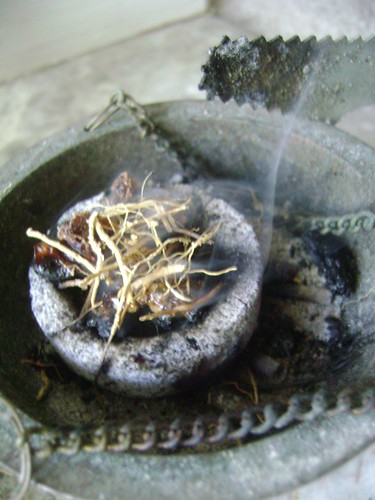
This week I've been burning the Triple Goddess incense. The Triple Goddess is representative of the three main phases of the moon: waxing, full and waning; of the women's menstrual cycle from the start of lining of the womb, through ovulation and followed by shedding layers of the womb and bleeding; and finally it is representative of a woman's circle of life: Maiden-Mother-Crone. Our culture celebrates the maiden, the woman at its sexual peak, yet also naive and most vulnerable, alluring and raw/fresh state. It pretty much ignores and diminishes the woman at the times when she is most in need of support, when she is dedicating herself to raising the young ones - Motherhood; and the time when she is wise and no longer fertile or "of use" to the patriarchal culture - as she is no longer a desirable sex-object, and can no longer bear children. At this stage, however, the Crone is most precious for its polished and refined state of being, it is most beautiful from within, having gained much wisdom and life experiences. She can teach both men and women how to live and how to be in tune with nature's cycles. She's seen many dark nights turn into daylight. She is the woman who knows

This post, as well as the incense, is in memory of my brother's sister-in-law. She passed away a week ago, on Monday night, surrounded by her closest family and loved ones, after a year and half of battle with breast cancer. Her courage and her suffering serves as an urgent call to us women: to live our lives truly and fully, and to reach out and ask for support from our sisters, mothers, aunties and grandmothers. In good times and especially in bad times, we always have one another. Even if it seems like they won't understand us or support us. Maybe in our darkest moments we don't even think we are loved. But this is not true. We always have other women to turn to and trust. Find those women and keep them close to you. Don't let anything come between you - but keep leaning on each other through motherhood, marriage, relationship, hardships, careers, and also take them along with you when things are just fun and light and happy. So that you have those sweet and fond memories to feed on in times of famine. 

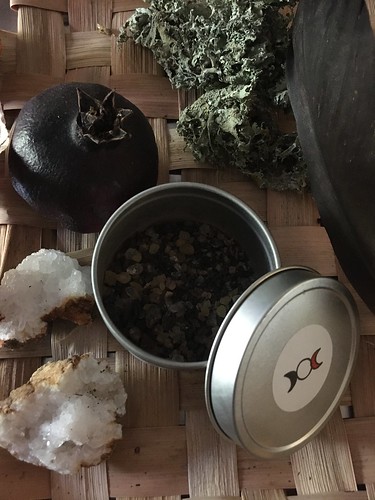
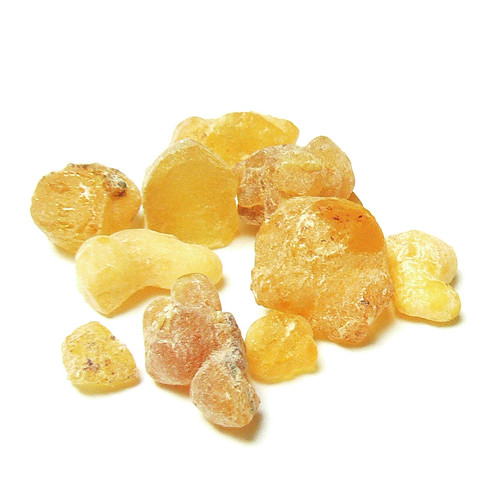
And since you are dying to know: the incense has three colours in it, and three incense materials, representative of the red, white and black of the woman's psyche. White of purity and light and fullness, represented by White Copal, which smells just as bright and fresh when burnt. Of course the white can also be associated with the Crone's wisdom, as well as with snow, winter and death (being the colour of bones and of the white cloth used to wrap the dead with). The red is the colour of bleeding, of giving life, of her wounds, represented by Dragon's Blood, not only because it is blood red, but also because of its flaming, aggressive aroma, purifying and protective properties and perfume. And lastly, the Black of earth,  of a decaying yet fertile soil, of the Crone's wisdom.  I chose to use Black Copal for this stage, which is suitable not just because of its colour but also because of its musty and mysterious scent. Of course the meanings and associations of these colours could be different. This is simply one layer of a deeper wisdom. 


This post as well as the incense is dedicated to all womanity so that we accept, no - embrace! - both our waxing, waning and darkest hours. May we never resort to artificially and superficially inflating our light to cover up sorrow, grief, emptiness and flaws. Bleed, cry, dance, swim, laugh, weave, play, create, destroy, sing, listen and heal when it's the right time. You are enough! 


Labels: , , , , , , , , , , ,

Thursday, December 05, 2019

Peace Incense

Incense for Peace


It is a long standing tradition to create at least one form of incense during the Oriental Perfumery courses. This fall (November 10-14, 2019), we created incense cones using a very unusual material fire tree resin AKA grass tree (Xanthorrhoae that one of my students harvested herself and brought all the way from Australia.

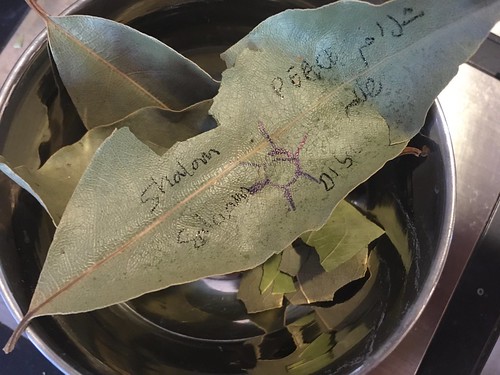
The incense blend was born out of the concept of marrying plants and resins from both Australia and the Middle East: bay leaves, eucalyptus leaves, fire tree resin, Australian sandalwood, and an array of Middle Eastern resins. On the leaves we've written prayers before causing them into pieces and grinding them. Prayers that will go up in smoke and come true. 

As we were writing on the leaves it, I recalled a dream I had about teaching perfume and incense to youth with the vision of harnessing the alchemy of it to sawing seeds of peace - first within and then outwardly to our environs.

I am now praying to have the courage, strength, wisdom, and the right help and partnership to be sawing these seeds for real in my everyday life.

Without any messed up politics, but through meeting people's true essence, and mine... This requires serious self reflection and internal alchemical transformations that transcends trauma, hurt and long history of pain and destructive defense mechanisms.

Of course, it is so much easier said than done... So I am hesitantly putting it here and trusting you to guard this and save this as a reminder to make this come true on all levels. The process begins from within. I hope that soon enough I will be ready to share it and bring it outwardly and lead others through this process.
Thank you 🙏


Incense for Peace


Labels: , , , , , , , , , , , , , , ,

Monday, February 18, 2019

Ras El Hanout Incense, Three Ways

Ras El Hanout Incense, Three Ways
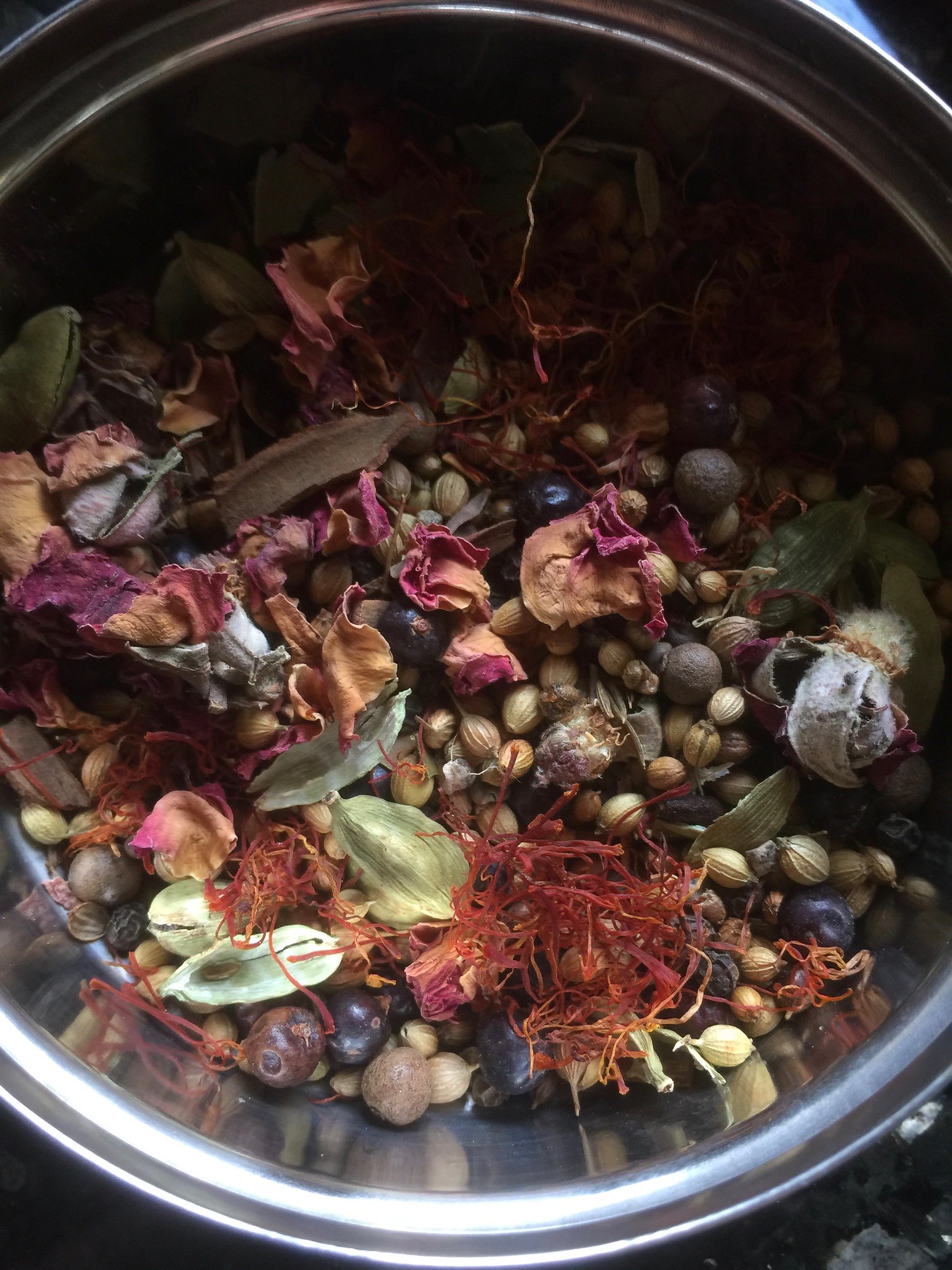
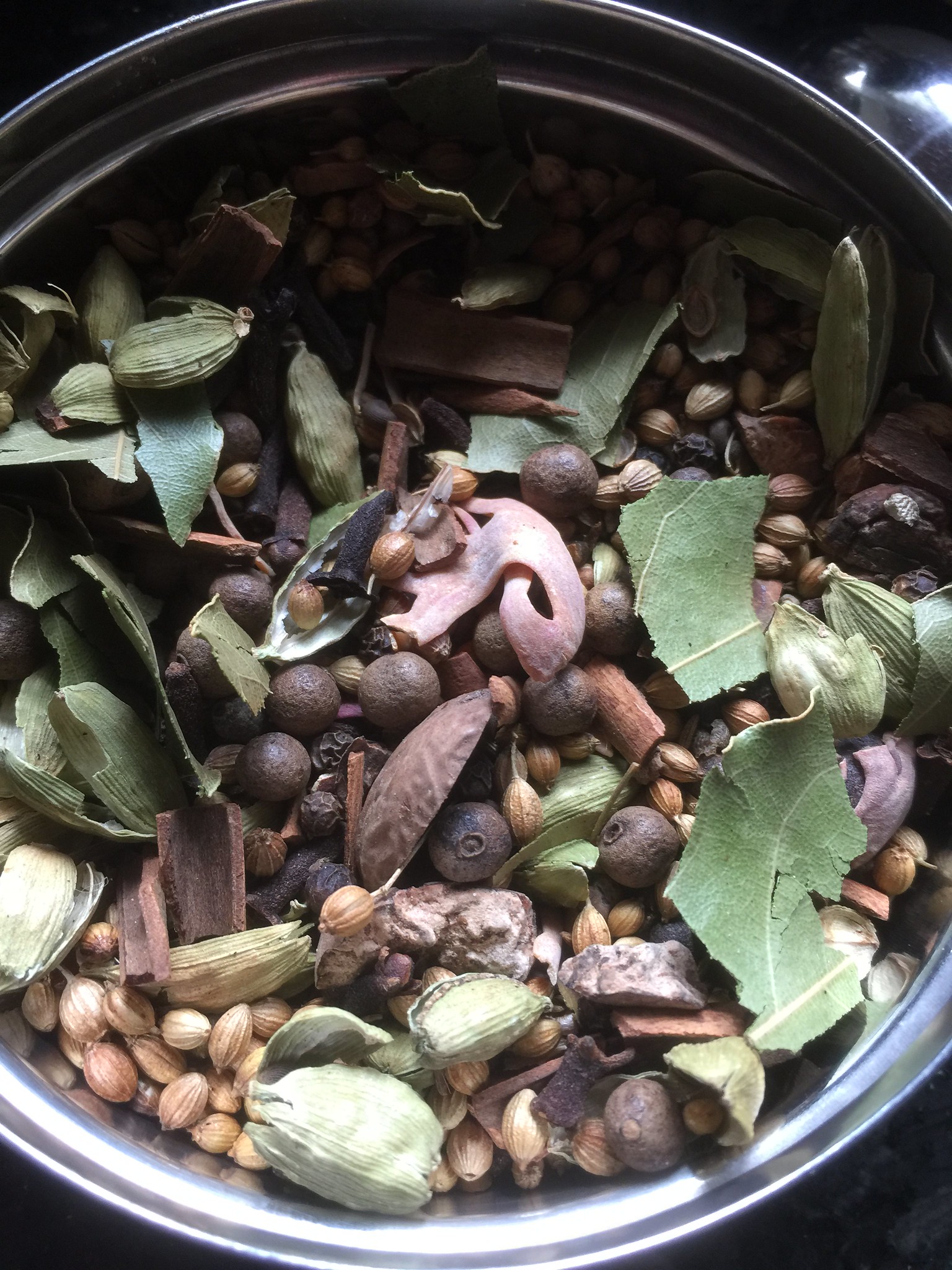
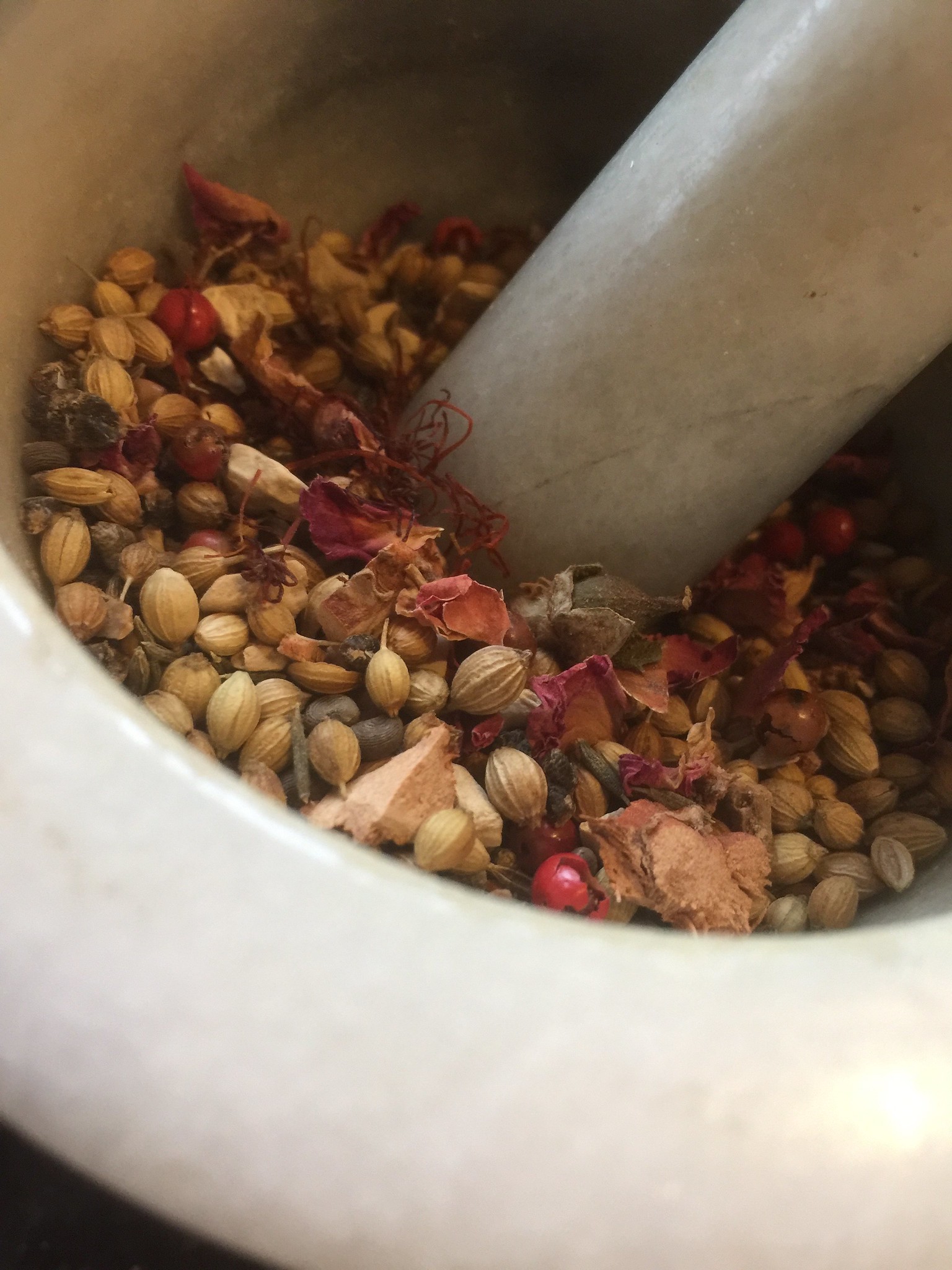
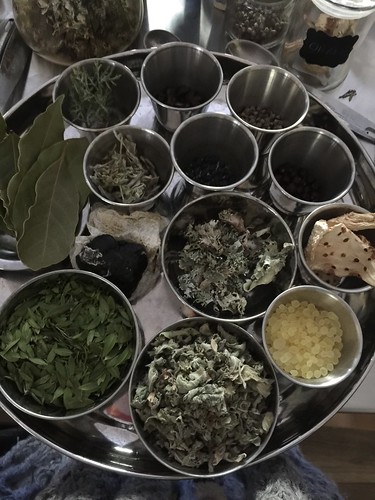
I ran out of my Ras El Hanout mixture (which I always make myself, using very peculiar spices from my overflowing spice rack). You can see some of them in the images below (how many of them can you guess?).
Ras El Hanout

Ras El Hanout

Ras El Hanout
Most of the grinding is done the old fashioned way using mortar and pestle, as it should be. I believe it is a more direct connection to the material because this way I can smell them as I crrrrrrrush them! Whatever I'm unable to grind fine enough, I will pass on to the electric grinder. I kept most of it for my cooking (nothing beats a homemade couscous topped with a homemade couscous stew spiced with my very own Ras El Hanout!). But some I just felt compelled to burn as incense.
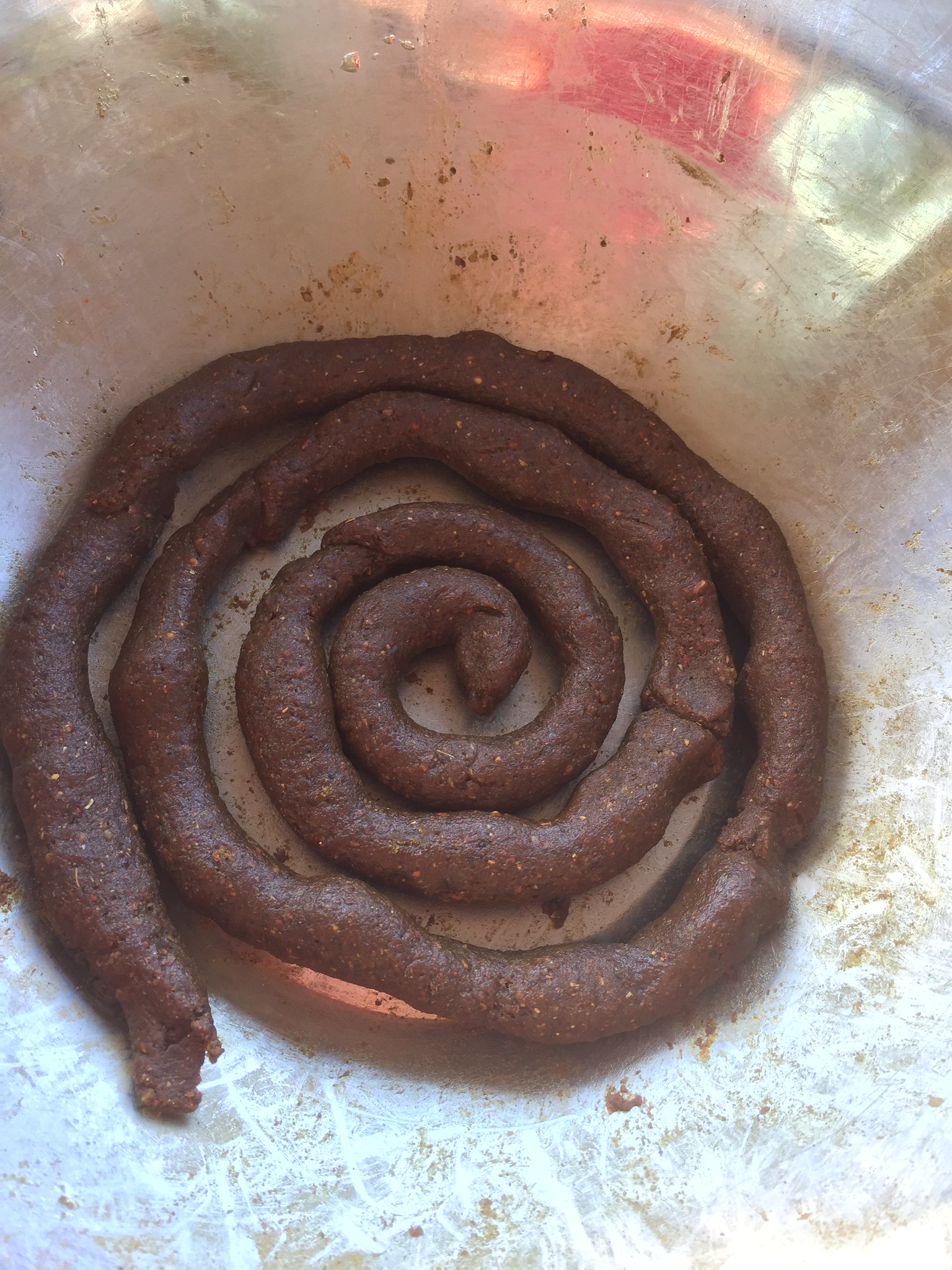
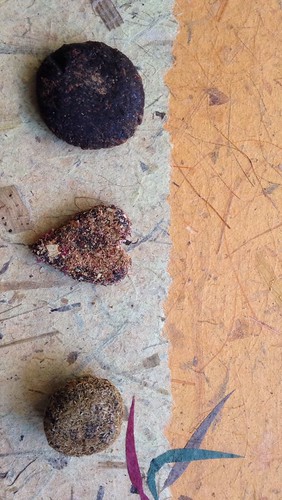
Ras El Hanout Nerikoh Snake
My first idea was making it into nerikoh (kneaded incense, which is not actually burnt but placed on a hot micah plate). Nerikoh traditionally uses honey or plum paste. For this experiment I used a combination of dates and honey. I named these Oasis Nerikoh.
In the picture you are seeing the incense dough shaped as a spiral, and waiting to be hand-rolled into tiny balls.
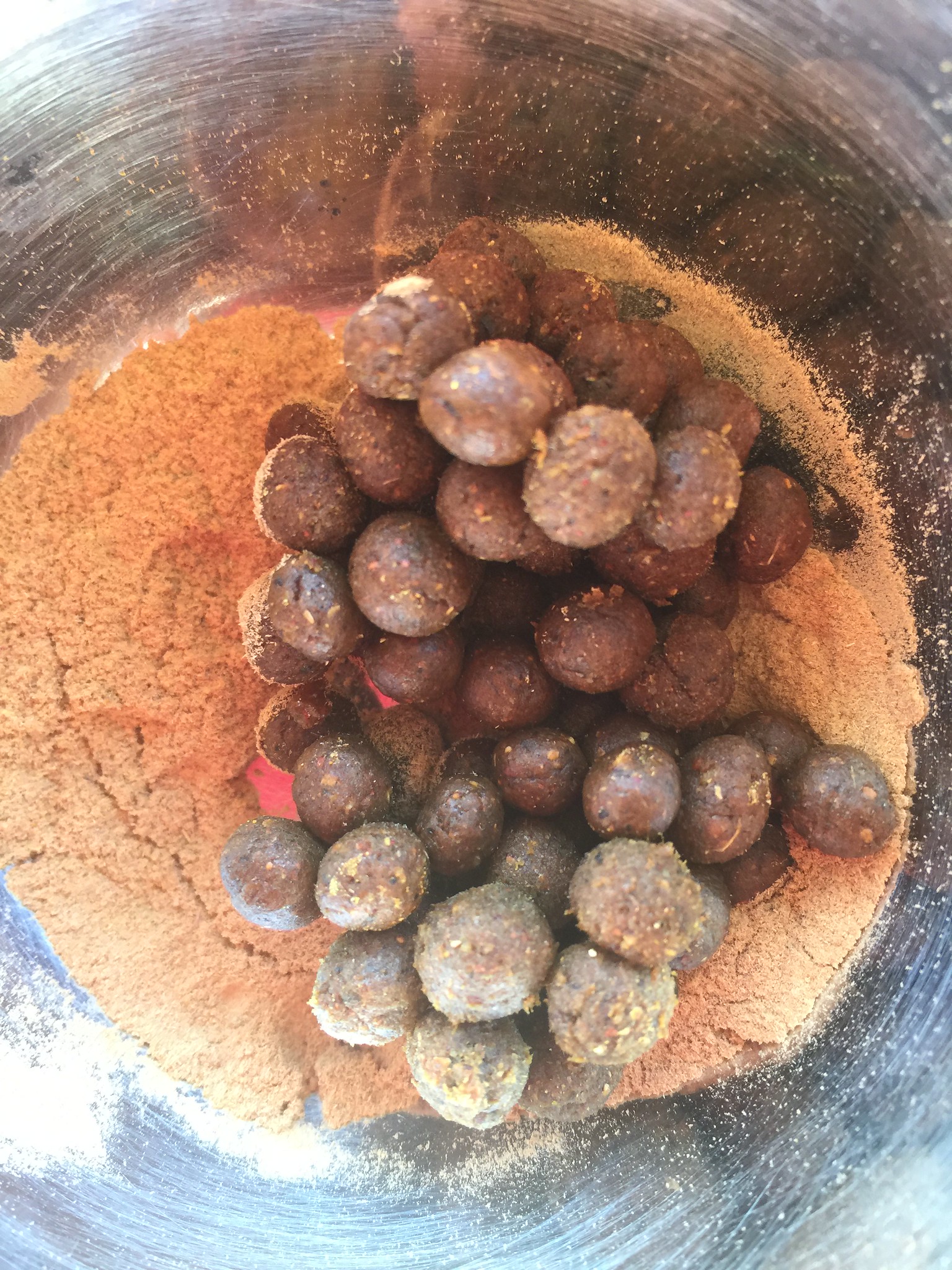
Ras El Hanout Nerikoh
Ras El Hanout Nerikoh (kneaded incense balls), rolled into a mixture of ras el hanout and sandalwood powder.
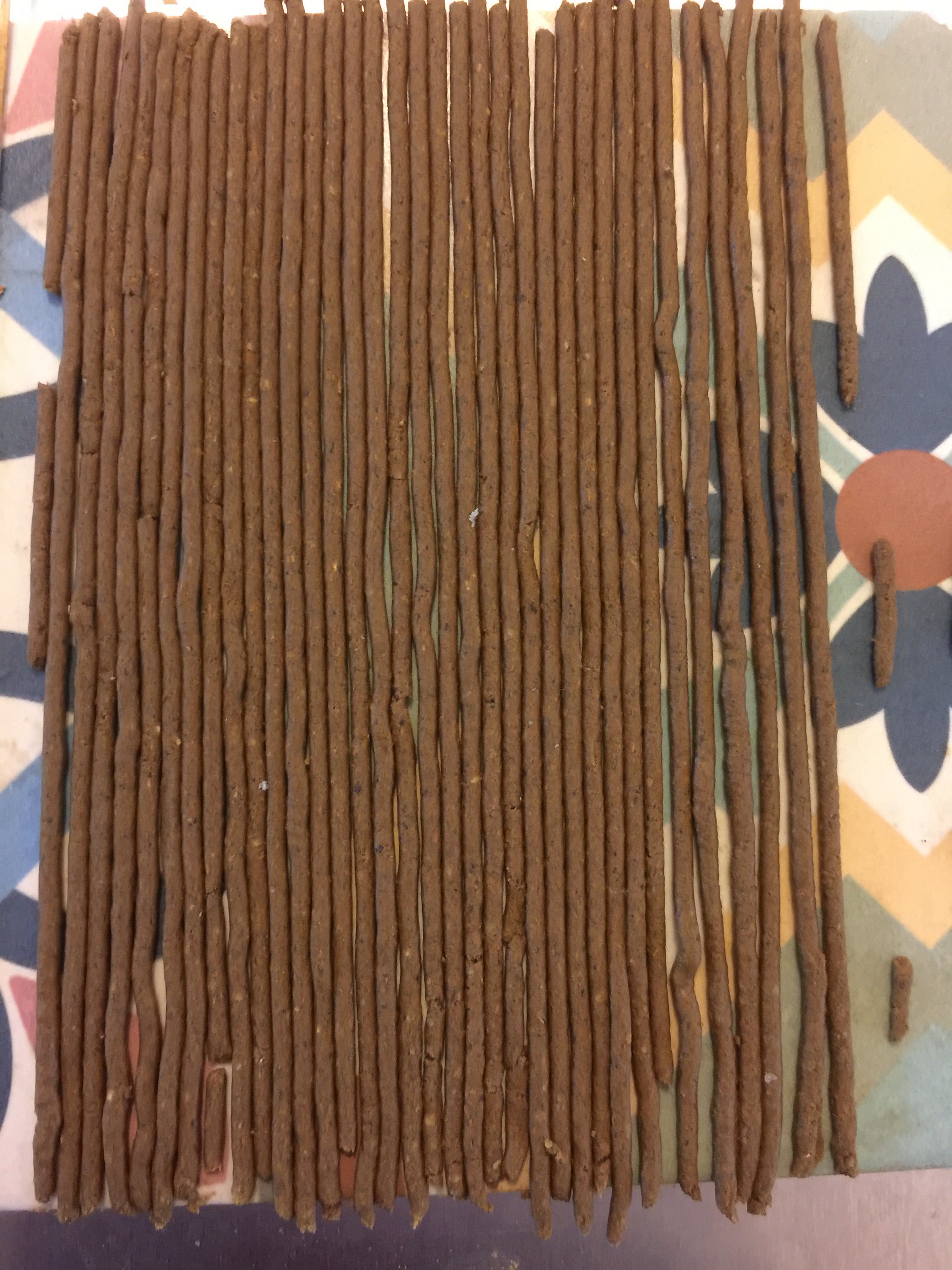
Ras El Hanout Incense Sticks
My second attempt at making incense sticks! Practice will eventually make perfect I hope.
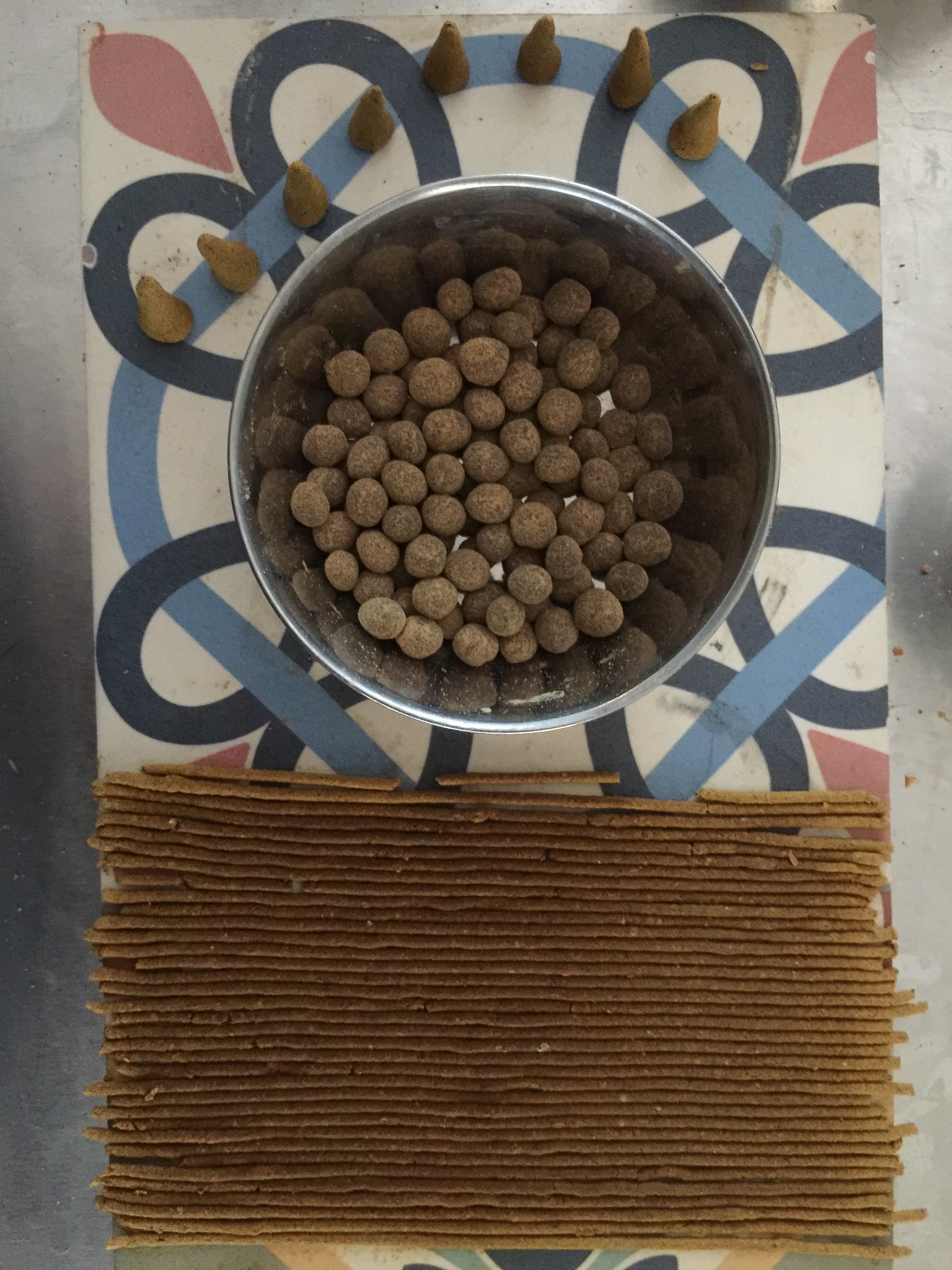
 Ras El Hanout Incense, Three Ways
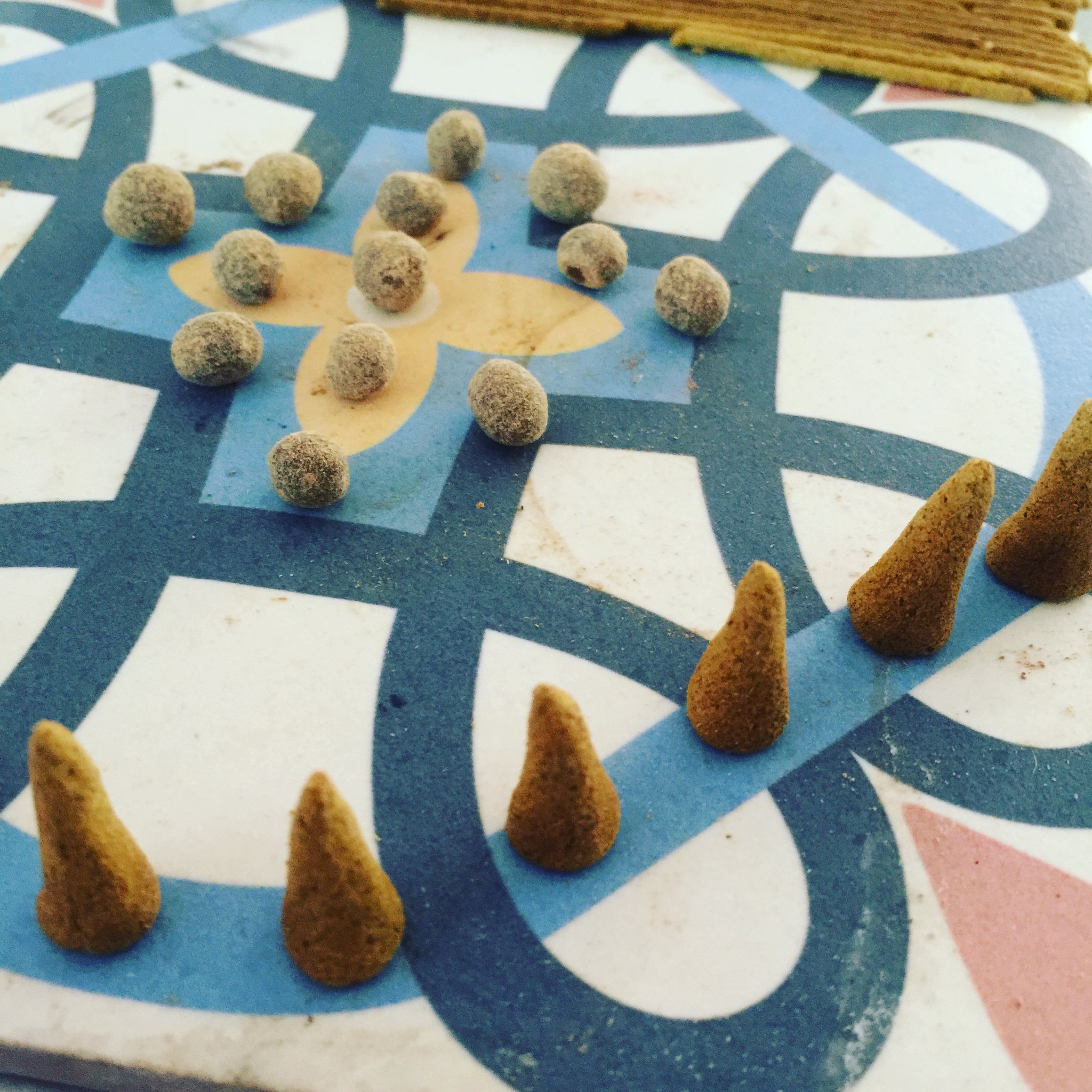
The whole line up, from top to bottom: Ras El Hanout Incense cones, norikoh, incense sticks.
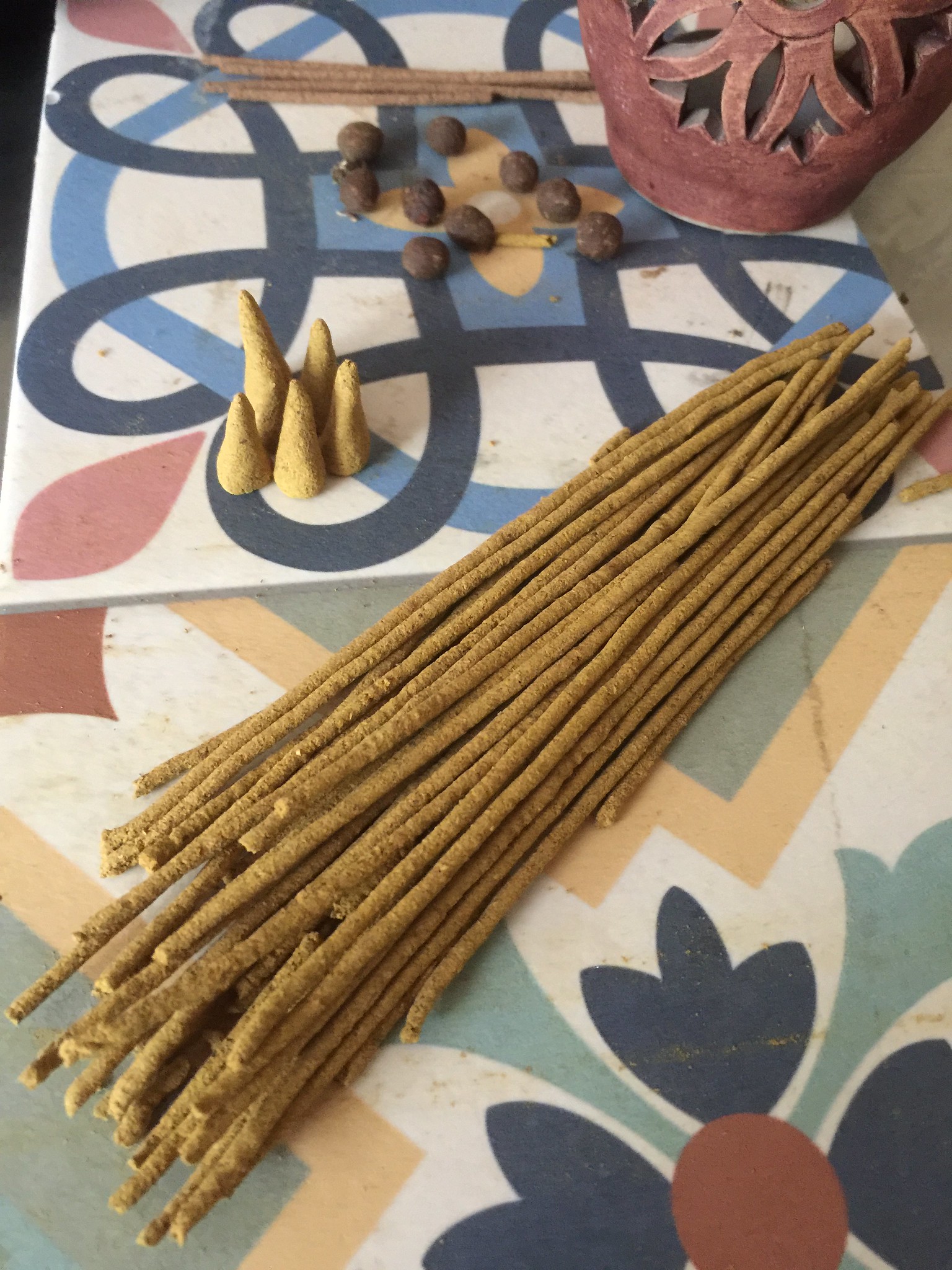
Ras El Hanout Incense, Three Ways
Here they are, all dried up and ready to use! The ornamental brown ceramic dish in the background is my aromatherapy diffuser, which I use to heat up nerikoh.

Labels: , , , , , , , , , ,

Monday, February 04, 2019

Local Kyphi

Local Kyphi Ingredients
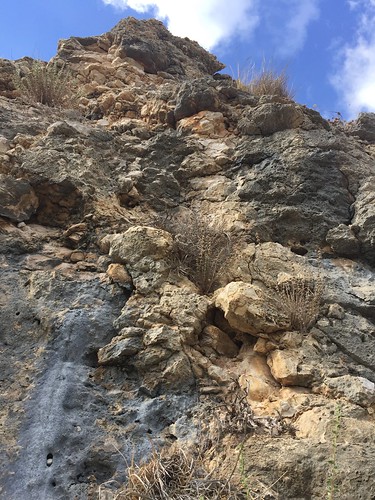
In preparation for the Kyphi class I'm teaching February 21st, I've decided to experiment with making Kyphi with as many local ingredients as possible. I tried to use mostly plants and materials that I either grow or wild-harvest, or can be found locally theoretically speaking.
Some were included because they were traditionally part of the materials traded Incense Route and therefore have penetrated the local cuisine and pharmacopeia and are almost inseparable from the culture (such as Frankincense and Myrrh), and also I've included them because although the specimens I have are not grown locally - there is now a farm near the Dead Sea that grows them. The same is true for mastic (which although is from Greece, I can harvest my own - just wasn't patient enough to wait till next summer when I can collect enough resin!). And so on, for most of the resins. So this is not a strictly local product, but it carries the spirit of the landscape I now live in, and reflects its plant aromatic profile.

Local Kyphi in the Mortar
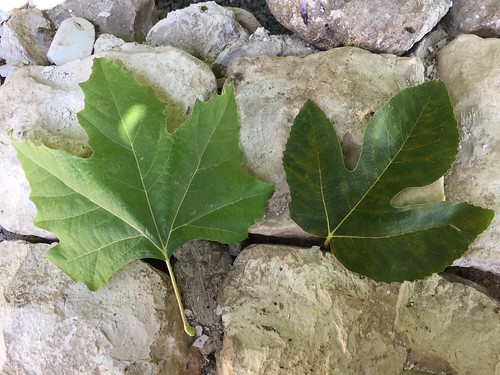
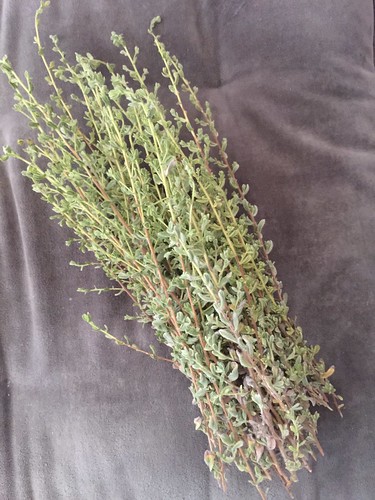
I began by soaking organic uncultured grapes in wine from the local vintner, and then set off to pound all the herbs I picked in the mortar and pestle. If you can recognize any of them in the pictures, and post a comment - you will be entered to win a little jar of my local Kyphi once it is made! It ended up very green and balsamic smelling, and with energy that is very vibrant and sweet, not unlike the Venus incense pastilles I made last year.
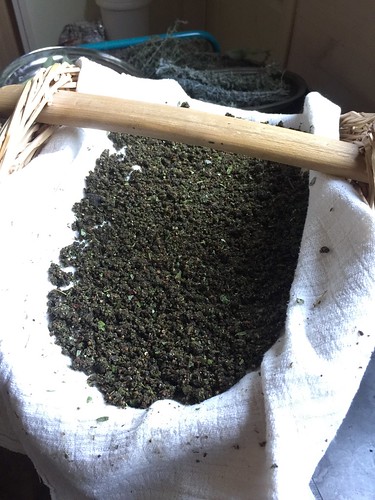
Local Kyphi in the Drying Basket
Here it is drying in a basket layered with a gauze fabric (okay, more like an antiquated baby diaper, remember those days? If you do then you're either very old or getting there!).

Labels: , , , , , , , ,

Tuesday, May 15, 2018

Fig Incense

Maple & Fig

With all the heat waves I've survived in the past couple of years, my Philosykos is beginning to dwindle down. So, I have decided to seek out a new fig fragrance. I love Philosykos, a green fig fragrance that is very refreshing in hot weather. Like wading in a cool pebbled stream, and enjoying the shade of fig trees and towering oleander bushes. It lasts very briefly, and so I thought why not get a stronger fig scent?

Premier Figuier was created in 1994, and was not only the first fig fragrance, but also one of the first by Olivia Giacobetti (the year prior to that she debuted her career with Petit Guerlain and Eau de l'Artisan). I have a sample of this first fig, and always liked it but not enough to purchase a bottle: it's milky, coconut and powdery and lasts even less than Philosykos (which is also by Giacobetti, and very light, which is excellent quality for summertime, but also limits it to this season for me). The latter has an Eau de Parfum version that is wonderful and longer lasting, but simply not available around this part of the world; and so when I stumbled upon Premier Figuier Extrême in the website of the nearest perfume boutique, I decided to purchase it unsniffed (the actual location near me didn't have it, so that's why I didn't smell it first). When it arrived, I immediately had a buyer's regret, because I should have known better than to purchase something with a similar name to something I like and expect it to end up well. I decided to pick up the scent, not open it, and go to the boutique that is a little more far away and sniff them side by side.

But, of course, I couldn't not open a bottle of new perfume sitting on my desk. So I undressed the box from its cellophane wrap, released the bottle from its carton embrace and spritzed just teeny tiny bit on one wrist. Well, this is neither smelling like Premier Figuier; not like fig of any shape for that matter. Instead, I got this exotic whiff of the spice market, a swirl of incense and maybe some crushed fig leaves very far in the backdrop. To replace Philosykos clearly it can't. Nevertheless, I was intrigued.

Hội An, Vietnam

Premier Figuier Extrême begins with a trail of delicate incense smoke, intertwined with spicy-floral undercurrent. It is dry and warm, yet also soft and sweet-balsamic (I am smelling Peru balsam to be more specific). There is a surprising smokiness to it that brings to mind Dzing! or perhaps Tea for Two (also by Giacobetti, who must have some kind of a signature I am yet to decipher), and much less of the powderiness of the original with its coconut note which I found distracting and a bit too soapy and watery-aldehydic. While the two are marketed as different concentrations of the same theme (Eau de Toilette and Eau de Parfum), and share almost all of the notes (minus the asafoetida note in the original), such as almond milk, coconut, sandalwood, fig leaf, dried fruit and fig wood - I find them to be almost as different as night and day: PF is watery, thin and luminous, with abstracts hints to the milky latex that streams out of the young tree. It is not even quite a tree yet, but a sapling that grows by the water stream, with the cool watery air coming off the wet pebbles.

PFE is rather expansive, surprisingly full-bodied and with a sultry, sulphuric air to it, and I am wondering if this is part of the allusion to the fig fruit. This makes me wonder if the asafoetida note is not wrongly listed and actually belongs to the Extrême. It is mentioned this way on Fragrantica.
It is not so much like ripe figs (and definitely not purple!) as stated in some of the copy writing, but more of a conceptual perfume, an interpretation of an interpretation. I imagine the perfumer revisiting her creation almost a decade later to tweak and upgrade the formulation to make it longer lasting - and gets carried away creating a completely new (and improved!) interpretation of the fig theme. This time the fruit is ripe, rich, full and the tree it grows from has matured to have thick, huggable trunk and more sturdy branches. It has become a home to several song birds and gives enough shade to rest under and cool off, even though it's not even close to any body of water. On the contrary: Maybe someone is burning a fire near it, and roasting some summer fruit on its flames.

There is the aspect of contrasting textures, also, which is what I find most intriguing about this scent. There is the feeling of being surrounded by fine incense smoke, and at the same time a bracing touch of bumpy fresh fig leaf. A delicate, powdery, almost honeyed sweet floral haze and also the pulling apart of fruit to reveal its minuscule slimy tentacles inside. The polished dusty feel of a silvery fig tree trunk, and at the same time the oozing white milky watery sap.

All in all, I'm pleased to say this has turned into an intriguing blind purchase which I'm happy to embrace into my collection and wear in this strange late spring, which keeps jumping from one extreme to the next: thunderstorms and humid cold rainy days, followed by hot dry desert winds, and replaced again by muggy humid days and more showers sprinkled in between. It's light-textured yet rich with nuances and I'm happy to discover different things within it in both cooler and warmer days.
Top notes: Fig Tree Leaves, Gorse Bush Flowers, Smoky & Sulfur Notes 
Heart notes: Almond Milk, Figs, Sandalwood
Base notes: Coconut Milk, Dried Fruit Notes, Stone Pine, Incense

A word about comparative sniffing: When trying something blind for the first time and without any preconceived ideas, you have the advantage of being able to form an impression that is free of opinions, marketing intentions and other biases. If I was to be told "this is a fig fragrance", on the other hand, I would be looking for the fig and finding it thanks to the power of suggestion. It is a bit tricky to compare similar fragrances side by side. It may be an excellent exercise for a professional perfumer or a perfumery student trying to refine their olfactory discerning abilities. But for  a layperson just trying to find a scene they enjoy, this can be utterly confusing and totally ruin the fun. Instead of smelling it for what it is, you smell it in comparison to something else that it is "supposed" to be similar to. And by doing so, what happens is that you find less of what you were expecting to find, and if that was what you're after - and don't find it - this is a sure method to feel disappointed.


Labels: , , , , , , ,

Monday, August 14, 2017

Varthemia

כתלה חריפה Chiliadenus iphionoides

Sharp Varthemia (Chiliadenus iphionoides), or in Hebrew Ktela Harifa (כתלה חריפה) likes to grow inside rocks and has the most incredibly resinous, rustic, complex aroma. It truly is like a complete perfume all of its own, exemplifying what Garriague and Chypre are all about.

Sharp Vartehmia

I've stumbled upon this plant by chance, first near Keshet Cave in Park Adamit near the Lebanese border. A beautiful place with gorgeous view. It was one of two aromatic plants i was unable to identify, but intuitively knew they are both of medicinal and aesthetic value. I later found Varthemia on the mountain above my house. But it wasn't until I saw Yonat HaMidbar post about it and rave about its lovely perfume that I was able to identify the plant (it was never in bloom when I saw it, and it's near impossible to ID plants when they are not in bloom).

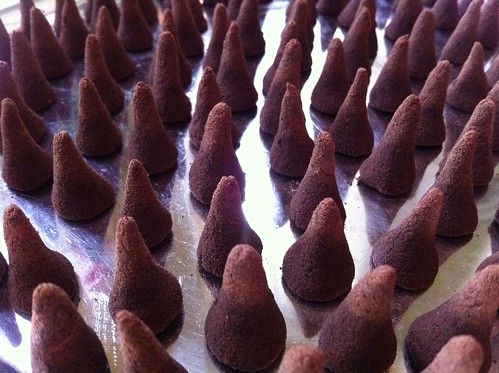
Vartehmia Incense Cones

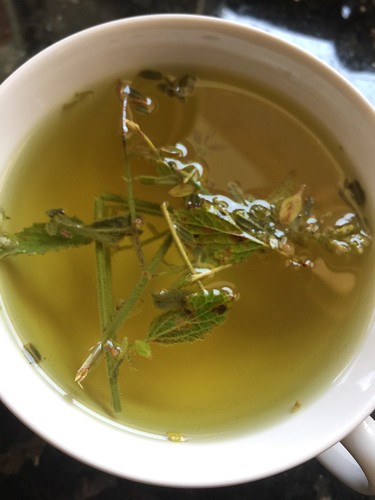
Shortly after I was not only inspired to finally make incense cones out of it, but also studied some of the medicinal properties of it. Among others, it is good for heart problems and diabetes - and seems like a very gentle herb to enjoy in tea (as long as it's not overly done). I picked some for a friend who just had a heart attack, and figured my own heart could benefit from it too. So I've been sipping a lot of vartehmia. marrubium and white mint tea. A lovely combination, and feels to be soothing both the heart and the soul.

Heart Soothing Tea

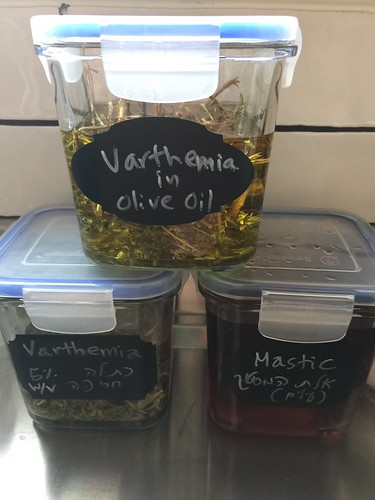
Infusions

My next adventure with vartehmia is infusing it in both alcohol and olive oil. From the olive oil I will make a single-note vartehmia soap (I will also have it brewed into tea for the water component of the soap making process, so that it is as naturally fragrant as possible). From the alcohol infusion, which turned out beautifully resinous and rich, I've created a rustic, garrigue-inspired amber perfume, which I am debating if you launch this fall or not. It's a further development of an old, old, old formula that was almost sickeningly sweet because the amber base in it wasn't my own and I am quite certain contained some artificial molecules. Frankly, that base smelled more like an ambreine accord. The perfume I made with it included a touch oregano that balanced this sweetness to some degree, but not enough. I want the new perfume to be more authentic and local, and use my own herbal infusions in it - but without taking away from the luxurious character of the perfume. It is very different from the original, and surprisingly has a bit of the Espionage DNA to it - even there is nothing smoky about it. Must be the ambreine accord (which, FYI, is the core of Shalimar, Emeraude and the like). 

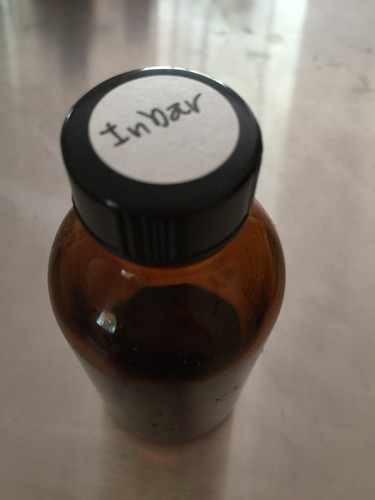
Inbar


Labels: , , , , , , , , , , , , , ,

Thursday, December 24, 2015

Incense Through the Ages

Smouldering Incense & Perfumes
It's winter. The most glorious season in Canada, where the energy is directed indoors, and focuses on social gatherings large and small. As usual, I'm an outsider peeking into what this is all about from the viewpoint of a traveller passing by. For, like, 17 years.

I am looking forward to the quite and solitude that tomorrow brings. For someone who grew up in Israel, it's funny to see how once a year, Canadians are experiencing the only tight-lid closure of stores and services. The rare sight observed today - of long, hectic lineups at the supermarkets and grocery stores, the traffic congestion, etc. are a weekly sight in Israel, where every Friday families stock up for a full day (gasp!) without shopping... I find it amusing.

One of my favourite things this time of year is walking in the West End (my neighbourhood  and home for my entire Canadian adventure) and coming across a waft of real, wood stove smoke. Am I the only human for whom the smell of pyrolysis stirs up strong emotions? I think not. It is at the same time a signal of danger in the forest, and the safety of the caveman's tribal bonfire.  No other recent can conjure so immediately and powerfully the feeling of freedom, adventure and coziness. It transports me to cozy nights with my family by the fireplace, my home village burning in a bush fire, and more recently - bonfires when camping in my imaginary gypsy tribe or spice caravan.

Come wintertime, and few things please me more than immerse myself in fragrant smoke. And I'm not alone - incense, and in particular - frankincense and myrrh, from the desert trees which grow wild and are cultivated in Southern Arabian peninsula and West Africa is a symbol of the Nativity Scene and is burnt in many Churches. Beginning with some basics, just straight-up burning of substances in their raw form, preferably on hot charcoals: white sage, leaves and twigs of redcedar, frankincense tears and sticks of palo santo (that tend to self-extiniguish repeatedly...). And then to some wonderful Egyptian Kyphi - a concoction that is my own modern spin on the ancient recipe. Although not accurate, it is done according to the technique and the scholarly deciphering of its original 16 ingredients. It may not be accurate, but I can attest to its fragrant heavenliness and ability to banish the worries of the day - which is what Kyphi is all about...

Dabney Rose's modern Kyphi

I've been blessed with wonderful incense friends, who generously send me their incense creations. Above you can see Dabney Rose's version of Kyphi, in 3 different "flavours" (from top to bottom): Soliliguy, Févriér Amour and Winter Sleep (Conifer). They are made very differently from mine, which is granular and is meant to be sprinkled on the hot coal. Rather, after the ingredients have been pounded into a more-or-less uniform level, they've been shaped into little "candies", and one is meant to break off little pieces to place on the hot charcoal, or on a mica plate. Although the shapes are adorable, I am wondering about the extra work required both by the incense maker (who needs to put a ton of effort into each piece!), and the user - who needs to break off the piece from a very hard piece of re-bound resins. Perhaps I am missing something in the process or the technique. It sure would make for an interesting ritual if there was a special knife that would cut through these elegantly.

But what truly matters, more than shape or form, is the scent itself. And in deep winter Winter Sleep is a most befitting incense to burn. It's a wonderful way to celebrate Winter Solstice; and once the celebrations are over -  to rejuvenate and counter the winter blues that tends to follow the over-partying or maybe just feeling left out after
The name is a bit misleading though: it's actually a great way to wake up from winter hibernation! The elegant incense candy smells like juniper, spruce needles and pinon pine, and it reminds me of a crisp winter walk in a snow-covered coniferous forest. When it's burning, I'm smelling primarily myrrh, but also the resinous coniferous notes and a sweet-balsamic after-note.

Another favourite of mine to burn at this time of year is Ross Urrere's "Ocean of Night" loose incense that look like kohl or charcoal with bits of woods and oakmoss strewn in. Ocean of Night is a rich, luxurious, ambery-balsamic yet floral blend that is very perfumey. It reminds me of the floral Russian and Greek Church incense, yet without the unpleasant synthetic aftertaste these have. It's like an incense version of Nuit de Noël!

Curious to explore more incense-themed perfumes - check out my Christmas 2015 Newsletter: Smouldering Incense Gift Guide.

Labels: , , , , , , , , ,

Wednesday, December 31, 2014

Reflections on a Year Gone By


It's the last day of the year, which means that it's legitimate to look back and reflect on yet another year that has gone by. On a personal level, it was a great year (considering 2013 was a year from hell,  even though I didn't quite put it that way publicly - this is not exactly surprising).
On a global level, however, in 2014 it seems like all hell has broken loose and the only reason we don't think of ourselves as in the midst of a 3rd world war is probably because no one is brave enough to call it what it is. But I digress. You're not visiting this blog to be reminded of what kind of an awful world we live in. You are more likely here searching for refuge from all those realistic nightmares.

Well, a lot of good things happened in the world of scent; most of them I was too oblivious to notice or pay attention to so you won't be finding too many surprises in my "list" for the fragrant highlights of 2014.

This year I was absorbed in recovery from the awful year prior, and with a renewed boost of energy, I've been tackling all fronts of my business - trying to reach out and teach classes and courses in more places, re-doing a website, narrowing my collection, writing a book, and teaching a lot. All those things, which in the year prior seemed to have a big question mark hovering over them, have found a new meaning in my life and a new sense of excitement and purpose which in the year prior I was really worried will never return to me. But I've been also integrating a lot of my passions and knowledge and experience (both gruesome and positive) leading to a new direction that I feel serves a higher purpose. It will all unfold and make sense as I progress in my studies, art and life experiences. One big thing that occupied me personally and was part of what some like to call "personal growth" has been learning to become a Pilates instructor. I know this seems completely unrelated to perfumery for an outside observer. But to me all those things - working with breath, body, awareness and within the flow and rhythm of life - are all part of the same thing for me. And I don't believe I was born to do just one thing. With that being said, I'm now able to be much more focused, with a much clearer sense of priorities and
Year of the Book: 
This year was dedicated to completing my book, which was in the works (AKA planning and procrastinating, and dreading the intense process that writing a book involves). Somehow, despite the fact that I lost nearly 2 months of work due to the teacher's strike, not to mention many nights of sleep of the yet-another-unnecessary war in Israel and Palestine - I was able to finish it. And I want to thank once again all the people who were involved in the process: Terry Sunderland, graphic designer extraordinaire, Shauna Rudd, superb copy editor and proofreader, Schuyler Corry, proofreader and contributor of some of the chemistry terms in the glossary; and David Shumaker for proofreading some 3 years ago when I started working on this 3rd edition of the book; and last but not least to the Taly and Yitzhak Ginsberg, who thanks to them I actually went ahead with being self-published as well as for pointing me to the right direction to turn my manuscript into a eBook (you'll hear about that soon enough).

Thank you so much for helping me make my dream come true and become a published author!

And - More Books:
This has been a great year for perfume related books. I've mentioned two of them here, the anthology of scented poems The Book of Scented Things, edited by Jehanne Dubrow and Lindsay Lusby; and Mandy Aftel's new book Fragrant. There is always more to learn, and it's wonderful to see more books published that pertain to the world of scent. It's all part of keeping this rare art alive!

New Perfume Love: 
Au Delà - Narcisse des Montagnes by Bruno Fazzolari.
This limited edition "flanker" of sorts to the perfume Au Delà is even more beautiful than the original. I will write about it in more depth in the coming week - a beautiful ambery floral with Chypre nuances, that was accompanied by a breathtaking screen print, signed by the artist.
Mainstream Surprise: 
Narciso by Narciso Rodriguez
While I can't say I thoroughly tested even a fraction of the many mainstream perfumes released this year to justifiably crown this the "best" of the year - I did purchase a bottle, and it did not feel like it was a whim at the time. This perfume is full of surprises, much more than the original scent from this brand. In all aspects of design (including packaging) there is elegant simplicity in this release, yet intrigue and originality. It's been a while since I was able to say that about any department store fragrance.
Vintage Discovery: 
Diorella. What a delight to have found a 220 mL (!) of the original, vintage Diorella on a certain auction site. I've been splashing it lavishly in the summer, and looking forward to much more of the same as soon as the spring bulbs and buds begin to open again.

The 180: 
Aromatics Elixir
If you haven't seen much new perfume reviews on my blog, it's because I've been dousing myself quite regularly with this (previously under appreciated by me) bombshell. I used to think of it as way too strong. It wasn't until I blind-purchased a bottle of the Perfumer's Reserve (also via the above mentioned auction site), and discovered to my horror that there's far too much white musk in it; that I just HAD to re-examine the original. I only purchased a tiny spray bottle of it, but a little is all you need, and goes a looong way. There is something about that

Thank You Hermes For Not Disappointing: 
First of all, Epice Marine FINALLY arrived in the Vancouver boutique many months after it should have. And I did enjoy it quite a bit (yet not quite enough yet to purchase a bottle). Cuir d'Ange, on the other hand, arrived in time (or maybe it didn't, but I didn't really expect it), and turns to be a very interesting sheer leather. Samples are still unavailable which is why I haven't written a review yet. It's not earth shattering, but I'm always happy to welcome a new leather kid into my world.

Natural Intrigue: 
Palimpset by Aftelier. There are many offerings in the natural world that I am yet to try. But I was immediately smitten with both Cuir Gardenia and Palimpset, the two new creations of this year by Mandy Aftel. While I'm more likely to wear Cuir Gardenia frequently - Palimpset is the more original, intriguing and unusual. Built around the rare, unusual and difficult to work with Fire Tree oil from Australia - it has an outstanding longevity (I believe the sample I received from Aftelier is the parfum concentration in alcohol base). The opening is very effervescent and citrusy, almost like wild orange, sweetly fruity but not overtly so - then continues to develop into an utterly floral yet woody perfume, with the Fire Tree note weaves in and out while being supported. It's exotic and wonderful. I just received it yesterday, and am planning to post full review of this (and Cuir Gardenia) in the upcoming days.

Incense: 
The new incense cones by Persephenie.
They come in several fragrances, and all burn fantastically well, without leaving any "off note". Original blends, yet with a very strong connection to spiritual rituals from around the world. They are beautifully hand-shaped, and rolled in an outer coating of herbs that adds a visual element to the experience, rich in both colour and texture.

Tea: 
Those who know me well, are concerned about my ever-expanding collections of teas, spices, perfumes, cookbooks, and of course raw materials. Well, this year I have been pretty good about finishing up a lot of the teas I have and narrowing down my favourites to a more workable and manageable scenario (for the sake of my kitchen counter and shelves). Although I won't pretend I don't have excess of teas still, and need to run out of a lot before purchasing anything new; I am quite proud to say I know which teas I love and I am happy to just keep drinking a handful of them and stop feeling the urge to collect them. Some things lend themselves very badly to collecting, and tea is one of them. They just lose flavour after a while... I'm proud to announce, that as long as I have one good black tea (darjeeling, Assam or a cask-aged Ghorka, for instance - for versatile use anywhere from plain black tea, to that adorned with fresh sprigs of mint, or ensembles into a chai), Cream Earl Grey, and either a robust rooibos or a Thai Tea for its almost coconutty aroma, some kind of a good quality green tea (i.e. matcha powder or jasmine) and a Milky Oolong - I'm pretty happy. That's not a lot, right? Of course I also have a kid with her own favourites, usually flavoured teas or a green tea. But that's just extra fun. With a little help from our friends,  I think we're going to have a pretty clear tea shelf by the end of 2015. But in all honesty, what we've been drinking almost every other morning has been chai in a base of almond milk. We make it very simple, because there is no time in the morning to blend too many spices - just some black tea, some cardamom and cinnamon, freshly diced ginger and honey. Blame it on my daughter. It's her idea.

Sweet Tooth:
Persephenie's Salty Jasmine Candies, and my own Oud Truffles, if I may say so myself.

Skincare Product:
It's a well known "secret" that I'm a sucker for anything rosy smelling on my face. My skincare regime is as simple as could be, and includes only two products: floral hydrosol (usually rose, or orange blossom) spritzed on the face, followed by a moisturizer - usually just my own facial elixir. Everyone once in a while I make an exception - but it has to be for something exceptional. Usually it's Persephenie's excellent Rose Pakka. This year I was ogling her new offering for the face - Saffron Rose Face Oil, which is a pure and nourishing facial serum. The makeup of oils shares some common elements with my Elixir (tea seed oil, sea buckthorn oil, carrot seed and rose oils) and the rest is all sheer goodness, as always with Persephenie's creations. I've received it in the mail today and it did not disappoint. It's practically the facial version of my Song of Songs anointing body oil. I'm in a facial New Year's heaven!

Body Product:
Bedouin dry oil by Persephenie. All of Persephenie's body products are top-notch. Bedouin was my favourite scent by Persephenie, but is no longer in production. That's why it was particularly delightful to find out that it is now available as a dry oil - a very lightweight, sheer oil that can be sprayed on either body or hair. Roses and cardamom. Mmm...

Discovery of the Year:
Dabney Rose's extraits and pommades are nothing short of magic. I've experienced her hyacinth extrait, tuberose pommade and ginger lily pommade (the latter are made in a coconut oil base) - all grown in her own garden and hothouse. These beautifully and lovingly crafted pure single note essences are made in the old technique of enfleruage, modernized by an innovative vegan base. Dabney's work is akin to capturing butterflies inside hot resin and keeping them alive and intact even after they've exhaled their last breath... It may sound too good to be true... But it is the most truthful portrait of the living flower if there ever was one.  In other words: alchemy at its best.

Raw Material of the Year: 
Narcissus Absolute. I've been obsessing over it while creating Narkiss, and (great minds think alike!) in Bruno Fazzolari's newest perfume.
Need I say more?


Labels: , , , , , , , , , , , , , , , , , ,

Wednesday, November 06, 2013

Chypre Birds

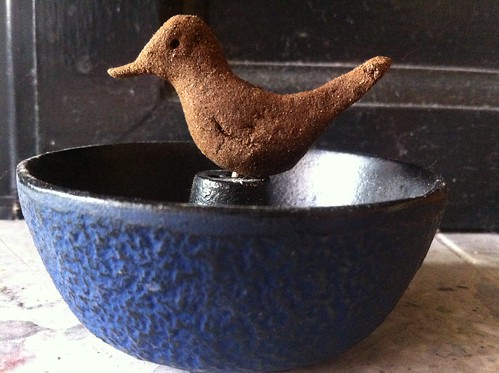
Chypre Bird by Ayala Moriel
Chypre Bird, a photo by Ayala Moriel on Flickr.
Oyselets de Chypre ("chypre birds") historically preceded chypre perfumes. Made of a mixture of herbs and resins (labdanum, styrax, calamus) and glued together with gum tragacanth - they were place in homes as potpourri, or burnt for fumigating the space. They became popular in Europe after the crusaders arrived in the island of Cyprus (in the 12th century), and didn't turn into an alcohol-based "Eau de Chypre" till the 14th century - way before Coty's Chypre (1917).

In my Chypre course a couple of years ago, I've tried to retrace the steps of making Oyselets de Chypre based on this very vague information. We've used gum arabic as the binder to put together Mediterranean aromatics such as labdanum resin, sage, dried rose petals, calamus and patchouli. The material was difficult to work with and the gum arabic was not sticky enough to hold the shapes together. So only one student was able to make hers to look like a bird... The rest of the students left their "chypre balls" behind, in much frustration. Such is the life of the experimenting perfumer... Not all formulas work!

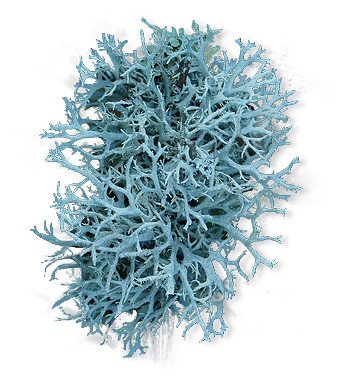
Oakmoss (Evernia prunastri)

2 years later, I've decided to go back to those balls (which, by the way, make wonderful sachets to scent linens, stationary or drawers). I also had some left over powder of the herbs we mixed together before we added the water. I've decided to add a more reliable binder, as well as neroli water and a two other off-beat ingredients: a piece of dried oakmoss lichen, and a crumpled cigar.

Chypre Tobacco Incense Paste

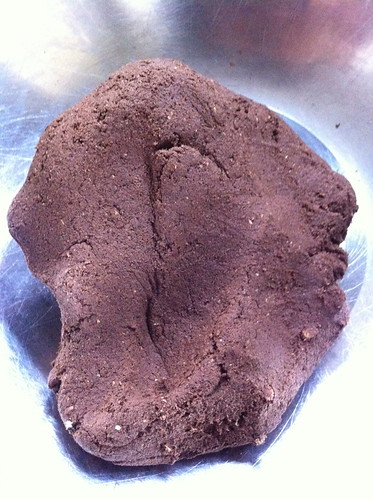
Working with the material was like working with wet clay, and smelled similar - wet and earthy, and a little like a wet cigarette. After a bit of molding, it dries on the fingers and personally makes me rather uncomfortable - itchy between my fingers and impatient to get on with the task... So I took a little break before I was able to go through the entire batch of "clay" (I covered the "clay" with plastic wrap to prevent it from drying).

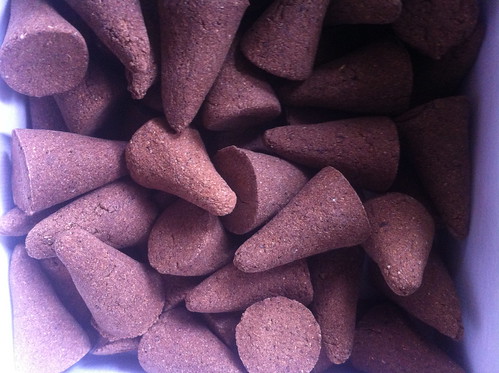
Drying Chypre Tobacco Incense Cones

Once I shaped most of the paste into little incense cones, I made one shaped like a bird. Just for fun, and decoration. The incense is a mistake that turned into a happy accident: the oakmoss and tobacco in it really do the trick and make it smell wonderful... Assertive, woody, dry, masculine and smoky in a good way. I wish I could turn this into a perfume. It's kind of like how the moss Poivre Samarcand smells like underneath all the pepper. Truly wonderful stuff, and if my witch doctor is right, the tobacco helps to protect, encourage confidence and push away any negativity you don't need in your life.

If you want to learn how to make incense, you can book incense-cone making workshop with me (up to 6 people), or you can also learn how to make Egyptian Kyphi. 


Labels: , , , , , ,

Tuesday, October 29, 2013

The Making (and re-making) of Song of Songs Incense Cones

Song of Songs perfume is made from ancient resins, so conceptually, it lends itself easily to an incense form.

I've blended together labdanum resin (a sticky paste, resembling tar), sandalwood, agarwood, frankincense, myrrh and rose petals to make this incense. I've even went the length of forming it with a little cone mold (this was the 4th batch of incense cones I've made, and I wanted the cones to be pretty, solid and uniform). And they sure were all of that!

However, the high ratio of resins created a serious technical problem: the incense would not burn through. That's no joke. You can't enjoy incense if it doesn't get consumed by the ember. The heat is what transfors its organic fragrant matter into smouldering smoke-perfume.

To fix this problem would have required breaking down all the beautiful cones, and adjusting the formula to add more woods that will help it burn through. This was not something I was excited about doing. So I put it aside for a long time. And even then, there is no way of guaranteeing that the formula will work (meaning: it might take more than one time of forming, drying, testing and breaking down again...). Not something I was looking forward to do.

Once I mustered the amount of willingness for this sisyphal work (which took a few good years, to be perfectly honest), I've done just that. This time I shaped them smaller, and all by hand again. They may not be as perfectly uniform as they were before; but at least they are funcitonal!

I'm burning one of these labour-intense cones as I type this. There is a bit of hit-and-miss in terms of how even it burns (some of the incense spots were not completely ground and they kinda block the ember). But it's ten times better than before.

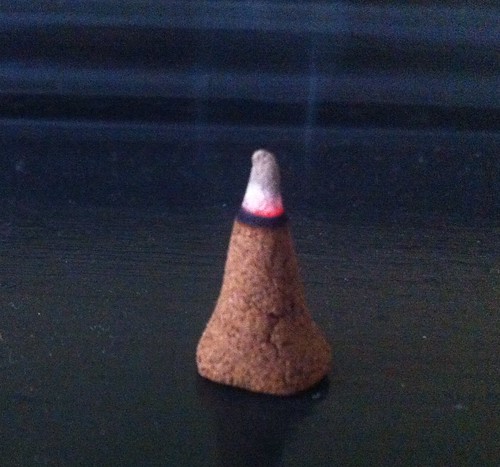
Burning Incense Cone

As the ember consumes my little cone, it unleashes smoke that bring to mind ancient rituals from the beginning of mankind. While the perfume Song of Songs is utterly sensual, incense smoke is purely spiritual, assisting the soul to transcend above matter, and connecting one's breath to the beating heart at the depths of the dark waters of creation.

Labels: , , , ,

Wednesday, May 22, 2013

Patchouli Magique


The lovely Muza has generously sent me samples to enjoy, including Russian perfumes which I have never been exposed to. It's wonderful to explore fragrances that I don't normally have access to. And among them, Patchouli Magique immediately grabbed my attention. If it wasn't for this, I would have continued to believe that the prime purpose of perfume in Russia is a vodka back-up.

Patchouli Magique is not a Bolshevik perfume. I'm still stumbling to find out when it was actually created - before or after the revolution or the perestroika or whatever the crumbling of the Soviet Union is referred to. All I know is that it's a fine patchouli fragrance that won't put to shame even the most niche houses out there. I wish I had it earlier when I was running the patchouli series - consider this a latecomer to the patchouli party!

Patchouli Magique enveloped me in a plush wrap made of soft yet rustic fabric. Like a hand-woven alpaca poncho. Or a woolen Russian scarf for that matter, with big roses printed all over it. Patchouli Magique is indeed magical - it's soothing yet sophisticated. Welcoming you with warm earthy notes of dry patchouli leaves; yet develops into warmer, sweeter notes of aged patchouli mingled with amber and sensuous musk. And a trail of sweet incense smoke weaves its way through - not the heavy resinous church incense; but rather a blend of sandalwood and flowers, reminiscent of the famous Nag Champa. Patchouli Magique is a delightful discovery in the patchouli genre, and is unusual in that it is simultaneously luxurious and sophisticated yet easy to wear and not in the least pretentious or overbearing. Being centred around a base note, its structure is not nearly as complex as classic French perfumes and such; but it is still dynamic rather than static; and provides something to ponder upon as you just immerse yourself in all those alluring notes and surrender to their powerful yet quiet beauty.

Patchouli Magique is made by Novaya Zarya, and being Russian, there got to be some fascinating history behind this house: originally Henri Brocard's company (a French perfumer that moved his business to Russia)*, it was renamed "Soap and Perfumery Factory No. 5" in 1917 (after the revolution); and then "Novaya Zarya (New Dawn) in 1922, under which title they first released Krasnaya Moskva (Red Moscow) - the first Soviet perfume.

* The story of this brand is kinda like the reverse of Ernest Beaux, whose family's perfume business, A. Rallet&Co. before the revolution; and "Soap and Perfumery Factory No. 7" in 1918, and eventually - Svoboda (Freedom)

Labels: , , , , , , ,

Saturday, April 13, 2013

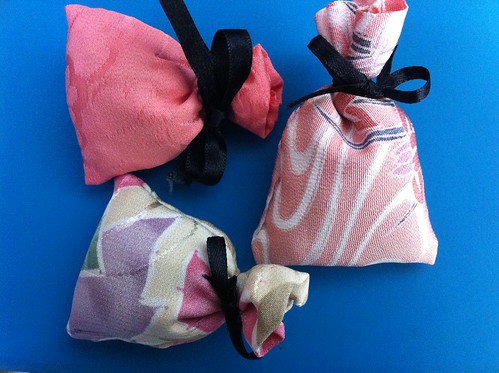
Hanami Sachets

Hanami Sachets by Ayala Moriel
Hanami Sachets, a photo by Ayala Moriel on Flickr.
It only took me 2 years from when I received these incredible fabrics (vintage kimono silk) from Japan, to actually making and filling them.

They are hand-stitched (I still need to sew a few more), so very labour intense - a labour of love, if you will. But that's not the true reason for my procrastination. I just did not know what to fill them with!

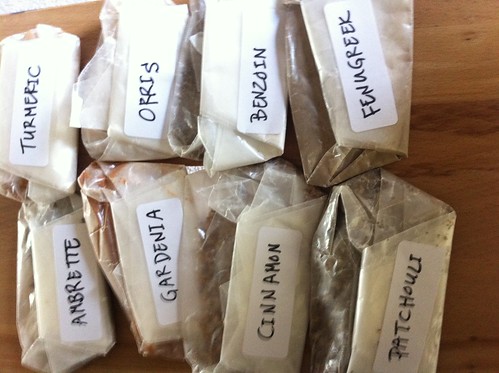
The solution was partly serendipity, and partly luck. On my last day in Berkeley, I visited Yuko Fukami. She generously gifted me with high-quality Japanese herbs, spices and resins that she in turn received from our mutual friend Ross Urrere. In true Japanese fashion, she beautifully wrapped them with wax-paper, similar to how a TCM (Traditional Chinese Medicine) doctor packages his custom-dosed powdered "herbs" (for all I know, these can range from true herbs and plant matter to minerals and crushed sea-horses, tiger bones, dragon's tails and other mythical creatures body parts).

Japanese Spices, Herbs & Resins
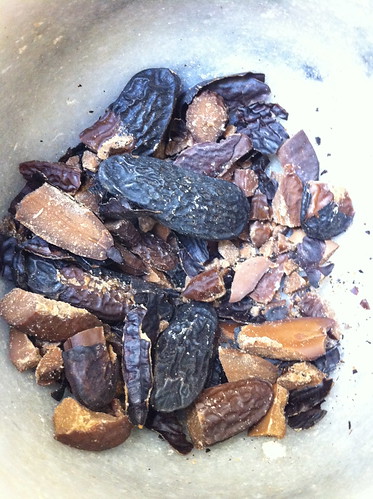
Upon my return to Vancouver, I immediately set to mix together these glorious components, as well as some of my own stashed-away botanicals: dried ume (Japanese sour plum) blossoms, whole tonka beans, and others that for now will remain secret. Crushing the tonka beans with a marble set of mortar-and-pestle was a truly sensual experience. Although there is mostly coumarin in tonka, there is also something else that is nutty and spectacular that you just don't get from the isolate/synthetic molecule alone. I love it! French chefs grate it on microplane and add to chocolate desserts (ganaches, macarons, ice-creams...). In North America it is illegal to use it due to carcinogenic effects. Personally, I think that we are exposed to far more dangerous carcinogens in daily life (your seemingly innocent ink on your grocery receipts has a plastic that is highly carcinogenic, as are most cans used to preserve foods). So I don't feel bad at all making myself a tonka-dessert once in a blue moon.

Crushed Tonka Beans
The sachets were supposed to be a studio-exclusive for my Hanami tea party. Unfortunately, we had to cancel it and will host it either in early May, or next year... So you can now get them online on my virtual boutique. These are very limited edition - I only have enough fabrics and filling for 12 sachets.

The Japanese used incense and sachets just like that to scent their kimonos and stationary so that they will be recognized for their good taste by their lovers (or suiters)... Use these sachets to scent your lingerie drawer, linen closet or stationary. You can also throw it in your suitcase when traveling, or tuck into a wool sweater or jacket's pocket for a lingering scent and to keep moths at bay.

Labels: , , , , , , , , , , ,

Sunday, January 29, 2012

Aphrodisac of the Day: Frankincense

frankincense tree by Alexbip
frankincense tree, a photo by Alexbip on Flickr.

In the Aphrodisiac of the Day series leading to Valentine's Day 2012, I present to you some of the easier to find aphrodisiacs and suggest creative and fun (as well as safe!) uses for your own amusement and pleasure. I'm also attempting to bring them in alphabetical order, and because there isn't all that much time I will only bring one of each letter (even though, there are more aphrodisiacs beginning with "C" than I can possibly cover here this year: I've already told you about Cardamom, but there are other domestic spices such as cinnamon, cumin, cloves, and the more exotic civet and costus root). Since I can't find anything beginning with "D" that I know enough about from first hand experience (there is damiana, which I know little of) - I'll jump straight to F and talk about frankincense. The name is derived from "Franc" (Medieval French for "Free") and "Incensum" (Latin for "to kindle"). Olibanum, the more ancient name for it is derived from the Hebrew name "Levonah".


Frankincense (Boswellia carteri) is a small tree or large shrub that grows wild in the deserts of Arabia near the Red Sea (in Yemen and Oman, where the best quality comes from), most of which is used by the Arab world. The next best quality of frankincense comes from Somalia and Somaliland, from which most of the essential oils and so-called absolutes of frankincense are processed for perfumery and aromatherapy purposes. Arabian frankincense is harvested from the wild by Bedouins (the nomadic tribes of the desert), who will induce more resin by placing incisions in the tree trunks and branches. The tree will exude a milky liquid that quickly resinifies into yellow, white and golden amber resins ranging in size from pea to a walnut. These are broken off the branches or collected from the ground underneath the trees.

Indian frankincense (Boswellia serrata) has a similar odour and has been used in Ayurveda "treating arthritis, healing wounds, strengthening the female hormone system, and purifying the atmosphere from undesirable germs" (Wikipedia). It's also considered helpful for respiratory conditions and even asthma.
Frankincense
The resin looks like precious gold, and smells like drops of sun and its texture is redolent of the dry desert where it came from: It is often a little dusty - partly from the broken resin itself, and party from the desert earth itself. It has a freshness to it alongside a balsamic, heavy, exotic perfume. The scent is fresh-citrusy (from limonene), woody-conifer (from the pinene) and spicy-peppery (from the phellandrene content). But above all, it possesses a richness that is unlike other, and unfortunately does not translate nearly as well into the essential oil, which is more light, fleeting and orangy-lemony in feel with a slightly powdery woody oriental finish.

The best of frankincense comes through once its burned as an incense. Placed directly on hot charcoal or embers (nestled in a heat-proof censer, of course), the resins and gums dissolves and release the true aroma of frankincense, without any “burnt” incense after notes. If you’ve ever entered an ancient church such as the Church of Holy Sepulchre or the Notre-Dame, whose walls are infused with prayers and incense smoke of hundreds of years - you know what I’m talking about… It brings the mind an instant calm and contemplative state that is most suitable for prayer and meditation, but also for other things…

Although not exactly as easy to find as culinary spices, you can find frankincense in most church supply shops - either on its own, or with various other resins and herbs. I suggest you stick to pure frankincense, and while you're there - you might as well pick up some myrrh resin and benzoin (which is a dried balsam), and charcoal to burn them on. This is the simplest, purest loose incense and if you are not objected to smouldering your habitat with thick, aromatic smoke - this might be the beginning of a very fine journey that will connect you to incense burning traditions as ancient as the world's first civilization (myrrh and frankincense were the first burning perfumes, remnants of which were found in ruins of ancient Sumer).

Don't let the religious associations of these resins "turn you off". The reason they were used in religious rituals since the dawn of civilization is because of their immensely powerful effect on the mind, body and soul. Their powerful effects were hardly researched until quite recently. For example: Boswellic acid, one of the main constituents in frankincense resin and oil has therapeutic properties was found to have anti-inflammatory properties and even cancer-fighting potential. But more relevant to our aphrodisiac topic, is the 2008 research by Johns Hopkins University and the Hebrew University in Jerusalem that found incensole acetate to reduce stress levels in mice.

Priests, shamans and prophets of antiquity did not need mice to know that. They burned frankincense in ceremonies and temples since the beginning of human civilizations. Frankincense was 5 times more popular than myrrh in ancient Egypt. While myrrh was used in some perfume and incense preparations at this time - it is probably most known for its used in the mummification process and in medicine (a powerful analgesic). Frankincense enjoyed more versatile uses: it was burned at dawn to worship the sun-god Rah.

Frankincense is not your predictable aphrodisiac that stimulate and excite the superficial layers of passion. Instead, it works on a deeper level of our mind - calming it completely and connecting us to the spiritual part of our existence, or our soul, or whichever way you’d like to call it. And being connected to your soul can only do you good - especially in our time, when the modern life-style gives very little room for relaxation, contemplation and connecting with one’s inner self.

Aside from particular health conditions that might be associated with lowered libido, stress is probably the number 1 mood killer or “anti-aphrodisiacs”. With this in mind, it only makes sense that something that is relaxing and is not damaging in any other ways, can only help (unlike, for instance – wine – which can relax and increase libido but can also take away from the fun by having the completely opposite effect tby the end of the night; not to mention unsightly spider veins all over your face and other less desirable long-term side effects).

So if burning incense makes you happy – do it for your own sake, and also to improve your love life. If loose incense seems like too much trouble (it does require some skill and certain equipment) – opt for high-quality incense sticks such as Shoyeido’s Frankincense from their Gourmet series, and Diamond in the Jewel series.

If you’re not into any kind of smoke, you can enjoy the essential oil in a diffuser or in a bath alone (as few as 5 drops of frankincense will be more than enough for a relaxing bath) or in a 30ml (2 Tbs) massage oil base (such as: almond, avocado or grapeseed oil) blend with other beautiful and sweet smelling oils to enhance its aphrodisiac qualities:

Olibanum Sensual Massage Oil
4 drops Frankincense essential oil

1 drop Roman Chamomile essential oil
1 drop Cinnamon leaf oil
3 drops Neroli oil
5 drops Sweet Orange oil
1oz (30ml) or 2 Tbs almond, avocado or grapeseed oil

And last but not least – enjoy it in a tea! Mandy Aftel of Aftelier Perfumes created an innovative beverage - Frankincense GABA Oolong - that combines the best of both worlds – sensual, aromatic and with health benefits. Her hojary frankincense is hand-tinctured and infused into an organic oolong that is rich in GABA – a naturally occurring human neurotransmitter that brings calm and relaxation to the mind and the body. While the oolong itself is a little earthy, the frankincense adds a fine nuance of woods and hints of citrus and keeps opening up and unfolding as the tea leaf unfurl with recurrent steepings. As with most high-quality teas, and particularly oolongs, this tea can be re-infused and each cup will taste and smell differently – which makes it even more fun experience for the palate.

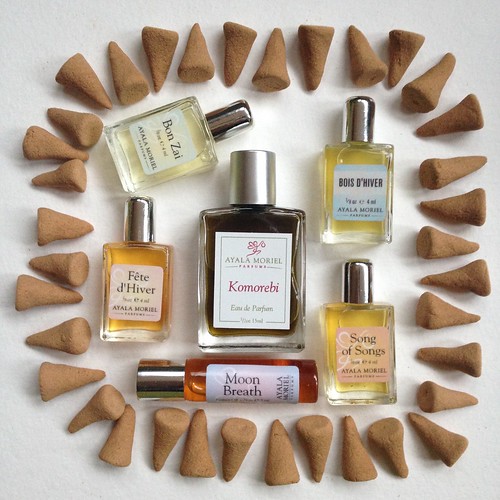
Aphrodisiac perfumes containing true frankincense oil: Arunima , Atlantic (Strange Invisible Perfumes), Avignon (Comme des Garcons), Carmel Bohême (Envoyage Perfumes), Encens Blanc (Rebel & Mercury) Fête d'Hiver (Ayala Moriel), Fire and Cream (Strange Invisible Perfume), Incense (Ava Luxe), Incense & Chocolate (Ayala Moriel OOAK perfume), Incense Pure (Sonoma Scent Studio), Mahjoun (Dawn Spencer Hurwitz), Marie Antoinette (JoAnne Bassett), Moon Breath (Ayala Moriel), Old Spice, Oud Luban (Aftelier), Rivertown Road (Soivhole), Song of Songs (Ayala Moriel).

Labels: , , , , , , ,

Saturday, November 12, 2011

Incense & Chocolate

Chocolate Smoke

The sensual world connects between the physical and the spiritual. It is with mindful observation of sight, touch, taste, sound and scent that we are able to connect to the world's divine beauty and discover the divinity that lies within us and pulsates through the universe.

Incense & Chocolate is a perfume that combines elements of two ancient rituals of offerings - burning of incense, and drinking a sacred beverage (hot cocoa, consecrated wine, etc.) as offering to the gods. In ancient Mexico, where chocolate originated, it used to be only the king who was allowed to drink cocoa, and otherwise it was offered to Quetzalcoatl, the god of cacao.

In our modern life, those little rituals that are often viewed as over-indulgences and are immersed in guilt, self criticism or worries about being judged by others - might in fact just be our little gesture towards our ancestors who were wiser than us with their choice of daily routines (for example: burn incense and meditate in the morning before checking their email... oh, wait, there was no email then!) and our way to connect to earth and ground ourselves in the modern world where almost everything turned virtual and disconnected reality.

Incense & Chocolate is a perfume that combines elements of two ancient rituals of offerings - burning of incense, and drinking a sacred beverage (hot cocoa, consecrated wine, etc.) as offering to the gods. I created it this summer, inspired by the two daily rituals I noticed have become important little moments each day: burning Japanese incense, which seems to calm me down and centre me, and savouring dark chocolate - that literally nourished my body, as well as my soul. I know it sounds very dramatic, but I really don't think I would have survived this summer without chocolate...

So exhale all your worries, uncork this bottle of magic and breath in the aroma of dark chocolate, olibanum, prehistoric fossilized amber resin and oud.

Incense & Chocolate is a One Of A Kind perfume - I created only one bottle of it, and the person who picks it first will be the only person I will create it for again in the future. It is bottled in our new EDP splash/spray bottles.

Labels: , , , , , ,

Tuesday, January 11, 2011

Snow & Incense


Snow, originally uploaded by homer250.

Greeting the cold air after Pilates class held a surprise for me - glittering snowflakes that kissed my face as I dashed home. Through an entire block of Bute, a thick scent emerged and kept changing, though remained true to the theme of smoldering incense.
Woodstove smoke -- hot candle wax -- incense -- burnt cedarwood -- overheated vintage perfume that was left too close to the central heating -- more incense smoke.
I live for moments of contrasts like this.And just to make things better, I crept out of bed in my nightgown and furry neck warmer to roll my first ball of fresh snow that piled up on my balcony.

Labels: , , ,

Friday, September 24, 2010

Fall Escapism: Champaca, Kyphi, Hiking and Chai

I'm burning Kyphi incense tonight, and it seems particularly befitting for the season. I've been "getting back to my roots" so to speak this week as I was teaching my intensive, week-long perfumery course focusing on the Oriental fragrance family. Kyphi is the most ancient perfume in the form of incense pellets - it combines about 16 different resins, spices and herbs, which are bound together with honey, raisins and wine. I made this incense three years ago (in September, actually...). It was burnt in ancient Egyptian temple in the evening, to "banish the worries of the day". And it does just that!

Now that my busiest season has began, I'm already finding it essential to keep my life balanced. Fall's transitions into the school year are exciting but also taxing. And with the market season beginning, I must take good care for not falling into stress-mode because this is going to last nearly 4 months and I am hardly going to have a single weekend off in the coming weeks!

I began making perfumes 9 years ago, when I was a full-time student in an intensive program, and also a very new single-mother. Stress was inevitable, and just as inevitable was me waking up at 5am every morning so that I can get a few moments to myself to burn incense and meditate. It seems like things are coming full circle now and I will be needing to go a similar route: wake up early and make sure my day does not begin with answering emails, or even making breakfast... But with thanking for and paying attention to my breathing. And what better way than burning incense to become aware of one's breath and deepen it?


Hiking or simple long walks in the neighborhood (the West End is surrounded by water in 3 directions, as well as a nearly-natural rainforest of Stanley Park). Morning visits to Coal Harbour always make my day seem promising and exciting, and the water always pops new ideas into my head! And in the evening, a long stroll along the seawall all the way to Lost Lagoon, Beaver Lake or the Rose Garden are a good finale to a day - usually with a companion that can share the beauty of the scenery and reflect on the day that just gone by.

And than, of course, there is tea to warm my hands on that early morning stroll, or lift up my spirits just before the workday is over. Chai tea is special in that it has to be actually cooked in a pot with all the spices and milk - something I hardly ever do on a week day, but reserve for weekends and guests... Or when I decide to go to the Indian restaurant to get lunch instead of cook it myself... Fortunately, there is a really good one right next door and it feels like home there (sort of, except for the giant Bollywood marathon on their big-screen TV).


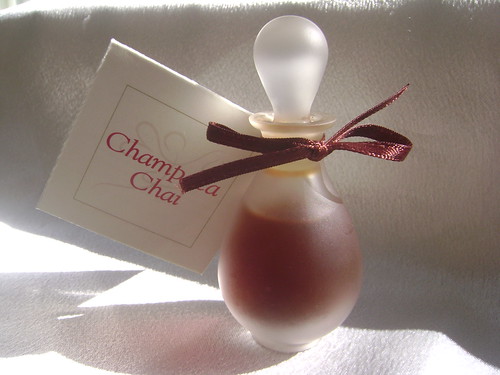
Champaca Chai, originally uploaded by Ayala Moriel.

And last but not least - here's a one-of-a-kind perfume that is especially appropriate for today: Champaca Chai. The fantasy of this perfume encompasses both the hiking, chai and smoky components that seem to save my mundane life from total disaster... It speaks to my fantasy of an outdoorsy tea ritual, preferably after a long hike on the mountains, and has a soothing milkiness to go with its rustic smoky surroundings. I also find the essence of champaca flower, with its complexity and fruitiness, to be reminiscent of Kyphi.

Top notes:
Ginger, Nutmeg, Mace, Cardamom, Fennel, Caraway

Heart notes:
Champaca, Jasmine, Coconut, Honey

Base notes:
Black Tea, Budhawood, Clove bud, Tonka bean

Labels: , , , , , , ,

Saturday, August 01, 2009

Making Incense Cones


Yesterday I tried to make incense cones for the first time. It was fun and exciting but I can't say I've neither mastered the technique of shaping the cones and determining their size, nor did I nail down the formula for what I envisioned for my first cone incense.

Just for fun, I'm sharing here photos of the process and the materials.

The ingredients: dry woods (i.e.: sandalwood, agarwood, cedarwood), leaves (patchouli) berries (juniper) roots (vetiver) and mix them with makko powder or another combustible binding agent that allows for thorough, even burning incense and also binds all the materials together.

Mix the ingredients thoroughly together, and add water or hydrosol to bind the ingredients together and allow for shaping the incense.


Kneading the incense mixture into a paste that will be shaped into cones, sticks, spirals, etc. Sticks are pressed out of a machine (kind of like noodles in a factory), while cones are hand shaped. Joss sticks are made differently - the paste is rolled onto a thin wooden or bamboo stick.


Shaping the cone is done by hands alone.

The cones lay flat on a tray to dry. This can be done outdoors in the sun as well (but make sure the incense does not get dew on it or wet if it rains!).

The incense may take up to a week to dry. It's been very hot and dry here last night so I was able to have a preliminary testing for this cone today. The bottom and centre was not dry enough so it did not burn all the way down.

Labels: , , , , , , ,