Tuesday, December 24, 2019

New: Aqua Mirabillis Collection
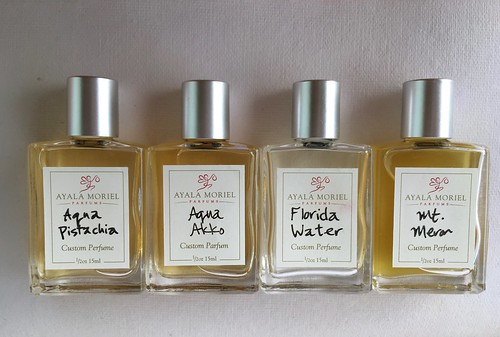
Aqua Mirabillis Series
I wasn't planning on releasing any new perfumes this year. But this kinda just happened, as a result of the wonderful and inspiring collaboration with Jullius Craft Distillery. Some of these fragrances were created a long time ago but were never added to the online store, such as the Agua de Florida (Florida Water) I made way back in 2013, and the Aqua Pistachia (mastic lentsik waters), which I created in 2018, after the inspiring Mastic Magic workshop I held here at the studio with Dan Riegler of Apothecary's Garden.

So without further adieu, I present to you an Aqua Mirabillis Collection of fragrant eaux: Cleansing and purifying waters, inspired by Aqua Mirabillis formulations from the time before perfumery separated from medicine, and the pharmacy was fragrant and redolent of healing herbs.  

These Medieval "Miracle Waters" were the first alcohol-based perfumes in Medieval Europe. Citrus peels, along with astringent herbs, were tinctured into what was called then “Aqua Mirabillis” AKA Miracle Water – were used both internally as medicine, and externally as disinfectant, for relieving sore muscles or simply as a substitute for bathing. Inspired by these ancient concoctions, and the abundance of healing plants in the Mediterranean wilderness surrounding the new studio in Clil, our collection of Aqua Mirabillis was born. These are perfumes for external use only, featuring ingredients rarely found in perfumery, which I grow, harvest, forage and tincture all by hand in the traditional old ways. Ingredients such as mastica, varthemia, vitex, wild oregano, thyme, sage, mint and more find their way into these fine fragrances that create a sense of well-being and connection to the Earth. 


Agua de Florida

Spanish fro Florida Waters, these mean "Flower Water", due to the higher proportion of lavender relative to the European-style Eau de Cologne, as well as some rosewater. Other New World botanicals include lime zest, cinnamon bark and clove buds. And to give it a local, Galilee twist: Mediterranean lavender, AKA Spanish Lavender (Lavandula stoechas) tincture from my herb garden, Grapefruit blossoms from my own orchard lend their sensuous allure. And a hint of tobacco for its sacred and protective properties. Use these Agua Florida to freshen up during the hot summer months, and in ceremony for purification at the end of a healing ceremony which involved release of pain, grieving, tension and general heaviness. 

Aqua Pistachia 

Mastic resin is the original chewing gum, and is used to flavour Middle Eastern ice creams and desserts; the leaves also are beneficial for oral hygiene but also prevent ulcers and have myriad of health benefits and medicinal uses, including uterine health. But most of all they are the most refreshing fragrance around. They smell forest-like without having a single pine needle in them. What I tried to recreate with this scent is the icy, brisk scent of hail on a cold winter morning in the Galilee. There are no words to describe the smell of the mastic bushes when they clash with these icy forms of precipitation. So I will let Aqua Pistachia speak for itself. 

Aqua Akka

Cleansing and purifying waters, inspired by Jullius Distillery's Akko Gin - a wild gin that is made entirely of local botanicals indigenous to the Western Galilee. To translate it into a fragrance, have combined several green, leafy botanicals that I find while roaming the Western Galilee and Mount Meron. Some traditional to gin, such as juniper berries; and others completely out-of-the-box, such as vitex berry and myrtle leaves. Cedar from the Morocco is here to replace Cedar of Lebanon, one of my favourite trees and destination while hiking on Mount Meron. Finally, a floral element, without which a perfume can hardly exist: handcrafted grapefruit blossom tincture from my own organic orchard, giving it body as well as a certain earthy sensuality. 

May Meron (Mt. Meron Waters) 

Mt Meron is a holy mountain in the Western Galilee, the second highest peak in all of Israel. Oak forests and regal Cedars of Lebanon grace its evergreen slopes, and its peak is usually shrouded in clouds, fog and mystery. It is home to unique vegetation, some plants that are found nowhere else in the country, which grow on a bed of quartz crystals, nonetheless. 
May Meron are cleansing and purifying waters, made in the tradition of Aqua Mirabillis - the miracle waters of Medieval Europe, in the early days after the discover of alcohol distillation. This fragrance is inspired by an autumn pilgrimage to Mt. Meron, which is abundant with wild medicinal herbs, Medronho berries, and saffron crocuses. These healing waters were born out of a collaboration with Jullius Craft Distillery and are the perfume interpretation of the magical and healing Jullius Bitters, which are redolent of wild herbs such as white mint (Micromeria fruticosa), sage, myrtle and mastic. 
Apply these Mt. Meron Waters just as you would any perfume, as well as in rituals for their protective, grounding, warming qualities, or for purification at the beginning or end of a healing ceremony. 

Labels: , , , , , , , , , ,

Wednesday, December 11, 2019

Nose-to-Nose

Nose-to-Nose
I don't usually mix alcohol and work (well, that's a lie! I alway mix alcohol in my work, I just don't drink it!). And last night was no exception, even though I had a the pleasure and the honour to entertain a very special guest at the studio: my dear colleague Yuval (Joov) Har-Gil, the master distiller of Julius Craft Distillery. We met several times at his distillery in Hanita, and every time I go there I end up high on just a few drops of his pure and delightful distillates from local fruit, honey and grape pomace. These he also infuses with wild botanicals that are indigenous to the region, and some other which are cultivated in the region, such as his many unusual fruit Eaux de Vie - alongside the more traditional spirits from apple, peach and apricot you'll find others that will blow your mind away, such as yuzu, carrots, cactus pear and even wild berries that few even know they are edible.

Although he is not formally a "Nose", every time we meet it is like meeting a colleague from the exact same field. And a master at that. Which is, needless to say - pure and sheer delight. Perhaps it is even more enriching because his knowledge complements mine. All the things I do not know - he does: Distillation process, history of alcohol and a lot of additional knowledge about the local plants and distilling the very fleeting esters of fruits into his Eaux de Vie. I have taken my students there for a class on distillation of citrus alcohol and even those who've visited countless distilleries as part of their profession, were blown away by his talent and craftsmanship.
Nose-to-Nose
That night I think was the first time we met and actually had tea. Yerbamate, because I already know of his love for strong flavours such as tobacco. And as far as tea goes that's the next best thing.

We go through all the extracts I've ever made, which includes anything from wild plants from the Canadian rainforest, to Asian teas and spices (milky oolong and pandan leaf, anyone?), ambrette seed (a shared passion of ours), to the local treasures - oh so familiar and beloved: white mint, wormwood, varthemia, vitex... We both swoon.
We are meeting because we're scheming an event together for the Western Galilee Winter Festival: A regional celebration of our very own local culture, art cuisine, agriculture - it all comes together in a long weekend (Thursday through Saturday, sometime between Christmas and Chanukah - this year it will take place December 19-21, 2019). Our event will take place Thursday, December 19th, at Jullius Craft Distillery in Hanita.

We will return to the defining moment in history when the world of alchemy, magic and herbalism split into two different worlds and industries – the distillation of alcohol for the production of potable alcohol-based beverages; and the distillation of essential oils for concocting   perfumes and toiletries.
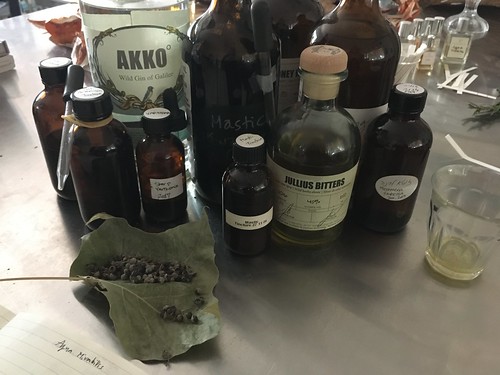
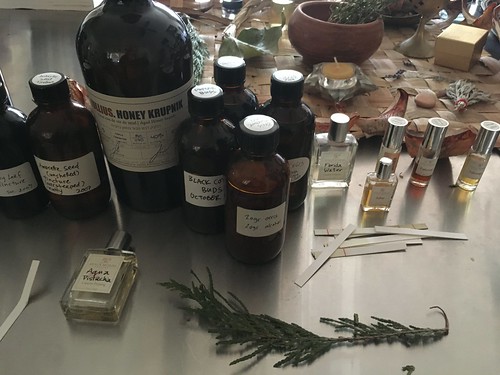
Lab Session for Aqua Mirabillis Workshop with Jullius Craft Distillery
The evening will be dedicated to discussing and showcasing our unique craftsmanship and demonstrate the connections and similarities between the craft of Eau de Cologne (lightcitrus-and-herb based perfumes) and the craft of Eau de Vie (alcoholic beverage). We will also discover unusual aromatic plants, and delve into the process of perfumes and alcoholic beverages. One-of-a-kind and unique bitters and "Aqua Mirabillis" will be made for the event – and those you will of course take home with you.

And for that of course I had to get into the lab and concoct something special... So this morning, I've been working on creating an Eau de Cologne type of fragrance that is largely inspired by Jullius' fine and subtle Akko Gin. It deserves a post on its own because truly, how it is designed and crafted is no different than making perfume!
I will only say here that it is akin to shaking a branch of Cedar of Lebanon tree after it rained on Mount Meron, and savouring the aroma of mountain air, fresh rain, leaves and forest. It's dewy and spectacular. To turn this into a perfume and use only local and natural botanicals will be a great accomplishment and I can't say I have managed to do this today... I have used a very similar structure of my Aqua Pistachia, with added juniper berries to give it the characteristic gin fragrance, as well as angelica root and tinctures of a few local wild herbs. And I have also created another concoction, which is unique to what we'll taste that night: we have decided to use mostly local herbs, and focus on six: Mastic, vitex, micromeria fruticosa (white mint), tobacco and the last ingredient the idea was that I will be using varthemia and Joov will be using arbutus berries (called Medronho in Spanish), that he picked from Hanita forest, fermented and distilled into a spirit. They have a unique aroma which Joov noticed is similar to varthemia's unusual perfume!
Lab Session for Aqua Mirabillis Workshop with Jullius Craft Distillery
I agonized over the Aqua Akko for a while, and then feel brave enough to tackle our brief: Make a perfume version of Joov's bitters, which I adore. They are delicately minty from Micromeria fruticosa, earthy from the local "Three-lobed" sage AKA Greek Sage (Salvia fruticosa) and slightly resinous-skunky from Elecampagne (Inula viscosa). I feel worried that it won't be a crowd pleaser (not even knowing what the "crowd" for our event will even be. Which is why I started with concocting the gin-like cologne to begin with. Some things just require time and patience. And right now I seem to have neither!

Labels: , , , , , , , , , , , ,

Saturday, May 11, 2019

Mullein Light

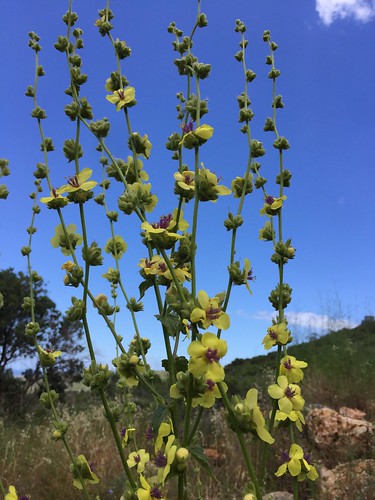
Wavyleaf Mullein (Verbascum sinuatum) בוצין מפורץ
Wavyleaf Mullein (Verbascum sinuatum), in Hebrew בוצין מפורץ (Butsin Meforatz) popped up in my yard in unusually high numbers and after two years of growing. It is not surprising because it favours disturbed soils, but at the same time - it chose to grow right outside my window, and I read it as a sign and a calling for me to study it, interact with it, and find its medicine.

It is now reaching its culmination with beautiful, tall candelabra-shaped inflorescence, lit with florescent-yellow candles scattered at different places each day. The plant at this stage is very impressive, and will bloom for a long period of the summer when many other plants don't bother trying to procreate, or are already dead and dry as a bone. Therefore, it provides important food source for various insects during the hostile summer months.

The flowers' intense colour and innate light, as well as the candelabra shape of the inflorescence are said to be the inspiration for the design of the Menorah, holder of the eternal light at the tabernacle and the temple in Jerusalem. But this is not the only connection this plant has to light: when it completes it cycle of life and the leaves are dry, their fuzzy hairs provide an excellent fire starter and could be rolled into the shape of a candle or used as a wick (dipped in fat or oil, of course). In fact, its Hebrew name comes from the Aramiac word for candle. The same word also was used to relate to the soul, or Neshama. Additionally, the foam-like core of the stem and branches can create fire without matches, using friction, and then keeps the fire in a slow, smouldering manner, allowing an easier keeping and transferring of fire. These can also be handy skills to have if you were to ever get stuck in the wilderness with no candles or matches.
Wavyleaf Mullein (Verbascum sinuatum) בוצין מפורץ
Waking up early every morning and seeing these flowers literally light my window at dawn was uplifting and magical, and felt like a message of encouragement despite the heavy heat that already started hitting us here around the Mediterranean. If SAD in the cold countries happens in the winter, in the hot-hot-hot ones it is the summertime when people have the hardest time, and it is not uncommon for people to be prone for depression during this time, even if simply because of the debilitating heat that makes one stupid for the majority of our waking hours. So I can relate to the interpretation of its signature being about standing tall and breathing deeply.

When the flower gets even slightly damaged (for example: if you brushed by it lightly), they will fall off the plant within a few seconds. This mechanism seems like a lesson of letting go, and feels almost magical to me. As is the stark contrast of the deep-purple stamens against the fluorescent yellow of the petals, like the complementary coloured robes of the healing archangel Raphael. It makes sense that the flower essence is used to clear and balance the psyche. But even without getting damaged, these flowers last less than a day before they wilt and fall off: the open around sunset, and begin to wilt and deteriorate  shortly after high noon.
Wavyleaf Mullein (Verbascum sinuatum) בוצין מפורץ
Mullein is a bi-annual plant, growing a rosette of leathery-leaves, covered in tiny hairs. The circumference of which can be extremely large. According to the doctrine of signatures, the tiny hairs are a signature fo the lungs' cilium. And indeed, the plant has several medicinal uses to do with the bronchiole. The leaves can be rolled and then smoked like a cigar, but have medicinal properties that in fact reverse the adverse impact of tobacco-smoking. The leaves can be prepared into a strong tea or a tincture as well, and act as an expectorant to clear out the lungs from mucus and help expel a dry cough. The leaves in the Israeli varieties I met are very rough, but the European kind
Verbascum thapsus (which also spread to North America) has softer leaves which are also used instead of toilet paper, as well as for dressing wounds.
Wavyleaf Mullein (Verbascum sinuatum) harvest בוצין מפורץ
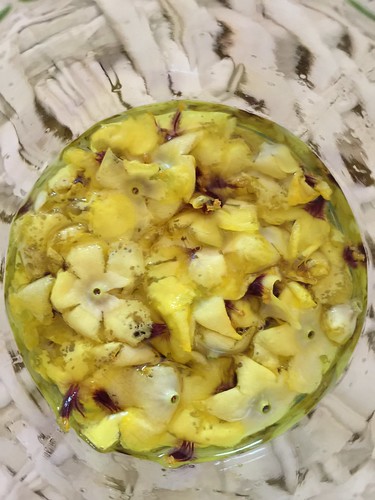
The tinctured flowers are useful for treating various respiratory ailments as well, including asthma. When infused in oil, they are used as a medicine for earaches that can be used on very small children as well.  And this is one of the things I've prepared from them early this season, having my young nieces and nephews in mind, who unfortunately one or another among them tends to suffer from ear ache almost every year.
Wavyleaf Mullein (Verbascum sinuatum) tincturing בוצין מפורץ
The main known constituents of mullein are: Mucilage, Gum, Saponins, Tanins, Volatile oil, Flavonoids (hesperidin, verbascoside), Coumarins, Iridoid glucosides (lateroside, harpagoside, ajugol, aucubin), Phenylethanoid glycosides, Phenylethanoid glycosides, Lignan glycosides, Polysaccharides.

Main medicinal actions: Mucus membrane trophorestorative (builds up and restores damaged membranes), demulcent (softening), Antitussive (stops coughing), Antiinflammatory, Antiulcerogenic (stops ulcers in the digestive tract), Vulnerary (speeds up the recovery of wounds), Expectorant, and indirectly Antialergenic (by ways of stabilizing the mucus membranes). Additionally, it is anti-viral, a mild diuretic and a mild astringent.
Caesarian Mullein (Verbascum caesareum) בוצין קיסריון

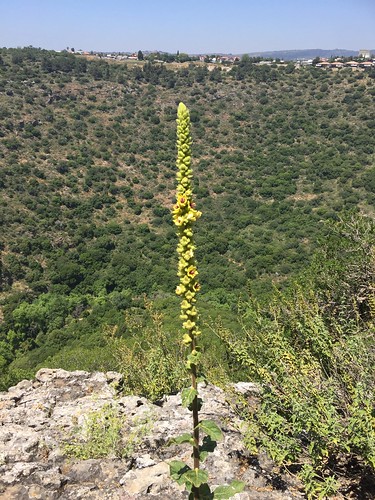
Last but not least: Here is a photo of the impressive and beautiful Caesarian Mullein בוצין קיסריון (Verbascum caesareum), overlooking the cliffs of Kziv creek - one of the most gorgeous nature reserves in Israel. This is a rare plant that is endemic to Syria and grows only on the cliffs and slopes of the northern-most regions of Israel. Israel is a very special place as it contains many different climate zones and diverse habitats. Out of the 120 species of mullein (not including 8 additional recognized hybrids), 16 were identified in Israel, and most of them are extremely rare. It is also a very clear message of "standing tall and speaking our truth".

Do you know more about mullein? I would love to learn more about this plant, albeit it having very little to offer in the way of aroma. Also, which kind grows where you live?

Labels: , , , , , , , , ,

Monday, April 22, 2019

Wild Peonies

Wild Peonies (Paeonia mascula)
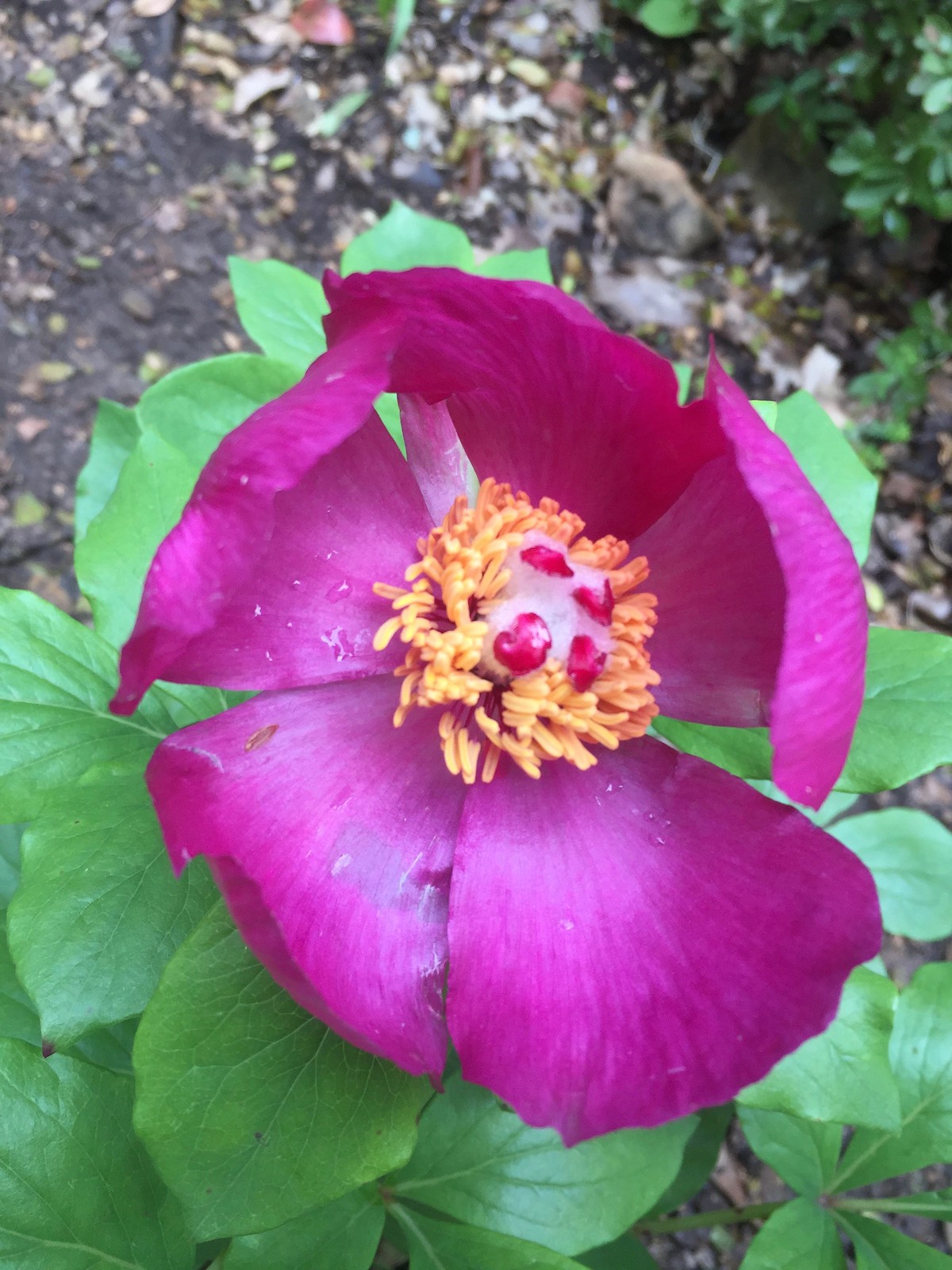
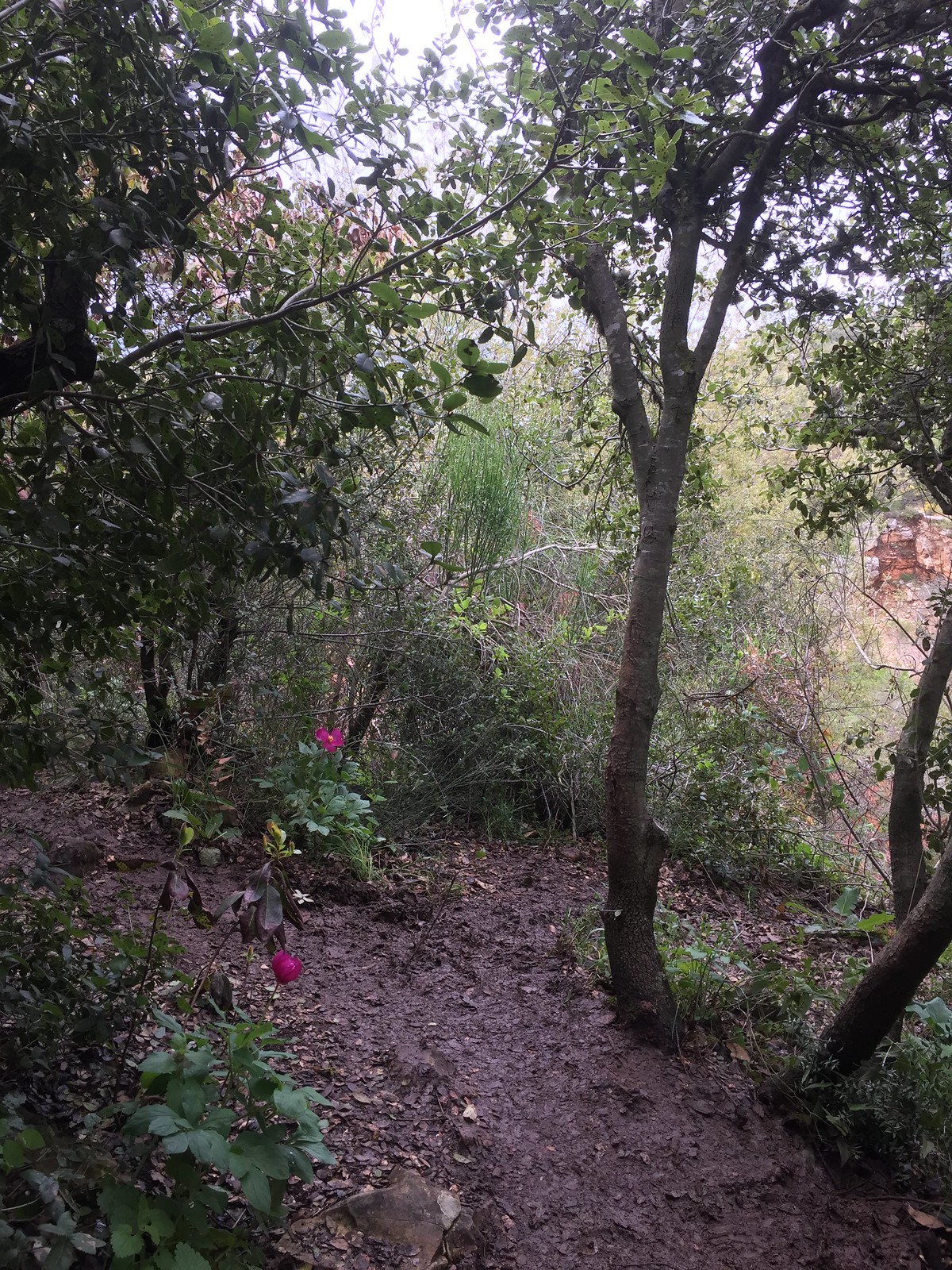
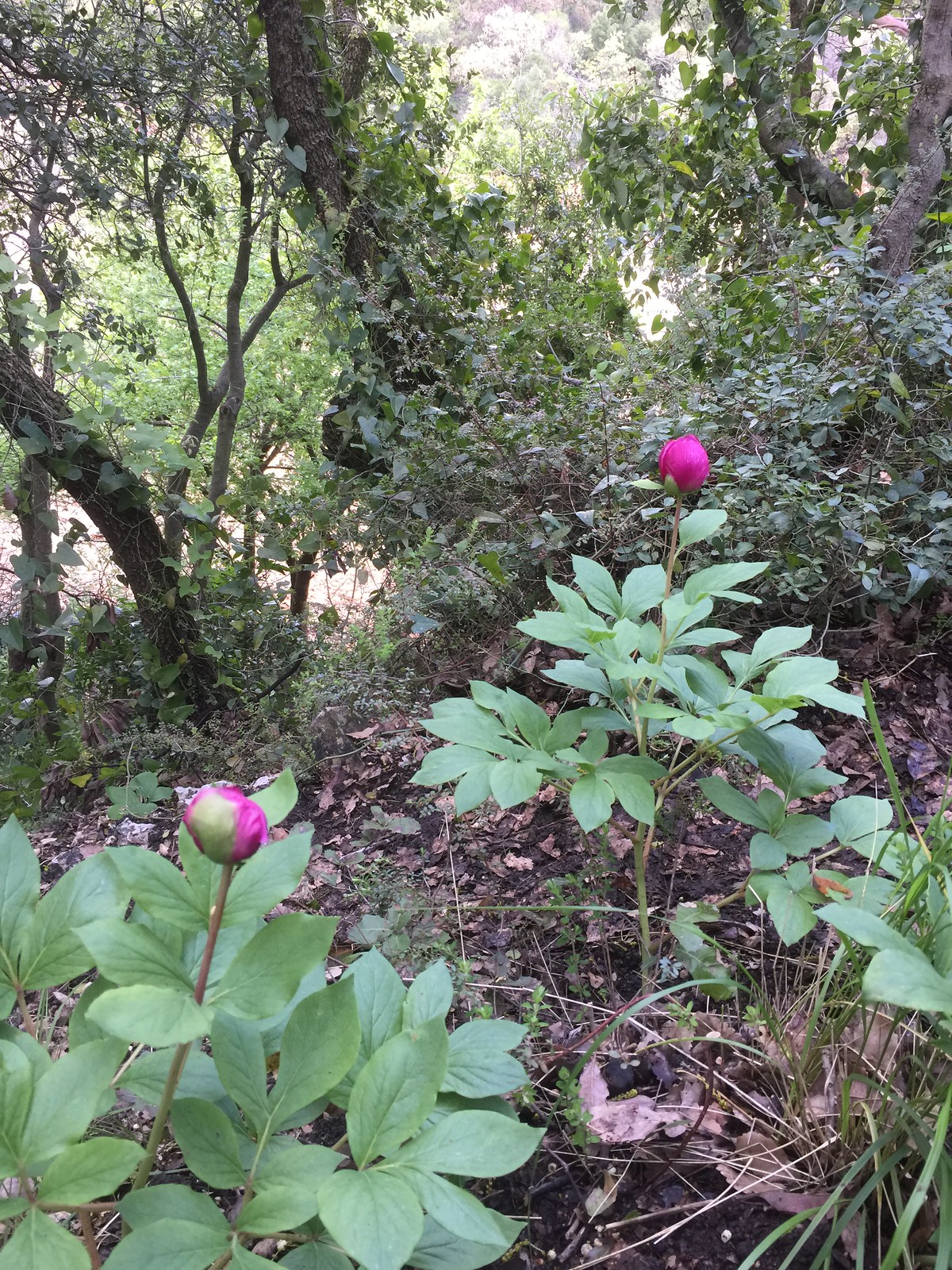
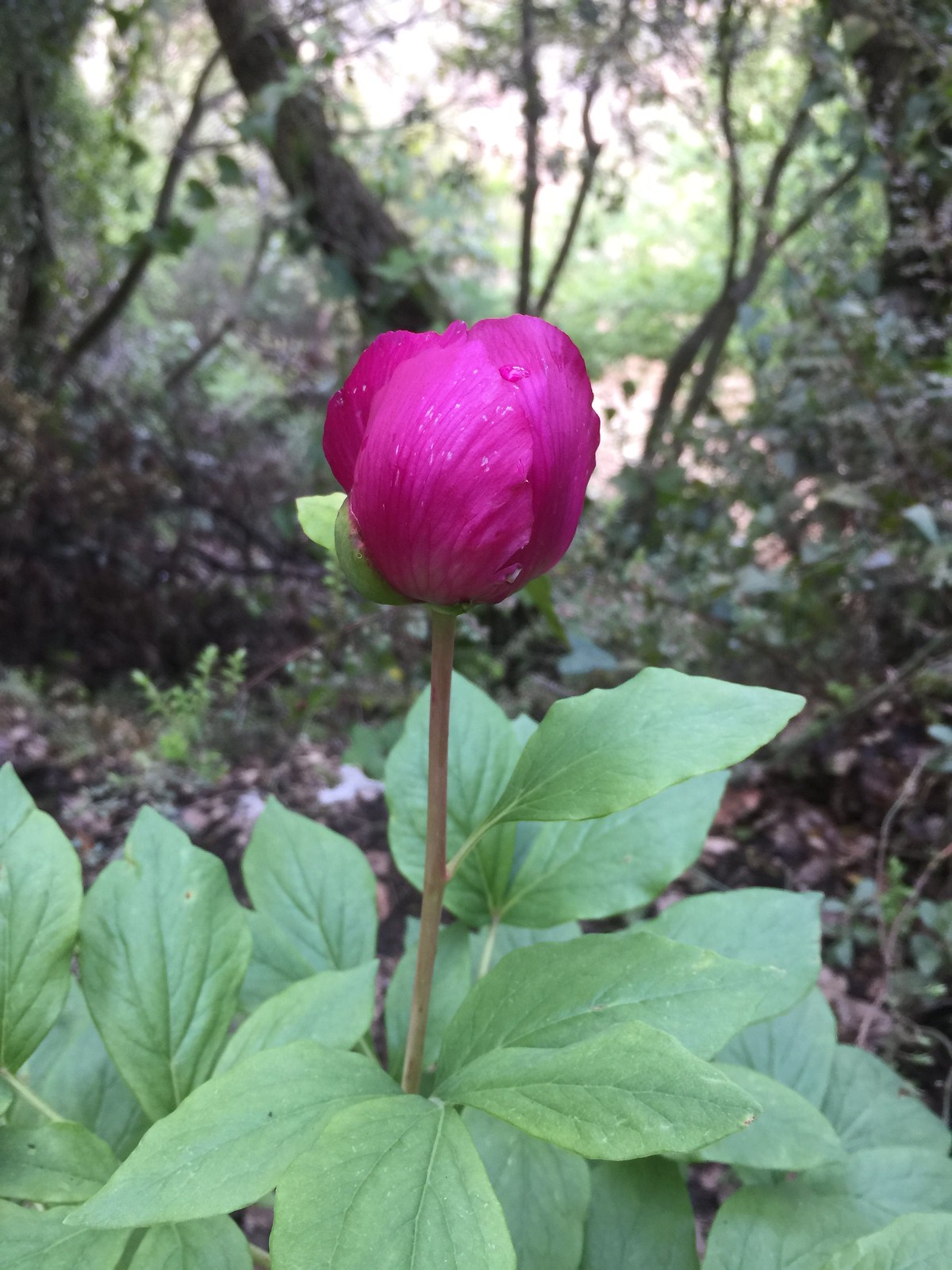
We went hunting for coral peonies (Paeonia mascula) in their natural habitat. I discovered so much more than I expected on the way, including about 7 kinds of orchids - so not everything will fit in this post. These impressive flowers are native to a large area surrounding the Mediterranean: Spain, France, Italy, Bulgaria, Greece, Croatia, Serbia, Turkey, Iraq, Lebanon and Israel. Here in Israel they only grow in one area in Israel, in the Mount Meron reserve. And even there it is not widely spread, but is found only in one specific area of the forest on Mount Hillel (near the Druze village Beit Jann).  In Arabic they are called "Bear Foot" because of the shape of their fruit. The origin for this name is a legend about lovers whose parents opposed their marriage. They ran away to the mountain, and were caught in a snow storm. The search party from the village lost hope for them when they saw brea footprints in the snow. Yet they followed the bear's trail and found the couple in a cave, and learned that the bear saved their lives by bringing them food. In the spring, peonies appeared on the bear's trail.
Jerusalem sage in bloom
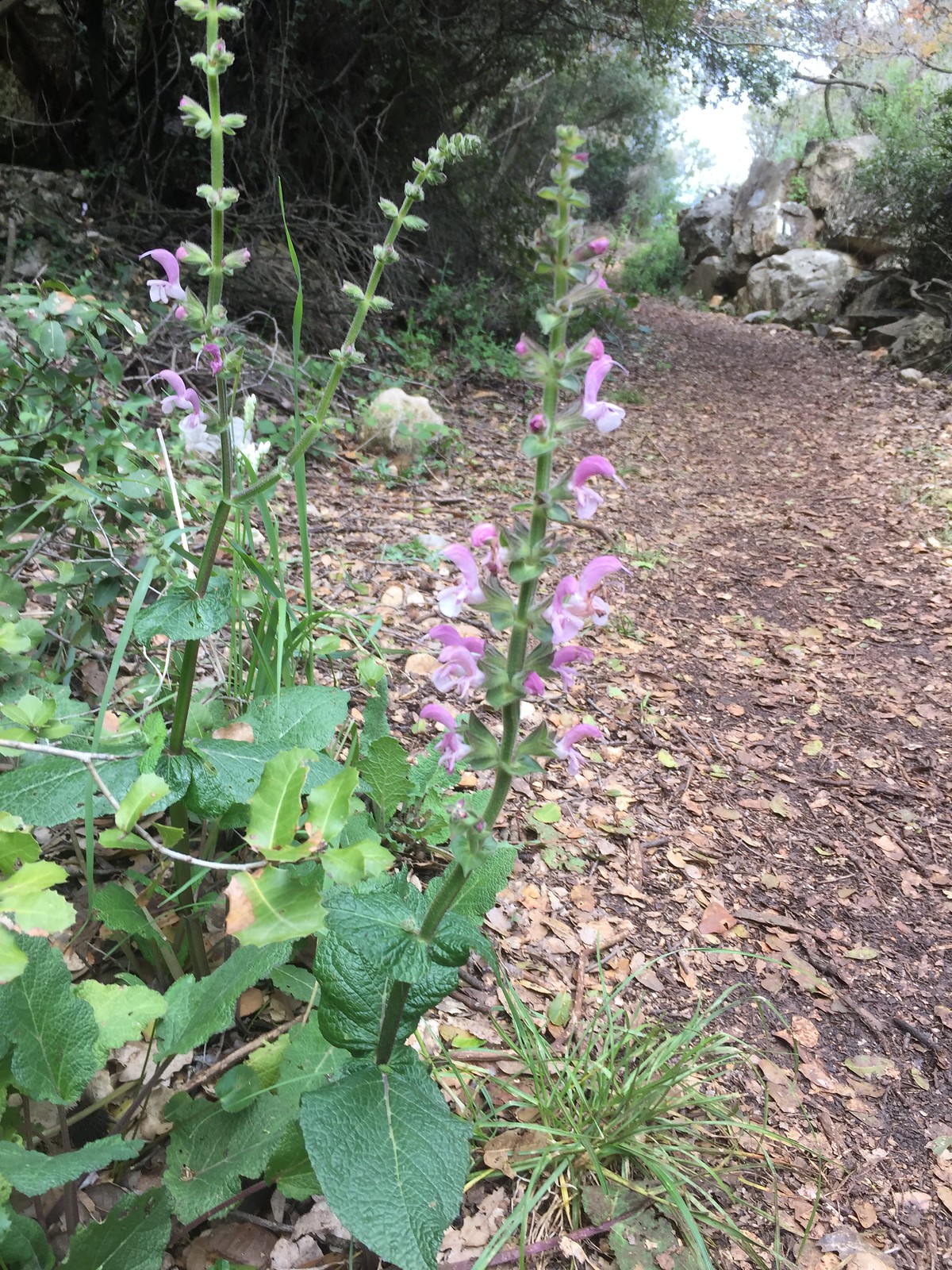
(Jerusalem sage - מרוות ירושלים Salvia hierosolymitana - in bloom)
Mandrake fruit
(Mandrake fruit, unripe)
Cephalanthera longifolia סחלבן החורש
(Cephalanthera longifolia סחלבן החורש)

To get to the actual trail where the peonies live, one needs to walk on a pretty uneventful gravel road in an agricultural land that is abundant with olive grove, cherries and other stone fruit. There are of course some interesting plants along the way - but nothing that you won't see elsewhere: Jerusalem sage (which was in bloom when we visited), and white orchids here and there. I even stumbled across mandrake fruit (still green and not fragrant yet).
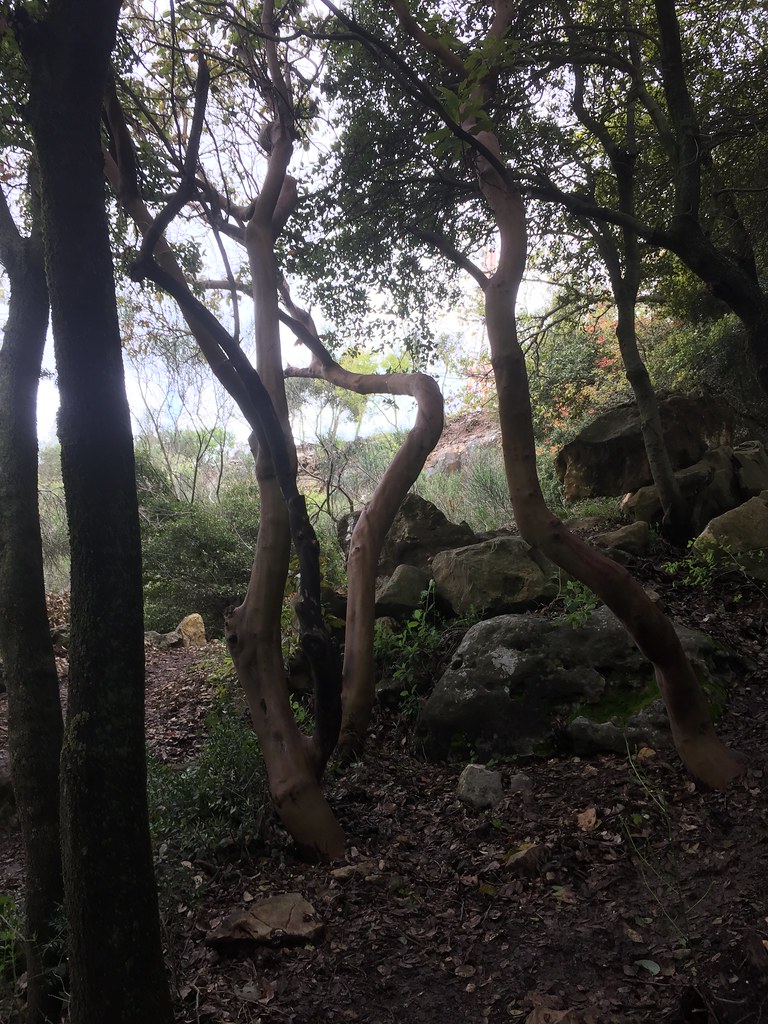
Arbutus and oak forest
Then there was a nice little trail going uphill, distributed again by a gravel road, and shortly after plunging into a rather steep and slipper downhill trail, which is where we were about to meet the peonies for the first time.

It was an unusually cold, windy and rainy day. So not so many people were there to spot the flowers. This is unusual for the week-long holiday of Passover, in which the country's parks are overflowing with noisy Israelis littering nature to their heart's content. The few people who were there were very nice and helpful, and we just happened to start the trail with two couples, who were relatives of someone from my village. Not only were they not loud and evidently curious about plants (so I couldn't help myself telling them everything I know about plants we met along the trail) but they also invited us for a coffee which they brewed right there next to the first peonies we found. It was nice to be the guest of an outdoors picnic like that.

More importantly: If it wasn't for these companions,  we probably would have turned on my heels right after meeting the first few bushes. They were located at the start of this downhill trail, which was immensely slippery and my daughter was a bit hesitant to continue with the trail. Having more people around gave us more confidence.
Wild peonies in an arbutus and oak forest
I've seen peonies countless times in gardens in British Columbia, but nothing compares to finding them like this (even though it was to be expected that I'll find them, of course). Their presence in this quiet oak and arbutus forest is nothing short of magical!
Wild Peonies (Paeonia mascula)

Wild Peonies (Paeonia mascula)
The wild peony (Hebrew: אדמונית החורש) are considered the first medicine plant by the Greek. They are named after Paeon (AKA Paean), the Greek God of Healing. And indeed their leaves and roots were used to heal a number of conditions, epically for night terrors, to treat the neural diseases, epilepsy, headaches and liver complaints, digestive issues and clearing the womb after childbirth or during mensuration. Dioscorides account in his Herbal (Materia Medica) mentions specific preparations for treating those conditions, as well as clearing the womb after childbirth, and how different parts of the plant are used:

"III. 140. Paeonia or glycyside which some name pentorobon, dactylos idaeos, the root paeonia, others aglaophotida. The stem grows two spans high and has many branches. The male has leaves like walnut, the female much divided leaves like smyrnium. At the top of the stem it produces pods like almonds, in which when opened are found many small red grains like the seeds of pomegranate and in the middle five or six purplish black ones. The root of the male is about the thickness of a finger and a span long, with an astringent taste, white, the root of the female has seven or eight swellings like acorns as in asphodel. The dried root is given to women who have not been cleansed (internally) after childbirth. It promotes menstruation (a dose containing root) the size of an almond being drunk; it lessens abdominal pains when drunk in wine. It helps those who have jaundice and kidney and bladder troubles. Soaked in wine and drunk it stops diarrhoea. Ten to twelve red grains from the fruit taken in dark rough (dry) wine slop menstrual flow and being eaten they ease stomach pains. Drunk and eaten by children they remove the beginnings of stone. The black seeds are good against nightmares, hysteria and pains of the womb when up to fifteen are drunk in mead or wine. It grows on high mountains and foothills."
Wild Peonies (Paeonia mascula)
Last but not least: Their scent, of course!
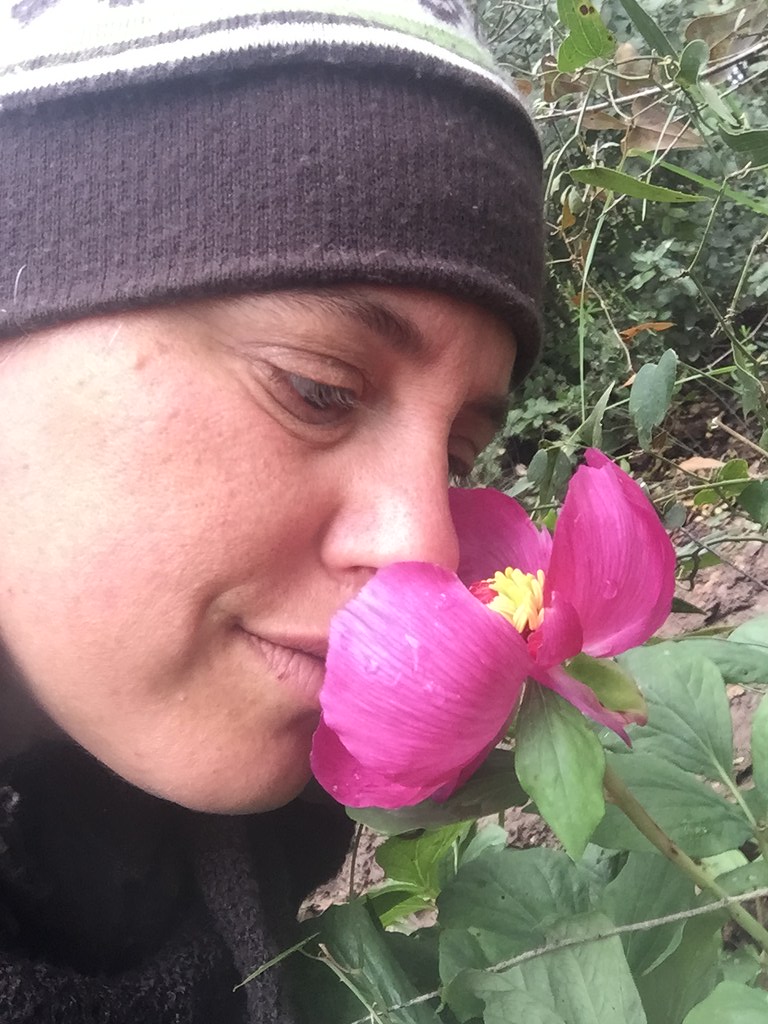
Wild peonies have a robust, sweet-spicy scent that is at least ten times better than the garden variety. I find that more often than not, the multi-layers of cultivated petals reek of something green and nasty, best described as the scent of the water in the vase after flowers have been sitting in it for a week. White peonies (and some light pink ones) tend to be better smelling, with a scent spicy yet cool, peppery and green and only a tad rosy and clove or carnation like. The are sharp and their vibration resonates around the head and the nose. These were all around sweet, warm and heavenly. Inhaling their scent created a feeling similar to smelling roses, a warmth and soothing around the heart and solar plexus. And most of all, so surprising to smell this kind of scent on a mountaintop surrounded by oak and arbutus trees!
Wild Peonies (Paeonia mascula) and Ayala Moriel

Labels: , , , , , , , , ,

Wednesday, March 06, 2019

Carmelit

RIcotia lunaria
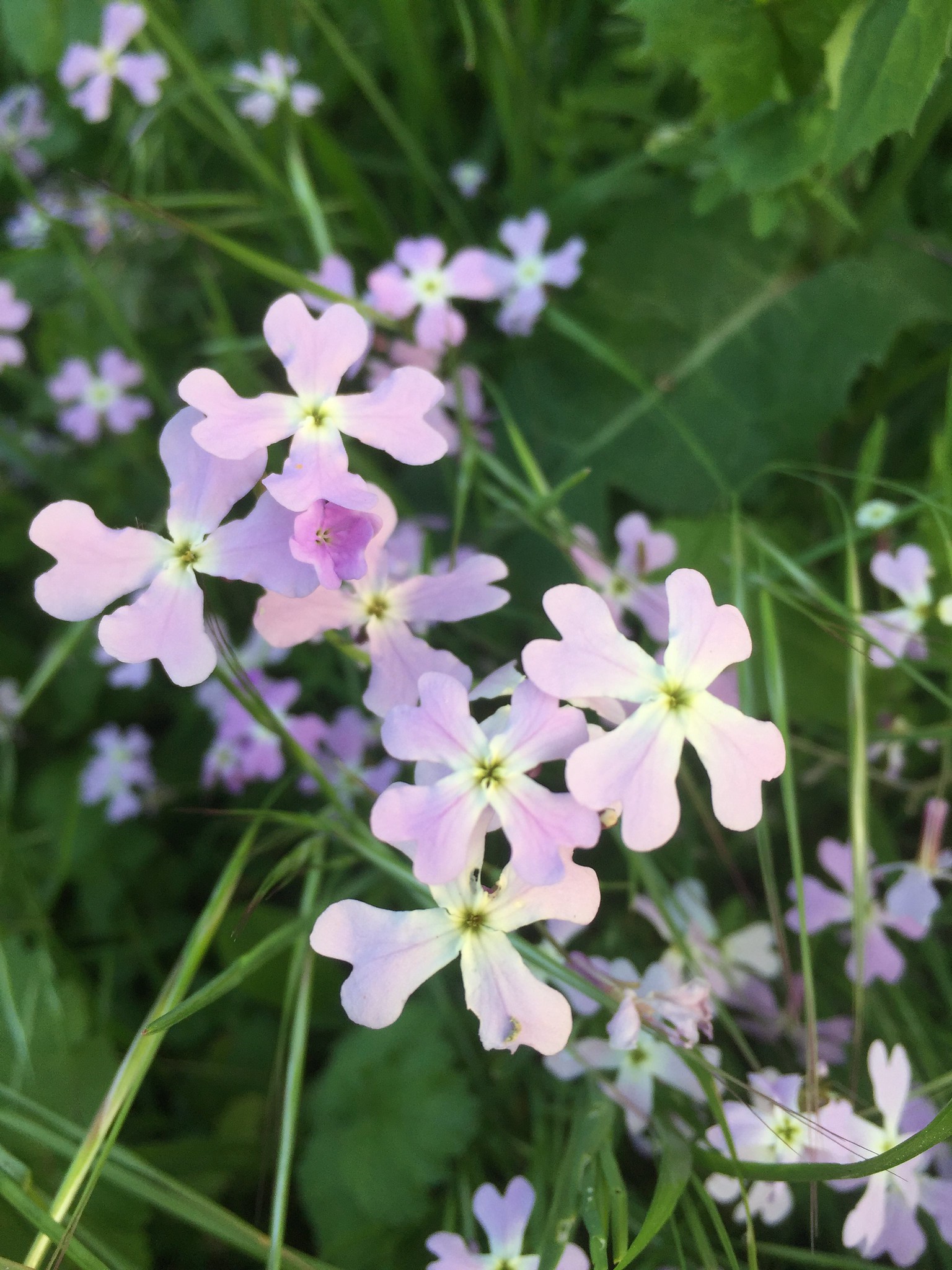
Carmelit (Ricotia lunariaכרמלית נאה is a delicate flower from the Cruciferae (Brassicaceae) family which grows in large groups and blooms in late winter and early spring. If you look at an individual flower alone (which is rare, because it always grows in large groups), it does not stand out at all, expect for its definite crossed-bones-like shape. It is named after the Carmelite order, which was established on Mount Carmel in the 12st Century (the same order also invented the famous Carmelite Water), whose symbol of a cross with heart-shaped tips it resembles. Other English names for the flower are Maltese Cross Ricotia (whose cross it also resembles) or Egyptian Honesty.
Ricotia Lunaria (Carmelit) כרמלית נאה
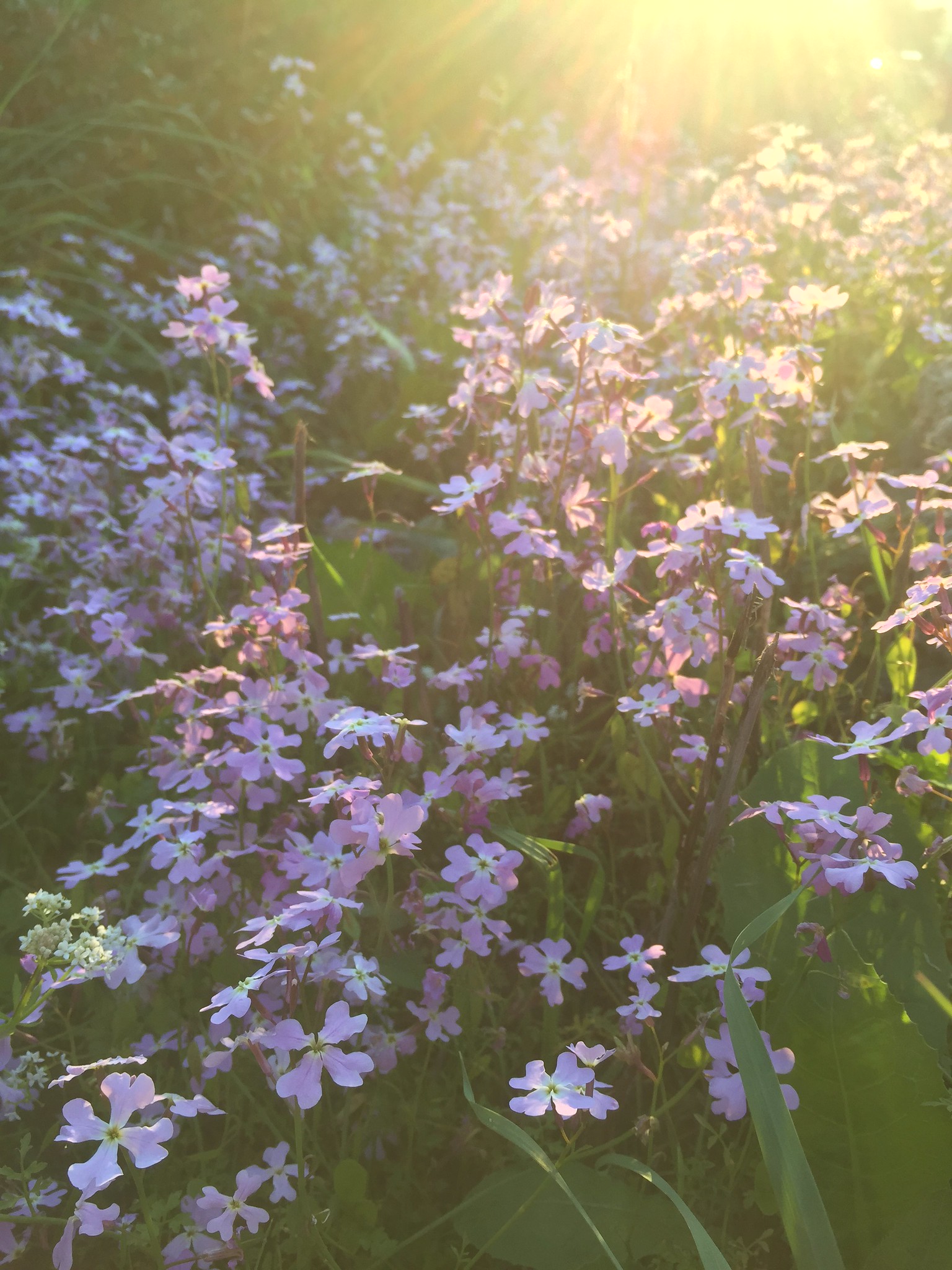
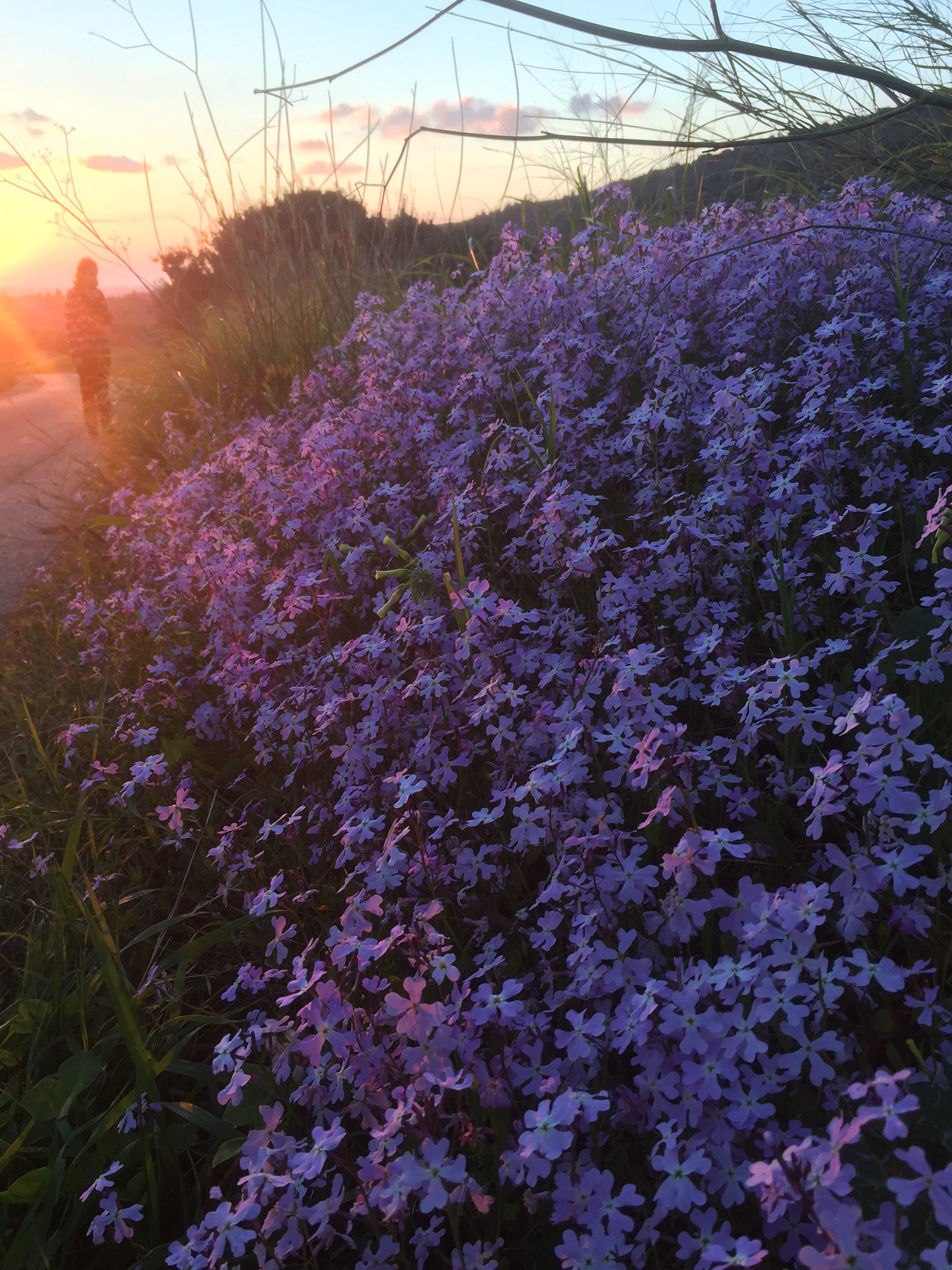
The flower is endemic to Israel and Syria (which means it grows nowhere else by these two countries - in Israel it grows only in the north of the country). Because these plants grow together, their blossoms cover large areas creates an impressive effect like floating purple haze above the ground. Which is nothing short of magical. Another aspect which is not any less magical is their fragrance: a delicate perfume that is the epitome of wild flower fragrance, reminiscent of night-scented-stock with hints of carnations when it's sunny, and becomes almost too heady on dry and hot spring days; and becomes all delicate, demure and cold-flower-smelling at nightfall. 

Here are a few more photos, which will hopefully transfer some of their magic despite the fact that their scent is inimitable.
Ricotia Lunaria (Carmelit) כרמלית נאה

Ricotia Lunaria (Carmelit) כרמלית נאה


Labels: , , , , ,

Sunday, December 23, 2018

Christmas in the Middle East

Despite globalization and Santa's great commercial success (and global take over) - Christmas in the Middle East (where it originated, let me remind you) has very different vibe than in Europe and North America. That's not to say that Santa and his reindeer do not make appearances here despite the alarming lack of snow (and sometimes no rainfall either). But it looks, sounds and smells different here, nevertheless.

Last week we went to the Christmas Market in Kfar Yassif (one of the largest Christian communities north of Haifa), with full-on expectations to have my Canadian standards of Christmas markets to be blown to bits. And to my delight, they did. First there is the reckless parking culture of the villages up north (parking is always a conundrum in big events, but we survived it quite heroically), and then there is the winter atmosphere of an Arab-Christian village in wintertime: lights everywhere, little children carrying light toys they purchased at the market, and street vendors selling boiled lupin and fava beans doused with cumin and lemon-salt (Middle Eastern street food is quite healthy), and sahleb (a warm, thickened milk beverage perfumed with rosewater, mastic resin and topped with spices and nuts).

Before you get into the market, you'll have security at the entrance (because any event of large crowds, especially that of a minority group, requires security in Israel, to remind you that something bad could happen at any moment but the army and police is there to protect you). And then there was lively and upbeat music - dumbak drums on the stage were performing Baladi beats by the town's square and the largest Christmas tree, later on succeeded by other performances such as a Middle Eastern violin musician, and more. And this pre-Christmas party was going to last till at least midnight, by the way. Proceeding to the market area, an overwhelming smell of barbecue filled the air - thick smoke of charcoals grilling meats of any kind (except perhaps turkey), including shrimps skewers. There were shawarma (aka donair) and felafel booths, and I think I've spotted some ma'amouls (fragrant and buttery semolina shortbread cookies filled with dates or nuts). There was absolutely none of the "Holiday Smells" such as eggnog or hot apple cider etc.


We circumvented the very crowded lineups and that's were we found the artisan stalls (there is a lovely new carpenter/woodworker in town that sold the most adorable ornaments, carved out of olive tree, some shaped like little guitars or oud - the musical instrument, not the incense tree); charity sales, and also those selling German-style mulled wine and green and red donuts (that look like they're made of plastic so of course we didn't eat them), and even something that looked like Japanese-style octopus pancakes next to stalls of chocolate syringes for chocaholics shooting up during Midnight Mass.

And speaking of mass - religious artifacts were offered as well lots and lots of incense was burnt. I don't think I've ever been to a Christmas market in Canada where frankincense and myrrh is openly burnt in cross-bearing copper censers! And keeping up with the syringe theme, there was the customary street-perfume-vendor stall, where perfume knock-off were sold out of large vats that make them give the illusion of precious cargo. The lady at that stall was advertising her wares by squirting cheap jus out of a large syringe (that is normally used to decant her merchandize into bottles for sale).

Around that time, we figured it would be a good moment to call it a night and go home with the loot we found - a little crocheted doily made by the local employment centre for adults with special needs, a bit clear helium bubble wrapped in lights, and the cheesiest Christmasy tiered tea tray, which for two years I've managed to avoid purchasing and always regretting I didn't...

And with this we'll close, but not before I'll give you recipes for a couple of regional sweets that are unique to the region around these holidays:

Ma'amoul Cookies Recipe
Ma'amoul
Ma'amoul are stuffed shortbread cookies from unsweetened dough, stuffed with dates or slightly sweetened nut fillings. The cookies originate in Jerusalem, but are popular all over the Middle East and each region has slightly different variation on the spices and dough recipe. For example: The nut fillings are usually walnut, but in Syria, where pistachios are abundant this is also a very popular and very elegant filling. The dough may be made from either fine semolina (cream of wheat), or from flour, or a mixture of both. Of course, the semolina ones are the best! They provide a rich, nutty and interesting texture to the cookie. In the Galilee, ma'amoul cookie dough is often flavoured with malepi (black cherry kernels), which give them a peculiar, inimitable aroma that goes especially well with the date filling (which, in turn, is likely to be spiced with cinnamon and cloves rather than the  nutmeg in the recipe to follow).

The ma'amouls are shaped in multiple ways, in order to be able to differentiate between different stuffings. The shapes can also have other religious meanings, especially in the Christian communities - where this was originally an Easter pastry. The round ones are stuffed with dates, and signify the crown of thorns and Christ's suffering, and and the nut filled ma'amouls are oval-shaped, and said to symbolize Jesus' tomb.

The following recipe is adapted from May S. Bsisu's excellent book The Arab Table, p. 303-304; and some improvements based on Dokhol Safadi and Michal Waxman's book "Baladi: Four Seasons and Nazareth" (in Hebrew), p. 288-289. Naturally, I've added my own perfumey touch to the filling flavours and also my tips from many hours of rolling ma'amoul cookies with my adopted Syrian family.

Aside from the usual kitchen and baking equipment (large mixing bowl, chopping board, knife and large cookie sheets and baking paper), you'll also need one special piece of equipment, which is very easy to find in the Middle East but not so easy to come by outside of it: little metal clips that are made especially for pinching the decorations and marking the ma'amoul. Some books will also recommend specialty cookie molds. These are very pretty and make for great (and impressive) kitchen decoration, but I found them to be way more difficult to work with (the cookies get stuck in the molds).

But most importantly - this is not a task for one person. It is best to make ma'amoul (or any large amounts of hand-shaped pastries, especially stuffed ones) with company. I sometimes wonder if it's not the cooking together rather than the eating together that keeps people together.

Semolina dough: 
4 cups fine semolina from Durum wheat, or regular sized semolina (AKA cream of wheat)
1.5 cups (3 sticks, or 375g)  unsalted butter, melted 
0.25 cup orange flower water
0.25 cup rosewater
0.5 cup unbleached all-purpose wheat flour 
1 tsp freshly ground malepi (optional)

- Melt the butter and add the floral waters. 
- Stir in the semolina until a dough is formed.
- Place in the fridge overnight, in order for the semolina to absorb all the moisture. 
- The next day, mix the flour with the ground malepi (if desired). 
- Knead the semolina dough with the flour mixture
- Roll into small balls (about the size of a golf-ball) and flatten them between your index finger and thumb. Place a small but significant amount of filling (about 1tsp) and close the dough in (it will look like a money pouch where all the dough gathers, this is the place you will place on the pan. The top will get the metal clips treatment, with decorations as imaginative as yourself. 
- Bake in pre-heated oven (to 350F or 180c) for about 15min, or until slightly golden on the bottom. 
- Let the cookies cool on a wire rack. Once cooled completely, sprinkle icing sugar on top. Keep as many as you're planning to eat within 2-3 days in a jar, so they don't turn stale. The rest are best to keep frozen. They will taste fresh once thawed again. 

Date filling:
1lb pitted and mashed dates (see note below)
1.5 Tbs unsalted butter
 1Tbs rosewater
1/4tsp grated nutmeg
* If you can't find pre-mashed dates, finely chop Barhi dates - the ones that are sold in small carton boxes and often mistakenly referred to as "fresh dates" in Persian and other Middle Eastern shops). If using pre-mashed dates (in vacuums package) be sure to remove any calyx or stem or occasional pit that were left behind).

Walnut filling:
2 cups walnuts
2 Tbs sugar
2 Tbs unsalted butter, melted
1 Tbs orange flower water
1 tsp cinnamon, ground 

Pistachio & Orange Blossom (Ma'amoul filling)

Pistachio filling:
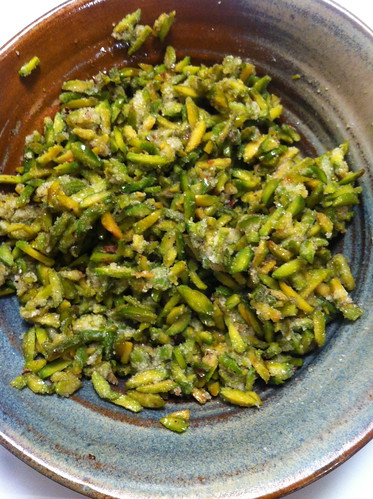
0.75 cups raw pistachios (unshelled)
2 Tbs sugar
2 Tbs unsalted butter, melted
1 Tbs orange flower water
0.5 tsp cardamom, freshly ground 

Stay tuned for additional Middle Eastern Christmas specialty from my region, including Pumpkin Jam!

Labels: , , , , , , , , , , , , , , , ,

Tuesday, March 06, 2018

New Soap: Hulnejan

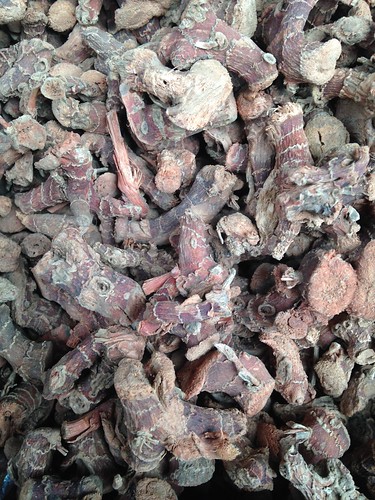
Hulnejan Roots

Inspired by the region's aromatic traditions, I'm pleased to present to you yet another wonderful soap I've recently developed: Hulnejan.
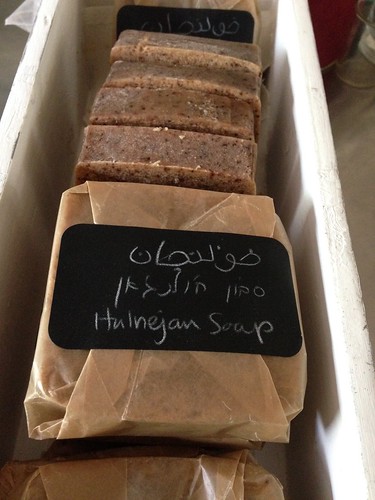
Hulnejan is a spicy, exfoliating soap bar with strongly brewed galangal, gingeroot and cinnamon. Properties: warming, cleansing, exfoliating.
Hulnejan Soap

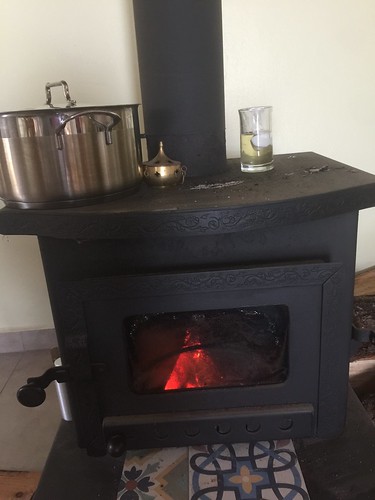
Hulnejan tea is a decoction of spicy roots and barks prepared by the Druze in Northern Israel over the winter months. It has strong warming and anti-bacterial qualities, exactly what one needs to stay healthy during the chilly months of the Galilee and the Golan. It is typically drank very sweet as well (sweetened with either sugar or honey), and with some chopped pecans on top. The best way to make it is by brewing it on the stove for hours, allowing the scent to fill the home, clear it from microbes while making it smell warm and cozy. It also helps to homidify the air, which is much needed as the fire tends to make the environment very dry.
Brewing Hulnejan Tea

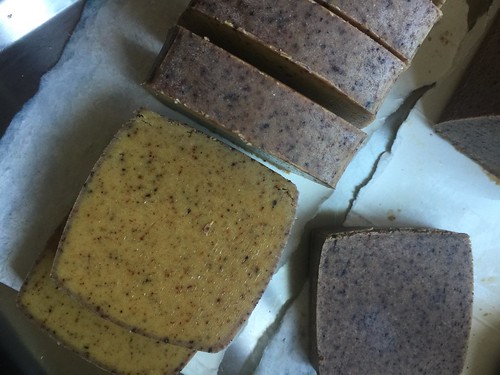
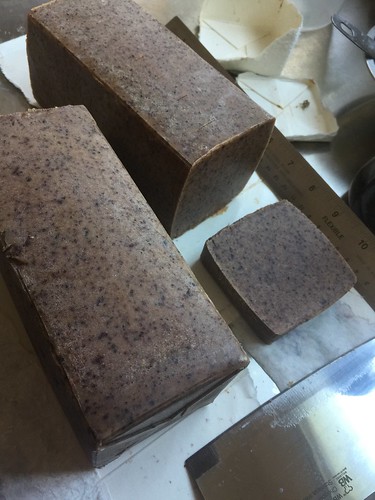
This limited edition soap bar is made from olive-oil and water infusions of Hulnejan tea. It creates a beautiful peeling soap bar that promotes circulation and rejuvenation of the skin. Like all of our soaps, it is also superfatted - which means it has wonderful moisturizing qualities due to high content of unsaponified oils within the formula. It is the same rich-lathering formula we've always had for our soaps, now handcrafted in our new studio in Clil by yours truly!

We're using olive oil that was cold-pressed from olive which were organically grown in a Druze village near Mt. Meron; Oganic virgin coconut oil (both are food grade), palm oil and castor oil for that extra emollient quality. The result is a hard, long-lasting bar with rich lather that is very moisturizing - a real treat for your skin, hair; and with a wonderfully spicy fragrance that brings to mind wintry teas by the fire place.

Hulnejan Soap
Ingredients: Saponified vegetable oils (coconut, olive, palm, castor), water infused with dried galangal, ginger and cinnamon, powdered dried cinnamon bark, powdered dried ginger root, natural fragrance (essential oils and absolutes of galangal, ginger, cinnamon, cardamom)

Hulnejan Soap


Labels: , , , , , , , , , , , ,

Thursday, February 22, 2018

New Soap: Za'atar

Steeping Za'atar for Soap

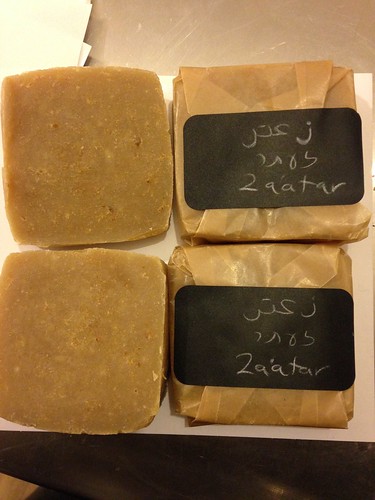
At long last, a new soap is made, and is available online: Za'atar - a melange of wild thyme and oregano from the mountain behind my home, and my garden. Properties; cleansing, disinfectant, anti fungal.

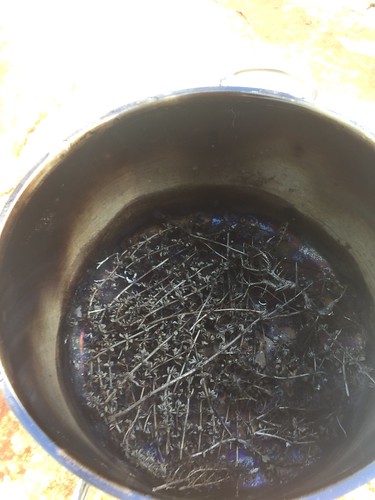
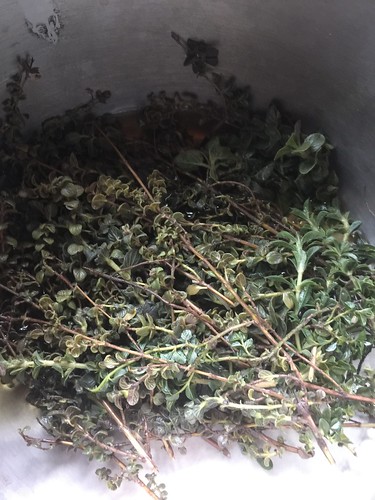
The za'atar soap I've been dreaming of making for 8 months now underwent many obstacles, including me not paying attention and charring the wild za'atar decoction meant for the lye (see image below). Moreover, when I finally made a decoction and that didn't scorch, it was a cold day, ad it took too long to trace and once added the essential oils it congealed too fast. The bars turned out fine but visually are not as consistent and pretty as they should have been - with a texture that shows pockets of oil. It has a fine za'atar smell, and works wonderfully like all my other soaps though.

Charred Za'atar

This limited edition soap bar is made from olive-oil and water infusions of various types of Za'atar - thymol and carvacrol rich plants that grow wild on the mountains around the southeast Mediterranean basin: Ezov/hyssop/wild oregano (Origanum syriacum), Winter Savory/Satureja (Satureja montana), Israeli Thyme (Corydothymus capitatus) and Mediterranean Thyme (Thymbra spicata), with the addition of cultivars grown in my garden, such as common oregano, marjoram and thyme. These infusions are used in all of the soap's phases, then supercharged with the aroma of wild oregano essential oil.

The result beautiful bar of soap, superfatted - which means it has wonderful moisturizing qualities due to high content of unsaponified oils within the formula. It is the same rich-lathering formula we've always had for our soaps, plus the healing properties of the wildcrafted herbs.
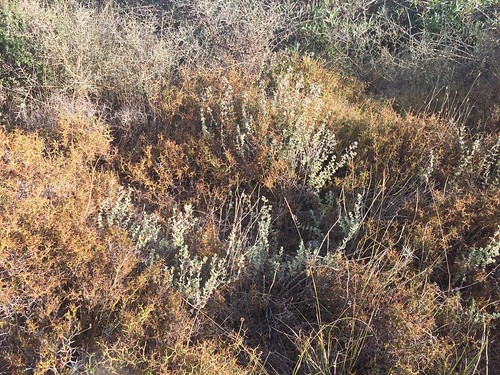
Summer Za'atar on the border with Lebanon
Among the locals, all the wild herbs mentioned above are called "za'atar interchangeably, even though the Origanum syriacum is the "real" za'atar. Because they are all rich in thymol and carvacrol, they have similar healing properties, strongly antiseptic (antibacterial and anti-fungal), and also help with various skin ailments (eczema in particular). And in other (non-skin-related) uses - most is drank as tea, primarily for digestive issues such as stomach aches, parasites and queasiness; generally used in oral hygiene, as well as curing headaches, earaches, colds and flu and respiratory complaints.

We're using olive oil that was cold-pressed from olive which were organically grown in a Druze village near Mt. Meron; Oganic virgin coconut oil (both are food grade), palm oil and castor oil for that extra emollient quality. The result is a hard, long-lasting bar with rich lather that is very moisturizing - a real treat for your skin, hair and even for shaving; and with the funky but lovable elecampane scent.

Za'atar Soap Bars
Ingredients: Saponified vegetable oils (coconut, olive, palm, castor), water, Za'atar (Origanum suriacum, Satureja montana, Corydothymus capitatus, Thymbra spicata), Thyme, Oregano and Marjoram infusions , Oil of Wild Oregano (Origanum vulgare)


Labels: , , , , , ,

Friday, November 03, 2017

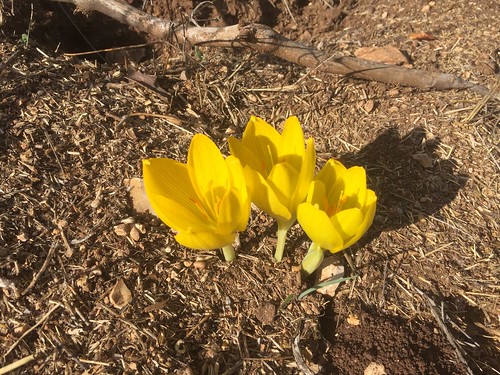
Yolk Flower (Sternbergia)

Sternbergia
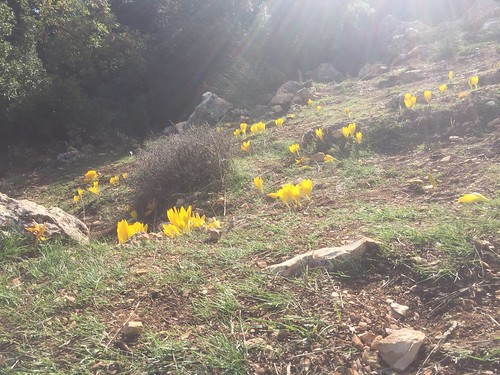
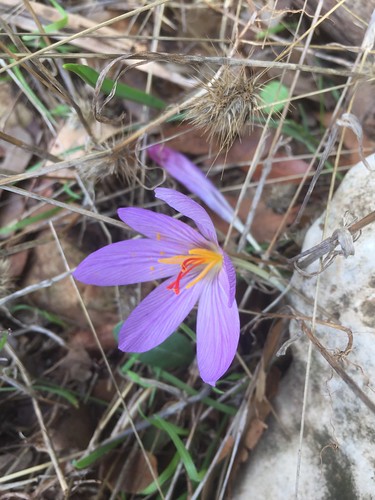
Just a few pics from my second sternbergia pilgrimage... This time we actually found the big patch of gold where they are growing! We saw a lot of other kinds of crocus on the way before we got to the golden meadow pictured above.
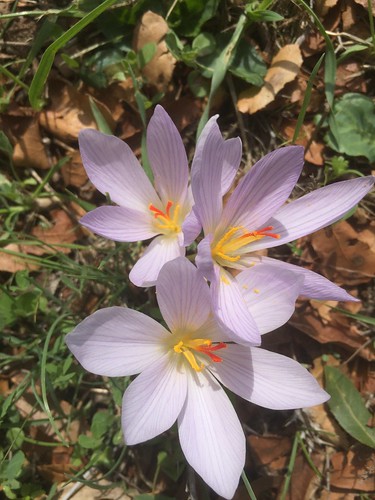
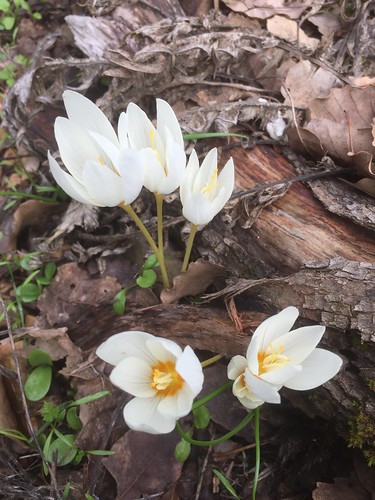
Crocus Triad
Crocus pallasii 

Crocus ochroleucus
Crocus ochroleucus

Crocus hermoneus?
Crocus hermoneus?

Sternbergia
Sternbergia clusiana

Labels: , , , ,

Tuesday, October 17, 2017

Olive Harvest

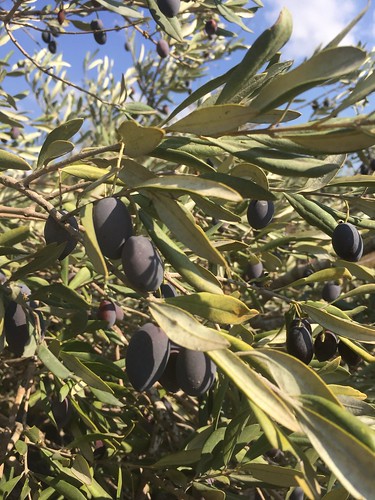
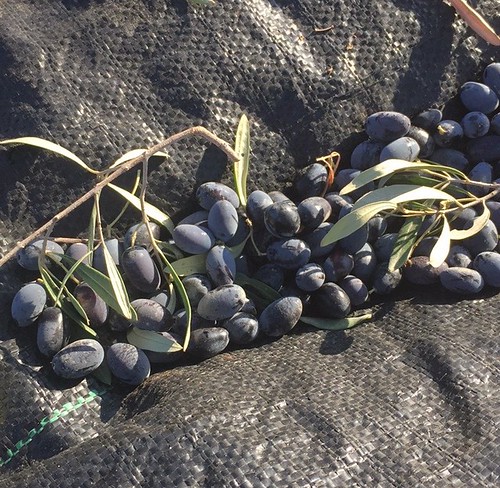
Black Syrian Olives

All members of the family take part in this annual tradition: Harvesting the blessing of olive fruit from our very own olive grove. We have about 60 olive trees in various ages (from several hundred years old transplants that were kicked off an avocado plantation about 20 years ago; trees we planted and grafted almost 40 years ago, and newer ones that don't even bear fruit yet).

We take a week off our real jobs and work harder than ever getting all the olives picked between the first rainfall (which washes the dust) and the second. Too much rain will spoil the olives rapidly and make them useless for olive oil. It is more of a regional family tradition than it is a profitable endeavour.

This year I'm especially excited to harvest the olives (a very tedious task, which I never particularly liked) because I've been using a lot of olive oil in my soaps and it's important for me to really experience the connection between the earth, plants and finished products - from start to finish. This is one of the main reasons I moved back to the village, and I hope to also grow and produce my own essential oils eventually.
Olive Harvest 2017

We grow the "Syrian" varietal, which is very sharp in favour and yields a lot of oil. We press most of them for oil, and set a side a little bit for pickling and eating.
Green Olives for Pickling
These green olives I set aside for pickling...

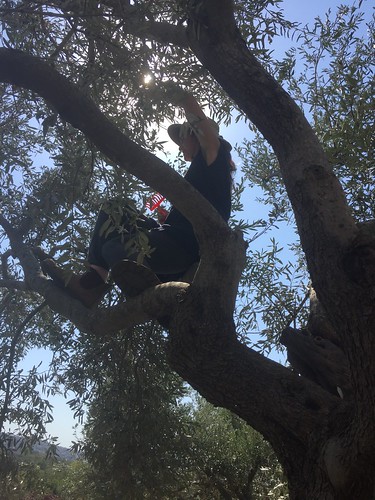
Olive Tree Acrobatics
Cirque de Huile:
Some olive harvest acrobatics performed by my sister-in-law.
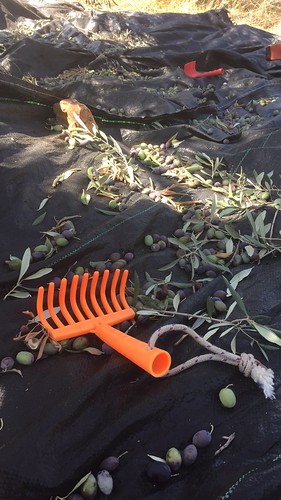
Tools of the Trade
This little rake looks like a toy, but it's actually the most important tool of the trade... We use it to "brush" the olives off the branches. It saves a lot of fine manual labour and does not harm the tree as much as beating it with sticks.
Olive Harvest 2017
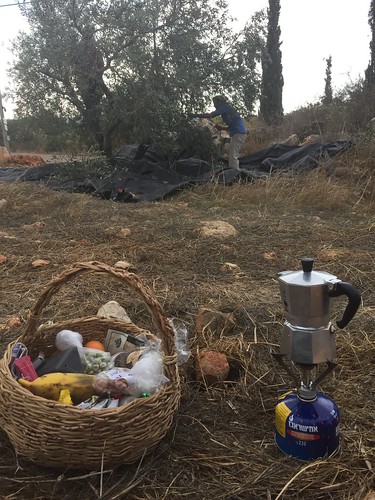
Okay... Time for a coffee break! I will post more pics as the harvest progresses. This year I also plan to go to the olive press myself to make the oil. Going to be fun!

Labels: , , , , , , ,