Monday, April 08, 2019

Immortelle l'Amour Soap

Helicrysum italicum

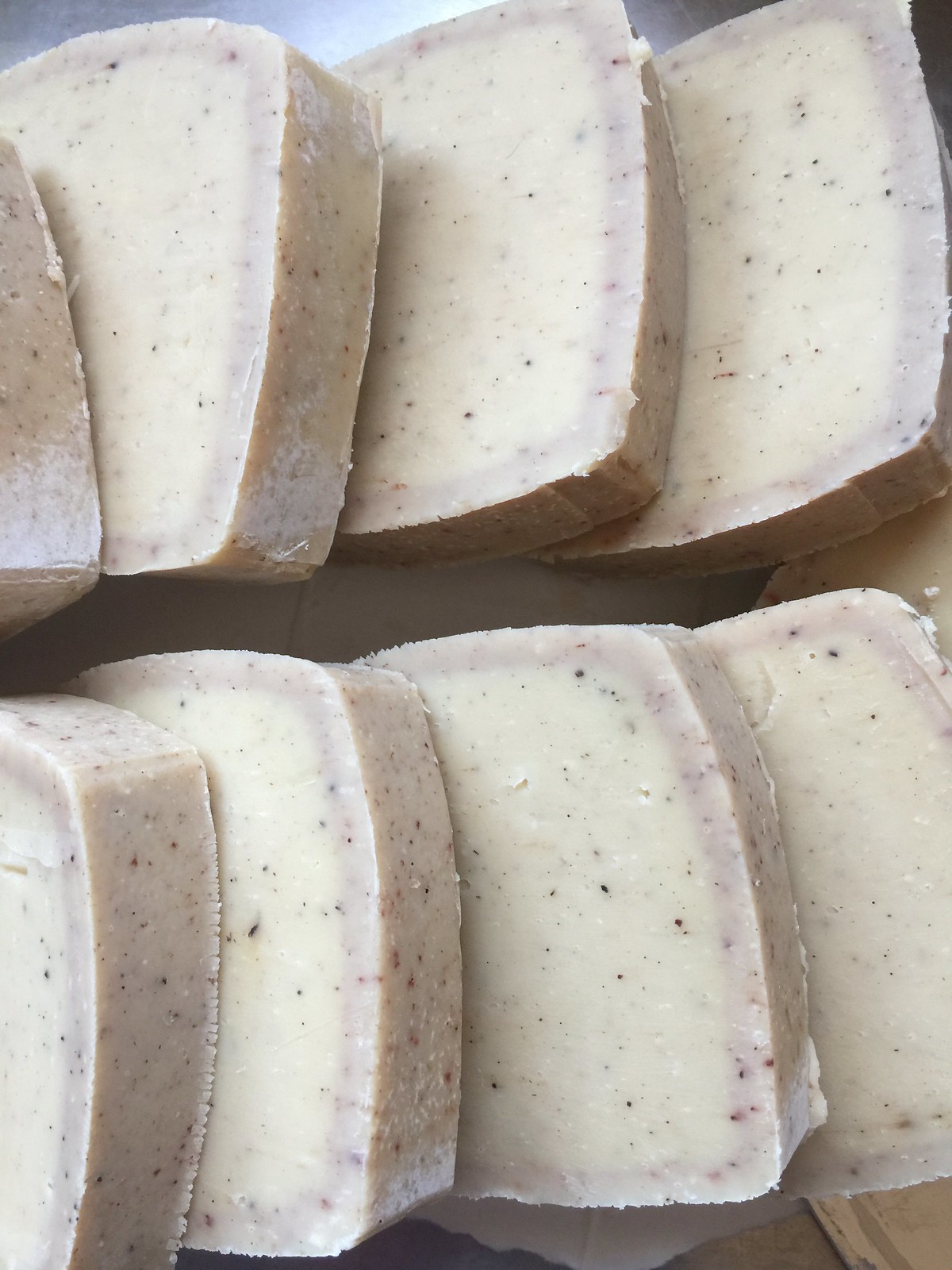
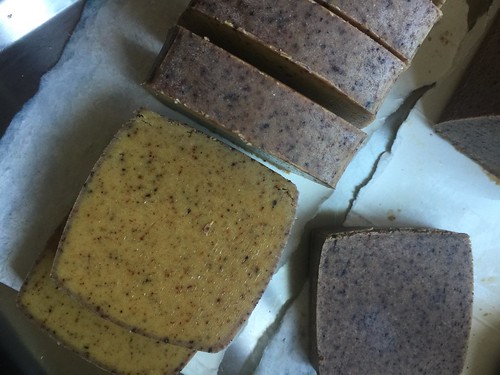
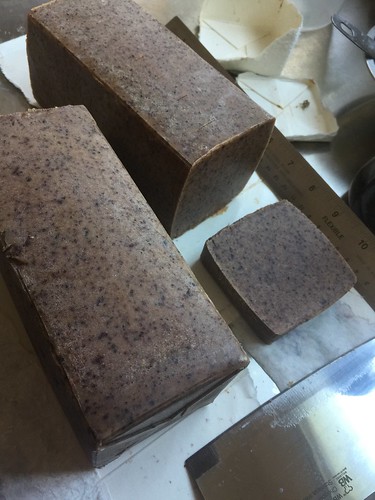
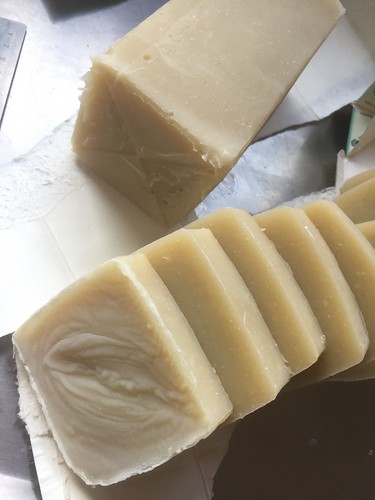
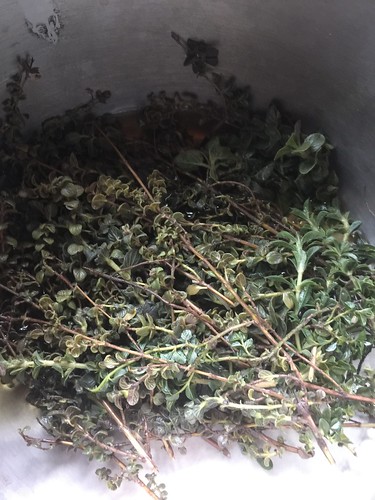
It takes a bit of imagination and creative formulation adjustments and changes to translate some of the perfumes into soaps. Last month, I've whipped up the first version of Immortelle l'Amour soap, which was tricky because immortelle (Helicrysum italicum) is one of the most expensive perfume and aromatherapy materials. The bars have been curing nicely for a month now, made with decoctions and oil infusions of the fresh and dried plants from my organic garden; as well as cinnamon, chamomile, marigold and vanilla beans and powdered cinnamon bark. A little bit of maple syrup added in the as well!

The result is delicious, albeit not exactly like the perfume. It has the same sweet intensity but a little more fresh and light because I did not use the heavy, curry-like immortelle absolute (otherwise nobody would have been able to afford it).

The soaps will be ready and wrapped April 17th, but you can already order them online now!

IMG_4566
Ingredients (In order of presence in the formula):
Saponified Virgin Coconut Oil
Saponified Olive Oil
Saponified Shea Butter
Saponified Palm Kernel Oil
Saponified Cacao Butter
Jojoba Oil
Maple Syrup
Vanilla Paste
Natural Immortelle l'Amour Perfume Blend (Benzoin, Peru Balsam, Sweet Orange, Cinnamon Leaf Oil, Marigold, Chamomile)
Cinnamon Powder

IMG_4613


Labels: , , , , , , , , , , , ,

Tuesday, March 06, 2018

New Soap: Hulnejan

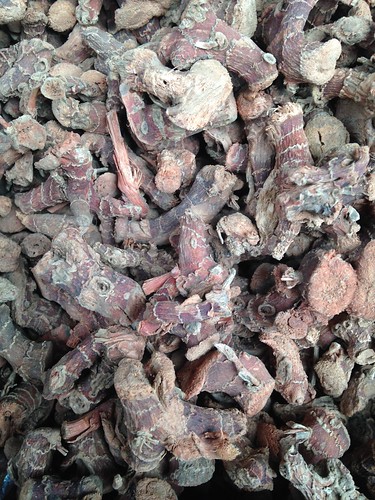
Hulnejan Roots

Inspired by the region's aromatic traditions, I'm pleased to present to you yet another wonderful soap I've recently developed: Hulnejan.
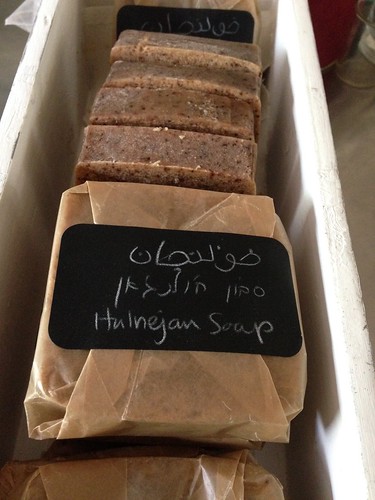
Hulnejan is a spicy, exfoliating soap bar with strongly brewed galangal, gingeroot and cinnamon. Properties: warming, cleansing, exfoliating.
Hulnejan Soap

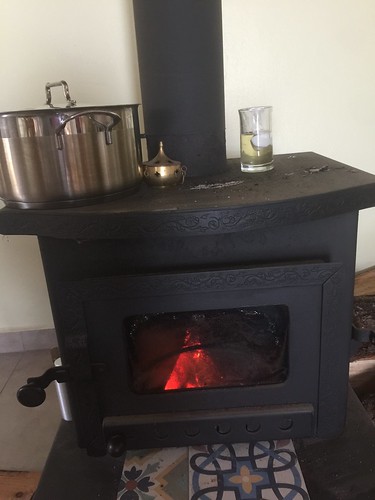
Hulnejan tea is a decoction of spicy roots and barks prepared by the Druze in Northern Israel over the winter months. It has strong warming and anti-bacterial qualities, exactly what one needs to stay healthy during the chilly months of the Galilee and the Golan. It is typically drank very sweet as well (sweetened with either sugar or honey), and with some chopped pecans on top. The best way to make it is by brewing it on the stove for hours, allowing the scent to fill the home, clear it from microbes while making it smell warm and cozy. It also helps to homidify the air, which is much needed as the fire tends to make the environment very dry.
Brewing Hulnejan Tea

This limited edition soap bar is made from olive-oil and water infusions of Hulnejan tea. It creates a beautiful peeling soap bar that promotes circulation and rejuvenation of the skin. Like all of our soaps, it is also superfatted - which means it has wonderful moisturizing qualities due to high content of unsaponified oils within the formula. It is the same rich-lathering formula we've always had for our soaps, now handcrafted in our new studio in Clil by yours truly!

We're using olive oil that was cold-pressed from olive which were organically grown in a Druze village near Mt. Meron; Oganic virgin coconut oil (both are food grade), palm oil and castor oil for that extra emollient quality. The result is a hard, long-lasting bar with rich lather that is very moisturizing - a real treat for your skin, hair; and with a wonderfully spicy fragrance that brings to mind wintry teas by the fire place.

Hulnejan Soap
Ingredients: Saponified vegetable oils (coconut, olive, palm, castor), water infused with dried galangal, ginger and cinnamon, powdered dried cinnamon bark, powdered dried ginger root, natural fragrance (essential oils and absolutes of galangal, ginger, cinnamon, cardamom)

Hulnejan Soap


Labels: , , , , , , , , , , , ,

Monday, March 05, 2018

Beach Lily Shampoo Bar and Body Butter

Beach lily. Smells incredible

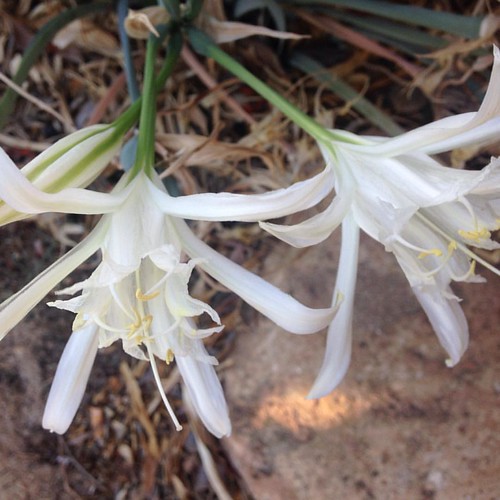
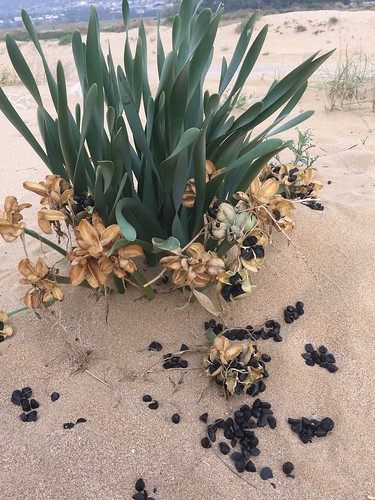
With its intoxicating scent and proximity to the sea, their luscious winter greenery and charcoal-like seeds, beach lilies give me inspiration constantly. The smell is similar to lilies but also to narcissus, but it's very delicate. Paired with the salty air of the Mediterranean it is easy to understand why they are so lovable.

Beach Lily in the Winter
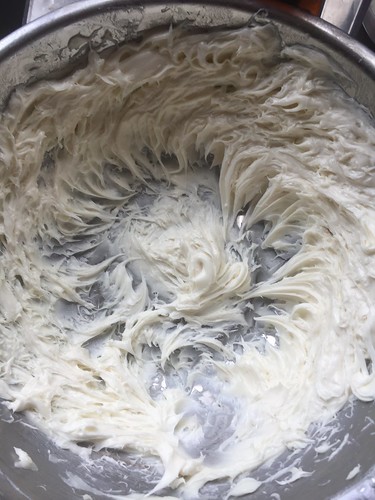
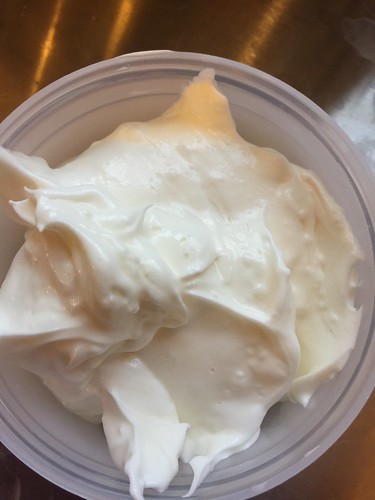
If I could I would wrap myself with their scent year-around. But of course that is not possible. So I've created an imaginary beach lily accord, and started playing with it in a couple of products. First came the scent itself - centred around ylang ylang and ginger lily, which I used in my bath and as a diffuser scent. Then I decided to make more of it and prepare body butters and scent it with this blend. The butters are amazing - I found a formula that actually works and is rich but also more easily absorbed, and does not develop annoying shea butter grains after it cools down. I whip it into a lovely creamy texture. It contains shea butter, cacao butter, virgin coconut oil and castor oil and a few other "secret ingredients".
Whipped Body Butter (Rahat Lukoum)
Sadly, I found this base not to be the best canvas to carry the Beach Lily fragrance though. I wear it and enjoy it all the same, but the scent changes a bit in reaction to the base ingredients. I tried to scent the same formula of body butter with antoher fragrance and it turned out divine (Rahat Lukoum scent). So I know the formula is fine, but just does not lend itself well to all perfumes. This is why functional perfumery is so much more challenging, by the way.

Gingerlily Whipped Body Butter
Lastly, I poured the scent into a lovely soap bar that is designed as a shampoo bar, but also good for all-over-the-body moisture and rich fluffy lather. Previously, I tried this new formula only with yang yang essential oil. It is an entirely different formula than my other soap bars, as it contains higher proportion of castor oil, that is an excellent humectant and conditioner for the hair), cacao butter, shea butter and coconut milk (!). I didn't want to risk putting a complex blend in it the first time, in case it does not turn all that great. But it turned out amazing, both in texture, lather, moisturizing properties and its ability to not dry the hair (I can easily use it on my dry curly hair without needing a conditioner after). It simply flew off the shelves. So this time I added the Beach Lily perfume and I think I'm going to hide some of it away before it will disappear!
I put the Beach Lily & Coconut Milk shampoo bar online already so that you can purchase it, and I think I will need to make a new batch pretty fast.

Beach Lily & Coconut Milk Soap

Beach Lily Shampoo Bar


Labels: , , , , , , , , , , , , ,

Thursday, February 22, 2018

New Soap: Za'atar

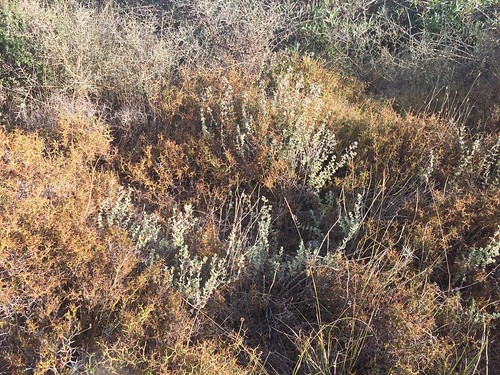
Steeping Za'atar for Soap

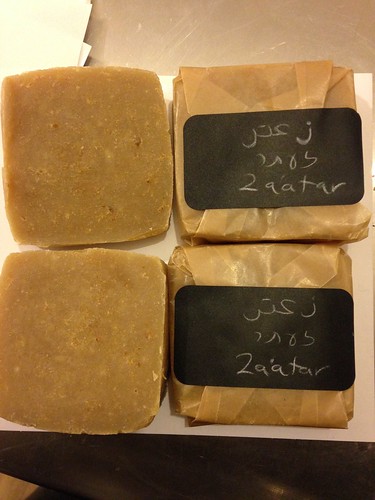
At long last, a new soap is made, and is available online: Za'atar - a melange of wild thyme and oregano from the mountain behind my home, and my garden. Properties; cleansing, disinfectant, anti fungal.

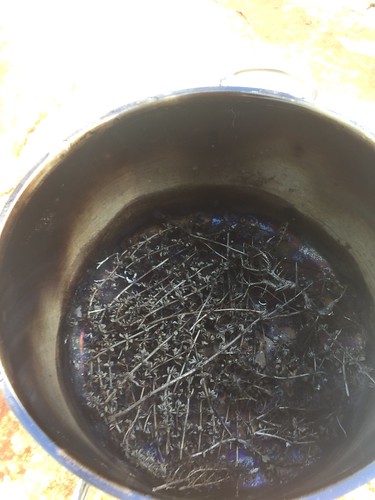
The za'atar soap I've been dreaming of making for 8 months now underwent many obstacles, including me not paying attention and charring the wild za'atar decoction meant for the lye (see image below). Moreover, when I finally made a decoction and that didn't scorch, it was a cold day, ad it took too long to trace and once added the essential oils it congealed too fast. The bars turned out fine but visually are not as consistent and pretty as they should have been - with a texture that shows pockets of oil. It has a fine za'atar smell, and works wonderfully like all my other soaps though.

Charred Za'atar

This limited edition soap bar is made from olive-oil and water infusions of various types of Za'atar - thymol and carvacrol rich plants that grow wild on the mountains around the southeast Mediterranean basin: Ezov/hyssop/wild oregano (Origanum syriacum), Winter Savory/Satureja (Satureja montana), Israeli Thyme (Corydothymus capitatus) and Mediterranean Thyme (Thymbra spicata), with the addition of cultivars grown in my garden, such as common oregano, marjoram and thyme. These infusions are used in all of the soap's phases, then supercharged with the aroma of wild oregano essential oil.

The result beautiful bar of soap, superfatted - which means it has wonderful moisturizing qualities due to high content of unsaponified oils within the formula. It is the same rich-lathering formula we've always had for our soaps, plus the healing properties of the wildcrafted herbs.
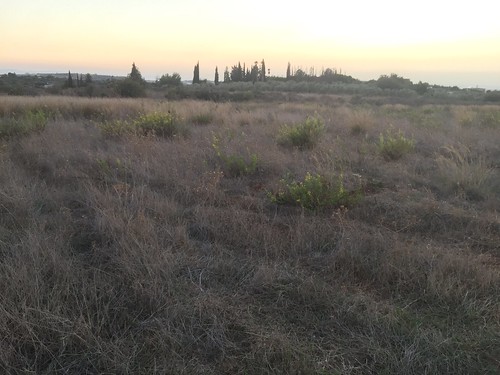
Summer Za'atar on the border with Lebanon
Among the locals, all the wild herbs mentioned above are called "za'atar interchangeably, even though the Origanum syriacum is the "real" za'atar. Because they are all rich in thymol and carvacrol, they have similar healing properties, strongly antiseptic (antibacterial and anti-fungal), and also help with various skin ailments (eczema in particular). And in other (non-skin-related) uses - most is drank as tea, primarily for digestive issues such as stomach aches, parasites and queasiness; generally used in oral hygiene, as well as curing headaches, earaches, colds and flu and respiratory complaints.

We're using olive oil that was cold-pressed from olive which were organically grown in a Druze village near Mt. Meron; Oganic virgin coconut oil (both are food grade), palm oil and castor oil for that extra emollient quality. The result is a hard, long-lasting bar with rich lather that is very moisturizing - a real treat for your skin, hair and even for shaving; and with the funky but lovable elecampane scent.

Za'atar Soap Bars
Ingredients: Saponified vegetable oils (coconut, olive, palm, castor), water, Za'atar (Origanum suriacum, Satureja montana, Corydothymus capitatus, Thymbra spicata), Thyme, Oregano and Marjoram infusions , Oil of Wild Oregano (Origanum vulgare)


Labels: , , , , , ,

Sunday, November 05, 2017

Elecampane Soap Bar

Elecampane Meadow
Elecampane meadow at sunset. This is where me and my mom harvested younger leaves and flowering tops of this Astaraceae plant for my soap making and oil infusions.
Elecampane (Innula viscosa/Dittrichia viscosa (L.) W. Greuter/ Cupularia viscosa (L.) Gren. & Godr.) is a plant with many herbal medicine attributions and healing powers, at least forty different ailments according to the folk medicine of Palestine, chief among them hypertension, relief of swollen feet and legs (common during pregnancy), bruises, diabetes, herpes and rheumatism, infertility and for treating dry skin and for its anti-aging properties.

Modern medicinal uses include: treating intestinal worms, cracked skin, athlete's foot, blood coagulation, topical disinfectant for wounds, and more.

Additional uses: The woody twigs and branches from this perennial bush can be used for bonfires, primarily for baking flatbread. Another useful application is in deterring insects. In Spain entire branches are hang to keep flies at bay. I will have to try this because they tend to get out of control at this time of the year. Extracts of the plant are also used to treat various plant diseases (especially of bacterial or fungal origin), and also the plant itself has a tendency to stop the growth of other weeds around it. Last but not least: Elecampane is what is considered a "pioneer plant": It is the first one to show up in new habitats (for example: areas that recently were devastated by invasive human behaviour such as bulldozers, etc.). It was originally a marsh plant, and likes muddy areas, which is why it is now so commonly found on the sides of the road (where the water tends to build up), the areas around creeks or rivers, and in areas that got flooded in the winter rains.

The young leaves are pickled in vinegar and can be eaten. I'm still trying to find out what this strange flavour and brought texture could go with.

Elecampane
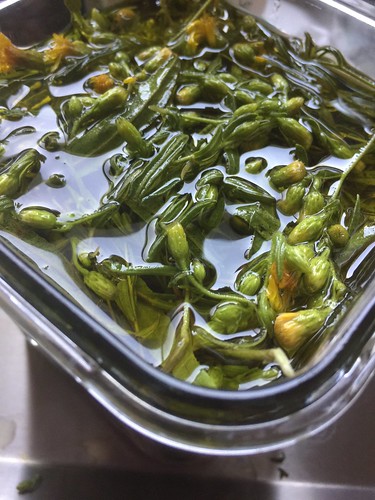
Oil infusion of elecampane flowering tops and fresh leaves. The smell was strong, resinous and true to the plant. It has a bit of a funk to it, very much like marijuana, but different.
Elecampane (Inula helenium) Soapmaking Process
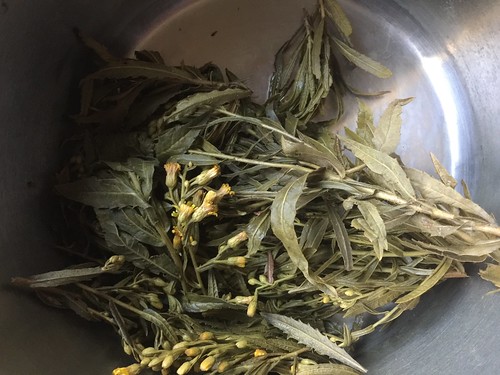
The spent elecampane branches after steeping them to make a very strong decoction.
Elecampane (Inula helenium) Soapmaking Process
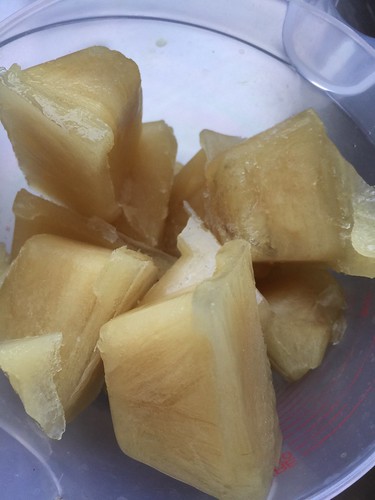
Frozen elecampane decoction. If not frozen, the various materials within the water will scorch upon contact with the sodium hydroxide (AKA lye).
Elecampane (Inula helenium) Soapmaking Process
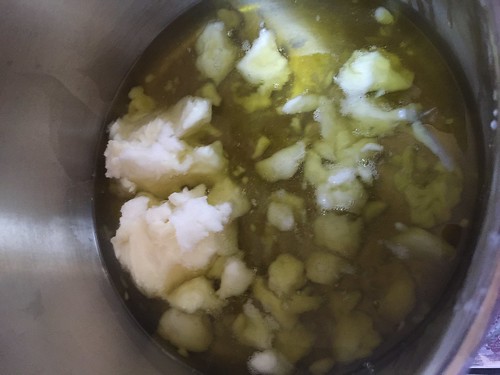
Melting the solid fats along with the oils over very low heat.

Elecampane (Inula helenium) Soapmaking Process
The oils are all melted nicely now! They include an oil infusion of elecampane, by the way. It was very strong smelling, with that funky resinous odour that is typical for this plant; but the scent got completely lost during the soaping process. Next time I will be infusing a lot more elecampane leaves into the entire oil/fat mixture (and this way, by using a gentle heating method, I will also skip the step of aging the infused oil).
Elecampane (Inula helenium) Soapmaking Process
Elecampane ice cubes
Elecampane (Inula helenium) Soapmaking Process
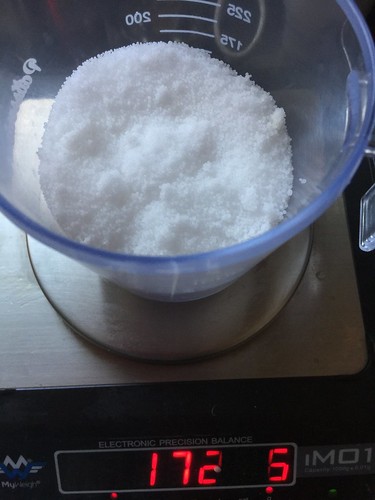
Weighing the lye
Elecampane (Inula helenium) Soapmaking Process
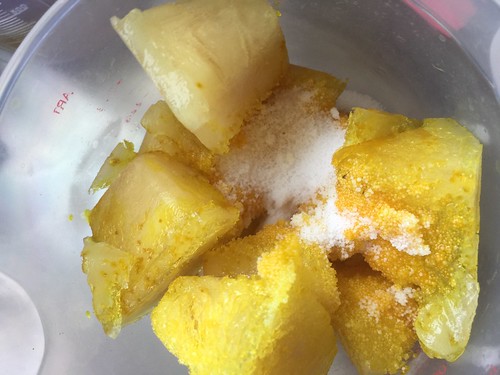
Sprinkle lye over ice cubes
Elecampane (Inula helenium) Soapmaking Process
Waiting for the ice to melt...
Elecampane (Inula helenium) Soapmaking Process
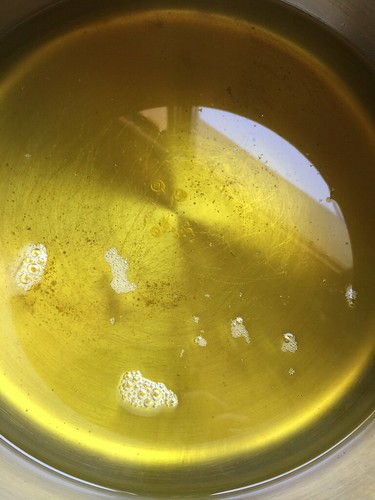
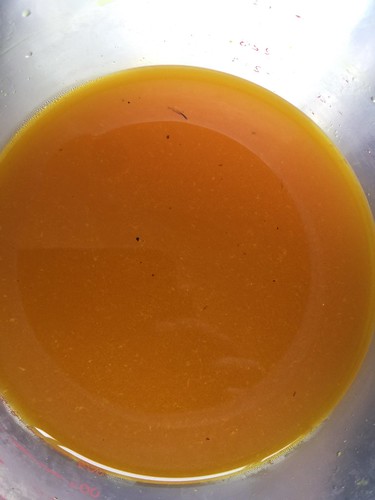
Elecampane decoction lye - don't let this honeyed look fool you. This will burn like hell if you touch it!
There are few missing photos from the process, because when mixing the oils with the lye it's a bit of a time sensitive and very hands-on process. It looks similar to making icing, and the soap mixture looks very much like custard when it's ready for pouring into the moulds.
Elecampane (Inula helenium) Soapmaking Process
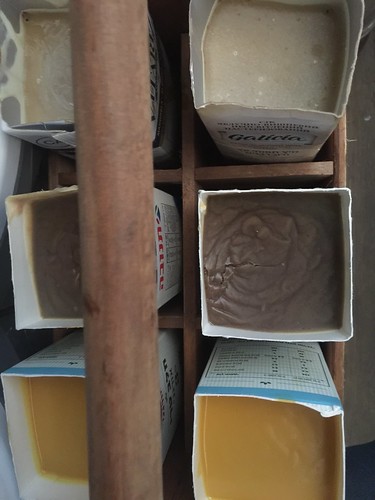
The soap bars I got lined up that day. It was a very productive soaping day! Elecampane at the bottom, Mastic at the centre, and Absinthe & Lavender at the top. All of them will be ready November 26th.
Elecampane Soap Logs
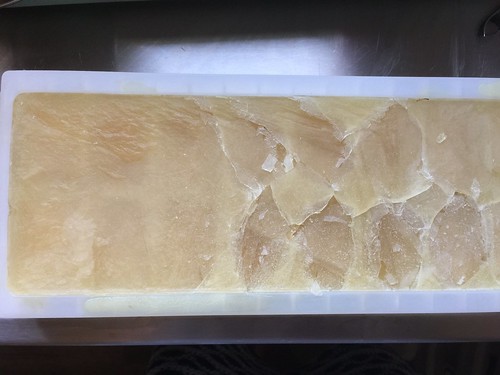
Logs of elecampane soaps which were very soft for pulling out of the Mold. I had to wait for ten days to do it!
Elecampane Soap Bar Logs
Elecampean soap logs gradually losing their golden look and turning olive-brown.
Elecampane Soap Bars -Slicing Time!
Elecampane soap logs are finally getting sliced!

Notice the "rind" - it will disappear once the soap is cured, due to oxidation and the gelling process.
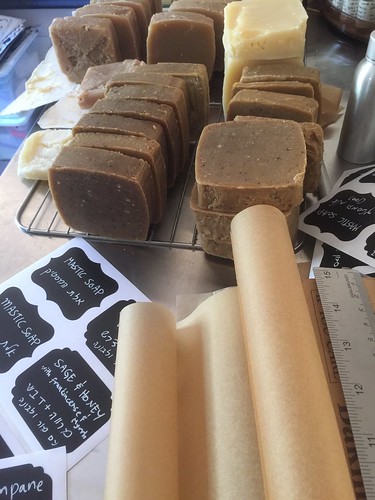
Srapping & Labeling Soap Bars
Here is a glimpse into the packing and labeling step. Even though I won't get to wrap the Elecampane soap until November 26th, when they would be fully cured and ready for you to enjoy!
You can, however, pre-order them online already.

Wild Soap Bars

Labels: , , , ,

Tuesday, October 17, 2017

Olive Harvest

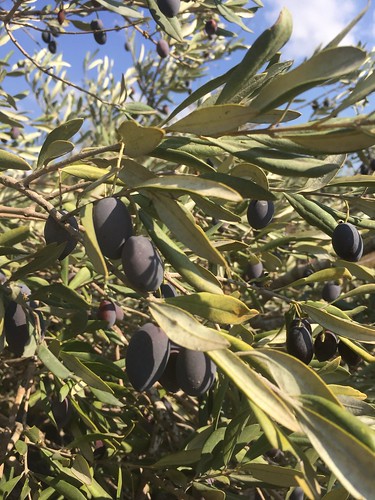
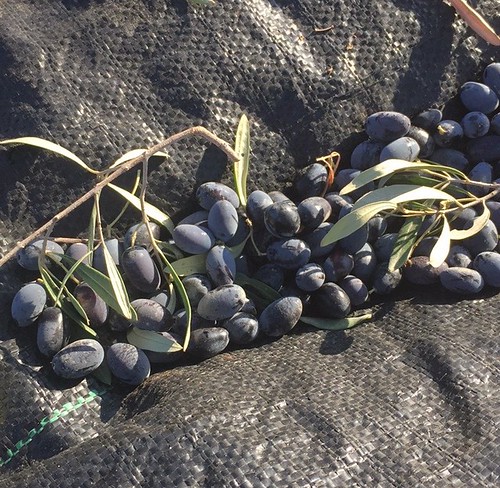
Black Syrian Olives

All members of the family take part in this annual tradition: Harvesting the blessing of olive fruit from our very own olive grove. We have about 60 olive trees in various ages (from several hundred years old transplants that were kicked off an avocado plantation about 20 years ago; trees we planted and grafted almost 40 years ago, and newer ones that don't even bear fruit yet).

We take a week off our real jobs and work harder than ever getting all the olives picked between the first rainfall (which washes the dust) and the second. Too much rain will spoil the olives rapidly and make them useless for olive oil. It is more of a regional family tradition than it is a profitable endeavour.

This year I'm especially excited to harvest the olives (a very tedious task, which I never particularly liked) because I've been using a lot of olive oil in my soaps and it's important for me to really experience the connection between the earth, plants and finished products - from start to finish. This is one of the main reasons I moved back to the village, and I hope to also grow and produce my own essential oils eventually.
Olive Harvest 2017

We grow the "Syrian" varietal, which is very sharp in favour and yields a lot of oil. We press most of them for oil, and set a side a little bit for pickling and eating.
Green Olives for Pickling
These green olives I set aside for pickling...

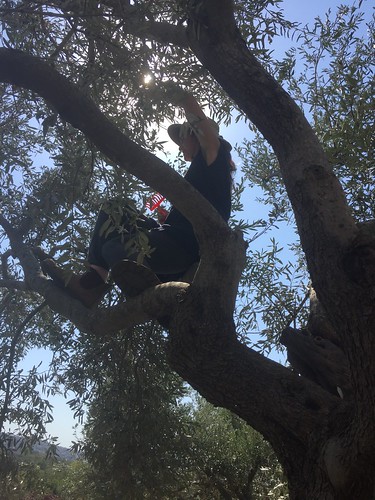
Olive Tree Acrobatics
Cirque de Huile:
Some olive harvest acrobatics performed by my sister-in-law.
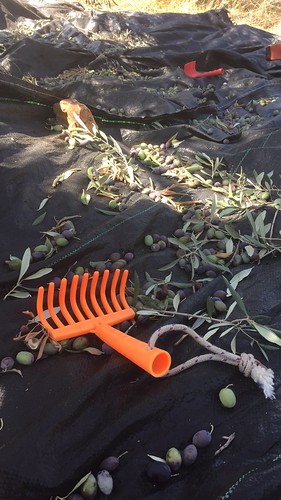
Tools of the Trade
This little rake looks like a toy, but it's actually the most important tool of the trade... We use it to "brush" the olives off the branches. It saves a lot of fine manual labour and does not harm the tree as much as beating it with sticks.
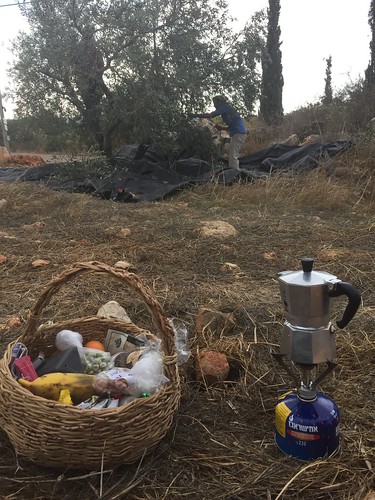
Olive Harvest 2017
Okay... Time for a coffee break! I will post more pics as the harvest progresses. This year I also plan to go to the olive press myself to make the oil. Going to be fun!

Labels: , , , , , , ,

Wednesday, October 11, 2017

Summer Sage & Honey Soap

Summer Sage Harvest
In the harsh summer conditions, certain plants developed a defence mechanism that prevents them from complete dehydration in the long drought conditions. The Three-Lobed Sage (Salvia fruticosa) is one of them. Naturally, the leaves in the summer produce a different aroma, and seem more concentrated to me. When not covered totally in desert dust, the leaves have a beautiful silvery-yellow-green colour, and are crinkly and "closed". They open in the winter after they get a few gulps of rain; and then will become larger and greener, with the texture turning from dry suede into fresh velvet.
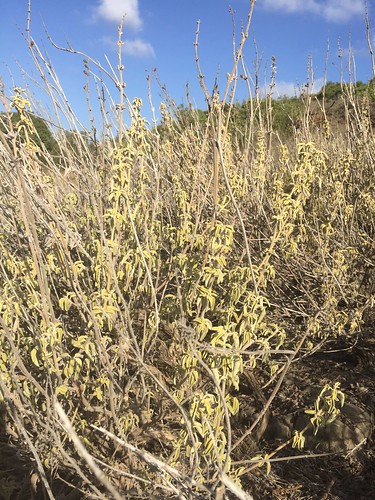
Sage harvest and olive oil infusion (for use in handmade soapmaking)

This particular sage (in Hebrew it can be translated literally into "Triangular Sage" because of its leaf made of three sections), shares many similar actions and properties with the garden/common/culinary sage, or as we call it in Hebrew, מרווה רפואית - literally translated as "medicinal sage" (Salvia officinalis), which is native to Europe. Our sage is actually gentler and safer than the latter, especially because of the lower thujone levels. Thujone interfers with the hormonal activity in the female body especially; and also has neorotixic and hallucinogenic influences when used in high dose.  Thujone in the wormwood plant is what gives the liquor absinthe its hallucinogenic properties.
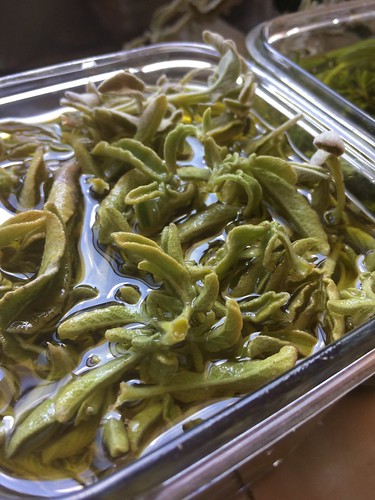
Sage infusion in olive oil
Sage (S. fruticosa) is one of the most valued plants in the region, and so it is only natural that I wanted to include it in one of my concoctions. It is used for myriads of ailments, mostly using its antiseptic, expectorant and "drying" properties to treat colds, and is also an aid for women who wish to wean their babies from nursing - it dries the milk and saves the agony of breast infection in the process. It also helps with menstrual cramps and pain, and in all matter of indigestion. It also helps to clear and prevent Nephrolithiasis (kidney stones) and to fight fungal infections. It helps to calm the nerves, and used to treat headaches (especially as synergy with other local cure-alls such as za'atar and mint, in an oil infusion rubbed onto the temples). It is also used for anxiety and depression - the latter treated by the flowers, a less-known use of the plant.
As for its skin-related properties - it's a valued antimicrobial, astringent, cleansing and purifying plant, which is good against fungal and bacterial infections, but also eczema and psoriasis. Sage tea is excellent rinse for the scalp and will improve colour for dark hair, as well as give a shine and body to it if used instead of a mainstream conditioner.

Spent Sage Leaf
After I infused the leaves for one month in organic, local, cold-pressed olive oil, I strained the leaves (and composted them, of course).
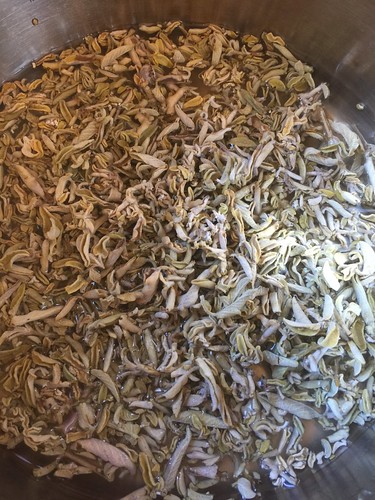
Late Summer Sage
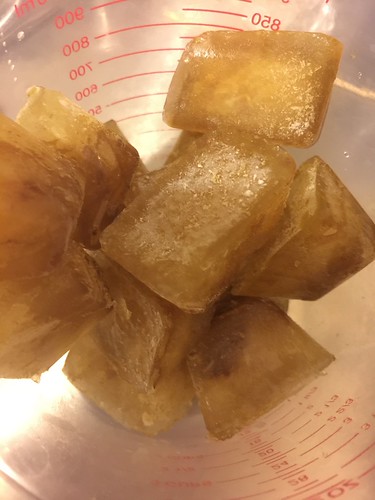
Another batch of leaves I brewed into a very strong tea, and made into ice cubes. If I didn't do that, all the nutrients and plant matter in the tea would get scorched by the caustic soda in the process of making the lye water.
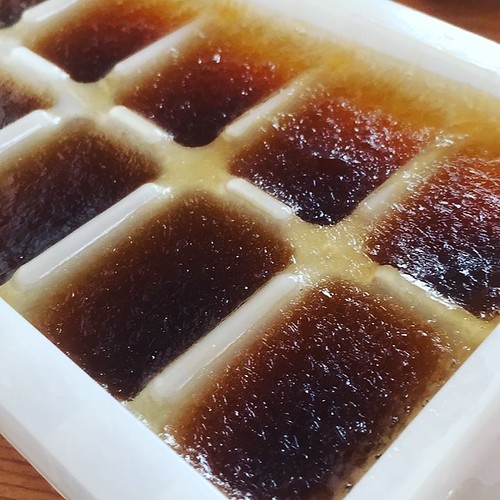
Sage Tea Ice Cubes

Sage Tea Ice Cubes

Bringing on the Lye!
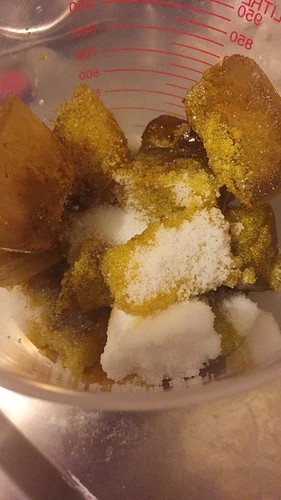
Once the caustic soda comes in contact with the water, a chemical reaction begins to take place, which generates heat very fast, and melts the ice cubes. Because i used only ice cubes, this lowered the temperature of the lye dramatically, which also results in less damage to the oil phase (once these two are mixed together).
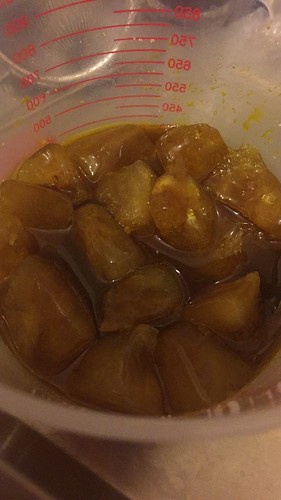
Sage Lye Ice Tea...

Frankincense Tears

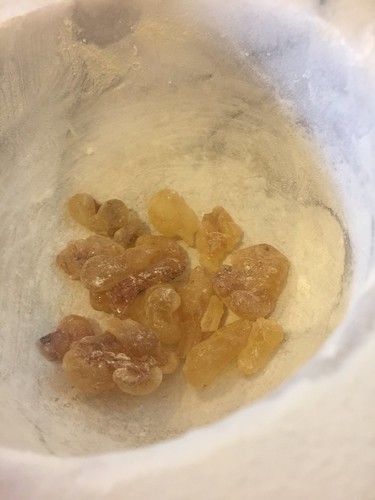
Frankincense tears, about to be ground up for the purpose of scenting and complementing the sage & honey soap. Myrrh is very beneficial for the skin, healing wounds and dehydrating. Frankincense also has healing benefits and both prevent the skin from aging prematurely.
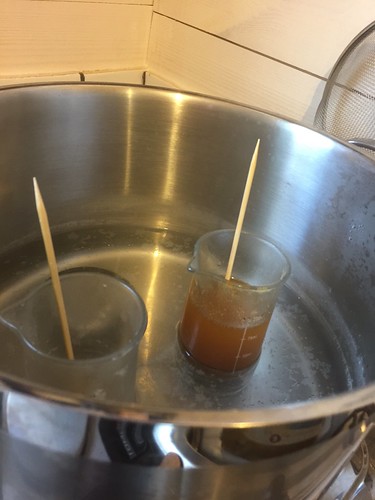
Myrrh in Bain Marie

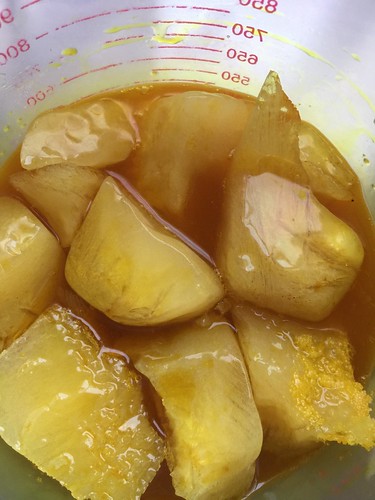
Frankincense and myrrh getting a Mary's bath (Bain Marie means being marinate in a bath, actually). They are both melting slowly into the olive oil... An excellent infusion on its own, by the way. A simple remedy and concoction for skin healing, massage and perfume.

The other oils I used in this particular soap are the same as all my soaps - a winning formula of olive oil, coconut, palm and castor oils. To this I added oil-infusion of myrrh and frankincense resins (added at the very end of the saponification process, which prevents their demolition by the lye), and honey. This was left for 48 hours before unwrapping the moulds (I use 1L milk cartons as my moulds - a great way to reuse something that would have otherwise be thrown directly to the trash; an also saves me miles of wax paper and rinsing and washing).
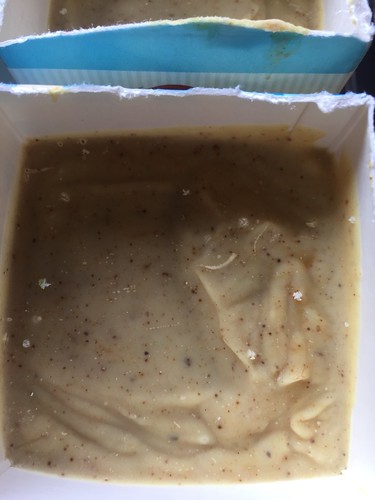
Sage & Honey Soap
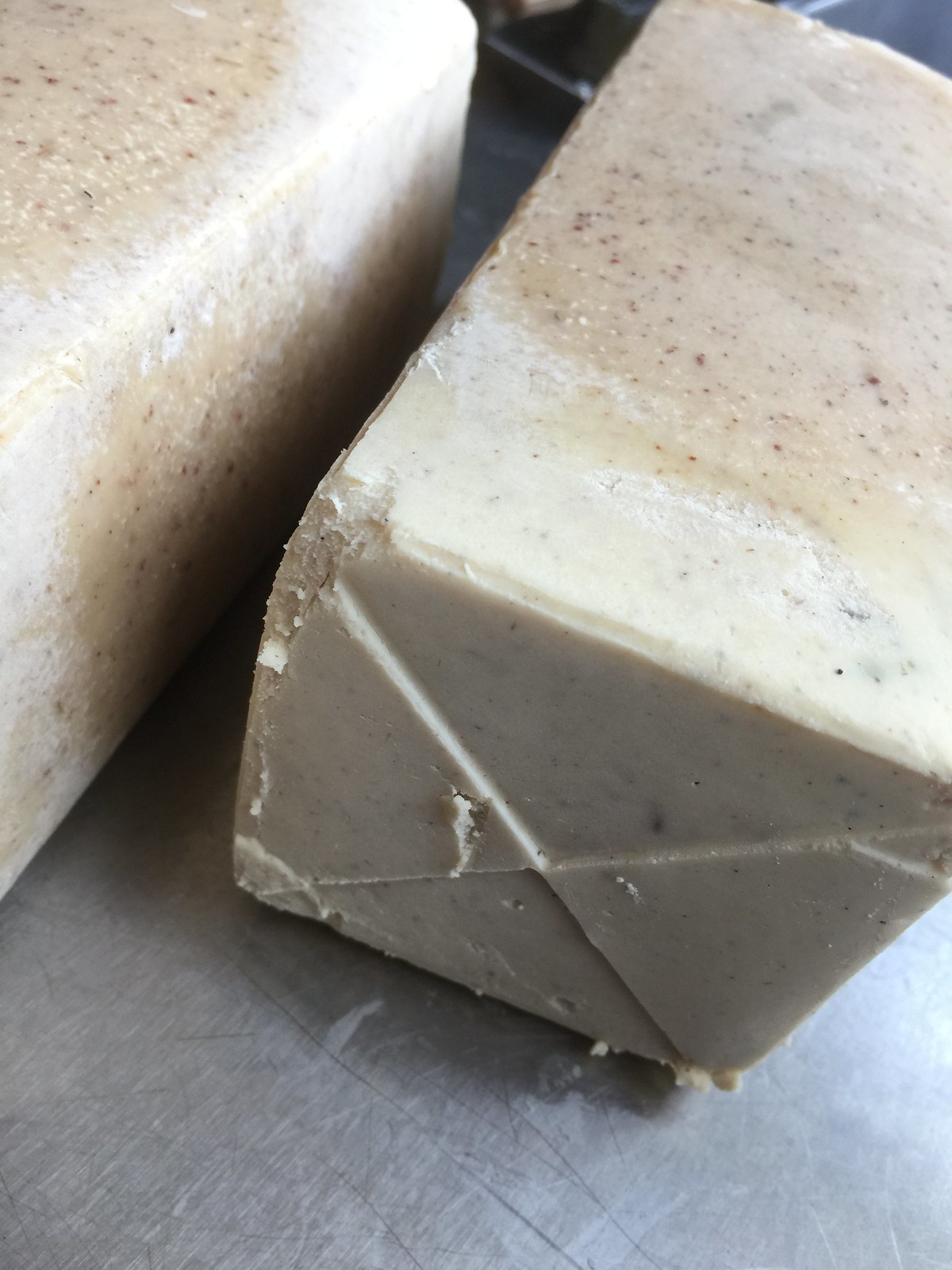
I panicked at first because of the white crystals that formed on the top. I was certain that they were lye flakes that didn't melt. After consulting with my soap mentor, and testing, I was much relieved to learn that they are just soap crystals.

How this soap bar smells was a big surprise to me: it smells almost edible, in an earthy, wholesome kind of way. Not like candy but a little bit like honey cake. If you love a bar of soap that smells sweet and spicy but not in a conventional Christmas candle or cinnamon bun style - this is definitely for you!
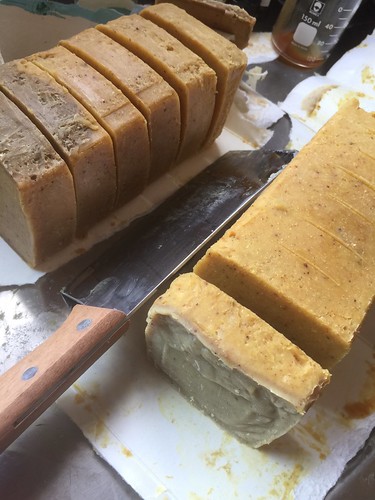
Sage & Honey Soap Bar with Frankincense & Myrrh Resins
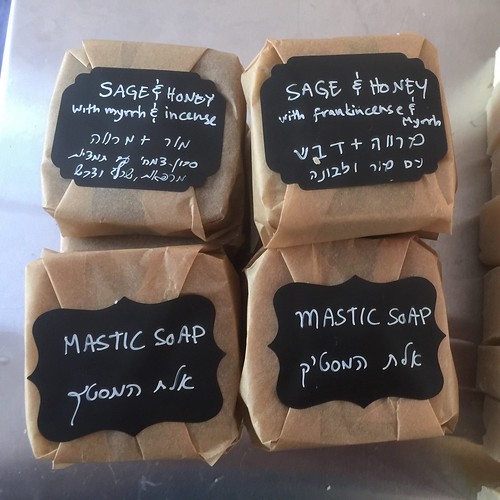
The soaps are hand-sliced and left to cure for a month. They will be ready a month later, on November 10th. You can pre-order them online though - I only have 16 bars so if you love sage and honey and incense, you want to make sure you got one set aside for you!
Labels: , , , , , , , , , , , ,