Tuesday, January 14, 2020

Pallas Athena

I've always admired the Greek Goddess Pallas Athena, since I first read about her as a young child in the Argonautica. Her wisdom, strength and poise impressed upon me that women can also be heroes. She always appears in warrior regalia: helmet and a spear. Her other symbols are the owl, the snake and she is often depicted with a symbol of the snake-haired Gorgon Medusa's head, either held in her hands, or placed upon her sash or shield. Pallas Athena is the one who have sent Perseus to bring Medusa's her to her, with full instructions on how to do so without turning into stone, which is the fate of anyone who gazes upon her terrible face. 

If one looks deeper into the mythology, it is told that Medusa is who she is (meaning: so terrifying that whomever gazes upon her becomes frozen or dead-like) because of a curse Pallas Athena herself cast on her, after Poseidon have raped Medusa in Pallas Athena's temple. So Pallas Athena is not only a warrior but also associated with rage and revenge. 

At the same time this makes one wonder “on which side” was Pallas Athena? Was she siding with the Patriarchal rapist god, or the woman who was raped? Was she commemorating her rage in response to the rape, and giving her the means to protect herself? Or was she enraged that a woman would allow such a thing to happen in the holy temple to the Goddess? Or is the temple actually symbolic of the woman's body - her personal intimate temple? I have a few reasons to believe this is all of the above. Medusa has become a part of Pallas Athena, either because she represents her more innocent side that was betrayed and raped; or because she was Pallas Athena's victim. And victims and their perpetrators are forever connected in an embrace that is at the same time a curse, and at the same time the key to their respective healing and redemption. 


Is Pallas Athena in a sense is a very Patriarchal female-goddess, a female goddess who is trying to navigate through the new realms of Patriarchy, using masculine tools such as weapons and revenge? Or is she giving women the tools to redeem their frozen, traumatized selves and transform them into powerful magical beings such as Pegasus (the winged-horse that was born out of Medusa after she was beheaded)?

The story echoes an ancient story: The Descend of Innana to the Underworld, a Sumerian myth that is the most ancient written myth we ever found, written in cuneiform on clay slates some 6,000 years ago. In this myth we can peek into the Sacred Feminine and its power before it was tainted with fear, hatred and oppression. Inanna was the Goddess of Fertility and War, just like Pallas Athena reconciles within her Wisdom and War. Some say that Venus or Aphrodite was Innana's later form, being the tame goddess of love, beauty and fertility. But I think that Innana held within her all Sacred Feminine -  Pallas Athena and Aphrodite. She was both powerful, just and wise, as well as sensual, sexual and seductive. She is portrayed in that ancient myth as the master of her own self, body, soul, mind, spirit. She has conquered the world on all of its layers - the heavenly and spiritual (the sky or heaven), the earthy and sensual (earth), and lastly the underworld which is the shadow aspect of the world, the unseen, and hidden, the ugly. She is no frozen Medusa when she chooses on her own terms  to bring her own death upon her, because a lifeless body and yet she has a plan and she is able to come back to life, buy her way out of the underworld and even seek revenge at those too weak to support her sacred journey. Innana exemplifies a deity that is both dark and light, sensuous and clever, enjoys her body, smart and cunning, and can face her own death and conceive her own rebirth and redemption. She shows us how to be authentic and connected to our entire being on all its levels: light and dark, shadow and self, passive and active, spiritual and earthy and even beyond and underneath this world. And to me this is what I peel away when I look at the myths of Pallas Athena as well. 

In her own way, Pallas Athena integrates Medusa, her frozen and frightened self, her lower existence in the shadows, by wearing her as a brooch or perhaps even a trophy on her regalia. But this integration is symbolic and not internalized. Medusa is seen as an enemy; while Innana's descend into the underworld is considered her greatest achievement, after which her lower self and higher self become one and whole; and her decaying carcass, her shadow is embraced and returned back to life and back into the land of the living, to continue leading a life, making mistakes and continuing to learn and evolve. Pallas Athena, without knowing, is forever frozen just as much as her trophy, for not embracing her fully. For not allowing her weaker aspects the space they need to be felt and there for to heal and become whole. 

Palas Atena perfume is one of my first creations (2001) and is an Oriental-Spicy perfume with champaca flowers, lavender, neroli and cinnamon over a base of amber, patchouli and sandalwood. It brings me a bit of synenthetic response, seeing the colours of crimson and gold which I imagine the goddess to be wearing. I hope wearing this will enable you to reconcile all those aspects of yourself. When I wear it I feel powerful and smart and sensual. I hope it will do the same to you, and maybe even other things that I can't even imagine.

The image is of Pallas Athena Attic red-figure kylix painting from c. 480-470 BC showing Athena observing as the Colchian dragon disgorges the hero Jason


Labels: , , , , , , , , , , ,

Monday, April 08, 2019

Immortelle l'Amour Soap

Helicrysum italicum

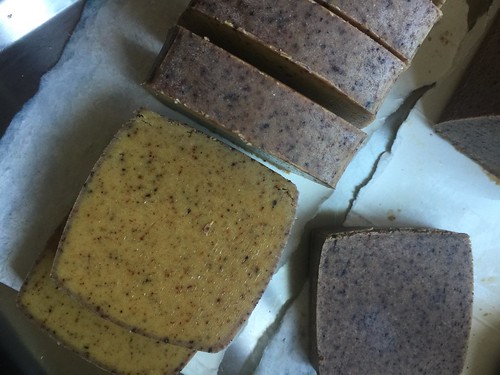
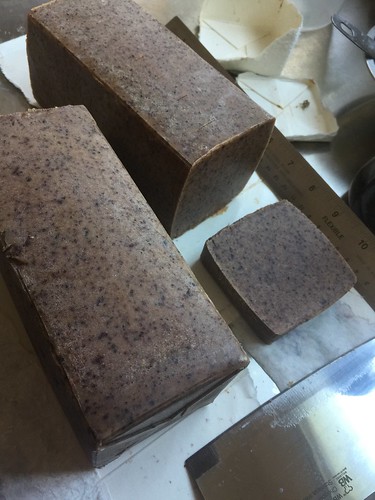
It takes a bit of imagination and creative formulation adjustments and changes to translate some of the perfumes into soaps. Last month, I've whipped up the first version of Immortelle l'Amour soap, which was tricky because immortelle (Helicrysum italicum) is one of the most expensive perfume and aromatherapy materials. The bars have been curing nicely for a month now, made with decoctions and oil infusions of the fresh and dried plants from my organic garden; as well as cinnamon, chamomile, marigold and vanilla beans and powdered cinnamon bark. A little bit of maple syrup added in the as well!

The result is delicious, albeit not exactly like the perfume. It has the same sweet intensity but a little more fresh and light because I did not use the heavy, curry-like immortelle absolute (otherwise nobody would have been able to afford it).

The soaps will be ready and wrapped April 17th, but you can already order them online now!

IMG_4566
Ingredients (In order of presence in the formula):
Saponified Virgin Coconut Oil
Saponified Olive Oil
Saponified Shea Butter
Saponified Palm Kernel Oil
Saponified Cacao Butter
Jojoba Oil
Maple Syrup
Vanilla Paste
Natural Immortelle l'Amour Perfume Blend (Benzoin, Peru Balsam, Sweet Orange, Cinnamon Leaf Oil, Marigold, Chamomile)
Cinnamon Powder

IMG_4613


Labels: , , , , , , , , , , , ,

Tuesday, March 06, 2018

New Soap: Hulnejan

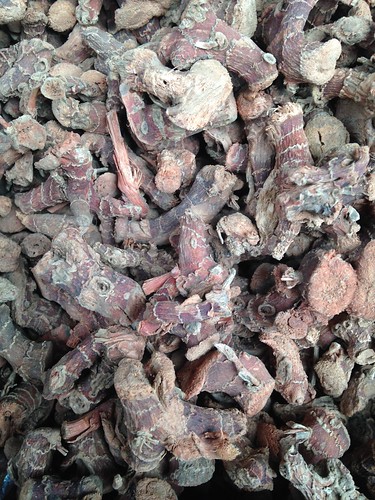
Hulnejan Roots

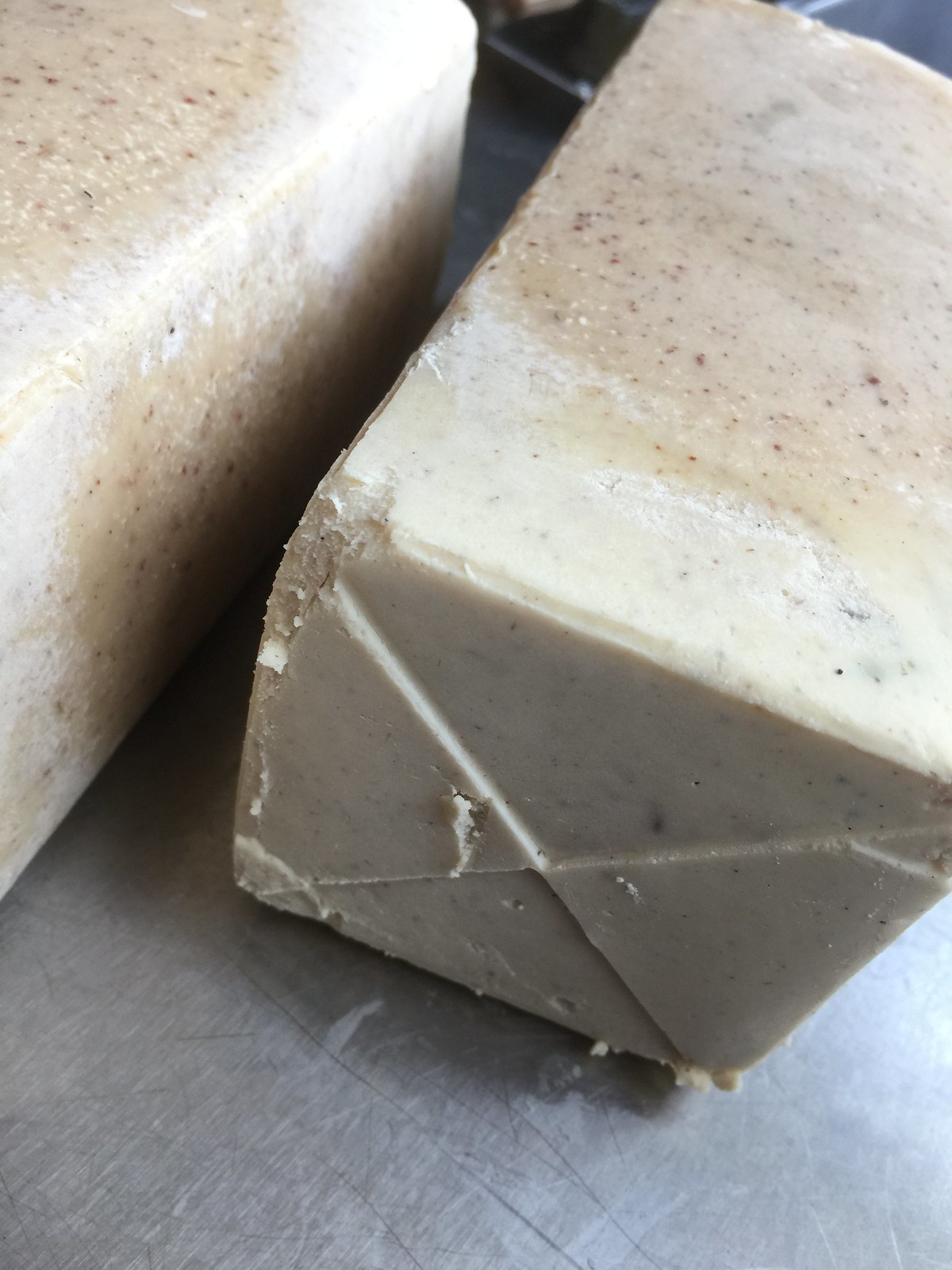
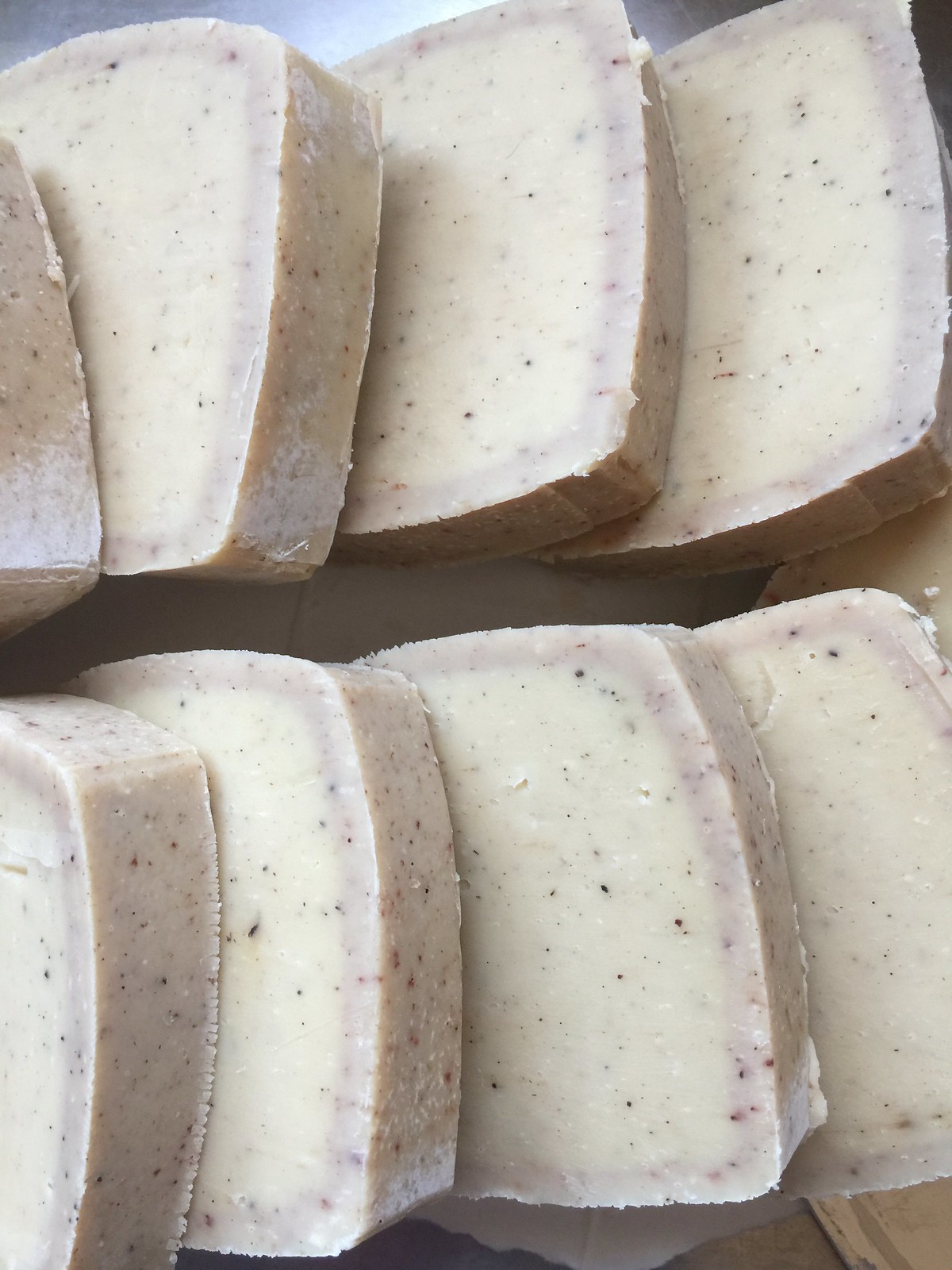
Inspired by the region's aromatic traditions, I'm pleased to present to you yet another wonderful soap I've recently developed: Hulnejan.
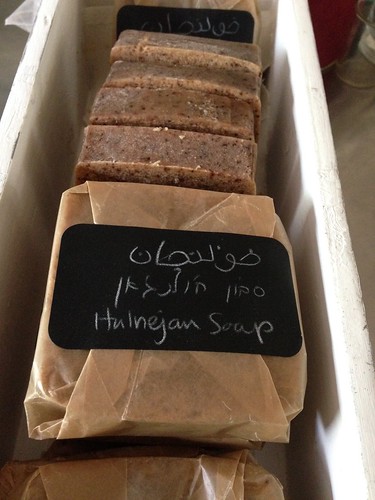
Hulnejan is a spicy, exfoliating soap bar with strongly brewed galangal, gingeroot and cinnamon. Properties: warming, cleansing, exfoliating.
Hulnejan Soap

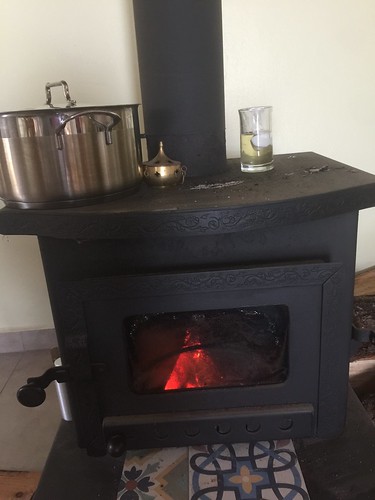
Hulnejan tea is a decoction of spicy roots and barks prepared by the Druze in Northern Israel over the winter months. It has strong warming and anti-bacterial qualities, exactly what one needs to stay healthy during the chilly months of the Galilee and the Golan. It is typically drank very sweet as well (sweetened with either sugar or honey), and with some chopped pecans on top. The best way to make it is by brewing it on the stove for hours, allowing the scent to fill the home, clear it from microbes while making it smell warm and cozy. It also helps to homidify the air, which is much needed as the fire tends to make the environment very dry.
Brewing Hulnejan Tea

This limited edition soap bar is made from olive-oil and water infusions of Hulnejan tea. It creates a beautiful peeling soap bar that promotes circulation and rejuvenation of the skin. Like all of our soaps, it is also superfatted - which means it has wonderful moisturizing qualities due to high content of unsaponified oils within the formula. It is the same rich-lathering formula we've always had for our soaps, now handcrafted in our new studio in Clil by yours truly!

We're using olive oil that was cold-pressed from olive which were organically grown in a Druze village near Mt. Meron; Oganic virgin coconut oil (both are food grade), palm oil and castor oil for that extra emollient quality. The result is a hard, long-lasting bar with rich lather that is very moisturizing - a real treat for your skin, hair; and with a wonderfully spicy fragrance that brings to mind wintry teas by the fire place.

Hulnejan Soap
Ingredients: Saponified vegetable oils (coconut, olive, palm, castor), water infused with dried galangal, ginger and cinnamon, powdered dried cinnamon bark, powdered dried ginger root, natural fragrance (essential oils and absolutes of galangal, ginger, cinnamon, cardamom)

Hulnejan Soap


Labels: , , , , , , , , , , , ,

Thursday, October 05, 2017

Moroccan Eggplant Confiture

Moroccan Eggplant Confiture
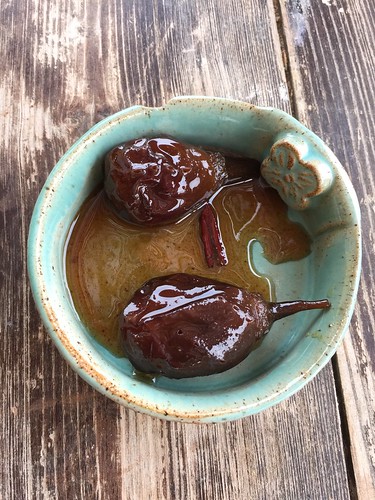
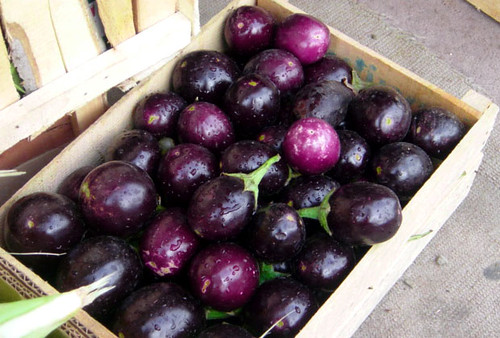
If you didn't have a Moroccan grandmother, you probably won't be awash in a wave of nostalgia biting into the stem of one of these miniature candied eggplants. If you never tasted this Moroccan specialty, you'd be hard-pressed to figure out what it is made of. Both the size of the "fruit", its shape and the texture and flavour make it very difficult to guess it's an eggplant. Perhaps a pear would come to mind. 

mini eggplants
Photo by Think Draw on Flickr

But I assure you that they do make a very impressive addition to any big celebration, and there are many ways to serve and eat them. But the best way is to grab them by the tail (or edible lollipop handle), and consume them from their firm but soft, seedy, sugared and spiced bottoms and nibble till you reach the firm top under the calyx, threaten to snap the candied stem, but manage only to scrape off the candied parts off the woody skeleton of the stem.  

Eating as it is will always warrant a sense of importance and feeling like this is a moment to cherish. First of all, because tiny eggplants are not something one often runs into. And secondly, a person who's patient enough to shape the calyx of each individual eggplant, pierce it with a fork and then go through the lengthy cooking process is not easy to come by either. They usually come with the title "grandmother", who would only make it for special occasions such as wedding, bar mitzvah or brith; or in my case - you just needs to be an obsessed person with reviving nostalgia. 

But you can also reserve the syrup for dripping over pancakes and French toast, slice the mini eggplants on top of fancy dessert arrangements or a fancy sweet and savoury sandwich, or simply over cheese and crackers. I admit that the best is just eat as it is with a cup of tea on the side to wash down all the sugar. 

The Making of Moroccan Eggplant Confiture

So if you stumble upon miniature eggplants, be sure to buy a kilo of the smallest and finest ones, no blemishes or parts that show any sign of rotting in the near future. Wash them and cut around the base of to stem, to remove any excess parts of the calyx (the green leafy looking part). Pierce with a fork. Once all are ready place in a pot of filtered water and cook until water boils. Reduce heat and simmer for five minutes. Allow the eggplants to cool before draining completely in a colander. 

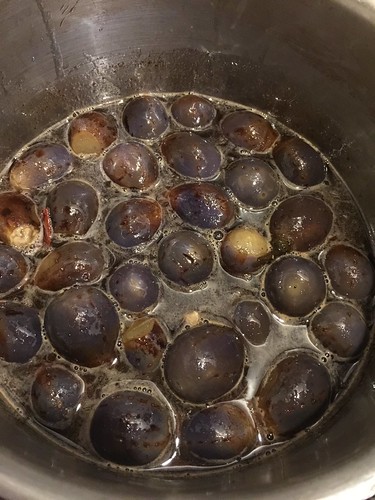
Meanwhile while the eggplants are cooling, squeeze enough lemons to make half a cup of lemon juice. Bring to a boil one kilogram of sugar (I use raw cane sugar - not any sugar containing molasses) together with the lemon juice, and add all the spices: cinnamon, cloves and ginger. Once the mixture comes to a boil and the sugar has completely melted - add the eggplants. Cook until the eggplants have absorbed about half o the syrup (takes between 1-2 hours). 

Ingredients list:
1 kg miniature eggplants
1 kg sugar
1/2 cup lemon juice
2 sticks cinnamon, Ceylon
1 tsp clove buds
2 tsp cinnamon, ground
2tsp cloves, ground 
2 tsp dried ginger root, ground 


Labels: , , , , , , , , ,

Tuesday, December 28, 2010

Cinnamon Buttons


One of the delights of having such a small operation such as Ayala Moriel Parfums is that I get to meet kind, sweet and inspiring people. One of them is Jean, who is a tea aficionado first and foremost, and would come to Portobello every month to stock up on my fragrant teas and truffles, and to find a new favourite perfume to sample from my collection.
She is also an avid knitter, and sources out the most unusual yarn to knit whimsical sweaters, hats, scarves and shrugs. When she told me that her favourite past time was to sit and knit while wearing one of my perfumes, sipping a good cup of tea, and savouring a truffle in between rows of knitting an elaborate pattern.

Jean introduced me to these curious cinnamon buttons: she worn one of those pins to keep closed a shawl she made and showed me how to rub them to release a sweet cinnamon aroma. The spiraling designs are non other than sliced cinnamon sticks!
(It took me a while to get it - these are really made from a stack of cinnamon sticks that were sliced up...). Spices can never cease to fascinate me. And cinnamon goes way beyond the cliches of mulled wine, hot apple cider or holiday potpourri for me. Cinnamon is ground up comfort, and brings sweetness and intrigue to any dish, perfume or -- an outfit!

They can be found at Button Button - 318 Homer Street in Vancouver (just across the street and a few stairs up from their original location). (604) 687-0067

- Posted using BlogPress from my iPhone

Labels: , ,

Sunday, October 18, 2009

Mermaid's Heart


137.365 - And Only for Love, originally uploaded by nikilynn.

“The little mermaid drew back the crimson curtain of the tent, and beheld the fair bride with her head resting on the prince’s breast. She bent down and kissed his fair brow, then looked at the sky on which the rosy dawn grew brighter and brighter; then she glanced at the sharp knife, and again fixed her eyes on the prince, who whispered the name of his bride in his dreams. She was in his thoughts, and the knife trembled in the hand of the little mermaid: then she flung it far away from her into the waves; the water turned red where it fell, and the drops that spurted up looked like blood. She cast one more lingering, half-fainting glance at the prince, and then threw herself from the ship into the sea, and thought her body was dissolving into foam. The sun rose above the waves, and his warm rays fell on the cold foam of the little mermaid (...)”
(The Little Mermaid, Hans Christian Anderson)


Mermaid of Stanley Park, originally uploaded by janusz l.


Shaped like a mermaid’s heart and adorned with corals, starfish and other treasures from the sea, L smells nothing like the ocean. Yet just like the waves licking warm sands, it soothes a wounded human heart with its vapours of cinnamon buns immersed in vanilla milk and musk. Immortelle gives it the barest hint of saltiness, mostly in the extrait version. The array of notes is simple, perhaps so much as to be considered bold. If the potent as the (similar) Musc Ravageur (also by Maurice Roucel) is a lustful hug, L is a soft caress on the face.

Labels: , , , , ,

Tuesday, September 11, 2007

Immortelle l'Amour

Fiery flower withholds
the moments of untold love
Written with the flames of phoenix feather
Leaving ashes forming into letters
Our walk was interrupted by the ghostly winds
and misty sea spray remained on our breath
Two hearts warming to the dancing flames in a fireplace
Skewered together with that same bleeding feather
Their longing for a kiss freezes on the snow
Like Tire sur la neige


The maple-like nuances of immortelle absolute are used here along with sweet orange, cinnamon, wheat and three different infusions of vanilla, creating a perfume that truly captures the aroma of cinnamon-pancakes and Tire d’Erable (“taffee on the snow”), an inseparable part of the Quebec heritage in the Maple Harvest Festivals. You’ll find it hard to resist licking this perfume, but it will prove to be a true friend for a love-injured heart. Immortelle l'Amour will be available as parfum extrait and in a tea-form.

Top Notes: Sweet Orange, Cinnamon
Heart Notes: Rooibos Tea, Broom
Base Notes: Immortelle, Vanilla, Wheat

* Immortelle l'Amour will be launched for Fall-Winter 2007-2008, along with a complementary tea blend, and will be available exclusively through Ayala Moriel Parfums starting November 2007.

More About the Inspiration of Immortelle l'Amour

Immortelle l’Amour, my new perfume created for the chilly fall and winter months tells the story of undying love. The formula was ready long ago, yet it was particularly difficult for me to name the perfume. Although I had a few names – all with an equal appeal of both meaning and sound – I had to choose the right one and know it’s right before releasing the perfume. When it comes to matters of love, it sometimes takes courage to say the truth. And so I ended up with the name that seemed to me, at first, to be too romantic, bordering on the cliché… Once I realized this is the right name, the best to describe both the botanical and inspirational origin of the perfume, I felt the time was ripe and it was just a matter of picking a particularly chilly day in November to release it to the world and add some warmth when its most needed.

Immortelle l’Amour was inspired by the immortality of true love and the unique aroma and energy of the everlasting flower – Immortelle. Immortelle is also known as helicrysum or everlasting flower. The essential oil is prized for its unusual healing properties, including pain relief and skin rejuvenation. The Latin name Helicrysum points to its connection to the sun and its own healing properties, bringing a soothing warmth to the soul.

In Immortelle l’Amour, the helicrysum (immortelle) flower absolute is used as the main theme for the perfume. Unlike the essential oil of helicrysum, which is herbaceous and honeyed (very similar to both chamomile and marigold), the absolute has a dark, ambery fragrance with a somewhat spicy-earthy underlining note, reminiscent of both fenugreek and maple syrup (incidenatally, both immortelle and fenugreek are used in the flavour industry to create a maple-syrup flavour.

The immortelle note is juxtaposed with a rich vanilla accord, using a few different varieties of vanilla: a dark absolute from Madagascar, a vanilla CO2 from Bourbon islands, and a tincture of vanilla which I made from plump vanilla pods (seeds and all) from Ghana. Another home-made tincture is used – that of red tea (rooibos), as this material is rarely available in the market as an absolute. Another interesting edible note that I’ve used is wheat absolute. It has a very subtle, iodine-like note, and along with cinnamon CO2 Immortelle l’Amour fills the air with an authentic warm cinnamon-waffles with maple smell… As it dries down, it feels as though an invisible maple taffee is spread upon the skin, sans the stickiness…

Labels: , , , ,