Sunday, September 30, 2018

Z'bad

Z'bad

Z'bad, Zebad or Zubad, Zabād, Sinnawr al-Zabād simply means civet in Arabic, and is the origin of this word in Western world (Civet, civette, zibet and zibetum are some of its Western spellings). In the Arab world, civet paste is still used today in its raw form, as an aphrodisiac, and a hair grooming product: to smooth and scent eyebrows, moustache and beard, as well as treatment for hair loss and various other folkloric uses. If you understand Arabic, this video explains how it is used also. But Z'bad is also a perfume type, just as "White Musk" is a type of fragrance nowadays, and not just one literal ingredient. Although civet is the key ingredient that gives it its character, it is not the only one. Z'bad was used to protect against the evil eye, so it is a magical concoction as well as an aphrodisiac.

I first heard about Z'bad from Dan Riegler (Apothecary's Garden), who have found it in an old perfumery and apothecary in the midst of a Souk in Yemen. I was both intrigued and hesitant about purchasing it because it was a bit unclear to me at the time what this was - aged civet paste or an authentic Yemeni perfume, and since I don't use the former in my creations, it seemed superfluous to make such a purchase.

When I stumbled upon this article about The Painted House and heard from Ayelet Bar-Meir that the Yemeni artist used this mysterious perfume and that it was a strong memory she left with her children and grand children, I knew I had to try it for myself. Dan has kindly gifted me with two jars, and I'm so thankful he did. The Z'bad that Dan found in Yemen is indeed not just aged civet but a full perfume, a solid paste of civet mingled with camphor, spices and that has aged and mellowed for decades.

In Dan's own words, "Z'bad is a potent traditional Yemenite Civet based perfume mix, used for hundreds of years among the Yemenite Jews, but abandoned by younger generations, Z'bad, or Zabad, doubled as a prophylactic against the evil eye, which may also be a contributing factor to its decline in popularity(...)". Which fits right in with what I read about Afia's use of it in that article, and what Ayelet has spoken about.

I received the Z'bad while I was still in Canada, and made great efforts (over the course of four weeks!), to not open the jar till I entered The Painted House. I wanted to have a very specific place association and emotional memory with it. And trying it on first at the house of a woman who lived with similar fragrances and put great care to incorporate them into her daily rituals. It was at first surprisingly fresh, and surprisingly familiar: a burst of camphor and spearmint emerges from the jar as I first uncorked it and smeared some of the dense, rich salve onto the back of my hand.  It had strong banknotes of balsams and civet, but nevertheless there was a surprisingly green, minty, camphoreous freshness to it for the first few minutes. It was a tad medicinal, but not as medicinal as Tiger Balm (which is what the uninitiated nose might dismiss it as at first sniff). There are also earthy qualities, almost musty-dusty, which makes me wonder if there isn't some patchouli oil in there as well, or more likely - a kind of infusion of the dried leaves. I have very little knowledge of how these traditional perfumes I made, but from the little I know about Arab aesthetics, just as the oud oil is used as the "base oil" for other ingredients, in this case it is not unlikely that the civet paste was infused with several resins, spices and herbs to create this rich perfume preparation. I'm also smelling cedar, which gives it a rather pervasive dryness in the opening hour of so on the skin. Perhaps even a hint of myrrh or opoponax. There are no flowers to be smelled in this, but it is unnecessary. There is so much indole in the civet that it really blooms on the skin, and develops into this luscious, purring animalic-balsamic presence for hours on end afterwards. It is not overmpoering at all, but simply becomes part of my skin.
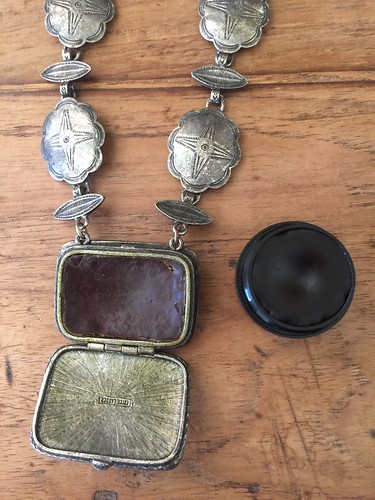
Youth Dew & Z'bad

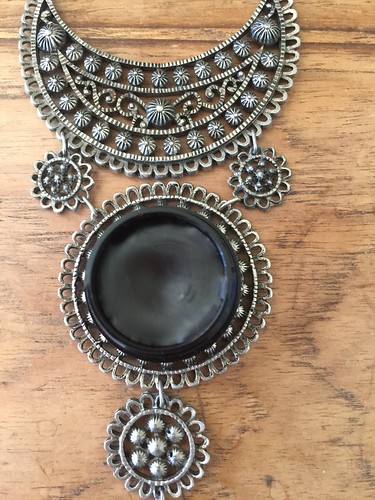
In both its scent and consistency, Z'bad reminds me a lot of vintage Youth Dew solid perfume in a vintage necklace I have that is probably not that different in age. It seems like Z'bad was the inspiration for Youth Dew, as well as its predecessor Tabu. Both rely heavily on civet, and have a distinctively heavy-sweet-cloying-exotic character that is heavily inspired by the Orient. To Westerners that never smelled the original, these two must have been earth-shuddering at the time, and immensely original. And they are in their own rights. But they wouldn't be around without this Arabian unguent.

Likewise, the evocative packaging and thicker liquid in the Western Orientals - Tabu, Youth Dew, Opium, Obsession and Shalimar - is created in such way as to recreate the ritual of applying a thick paste to the eyebrows, nape of the neck and perhaps other unmentionable strategic spots. The richness of materials create a heavy veil of scent that is highly intimate, personal and also precious. It does not need to be applied in great quantity, and ironically - the economy in which is can be used is part of its luxury and appeal.

Labels: , , , , , , , , , , , , , ,

Tuesday, July 24, 2018

Black Gardenia

Gardenia

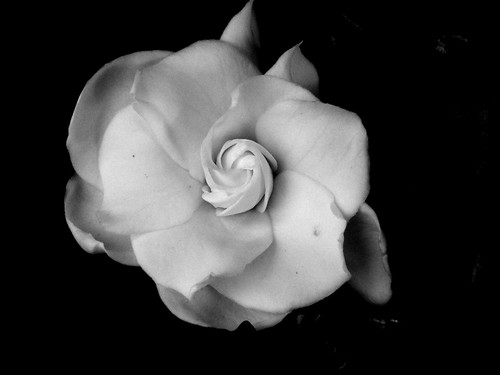
Russian Leather meets tuberose in Anna Zworykina's Black Gardenia. Zworykina's plays up the rubbery nuances of tuberose with the addition of  leathery-smoky quality of castoreum*, and I suspect there is also a tad of birch tar or cade in there. The green and creamy aspects of tuberose are still felt, but they feel mushroomy and dark, and stay true to the promise of the name Black Gardenia. This is by no means a shy flower, but rather a fleshy, dark, prowling feline-like beast that becomes more aroused the longer it lingers on your skin.

Along the tuberose star, there are frangipani, neroli and ylang ylang as a supporting actresses. The first two bring out the stem-green aspects of tuberose and gardenia; the latter highlights its creamy, leathery, salicylic qualities. There are some oak-barrel-like undertones from the sandalwood and agarwood, giving the leather a sturdy frame to stretch on. Slowly the smokiness dissipates and makes room for a smooth, woody-vanilla skin-scent. There is also a hint of something fruity-floral (perhaps the davana), and the floral gardenia illusion, although subtle, is felt in a suave, smooth, tropical-floral-on-warm-skin way.

The interesting things about complex compositions and raw materials: Once you notice something, you will notice it again in different stages of the composition. Another time around wearing Black Gardenia, the  juicy fruitiness of the Davana comes off right away, adorning the tuberose, shimmering and reflecting the ylang ylang juicy banana aspects, and creating more of a tropical-fruity effect, where as in the first times I worn it, I noticed the creamy-green tuberose facets more.

While Black Gardenia has a clear personality of leather-tuberose, it has many nuances that piques my interest throughout its duration on my skin. It is lovely, a little addictive and a case in point that white florals can take a stance without being loud, and be pretty without ever becoming boring.

Top notes: Ylang Ylang, Neroli, Frangipani
Heart notes: Tuberose, Jasmine, Rose, Orris, Davana
Base notes: Castoreum, Sandalwood, Vanilla, Agarwood 

* A botanical, vegan version is also available, which I haven't smelled

Labels: , , , ,

Saturday, July 21, 2018

Carnal Flower

Pink orchid 011

Carnal Flower opens with a slightly fresh fruity note and hints of green (melon and eucalyptus). Than it’s mostly tuberose with a full-bodied, sweetened orange blossom, much in the same vein as that note in Lys Mediteranee. Even the base is the same to my nose – supposed to be musk, but I smell a balsamic-woody sweetness similar to peru balsam essential oil (which smells very different than the crude balsam). There isn’t much coconut in it, but it does help improve the initial impression and add creaminess to the tuberose.

I like this a lot and it’s easy to wear (I worn it on a very warm day and it was never cloying at all). However, this is not my favourite tuberose, and in the light of Lys Mediteranee being so similar, I do feel a tad disappointed from this installation in the Editions de Parfums

Top notes: Melon, Eucaliptus, Ylang Ylang, Salycilates
Heart notes: Tuberose, Orange Blossom, Jasmine
Base notes: Coconut, Musks

Labels: , , , , ,

Friday, July 20, 2018

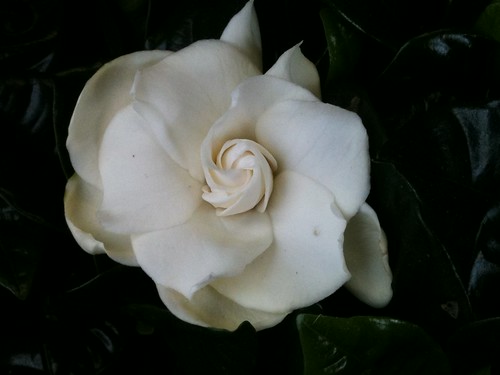
Chanel's Gardénia

Black Gardenia

Chanel's Gardénia was never really meant to be a realistic gardenia, but an olfactory representation of the designer's favourite flower, the (scentless) white camellia. Like Narcisse Noir, this abstract floral has an orange-blossom-like quality at its core, but it's not nearly as dark. At the same time, it does not have the bright clarity orange blossom usually creates. Instead, it plays up the methyl anthranilate, and fleshes it out with a muted, slightly mushroomy-green tuberose back note, waxy aldehydes and powdery violet-rose accord that bring to mind lipstick, scented candles and makeup. As it dries down, it becomes less sweet and smooth and a little dusty-woody, like cedar wood saw dust. Perhaps there is also a hint of cedar moss as a fixative as well, some vanilla and musk. All around there is an incense feel in the air that accompanies the abstract floral frontline. But all in all, it is quite linear and very well blended that the character somehow maintains itself despite these changes.

If you're expecting a luscious, larger-than-life tuberose-gardenia you'll be disappointed. This is demure by comparison, and has more fruity floral character than a big white floral as this name would suggest to anyone familiar with the flower. It's very well-behaved, staying close to the skin but at the same time has depth and a harmonious, even if not complex evolution. This is the perfume extrait I am referring to, which I believe was discontinued when the Les Exclusifs were launched. Which is too bad, because it was replaced by a thin and pale shadow of its former self, and a very short lived experience. And I hear that even this older version I have may very likely not be the original composed by Ernest Beaux. Read more on Perfume Shrine about how Gardénia has changed and evolved (or devolved...) in different eras since it launched in 1924. To me it smells more like a Caron than a Chanel - it has warmth and sensuality, while most of the Chanels are generally aloof and have a cool manner about them.

Nevertheless, it will still satisfy elegant ladies in beige linen suits or cream satin gowns, or those who enjoy an unusual floral with a retro yet not old-fashioned feel. It is elegant, understated and the aldehydes are not terribly dominant (as they are in No. 22, for example). The new version that replaces it is louder at first, with a more identifiable fresh flowers of tuberose-gardenia with their intense headiness and almost realistically dewy gardenia petals, but just for a few minutes. It is so light and sheer that it disappears very quickly and makes room for an accord that is quite true to the core of the original composition - incense, wax, lipstick rose-violets - just a tasting menu of it all, not a full fledged Gardénia.

Top notes: (Modern EDT version has green-dewy gardenia top notes, the vintage I have has no apparent top notes). 
Heart notes: Orange Blossom, Tuberose, Rose, Violet
Base notes: Incense, Cedarwood, Vanilla, Musk

Labels: , , ,

Thursday, July 19, 2018

The Different Company's Osmanthus

Linden Blossom

Sometime in the spring, I took the train to Tel Aviv for a day of fun with my daughter. Among other things, we went to Individual in Neve Tzedeq, a new perfume boutique that carries only niche brands, among them Different Company. It was a chance to revisit Osmanthus, a fragrance that from my memory captured best the elusive scent of this tiny flower while it's still intact on the bush. The absolute does not portray an accurate picture, although it is gorgeous on and of itself. I only had a chance to smell white osmanthus one evening in San Francisco at Ineke' private fragrant garden. It's the kind of scent one could ever forget. The osmanthus incense my friend Noriko brought me from Japan also comes pretty close to it, and does not smell terrible artificial even though it is.

The shop owners at Individual are evidently passionate about perfume, and know how to sell it (not being pushy is crucial, as is giving samples to try at home several times). I've revisited the sample of TDC Osmanthus over the course of a few months now, and I'm still on the fence if to get it or not... But before I launch into describing my experience with this scent, a word of caution to any perfumer trying to recreate this scent or even attempt to compose with osmanthus absolute: it is extremely challenging. That is not to say that there aren't any gorgeous perfumes with that scent, or that it's impossible to work with, or to discourage one from trying; but the results are more often watered down florals that lack body or character, except for a very artificial and synthetic feel (the examples for this genre of osmanthus approach are many, from to the swimming-pool clean l'Eau d'Issey or whitewashed Pure White Linen to the fruity-shampoo persona of Nuit de Cellophane). Some of the natural and niche perfumeries have churned up descent or interesting perfumes in which osmanthus is the star of the show - Osmanthus Oolong and Un Crime Exotique are two of my all-time favourites.

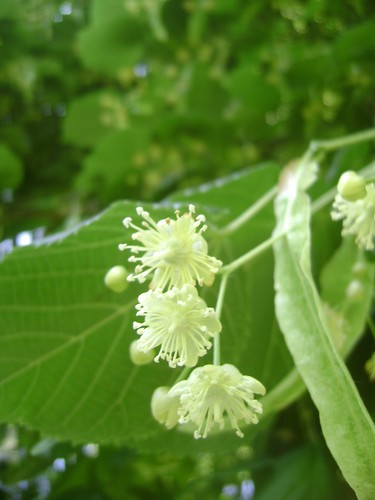
TDC Osmanthus starts realistic and promising, with that mysterious, fruity yet powdery, diffusive and  delicately ephemeral live osmanthus on the bush; yet there is a slightly oily element which interrupts this harmony. This is not uncommon in osmanthus absolute, by the way. There could be a tad of a rancid oil off-note. As long as it's just a hint, that's okay. Then it becomes  bit more honeyed and before you know it - it turns into realistic rendition of living linden blossoms in mid-June. Like  whiff of blue skies on a cool summer morning. Bright and fresh like crisp linens off the laundry line, with hints of iced tilleul tea. It is pretty, but I'm missing some kind of a darkness or body or a contrasting point that would make it more interesting and less linear.

Labels: , , , ,

Sunday, June 17, 2018

Intimate


There is a box of decants that I kept from the days when perfume trading was fun and exciting, and collecting more vials than I will ever need in my lifetime didn't feel burdensome. There was the thrill of the hunt, and the wonderful feeling of being taken care of when someone you only knew by their screen name and fragrance wardrobe sent you a surprise in the mail with vintage perfumes that smelled like nothing you ever smelled before... That was of course, before I smelled too many perfumes, before each year offered over 500 new releases, and I became too jaded and selective about what I put under my nose.

In a moment of olfactory boredom last night, I unearthed a roll-on with vintage Intimate in its vintage form (Revlon, 1955). The concentration is not specified, but judging from it lasting well into the next morning, I imagine it's at least an eau de toilette.

Intimate is a softly-spoken echo Miss Dior's green-floral-animalic-Chypre; a hazy mirror image of its New Look glam. There are green aldehydes at the top, but they've lost their sharp edge (possibly through aging and mellowing, but even still, comparing to the vintage Miss Dior I have they are less intense).

Intimate is definitely from the same genre (Chypre Floral Animalic, and sporting some definitive green notes), yet has a softer, powderier character right from the the start (a trait that is only evident in Miss Dior if you really pay close attention somewhere around the second act). It has edgy, woody-herbaceous notes peeking underneath, making the greenery less obvious. There is an aldehdic wisp at the opening as well. Mingled with the orris this creates a blending illusion, like smudging and blending pastel crayons that obscures the shapes of jasmine and rose that were just drawn moments ago. One can't quite tell when the jasmine and rose end and the oakmoss, sandalwood and cedarwood begin. The woods create a dry feel, a sort of temporary cleanliness. An animalic power roars from underneath, with the carcass of castoreum and the concentrated piss of civet create a dark, musky-sweet epilogue.

This phase dissipates faster than I would have liked it to, turning into a vintage Revlon lipstick scent, like the ones I would try on from my grandmother's dresser. My grandma always dressed elegantly, so lipstick was the only way to tell she's going somewhere importatn (work included, and she worked well into her 70s, and continued freelancing even after she officially retired). And if it was somewhere social, there will also be a dap of perfume or some Eau de Cologne splashing. I never was happy with any of her shades of lipstick - they were either too red or too nude, and most importantly, made my lips dry and tasted awful. The smell is nice and nostalgic, but synthetic fatty-violet-rose-aldehydic floral is not something I'd like tasting on my lips for too long.

The drytdown (as observed the next morning) has a sweet and smooth amber and a musk compound that bears some fruity, berry-like qualities. Oakmoss is still there as well as a hint of greenery. Overall, there is a soft, close-to-the-skin feeling that's exactly what I would like in a perfume from the night before: a sweet reminder that something wonderful happened last night, but without having all your clothes reeking of it or making you want to wash it off. You could easily apply something else on top, or go for a second round.

Intimate is beautifully constructed and elegant, and smells sexy in a down-to-earth kind of way. If I didn't know who made it I would think it is a French perfume - it skips the loud statements that American fragrances so often have (both in sillage and tenacity) and instead offers a more nuanced perfume that even if it isn't a groundbreaker for its time, it is very well done and wonderfully enjoyable. The bottle in the ad shown perfectly conveys its style and class, which will be evident even if you are blindfolded and can't see it. So while many perfume advertisements are total utter nonsense, this seems quite truthful indeed.

Top notes: Green Aldehydes, Bergamot
Heart notes: Jasmine, Rose, Orris, Cedarwood, Sandalwood
Base notes: Oakmoss, Civet, Castoerum, Musk, Amber

Labels: , , , , , , , , , , , ,

Tuesday, May 15, 2018

Fig Incense

Maple & Fig

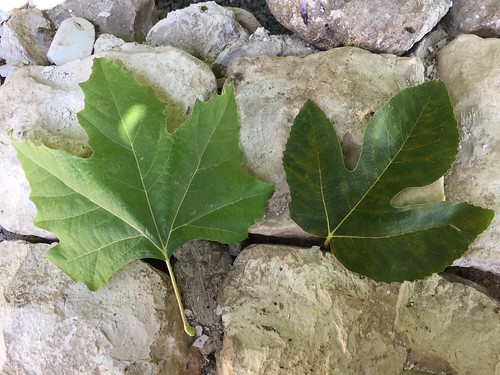
With all the heat waves I've survived in the past couple of years, my Philosykos is beginning to dwindle down. So, I have decided to seek out a new fig fragrance. I love Philosykos, a green fig fragrance that is very refreshing in hot weather. Like wading in a cool pebbled stream, and enjoying the shade of fig trees and towering oleander bushes. It lasts very briefly, and so I thought why not get a stronger fig scent?

Premier Figuier was created in 1994, and was not only the first fig fragrance, but also one of the first by Olivia Giacobetti (the year prior to that she debuted her career with Petit Guerlain and Eau de l'Artisan). I have a sample of this first fig, and always liked it but not enough to purchase a bottle: it's milky, coconut and powdery and lasts even less than Philosykos (which is also by Giacobetti, and very light, which is excellent quality for summertime, but also limits it to this season for me). The latter has an Eau de Parfum version that is wonderful and longer lasting, but simply not available around this part of the world; and so when I stumbled upon Premier Figuier Extrême in the website of the nearest perfume boutique, I decided to purchase it unsniffed (the actual location near me didn't have it, so that's why I didn't smell it first). When it arrived, I immediately had a buyer's regret, because I should have known better than to purchase something with a similar name to something I like and expect it to end up well. I decided to pick up the scent, not open it, and go to the boutique that is a little more far away and sniff them side by side.

But, of course, I couldn't not open a bottle of new perfume sitting on my desk. So I undressed the box from its cellophane wrap, released the bottle from its carton embrace and spritzed just teeny tiny bit on one wrist. Well, this is neither smelling like Premier Figuier; not like fig of any shape for that matter. Instead, I got this exotic whiff of the spice market, a swirl of incense and maybe some crushed fig leaves very far in the backdrop. To replace Philosykos clearly it can't. Nevertheless, I was intrigued.

Hội An, Vietnam

Premier Figuier Extrême begins with a trail of delicate incense smoke, intertwined with spicy-floral undercurrent. It is dry and warm, yet also soft and sweet-balsamic (I am smelling Peru balsam to be more specific). There is a surprising smokiness to it that brings to mind Dzing! or perhaps Tea for Two (also by Giacobetti, who must have some kind of a signature I am yet to decipher), and much less of the powderiness of the original with its coconut note which I found distracting and a bit too soapy and watery-aldehydic. While the two are marketed as different concentrations of the same theme (Eau de Toilette and Eau de Parfum), and share almost all of the notes (minus the asafoetida note in the original), such as almond milk, coconut, sandalwood, fig leaf, dried fruit and fig wood - I find them to be almost as different as night and day: PF is watery, thin and luminous, with abstracts hints to the milky latex that streams out of the young tree. It is not even quite a tree yet, but a sapling that grows by the water stream, with the cool watery air coming off the wet pebbles.

PFE is rather expansive, surprisingly full-bodied and with a sultry, sulphuric air to it, and I am wondering if this is part of the allusion to the fig fruit. This makes me wonder if the asafoetida note is not wrongly listed and actually belongs to the Extrême. It is mentioned this way on Fragrantica.
It is not so much like ripe figs (and definitely not purple!) as stated in some of the copy writing, but more of a conceptual perfume, an interpretation of an interpretation. I imagine the perfumer revisiting her creation almost a decade later to tweak and upgrade the formulation to make it longer lasting - and gets carried away creating a completely new (and improved!) interpretation of the fig theme. This time the fruit is ripe, rich, full and the tree it grows from has matured to have thick, huggable trunk and more sturdy branches. It has become a home to several song birds and gives enough shade to rest under and cool off, even though it's not even close to any body of water. On the contrary: Maybe someone is burning a fire near it, and roasting some summer fruit on its flames.

There is the aspect of contrasting textures, also, which is what I find most intriguing about this scent. There is the feeling of being surrounded by fine incense smoke, and at the same time a bracing touch of bumpy fresh fig leaf. A delicate, powdery, almost honeyed sweet floral haze and also the pulling apart of fruit to reveal its minuscule slimy tentacles inside. The polished dusty feel of a silvery fig tree trunk, and at the same time the oozing white milky watery sap.

All in all, I'm pleased to say this has turned into an intriguing blind purchase which I'm happy to embrace into my collection and wear in this strange late spring, which keeps jumping from one extreme to the next: thunderstorms and humid cold rainy days, followed by hot dry desert winds, and replaced again by muggy humid days and more showers sprinkled in between. It's light-textured yet rich with nuances and I'm happy to discover different things within it in both cooler and warmer days.

Top notes: Fig Tree Leaves, Gorse Bush Flowers, Smoky & Sulfur Notes 
Heart notes: Almond Milk, Figs, Sandalwood
Base notes: Coconut Milk, Dried Fruit Notes, Stone Pine, Incense

A word about comparative sniffing: When trying something blind for the first time and without any preconceived ideas, you have the advantage of being able to form an impression that is free of opinions, marketing intentions and other biases. If I was to be told "this is a fig fragrance", on the other hand, I would be looking for the fig and finding it thanks to the power of suggestion. It is a bit tricky to compare similar fragrances side by side. It may be an excellent exercise for a professional perfumer or a perfumery student trying to refine their olfactory discerning abilities. But for  a layperson just trying to find a scene they enjoy, this can be utterly confusing and totally ruin the fun. Instead of smelling it for what it is, you smell it in comparison to something else that it is "supposed" to be similar to. And by doing so, what happens is that you find less of what you were expecting to find, and if that was what you're after - and don't find it - this is a sure method to feel disappointed.


Labels: , , , , , , ,

Monday, December 25, 2017

Bois d'Encens

Notre Dame

Frankincense essential oil only presents certain aspects of the resin, reminiscent of citrus zest (lemon, orange) and sharp turpentine qualities in various degrees of harshness, depending on the oil's quality. The dry down of frankincense oils is typically powdery and faint, leaving much to be desired in both longevity and the scent itself. All in all, frankincense distillations generally pale in comparison to the rich experience of smouldering resin smoke that Church-goers and incense addicts are so fond of.

The reason for all this is rather technical: frankincense resin (and resins in general) are made of essential oils, gum and resin. The gum is water soluble, often creating a plasticity (this is especially apparent in mastic, the resin from Pistachia lentiscus).

Bois d'Encens is one of the most realistic frankincense scents I've ever smelled, which, given the above factors, is not an easy feat. Rather than smelling like the oil, it brings to mind the burst of citrus and dust that occurs when you place a tear of frankincense on a hot charcoal, followed by an explosion of essential oils released in thick smoke. So far, this is the only Armani that ever spoke to me (the rest of the Armani Privé collection seemed mediocre, or at best pretentious - a trend that is sadly saturated the faux niche market from its very conception).

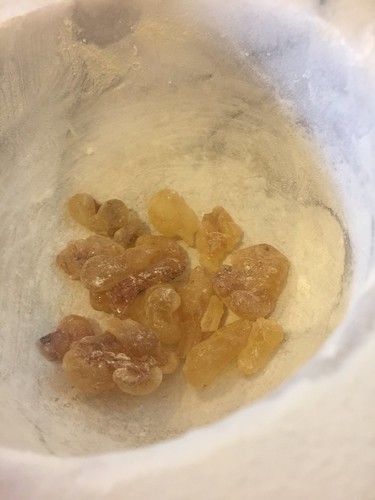
Frankincense Tears

But, as common with modern niche fragrances, there is a culprit. And that shows itself in the dry down, which often with the incense genre falls into the disinfectant-soap basin, with musk molecules or iso-E-super that break down the illusion of authenticity. Thankfully with this number, it happens later into the game (then, in, say Kyoto by Commes de Garcons).

Labels: , , , , ,

Friday, January 06, 2017

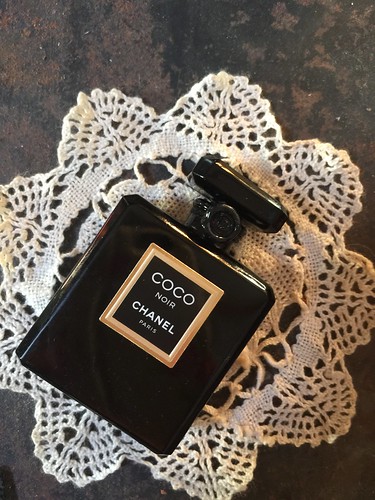
Coco Noir

Coco Noir

Sometimes we get attached to perfumes because they speak to us. Other times, it is pure coincidence that creates an imprint on our minds and adds meaning to the scent that we would have otherwise not found in it.

These past few months I've been wearing copious amounts of Coco Noir. I've received the parfum extrait from a friend as a goodbye gift, and somehow it did not seem right to stuff it on the shipping container. Probably because I was too curious about it. At the same time I was too scared to open it, because starting a new perfume at a time of great change can create too strong of an impression - and I knew that there are many challenges ahead of me. I definitely did not want to open it at the time of our departure - I was an emotional mess, after three months of intensive packing and very little sleep... So I waited for a while for the dust of traveling to settle, and opened it about a week or two after arriving in Israel. It was a time of terrible weather (weeks and weeks on end of dry desert wind and over-the-top temperatures) not to mention - great emotional turmoil and immigrant adventures - and we are still in the midst of it, but I have enough levelheadedness now to reflect a bit, as things are finally starting to fall into place: my daughter will start school on Sunday, our home renovations are about halfway through, and my mental state allows me to pass entire days without crying (but still happens about once a week, because I end up hitting a brick wall of some sort at least in that frequency).

Coco Noir is a modern "dark" concoction, which means that instead of oily aldehydes and animalic base, it has clean florally laced with white musks and underlying notes of vetiver and patchouli. It isn't exactly a fruitchouli, but it borders on that territory, with a clean ambreine accord (not unlike Prada Ambre Intense Pour Homme) - which means it has vanillin, patchouli and bergamot galore in it. However, there is also a spicy cacao accord (or perhaps it's just an illusion of that - created by the spicy cloves notes alongside the benzoin, vanillin and coumarin) which is quite prominent, which reminds me of Notorious - only that it continues much better in my opinion (it does not have as much musk, which in Notorious gives me a piercing feeling through my nostrils). It gradually softens and develops around the heart of jasmine and rose, and leads smoothly to the end: Dryout is a mellow, powdery confection, with hints of heliotrope (not unlike La Petite Robe Noire - but with non of the saccharine qualities of the latter).

Coco Noir is more accessible, in my opinion, than Coco is. I love the original, even though I do not own it. It has a big persona and feels over-the-top for daily wear. I would only imagine wearing it when I'm all dressed up for a very sepcial event in the middle of winter. Instead, it provides with a very modern comfort in my overtly rustic living arrangement (which is only temporary, sort of...). It's a scent that inevitably will conjure up scent memories from this time of re-settling in my home village: having this sleek, elegant, opaque black glass square bottle around reminds me of my urban side and that I'm not going to be forever wading in mud to and from the yurt, and struggling with every little aspect of life. There is still place for elegance and luxury in my life even in this off the grid spot in between two major life periods.

Another great reminder of this truth: whenever I stick my nose inside my shipping container, which smells still like my very fragrant home studio in Vancouver. My friend chose this fragrance because it reminded him of how my perfume smelled. I think I now get what he's talking about: it's very much like this "smell of everything, all at once" that you get from my workspace: dried coumarinic herbs (liatrix, tonka), vetiver roots, patchouli, countless flowers, herb oils and spices... All mingled with woodsy oils and the scent of antique furniture.

I'm grateful for having this point of view portrayed to me via a bottle of fragrance chosen for me.

Top notes: Cedarwood, Bergamot, Orange, Grapefruit
Heart notes: Rose, Jasmine, Narcissus, Geranium, Peach, Carnation, Cloves
Base notes: Patchouli, Vetiver, Sandalwood, Benzoin, Frankincense, Musk, Vanilla, Heliotropin, Tonka

Labels: , , , , ,

Wednesday, August 03, 2016

ScentHive Reviews Sunset Beach & Lost Lagoon

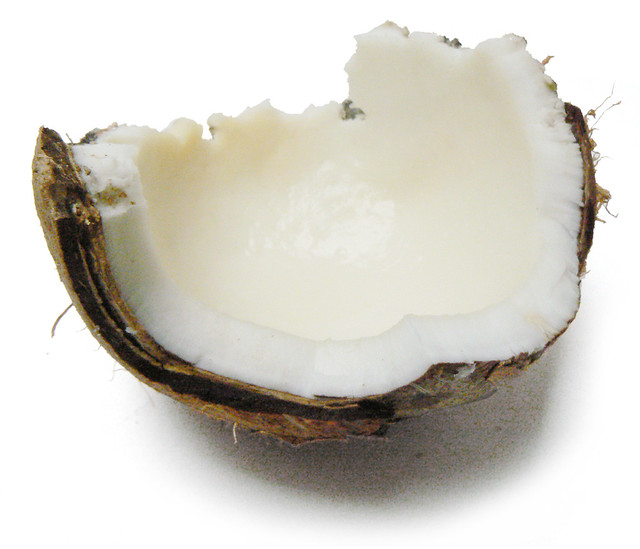
Coconut (Cocos nucifera)
Many thanks to Trish Vawter of ScentHive for reviewing Sunset Beach:

"Sunset Beach (...) is milky, smooth and fresh. The overall impression of this fragrance is of creamy woods, gentle spices and a laid back floral flourish. Champaca and ylang ylang reveal themselves in a light, tropical manner that lends a beachy vacation vibe to this perfume, perfect for those of you who love woody florals, but don’t want anything too heavy."

And Lost Lagoon:

"Chypres can be hyper green, icy crisp, or down in the dirt earthy. Lost Lagoon strikes a nice balance, probably because it does not make use of synthetic aldehydes so the initial citrusy-green opening melds gently into its lovely floral heart. "

Labels: , , , , , ,

Friday, July 29, 2016

1804 George Sand

"There is only one happiness in this life, to love and to be loved" (George Sand)

The perfume dedicated to the controversial author George Sand, has a complexity of a real person and a feeling of rummaging through the old bureau of an author to find her own inkwell and notebook. I am not familiar with her work (except for La Petite Fadette which I read translated to Hebrew when I was in elementary school). She lead an unusual life and was ahead of her time in insisting on doing things that were considered taboo for women, most memorable of which were sporting men's attire and smoking in public and her reputation was an androgynous type (apparently, having a masculine pseudonym was common at the time, otherwise no publisher would risk taking on a woman's work). But more importantly - her independence, breaking free from her marriage, following her heart into many tumultuous relationships, the most famous of which is her 10 years love affair with Frédéric Chopin - all the while still raising her two children. She sounds to me like one wild woman.

1804 is a classical spicy oriental, in the great tradition of Tabu, Opium and Asja. Like the latter, it also has some fruity surprises. And like Opium before it - there is a fascinating contrast between coolness and warmth that keeps the tension and interest of the reader from the get go.

The beginning feels earthy and cool yet spicy, with the Mellis accord centered on patchouli, cloves, carnation and jasmine and a hint of plum-like rose notes in the midst. The earthy quality is a bit musty, like a jar of clay or like spikenard. There is a certain cool and sharp edge to this, but as the perfume continues wearing on the skin, it seems to switch over to ambery-oriental world. The patchouli is still there, but it's more of a spice or a nuance, giving the sweet, rich and soft amber a dirty-sultry undercurrent.

Top notes: Peach, Pineapple, Gardenia 
Heart notes: Jasmine, Carnation, Rose, Lily of the Valley Cloves, Nutmeg 
Base notes: Patchouli, Spikenard, Vanilla, Benzoin, Amber, Sandalwood

Labels: , , , , ,

Wednesday, July 06, 2016

Anaïs Anaïs

Anaïs Anaïs

The 70s were all about soapy-green florals: Ivoire, No. 19, Laura Ashley No. 1, etc. Cacharel released Anaïs Anaïs  in 1978, and it fits-in nicely with that trend, but also has its own personality, even if understated in comparison. While the others in that genre tend to come across as sharp and angular and exude an air of intimidating and cool-headed professionalism - Anaïs Anaïs is soft, feminine and lady-like. It is very pretty, approachable and agreeable, yet at the same time it's not at all boring - in fact, it is a classically structured Chypre, yet with more modern ingredients that still to this day make it smell fresh and dewy.

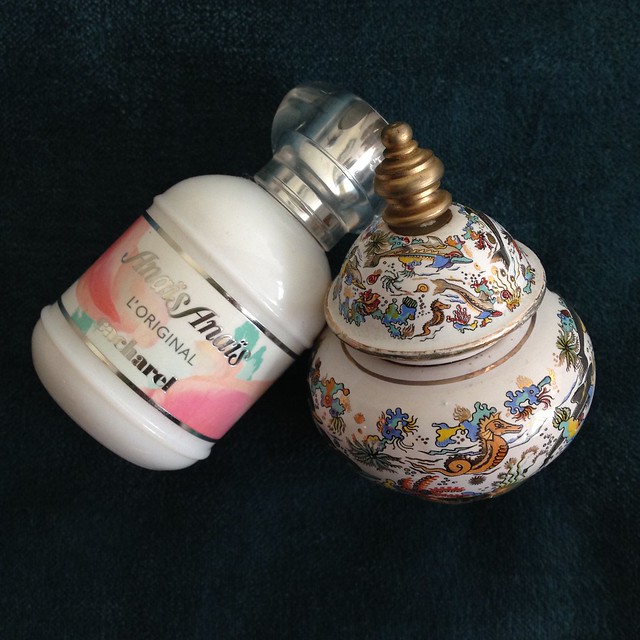
In the late 80s and early 90s it was a very popular and "safe" scent to wear for younger girls - or give as a gift - as you'd be hard-pressed to not admit that you at least tolerate if not like it. It was the precursor for many pleasantly scented double-milled soaps.  Which is why I probably felt it was too soapy when my grandmother gifted me one of those after a trip abroad. It was also too heady and too floral for me. I guess my tendency towards deeper scents has began early on... The other important reason I was disappointed with it was that on another trip to Greece, my grandmother brought me a clever little pot of porcelain that had Anaïs Anaïs knock-off in a solid perfume form at the bottom, and a liquid one inside the lid (pictured above, next to the original). Strangely enough, that knock-off was much better than the original: it wasn't as sharply floral, and the base was a gorgeous incense.  The florals were not too heady - and had a slightly waxy, lipstick-like quality about them which made them softly purr. I remember wearing it in the wintertime and just sniffing my wrists all the time, near the wooly smell of the sweater... Rather quickly, I finished the whole thing - both liquid and solid. This was the first perfume I've ever owned - and still do (not only because I'm so sentimental that I keep little objects like this; but because the smell remains in that pot, after all those years!).

Anaïs Anaïs opens with a fruity-floral melange that is at once freshly green and soft. How is that achieved is beyond me - because there is a definite presence of galbanum, cassis, hyacinth and Madonna Lily there - neither of which is particularly shy or soft on its own. This bouquet is so well-balanced, and only moderately aldehydic in a very tasteful, seamless way (perhaps owing to the honeysuckle note) - that it's difficult to pick one note in particular, and to me this is part of the magic of perfume, but jasmine and rose peak through if you pay close attention... The heart continues to be green and floral and elegantly leads to the oakmoss-laden base, where vetiver and white musk have a strong presence, as well as modest hints of sandalwood and patchouli (the latter adding more of an earthy-green dimension rather than any allusion to hippie-ness). But before that dryout phase completely takes over, you'll find a surprising incense phase, that is not exactly like any particular incense "flavour", and combines sandalwood with a little peppery greens and cedarwood notes.

Recently, I found a little 30mL bottle of Anaïs Anaïs eau de toilette - and immediately purchased it for my daughter. I tell her that her great-grandma used to wear it and gave it to me when I was a young girl. She calls it "Pink Flower Perfume"...  I thought it would be fun to have it around, and get her some early perfume education about what young girls should wear (instead of those horrid celebrity scents that are kicking around). Also, I won't lie, I was planning to steal some from her so that I can sneak in a review of it at some point...

It may not smell exactly like the original did (even though it is subtitled L'ORIGINAL). But I didn't know it well enough at the time to notice the change. I do, however, find a resemblance to a much later scent, Calyx (1987), although of course not quite as fruity as that; but they both now have a very strong connection with ancillary products (Calyx is the mother of all Herbal Essence type of shampoos and hair products, which are still highly in demand). They both have a very similar structure, with green and fruity notes at the top (Calyx has more tropic fruit notes, i.e. papaya, guava, passionfruit and mango; while Anaïs Anaïs uses more "traditional" black currant bud to achieve the fruitiness). Both have Madonna Lily and Lily of the Valley at the heart, and both conclude with oakmoss, vetiver and white musk. Both also smell wonderful on my young daughter's skin, and I only wish we'd smell more real perfumes on young girls these days, instead of the fruit-punch cocktails sprinkled with polycyclic musks and vanillin that have long overstayed their welcome (IMHO).

Top notes: Galbanum, hyacinth, lily of the valley, bergamot, cassis
Heart notes: Madonna lily, honeysuckle, ylang ylang, orris root, jasmine, carnation, tuberose, rose
Base notes: Oakmoss, vetiver, musk, sandalwood, amber, patchouli

Labels: , ,

Tuesday, July 05, 2016

Sunset Beach Reviewed by EauMG

Sunset Beach

Thank you to Victoria Jent's glowing review of Sunset Beach on her excellent fragrance and beauty blog, EauMG:
"Sunset Beach wears like a powder of finely milled precious woods with a subtle coconut milk-like sweetness and vanilla custard-like ylang-ylang. The dry-down really does remind me of sun-bleached driftwood and warm, sun-kissed skin. It’s creamy with a sweaty bitterness from woods like sandalwood and massoia (…) Warm, milky woods. It’s a summery, beachy fragrance that isn’t “tanning oil”. Yay!"

Labels: , , , , , , , ,

Thursday, November 26, 2015

Scent Safari: Video Review for Komorebi


Maximilian Must Know Episode # 431 (Scent Safari - Ayala Moriel)

First video reviews ever for Ayala Moriel Parfums! And first review of my new perfume Komorebi - yayMaximilian compares it to Serge Lutens' Fille en Aiguilles, and says describes it as redolent of "woods, some forest funk, and this note of pine-like tree sap with some berries (...)" . FYI the vial titled "Forest Amber" is really Komorebi - before I had a name for it.

Also reviewed in this episode: Etrog, Film Noir, Espionage:
"The key word with these fragrances from Ayala is quality, development, power and performance (...) there is no gimmick (...) really high quality perfume made with passion and ingenuity and no shortcuts (...) This is as good as it gets. These are regal fragrances, fit for royalty". 

Labels: , , , , , , , , , , ,

Monday, November 16, 2015

Musk Malabi Reviewed on ScentHive

"... it’s the addition of a few other botanicals that elevate Musk Malabi to the level of chilly weather comfort. As you might have guessed from its name, the musk in this perfume cannot be denied."

Visit ScentHive to read Trish Vawter's full review of Musk Malabi.

Labels: , ,

Monday, October 26, 2015

Sandal Ale for Oktoberfest

Visit EauMG's section to discover quirky and unusual scents for fall, handpicked by Victoria Jent, including Sandal Ale to celebrate Oktoberfest! 
"This such an unusual fragrance but it’s so nifty. It’s like an Indian Pale Ale with sandalwood. It’s really interesting."
Sandal Ale was previously reviewed on EauMG.  If you wish to purchase it, visit my new online boutique!

Labels: , , , , , , , , ,

Friday, September 18, 2015

EauMG Reviews Zangvil

Some of you might feel it more than others - but autumn is just around the corner! Victoria Jent claims Zangvil is the perfect scent for this time of year, and I won't argue with her "eaupinion"! 

"Zangvil is a gourmand. In fact, it’s so gourmand that there’s is a matching tea from the brand. However, I think of it as the sort of gourmand that even a gourmand hater would like. The fresh citrus, ginger and florals balance the sweetness. It really is perfect for this time of year. It’s like “layering”. It can transition to warmer days to those cooler nights that need a sweater."

Visit EauMG to read the full story.

Labels: , , , ,

Wednesday, July 29, 2015

Jasmine & Cantaloupe

Cantaloupe

When visiting Grasse in spring 2009, I was intrigued by Salade de melon et jambon de Parme
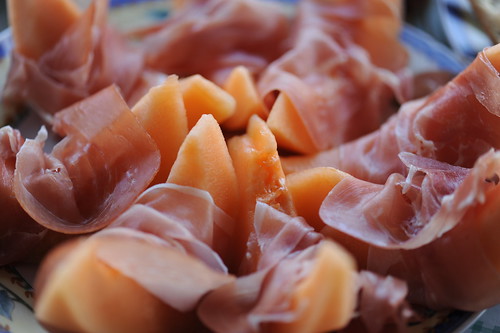
 (AKA Prosciutto e Melone - a simple carpaccio dish that seemed rather alluring even to my eternal vegetarian-born-and-raised palate. Thin slices of cured ham were layered flat on a plate, and wedges of cantaloupe arranged on top. It seemed so odd to me to pair something so meaty and brown with something so vividly orange and juicy. But, living vicariously through the carnivore boyfriend I had at the time, I gathered that the magic lay in the contrast between the saltiness of the prosciutto and the fragrant sweetness of cantaloupe - not unlike the Balkan signature pairing of crispy sweet watermelon with creamy and heavily brined feta cheese.

Later research into the matter also informed me that pork has a coconut, peach and apricot-like notes to it from lactones, which makes it so suitable for pairing with fruit as well as certain fruity white wines or lightly oaked reds. Vegetarians may enjoy a somewhat similar experience by savouring tiny cubes of well-aged Pecorino Romano with abovementioned cantaloupe; or if you want to go overboard, find yourself a coconut-gouda and watch out for exploding tastebuds. And since we are on the topic of coconut, vegans can also enjoy the coconut and cantaloupe contrast by sprinkling fine coconut flakes on their melon; or toasted coconut curls for an even more decadent experience.

Prosciutto e melone

While in Grasse, I had the pleasure and honour to meet with Michel Roudnistka - a multi sensory and visual artist (photographer, perfumer and filmmaker who combined his videos into a film that is accompanied by five difference ambient fragrances, each for a different indigenous culture around the world), and that is when I firs experienced his magnificent perfume Emotionelle, which he created for Parfums DelRae in San Francisco. How does Emotionelle smell?

Picture this in ripe, juicy, room-temperatured cantaloupe in your mouth, with a full-bodied flavour filling your entire palate:

Crisp Cantaloupe
Suddenlly and immediately, you are interrupted by more than a whiff of this indolic jasmine:
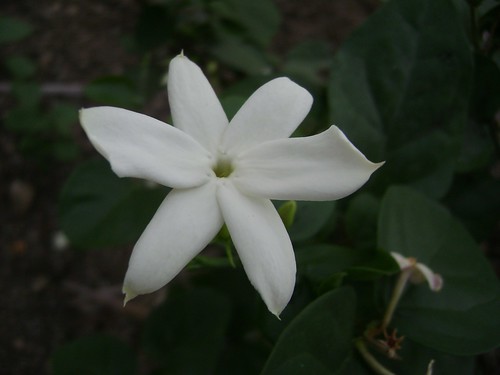
Grasse jasmine
That is the basis for Emotiomelle, the main structure upon a complete, original and unusual perfume is built. One could argue the source for this pairing is in Le Parfum de Thérèse (which the perfumer's father created for his mother), or Diorella. However, the other two had melon, not cantaloupe. And that is a huge difference. As far as influence goes, I would suspect that a new cantaloupe molecule or base was invented that year in one of the Grasse houses, because both Emotionelle and Un Jardin Après la Mousson (which pairs this very cantaloupe note with more bracing, chilled spice notes and cooling vetiver) were released the year prior (2008).

Emotionelle opens with a big, ripe, juicy cantaloupe note and is paired with sultry jasmine and sweet violets. It’s hard to believe these will get along, but they sure do. The key is in the balancing of the animalic indole in the jasmine with softly-blended, oily violet, musk and cedar notes, almost like pastel crayons smeared with a persistent finger to create a bold picture with loud colours yet with very soft texture.

The result is magical, even if a little disturbing, like striking the right chord in the right time. After all, we are talking about pairing something very edible, with something very floral and animalic. To me Emotionelle is very sexy, sensual. I like the fact that it's a distinctive tricolour - with cantaloupe, jasmine and violet being in the centre at all times. There is a complexity and tension that all three bring to the composition, but there are also other subtle layers underneath that keep it from being too simplistic and ordinary. Those who yell "cantaloupe" and dismiss it (most of the reviews I read, actually) miss the entire point. There are many composition styles, and Michel Roudnitska's is one that takes a theme and goes all the way with it. It's also what I smell in Noir Epices: it's very bold combination of geranium, cloves, orange and cinnamon. But it's brining a new, modern meaning to the ages-old pomander scent (the root of all Oriental-Spicy scents, if you ask me) - by not trying to play it quieter, but rather amplifying the seeming dissonance between those notes. Those who pay attention will find it actually humorous, playful and at the same time sophisticated. In the case of Emotionelle this is achieved with low dosage of musk to offset the animalic indole; cedar wood to substantiate the ionones; and warm, sweet notes of honey, amber and labdanum to deepen the sweetness of the cantaloup, with tiny sparkling of spices (cloves, cinnamon) for a bit of warmth and dimension.

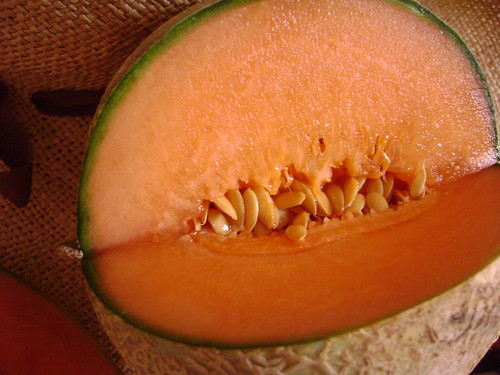
Cantaloupe

To me this perfume will forever remind of Southern France and in particular Grasse, and the visit to Michel's studio and home in Cabris where I first smelled Emotionelle. There was an osmo-art (multi sensory film) projected in one of the room of the MIP (Musée International de la Parfumerie, AKA International Perfume Museum) of which an image of a ladybug crawling along a split cantaloupe was the olfactory if not visual highlight. And lastly, the cantaloupe in the above photo is one I bought and ate there, in its entirety, one afternoon. I didn't have a big enough refrigerator in my hotel room there, so I had to eat most of it room-temperature (which is actually delicious, by the way: it makes the fragrance more apparent than when chilled). It is the perfume of a hot spring day up on the mountainous Alpes-Maritimes-Cote d'Azur, where the sun shines generously, people are warm and hospitable, life is slowly savoured with the people you love, lunch breaks span over two hours minimum, and an afternoon siesta to follow is not a bad idea at all, especially when the room is permeated with a fragrant cantaloupe.


Top notes: Cantalupe, Tangerine, Bergamot, Ylang Ylang, Prune
Heart notes: Jasmine, Violet Flower, Violet Leaf, Rose, Cinnamon, Honey
Base notes: Vanilla, Cedarwood, Cloves, Patchouli, Musk, Amber, Labdanum

Labels: , , , , , , , , , , , , , ,

Tuesday, July 28, 2015

Madini's Jasmine


Madini is a provider of various fragrance oils * in the like that is sold in many Middle Eastern souks' perfume booths. Some of their oils are single notes compounds; some are replicas of commercial designer fragrances (i.e.: Angel, No. 5 and other best-sellers), and some remain true to the Arabian style of perfumery, even if made with cheaper raw materials. Traditionally, a perfume business runs in the family, and the father passes the art and wisdom (selecting oils, etc.) to his sons (it is primarily a patriarchal system, though it is changing), and I gather Madini have been around for 400 years.

The vendor (who nowadays rarely is the perfumer) will either bottle it as it is in an ornamental-looking bottle with a dauber, or in a simple roll-on - or if you wish, will blend it for you in some alcohol so that you can spray it. DPG can be mixed in both oil and alcohol, and that's the advantage of this material, besides it being very cheap (unlike jojoba oil).

"The sweet and most celebrated flower of North Africa. Considered by many to be the most precious of floral ingredients, certainly one of the costliest". Given that it is sold for $25 for a 6 mL bottle (which brings it to roughly $125 per oz), I can see how someone may be inclined to think they are purchasing pure jasmine. This is not the case. This is simply a jasmine-like concoction of mainly (if not solely) synthetic molecules that is designed to replicate jasmine. It is not far off the jasmine base that I've described in my earlier article on jasmine, and is very potent. Certainly not something that I'd recommend wearing neat on the skin. It's just way too potent and harsh that way, and goes up your nostrils with a bit of a stinging sensation.

Okay, now I've diluted it to a normal eau de parfum concentration (in alcohol). Much better... But still, it's very cheap-smelling, and not convincing enough as a jasmine. I'm pretty sure that if it were to be blended with other notes, it would be okay, for example: if it were to be blended with fresh, citrusy or herbaceous essential oils, or with a true patchouli essential oil base - it will give it some more soul. Overall, it still smells flat, chemical (a combination of acetone and something else that still maintain a green sharp ice-needles in my nose, even after dilution). There is a hint of indole in the base that makes it feel a tad more real than other cheap jasmines I've smelled lately, but I would not wear it on its own as a soliflore, because it is just too harsh and sharp this way. But either way, I'm sorry to say that this goes down as a scrubber. I couldn't even do that too well - so I layered it with Brin de Réglisse and now I can breathe a little better... At least for a little while - the jasmine creeps up again after an hour or so, making both a scrubber once more!

For that price, or a little bit higher, you can get yourself a sample of pure jasmine absolute from a reputable supplier such as White Lotus Aromatics or Eden Botanicals, and dilute it in an oil of your choice (or get the jojoba-oil 10% dilution). I guarantee you will enjoy it much more. If you are interested in authentic, modern-day Arabian perfumes that are all-natural and beautifully crafted, I recommend you visit Amal Al-Kuwait's website. They are the real deal, and their Fatima perfume has loads of natural jasmine grandiflorum absolute, along with oud.

* “A compound of various raw materials (synthetic and/or natural) that are usually suspended in a base of DGP (dipropylene glycol).” 
- Excerpt From: Ayala Moriel. “Foundation of Natural Perfumery: A Practical Hands-on Guide for Creating Your Own Fragrances.” iBooks

Labels: , , , , ,

Monday, July 27, 2015

Ikat Jasmine

BD011 (detail)

The most interesting thing about Ikat Jasmine is its name. Ikat is an elaborate resist-dyeing and weaving technique in which rather than dyeing the finished, woven fabric - the individual threads or bundles of yarn are tightly tied or resistance-treated before being dipped in the dye, and only then woven into elaborate patterns that (unlike printing a pattern) are visible on both sides of the fabrics. This is an ancient technique that is labour-intensive and requires both skill and artistry. It is extremely difficult to create accurate patterns with the pre-dyed yarn, especially when trying to create elaborate designs with multiple colours. Therefore there is always a blurry quality to it - which adds to its charm and character. Ikat fabrics made with finer threads (such as silk) and several colours require an expert weaver, and usually are more accurate and costly. In many of the cultures where Ikat is produced, the fabric is considered to possess magical powers, endow its wearer with good luck, or at least be a symbol of status.
Ikat Looms

The technique can be found among specific weaving traditions, all over the world: Central Asia, Southeast Asia, India, Japan, Africa and the Andes indigenous people of South America. Most of these cultures use either a warp or weft ikat; while only very specific locations produce the even more elaborate double ikat, in which both the warp AND the weft are resist-dyed, for example: India (Pochampally Saree from the Bhoodan Pochampally village in Telengana State; and Puttakapa Saree from the Puttakapa village in Andhra Pradesh). The Balinese village Tengan (Indonesia) produces the beautiful geringsing; and in Okinawa, Japan (where it is called tate-yoko gasuri). In Okinawa there is an additional uniquely Japanese ikat technique called Oshima, which is used for stiff fabric and is so labour intense it is reserved for royalty).
ikat
Reading up about it was probably the best thing that came out of this short-lived perfume experience. I now have an even greater appreciation for the art of weaving. But also am more disappointed of this perfume, whose only connection to its name is its blurry, nondescript quality. However, while the blurriness of an ikat fabric shows its handmade origin and gives it a one-of-a-kind value - Ikat Jasmine perfume smells impersonal, industrial, synthetic and showcases neither jasmine nor ikat-like craftsmanship in its design and execution. To begin with, its only resemblance to jasmine is to star jasmine, which is not a true jasmine at all. In other words - there is no indole and no other dirty secrets to discover. In addition, there are absolutely no fun surprises of twists-of-plot for this number. From a nondescript floral frolic it smoothly and stretches into a yawn-inducing musky-ambery vagueness. To be fair, it is a pretty and wearable whitish floral ambery-musky thing, and all in all not bad if you place it next to, say, Halle Berry Exotic Jasmine. But compare it to what true jasmine absolute smells like or one of the more successful renditions of the theme (Jasmin de Nuit, Jasmine Rouge and A La Nuit), not to mention something a tad more imaginative such as Alien - it hardly demands mentioning.

Another point of reference is the price: for $125 CAD plus tax, you can do better than that: Either save yourself $26 and get Pure Poison, which is basically the same thing (minus pretending it's a high quality jasmine fragrance) add $25 more and get A La Nuit by Serge Lutens, both available at Sephora on Robson Street (for some reason they don't have the Serge Lutens on their website). To be fair, though, it is so much better than California Star Jasmine by Pacifica. Like, 100 times better. But that says more about Pacifica's disappointing launch rather than the topic of this blog post.

The notes are supposedly Tuberose Fleur, Jasmine Sambac, Jasmine Egypt Infusion, Honeysuckle, Tuberose Infusion. What my nose is smelling is Star jasmine, orange blossom, white musk and a hint of powdery, sheer amber. 

Labels: , , , , ,