Friday, January 06, 2017

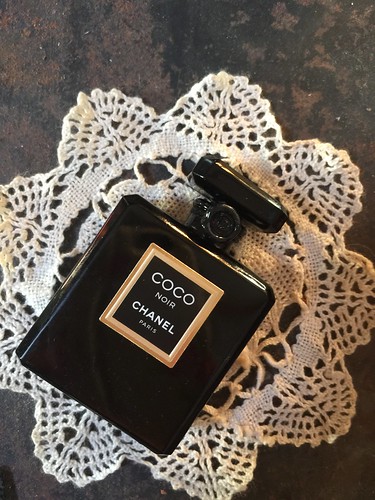
Coco Noir

Coco Noir

Sometimes we get attached to perfumes because they speak to us. Other times, it is pure coincidence that creates an imprint on our minds and adds meaning to the scent that we would have otherwise not found in it.

These past few months I've been wearing copious amounts of Coco Noir. I've received the parfum extrait from a friend as a goodbye gift, and somehow it did not seem right to stuff it on the shipping container. Probably because I was too curious about it. At the same time I was too scared to open it, because starting a new perfume at a time of great change can create too strong of an impression - and I knew that there are many challenges ahead of me. I definitely did not want to open it at the time of our departure - I was an emotional mess, after three months of intensive packing and very little sleep... So I waited for a while for the dust of traveling to settle, and opened it about a week or two after arriving in Israel. It was a time of terrible weather (weeks and weeks on end of dry desert wind and over-the-top temperatures) not to mention - great emotional turmoil and immigrant adventures - and we are still in the midst of it, but I have enough levelheadedness now to reflect a bit, as things are finally starting to fall into place: my daughter will start school on Sunday, our home renovations are about halfway through, and my mental state allows me to pass entire days without crying (but still happens about once a week, because I end up hitting a brick wall of some sort at least in that frequency).

Coco Noir is a modern "dark" concoction, which means that instead of oily aldehydes and animalic base, it has clean florally laced with white musks and underlying notes of vetiver and patchouli. It isn't exactly a fruitchouli, but it borders on that territory, with a clean ambreine accord (not unlike Prada Ambre Intense Pour Homme) - which means it has vanillin, patchouli and bergamot galore in it. However, there is also a spicy cacao accord (or perhaps it's just an illusion of that - created by the spicy cloves notes alongside the benzoin, vanillin and coumarin) which is quite prominent, which reminds me of Notorious - only that it continues much better in my opinion (it does not have as much musk, which in Notorious gives me a piercing feeling through my nostrils). It gradually softens and develops around the heart of jasmine and rose, and leads smoothly to the end: Dryout is a mellow, powdery confection, with hints of heliotrope (not unlike La Petite Robe Noire - but with non of the saccharine qualities of the latter).

Coco Noir is more accessible, in my opinion, than Coco is. I love the original, even though I do not own it. It has a big persona and feels over-the-top for daily wear. I would only imagine wearing it when I'm all dressed up for a very sepcial event in the middle of winter. Instead, it provides with a very modern comfort in my overtly rustic living arrangement (which is only temporary, sort of...). It's a scent that inevitably will conjure up scent memories from this time of re-settling in my home village: having this sleek, elegant, opaque black glass square bottle around reminds me of my urban side and that I'm not going to be forever wading in mud to and from the yurt, and struggling with every little aspect of life. There is still place for elegance and luxury in my life even in this off the grid spot in between two major life periods.

Another great reminder of this truth: whenever I stick my nose inside my shipping container, which smells still like my very fragrant home studio in Vancouver. My friend chose this fragrance because it reminded him of how my perfume smelled. I think I now get what he's talking about: it's very much like this "smell of everything, all at once" that you get from my workspace: dried coumarinic herbs (liatrix, tonka), vetiver roots, patchouli, countless flowers, herb oils and spices... All mingled with woodsy oils and the scent of antique furniture.

I'm grateful for having this point of view portrayed to me via a bottle of fragrance chosen for me.

Top notes: Cedarwood, Bergamot, Orange, Grapefruit
Heart notes: Rose, Jasmine, Narcissus, Geranium, Peach, Carnation, Cloves
Base notes: Patchouli, Vetiver, Sandalwood, Benzoin, Frankincense, Musk, Vanilla, Heliotropin, Tonka

Labels: , , , , ,

Thursday, April 09, 2015

Misia


Misia, the new bird in Chanel's flock of exclusive scents has pleasantly surprised me with its soft, down-like softness, warmth and retro sweetness. It immediately brings to mind candied violet petals, with its overdose of alpha ionones, which dominate the opening, giving it the characteristic cedar wood effect. This balances the sweetness of the composition, addinga woody, dry yet powdery and soft air to it. This is quickly taken over by juicy, fruity notes of a plush, dark-red rose. Raspberry and plum notes rule supreme with every stroke of this bold bluish-red lipstick. The iconic Lipstick Rose comes to mind, as well as the scent that pervades most of the current Guerlain cosmetics. But more on points of references later. While there is more than a gourmand hint to Misia, it does not in the least smell too obviously dessert-like, nor trashy. It does, however, give it a most addictive character. As the fruit and rose soften and become rounder, the sweet supporting base note begin to emerge, and they are the perfume-world equivalent of caramel: tonka bean, with its slightly bitter, powdery qualities of almond rocca; and benzoin, which is like liquified brown sugar, with a depth to its sweetness that stops it from being cloying. There is something about the dry down that is not how I'd expect this to end. It's thankfully not too powdery, nor too musky; and sweetness is played just right, balanced with an earthy nuttiness. If there is any leather in there I can't smell it, unfortunately.

If I didn't know the perfumer behind Misia is Olivier Pole (Jaqcues Polge's son and successor as Chanel's house perfumer) I would have guessed it's Sophia Grojsman (Lancome's Tresor and YSL's Paris smell like close relatives). But there is more violet than rose in Misia, which if I were to blind test this would make me think of it is a Guerlain. Not so much the old fashioned violet-laden Apres l'Ondee or l'Heure Bleue, but rather, Meteorites (a scent that was phased out and instead was used to scent their makeup line of the same name); or perhaps a more agreeable version of their recent violet-dominated La Petite Robe Noire (which although I like its idea, I find it to be more than a tad too brash to my taste). But again I will contradict that notion because Misia's character is a more nuanced and less invasive.

With all these references to existing non-Chanel fragrances, you can probably already guess that there is nothing particularly groundbreaking about it. However, in the context of it being part of the Chanel family, and comparing it to the rest of the collection, it is admittedly quite refreshing to be offered the choice of a perfume that it is not nearly as austere, angular or aloof as the temperament of this house tends to lean on. Misia seems even more "out of place" than Coromandel was at its time - a patchouli fragrance in a collection of iris and aldehydic florals. But even Coromandel has a coolness to it, a bit of a sharp edge that surrounds a very clean, albeit sweetened patchouli. Misha wants to crawl right next to my Bois des Iles bottle and cuddle, while still wearing its silk stockings and with a fully powdered and made-up face.

Top notes: Ionones alpha (Violet notes), Raspberry, Plum
Heart notes: Rose, Orris, Damascones
Base notes: Tonka bean, Benzoin

Labels: , , , , ,

Monday, December 30, 2013

28 La Pausa

Behind the Curtain by judy stalus
Behind the Curtain, a photo by judy stalus on Flickr.
Revisiting 28 La Pausa, and the Les Exclusifs that came out in 2007. What's been around before (Bois des Îles, Cuir de Russie) has been watered down so much they remind me of a lukewarm instant coffee made by a pinchy in-law compared to a proper espresso. And the remainder seems like an elaborate, cerebral exercise in restrained variations on the Chanel originals: No. 19 and Bois des Îles being the primary sources of inspiration, with various iterations (Bel Respiro and La Pausa in reference to the first; No. 18 and the later-arrival Sycomore stemming from the latter). Both share recurring themes in varying proportions - primarily iris, indole, ambrette seed and greens to varying proportions. 28 La Pausa seems to have some leanings towards No. 18, with hints of ambrettolide, but non of the intriguing wine-like qualities of true ambrette.


28 La Pausa is very light, ethereal exercise in iris. Not the powdery, creamy orris butter that at the core of all the classic Geurlains; but rather a cool, airy rendition of this ethereal and obscure note, quite anemic if to be perfectly hones, and supported by ionone, irone and synthetic musks to extend its metallic presence without adding much longevity or blood. If the inspiration for it is the green-shuttered villa in southern France, then 28 La Pausa is the breeze blowing in the gauzy cotton curtains, bringing in the scent of a just-watered garden with iris and wet concrete pavement. There is a hint of indole in there, giving the ever so slightly warmth of jasmine petals. But it's not enough to bring in any of the relaxed, carefree Joie de Vivre spirit of southern France, nor its neighbouring Italian riviera the house is supposedly overlooking. If this is Chanel's mood on her vacations, then she's most likely sewing mosquito nets indoors, or else sketching patterns on a glass coffee table. She should be indulging in the fresh air, beaches and abundant Mediterranean scenery and loving sun. But she's not. She's cold inside her stone villa, letting only the cold sea breeze come in.


Although Gabrielle Chanel always followed her dreams and made them come true - always strikes me as a logical, down-to-earth person. She seemed quite restrained in her emotions, which in some way also comes across in her very put-together, tailored designs she's created; but that is not to say she had no emotions. Her passion was evident in the meticulous attention she's given to every stitch, in the bold audacity of her costume jewellery, and in her involvement in the artistic direction of the original perfumes. It is true that it took some time before No. 19 and
Bois des Îles grew on me - but when they did, I could sense the vulnerable, playful, passionate personality behind them - even if she hasn't created the perfumes herself, she stood behind them completely and took Even after all these years, coming back to Les Exclusifs, I can't help but notice my feelings are completely untouched by each and every composition. There is no soul to them. Only cerebral reminiscing of Chanel's style, luxury and good taste. It's all about flaunting the several expensive ingredients at the core of the composition (iris, ambrette, jasmine from Grasse) but there is really no story behind it except for a brief that resembles an interior-decorator's outline for a very wealthy client.

Notes: Iris,
Ionones, Jasmine, Indole, Ambrette, Musks.

Labels: , , , ,

Monday, December 16, 2013

Égoïste


Égoïste by Chanel, although officially released by this name in 1990, is a true child of the 80's: bold, clear and with a definite presence that is unmistakable with others. It is one of the most delicious woody fragrances designed for men, not to mention its got the most dramatic yet humorous, wonderfully timed perfume commercial I've ever laid eyes upon, rivaled only by the marvellous Old Spice, which is really for a shower gel so I guess that does not really count. Perhaps it's because Prokofiev's "Dance of the Knights" from the ballet Romeo and Juliet has a way of sending shivers down my spine; and perhaps because I've been always intrigued by the use of "negative" titles for perfumes. The guy who chooses to wear it might be perfectly sweet, honest and dependable - but that should not stop them from fantasizing about taking over a whole building full of screaming females.

Sadly, Europeans are rather egotistic in keeping this beauty to themselves and it is nowhere to be found on North American soil. So, on my last stopover at Schipol airport, I picked up a chunky 100ml bottle of this masculine gem, a size that I generally avoid. This is obviously designed for a larger fist, and should last me a lifetime, because there is no man in sight with whom I can share this beauty.

Égoïste is the younger and louder brother of the demure, soft-spoken and old-fashioned Bois des Îles. It opens with a burst of dry yet sweet melange of woods, citrus and spice. It actually reminds me of another favourite 80's fragrance, which is also drenched in sandalwood: Samsara (which reportedly had a glutenous 40% Mysore sandalwood). There is no true separation between top and heart and base as they weave in and out in different phases of the perfume. At first, there is the clarity of bois de rose (rosewood), the led-pencil shaving association of Virginia cedarwood, and the sweet citrus burst of tangerine and a sprinkle of sweet cassia. There is also a hint of eugenol, not quite clove like, but softer - perhaps form carnations. Underlying notes of coumarin backed up with a generous dose of vanilla absolute. There is something about true vanilla absolute that is simultaneously woody and animalic, quite unlike the cupcake frosting character of vanillin. Égoïste's vanilla really brings this out with some help of both indole and leathery animalic notes. which add interest. It is quite well balanced between sweet, bitter, smooth, spicy and powdery - although admittedly leaning towards the sweet more so than I would have expected (or remember the original to be).

The sandalwood is not as creamy as its sister Bois des Îles (probably because what I have in my hands is a rather modern version, very unlikely containing any Mysore sandalwood) - but that also gives is an edge somehow - it's warmer and more spicy and dry than I remembered it from a few years back. It seems to be accompanied by Atlas cedar's suave fruitiness, and perhaps even a splash of violet-y ionones and plum and rose notes from damascones.

I would hardly consider anyone wearing Égoïste selfish - anyone around you is going to enjoy it too!
Beware: Egoiste Platinum has nothing to do with it besides the name, and is the only version you'll find in Canada and the USA, and to my nose it smells like generic sporty aquatic chemical trash. But it has a wonderful ad as well!

Chanel_egoiste

Top notes: Rosewood, Tangerine, Virginia Cedarwood
Heart notes: Rose, Cassia (Cinnamon), Carnation
Base notes: Sandalwood, Coumarin, Atlas Cedarwood, Vanilla, Leather

Labels: , , , , , , , ,

Tuesday, August 20, 2013

Floriental Week: My Short But Sweet Taste of Perfume Making

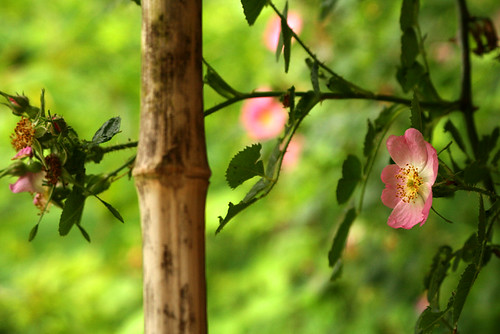
Trailing Roses
Trailing Roses, briar roses at Horton Bay in Mayne Island - a photo by Laríssa on Flickr.

I remember quite clearly the first time I ever met Ayala and came across her fragrances. I was in my first semester of the Fashion Marketing Diploma program at Kwantlen Polytechnic University and I met Ayala at Portobello West very briefly while I was in the process of completing an assignment. I have always loved fragrance as more than just a sensory pleasure but also as a complex and powerful art form - the sense of smell is the sense that is most closely linked to emotions and memories. I was immediately intrigued by her unusual scent combinations (urban inspired Hanami and simplistic but powerful Roses et Chocolat were the scents that left the biggest impression on me) and by the stories that were behind each one and I never forgot about our discussion or her fragrances. I met Ayala again a year later at her Etrog tea-party after writing an article about her custom fragrances for a bridal fashion website. We talked about fragrance and bonded over the fact that we are both chypre-lovers (from Ayala's collection I particularly adore Rainforest and Ayalitta). I told her that I loved her product and that if I could ever be of help to her in any way that I would love to volunteer. Another year later and I am lucky enough to have the privilege of working for Ayala Moriel Parfums.

While I was interning for Ayala in July, I was fortunate to be able to sit in on one of her classes and participate in the solid-perfume workshop during her five-day Floriental Perfume Course. While I do have a passion for fragrance and spend a fair amount of time researching fragrance myself, I knew very little about florientals and what key components make a scent a floriental versus a floral or oriental.

Many people think of floriental fragrances as being heavy, rich, ambery, and spicy. But truthfully, Florientals can be best described as a Floral-Ambery: a sub-category of the floral family, and the love child of two harmoniously mingled fragrance families - heady White Florals, and smooth Ambery Orientals. Opulent, smooth scents like Guerlain's iconic Samsara or Chanel's Allure often come to mind but floriental fragrances, while having a similar structure and similar notes, can vary greatly in smell and spirit. They can be light and sparkling, creamy and beachy or dark, smoky and seductive, depending on the composition and accent notes used.

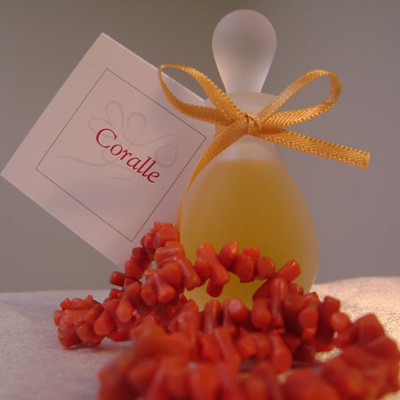
Coralle
Coralle parfum, an all-natural floriental from Ayala Moriel Parfums' archives

Floriental perfumes can vary greatly but are unified in their composition structure. Those who are familiar with fragrance know that notes are only a percentage of what leads to the final smell of a perfume. Florientals are more base heavy than other florals. Amber is always in the base, along with other heavier notes such as incense, sandalwood, vanilla, massoia bark or myrrh. The heart is where the richer flowers (roses, violets etc.) and white florals reside and the top is reserved for the airy citrus notes and lighter flowers (i.e.: mimosa), cool spices (i.e.: coriander, ginger, cardamom), balsams and woods. Perfumers will play around with the composition of fragrances but that is the basic outline of what the formula for a floral-oriental fragrance would look like.

Class Of Summer 2013
Class of Summer 2013 (Floriental Week)

It was fascinating to listen to Ayala explain how the different components and ingredients of a floriental perfume could work together. Perfume is often explained and described in terms of the ingredients or "notes" within a fragrance. Ayala stressed that the ratio of notes within a fragrance is as equally important as the notes themselves. There may be several different versions of a fragrance with similar or the same notes, but each version will smell entirely different based on the amount of each note and the concentration. The subtle but distinct differences between fragrances of the same family was illustrated most vividly when Ayala began passing around different examples of floriental fragrances, some her own creations, some commercial perfumes, and some truly intriguing indie and vintage scents.

I was particularly intrigued by a vintage fragrance that she presented to us called l'Heure Bleue. The perfume was released in 1912 and I was truly surprised at how modern the fragrance smelled.When I used to think of vintage perfumes I would think of heavy abstract florals, thick spices, and animalic, aldehydic notes reminiscent of those on my great-grandmother's dresser. This perfume, created more than one hundred years ago could easily be worn and enjoyed today which made me appreciate the perfume and the perfumer all the more for being able to create a fragrance that can transcend time - not an easy task for an art form as personal perfume.


Floriental Week July 1-5, 2013
Students smelling tea roses at Nelson Park community gardens

During my time as a stand-in student of Ayala Moriel's I found that I most appreciated the way Ayala would connect science with more artistic side of creating a fragrance. What I mean by that is she would tell us about the chemical components of an ingredient and how that would affect a fragrance but would also describe it in imaginative and sensory terms that made it relatively easy for someone like me, with no background in science or chemistry to understand. I also appreciated the way that every lesson was illustrated with examples. If she was trying to show us how carnation blossoms smell similar to clove essences because of their high eugenol content, she would pass around the essences and have us describe any detected differences as well as similarities. Ayala thoroughly saturates you in the content of her lessons, urging you to use every sense while learning. Fragrant snacks (elderflower tea, floral-flavored cookies and bitterly rich dark chocolate), and garden walks allow her students to experience fragrance and explore the different components of fragrances in different ways. It is amazing how one flower, or spice, or balsam can produce essences with completely different aromas. The different facets of natural ingredients are fascinating and really made an impression on me in terms of how complex an art-form perfume-making is. It made me think of music or painting, where tiny brush strokes and notes combine together to create something abstract or simplistic but always emotionally/intellectually impacting. Everyday we are surrounded by different smells, some pleasant and some not so pleasant but they have a strong impact on our perceptions of our environment and on our memories. Fragrance can transport you to a different time, place, or emotional state depending on what you associate with different smells.

Grating Beeswax
Grating beeswax for making solid perfumes
Ceramic Casseroles
Ceramic casseroles for solid perfume making.

The highlight of my week as Ayala's student was the solid perfume workshop. Using beeswax, jojoba oil, and essences we were encouraged to close our eyes and transport ourselves to a place that really represents ourselves and where we feel most alive, inspired, safe etc., a place that we would want to capture and carry with us always. For me that place is Mayne Island, a gulf island close to Vancouver Island. Briar roses, sun-baked blackberries, spruce, pine, broom and salty ocean air are the aromas that are closest to my heart. Using notes of Rosa rugosa, lavender absolute, vanilla absolute, wild frankincense, and ylang-yang I created a fragrance that reminds me of my home away from home and that smells just a little bit vintage-esque because of the frankincense. I named it Marion after my great grandmother who helped build my family's cottage on Mayne Island. It was a meditative but somewhat nerve-wracking experience because of how much a subtle change in the amount of each essence and even the slightest variations of notes can change the entire fragrance. The process of creating the solid perfumes felt similar to cooking and is definitely something I would like to explore for my own enjoyment in the future.

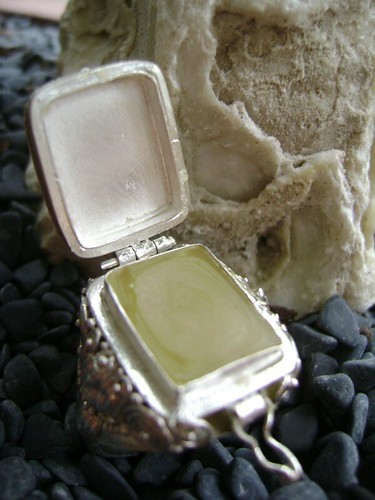
Labradorite Poison Ring
Solid perfume in a vintage poison ring 

Overall what I would say about Ayala's classes are that they are intensive, artistic and scientific, and very hands-on. These are not classes where you will simply sit, read, and memorize. Every one of your senses will be involved while taking her classes. Perfumery is a rich and complex subject and there is always a lot to learn. Ayala has been practicing perfumery for years and years and as she says, even she is learning on a regular basis. In my opinion, the mark of a good teacher is to be able to take a fairly complicated subject and to be able to explain it in easy to understand terms. As Albert Einstein said, "If you can't explain it to a six year old, you don't understand it yourself.". I learned a lot from my couple of hours as Ayala's student even without a base of knowledge to reference.

Truly, perfumery is an art-form that should be further explored and celebrated. It is an incredible form of expression even for those who perhaps don't necessarily want to pursue it as a career. Not only will you develop a new creative skill and outlet but you will become more aware of the aromas and environment around you. I, for example, will never look at a tuberose the same away again after meeting and talking with Ayala about it (such a mesmerizing, multifaceted flower). I encourage anyone who has an interest in aromatherapy or perfume to take one of Ayala's courses, such as her Orientals week-long course from September 30th to October 4th 2013. Registration for this course closes Friday, August 30th at 12 noon PST. 

Labels: , , , , , , , , , , , ,

Monday, September 10, 2012

Coromandel

Back when Chanel's Les Exclusifs came out, I wrote about Coromandel: "a modern oriental much in the vain of Prada and Allure Sensuelle, but one that I can stomach without gagging. If I happen to change my mind about it I will let you know. Promise".

Well, I haven't changed my mind. But since the patchouli series is still going, I thought I'll give it a more proper wearing and describe it in slightly more detail than before.

Coromandel has a funny name and is a thin, rather non inspiring oriental if there ever was one. Beginning with a floral-fruity mess that quickly leads to the patchouli premise everyone is hoping for, it does so with the assistance of agricultural-smelling molecules of upturned soil (geosmin?) that hints at less appetizing visions of sugar plums developing mold on the ground in late fall. Fruit and dirt might be a fertile combination, but not for the nose...

Once the chemicals quiet down, you can sense more of the patchouli, with what seems to have been its usual-accomplice (benzoin) and richer powdery vanillin that will pitch in only later.

I know Coromandel has its die-hard fans somewhere, but to me it was a very under-satisfying experience, even after the fruitsy notes left the stage. I would have expected something more polished, lacquered and poised with sophistication and depth - even if it has such a funny sounding name. In efforts to please the crowds, the result is less than pleasing and not quite befitting of the Chanel legacy. Pity, because I think it had a full potential of being one of those Chanel big-guns - Coco, for example; but instead tries to reach the younger audience of patchouli wannabes that can't tell musk from amber.

Labels: , , , ,

Sunday, September 09, 2012

Allure Parfum

For Adrian... by pieceoflace
For Adrian..., a photo by pieceoflace on Flickr.

Angular, crisp and non-accommodating, allure eau de toilette never appealed to me. I tried to fall for it, but it didn’t happen. There was something just so harshly chemical at first, and than bland through and through – I kept waiting for a surprise to happen, and it never did.

While reviewing Dune, I realized how similar the two fragrances are, and how much Allure was influenced by Dune. So I’ve given Allure another chance, and tried it in the pure parfum (I have a mini that was sent to me by a fellow perfumista – to this day I can’t remember if it was a trade, a gift or one of those “thinning the herd” sales…). Either way, I’m glad I had (and still have) the opportunity to smell Allure in the parfum concentration. Traditionally, perfumers will design a new fragrance in parfum extrait first, which means this is their truest intention. Now you’ll sometimes see perfumes released first in other concentrations: Cristalle, for example, was first created as an eau de toilette, and was never offered in extrait.

Allure parfum is slightly a different animal: It opens with a similar crisp, angular tonality – but it is actually recognizable as bergamot, even though a very crystalline version of it. Than a slightly peachy note comes in, as well as the musky, oily-scalp type aldehyde C-11 (Perhaps a reference to No. 5?; overall, Allure brings to mind the soapy cleanliness of No. 22) as well as the full-fledged floral bouquet of rose with underlining green hints, and supported by white floral notes - jasmine and magnolia. Together with the aldehydes it gets quite a "perfumey" personality - very French and not nearly as modern (read: thin and one-dimensional) as the EDT.

It is a little smoother, sweeter and warmer than the eau de toilette, which is a good thing in my book and there is more depth to it. There are crystalline vanilla notes as well, nothing syrupy or pastry-like about it; sheer woods and musks, and an ever so quiet whisper of vetiver – which is probably the best part about Allure (although it's not really all that obvious, it creates an effect that really saves it from being too cloyingly floral and chemical), which gets stronger over time once the aldehydes and florals tone down a bit. It's a clean, bitter, gorgeous vetiver, and smells Haitian alright! At the very end, Allure dries into a pleasant powdery musk, though not nearly as generic as you’d expect (musk is so over used nowadays, in florals like any other genre).

Still, there is a certain acrid, harsh note lurking underneath Allure’s innocent and agreeable purr; and that is something that disturbed me in all other concentrations. It’s not nearly as apparent in the parfum, but it’s still there – making me wonder – what were they thinking including that thing?! And what IS it? It might be the waterlily accord – as it is a very chemical smell (and most “waterlily” scents heavily rely on watery synthetics. It could be this with the vetiver. I smelled a similar note in Dune, and I'm not sure if it's one raw materials or just the result of combining similar notes with some natural vetiver in the mix.

Allure’s olfactory structure is described as a “faceted” one, with illustrated by a hexagon, divided into 6 triangles:
1) Fresh : Citron note.
2) Fruity : Sicilian Mandarin.
3) Timeless Floral : May Rose, Oriental Jasmine.
4) Imaginary Floral : Magnolia accord, Honeysuckle accord, Water lily accord.
5) Woody : Haitian Vetiver.
6) Oriental : Vanilla from Réunion.

A quick glance at this makes one wonder. After all: citron and mandarin (Sicilian or otherwise) are both top notes. The florals in facets 3 and 4 are all heart notes; and lastly, vetiver and vanilla (facets 5 and 6) are both base notes. So it does not exactly convince me that it’s any different form a “pyramid”. The one thing I do get from this illustration of a 6-faceted is the angular quality of the perfume. It is softer than the EDT, and and softens more over time in the parfum version. But there is something sharp and angular, crips and faceted about its personality. I experience it mostly as a linear scent. There is none of the complex evolution that can be found in other Chanel perfumes (say, Bois des Îles) and it’s pretty much offers what its got right from the start, with very little surprises.

Labels: , , ,

Saturday, November 12, 2011

Favourite End Of Fall Fragrances

IMG_3450

Fall is coming to a close any day now, and it's time to make a list!
While these are not necessarily what I'm wearing this particular fall, they are what I would consider my autumn staples and what I would recommend to invoke the season of fallen leaves, harvest and shortening days, when more than anything else I want to curl by the fireplace with a Noire book and a dense perfume that reminds me of the golden days of Hollywood in the 30's and 40's.

Looking at previous years' fall lists I've made, I'm noticing a pattern in my choices. There is always something Chypre, something woody, something smoky and something spicy in my fall perfume favourites. So here are a few suggestions:

Something Woody:
I've been wearing Hinoki more often than ever (and find it especially appropriate when trying my hand at practicing martial arts...).

Mitsouko - a chypre that defies categorization, but certainly has more woody qualities than most. The haunting of contrasts is probably what makes Mitsouko timeless and never boring. This zen-meets-baroque perfume is luxurious, yet as sparse as a monk's dorm; woody and dry yet cradles a tender sweetness therein, and I can continue on and on, but the main question remains - how can any fall list not include Mitsouko?!

Bois des Îles is another favourite fall of mine - and I'm also enjoying a similar perfume, that shares the woodsy creaminess of sandalwood paired with the understated sensuality and elegance of vintage-glam aldehydes that makes you think of pearls and beige nubok. I'm talking about Champagne de Bois by Sonoma Scent Studio.

Something Chypre:
Ma Griffe - after years of loyalty to Miss Dior, the epitome of animalic-floral chypres tinged with green, it was time to find another green chypre. I spotted a pre-IFRA regulated version (from days of yore, when there was no requirements of listing any allergens on the ingredients list). It's very vintage-y, and if comparing to Miss Dior - it has more of a white floral and musky nuances to it, which remind me a bit of Chant d'Aromes. It also has more of a citrusy burst and it's more aldehydic and powdery than Miss Dior. I should get around to write a full review of it next week.

1000 de Patou also seems to hit the spot on the shortening days, reminding me of icy, frost-spiked leaves with its intriguing osmanthus and eucalyptus notes. Melancholy, elegant and old-fashioned, it reminds me of scouring my grandmother's dresser and colourful strands of tropical seashells and Amazonian bead necklaces.

Something Smoky:
from burning leaves and Lapsang Suchong tea to leather bound books, smoky notes are one of those things that make fall so mysterious that even if you're not traveling you feel you're going on an adventure... This fall, my love for smoky, leathery notes is replaced by a craving for incense, which I burn at least once daily. And I've just received a package of Japanese Kyara incense sticks - there is nothing short of magical about burning them, the scent changes after a few centimeters of stick have turned into ashes. Also, I've been enjoying the depth of Sonoma Scent Studio's Incense Pure, with its depth and complexity of tobacco paired with powdery tonka, rustic immortelle and sweet amber.

Something Spicy:
I've been deeply immersed in the Clarimonde project and wearing the oriental-spicy violet perfume I've created for it more than anything else in the past month. Oriental perfumes truly did originate in the orient, where spices such as cloves, cassia and star anise were pulverized into a fine powder and blended with fragrant resins and woods such as camphor, sandalwood and agarwood to create fine perfumes for rituals of both religion and seduction. Body incense is still popular in Japan, where it originally was used to purify one's hands before entering a temple; but also powder perfumes were used to scent a Geisha's hair. Aftelier's Shiso is based on such a Geisha formula, and is a remarkably authentic in the ingredients it uses and the intense and immediate effect it has on my mood - transporting me instantly into dimly lantern-lit rooms separated with fusuma and lined with tatami mats. Shiso is intense, deep and camphoreous, tinged with eugenolic spice and aldehydic shiso herb.

And last but not least - combining sugar and spice, is the haunting Un Crime Exotique - a gourmand that walks the tightrope between French patisserie and an Asian soup broth.

What are you favourite end of fall fragrances?

Labels: , , , , , , , , , , ,

Saturday, April 04, 2009

CC and the SS

An article in the Times Online by Kate Muir reveals topics not often discussed about Chanel's life during World War II, her relationships with the Nazis (both sexually and politically), questionaning her moral integrity and explaining how she managed to live so comfortably at The Ritz Hotel in Nazi-occupied Paris while other artists struggled to survive both morally and physically.

"It seems to me that Chanel bent to the times, always intent on survival. The French call this Système D, or système débrouillard, which means getting round the rules somehow. As Charles-Roux notes, “playing refugee was not her style”, hence Chanel's move to the Nazi-infested Ritz (...) "

And to me it seems that Chanel sold out to the Nazis. Muir puts it ironically - "Who else could afford to buy her perfume?"
Among Chanel's compromises mentioned in the article were using the Nazi rules against Jewish businesses in order to take over her perfume factory from the Wertheimer family. How convenient.

“The occupation was merciless in exposing character” (Frederic Spotts, "The Shameful Peace"). How awfully true. But without being there it is so easy to judge others. I often wonder what I would have done if I lived in that era, both as a Jewish or a non-Jewish person.

Labels: ,

Saturday, March 14, 2009

31 Rue Cambon


Me at AE, originally uploaded by sallyTV.

For some reason, I can never get overly excited about furniture. And when trying to think what is the best visual way to portray 31 Rue Cambon, I cannot stop thinking of neutral coloured furniture. I can admire the architecture of the bottle (magnetic cap maintains the alignment of the mirrored "cc" logo at all times). I can intellectualize about the validity of oakmoss-free chypre and analyze the construction of the fragrance. But as of yet, I remain unaffected, no matter how comfortable or elegant this fragrance may be.

At this age of technology and the internet leaking inside information about perfumes well before anyone could sniff them, it’s hard to keep an open mind and untainted or opinionated approach when smelling perfume for the first time.

I’m trying to remember what was I expecting from 31, Rue de Cambon before getting directly acquainted with it. I wasn’t expecting a particular kind of scent or mood or notes. No, the emotions were a mix between high-hopes and advance disappointment, combined together to create an accord of mixed feelings and suspicion. Keep in mind that 2007 was marked by serial niche releases – i.e. launching a collection of even as many as 12 perfumes instead of focusing on just one. Tom Ford Private Blends and Le Coffret from Thiery Mugler (to coincide with the movie release of Perfume: The Story of a Murderer) are just two prime examples of what is perhaps a new strategy to avoid bad reviews: overwhelm perfume bloggers and critiques with so much information that they simply don’t bother testing, thus avoiding possible negative criticism. The rationale, of course, is to get the consumer to such a heightened sense of confusion that will prompt him/her to purchase the entire collection instead of just one perfume.

So here I am, 2 years after 31 Rue Cambon saw the light of day, finally trying to pay more attention to it as a single fragrance. In the context of the entire collection released back in 2007, 31 Rue Cambon stood out right next to the quirky, nutty unpolished ambrette seeds of No. 18. Back than it reminded me of the understated woody and aldehydic-floral juxtaposition of Bois des Îles. Two years later, I’m still impressed with the first few moments of intrigue, where 31 Rue Cambon smells like how you’d expect a luxury good boutique to smell like (reference: Hermès Poivre Samarkand). For a few moments, the juxtaposition of orris, pepper and vetiver seems equally classy and fresh (in the sense of “new”). But is that really how “the best chypre of thirty years” that would “permanently change the landscape of perfumery” suppose to smell like?


31 Rue Cambon, originally uploaded by PallasAthena1081.

Or is it even a Chypre? Taking a closer sniff of it in recent weeks I’m even less convinced than I was ever before. Despite the fact that 31 Rue Cambon has the Chypric characteristic of creating a general homogenous impression at first, refusing to unveil what it’s made of right away, the threads that connect the elements are not as tightly woven as in a classic Chypre. And even though it does provide the sudden emergence of voluptuous flowers (jasmine and narcissus) it is not enough to get one’s heart racing as florals soar into the atmosphere – as one would experience in great Chypres such as Mitsouko, Femme or Miss Dior. And finally, lest me remind you that there is no oakmoss here so even when you get to the base of things I never got the satisfaction of dusting my feet in crushed dead autumn leaves or dampening my leather sandals in mossy forest floor. Instead, all I got was a thin layer of a vague woody-synthetic mixture of vetiver and patchouli that have been stripped down to their minimum representation – thus lacking any of the earthy foundation that makes a Chypre perfume so alluring and timeless. Chypre, after all, the epitome of urban chic born of the chaos of nature. It is complexity that made Chypres so near and dear to the perfumer and have in many ways, defined what was to become of modern perfumery.

I’ve been wearing 31 Rue Cambon for a few weeks now before bedtime and almost every single time I do I wake up 20 minutes later with an overwhelming olfactory sensation of heat and dryness. Testing it again yesterday morning, I was not surprised to find out that 20 minutes in this is the point where the synthetically-amplified patchouli kicks in. More than the lack of oakmoss, it’s the synthetic patchouli part that disturbs me in 31 Rue Cambon. Just as it does in Coromandel, Allure Sensuelle and earlier on – Coco Mademoiselle (and maybe also Chance, which I never was able to watch through the end because of its sharp edges and aggressive sillage). While the last two I’ve mentioned are far less hostile and have that sense of refinement – achieved by using the “precious woods” aspects of vetiver and patchouli.

And one last observation about the Les Exclusifs collection – I now realize that the six scents have more in common than I even thought before: An iris thread goes through the green and fresh Bel Respiro and 28 La Pausa (both contemporary reflections on No. 19), through the sparseness of No. 18 and on to the more complex 31 Rue Cambon* which in addition to iris also has the same patchouli theme as Coromandel. And the vetiver finally leads us Sycomore, the redeeming point in the collection.

Top notes: Pepper, Bergamot
Heart notes: Orris, Narcissus, Jasmine
Base notes: Patchouli, Ambrette, Vetiver, Labdanum

* Both No. 18 and 31 Rue Cambon being reflections of Bois des Iles

Labels: , , ,

Sunday, November 09, 2008

Sycomore

As you may remember, Les Exclusifs left my nose generally unimpressed and my wallet completely unaffected (except that, of course, I immediately bough the last parfum extrait of Bois des Îles upon learning this was the sacrifice for the new line). Even though all the 6 new scents were very well made from quality materials and nevertheless elegant – they left me cold and, well, disappointed. Mostly because most of the collection seemed to be elaborating on already-familiar-Chanel themes: the cool green iris scent (28 La Pausa, Bel Respiro – both reflecion of No. 19); the over-the-top oriental (Coromandel, a modern oriental with an obvious wink towards Coco from the 80’s); and finally - the sophisticated abstract woody: No. 18 and 31 Rue Cambon, both paying an homage to Bois des Îles but barely scrape the bottom of its feet in my opinion, but nevertheless are the only two that I found interesting so far. Until Sycomore came around.


Sycomore was love at first sniff. It encompasses everything that I wish was in a vetiver perfume but haven’t really smelled yet. I have to admit: for a moment I felt so comfortable I even thought I am smelling my own familiar and odd Vetiver Racinettes. . It is the first vetiver that I encounter that is nearly as complex and full bodied, dark and spicy, earthy and sweet as how I like this root to be. It has many of the lements I liked in Vetiver Tonka. It even has a nutty coffee note (which I really enoyed in Jo Malon’s Black Vetiver Café); and it has a lot of Haitian vetiver from what I can tell – which is my all-time favourite vetiver oil. I've been reaching for the Sycomore mini for a week now and enjoy it's versatility, easy-going nature and find that it is distinctive and perhaps even timeless. But perhaps more than anything else I'm surprised that is so unpretentious.

Sycomore is nutty, woody, earthy, sweet, clean, tart and complex like vetiver should be. It has whiffs of odd and familiar notes weaving in and out – mint, pepper, mastic, cypress, juniper and coffee. And the woodiness of vetiver is accentuated by other woody notes such as sandalwood. It truly captures the vastness of earth, nature, trees and woods.

Labels: , , , ,

Tuesday, September 04, 2007

More on Jacques Polge and Chanel

I recently came about a short interview with Jacques Polge on Icon magazine (fortunately it was short enough for me to read it in the store – the magazine costs 5 times the price of a “normal” magazine, looks like a paperback cover book, and contains mostly artistic-version photographs of products that look quite mundane on the shelf but very interesting in those photographs).

Though the interview was short, it was effective enough to intrigue me and make me try to look differently at the Les Exclusifs collection. Reading what the perfumer had to say made it all seem a little less pretentious. And why? Because his passion comes through. And being known to be a quiet person who prefers not to speak, I could see that the words, chosen carefully, were in fact meaningful.

Below are a few interesting points, which I don’t believe would have been found on any other cheaper magazine raving about Les Exclusifs and go on and on with the scripts about the utter class and luxury that the collection is trying to “sell” to us (AKA simple people who can only dream about a wardrobe comprised entirely of Chanel suits and little black dresses, but can only afford some of her creative juices). I’ll make it look like little trivia items that might shed a new light for you (as they did for me) on the perfumer that has been known lately more for trend-following creations such as Chance and Allure Sensuelle than for setting trends or maintaining traditions:

- Jacques Polge was the one who resurrected the Chanel classics from the oblivion of a lab formula book, and re-issued them in the late 70’s, as the “Rue Cambon” collection.
- Jacques Polge’s Egoiste was inspired by Bois des Îles, and was a male counterpoint to a scent that originally was an unusual feminine creation (a woody women’s perfume)
- The inspiration for No. 18 was not the giant pearls and gold jewelry in the Chanel jewelry boutique, but rather – the discovery of the ambrette seed note in Bois des Îles. Jacques Polge was so intrigued by this note he decided to dedicate an entire perfume to that precious note, and rightly so.

Well, I may not like the Les Exclusifs any more than I did before after reading the article, but I appreciate much more the inspiration and thought that went into them and they seem just a tad less pretentious now. Even if these are again neither "groundbreakers" nor “trendsetters”, they are in a sense “curators” of the glamour and artistry that was the domain of perfume and fashion back in the days when Chanel has initiated this successful reunion.

I searched in vein for a website for that magazine, to be able to prove to you it even exists, but I did come across this short film, also interviewing the in-house Chanel perfumer for the past 30 years or so, and I couldn’t’ agree more with what he said, as artsy as it may sound.

Labels: , , , ,

Monday, September 03, 2007

Bois des Îles


Bois des Isles, originally uploaded by Ayala Moriel.

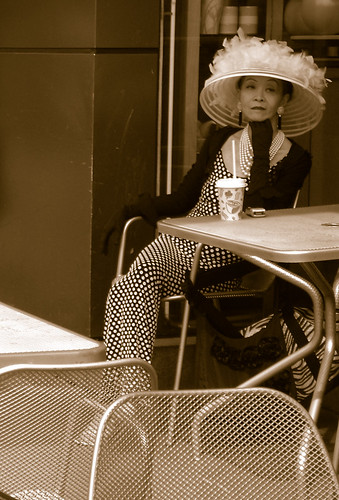
She sits at the café. She just arrived from another era. She is not quite sure where she is, but she can recognize an urban heaven when she sees it. In her lacy gloved hand, she slowly lifts a lided paper coffee cup, and indulgently sips the warm elixir inside. Peacefully watching passers by as if completely unaware that she is the one who’s being watched. With her striking European chic outfits, complete with brimmed hat, carefully made-up brows and powdered face and dark lipstick her presence is enigmatic and foreign not only to her Asian features but also to the laid-back Pacific Northwest’ small-town mentality.

And just as her entrance into our lives was mysterious, so was her sudden disappearance one summer day. All I could gather was that I was not the only one sneaking curious gazes at her lacy brimmed hat and gloves, wondering if they might be covering some dreadful secret rather than evidence that she was indeed a time traveler… All I know is that she was not a hallucination of my dreams. Besides my success at capturing her image with my digital camera, I also found out that she disappeared on August 6th, 2007, and left behind a trail of mystery, including puzzled baristas who remembered her favourite drink was French Vanilla coffee – nothing fancy, just straight from the tap.

Perfume transcends the intangible mystery of time. And just like the presence of the mysterious time traveler, it enters our life suddenly and disappears without warning. Perhaps this was why when I saw her I smelled a phantom breath of Bois des Îles: a perfume that silently entered my consciousness and whose beauty I was unable to appreciate years ago because of its antiquated aldehydic moments and the vagueness of its intentions.

Years later, my reflections on Bois des Îles have been refined and clarity is starting to bring me more pleasure from this jus treasured within the crystal cut flacon. Without taking away from its mystery I can enjoy it and indulge in discerning the notes as they lazily dance on my skin. First come bergamot and aldehydes, which take some time to fade away. They are oily and bring to mind the somewhat uric aspect of sandalwood, and the somewhat sharp (at first) nuances of heady ylang ylang. As the aldehydic cloud settles, Bois des Îles becomes deliciously warm, with the spiciness of dry ginger and nutmeg. Sandalwood embraces the perfume throughout its evolution. Although there are floral notes in the heart (namely jasmine and rose), ylang ylang is the only one that truly stands out. The others are blended to complement the sandalwood and ylang ylang (smoothing and rounding its sharpness) and bridge from top to base and the crisp-woody notes of vetiver. And in the final movement choreographed on my skin, the sweetness of vanilla absolute, tonka and benzoin feels like a silky caress of soft lips and warm sand.

Top notes: Aldehydes, Bergamot, Ylang Ylang
Heart notes: Jasmine, Rose, Nutmeg, Ginger
Base notes: Sandalwood, Vetiver, Tonka, Vanilla, Benzoin


P.s. This review is for the pure parfum, which unfortunately is no longer available in the Chanel boutiques as the beautiful and elegant crystal flacon of this jus had to make room for the ridiculously gigantic Eaux of the Les Exclusifs. Let’s hope the executives at Chanel smarten up and bring it back. After all, the extraits are the best way to wear the Chanel classics.
P.s.s. Coffret of vintag Chanel flacons was taken from this auction.

Labels: , , , , , , , , ,

Thursday, March 01, 2007

Les Exclusifs de Chanel


Chanel Logo, originally uploaded by Ayala Moriel.

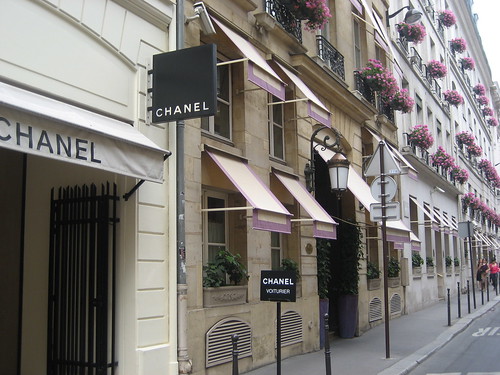
March 1st was a strange day. The city awoke to a thin veil of snow that gently melted in the sunrise. A few hours later, as I was walking to the Chanel boutique (this time before I went to the gym), the sky was sprinkling some indecisive flakes of snow that glittered in the vague sunlight.

The night before, I got invited to the boutique by Cathy Davis, the Beaute Analyste of the Chanel boutique in downtown Vancouver to come to the boutique and get a personal tour of Les Exclusifs before most Vancouverites (or perhaps tourists?) discover them.

While the rest of the world seemed to have been awaiting the arrival of Les Exclusifs with breathless anticipation, I maintained my cool. While most perfume bloggers managed to get samples or decants quite early and the so-called “olfactory grey market” of samples of decants was taking pre-orders months in advance, I found it quite easy to just wait till they fall in my lap. Was it the exaggerated buzz that turned me off? Perhaps that helped. But what really did the trick was the

A couple of weeks ago, I casually stopped at the Chanel boutique after one of my sessions at the YWCA gym (two blocks away on the same street), and asked when they are going to be in. They weren’t sure, so I left my card and forgot about it until I got the call last night. I asked Cathy if I could discreetly make modest samples of the fragrances when I arrive, so that I can properly review them on my blog, and she kindly agreed. And so the big day was today, and this time, to avoid feeling intimidated by the boutique’s formal and demanding atmosphere (a feeling that only a girl who grew up in a little village in the middle of nowhere can truly understand), I actually put a little more effort in my dress (which basically means that I covered my leggings and vintage-inspired tunic, which I was planning to use in the gym right after, with super-high leather boots, my usual-chic, all-purpose coat (you don't want to know where I got it...), and a matching handbag of contrasting black and white; Don’t you just love accessories? If it wasn’t for them I would be lost fashion wise...

While most of the cosmetics and fragrances are usually in the front of the boutique, right at the entrance, Les Exclusifs require you to go all the way in and be fully committed to the process. So I was glad I dressed up (a bit...). I remember a few years back, when I came in to inquire about Cuir de Russie, Gardenia and Bois des Isles that they were also stored in the back, almost as a piece that the shop was embarrassed to admit they carry, or perhaps something that requires some repair work before being presented to the public - in a dark storage cabinet. You had to know about them, ask for them and get helped in every step of the way of sampling and purchasing. Les Exclusifs now have a completely different presentation, the entire ten laid out as the Corinthian pillars in a Pantheon that will scare of the laymen, even the ones who shop Chanel - but delight and lure the perfumista at heart.

I tested all 10 scents (including the former Rue de Cambon ones int he Eaux de Toilette) on the little pre-named blotter cards (later to be inserted by Cathy into little matching envelopes), and received a miniature anthology of ad-copies for all the ten fragrances. The bottles, by the way, are all 200ml and are sold for the modest sum of $200.00 CAD (which is very close to the same amount in USD, because the Canadian dollar is mighty strong these days, yet imported products seem to disregard that obvious fact, and ask for a higher price here than in the United States). The bottles have an interesting magnet mechanism that makes the cap always close in a neat way, presenting the logo lined-up properly at all times, to avoid an untidy, sloppy impression no matter how clumsy the owner is. If it came with a Ginny who cleans your house for you and replaces you once the unavoidable request for a daily massage from the SO comes in - I wouldn't be surprised either...

This size is way to big for me for any fragrance really. 100ml is more than enough even for my most favourite scent in the world. When it comes to perfume, I like the philosophy of less is more. I adore the concept of flacons. In my opinion, these create a feeling of preciousness and appreciation for the juice, as if it is liquid gold or a rare piece of jewelry.

The following are my very preliminary impressions of the collection, and if you find my remarks to be too sarcastic or cynical, I will not be surprised, but I also hope that you won't be offended either. In another article my attitude to the subject matter will be explained and hopefully clarified. However, please keep in mind that my complaints are not necessarily directed at the house of Chanel or its house perfumers; it is really the current trend in perfumery that I am frustrated with. I can reassure you that I will expand and elaborate on this later, in a separate article.

No.18 was the one I was most curious to try. Like its premise, it is mostly ambrette seed, surprisingly very true to the real seed – not the absolute or the essential oil as we usually find them (which have a very subtle, musky-powdery skin-like odour), but rather, the un-crushed, unshelled seeds with an intense, penetrating musky aroma. This phase lasts only two hours, and than comes a very subtle skin-scent, slightly sweeter, almost berry-like actually, along the same lines as Mure et Musk and M7. This is the only scent that I am in the risk of spending money on in this collection. But sure enough, I’d rather spend the cash on buying two kilos of the seeds and tincture them myself, for the same price and I quite adore my own ambrette-seed infused perfumes, so I don’t anticipate the urge will be uncontrollable.

28 La Pausa, the orris scent, is quite lovely, but honestly – do we always have to have an iris scent in every exclusive/niche collection? Apparently, the answer is yes.

Eau de Cologne, a citrus cologne, obviously, which is said to be inspired by a discontinued Chanel cologne from 1929; As much as I like it, I think there are enough citrus colognes as there is, and for that price I could get a lifetime supply of 4711 which I admire but never wear anyways.

31 rue Cambon is suppose to be the revolutionary new chypre with no oakmoss. The result? A hybrid between Bois de Isles in the opening (sounds promising, right? wait and see!), but leading to a x3 the price but very similar scent variation on Opium Fleur de Shanghai. At least I found a substitute for that when I finish my 150ml remaning of this affordable gem, so if this scent (and me) will still be around by than, I might add it to my collection.

Coromandel, a modern oriental much in the vain of Prada and Allure Sensuelle, but one that I can stomach without gagging. If I happen to change my mind about it I will let you know. Promise.

Bel Respiro, a green floral in the same vein as No. 19 and Ivoire – only lighter. One may ask – why making something so similar to a scent already existing in the collection? My only guess: No. 19 is either going to be changed to the point we wont recognize it due to reformulation (it does have oakmoss, you know…), or it could be completely phased out. Another possibility is the simple lack of either confidence or imagination of the perfumers involved, making sure they have something similar to what they already have and is popular rather than taking risks.
Let me just remind you how No. 22 was available everywhere until the release of the somewhat similar Allure (white floral, anyone?). All of a sudden, you can only get No. 22 at the Chanel boutiques. I won't be surprised if No. 19 will receive a similar status of endangered species.

As if to make matter worse, I have to give you some bad news: Bois des Isles and Cuir de Russie will no longer be available in their Parfum Extrait (the 15ml that used to be available in the Chanel boutiques is now replaced by the gigantic eaux de toilettes dilutions of the re-launched bottles). Not in Canada anyways. Do you want to hear even worse news? The last bottle of Bois des Isles parfum is GONE. I snatched it before you would. Sorry...

These are very preliminary impressions – I have only skin-tested two of these today (No. 18 and 31 rue Cambon). The ones that deserve more attention in my opinion will be posted later as separate, stand-on-their-own reviews.

If you'd like to get a different angle on Les Exlusifs, I recommend you read the following reviews of the line in general (as opposed to specific, elaborate reviews you will find in some of the blogs). I took the liberty to divide them into "Yay" and "Nay" response (the "nayers" not necessarily thinking that they are awful, but expressing some kind of disappointment, criticism or under-impression from the line:

Yay:
Aromascope
Perfume Posse (Patty's favourite three)
Perfume Posse (March's reviews)
Perfume Posse (part 2)
Luca Turin in NZZ Folio
Perfume Smellin' Things

Nay:
Perfume Shrine
Victoria's Own
The Scented Salamander
Perfume Posse (Patty's not-so-favourite three)

Labels: , , , , , , , , , , , ,

Monday, January 29, 2007

No. 19: A Review in Three Acts

One of the things that I noticed when summarizing 2006, was that I can change my opinion and perception about a fragrance over time. I learned that I should keep an open mind and never give up completely on a perfume. It might hold a surprise for me in the future.

Labels: , ,

ACT I: The Transformation of No. 19

I am known for my adverse reactions to green notes. While I can admire a well-made green perfume for its originality and the ability to invoke the charms of nature in spring or a well-watered garden, it is very rare that I find a green scent that I personally love (as opposed to intellectual admiration from a professional point of view of a perfumer). My relationship with No. 19 has been always ambivalent. When I started exploring the fragrances by Chanel, the first one that I fell for was none other than Cristalle. The sparkle of sweet citrus and bright greens is set against the sweetness of magnolia and other florals at the heart, and the base is again equally mossy and ambery-sweet. A perfect balance. At the time, I had my mind set on purchasing only pure parfum, and having quickly found out that Cristalle exists in none such form – I had to turn to something else from the line. The ultimate alternative was No. 19. With the abundance of nature notes, this should be anything I can dream of – at the time I was completely smitten with anything that bore the slightest resemblance to Chypre. By all standards, No. 19 should have been my favourite Chanel. And so I tried it on, and every single time I worn it I felt immediately a sense of sadness, as if my heart just missed a beat and twitched in pain and longing for something unknown; my throat became tense with the anticipation of crying; my eyes were just about to cry yet the pain seemed too grave to allow the tears from flowing.

I could never find the answer to this intense emotional reaction. I don’t recall knowing anybody in my early life that was wearing No. 19. Nor did I recall a particular memory when wearing No. 19 (I usually get visual images of places and experiences of when I first smell a certain perfume or a note when I smell it again). With No. 19 all I had was an emotional reaction.

I refrained from wearing it for the most part, and needless to say I did not own any form or size of this perfume in my ever-growing collection of perfume classics. What got me back to No. 19 was a lover. A French lover to be precise. A comical young man who spent most of his life traveling around on a little bicycles that wouldn’t even fit a 3 year old. There was nothing serious about this relationship, and it wasn’t meant to last very long (especially not since a few weeks later I actually met with my True Love). But he did appreciate perfumes, growing in a country that prides itself for making the best perfumes in the world. No. 19 happened to be one of his favourites, and so I decided to give it a try and wear it for him. Guess what happens? The guy decides to be really late, and so a self-fulfilling prophecy is once again proved. And No. 19 just intensifies its melancholy, heart-twitching properties.

Just a month or two later, I use No. 19 as a litmus paper. I smell a phantom scent of it when I fall in love. I put it on, and all I experience is this heart-breaking sensation of longing and loss and beauty. Ok, I may be in love, but I can’t wear No. 19!
Once I realized and accepted that, white a couple of reviews to substaintiate my theory (see below), I passed the bottle on and swapped it for Parfum Sacre. I will be avoiding No. 19 for about 3 years. Until a couple of weeks ago, for no apparent reason. I decide to try it again. I do so cautiously: first, a scented strip. I keep it in my pocket for a couple of days and I can’t stop noticing how much I like it! Even though it’s definitely the recogniziable No. 19, it does not trigger those dramatic feelings. I just smell it for what it is. I am now driven to go and try it on my skin! I try the EDT, than the EDP. They are too different and I can’t make up my mind which one is better. The EDT seems thin and very cool (mostly iris and vetiver). The EDP is gorgeous, but I was fearing it’s not quite as authentic as the pure parfum might be, so I settle on the parfum again, and delight in it for a full week, wearing nothing else – and feeling utterly happy about my perfume choice every time I do. I finally find in it the aromatic delights and the elegance of nature: the astringent qualities of lemon; the crunchy greenness of galbanum; the smooth coolness of orris root; the cucumber-like glide of violet leaves; the ever-unfolding beauty of rose petals and jasmine blossoms; the distant undergrowth of oakmoss; and above all, the tart sweetness of vetiver. Vetiver, violet leaf, orris and galbanum make a stellar performance in this classic green-chypre-powdery-woody perfume. The overall feeling is equally elegant and composed, and at the same time, free-spirited, wild and grassy. I find myself utterly compelled to enjoy a new world that I could not enter before.

Top notes: Lemon, Galbanum
Heart notes: Violet Leaf, Rose de Mai & Jasmine Grandiflorum from Grasse, Orris Root, Lily of the Valley (most apparent in EDT)
Base notes: Vetiver, Leather, Sandalwood, Oakmoss

A few notes about the different concentrations:
The Eau de Toilette comes in a variety of sizes and shapes, but none look like the classic Chanel flacon, so it’s really easty to recognize it. It comes in either a refillable metallic-cased spray bottle (brushed aluminum look), tall rectangular glass bottle with either a black or a silver capy as a refill, or a flat sharp-edged rectangle spray bottle with a rectangular black cap, amongst other shapes that you may find otehrwise. The EDT is very light and sheer. I found it to be amost aquatic. It opens very lemony and citrusy, along with the galbanum of course. The cucumberness of the violet leaf really stands out here, and there is a most apparent presence of lily of the valley accord. The sheerness of the EDT makes the contrasting elements of woody vetiver, powdery orris and cool violet leaf almost startling. But it’s all very smooth and apprehensive. I have a suspicion this was reformulated recently and that’s why it smells so aquatic. I can barely notice the jasmine and rose form Grasse, which really make No. 19 quite unique (these two essences are becoming very scarce). But knowing how widely No. 19 is distributed, I would not be surprised if these rare essences are saved for the higher concentrations. I personally prefer the EDP and the pure parfum over the EDT, but I know many will disagree with me and will say that the EDT is superiour to the EDP. I tried the EDT from testers in two different retailers, and I could almost swear they did not smell the same. This just substantiates my suspicions about reformulations. I am willing to go back and put it to the test again, and when I do so you will read about it here.


The Eau de Parfum comes in a bottle that resembles the classic Chanel flacon, only larger and with a spray apparatus. It is richer in the floral notes, and I found it very interesting and rounded. The roses really shine here and are more apparent than in either the EDT or the parfum extrait. It was the EDP that converted me to No. 19 after years of abstinence.... I would have bought it in this formulation, if only the price wasn’t so close to the pure parfum. To top it off, I am an avid parfum extrait collector.


The Parfum may have a slightly less emphasis on the florals than than the EDP, and the greenness reigns here, with the violet leaves and vetiver and orris being the stars of the show. I am very happy with this form, but than – I am known for my bias for parfum extraits: I think this is simply the most elegant and sensual way to apply perfume. You may just choose the pure parfum because perhaps, like me, it’s less likely that the ones in stock in stores are yet reformulated (because of the ever tightening IFRA guildeines and EU regulations regarding oakmoss). The extrait simply doesn’t fly off the shelves as fast as the other forms.


Below are my “love it/hate it” reviews of No. 19 from three years ago. It’s interesting to note how the notes that were dominant for me back than have changed. I now notice the vetiver while back than I didn’t precieve even a trace of it… It’s quite interesting to see how my perceptions – both emotional and olfactory – have changed so greatly over time.
If these is any moral to my No. 19 story – it is the endless possibilities that awaits us in the world of aromatics. If you open your mind and open your heart, you might be able to surprise yourself too.

Images of EDT from Perfume.com, PhilllyBurb.com and Bizrate.com
Image of EDP from
Strawberrynet.com

Labels: , ,

ACT II: The Distant Admiration of the Artistry of No. 19

No. 19, released in August 19th, 1970, only after Coco Chanel’s death, was known to be her very own personal signature perfume. It was named after her birth date, on the same launching date…

I feel it is the most refined and sophisticated of all the Chanel fragrances, perhaps the one that truly stands for its own sake as a perfume, separately from fashion, and can be compatible with perfume from other great houses (that is not to say that her other fragrances are not good – I simply feel that this one is uniquely different and original).
No. 19 is equally natural and urbane, simple and sophisticated.
It derives its materials primarily from nature, yet radiates certain elegant and distant melancholy that perhaps suggests something about Chanel’s deepest emotions…

No. 19 Starts off with sharp, green galbanum note, backed up with bergamot and some of the top notes of jasmine and orange blossom absolute “lifted up” from the heart...
Soon enough, No. 19 mellows down and reveals its heart – an interesting rose accord appears: first it is green and fresh Rose de Mai, somewhat powdery as it is backed up with precious Florentian orris root and violet leaf absolute. It will soon reveal a sophisticated, more complex phase, as a powdery, woody-leather note emerges – it is reminiscent of cedarwood and dry burnished leather, and surprisingly creates a very soft and somewhat warm accord together with the rose.
This note surprisingly reminds me of other great French perfumes, which I believe No. 19 can proudly stand hand-in-hand with – Ivoire, Tocade and Nahema. The rose accord in all three possesses a similar almost-smoky quality that is interesting and complicated…

The drydown will bring forward more of the woody notes – distant and quite dry oakmoss, subtle cedar and sandalwood, and primarily the balsamic, somewhat fresh notes of frankincense oil. It still is possessed by the green notes of the former phases, but is not as sharp and is somewhat rounder, more powdery…

No. 19 is the most mysterious and enigmatic of all Chanel’s perfume, and I feel it requires a lot of effort to wear with the right spirit of class and refinement and certain elegant distance...

Top notes: Green, mainly galbanum
Heart notes: violet leaf, orris root, rose, jasmine
Base notes: Moss, Sandalwood, Leather

Labels: , ,

ACT III: The Heart Twitching Longing of No. 19


A slight distance whiff of this perfume will effortlessly bring tears to my eyes…
I find No. 19 to be the most melancholic perfume of all times… It is the odour of uncertainty, the smell of lost love and of fruitless longing…
I find myself wearing it only to intensify the feeling of a lonely abandonee in the midst of a big cruel world…
The sharp green notes at the beginning are strong enough to press on my tear-glands, and what comes after is a rush of stingy green olfactory particles, sharp and transparent as glass fragments…
No. 19 is deceivingly perceived by some as a warm chypre fragrance. In fact, it is icy-cold cruelty to my heart.
Than comes my favourite part – when the rose emerges, and there is a moment of grace, with its warm powderiness supported by orris and leather notes…
But when it finally dries down, it is again a heartless woody, stingy-powdery scent of orris, smoky cedar wood and bitterly dry oak moss that is not enough to console me at all...(Supported with some skin-burning fresh frankincense…) this all will make me regret wearing it, and yet longing for something that never appears to come, though promised…

Without doubting its superb quality and artistic balance, using a rightfully generous ratio of natural essences from the best sources skillfully crafted - I find it very hard and almost impossible to wear No. 19 without shedding a tear.

If you share the same feeling towards No. 19, I suggest you wear it only when you are absolutely sure that your lover (yes, that unserious guy that you started to have feelings for) will never show up…
Image of refillable EDT from ImaginationPerfumery.com

Labels: , ,

Saturday, November 25, 2006

Cuir de Russie

While Tabac Blond is a rebel, with an elegant off-beat premise – Cuir de Russie is an unusual take on luxury and chic.

While the animalic notes in Tabac Blond are abstract and allude to leather bound books and horse-takcs, and set the mood of a desired loneliness, in Cuir de Russie these are present to make a statement of uncompromised luxury and decadent style.

Cuir de Russie, more than other leather scents that I met, really makes me re-think the relationships between luxury, wilderness, death and perfume. The animal essences here are so strongly present, that you can’t help but think of the forests in Russia where wild animals’ lives has been taken away for the sake of their skins and furs. I cannot wear Cuir de Russie without thinking about a fur coat and a furry Russian hat. Maybe it’s because my mind is set on these clichés. Maybe it is because the first time I smelled Cuir de Russie was in one of the most luxurious spaces – the Chanel boutique. Perhaps it’s really the scent doing this, as reeks of luxury quite blatantly.

Wearing Cuir de Russie is like wearing a fur coat. Which is a big statement. It’s going all the way for appearance. It’s telling the world that you are willing to kill for your looks. That you don’t really care about wild life. But it’s also a reminder that once upon a time, before we learned how to make textile and fabricate our clothes, we had to burrow other animal’s skins and furs to survive the cold long winters. In those far-away days, where fur was a question of life-and-death.

When I wear Cuir de Russie, I think of a snow-covered forest in Siberia, where a hunter is just recovering the hunted animal, breathlessly giving away its winter coat which is soon to be traded for rye bread, sausages, vodka, and other Russian necessities of life.

Chanel’s Cuir de Russie reeks of animal essences – primarily castoreum absolute, an essence extracted from the Russian – and Canadian – beavers, after they have been hunted for their furs. There is also civet galore. It’s amazing how furry this perfume is thanks to those essences. But there are other notes as well, and these are what make Cuir de Russie such a masterpiece:
It opens with notes of cade and a resinous, dark myrrh. Than, leathery cassie notes fleet around, like a misty cloud of foggy vapour – airy, powdery, barely visible. Soon enough, we move into a phase of an airy white floral bouquet – jasmine sambac being the most visible of all. Roses undfold later and the perfume turns into a smooth bouquet of notes that are not quite separable from one another, but harmonize to create an overall creamy, smooth leatherness. There are sweet resins and balsams (namely benzoin and labdanum), a subtle, sexy musk, and a most definite note of castoreum paired with civet. Hours later, I smell a familiar oakmoss dry down, but it is very subdued.

*Image of a Woman in a Fur Coat by Nick DeWolf dated December 8th 1970, courtesy of dboo
**I chose this picture because it is elegant, yet it seems the woman really needs the warmth of the coat...

Labels: , , ,