Saturday, July 21, 2018

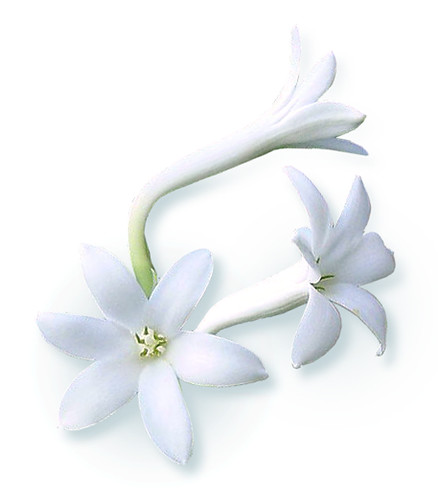
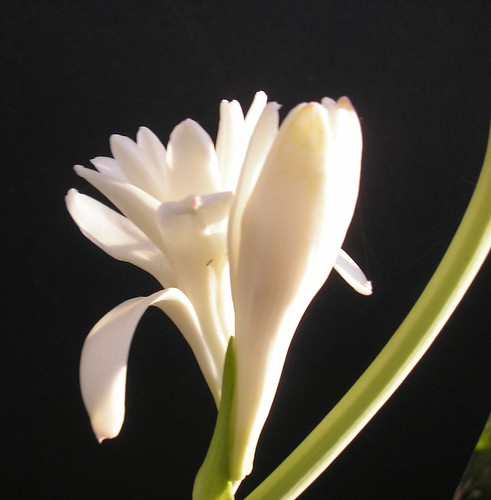
Carnal Flower

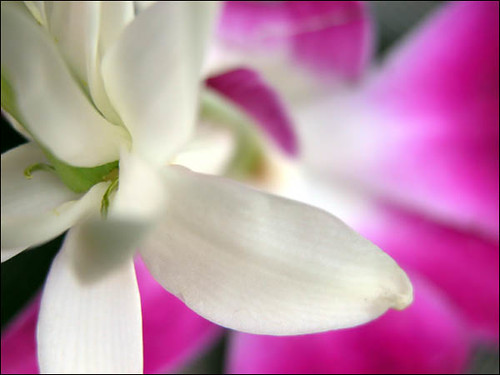
Pink orchid 011

Carnal Flower opens with a slightly fresh fruity note and hints of green (melon and eucalyptus). Than it’s mostly tuberose with a full-bodied, sweetened orange blossom, much in the same vein as that note in Lys Mediteranee. Even the base is the same to my nose – supposed to be musk, but I smell a balsamic-woody sweetness similar to peru balsam essential oil (which smells very different than the crude balsam). There isn’t much coconut in it, but it does help improve the initial impression and add creaminess to the tuberose.

I like this a lot and it’s easy to wear (I worn it on a very warm day and it was never cloying at all). However, this is not my favourite tuberose, and in the light of Lys Mediteranee being so similar, I do feel a tad disappointed from this installation in the Editions de Parfums

Top notes: Melon, Eucaliptus, Ylang Ylang, Salycilates
Heart notes: Tuberose, Orange Blossom, Jasmine
Base notes: Coconut, Musks

Labels: , , , , ,

Friday, February 13, 2015

Tuberose Pommade and a Flower Meditation


The other enfleurage pommade I ordered from Dabney Rose was a tuberose one. If you've smelled fresh-cut tuberose before, you'll be appreciate the glorious beauty of the living flower that has been captured in the vegetable oil base of this pommade. You can read more about the process and what pommade means in my post about the equally stunning Butterfly Ginger pommade.

Capturing a living flower's true scent is an enormously challenging feat. Dabney Rose does an incredible labour of love growing her own plants in a glass hothouse and her own little garden, and she must be tending to each blossom and petal with much care while growing them, and of course handpicking and placing them in the coconut-base vegetable alternative to enfleurage.

The Tuberose Pommade brings to mind spring eternal when the entire room is intoxicated from a single cut stem. It transports you to a hot summer night on the beach, adorned with a lei of tuberoses and gardenias. I am yet to experience this in real life, but my imagination is quite satisfying and a dab of real tuberose is enough to make it feel real. All is needed is to close one's eyes and surrender your senses to this beauty, for it is fleeting.

The pommade is not a solid perfume, but a pure, single note extraction - a rather antique method, like the one invented in the city of Grasse. It does not last long, which demands you do pay attention to it while it lasts. With such rare beauty, a floral meditation is in order, once you apply this white unguent to pulse points or even finger tips. Take a few moments off your stressful day to appreciate this beauty. Or better yet - start your day that way. Dedicating the beginning of your day to gratitude and appreciation is the best way to start the day. Invite life's blessings and pause to fully appreciate it, and more will come your way.

Labels: , , , , , , ,

Saturday, June 21, 2014

Happy Summer Solstice!


Happy Summer Solstice!

Scents that mean summer to me: Splitting watermelons and slicing fresh rhubarb; tomato plants and heirloom tomatoes carrying that tomato-leaf scent in their still-green parts; suntan lotion mingled with poolside chlorine, vanilla and banana flavoured ice cream bars (the cheaper the better), night blooming flowers (Cestrum nocturnum, honeysuckle and jasmine), cut flowers with intoxicating aroma filling the house - white and pink peonies, peppery white and yellow freesias, but tuberose after dark being the queen of them all.  Dewy gardenias and frangipannis, reminiscent of happy days by the beach - and of course, endless amounts of salty sea breeze.


When summer start hinting about getting serious at all, I bring out some of the bottles that are waiting patiently 10 months out of the year, making their debut with much needed TLC:

Cooling off with hydrating fruits: 
Citrus are famous for their cooling, refreshing qualities in the summertime. But they are not the only fruit-based scents that I reach for in the summer. Figs, cantaloupes and mango seem to be making an appearance in my olfactory fruit-bowl.

Philosykos
There is nothing like green figs, and when you can't have them - the longing for them makes the heart even fonder. Philosykos makes me feel as if I'm sitting under a fig tree by a cool brook in the Galilee, and picking ripe green figs, their milky sap dripping off their stems (and that's the part you want to avoid, but is represented by a green coconutty note).

Un Jardin Apres la Mousson
This singular perfume is simultaneously cool and refreshing yet at the same time juicey and sweet. I love the contrast between cantaloupe and the cool vetiver, fresh ginger and coriander.

Eau d'Orange Verte
To a classic eau de cologne frehsness, there is a hint of green mango added (in the new formulation, which isn't as bad as I feared). I still stick to my

Orcas
There is no scent that screams "West Coast" more than Orcas. I dreamed it while vacationing in Tofino and fine tuned it when spending an entire summer at SunsetBeach. Its main citrus component is lime - a surprisingly coconutty citrus note. Paired with seaweed and rosemary and smoothed out by violets

Tropical Island Vacation: 
Unless you count my dreams (and daydreaming) - I never did go on a tropical island vacation. But this fantasy is an inevitable part of my summer enjoyment, which includes spending as much time at the beach as possible. 
 Terra Cotta Eau de Sous le Vent
Supposedly a tan enhancer, I wear this for the scent alone. It's like a beach vacation in a bottle. And even if mine usually happen 10 minutes away at the beach down the hill, and go for only a few hours at a time - it creates an illusion that I actually went away somewhere exotic.

Azuree de Soleil Body Oil 
Who said you can't be sophisticated at the beach? This European suntan lotion inspired scent is much more than that. It's very light yet has depth. The white florals are toned down, and unusual resinous notes and subtle musk are what make it so charming.

Vanille Banane 
Just like the banana ice cream bars we'd have at the beach as kids. The flavour is fake, but oh so charming. Banana esters rule! 

Tamya
Plumeria tucked behind the ear, yellow sarong, flip flops and a spritz of this subtle beach scent - frangipanni, ylang ylang, cedar and soft musk and hint of vanilla make it a feel like an authentic tropical getaway. Cassis and yuzu add a fruity lift, reminiscent of ripe mango.

Midsummer Night: It is not surprising that on summer evenings I tend to reach to white florals. Tuberose, gardenia and jasmine perfumes are at forefront of my evening summer wardrobe.

Opium Fleur de Shanghai is a more subdued, easy to wear spicy-oriental with magnolia as an added twist to the original rich formula. There is still plenty of spice and resinous goodness (myrrh especially), but it can be worn with dignity even in heat and humidity.

Songes
Ylang ylang, frangipani and jasmine over a soft ambery base. Songes is the roundest, most pampering of all the Annick Goutal perfumes, with no sharp edges or heady floralcy which prevents me to be able to fully connect to the rest.

Moon Breath
Soft, smooth yet meditative, I love wearing this incensey white-floral in an evening while enjoying the potted star jasmine and burning a good incense on my balcony on those rare balmy summer nights we get here maybe twice a year if we're lucky...

GiGi
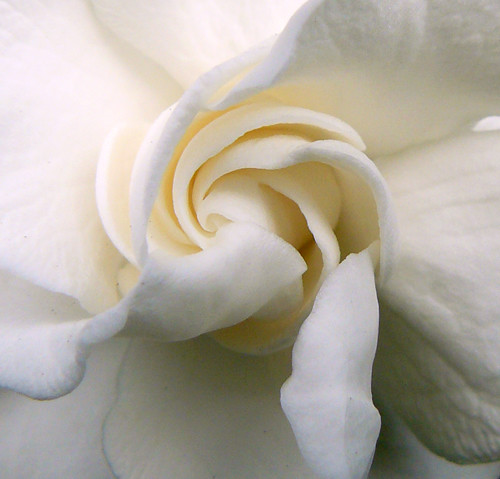
Luscious gardenia soliflore, that makes me feel like I have the real flower pinned to my hair. It's heady and rounded, distinctively gardenia and makes me feel happy.

What about you? What scents do you crack open when the summer arrives?

Read my previous years Summer Lists: 2009, 2010, 2011, 2012, 2013.

And now - off to the beach! 

Labels: , , , , , , , ,

Monday, May 05, 2014

Feliz Cinco de Mayo!


Happy 5th of May to those of you celebrating Mexican culture and heritage today!
There are such distinctive aromatics associated with Mexico's vibrant culture, that I've decided to put together a few notes about key ingredients, scents and flavours and combinations that are unique to Mexico.


Cumin - or Cumino in Spanish (Cuminum cyminum) is a seed from a plant from the Umbelliferae or else known as Apiaceae family (related to anise, fennel, carrot - among others) with a unique scent of cuminaldehyde that gives its distinct oily-sweaty personality. It's taste is a little bitter and pungent when unroasted, and nutty and more delicate when roasted, pan-fried or toasted before cooking with it. It's an inseparable part of many Mexican stews such as chilli, re-fried beans, salsa and more. Now, cumin is not exactly unique to Mexican cuisine - but how it is used is: combined with substantial, hearty falvours such as chocolate and vanilla in bean dishes, or sprinkled together with raw onion and freshly chopped peppers, tomatoes and tomatillas - this is a very distinctive way of experiencing this musky seed.

Vanilla (Vanilla planifolia) - isn't it interesting that both vanilla and chocolate originate in Mexico? This magical orchid produces a fruit only if pollinated by a tiny bee that is native to North America. Therefore, at first the plantations in other tropical islands (such as Madagascar, now the largest producer of vanilla) were grown. Vanilla anywhere else but in Mexico requires hand-pollination, which is meticulous, and is one of the main reasons why vanilla is so expensive. Mexican vanilla is different from other crops, having a very rich, full-bodied flavour that is more fruity and smooth than its almost woody Madagascar specimens. And vanilla from Tahiti is a different orchid altogether (Vanilla tahitensis), and also grows in Papua New Guinea - resulting in an even sweeter, more powdery profile (due to the presence of heliotropine). What's unusual about vanilla in Mexican cuisine is that it's used in savoury dishes, (see below), not just sweet ones. It may sound a bit weird at first as we're so used to vanilla being equal to dessert. But it has a very deep flavour, and if blended with the right elements will enhance most flavours, really. Try using it in bean stew or soup, and taste for yourself!

No wonder Cacao (Theobrema cacao) had its own god in the Aztec mythology. It's got such a powerful unique flavour, aroma and texture - at once earthy, buttery, smooth, bitter... The Aztecs made an elixir of cacao cooked with vanilla and spiced with chilli as a ritual energy drink that was used ritually (and mostly by royalty). Cacao adds vigour, passion and depth. In Mexican cuisine, it's added to bean dishes. Inspired by Mexican cuisine, I make a "Chocolate Soup" which is basically a black bean soup with cumin, chilli, vanilla, raw sugar and sun dried tomatos. Sometimes I add a bay leaf or two for extra spice, or a small piece of cinnamon bark. This balancing act between savoury and sweet, salty and bitter was captured perfectly in the wonderfully addictive perfume Anima Dulcis, where cocoa, vanilla, cinnamon,


Lime (Citrus limetta) is an unusual citrus, with both woody accents (from pinene) and milky, almost coconutty notes (from the coumarin). Again, it's that particular type of citrus - as opposed to the usual lemon, that sets off the other flavours and gives them a unique character. I've tasted plenty of cumin before - say, in a beet salad, with plenty of lemon juice; but that lime (and raw onion...) take it to a different world. The New World, perhaps?

And then there's Tequila: I'm certainly not a fan, but there is something to be said about the peculiar clash between salty and citrusy-fresh that's present in Jo Malone's weird Blue Agave & Cacao. Is a bit of an oddball - mingling the illusion of saltiness with a dusting of cocoa, and a full squeeze of lime.

Cilantro is usually what we refer to as coriander leaf (Coriandrum sativum) but in fact is the Spanish word for coriander. It is yet another flavourful Umbelliferae, with many versatile uses in cuisines around the world. The seeds don't seem to be used in Mexican food as much as the leaves - those are chopped up and added to fresh or cooked salsas, and complements the oiliness of avocados in guacamole. It's also goes extremely well with fish, setting off the fishy aspects with more vibrant and fragrant counterpoint. The aroma of cilantro leaf is a little green and at the same time soapy. Some swear by it, others can't get any near it. In perfume it has a rare use though the essential oil has the vibrant green qualities of the fresh leaf and are very appealing from a perfumer's point of view - it's hard to bypass the polarizing reaction and strong culinary association that it tends to elicit. 

Flor de Jamaica is the popular name in Mexico for the flowers of hibiscus commonly called Roselle that is native to West Africa (Hibiscus sabdariffa). Both warm and chilled tisanes are made from it, and are very popular year around. In the winter, they provide protective vitamin C against colds, and in the summertime they are a cooling, tart beverage like lemonade. It also reduces blood pressure. If you want to enjoy hibiscus flowers in a unique way, pay a visit to O5 Tea Bar, where they will serve you candied hibiscus buds to go with your tea; and Terra Breads bakery or cafe for a memorable bite at their tart and vibrantly red hibiscus macaron!


Choisya (Choisya ternata) aka "Aztec Pearl", Mock Orange or Mexican Orange is an evergreen shrub from the rue family, that blooms copiously between April and June.The flowers contain a simple anthranilate which gives it a scent not unlike orange blossom - though also with underscores of vanilla or heliotropine. There was a wonderful candle by Diptyque with a Choisya scent.

Tagetes, aka Aztec Marigold (Tagetes erecta) is called in Mexico "flor de muertos" (Flower of the Dead) and is planted in cemeteries and used in rituals and ceremonies on November 2nd, which is Day of the Dead (Dias de los muertos). Interestingly, it is associated with death in several other cultures such as Honduras. The flower's intensely yellow-orange colour is due to the presence of sulfur in some of its compounds. The sulfur also gives it interesting medicinal qualities against several types of airborne germs, making it particularly effective for various skin infections (dermatitis, acne, rashes and more). In sustainable and traditional agriculture, planting marigolds next to certain plants (for example - tomatoes) will protect them from nematode pests as well as aphids. Marigold flowers also taste delicious in salads, along with tomatoes, lemon, olive oil and green onions. Marigold rarely find its way into perfume composition - at least not as a major player (except for in Liz Zorn's now defunct Chrysalis). There is a hint of it in Obsession, though. It's a peculiar note with opening note of green apples and pheromones, and that fades later into dried hay and herbs scent. It mostly finds use in flavouring to add a natural fruity nuance.

Tuberose is also native to Mexico, and the Aztecs called it Omixochitl (Bone Flower). This relative of the narcissus flower has tuberous bulby roots (the name has no connection to rose, and neither does the scent), and like the Choisya, it also owes much of its unique scent profile to methyl anthranilate, as well as salicylates (which give it a medicinal character) and paracresyl methyl ether which gives it an animalic, almost leathery quality. 

Capsicum is the chemical that gives peppers their heat. And in Mexico there isn't just one type of "hot pepper" - there are myriads of them, from the milder poblano peppers which lose most of their heat in cooking but leave a wonderfully deep pepper flavour behind; jalapenos, and smoked-dried jalapenos (aka chipotle) to the lava-heat of serrano peppers - enough to burn a hole in your tongue! Peppers also have a unique aroma, not as sharp as it's other nightshady sister the tomato, but still recognizable. Paprika Brasil did not do it justice; but I've been always intrigued by how it was presented in l'Artisan Parfumer's Poivre Piquant.


My own interpretation of the rich flavours and textures of Mexico's cuisine seems to only scrap the surface of this rich culture full of intriguing aromatics. In Lime & Cacao limited edition OOAK perfume: Contrasting colours of lime green against deep brown are the centre of this playful fresh gourmand. Inspired by the Mexican way of treating chocolate, Lime & Cacao is more piquant than sweet and balances the richness of South American balsams with zesty lime and mineral and melancholic Blue Cypress from Australia.

I'm now inspired to create something with unusual note combination such as marigold, orange blossom, tuberose, vanilla and hibiscus. Hmm...

Labels: , , , , , , , , , , , , , , ,

Thursday, May 30, 2013

New OOAK Perfume: Tubereuse et Violette

Awaken, spring. by alexstoddard
Awaken, spring., a photo by alexstoddard on Flickr.
This morning I've completed a new OOAK perfume today - Tubereuse et Violettes that has been aging since 2004...

Tubereuse et Violette is a Green and tender variation on tuberose, reminiscent of green fig and milky iris. Its inspiration was the majestic and extravagant perfumes of the Royal French courts at the time of Marie Antoinette when European perfumery became more sophisticated and extravagant, with the addition of flowers extracted by enfleurage.

Top notes: Black pepper, Mimosa, Rosewood, Ginger Lily
Heart notes: Tuberose, Violet Leaf, Orris Root (butter and tincture), Jasmine, Rose de Mai
Base notes: Opoponax (oil and tincture), Vanilla tincture, Tonka Bean, Vegetale Musk

Labels: , , , , , ,

Wednesday, November 14, 2012

Intoxicating Flowers: Tuberose Demystified

Tuberose (Polianthes tuberosa)
Polianthes tuberosa - single stemmed flowers, the ones that are used for perfumery. 

To the layperson, the mention of tuberose usually brings to mind “rose”. The name, however, refers to the tuberous roots of the plant, which is related to narcissus and is native to Central America and Mexico. Nowadays, it is mostly cultivated in India and to a lesser extent in Egypt and in Southern France. Currently there are only two tuberose fields left in Grasse, which are processed by enfleurage: the preferred method for this flower, which possesses the rare quality of emitting more scent after it’s been cut and separated from the plant. Therefore, enfleurage is actually more cost effective as it yields much more absolute than by solvent extraction. Enfleurage, however, is not possible in India because of cultural and religious restrictions: for enfleurage requires two types of animal fats - and tallow. Cows are sacred to the Hindus, and pork is prohibited by the Muslims - two major populations in the flower growing regions of India. The good news is, that Indians are currently exploring enfleurage with vegetable fats - certainly something to look forward to!

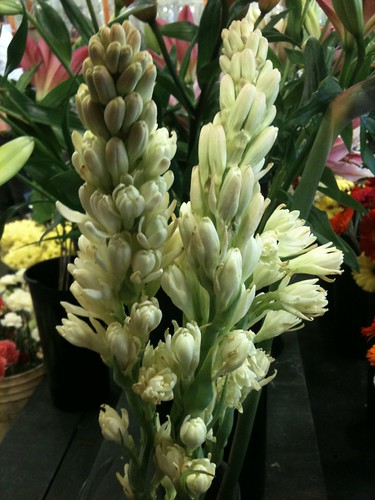
The flowers themselves look somewhat like lilies arranged on a tall stalk that is one meter in height. The plants grow from a bulb for 4 years before they bloom in July! This of course furthers the cost of the absolute as the land remains in use but with no profitable crop for so long.The tuberose for perfumery is different species than the one for bouquets that you’d find at the florist (though their scent is similar) – they are from the single flower variety, where as the ornamental ones (grown in gardens and available in the flower shops) have two flowers clustered together on the stem.

As far as the fragrance goes - tuberose has made a name for itself as a narcotic, sedative scent that is dangerously seductive to the senses and even has the powers to make innocent girls unable to control themselves sexually. Virgins and young girls are not permitted on the tuberose fields after dark from fear that their innocence will be compromised... As a perfume, tuberose scents are known for being grand and at times even obnoxious (i.e.: Poison, Fracas, Jardin de Bagatelle, Carnal Flower, etc).

Tuberose absolute, however, is everything but loud and obnoxious. It is soft, smooth, waxy, with hints of green and almost mushroomy qualities. Some specimens might feel a bit rubbery or medicinal - and this can be either an interesting and desirable quality or an unwanted one, depending on the perfumer's perspective. The best tuberose would feel buttery, creamy and with sweet grape top notes from methyl antrhanilate (also present in large amounts in orange blossom, ylang ylang and other white floral notes). A somewhat off-putting medicinal note may also be present, reminiscent of wintergreen or birch - which comes off the methyl salicilate that is also one of the constituents.

According to Bo Jensen, tuberose’s chemical makeup comprises of “benzyl alcohol and -acetate, methyl and benzyl benzoate, methyl salicylate, methyl anthranilate, eugenol, geraniol and nerol and -acetates, and farnesol, but its power and original effect is due to a multitude of gamma- and delta-lactones, some of them only found in tuberose” (i.e.: 6(Z),9(Z)-dodecadiene-4-olide, tuberolide and tuberolactone). It is probably those lactones that account for that creamy-dreamy, buttery characteristic of a good tuberose absolute, which is even more obvious in the tuberose floral wax.

Tuberose in the Flower Shop
Tuberose at the flower shop - this is a different variety, that is double-stemmed. 

To say that tuberose is one of my favourite raw materials would be an understatement. It's the queen of the flowers, mistress of the night and a welcome participant in too many perfumes I've created. I say "too many" because it is a very costly raw material, going for about 8,000 per kilo, making some of my perfumes almost unrealistic for commerce.
 

White Potion was the first perfume I've created with it, back in my very early days in 2001. In White Potion, the tuberose plays centre stage but has a very muted, well-mannered persona (thus making it a perfect member of the Language Of Flowers - my soliflore collection that is an homage to time past where soliflores were synonymous with elegance and refinement. And it was particularly fun to use tuberose in the other spin-offs of White Potion: the body oil, which only "opens up" once it's on the skin (due to how the salicilates are behaving in the oil base - they are almost "invisible") and in the fragrant white chocolate bar. I used it later in my contemporary, all-natural soliflores to give a white floral, creamy nuance in Gigi (gardenia soliflore, where tuberose has a traditional place to accentuate the big white floral qualities of gardenia), InCarnation (carnation soliflore) and Zohar (orange blossom soliflore).

Schizm
, also created in 2001 - was an outrageous Chypre floral animalic, with all the white florals imaginable (tuberose, orange blossom, sambac and grandiflorum jasmines), counterbalanced with dry cedarwood and salty oakmoss, and a touch of tart mandarin and savoury cepes and black pepper.  Schizm was the first perfume I created with a name in mind first - and than the perfume came along. The concept was for a perfume with "schism" or division with it; and indeed, it begins more dry and almost acrid; yet develops into this sensual, floral-musky chypre.

In Razala, tuberose plays in the exotic, nearly erotic fantasy of an animalic, Arabian-inspired perfume. It has all the makings of a harem perfume: myrrh, oud, ambergris, saffron, rose... Tuberose gives it a creamy touch which along with the magnolia brightens it and brings some light into a rather dense and seductive composition.

l'Écume des Jours is that rare place where my wildest imagination followed Boris Vian's book of the same name. It is a true fantasy perfume, and the tuberose played a role in the deadly "lung water lily accord" - which is simply a made-up illness that only Boris Vian could come up with and make it seem beautiful.

Last but not least is Treazon: my newest perfume, which is a study in tuberose that has gone wild (more on that in a separate post). It's like White Potion's evil sister, accentuating all the aspects in tuberose that are more controversial and disagreeable. It was done before me (it was compared to Tubereuse Criminelle, which does not surprise me), but this one is with natural ingredients, exaggerating the salicylic aspects with an overdose of wintergreen and utilizing lactonic notes such as massoia bark to bring forth that creamy, milky and sweet aspect of tuberose, yet keep it dark and extreme.

Labels: , , , ,

Monday, November 12, 2012

Wear at your own risk: Treazon is ready!

"A traitor needs two things: somebody to hate, and somebody to love." - John LeCarre

It is Treazon time at Ayala Moriel Parfums!
I'm pleased to announce that Treazon is out of the lab and ready for your enjoyment - at your own risk, of course!
So far, this scent is proving to be highly addictive and controversial...

The original launch date was scheduled for 12.12.12 - yet I've decided to release it a bit earlier, due to prodcution and schedule changes. Treazon is the first perfume with the new packaging that my graphic designer has been labouring over since the spring. Very excited to share it with the first who dare order a bottle of Treazon!

Tuberose stems unveil toxic wintergreen; narcotic blossoms stare at death across the street. Nightfall. Window screens.

Treazon is tuberose at its darkest and most dangerous moment – right after dark.
From than on, the seemingly innocent little white flower’s aroma is so intoxicating,
that young maidens were prohibited from walking through tuberose fields, from fear that
their decency will be betrayed, and their innocence defeated by lust.

Try this at your own risk: bring home a fresh-cut tuberose stem. Wait till after sunset and explore your the limits of olfactory seduction. Alternatively, you can dab a drop or two of Treazon on your pulse points, and watch your heart race to meet... danger! 

Top notes: Aniseed, Cinnamon, Wintergreen, Sweet Birch, Cassis
Heart notes: Tuberose Absolute, Orange Blossom, Orris Root
Base notes: Benzoin, Vanillla, Massoia Bark, African Stone Tincture

Rave Reviews for Treazon Perfume!

"The composition isn’t your usual floral fare – Treazon has an odd mix of infatuation with opulent Tuberose and a nonchalant glamour of something a bit retro". -
Visit Beauty Huile to read Nav's review of Treazon, my upcoming killer tuberose.

"Ayala Moriels's tuberose is a true femme fatale. She teases and tempts, all the while you know she's nothing but danger (...) what I love most here is the even more narcotic vanilla in the dry-down. It's infused with all the spice and nectar that run through the veins of Treazon, and has a distinct dark and almost animalic character that make the fragrance wonderfully sexy and addictive".
Visit The Non-Blonde to read Gaia's full review of Treazon.


"The opening blast of wintergreen will knock your socks off (...) Treazon, which is a natural perfume, softens into a silky, dusky, not-buttery tuberose accented with vanilla and spices. It has an almost wine-y undercurrent".

Visit Now Smell This to read the rest of Robin's review of Treazon - which is described for the 2nd time as "breathtakingly beautiful" (the first one to say it is Gaia aka The Non-Blonde) and "very wearable". I'm also particularly honoured that this review comes next to the wonderful Forest Walk by my friend & colleague Laurie Erickson, and the 7 Virtues Afghan Orange Blossom (which I'm yet to smell).
And last but not least - read Fragrantica's review of Treazon. 

If you've already tried Treazon, please add your reviews of Treazon or our other recent perfumes - Etrog, Zangvil, New Orleans and Orcas - to MakeUpAlley, Fragrantica or Basenotes and you will be entered to win a Treazon mini ($90 value), or your choice of scent (same or lesser value). Winners will be announced Saturday night (November 18th). Your name will be entered into the draw as many times as your reviews.
Plus: to further increase your chances of winning, leave a comment below telling us which perfume/s you reviewed and where; and tell us what you think of the name Treazon! Your name will be entered as many times as your reviews and comments :-)

Labels: , , , , ,

Monday, June 06, 2011

Corpse Flower, Sorta...

What went through my head when you picked up that corpse of a flower and carried it home, all the way from Davie Street. One thing is certain: it did not look pretty. It didn't even smell all that great (if at all). The single stem looks lonely in its vase by the window. It looks like a forgotten flower that is long overdue for a trip to the garbage can.
But oh my, after the sun disappears behind the Coast Mountains and Vancouver Island and goes to visit Asia and the islands in between... This dead botanical releases an intoxicating, creamy, heady, narcotic aroma that one could never forget.
I love my tuberose stems in the summer, no matter how shabby they look on the windowsill, they never disappoint come night time. They take over the room, if not the entire house, single-stem-endly, and do it so well you'll never go back to any other way to perfuming your home at night for as long as they can be found in the flower shops!

Tuberose is one of those rare flowers, that releases more scent after it's been cut from the plant. Therefore, the best way to extract it is, in fact, enfleaurage, when it will continue to exhale its beautiful olfactory aria into animal fats all night long. In India, where it is mostly grown and produced nowadays, using animal fats is prohibited for religious reasons (tallow is forbidden for the Hindu, and lard for the Muslims). The tuberose absolute we get now is a far cry from what tuberose absolute from enfleurage would smell like.

Labels:

Sunday, March 06, 2011

Wicked Tuberose


Tuberose have been played quite mellowly so far in my perfumes... In White Potion it is a soft whisper of creaminess with sandalwood and gourmand, bittersweet tonka and coconut. In other scents it's more of a supporting note (Zohar, Razala, Hanami...). I tend to accentuate its creaminess rather than the medicinal and rubbery aspects.

Tuberose is an intriguing material that can be played in many different ways. More often than never I find it overpowering in commercial perfumes, to the point of being unbearable... i.e.: paired with screeching green high notes (i.e.: Cabotine de Gras), and worst of all, smelling sickening, artificial and overpowering (i.e.: Poison, Carolina Herrera). Which is unfortunate - because natural tuberose is nothing like it. It's potent, strong and the fresh cut flower can take up a whole room after nightfall... Of course, there are many examples of bold tuberoses to look up to: Fracas, with its full-bodied, albeit high pitched at first, floral, fruity tuberose; La Chasse Aux Papillon with its lighthearted tuberose laden bouquet and other cheerful greenish airy florals, and last but not least – the dusky, toxic Tubereuse Criminelle, where rubber and wintergreen are boldly used alongside dense white blossoms of orange and tuberose. And I adore the creaminess of Noix de Tubereuse.

Tuberose (Polianthes tuberosa) is a flower related to narcissus and is native to Mexico, where it is called a "bone flower" in Aztec (Omixochitl). The name tuberose has nothing to do with rose, but with the tuberous or swollen roots of the plant. Therefore, the Latin name of the plant really means a plant with many flowers and tuberous roots. In Victorian times, young ladies were forbidden to roam the tuberose fields after dark from fear that they will lose their innocence due to the seductive influence of the flowers. In tropical countries, tuberose flowers are strewn into leis for ritual purposes (along with jasmine or marigold in India, for example) and for beauty and sheer pleasure (i.e. paired with plumeria and gardenia in Hawaii).

Tuebrose grows in other parts of the world - both for fresh cut flowers (I'm always excited to find them at the flower shop!) and as a raw material for perfumery (mostly in India nowadays, and to a far lesser extent in Southern France). There are 12 species of tuberose, and the one used for perfumery is different than that of the cut flower we are more familiar with, and has to be grown from the bulb for 4 full years before it will actually bloom. In France, tuberose may still processed in the traditional enfleurage method, which involves animal fat (lard and tallow). Tuberose is very unusual in that it releases more scent after it has been removed from the plant, making the process of enfleurage ideal and most efficient way to extract its fine aroma. However, because of religious reasons, neither of these fats can be used in India (Cows are holly to the Hindu, and pigs are forbidden among the Muslim population). Therefore, it is only extracted with a solvent (hexane) to produce its absolute.

The scent of tuberose is different from each locale and of course is different in enfleurage or in absolute forms. The enfleurage seem to capture more of the medicinal, rubbery and salicylic notes (reminiscent of wintergreen). Generally speaking, tubrose is often compared to jasmine and ornage blossom in its makeup, although it has no indole at all. It is rich, creamy, opulent and heady, with some animalic, licorice, medicinal, powdery notes. In the absolutes, I have tuberoses that range between powdery and even a little green, to buttery and milky/lactonic notes with hints of bitter almond (which makes it a perfect companion to tonka bean) and all the way to intensely heady and high in orange-blossom notes (from methyl anthranilate).

I adore tuberose and find it to be one of the most intriguing essences to work with. I even went as far as using it in my White Potion truffles and am planning to find other fascinating culinary uses for it, which I’m sure to share here on SmellyBlog once my experiments lead to a desirable result. But for now, I’m trying to explore its darker sides in perfumery, i.e. the more rubbery, medicinal, wintergreen notes, and see what can be done with that without the aid of synthetic aromachemicals or isolates. Curious minds want to know how far I can push this to… At least my mind is!

Labels: , ,

Thursday, September 03, 2009

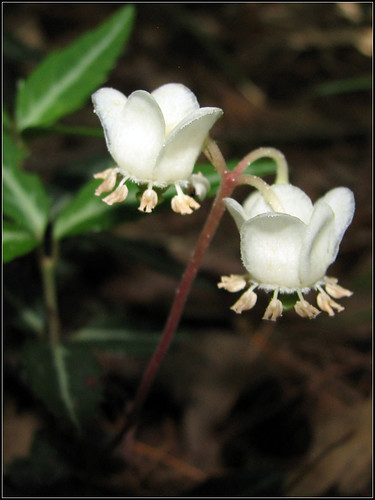
Wintergreen Flower


Spotted Wintergreen, originally uploaded by Dave Delay.

The other fire element that took me over by surprise was No. 20. Strange combination of notes: ylang ylang, sandalwood, violet leaves and wintergreen creates a haunting illusion of a nasty tuberose that attacks at night. The intense wintegreen opening is bordering on sickening, save for the fruity gardenia deja-vu that occurs when it clashes with ylang ylang’s sweetness and the coolness of violet leaf. Yet, the sandalwood base offers softness and balances this contrasting ensemble with an incense trail, reminding me overall of burning Japanese incense sticks in my balcony in the summertime, when the star-jasmine and gardenias decide to bloom.

Like all the Personal Blends from Aveda, one can choose either an alcohol base or an oil base. The alcohol spray bottle releases a heady and highly diffusive aroma, where the notes are more discernible; the oil is softer and sweeter and a little easier to digest since the strong top notes are a little muted.

Labels: , , , ,

Saturday, May 09, 2009

Got Milk?

A florist on Davie street is finally carrying tuberose stems on a regular basis. And so I brought one home and immediately was carried away with thoughts of milk… Or perhaps it was the previous Mother’s Day post got me thinking about milky notes in perfumery. Milk, butter, and anything that reminds us of these in taste, texture or appearance are not easy to find in the natural olfactory palette.

But it isn’t impossible either. And for a natural perfumer, imagination is the key, anticipating how notes will interact with one another to create something new and different than ever intended for the notes on their own.

Milk, like musk, is a bit vague. When I think of milk or musk notes, I get a sense of soft-focus. And indeed, some musky notes serve well in a milky way.

Butter CO2 creates a decidedly fatty, decadent flavour reminiscent of butterscotch and baked shortbread cookies.

Tonka Bean, with its high content of coumarin is reminiscent of caramel and almond milk and adds a soft, powdery sweetness like the dusting of icing sugar on a fluffly pancake.

Orris Butter, which indeed looks buttery, is one of the closest notes to the human skin – at once powdery and smooth, milky and earthy, cool and warm, oily like skin yet gritty like the earth its grown in.

Massoia Bark, with its intensely dark coconut notes due to the presence of lactones is rich and also creates a full-bodied presence like condensed milk.

And finally, tuberose in all its forms, but particularly tuberose floral wax and the fresh flower – despite being so floral, intoxicating and also green - has a certain butteriness that is irresistible and difficult to explain until you experience it.

P.s. Updates on more milky notes - May 16th, 2013:

Mysore Sandalwood, especially the vintage from 50 years or older sandalwood tree heartwood are phenomenal due to the high content of santalol. True and high quality white sandalwood (Santalum album), unfortunately, is no longer produced (the trees being cut too young, thus producing a far inferior oil, that is dry, sour and acrid). The closest I found was the smooth and suave Vanuatu sandalwood (which is from plantations in Vanuatu, and has already run out of stock due to our greediness); and organic Australian sandalwood oil which is smooth and fine, yet has a bit more of an animalic, urine-like note to it (which is a fantastic addition to masculine fragrances, as it really mimics men's pheromones).

Milky Oolong is one of the finest teas in the world, and a prime example of nature's chemistry: although tea leaves on their own do not resemble milk whatsoever, when particular tea varietals are oxidized and fermented a certain - the result is a smoothly fragrant tea, reminiscent of buttered popcorn and steamed milk. Milky oolong is not a note that you'd normally find in perfumery, as it is a very high-end tea and requires much preparations (a pound runs for at least $80, and I don't want to even imagine how much higher it would be to extract it). However, I did create my own tincture, and have been experimenting with it in perfume compositions that require a subtle tea and milky nuances.  I am tremendously enjoying the results. 

Pandanus Extract -like the milky oolong, is not available as an absolute or essential oil; so I created my own extract (tincture in alcohol) which I use in both food and perfume. It is amazingly potent for an extract, yet leaves a very subtle, steamed-rice and coconut nuance wherever it is used.

Labels: , , , , , , , , , , , , ,

Thursday, March 26, 2009

Tuberose Lei


tuberose and orchid lei, originally uploaded by NoeLani2006.

Tuberose Lei is the newest addition to the One-Of-A-Kind section on my Etsy shop.

Tuberose Lei is a humid, heady tuberose wrapped around the neck like a snaky flower lei. Four types of tuberose essences were picked for this living piece of jewelry, including two different tuberose absolutes, Indian tuberose attar and a unique distillation of organic tuberose are laced with other precious attars, creating an intoxicating tuberose infatuation.

Top notes: Kewda Attar, Ho Wood, Bergamot

Heart notes: Tuberose Absolute, Tuberose Attar, Organic Tuberose Essence, Attar Mottia, Orange Blossom

Base notes: Sandalwood Vanuatu, Peru Balsam, Labdanum, Liatrix, Vanilla

The One-Of-A-Kinds are distinct signature perfumes that will never make it to the Ayala Moriel ready-to-wear collection. The formula will be kept in file exclusively for the one customer who chooses to adopt this unique perfume as their own Signature Perfume.

Photo: tuberose and orchid lei, originally uploaded by NoeLani2006.

Labels: , , ,

Thursday, February 26, 2009

Scent Systems


Some of you may have been familiar with Scent Systems from the days it was a posh niche perfumes retailer in London that included custom scents as part of their services. A few years back, the company underwent a shift and became a perfume house that uses only natural building blocks in their perfumes, and the bespoke fragrances are also 100% natural. Scent Systems was founded by Hiram Green, a Canadian that followed his dreams and ended up on the other side of the pond. He now works with George Dodd, a perfumer and a renown fragrance consultant and researcher in the field of fragrance and psychology. His book, His book “Fragrance: The Psychology and Biology of Perfume” (co-edited with S. Van Toller) includes some of his researches as well as other researchers (including the infamous inventors of the Colour Rosette Test), which were key to understanding the impact of fragrance on human beings. He now operates from a small studio in the Highlands of Scotland, and his connection to this landscape is reflected in the choice of some of the aromatics used in the floral collection he designed for Scent Systems, such as heather absolute and Scottish bog myrtle.

Last week, Scent System’s coffret of the 5 floral perfumes arrived in the mail. While the five are quite different from one another, the line has a style, and it’s as if there is a thread that connects them all. Each is named after a flower, and that note is distinct and present; yet they are far more complex and rich to be categorized as soliflores. Aside from the natural perfumery staples, the line uses some rare natural essences that even I am not familiar with (i.e.: heliotrope, basmati flower and heather absolutes), and also some natural isolates (i.e.: aldehydes that occur in plants rather than synthesized from an unrelated source). The perfumes are all dense, rich, and have a slightly oily opening (which I’m guessing is the aldehydes) that reminds me of the scent of blood, yet not in a disturbing way. The line is intriguing and original, yet has a solid foundation in classic perfumery principles and the perfumes have an interesting evolution and are long lasting.

I intend to give a full review of the scents soon, but would like to use this post to give them all a first-impression introduction:

Jasmine - the freshest of them all, and slightly grassy jasmine, paired with herbs (basil and verbena) overtop vetiver base.

Rose - opens overly fruity and ripe with spicy, turmeric-like after-note and rose isolates dominant and sharp, but softens into more complex rose territory after a while. The dryout reveals a patchouli and curry-like base.

Wild Violet - I found this to be more spicy than I expected, rather than a fragile, powdery floral. An opoponax note comes forth right away, than replaced by roses; and only later on the iris notes glide in and create a more violet-y impression.

Tuberose - I thought I would love this one the most, as it smells most delicious from the vial, but it ended up very different than the opening. Starts off as a creamy, heady and slightly juicy, and reminds me of Miller Harris’ Noix de Tubereuse, which I like, but once the tuberose subsides it’s not as intriguing.

Oeillet is by far my favourite of them all, and is a dusky, dark seductive green, herbaceous and spicy oriental. Sage is the key note though, in my opinion, and having grown up surrounded by sage this might explain why I’m partial to it.

Full reviews will be posted over the next couple of weeks after I wear each a few more times. If you have already experienced Scent Systems' floral collection please do comment :)

Labels: , , , , , , , , ,

Wednesday, August 27, 2008

Private Collection Tuberose Gardenia


White Beauty, originally uploaded by tropicaLiving.

Private Collection Tuberose Gardenia delivers what its name promises and does it well. The execution of this grand floral is surprisingly tame and not in the least obnoxious. Although I can’t say its lacking sillage, it is definitely quieter than most of Estee Lauder fragrances not to mention many other tuberose-themed perfumes.

Tuberose Gardenia remains polished and soft like a white novak purse that’s inevitably saturated with it’s owner’s perfume. Inside the purse you’ll find very few accessories - just what’s necessary for that particular outing. In this case: tuberose and gardenia accords underlined by a woody vanilla base (which halfway through the journey brings to mind the overall impression of Songes). If Fracas is the point beyond which everything is too loud, Private Collection Tuberose Gardenia marks the point on the same spectrum beyond which tuberose starts to whisper.

While Fracas makes me think of other things (disturbingly intoxicating and unrecognizable flowers at night), Tuberose Gardenia leaves me just comfortably pampered with buttery, creamy tuberose and gardenia. There is none of the greenness or complexity you can find in Fracas and which makes it so intriguing as it bounces between gasoline, white flowers, rubber and greenery until it settles down into a creamy tuberose. Private Collection Tuberose Gardenia is straightforward and shows all its card right from the start: it reminds me more of tuberose floral wax than anything else, with its velvety, pampering tuberose headiness. Private Collection Tuberose Gardenia seems to give us what we need in this day and age (aside from the very long name to type over an over again - a trend that I hope would come to an end one of these days!): it brings a simple pleasure just like a much needed vacation.

Labels: , , , ,

Tuesday, August 19, 2008

Fracas


tuberose, originally uploaded by Buttersweet.

Fracas: An over-the-top white floral; a moon-garden outrageously populated by fragrant night-blooming flowers: honeysuckle vines curling their lashes against the dark skies, pale tuberose skeletons trembling in the summer wind and night blooming jasmines exploding their indoles like fireworks. Cool and warm wafts of winds alternate as one walks through attempting to survive this intoxicating olfactory temptations without falling flat on the ground and becoming fully sedated.

Fracas from French translates straightforwardly to “crash” but more specifically - a noisy, disorderly quarrel, fight or disturbance (which is what could possibly happen if this perfume is applied in abundance by a government employee in Canada). If worn in a different setting, the disturbance is bound to be rather pleasant. There is nothing timid, restrained or shy about Fracas. At the same time, it is not nearly as obtrusive as I have expected after sensing the divided opinion about this fragrance, rivaled only by the opinions regarding Angel and Poison.

On the tuberose intensity-spectrum, Fracas sits just at the point where it leaves a (fondly) memorable impression; go any further you are approaching Poison’s aggressive territory. Tamer tuberoses, on the other hand, always live in danger of paling in comparison to this landmark fragrance.

With every wearing of Fracas, it keeps me on my toes as it bounces between gasoline, white flowers, hot rubber and greenery from the florist shops’ cooler. But it’s intrigue lies not only in its contrasting notes, but also in it’s ability to shift its weight between realism (the real living flowers) and the abstract of modern chemistry (bold molecular statements), while never losing its balance.

In its evolution, Fracas starts out as an intense heady floral, yet with depth rather than being high pitched. It was described before me as “sparkling” and I can’t agree with this description more - it has a certain vivacity that makes it seem very light hearted, almost humorous. You could say it’s Narcisse Noir’s blond sister or the glamorous Norma Desmond when silent films were still in production (both perfumes share the intensity of white florals overtop incense, sandalwood and rubbery animalics, with Narcisse Noir being darker and bordering on the decay).

Tuberose and green cool notes (violet leaf?) are further intensified and sweetened by orange blossom and jasmine absolutes. I also smell something reminiscent of stephanotis there though I’ve never seen it listed anywhere. In the first hour of wearing the various floral notes competing simultaneously for the diva role yet somehow end up singing a polyphonic and harmonious coral and acting as counterpoint to one another (they are all bold, loud white florals so the competition is close). Once settled on the skin, Fracas is linearly floral tuberose with the creamy aspect of the flower taking centre stage. From this point on Fracas slowly but surely dissipates into the atmosphere, shedding one layer after the other of its tuberosiness until in the end we are left with a clean, smooth petal underlined with musk, wood and just the slightest hint of acrid oakmoss.

Top notes: Yellow Mandarin, Bergamot, Honeysuckle, Gardenia
Heart notes: Tuberose, Jasmine, Stephanotis, Lily of the Valley, Jonquil, Violet, Orange Blossom, Iris
Base notes: Musk, Vetiver, Cedar, Sandalwood, Oakmoss


Labels: , , , , ,

Sunday, May 21, 2006

Noix de Tuberéuse


flowers from my lei, originally uploaded by flicka23.

These little white flowers from the narcissus family have a rich nocturnal life: it is not until the evening that their scent is at its full intoxicating aphrodisiac powers. It was traditionally considered dangerous for a young lady to pass through them as to be overcome by its intoxicating and voluptuous fragrance and be struck helplessly by it aphrodisiac powers (Poucher, 1959). Different crops and varieties of the absolute smell differently – some are powdery, soft and sweet, other have a slightly green overtones, and the harshest ones have been described as rubbery and almost medicinal.

In modern perfumery, tuberoses are often interpreted as a bombastic, loud and high-pitched narcotic florals. Poison and Fracas are two extreme examples of how tuberose can be treated in a very bold way. Noix de Tuberéuse, however, is the first and only perfume I found so far that is built around the theme of tuberose and does not have a harsh, intimidating, heady and cloying presence.

Noix de Tuberéuse is the softest tuberose and the one that reminded me most of the pure absolute. It is simple and I consider it a soliflore as the other notes all serve to accent different aspects of tuberose: mimosa and clover leaf hint at its slight green top notes; orris enhances its powdery softness; violet flowers bring forth an almost gourmand sweetness; tonka bean brings out its rich yet gentle, creamy-buttery sweetness; and ambery incense and sandalwood add a full bodied yet mysterious aura that along with reminiscence of coconut serves as a reference to the tropical Orient.

All in all, Noix de Tuberéuse is a creamy, buttery, sweet and soft tuberose scent. It reminds me of two things – the first one being the perfume oil called “Night Queen” from India. It is not a fancy perfume – but smells delicate and alluring, like flowers and incense intertwined. I am quite sure it is suppose to smell like tuberose to begin with, as tuberose is often referred to as “Mistress of the Night”.
The other olfactory reference links us back to Lipstick Rose, as it does remind me of the scent of some lipsticks. The violet and orris that appear in both perfumes have a similar effect and create a pleasantly plasticy nuance that is akin to the taste of a shimmering pearly-pink lipstick, if you happen.

The packaging of Noix de Tuberéuse is pink, and I couldn’t think of a better colour to describe this scent. It smells pink to me… It also brings me good memories, from when I first worn it a couple of years ago and my daughter was recovering from a broken femur, an incident that had forced her to choose speech as an effective method of communication... Ever since than she can’t stop talking, and my dreams are coming true. Maybe that is why I associate it more with chilly autumn days. But regardless of my own personal memories and associations, I still feel that the heat (even the very slight heat such as the mild spring weather in which I was wearing this yesterday) upgrades this scent into the next cloying-level which decreases both its sex-appeal and delicacy.

Top notes: Wild Green Clover, Mimosa
Heart notes: Tuberose, Fig, Violet

Base notes: Tonka Bean, Orris, Amber, Sandalwood, Incense, Coconut

p.s. I can't smell the figs on my skin at all. But these are listed on the official Miller Harris website.

Labels: , , , ,