Thursday, May 30, 2013

New OOAK Perfume: Tubereuse et Violette

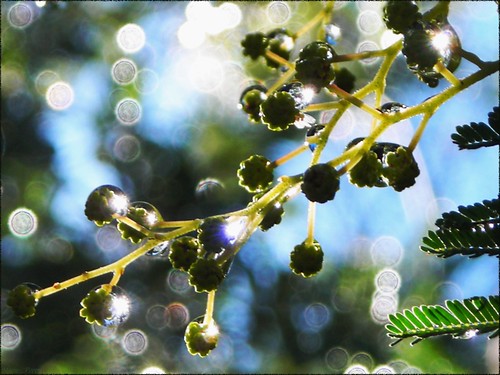
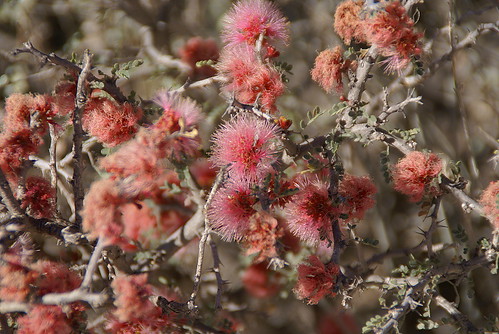
Awaken, spring. by alexstoddard
Awaken, spring., a photo by alexstoddard on Flickr.
This morning I've completed a new OOAK perfume today - Tubereuse et Violettes that has been aging since 2004...

Tubereuse et Violette is a Green and tender variation on tuberose, reminiscent of green fig and milky iris. Its inspiration was the majestic and extravagant perfumes of the Royal French courts at the time of Marie Antoinette when European perfumery became more sophisticated and extravagant, with the addition of flowers extracted by enfleurage.

Top notes: Black pepper, Mimosa, Rosewood, Ginger Lily
Heart notes: Tuberose, Violet Leaf, Orris Root (butter and tincture), Jasmine, Rose de Mai
Base notes: Opoponax (oil and tincture), Vanilla tincture, Tonka Bean, Vegetale Musk

Labels: , , , , , ,

Wednesday, February 27, 2013

New Discoveries

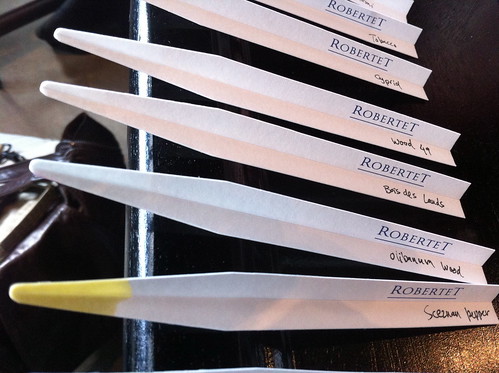
New Discoveries by Ayala Moriel
New Discoveries, a photo by Ayala Moriel on Flickr.
Monday was spent on the road mostly, doing a round trip to Seattle to reconnect with the West Coast indie perfume community, and smell some new raw materials. The fresh Szechuan pepper essence pictured here made the trip worth my while, but there were some other fascinating raw materials worth writing about.

Elemodor: fraction of elemi resin, which possesses no resemblance to its origin, with only the slightest hint of resinous woody. The best way to describe it is as orange zest and juice on speed.

Elemi (Canarium luzonicum): Sharp, crisp, like lemon and black pepper combined, and also with hints of both cilantro leaf and pink peppercorns.

Tobacco absolute: Time and time again, I'm surprised at how muted tobacco is. It can easily disappear in a blend, and it sometimes seems as if the more you add, the less you'd smell of it. A challenging raw material to work with, but powerful and very elegant when used properly. Although it does not have a very strong odour intensity or diffusive power, it is a distinctive note, reminiscent of freshly cured tobacco leaves (read: not stale!), fermented hay in a meadow, and with an undercurrent of animalic energy. A truly good tobacco bring a sense of reverence and reminds me of the original use of this as a sacred, medicinal plant.
Please note that this absolute is nicotine free, unfortunately, so don't try this as a substitute for your nicotine patch!

Cypriol/Cyperus/Nagramotha (Cyperus scariosus): from the vetiver family, this root oil possesses as urpentie, sharp top note, woodsy-dry base, and a very clean, elegant dryout reminiscent of the hint of tart freshness of Haitian vetiver.

Bois des Lands or Pinewood is a co-extraction of French pine resinoid with a Virginian cedarwood oil. Smells of wood, mushroom-y forest floor, moss and a tiny smoky, with a cheese-like fermented undertones. Dries out to a woody-balsamic finish.

Cedarwood fraction: From Texas cedarwood. Sharp cedar note, a little sweaty-herbaceous reminiscent of oregano.

Olibanum Wood: co-distillation of olibanum (frankincense resin) with Virginia cedarwood, which creates an interesting new note that is more stable and woody, more reminiscent of dusty frankincense tears rather than the oil or the smoke.

Vanilla CO2 with 20% vanillin:  This is just about as sweet as one can get, in a very elegant way.

Ambrette Oil (Abelmoschus moschatos): High content of ambrettolide, resulting in a typical "white must" scent without the skin-like, buttery, nutty and wine-like quality of most ambrette seed essences. 

Szechuan Peppercorn, Fresh: Green, floral, surprisingly citrusy (reminiscent of ruby red grapefruit, bergamot  and yuzu), tomato leaf and yerbamate. Very distinct, fresh and tenacious.

Poplar Buds Absolute: Honeyed, boozy, hops-like, hint of cloves, dominant propolis note, hint of nutritional yeast odour.

Mimosa Olessence: Gentler extraction method, resulting in a more true to the flower profile. Reminiscent of almonds, marzipan, hints of fennel, floral, woody and clean.

Elderflower Absolute: That nutritional yeast note again, with only the tiniest hint of what the fresh flowers are all about - cassis-like and floral. More like hay than a flower overall. Similar to linden blossom absolute, which also presents a similar problem.

KF1150: Isolate that smells grassy green and sharp - like a combination of gasoline and freshly cut grass. Your dad is going to love this!

Black Tea Absolute: Smells like a wonderful container full of fresh Assam tea, maybe hints of Darjeeling too.

Eucalyptus Forte: Combination of of solvent extraction and molecular distillation. Green, balsamic, eucalyptus pods, hints of animalic/indolic quality, surprisingly. Very tenacious, resinous-woody-balsamic dryout.

Just a little glimpse into where a perfumer's palette can expand.
And that's all, folks!

Labels: , , , , , , , , , , , , , ,

Monday, February 28, 2011

Yellow!


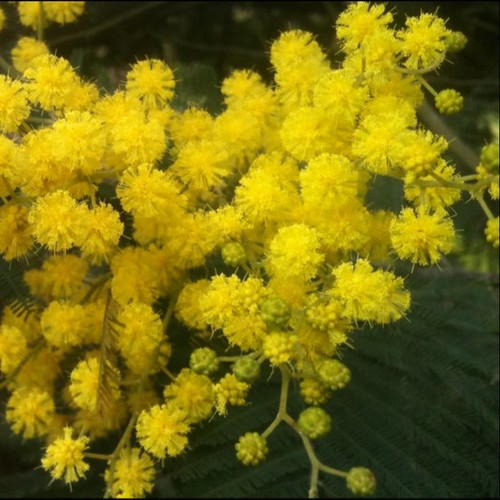
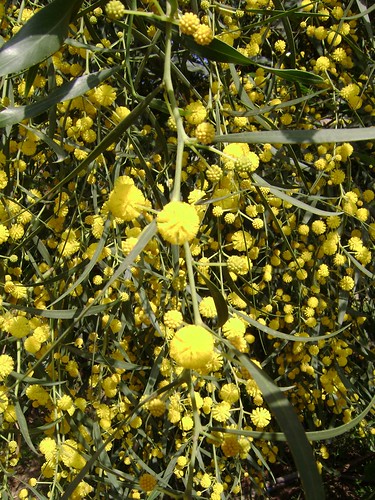
Mimosa, originally uploaded by Ayala Moriel.

While Vancouver is freezing over, spring is here in other parts of the world (although it may seem like a very wintery weekend to those who actually live here...). Splashes of yellow bring cheerful smile to my face, and especially when sniffing these particularly tiny mimosas, or acacias, be what they may, growing on the sides of the roads of beautiful Sonoma Valley, California. My, is this place beautiful!
These tiny mimosas are only lightly fragrant (most mimosas are, actually). And they smell of spring: delicate sweetpea at first, with some underlining green notes of fresh cut grass and even carob blossoms.


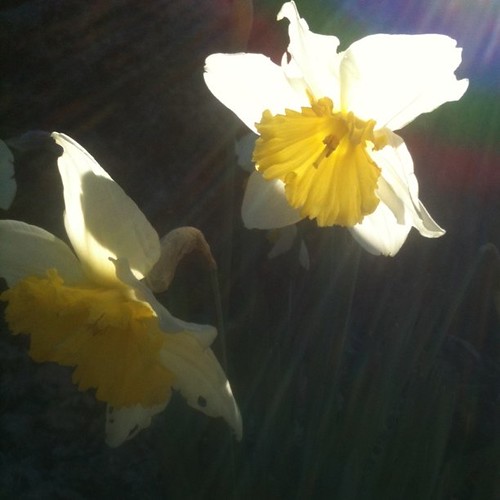
Daffodils, originally uploaded by Ayala Moriel.


Other less fragrant but not any less appealing visually are fields of mustard (or is it canola?), cultivated daffodils (which don't bloom in Vancouver till April!) and this sign warning of ducks crossing that totally cracked me up...

I'm stranded in Sonoma for another day (flying standby - there was no room on any of the flights out of Santa Rosa this morning) but I can't really complain, can I? This place is so cheerful, peaceful, beautiful and welcoming.


Ducks crossing, originally uploaded by Ayala Moriel.


Labels: , , ,

Wednesday, March 31, 2010

Mimosa Glow


Mimosa - 05, originally uploaded by Marie-Poppy2.

Early evening yesterday, I stepped into the drugstore to check my mail, and swept by the $19.99 shelf to find the tall frosted JLo Glow awaiting redemption from its place of non-glory. I thought I’d snatch it as a gift for my friend Tina, who loves spraying it on her hair and clothes (and it always makes her smell like she just washed her hair when she does). And right than and there, I decided to give it another try.

When Glow came out, I dismissed it as too sharp, too synthetic and too soapy to my taste. While this remains true for the first few minutes, I became pleasantly surprised when trying it on my skin for the first time in 8 years. In a world that sees a rapid life cycle for celebrity scents, JLo’s Glow is probably considered a classic by now, rivaled only by Sarah Jessica Parker Lovely.

What awaited me after the initial rash of synthetic orange blossom was something I did not expect. Although familiar, it took me a few minutes to figure it out… Provence! Shimmering mimosas, honeycombs and good old French milled soap. And a little bit of freesia too, which gives it just a touch of peppery greenness. And than a sweetness crept in, vanilla against mimosa, and I was in heaven for a few hours. By bedtime most of what I could smell was musk though, and that was the song I woke up to the next morning.

If Narcisso Rodriguez’s dry down resembles laundry detergent musk, Glow resembles whatever musk they like to put in milled soaps to keep your skin fragrantly “clean” for hours after washing. In that regard, the scent really is true to what it always claimed to be, starting from the ad copy, frosted glass that is reminiscent of a shower cell’s sliding doors and shaped like a yuppie shampoo bottle, to the image of Jennifer Lopez herself scrubbing all the ghetto-dirt from her perfectly carved abs and curves.

Labels: , , , , , , , , , ,

Wednesday, August 05, 2009

Sephora in Vancouver


New Sephora, originally uploaded by Elsbro.

New Sephora, originally uploaded by Elsbro.

The long-awaited Sephora launch in downtown Vancouver brought a few good things to the city: in anticipation for the arrival of a new competitor, Holt Renfrew added Holtscents – an expanded fragrance division with many niche brands, including Editions de Parfums, Miller Harris, Bon No. 9, Juliette Has A Gun, Miller et Bertaux, Ineke, and several others. Some vanished after a while due to lack of demand (By Killian and Etat Libre d’Orange) but we can only hope the others will stick around and keep our dull Vancouver life interesting. Shoppers Drug Mart took a similar approach and expanded their fragrance and cosmetics tremendously – carrying brands that used to be only found in luxe department stores – Prada, Guerlain, Clinique, BeneFit Cosmetics, Comptoir Sud Pacifique and others.

And now the cat is out of the bag and Sephora is open for about a month. Vancouverite teenagers and girls in their early 20’s seem to not have gotten enough of it yet. I was there for the first time exactly on Jly 17th, exactly one week after the opening (July 10th)
around 2pm on a Friday, taking a detour on the way to pick up printed labeling for the Tropical Flower & Spice Limited Editions for the tea party that weekend.

It was a very hot day and I sought refuge in the mall’s lavishly air-conditioned space. The first thing that crossed my mind was: don’t anyone have a job anymore? Because clearly, everyone and their two girlfriends seemed to be at Sephora trying out new makeup. The downside was that the store was packed to say the least ( but that was nothing comparing to the opening day which I promptly skipped, being the crowd-avoider expert that I am). Apparently 7,452 is not enough to host all of Vancouver’s beauty junkies. The up side, of course, was that I was able to roam freely in the shop without anyone offering to “help” and asking me boring questions about my fragrance preferences.

I scouted everything that is new and unusual and can’t be found anywhere else in the city, and as far as fragrance goes I was not quite blown away. There was the Tweety bird perfume, with a promptly yellow atomizer bulb that turns the otherwise classy vintage-style perfume spritzing into a deja-vu squawking a rubber-duck in the bath-tub when you had to babysit your little siblings (by which point, commenting about the scent seems futile). On the other hand – I spotted some rather fantastic size for Fracas – a 7.5ml roll-on which if only for the long line ups would have landed in my purse later that afternoon.

Scent-wise, my sniffer was impressed with several things: Cannabis Santal – a strange mélange of woods, patchouli and chocolate that is not in the least as doobie as the name implies; rather, it reminded me of a cross between an Hermes masculine (Either Vetiver Tonka, Poivre Samarkand or Terre d’Hermes) with an overdoes of chocolate. I also found Cannabis Rose, which I had to try because one of my classmates in Grasse raved about it and it was created by a young perfumer at Robertet. Cannabis Rose smelled like the new generation of Chypre – with patchouli, vetiver and musk as the base and a warm and clean rose heart – but not quite spicy or rosy. I tried the body cream of that and it was overbearing though and will have to try it on skin at a later time. As an aside - Fresh can be found both at Holt Renfrew and Beautymark but neither of them carry the entire line, and neither of these two scents, to the best of my knowledge.


And last but not least – it was a very nice surprise to find Demeter Vintage Naturals 2009 limited edition collection of 5 soliflores that are all-naturals: Lavender, Rosebush, Patchouli, Geranium and Mimosa. The latter captured my attention immediately. Geranium has been my obsession in the past year or so, and it was refreshing to see it treated as the main theme. This geranium is extremely leafy and fresh. It starts herbaceous and minty and dries down into a more earthy base, and geranium is always at the forefront – no surprises there. Mimosa opens with a dominant mimosa absolute note, which is a top note so it does not stick around for too long. Than it morphs into a complex, rich white florals – with ylang ylang, jasmine and powdery tonka bean whispering sweet nothings in your ears till you are completely seduced. It has an incredible lasting power. I am yet to try the other three but so far I have to say I’m very impressed with this mass-produced natural perfume, and the price is very reasonable at $75 a pop (50ml EDP spray).

And the other evening, I stepped in again, and although the store was not as busy as before, the lineups were intimidating. For the first time I got noticed by a sales rep which I gently refused. Fortunately, I had Tamya with me so I got to try the Geranium and the Mimosa again and also tried Fresh’s “Strawberry” (so not!) on Tamya’s one wrist, and BeneFit’s whimsically martini-shaker packaged “Something About Sofia” from their new Crescent Row collection (lilies and some fresh tart fruit – perhaps apple and lychee?) on the other. Incidentally, "Something About Sofia" was what was suggested to me after completing BeneFit's quiz. Also, if they had a quiz to find out how much of a sucker for a cute bottle you are I would probably lead with at least 99% and buy the bottle on the spot. As it turned out, I was impressed by neither but I learned a new shopping tip: take your kids with you and use them as living scent strips. It would save you money.

Labels: , , , , , , , , , ,

Wednesday, April 11, 2007

Farnesiana

Farnesiana is the cream of the crop in the world of mimosa soliflores. It is tastefully decadent, like a buttery almond pastry flavoured with flower essences, Farnesiana is more gourmand than floral.

Farnesiana was recreated by Michel Morsetti from Ernest Daltroff’s notes after his death in 1941. The name is taken from the Latin name for cassie, Acacia Farnesiana, as well as the garden in the Roman palace of Farnese which is the inspiration for Farnesiana. However, there is nothing Mediterranean about it, unless you recall the rich butter-soaked floor of an almond-filled baklava. The sweetness of Farnesiana, however, has none of the burning sweetness of the honey syrup of this Middle Easter pastry. It can be likened to a marzipan flavoured with floral waters, if such a thing ever existed.

In the time it was released in 1947, it was ahead of its time, like an impressionistic olfactory painting. Many gourmands nowadays pale in comparison to Farnesiana’s innovation and class.

Farnesiana opens with mimosa and cassie, but you know right away that this is going to be a very unusual mimosa scent. The heliotrope note peak in right away, with its sweet, fluffy, powdery almondness. The heart is powdery and floral but not as indolic as Mimosaique or Une Fleur de Cassie, as the presence of jasmine is tampered by the lightness of farnesol and linalol in lily of the valley and lilac and the melancholy powder of violets. You won’t smell them on their own, but their effect is felt and adds a certain airy lightnes to what is otherwise a rich, sweet, dark composition. What’s most intriguing in Farnesiana, besides its extreme dessert-like appeal, is its ability to remain so Caronesque, despite the fact that it is dusted mostly with the bright yellow flower of mimosa, ever so light and airy on its own. The most dominant element that creates this Caronesque impression is the presence of opoponax, in addition to the darkly sweet and melancholy heliotrope. It adds a musky, resinous, animalic, daring and unusual touch which is just perfect with the other base notes (vanilla and musk being the most prominent besides the opoponax and heliotrope).

Top notes: Cassie, Mimosa, Bergamot
Heart notes:,Jasmine, Lilly of the Valley, Violet, Lilac
Base notes: Cassie, Opoponax, Vanilla, Sandalwood, Musk, Heliotrope

Farnesiana is available directly from the Caron bouqitues in Paris and New York. I was very impressed with the excellent customer service of the Caron ladies in New York, Cathy Lilly and Diane Haska. They can also be contacted via their toll-free number: 1-877-882-2766.
The package arrived in a couple of days within the US to my aunt’s house, where it rested for a while until my aunt found her way to the post office (which can be easily explained by the fact that she is a busy 50+ mother of twin toddler boys). The long wait just wet my appetite and made me enjoy Farnesiana even more, when I almost forgot I ordered it. It came in the most exquisite silver coloured satin bag, fit for a queen, and accompanied by a few generous parfum extrait samples from the urn fragrances. The presentation made me think instantly of Marie Antoinette, who equally enjoyed pastries and perfumes.

Labels: , , , , , ,

Wednesday, April 04, 2007

Une Fleur de Cassie

Une Fleur de Cassie by Dominique Ropion has a perfumey, flowery-powdery, indolic and wet presence. It surprises with a counterpoint of contrasting elements that work harmonioiusly despite the fact that some of them are very single-minded and stubborn. Aside from a high concentration of Cassie absolute, the notes I find most dominant in Une Fleur de Cassie are a highly indolic Jasmine accord accented even further to the domain of body odours by essence of cumin. The cumin is subtle yet carnal, which is very contradictory to the cool, green and aloof note of violet leaf echoing the cassie. In addition, orris root contributes a buttery powderiness, which along with the cumin feels warm and sensual. The base is sweetened with vanilla and balanced with the lead-like pencil-shaving note of cedarwood, which invokes the texture of wet green clay, musty and dusty.

Une Fleur de Cassie starts a bit perfumey, though not as much as Mimosaique. It is unmistakably a Cassie perfume. Cassie, also known asAcacia Farnesiana or Sweet Acacia, has an intense note that can be quite objectionable when undiluted or in high concentration. As I said earlier, it is one of the most unusual floral notes because it is a floral base note and provides an interesting floral foundation for other lighter floral notes. It is rarely used in such concentration as in Une Fleur de Cassie, and therefore it is not surprising that it often garners ambivalent or repulsive reactions. However, this is what makes it unique. And particularly when played by this particular ensemble of notes such as the cumin.

According to Basenotes, the notes are:
Top Note: Cassie, Mimosa, Jasmine, Clove, Cumin, Bergamot,
Middle Notes: Rose, Violet, Apricot, Aldehyde, Salicylate,
Base Notes: Musk Ketone, Cedarwood, Sandalwood.

The photo is courtesy of my brother, Yotam Dehan, a Desert Ranger in the Dead Sea area. It is a blue robin on an Acacia tree in the Yehuda Desert near the Dead Sea. You can also view more photos by Yotam on his photolight webpage.

Labels: , , , ,

Tuesday, April 03, 2007

Molinard's Mimosa Concreta


Amongst his many other talents, my brother Noam has an infamous talent for finding treasures in the least expected places: alleys, photo booths, flea markets and forsaken thrift shops in Tel Aviv. One of them was an antique coffret of three Molinard’s concretas (solid perfumes) presented in their original bakelite boxes. Inside they look a bit like an ancient dark resinous lipstick.

I researched these a bit and they could be dated as far back as the 1940’s. The three concretas have preserved their scent tremendously well, and among them was a Mimosa concreta. Although the material itself is waxy and somewhat sticky, it is worth inhaling for its magnifiscent, creamy mimosa fragrance. It is most delicious and reminds me a lot of Farnesiana (to be reviewed here on SmellyBlog shortly).

Labels: , , , , , ,

Monday, April 02, 2007

Mimosaique


Pompones rosa, Fairy duster, originally uploaded by fvaldes.

First of all, the name for this mimosa perfume is genius in my opinion. It is indeed mimosaique rather than pure mimosa. From all the mimosa perfumes I’ve sampled it is the most perfumey. While Mimosa pour Moi is a sheer, leafy twiggy mimosa soliflore, Mimosaique is floral and powdery through and through. More floral than the flowering mimosa is in my opinion. This is in large due to the aldehydes present in this perfume, as well as other floral notes such as jasmine, paired with the powderiness of orris root. The initial aldehydic-perfumey impression wares off after the perfume is worn for a while and the mysterious mimosa note becomes more pronounced, as well as what I suspect to be a sheer yet still powdery musk base.

While I found the perfumey character of Sacrebleu intriguing (as it unfolds into many facets as it develops on the skin) I found Mimosaique to be far less interesting. However, I can see its appeal as a perfume that is equally simple (a soliflore) and sophisticated (the ladylike aldehydic impression).

Mimosaique is said to also include anise note, a note I did not detect in the few times I’ve worn Mimosaique. But alas, my little vial of Mimosaique sprang out of the ziplock envelope I had while traveling and collapsed to the tiled floor where it emptied its content and broke with no repair. I will have to get back to this one for re-sniffing and evaluating. Anise and orris is a combination familiar from the Guerlain heritage, a dynasty Patricia de Nicolai belongs to.

Mimosaique can be purchased directly from the perfumer's website as well as other specialty retailers such as Luckyscent and Beauty Habit.

To read another opinions of Mimosaique, visit Cognoscented.


Labels: , , , ,

Mimosa pour Moi

Mimosa pour Moi by l’Artisan Parfumeur is a light yet persistent and long lasting mimosa soliflore. It has the typical cucumber-like mimosa absolute top notes, along with a woody sensation of crushed leaves and branches, and a slightly violet and milky fig-leaf like sting to it that is achieved in part by a subtle use of Cassie absolute (the more wet, woody and deeply penetrating variety of mimosa I’ve mentioned in my recent post). The base is sweet with a sheer vanilla accord. Overall, Mimosa pour Moi is characterized by a watery-woody floralcy and subtle powdery and milky-green woodiness. It reminds me quite a bit of a few Olivia Giacobetti's creations - Philosykos, Premier Figuier, and Ofresia. Yet, the nose behind Mimosa pour Mois is Anne Flipo, who is also the nose behind Verte Violette and Ananas Fizz.

It is not, by any means a “pure” mimosa, but rather an abstract rendition of the idea of this fuzzy flower. Just like the illustration on the l’Artisan labels.

Labels: , , ,

Sunday, April 01, 2007

Acacia, Botanical Invasion and Leather


Mimosa, originally uploaded by Ayala Moriel.

In the past two weeks, I’ve been traveling back and forth between Tel Aviv and my little village up north. In one of our rides together, my brother Yotam pointed out to me the dangerous abundance of Mimosas across the country, and the fact that they are now considered invasive species in Israel. Mimosas were sparse and almost exotic way back when, and I remember specific spots along the road where they could be found. When the blooming season arrived, we would pick them for my step-grandmother, who admired them greatly. Now, however, they can be found everywhere, not just in parks and city gardens or along the roads. They can be found in the middle of fields or on hillsides, where they are gradually taking over and use up resources such as space and water, therefore endangering the survival of the indigenous plants.

Now, in springtime, the view of mimosa is glorious and abundant, particularly in full bloom. Otherwise, these bushes embody the mood of desert and negligent greenery scattered in random places where it leaves no impression whatsoever except, perhaps, the gloom of heat and burning sunrays.

Mimosa is from the family of Fabaceae, which also includes the legumes. And indeed it has seeds that are arranged in elongated pods. It belongs to the subfamily of Mimosoideae, which includes also plants, shrubs and trees, some of which perform rapid movement like the “touch me not” plant (Mimosa Pudica).

The Acacia (commonly known as Mimosa) is an invasive species in other parts of the world. Although it is native to Australia, it is cultivated in countries such as Egypt, Morocco, France, Italy, Algiria, Lebanon an India. I suspect it was brought Israel at the turn of the century, along with Eucalpytus trees which exude an equally gloomy appearance where they remain as a statue to lost wetlands or malaria-beaten swamps and marshes that my Zionist ancestors fought vigorously and turned into depressing little forests instead.

The particular mimosa that is widespread in Israel is the Blue Leaf Wattle (Acacia cyanophylla). It is not extremely fragrant like the Acacia decurrens or the Acacia farnesiana (Cassie). But it does have a light, floral powdery sweet aroma wafting about it without making too much effort to leave an impression. I noticed that the scent is more apparent when smelled from distance, rather than sticking your nostrils amongst the pollen-laden wands decorated with the little yellow pompoms.

Mimosa has many uses in the leather industry. The bark as well as the pods are rich in tannins, and therefore make an excellent agent for preserving and tanning the leather. By way of fortune, I had the honour to get some information about the uses of mimosa from Stu Miller, a life long leather tanner and an expert in the field who consulted to leather tanneries across the world. mimosa bark. Mr. Miller’s daughter is known to some of you as Loukumi in Basenotes or Elizabeada in Perfume of Life forum. When she tried my mimosa soliflore, Les Nuages de Joie Jaune, she immediately recognized a familiar scent from her father’s tannery. She was intrigued and assisted me in finding out a little more about the use of mimosa in modern tanning industry, which, surprisingly, still uses many natural and locally grown materials in the tanning process. For instance: Cabracho from Argentina, chestnut extract, and sumac which used to come from Albania but is pretty rare today (sumac, in Hebrew, is called “Og Haburskaim”, which means “Plant of the Leather Tanners”, and grows wild in the mountains of Jerusalem), mangrove. Many tanneries use plants that are rich in tannin that are grown locally, for instance - some kinds of Eucalyptus in Australia, and unknown plants in South America, that are “used to tan fluffy curly white sheep skins that we sometimes see here”.

Mr. Miller’s tannery imported powdered mimosa pods from plantations in Africa and Brazil, which had 40-50% tannin. It was particularly used for tanning saddle leather, which tanned and dyed entirely with vegetable substances. At times, iron is added to mimosa powder to create a black dye: the tannin reacts to the iron and turns black. When asked if the mimosa pods had any smell, Mr. Miller said they just smelled like wood. He suggested that the scent his daughter smelled was a solvent – either butyl acetate (which smells a bit like bananas and is commonly used in the flavouring industry, particularly to create the scent of Granny Smith apples), or butyl alcohol.

The two species of mimosa that are of particular interest from perfumery as well as aromatherapy aspects are commonly called Cassie and Mimosa. Mimosa is the Acacia decurrens (Green Wattle) species. It is a middle to top note, with a scent that is at once watery, powdery, only slightly flowery and woody and very much cucumber-like. The absolute is a thick substance that tends to solidify once exposed to air and become brittle. This absolute is high in Palmic aldehyde, anisic acid, enanthic acid, acetic acid, phenols.
Because of its antiseptic and astringent properties, mimosa in aromatherapy, it is used as a muscle relaxant, skin conditioner, and for skincare of oily and sensitive skin. It also assists in nervous tension, anxiety, stress and insomnia.
Mimosa is mostly grown in Australia, Africa, France, Italy (based on HerbBee).

Acacia Farnesiana, AKA Sweet Acacia or Cassie absolute, is an unusual floral note: it is one of the most rare floral base notes. It has a far more intense, wet quality to it than the mimosa absolute has. It smells green, woody, wet, similar somewhat to violet leaf, yet floral with an intensity that is quite similar to that of jasmine. It is a valuable fixative in floral compositions.
According to the HerbBee, Cassie absolute contains Benzyl alcohol, methyl salicylate, farnesol, geraniol, linalool.
It is considered anti-rheumatic, antiseptic, anti-spasmodic, aphrodisiac, balsamic, and can be also be an insecticide.
In aromatherapy, it is used for rheumatism, dry skin, sensitive skin, increases sexual desire, depression, nervous exhaustion, stress. It is also used in the flavour industry. Cassie is mostly grown in France, Egypt, Lebanon, Morocco, Algeria and India.

Coming up next: reviews of mimosa perfumes.


Labels: , , , ,

Tuesday, August 01, 2006

Drifting in Yellow Clouds of Happiness


Acacia baileyana, originally uploaded by jam343.

Drifting in yellow clouds of happiness. My new mimosa perfume. A soliflore.
Mimosa – such a fleeting scent. The absolute smells like cucumber and water and wood more than a flower. A bare dusting of pollen shaken from a broken branch. Les Nuages de Joie Jaune.

Who would have imagined that such an innocent scent would be so difficult to crack? Mimosa is a fleeting mystery…

Mimosa opens along with the watery-wood of caberuve and the pale greenness of frangipani. A heart of violet and jasmine is like a leaf between airy blue sky and fuzzy yellow blossoms. A base of cassie flowers and vanilla creates a delicate and lasting impression of this ethereal desert flower.

Les Nuages de Joie Jaune launches today and is a salute to all mimosa lovers to whom the scent of mimosa brings happiness and joy!


Labels: , , , , ,

Friday, July 21, 2006

Moroccan Mimosa Memories


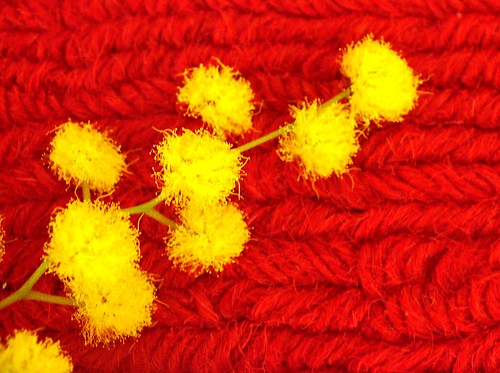
colori, originally uploaded by mafaldablue.

Mimosas were my step-grandmother’s favourite flowers. We always stopped on the way to Tel Aviv to pick the long stems, bubbling with yellow pompons, and make a wild bouquet just to make her happy. By the time we arrived at her doorstep for a Friday night dinner, we have left behind us a trail of mimosa pollen, from the station-wagon, all the way up the stairs, and honestly – I don’t know if there was much left of the flowers at all. But I think it still made her happy to hold real mimosa stems in her arms.

This photo reminded me of her, and of “habana” - a heavy Moroccan blanket, made of thick wool in vibrant colours. These must be perfect for an icy Moroccan desert night, but for my little girl’s body, cuddling underneath it felt just as restraining as taking a nap in a coffin. I still can’t understand the admiration it got from my parents…

My step-grandmother made the best Moroccan food, only from scratch, of course: couscous (but really from scratch, you just can’t compare it to store-bought couscus in a million years), mufletta, galette biscuits to dip in the sweetest spearmint-black-tea, coconut cookies adorned with a tiny silver ball, almond cookies with a clove bud stubbed at their heart, and my favourite of all - beet salad, and candied miniature eggplants, spiced with cloves. It’s unbelievable what you can turn into jam if you follow a good Moroccan recipe, you can practically turn rocks into candy! Because she spent so much time in the kitchen her face and skin was always soft and a little bit glossy from the oil. The food was always very colourful and flavourful, but now that I look back it seems as if she lived a very grey life. She was always working hard and serving her family, raising 6 kids in the depression of the 50’s in Israel when everyday commodities were sparse; and so she had to be improvised - shoes were cut-to-fit the growing feet, and stale bread was made into fancy patties soaked in tomato sauce. These were just some of the legends I heard of her life as a young mother.

The only thing I remember of her that would hint that she actually did something to indulge herself was her collection of perfumes. She had quite a few, but they were all in her bedroom, which I only remember as very dark, and so I don’t have any vivid visual memory that would support my theories about which scents these could be.

As a great admirer of the French culture, I am sure she had No. 5. And so she should have. But also, whenever I smell Cinnabar and Youth Dew EDP, I immediately get a glistening glimpse of a hidden retro bottle with dark juice and gold cap winking at me from a dark room. It took me a while to connect it to her. So I think she must have had at least something similar to either of these American scents. Bal A Versailles is another possibility… These will all remain mystery, as my step-grandmother took her perfume secrets to the grave. She died of a heart attack after receiving the news of the assassination of Israel’s Prime Minister Izthak Rabin.

What was it in mimosa flowers that made my step-grandma so happy, I would never know. Maybe it was their vivid yellow colour. Maybe their delicate scent reminded her of Morocco, where she was born and raised.

I hope that my mimosa perfume, when it is ready to emerge from its genie incubating tube, and meet the skins and noses of living people, will form yellow clouds of happiness around them.

Labels: , , ,