Tuesday, November 01, 2016

Autumn Aromas & Fall Flavours - The Western Galilee Edition
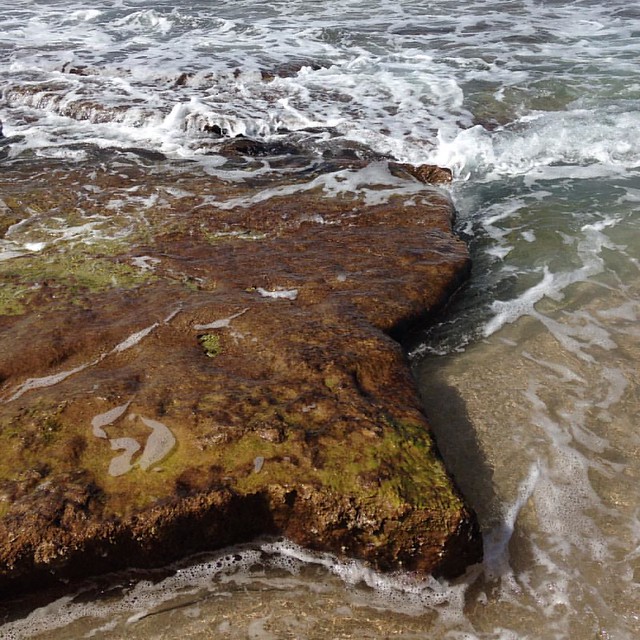
Rocky and wild #betzetbeach #perfumeryonthemove

I'm emerging from what has been one of the most challenging months of my life (and this is pretty much what I've been experiencing with every month since May of last year). Three days ago, we moved into my mom's yurt (a sort of a not-so-temporary dwelling originating in Mongolia) and after one day of total hell (predictable with major change with anyone, but particularly for autistic people) my daughter is adjusting surprisingly well to the new arrangement. So to break the doom and gloom of silence that's been hovering over this blog, I've decided to assemble an illustrated collage of scents that I've been enjoying since arriving here in Israel. It's those little things that keep me going and bring comfort in the midst of total chaos and displacement.

And what better place to begin than the beach? It's the one and only constant in our lives since leaving Vancouver (besides basic activities such as brushing teeth and eating breakfast). The north coast of Israel is fascinating with wild life and the terrain is not as monotonously sandy as the south (although this has its charm as well). Lagoons, rocks and  ancient port cities and fishing villages lace the shores, as well as remains of an ancient factory for red dye from certain sea snails.  Beach culture here is also vibrant and goes year around, with diving and surfing bringing in people who would normally complain that the water is too cold in the winter.
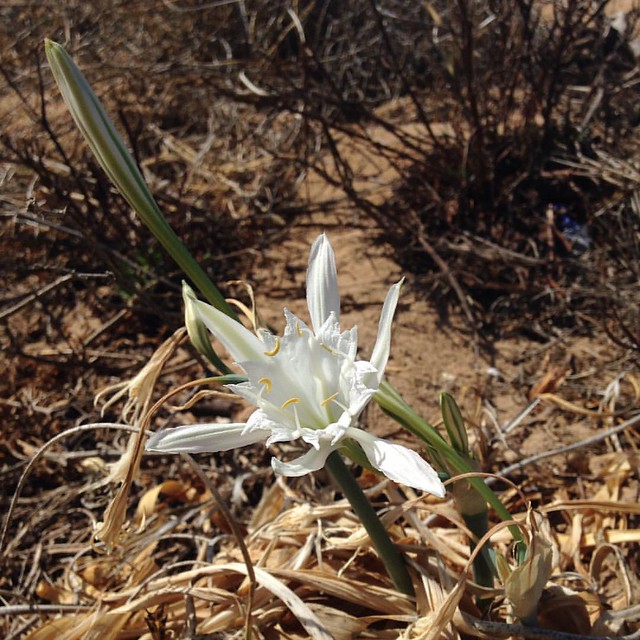
Beach lily on the dunes
And as if the beach is not wonderful enough just for its warm, azure blue water - there are also some amazing wild plants growing near it. These wild beach lilies are almost as large as the madonna lilies, and just as fragrant. But their aroma is a little different - a sultry mix of salicilates (which are typical for lilies, as well as present in ylang ylang) and hyacinth's heady green. Add to that the fact warmth from the Mediterranean sun, which beats the dewiness out of it completely - and you get a scent of slightly-cooked bulb flowers.


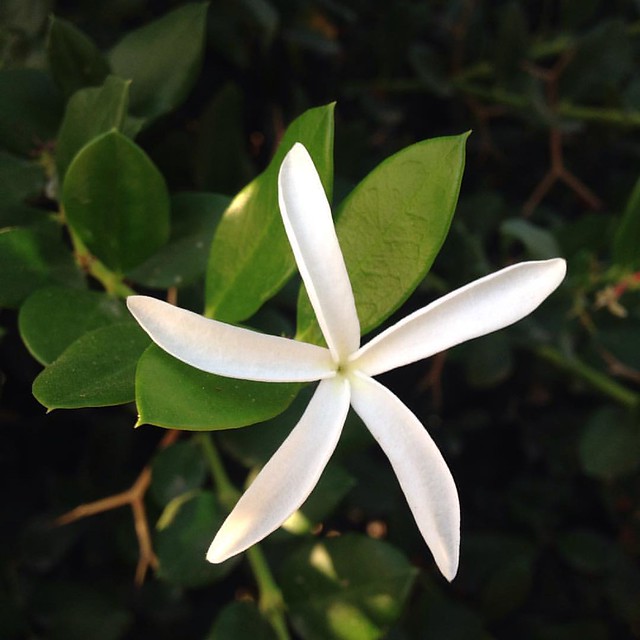
Carissa macrocarpa
Carissa (AKA Natal Plum) is another beach phenomenon, but cultivated. It can be found as a hedge plant in many coastal cities here. This plant originates in South Africa, where its oblong, bright red fruit provides an important source of food (I personally find it too astringent). The flower is what I'm more fond of, as it has shape like frangipani or tiare, and a smell that is gardenia-like, but more subtle.
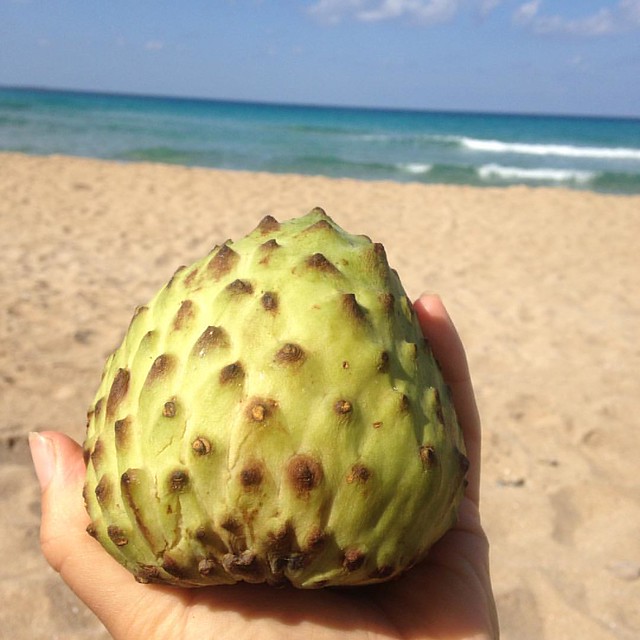
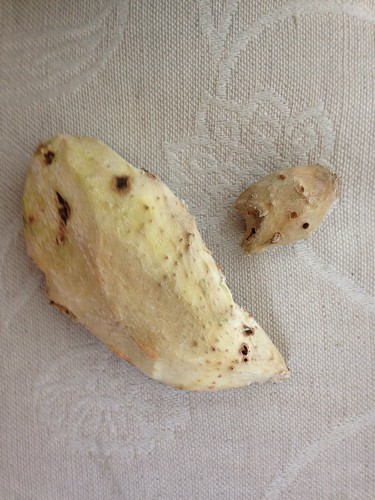
Anona #custardfruit #anona #beach #picnic
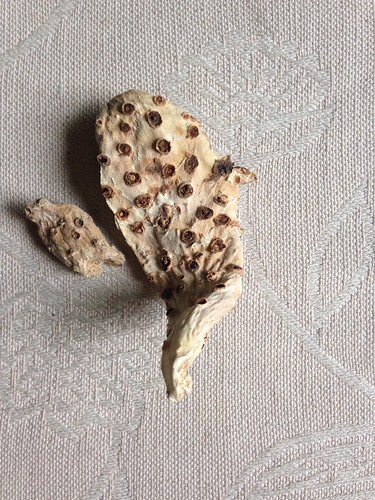
I've dedicated an entire post to guavas,  so I won't mention them again. But they are not the only remarkable fruit this season. Anona (AKA cherimoya, custard fruit or custard apple) are lovely-tasting fruit that look oddly like pine cones (especially after they get overripe and their peel hardens and completely blackens). The inside flesh has a flaky structure, similar to cooked fish, but melts in the mouth like custard. The aroma is very mild and appealing. This fruit is quite expensive, and always brings me fond memories of when my daughter was born, because my mom brought me many of them as a treat.
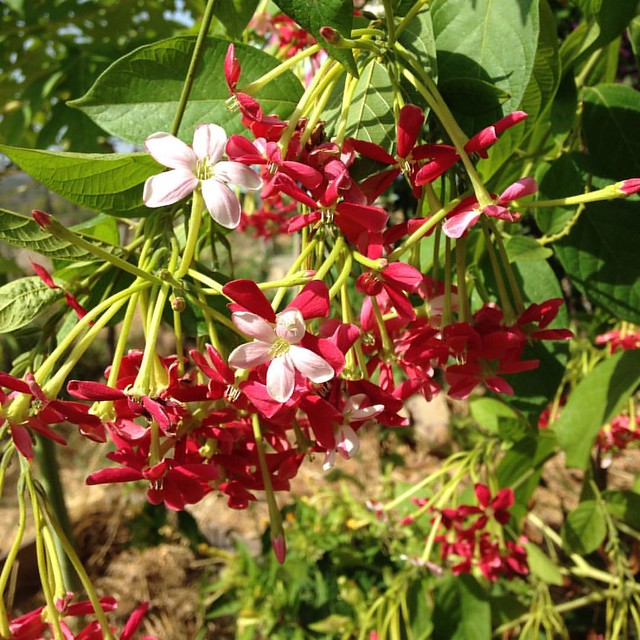
Quisqualis indica אלמון הודי. Smells like fragrant King Jade oolong.
Quisqualis indica (AKA Chinese Honeysuckle or Rangoon Creeper) greets you as you enter the veranda at my brother's house. Incidentally, this is a similar scenario to the entrance at his in-laws home. The scent is intoxicating, especially at night. Floral (vaguely jasmine-smabac-like) and heady but not overwhelmingly so, as it is balanced with green notes and overall smells like a good oolong tea, xing qin to be exact (also called King Jade).
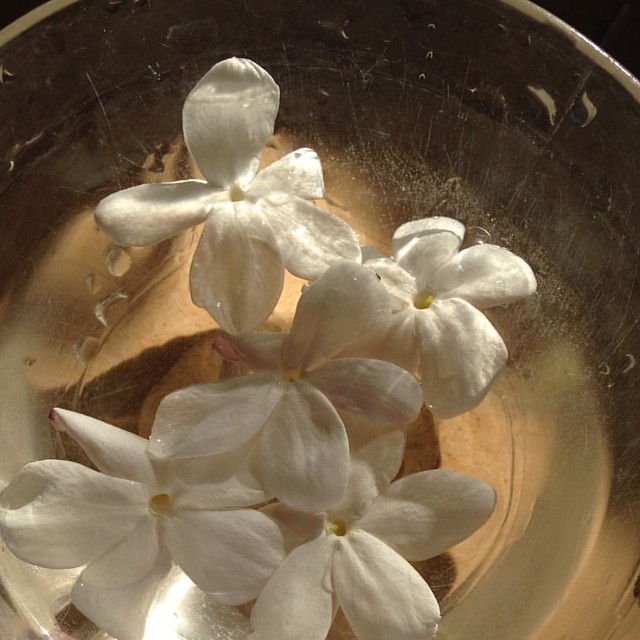
#Jasmine
Jasmine blossoms are alive and well in this part of the world, and early morning is the best time to enjoy them. By night time most of their scent has evaporated in the sun. Sitting next to one of these bushes, with or without a cup of herbal tea (coming soon) is a most delightful way to start the day and remind me why I came here. I've been enjoying the ones near my brother's home (we've stayer with him for a month), and my own bush, planted 20 years ago, is still alive and well. There are also jasmine sambac bushes growing on my mom's property. What's fantastic is that they have no problem surviving the winters here, and can grow to be impressively large bushes with thick trunks, and they bloom many times throughout the year.
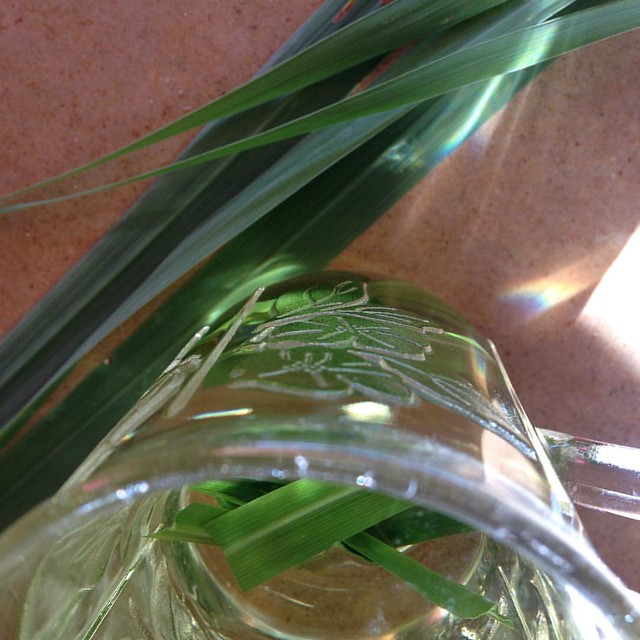
#Lemongrass #light
Fragrant herbs, especially lemon scented ones, are one of the things I missed the most about my home village. Nothing compares the taste of freshly brewed tisane from lemon verbena and lemon grass that you've just picked from the garden a few minutes ago. The flavour is so full of life and so refreshing. We like to open and close each day with this brew, sit down with family and relax; and also that's how we greet most visitors. For out of owners this is the epitome of luxury.
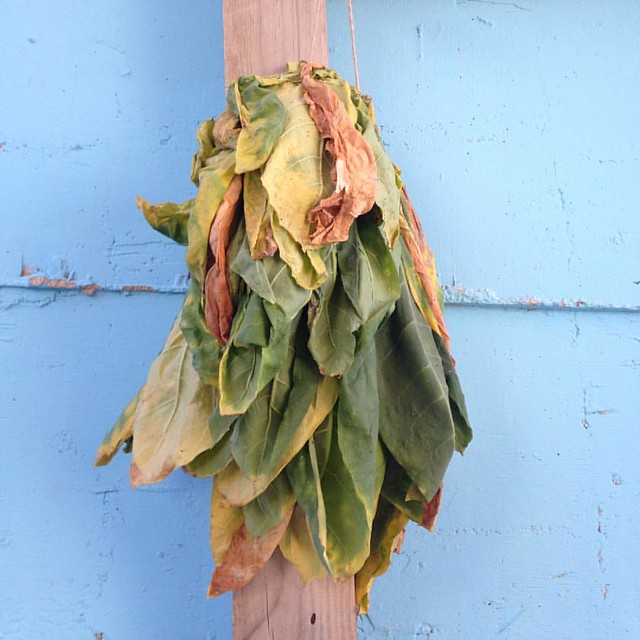
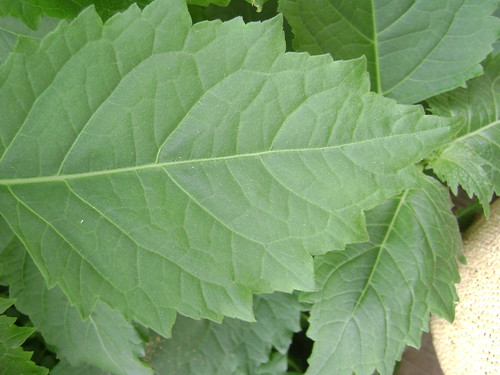
#tobacco #leaf #curing. #tarshiha
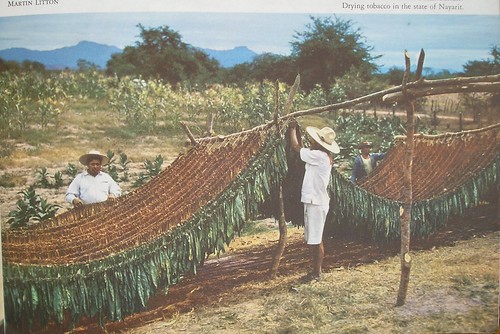
In one of my visits to the nearby town of Tarshiha, I spotted a tobacco curing joint on the roof of one of the houses. Tobacco leaves are usually harvested at the end of the summer, and can be left to cure outdoors in this climate, as the first rains won't begin till October (and sometimes even later). The scent of tobacco leaves wafted through the cobblestone lanes and many leaves that fell of the clusters on the roof could be found on the ground.
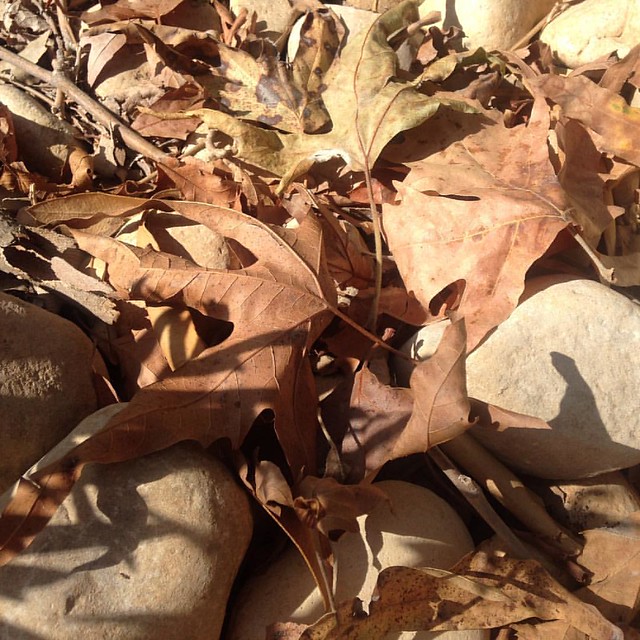
Syrian maple #fall #autumn
These are leaves of Syrian maple that I spotted in a creek nearby. They don't have any notable scent, but are significant in a symbolic way, because the season is called fall, after all. Likewise, the acorns pictured below are not particularly fragrant, but illustrious of the season's unique sights.
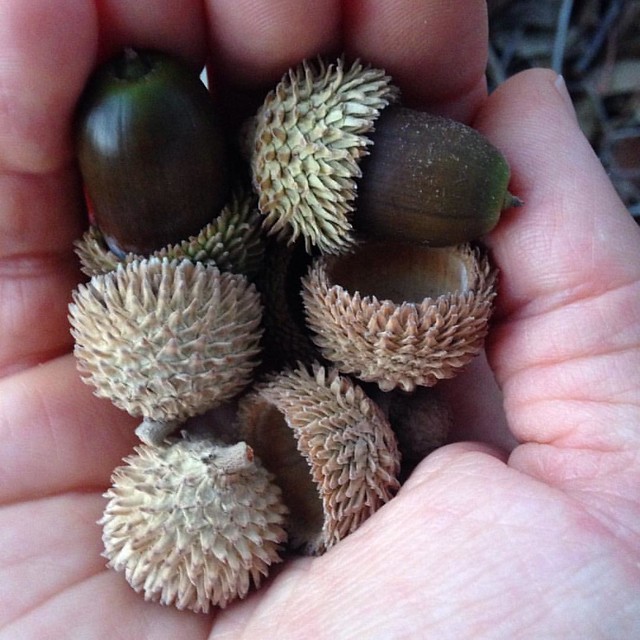
Acorns בלוטים
The acorns, I'm told, can be roasted and ground into a flour and used as a source of food. I'm going to try it this year... And serve acorn pudding from teeny tiny acorn cups. 
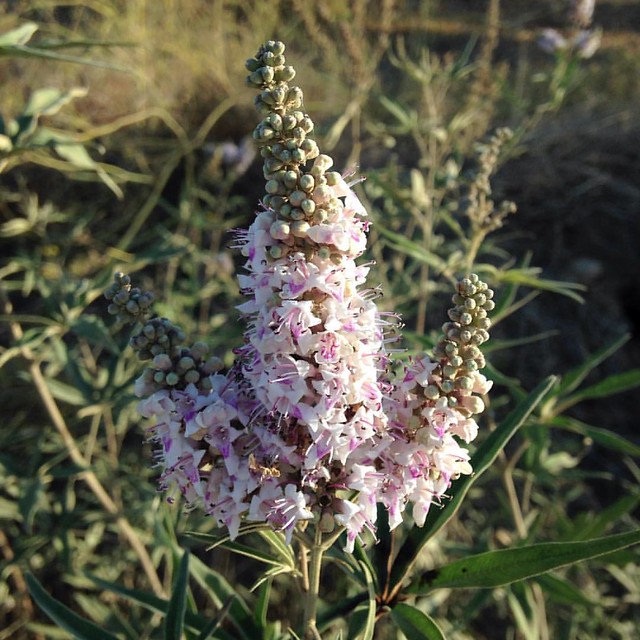
שיח אברהם/ירנך Abraham's bush (smells like #Indigo perfume( https://ayalamoriel.com/products/indigo
The flowers of Vitex agnus-castus AKA Abraham's Bush, Abraham's Balm or Yarnakh, appear in clusters like lilac, only that they are pointing upwards. They have a distinctive perfume that I can't describe. The best way to experience it outside the wild habitat is uncork a vial of my Indigo perfume.
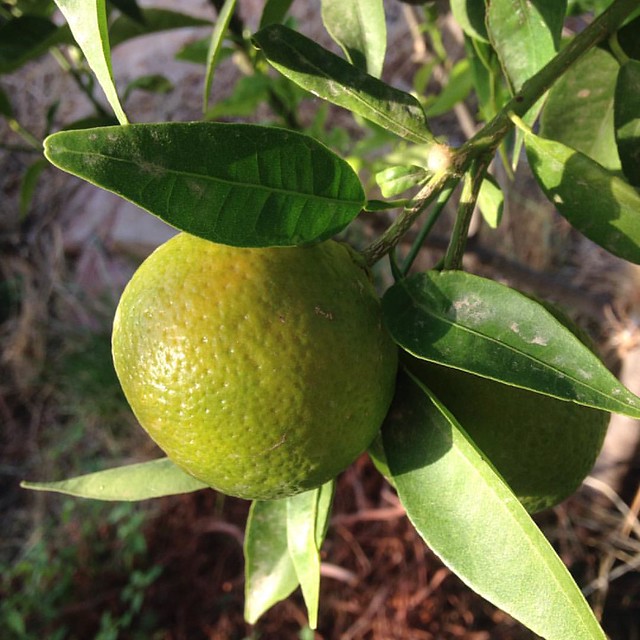
Green mandarin #greenmandarin #autumnaromas #fallflavours
The first mandarins are ripe from the inside but still green on the outside. Nostalgic scent for me, as we'd pack them for the first days of school and they marked not only the beginning of the new school year, but also the many citrus fruit that will continue to ripen and provide us with vitamin C throughout the abrupt and rather stormy Israeli winter.
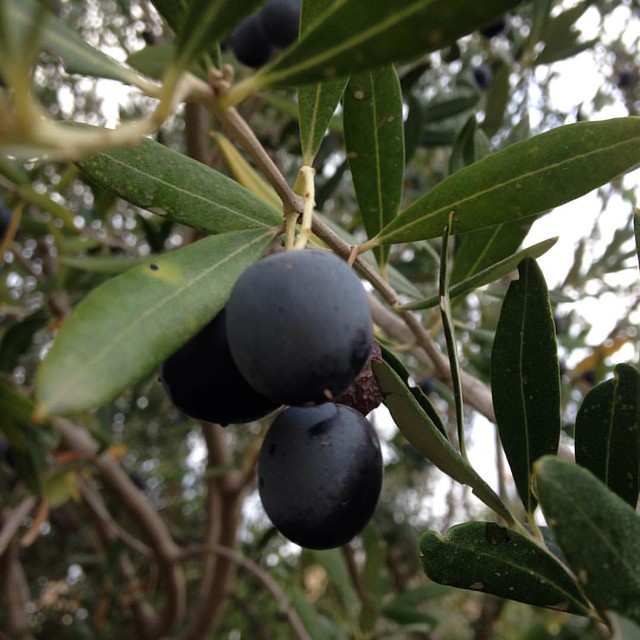
#מסיק #oliveharvest

The olive harvest season is now, and the rain wouldn't arrive to wash the dust off the olives. It was a very weak year for this crop, and many families including mine decided to not even bother picking them. My mom insisted and we helped her pluck enough olives to fill two sacks, which surprisingly yielded an entire can of oil (probably around 2 gallons). The experience was a tactile torture as there is nothing I hate more than chalky dust all over my fingers, toes and clothes. The first rain finally arrived in a short but violent outburst first thing in the morning of November 1st, so maybe now I will be more inclined to pick the remaining olives. I much prefer the smell of petrichor and olive foliage to that of dust accompanied by scorching sun.


Labels: , , , , , , , , , , , , ,

Thursday, October 08, 2015

Cured: The Science & Art of Decay

Orris Root

The challenge of some raw materials is that they might be rather unpleasant in their original state. At best, they lack any aroma and depth whatsoever. The cure for that lies in a process called curing (pun intended). Curing takes many shapes and forms. Sometimes the process is long and at times it's rather short. Either way, the results are nothing short of magic that tantalizes the palate and the olfactory bulbs!

We've all heard of curing meats and tobacco leaves, and it's common knowledge that wine gets better with age. But the culinary world is not the only one that benefits from time and fermentation. For some fragrant crops, growing and harvesting them is only a tiny portion of the process to make them edible, smellable or worth any mention at all. The starting material may be extremely stinky, bitter, astringent, or just plain flavourless at best. The processes by which the desired result is achieved is usually referred to as "curing" or "aging". It ranges from a few days, weeks or months and up to several years. The extra time and care that is invested in those crops makes all the difference in the world. And this will be evident and felt in the raw material itself as well as the finished product where it will be used - in our case, perfume.

Several aromatic botanicals used in perfumery require a fair amount of processing before being used (or extracted). For example: vanilla beans must be left in the sun to cure to bring out the vanillin; patchouli leaves must be dried and matured for quite some time to improve their scent; and iris rhizomes must be peeled, dried and stored for 3 years before they are extracted to produce orris butter.  Let's explore some of these unusual raw materials in more detail, as they specifically relate to the world of perfume and aromatics:

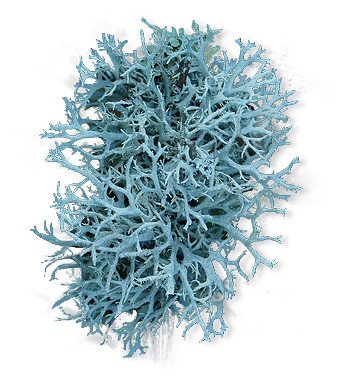
Oakmoss

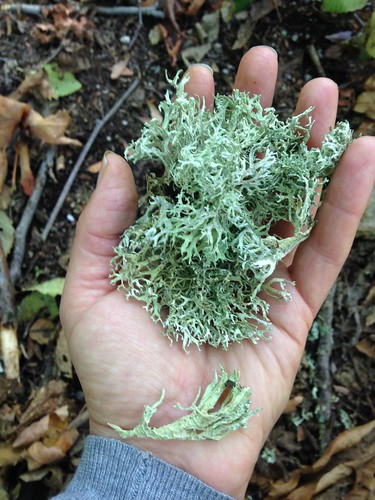
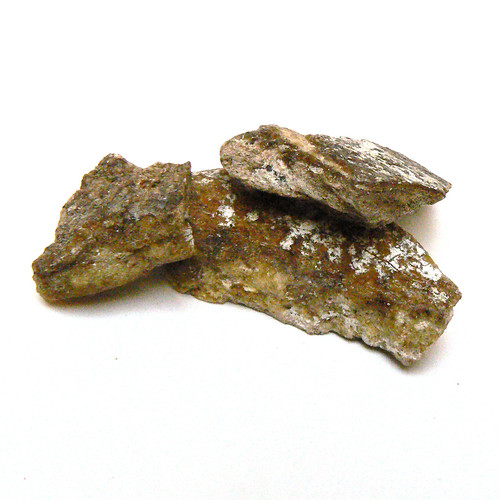
Oakmoss (Evernia prunastri) actually is a lichen native to former Yugoslavia, and which also grows in the rainforests of the Pacific Northwest. You may know it under the name Antlered Perfum; however, it is practically odourless when found fallen on the forest floor. Once placed in hot alcohol, and undergoes a process of extraction - a fragrance that personifies the aroma of the forest floor's dark and mysterious hidden life emerges - fungi, decay, moss and undergrowth. No wonder Chypre, the most beloved fragrance family that relies on oakmoss, is strongly associated with fall.
Perfumes that give oakmoss its proper due are far and few - so reach out for vintage of Miss Dior,  Vol de Nuit or Chamade; or check out some of my Chypre (and Fougère) fragrances, namely Ayalitta, Megumi, Rainforest and Autumn.

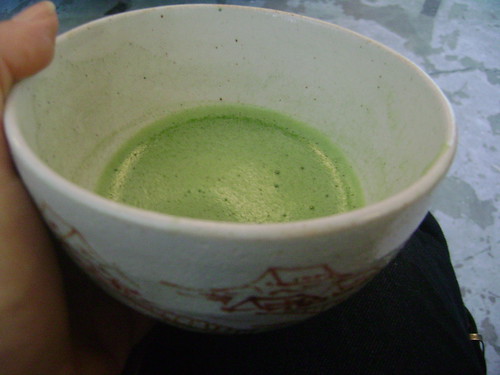
Chawan with Matcha

Tea is so unusually diverse - there are white, yellow, green, blue (AKA oolong), red and black teas - that it's hard to believe it comes from only one plant: Camellia sinensis. It is the process of  curing - namely, oxidation, fermentation, roasting, and sometimes even smoking, that creates the unique effects of texture, aroma and nuanced flavours in tea. Some teas are even left to age for decades and up to a hundred years!
Tea leaves come in all sizes, shapes and forms, at times they are twisted to break the cells and release the enzymes that will start the oxidation process (as in oolong teas), other times they are rolled into little balls (dragon pearls or jasmine pearls), hand-tied to look like a flower that will open its "petals" once steeped in water, to reveal a colourful real flower in the heart, and many other ancient traditions involving teas. In perfume, we use tea notes rarely, because they are so subtle. The first "tea" perfume was Bulgari's Au Parfumeé au Thé Vert (which utilized ionone in conjunction with hedione to create the effect of freshly steeped green tea) and the series continued to even include a "red tea" scent based on rooibos (not from the tea plant).  But my favourite is, not surprisingly, the Bulgari Black, which is based on Lapsang Suchong (pine-smoked tea), and even more so - l'Artisan Parfumeur's Tea for Two, which is a more refined play on the same tea leaf. If you're a tea love, taste a sip of Kinmokusei, our osmanthus-scented tea with hints of tobacco, Gaucho (with the tannin South American Maté) or The Purple Dress (black tea).


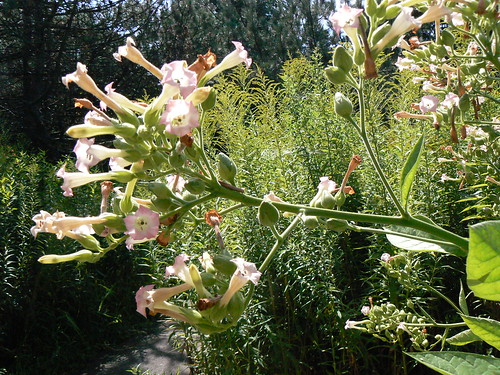
Tobacco Flowers

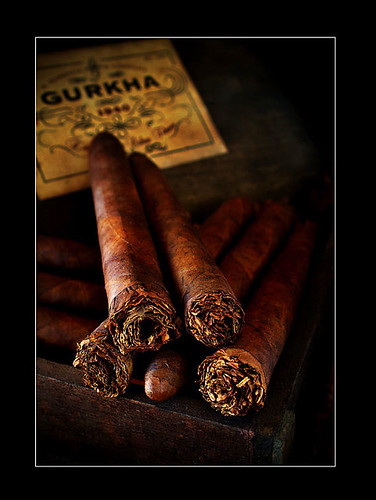
Few other ingredients stir the imagination as much as tobacco. The raw leaves have a bitter taste and not a particularly pleasant smell either. After all, nicotine, the substance that gives tobacco most of its medicinal (and addictive) properties, is meant to protects it from insects. Although the raw leaves have medicinal uses, it is hardly the sophisticated aromatic that we have learned to recognize as tobacco. This is achieved via a careful drying process that takes several days to a week, and usually followed by an additional fermentation period of about 8 weeks. This will develop the characteristic tannin,  full-bodied chocolate-vanilla undertones and hints of coumarin, violet and tea notes in tobacco products that some of us are so fond of (or hooked on). Additionally, tobacco leaves are treated with various perfume and flavour materials to enhance and accentuate this character. If you like your tobacco leaf clean and dry - try Sabotage  The tobacco in or Rebellius is exotic and spicy-sweet, not unlike shisha,  To experience pipe tobacco or Cuban cigar in all their glory, dab some Espionage.

Patchouli Leaves

Patchouli leaves, an odd member of the mint family, do not smell like much when they're green and fresh. The sun-dried leaves are ideally stacked and occasionally turned in a process of interrupted fermentation. This way they will yield 2.5-3 times more oil than the green leaves. This process helps to rupture the cell walls and release the oil. However, that is not sufficient to develop their charactesritic aroma of patchouli. Exceptional patchouli oils undergo an additional step of aging, in which all the off notes (grassy, oily, tar-like) dissipate and make room for rounded, warm precious-wood aroma that you'll find in fine quality patchoulis - which can take another 1-4 years. Patchouli really does get better with age, and when this desired effect is achieve - the scent will remind one of both dark red wine, oak barrels and the cellar where it is kept. Patchouli is earthy, woody, musky, a tad funky, spicy and dark-chocolate-like. Examples of this can be found in  Patchouli Magique and Patchouli AntiqueFilm NoirRazala, and Palas Atena (Ayala Moriel).

Ambergris

Ambergris is a rare secretion that occurs in about 1% of sperm whales to heal their stomach from the scratches of the cuttlefish they swallow. This sticky mass floats on the ocean, and by exposure to the sun and the salty water it changes its originally foul smell into one of the most delicate and sought after fragrances: Ambergris. Ambergris is sweet, soft and slightly powdery. We use ambergris only occasionally – when we can find ethically harvested ambergris that was beach harvested. It is than tinctured and used as a base note in oriental and floral compositions. Best scents to experience this though are LesNez' mystical l'Antimatiere  by Isabelle Doyen; and my own Orcas, Etrog and Razala.

IMG_8605

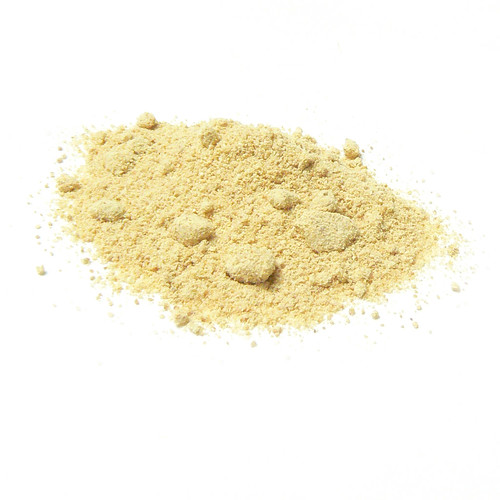
Orris Root: Orris root essential oil (AKA Orris Butter) is one of the most precious perfume materials. The roots need to be peeled and aged for three years before extraction or distillation. During this time, the glucosides in the rhizome gradually metabolize into irone - the violet-like molecule that gives orris root its desired violet-blossom aroma. It is invaluable in perfumery for its delicate powdery delicate aroma and ability to fix lighter scents. Orris is a welcome addition to any perfume whenever a delicate softness is required. Orris butter is both powdery, milky and smooth - reminiscent of a baby’s head and soft skin. Experience the highest quality of orris, with 15% irone (the unique orris molecule) in Sahleb parfum. For a lighter, paper-thin iris, try Hiris, and for a more sophisticated, abstract, modern yet old-fashioned you must experience Après l'Ondée!

Iris (Iris pallida)

Coumarin has may sources, and in all of them, it is not felt all that much in the original product but only appears after a process of drying or curing takes place. Tonka is soaked in rum and then dried, to coax the coumarin crystals out of the "beans". Liatrix (deer's tongue) smells like nothing when it's fresh, and like hay - needs to be dried and even slightly fermented to bring out the coumarin potential locked within them, which smells like "new mown hay". Classic coumarin examples are YerbamateBiche Dans l'Absinthe. and Brut. To experience natural coumarin try l'Herbe Rouge, Sabotage or White Potion.

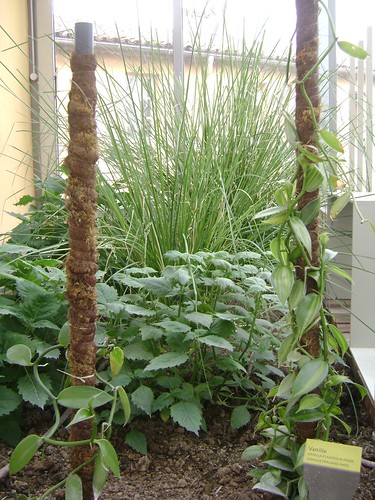
Climbing Vanilla Orchids, Patchouli and Vetiver

Vanilla Beans are left to cure in the sun so that they turn from green to black and develop their vanillin content. But vanillin is only one component that makes vanilla so special. In reality, this is one of the most compelling and complex natural aroma, inimitable by any manmade compounds.  Some 100 molecules were identified in vanilla (Vanilla planifolia), in addition to vanillin (4-hydroxy-3-methoxybenzaldehyde), including: Guaicol, creosol, acetovanillone, vanillyl alcohol and methyl salicylate and vitispiranes.
Tahitian vanilla (Vanilla tahitensis) has a much lower content of vanillin, and has a scent reminiscent of heliotropin - but contrary to some literature, this is not a compound that naturally occurs in it. Rather, it's the anisyl compounds that are responsible for its soft, floral, almond-like, sweet heliotrope-like nuances, including anisyl alcohol, anisaldehyde, dianisyl ether and anisyl ethyl ether. (Bo Jensen). To experience true vanilla absolute in perfume, try Shalimar (the extrait has handcrafted vanilla tincture), My Vanilla (Anna Zworykina),  Vanille Galante (Hermessences), Espionage and Immortelle l'Amour (the latter has 5 types of vanilla, including absolute, CO2 and handmade tinctures by yours truly).


Labels: , , , , , , , , , ,

Wednesday, July 01, 2015

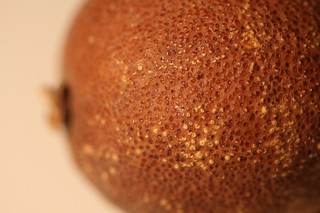
Orange Skin

Orange Desert

Cuir d'Oranger by Miller Harris intrigued me greatly the moment I sampled it at the flagship boutique in London. The memory of it haunted me until I was able to procure a decant some years ago. And it is much later that I got around to really sit with it and experience its personality uninterrupted. In retrospect, I realized that it is really its similarity to Feuilles de Tabac that intrigued me in the first place. But Cuir d'Oranger is nowhere near as complex and fascinating. I also misread the name as "Cuir d'Orange" (without the "r" in the end), which would mean leather and orange, rather than bitter orange tree and leather. So unlike others, I was not at all disappointed that it smelled like leather rubbed with orange skin.

The opening is that of dried, cured tobacco leaves soaked in aldehydic orange oil. There is only a blink of green from petitgrain (the leaves of the bitter orange tree), and then you notice the violet and cedar character of ionones diffusing warmth in the middle and softening the appearance of jasmine, which juxtaposed with patchouli could have come across as a hippie concoction from the 70s, but in reality is so subdued and is just there to create more body and bridge between the dry, woodsy tobacco theme in the base and the oily, waxy aldehydic top notes. At the base the dried tobacco leaf note is amplified with patchouli and vetiver notes and only the merest hint of tonka bean or coumarin, to offset the tobacco flavour and give it a more palatable taste.

All in all, Cuir d'Oranger is the more sophisticated younger sister of English Leather: less soapy, less coumarin-y, and with more accent on the orange zest rather than its leaves. The orange in question is a sweet orange at its most waxy, oily, aldehydic self, paired with a super dry tobacco and woods base, and a subtle floral softness in the heart. The orange blossom is only a suggestion, while the violetty notes of ionones creates a statement that is delicately forceful but definitely powdery, green like tomato leaves and clary sage, and along with the vetiver and patchouli alludes to the tobacco leaf as it changes colours from green to brown.

Top notes: Aldehydes C8 (Octanal) and C10 (Decanal), Sweet Orange 
Heart notes: Orange Blossom, Jasmine, Orris Butter, Ionones
Base notes: Tobacco Leaf, Patchouli, Vetiver 

Other reviews of interest:
The Perfume Critic

Labels: , , , ,

Tuesday, June 30, 2015

Equipage (Vintage)

Leather Pleasure

Crackle of a whip, oiled saddles, shiny boots being broken-in on horse manure and cedar wood chips. Few smells bring so many other images, sounds and textures to mind as leather scents do. And Equipage got all of these plus its own refined, aristocratic touch of carnation and tobacco.

In this genre, Equipage is more tobacco than leather, with a sweet-spicy opening of nutmeg and allspice, a voluptuous carnation body that makes it equally dandy-esque and gypsy dancer. Images of a carnation tucked into a waistcoat pocket conjured simultaneously with Carmen rolling up clove cigarettes in her wide skirts. And once she sells the cigars, we're back to gentlemen territory where everything is polished, woodsy and unfloral. The carnation clears room for vetiver to shine as the heart note in this fragrance for a rather prolonged period of time.

Equipage in its vintage formulation (a generous decant I received from Joanna, one of the very few perfumista in my neighbourhood) is both silken and acrid, sweet and dry/phenolic, and brings to mind both pipe tobacco and a horse-stable tack-room. Although I've seen many other notes listed in literature on this fragrance (such as bergamot and rosewood and perhaps some other herbs) I'm not really feeling them in this particular specimen. Perhaps they have dissipated or they are so well blended that they are barely noticeable.

The dry down is that of cured tobacco leaf and only the slightest hint of carbonileum gives it a phenolic underscore. Equipage is elegantly dry, warmly sensual and musky with well-aged patchouli, and naturally sweetened with tonka bean. The latter gives it a finishing touch of rolled-leaf cigar that has been extinguished and left for later enjoyment - and forgotten. That should be long enough so that the acrid ashtray notes have dissipated completely, as you'll fortunately find non of these in Equipage... The perfumer is Guy Robert, who is also responsible for the masculine beauty of Monsieur Rochas and Gucci pour Homme.

Top notes: Nutmeg, Allspice
Heart notes: Carnation, Vetiver
Base notes: Tobacco Leaf, Isobutyl Quinoline, Patchouli, Tonka Bean 

Other reviews of Equipage - both contemporary and vintage:
Perfume Shrine
The Non Blonde
Bois de Jasmin
Now Smell This
Basenotes (members reviews)
Basenotes (discussion about vintage vs current formulation)


Labels: , , , , , , , ,

Wednesday, November 06, 2013

Chypre Birds

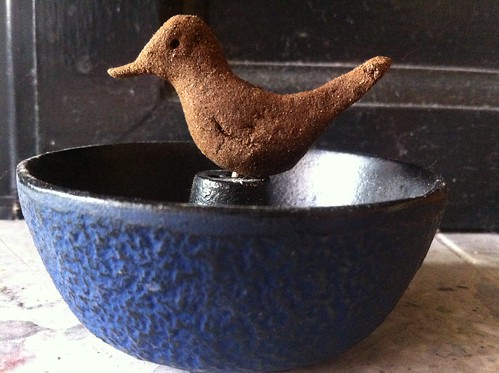
Chypre Bird by Ayala Moriel
Chypre Bird, a photo by Ayala Moriel on Flickr.
Oyselets de Chypre ("chypre birds") historically preceded chypre perfumes. Made of a mixture of herbs and resins (labdanum, styrax, calamus) and glued together with gum tragacanth - they were place in homes as potpourri, or burnt for fumigating the space. They became popular in Europe after the crusaders arrived in the island of Cyprus (in the 12th century), and didn't turn into an alcohol-based "Eau de Chypre" till the 14th century - way before Coty's Chypre (1917).

In my Chypre course a couple of years ago, I've tried to retrace the steps of making Oyselets de Chypre based on this very vague information. We've used gum arabic as the binder to put together Mediterranean aromatics such as labdanum resin, sage, dried rose petals, calamus and patchouli. The material was difficult to work with and the gum arabic was not sticky enough to hold the shapes together. So only one student was able to make hers to look like a bird... The rest of the students left their "chypre balls" behind, in much frustration. Such is the life of the experimenting perfumer... Not all formulas work!

Oakmoss (Evernia prunastri)

2 years later, I've decided to go back to those balls (which, by the way, make wonderful sachets to scent linens, stationary or drawers). I also had some left over powder of the herbs we mixed together before we added the water. I've decided to add a more reliable binder, as well as neroli water and a two other off-beat ingredients: a piece of dried oakmoss lichen, and a crumpled cigar.

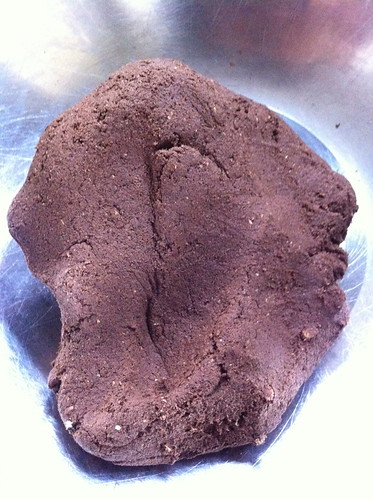
Chypre Tobacco Incense Paste

Working with the material was like working with wet clay, and smelled similar - wet and earthy, and a little like a wet cigarette. After a bit of molding, it dries on the fingers and personally makes me rather uncomfortable - itchy between my fingers and impatient to get on with the task... So I took a little break before I was able to go through the entire batch of "clay" (I covered the "clay" with plastic wrap to prevent it from drying).

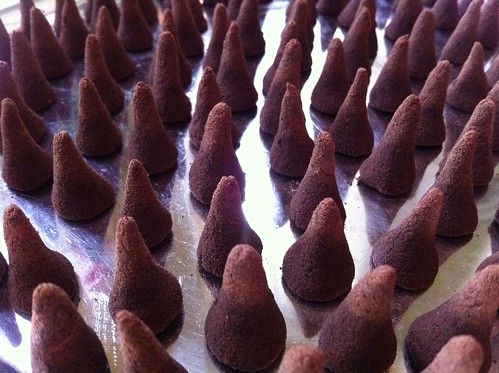
Drying Chypre Tobacco Incense Cones

Once I shaped most of the paste into little incense cones, I made one shaped like a bird. Just for fun, and decoration. The incense is a mistake that turned into a happy accident: the oakmoss and tobacco in it really do the trick and make it smell wonderful... Assertive, woody, dry, masculine and smoky in a good way. I wish I could turn this into a perfume. It's kind of like how the moss Poivre Samarcand smells like underneath all the pepper. Truly wonderful stuff, and if my witch doctor is right, the tobacco helps to protect, encourage confidence and push away any negativity you don't need in your life.

If you want to learn how to make incense, you can book incense-cone making workshop with me (up to 6 people), or you can also learn how to make Egyptian Kyphi. 


Labels: , , , , , ,

Tuesday, May 28, 2013

Volutes

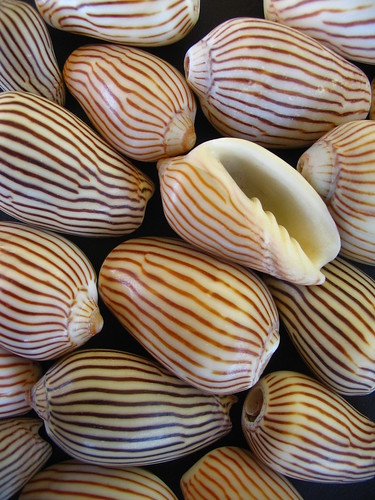
zebra volute shells by *omnia*
zebra volute shells, a photo by *omnia* on Flickr.
Diptyque's has already won my heart if not at least gained my deepest respect time and again with their classics - Philosykos, Oyedo, l'Ombre Dans l'Eau, Ofresia and Tam Dao. But I kinda stopped following their latest releases as I found them all to be pleasant enough; yet non has stirred anything in me. I probably would have dismissed Volutes completely if it wasn't for Trish's enthusiastic recommendation - she literally left a sample for me on the kitchen table to take home with me - which she didn't need anymore, because she already got her own bottle. Imagine that! If you're a perfumista, you know how rare a "full bottle" is...

Smelling it from the vial (or bottle) did not do it justice, and in my haste to catch the plane to San Francisco, they were left on the kitchen table... And caught up to me a little later, when Trish sent me a care package of a few perfume samples she thought I ought to try.

When I finally made the skinspace for Volutes, I understood what the enthusiasm was all about. It's very different from the other Diptyques in that it's a lot more substantial and full bodied; and dances on the edge of ethereal, smoky, oriental, and maybe even a little gourmand. If anything, it reminds me more of some of the more forthcoming scents they've created for their candle line (i.e.: Feu de Bois, Essence of John Galliano come to mind, in terms of their bold, outspoken complexity).

Volutes plays on the contrast between two themes - the smoothness, warmth and strength of polished woods against the airy, untouchable movement and swirling of incense. It spills out on the skin like warm melted beeswax and honey, creating a feeling that is not quite gourmand, but more so a sensory memory of gliding honeyed wax on smoothly-plucked skin. And maybe licking a polished wooden staircase (I might have done that at some point between the ages of 2-4...).

And then comes a waft of swirling incense mingled with pink pepper, roses, saffron and dates. Sounds familiar? Yes, it does bring to mind another favourite of mine - Ormonde Jayne's Ta'if. Only here the dates are more pronounced, and the musk is less powdery, and more sweet and addictive. The dry down reminds me of the (also addictive) Chai incense sticks (in Shoyeido Gourmet Incense Series).  Burnished pipe also comes to mind, which echoes the tobacco notes beautifully... And the tobacco with an accent of dried hay and immortelle are the last to remain while everything else is has jumped ship.

Top notes: Pink Pepper, Dates
Heart notes: Honey, Beeswax, Roses, Saffron, Incense
Base notes: Tobacco, Vanilla, Musk, Immortelle, Hay

Labels: , , , , , , , , , , ,

Wednesday, February 27, 2013

New Discoveries

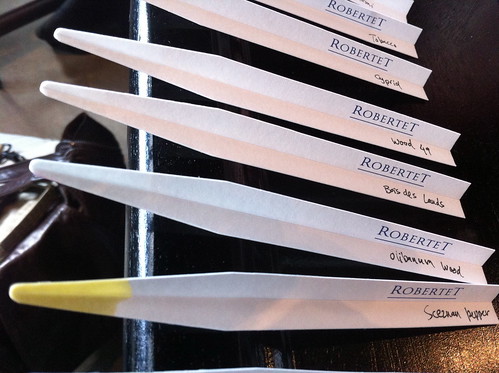
New Discoveries by Ayala Moriel
New Discoveries, a photo by Ayala Moriel on Flickr.
Monday was spent on the road mostly, doing a round trip to Seattle to reconnect with the West Coast indie perfume community, and smell some new raw materials. The fresh Szechuan pepper essence pictured here made the trip worth my while, but there were some other fascinating raw materials worth writing about.

Elemodor: fraction of elemi resin, which possesses no resemblance to its origin, with only the slightest hint of resinous woody. The best way to describe it is as orange zest and juice on speed.

Elemi (Canarium luzonicum): Sharp, crisp, like lemon and black pepper combined, and also with hints of both cilantro leaf and pink peppercorns.

Tobacco absolute: Time and time again, I'm surprised at how muted tobacco is. It can easily disappear in a blend, and it sometimes seems as if the more you add, the less you'd smell of it. A challenging raw material to work with, but powerful and very elegant when used properly. Although it does not have a very strong odour intensity or diffusive power, it is a distinctive note, reminiscent of freshly cured tobacco leaves (read: not stale!), fermented hay in a meadow, and with an undercurrent of animalic energy. A truly good tobacco bring a sense of reverence and reminds me of the original use of this as a sacred, medicinal plant.
Please note that this absolute is nicotine free, unfortunately, so don't try this as a substitute for your nicotine patch!

Cypriol/Cyperus/Nagramotha (Cyperus scariosus): from the vetiver family, this root oil possesses as urpentie, sharp top note, woodsy-dry base, and a very clean, elegant dryout reminiscent of the hint of tart freshness of Haitian vetiver.

Bois des Lands or Pinewood is a co-extraction of French pine resinoid with a Virginian cedarwood oil. Smells of wood, mushroom-y forest floor, moss and a tiny smoky, with a cheese-like fermented undertones. Dries out to a woody-balsamic finish.

Cedarwood fraction: From Texas cedarwood. Sharp cedar note, a little sweaty-herbaceous reminiscent of oregano.

Olibanum Wood: co-distillation of olibanum (frankincense resin) with Virginia cedarwood, which creates an interesting new note that is more stable and woody, more reminiscent of dusty frankincense tears rather than the oil or the smoke.

Vanilla CO2 with 20% vanillin:  This is just about as sweet as one can get, in a very elegant way.

Ambrette Oil (Abelmoschus moschatos): High content of ambrettolide, resulting in a typical "white must" scent without the skin-like, buttery, nutty and wine-like quality of most ambrette seed essences. 

Szechuan Peppercorn, Fresh: Green, floral, surprisingly citrusy (reminiscent of ruby red grapefruit, bergamot  and yuzu), tomato leaf and yerbamate. Very distinct, fresh and tenacious.

Poplar Buds Absolute: Honeyed, boozy, hops-like, hint of cloves, dominant propolis note, hint of nutritional yeast odour.

Mimosa Olessence: Gentler extraction method, resulting in a more true to the flower profile. Reminiscent of almonds, marzipan, hints of fennel, floral, woody and clean.

Elderflower Absolute: That nutritional yeast note again, with only the tiniest hint of what the fresh flowers are all about - cassis-like and floral. More like hay than a flower overall. Similar to linden blossom absolute, which also presents a similar problem.

KF1150: Isolate that smells grassy green and sharp - like a combination of gasoline and freshly cut grass. Your dad is going to love this!

Black Tea Absolute: Smells like a wonderful container full of fresh Assam tea, maybe hints of Darjeeling too.

Eucalyptus Forte: Combination of of solvent extraction and molecular distillation. Green, balsamic, eucalyptus pods, hints of animalic/indolic quality, surprisingly. Very tenacious, resinous-woody-balsamic dryout.

Just a little glimpse into where a perfumer's palette can expand.
And that's all, folks!

Labels: , , , , , , , , , , , , , ,

Friday, March 12, 2010

Feuilles de Tabac - Review + Weekly Giveaway

Feuilles de Tabac is one of those strange scents that I love yet have a difficult time writing about. I’ve been smitten with it ever since I came across it, sometime in 2003 after meeting with a perfumista client who kindly bombarded me with tens of samples from European niche perfumeries. I immediately fell for it, and when the vial ran out, begged my friend who lived in London to get out of her merry ways and fetch me a bottle.

Whatever it was that caught me in the Feuilles de Tabac trap, I can’t describe. It was the sense of familiarity in it that was intriguing to me. Something that happened to me before with Habanita (which reminded me of my grandfather’s Old Spice). But Feuilles de Tabac had something else, and was certainly more dry at first, and later on became sweeter, though not nearly as sweet as Old Spice.

Feuilles de Tabac dances between astringent and woody finesse and rustic herbal medicine.

The opening is dry, a little medicinal even, with the cascarilla bark dominating. Cascarilla is a bark used for flavouring tobacco, and has a scent that is both woody, musky and a little spicy-warm. There are also citrus and coniferous notes, though no particular one stands out, and allspice (pimento), a spice that has a dry-woody character. The other important note is sage, which is bitter and astringent at first, and than becomes velvety and warm, especially with the slight touch of rose at the heart.

Dry tobacco and vetiver peak in, but quickly, Feuilles de Tabac is cured into a very warm and sweet concoction, similar to pipe tobacco, with the tonka bean giving it a significant soft sweetness, as well as an amber accord with a muted labdanum. Only patchouli saves it from becoming powdery, adding a bold, animalic undertone and depth.

Feuilles de Tabac exudes such confidence that wearing it is akin to gulping some bravery potion, or just having a courageous powerful man on your side (unless you happen to be one).

It's interesting to compare sometimes notes from time past with the current impression of the same scent. In 2005, I described it as follows: "What starts as a medicinal, somewhat harsh drink – reminiscent of Absinthe – extremely masculine and sharp-edged – dries down to a seductive earthy sweetness. Warm, enveloping and sophisticated, Feuilles de Tabac is the emblem of what leathery-tobacco scents should be: Daring, sensitive, and seductive in a reassuring confident manner". Cascarilla has a certain liquor-like aroma to it; and sage is very similar to artemisia (absinthe). Perhaps this is where the courage comes from...

Top notes: Citrus notes, Coniferous notes, Cascarilla, Allspice
Heart notes: Sage, Rose, Vetiver
Base notes: Tobacco, Tonka Bean, Patchouli, Amber

*Weekly giveaway: Post a comment and win a 5ml decant of Feuilles de Tabac.*

Labels: , , , ,

Monday, November 30, 2009

Decoding Obscure Notes Part VIII-C: Perfuming Tobacco and Tobacco in Fragrance


curing tobacco, originally uploaded by bunky's pickle.

Here we further explore the relationship between perfume and smoke...

Perfuming Tobacco
Once the tobacco has been cured, many types of tobacco undergoes further processing by adding a scent. In some the perfume is more distinct than other, such as in cigars and pipe tobacco. Once the leaves have completed fermentation and curing and prizing, the may be sprayed with an appropriate perfume for their final use. There are different tobacco perfumes for cigars, cigarettes loose-leaf tobacco, snuff, shag, etc.

Some of the essences most popular for use in tobacco perfume are: vanilla, tonka bean tincture (as well as coumarin), vanilla (most popular in cigar perfumes), cedarwood, rose otto, sandalwood, patchouli, cascarilla, geranium, orris tincture, citrus oils, and even expensive flower oils such as orange blossom, tuberose and jasmie (in Turkish and Egyptian cigarettes), spices (such as cinnamon, cloves and nutmeg) and spirits such as brandy.

In Middle Eastern tobacco for narguilla (aka shisha or hooka), tobacco is sweetened with molasses, honey and dried fruit and blended with flavours such as rose, mint, apple and other fruit.

The Scent of Tobacco
Tobacco absolute is solvent extracted from the cured tobacco leaves. Only a very small portion of the tobacco produced is extracted for perfumery uses though. The absolute is a thick dark brown (almost black) semi-solid mass which discolours perfume into a dark brownish green (posing a disadvantage right there and than to the perfumer). An incolour absolute is also available, reducing that disavtange to some extent. The scent of this absolute varies depending on the quality of the tobacco leaves extracted. Some can be more flat, dry and woody, with a certain tannin-like quality, reminiscent of black tea and mate absolute and with musky undertones. Other can be fuller, more animalic and rounded, with more body and nearly chocolate-like richness. Although potent and long lasting, tobacco is a scent that can easily get “lost” in a composition, and in a sense – less is more. It really needs to be diluted down to be fully appreciated as a raw material; and needs to be used in a small quantity with complementary essences in order to truly shine.

Perfumery Uses for Tobacco Absolute
Tobacco is obviously a key component in the tobacco and leathery families. With its tannin quality, it makes a perfect base for leathery scent, along with castoreum or hyraceum tinctures, and cade oil or birch tar. And of course for the tobacco families – all one needs to do is take sufficient amount of tobacco and tobacco-like essences and pair them with the essences used to flavour tobacco to create the impression of your choice (see above). Depending on what you choose, it will smell more like pipe tobacco, cigar, cigarette, etc.

But the uses for tobacco do not end at the leather and tobacco families. Tobacco is a beautiful and versatie material in masculine fragrances, from the woodsy type in particular. It blends beautifully with all woods – vetiver, patchouli, sandalwood, cedarwood, juniper etc. And it adds a polished, sophisticated feel to what otherwise would have been plain citrusy colognes. Tobacco works beautifully with florals, especially rose and orange blossom. And in the citrusy or fresh context, orange blossom, lime and tobacco are a match made in heaven.

Some tobacco perfume worth mentioning (and experiencing!) are:

Feuilles de Tabac
Tabac Blond
Kouros
Field Notes from Paris
Bohem
Ava Luxe’s Film Noir
Guerlain’s Vetiver and Heritage
Jasmine et Cigarette
Quorum

If you missed the previous article about tobacco, click here and here.
Next in our tobacco series: case studies of using tobacco leaf absolute in natural perfumes.

Labels: , , , ,

Thursday, November 12, 2009

Decoding Obscure Notes Part VIII-B: Tobacco - Origins, History, Medicine & Curing


Tobacco in the Field, originally uploaded by Mike the B.

Tobacco is one of the most strange, unusual, misunderstood and challenging notes in perfumery. There seems to be a fair amount of mystery surrounding fragrances from the tobacco family, which is why it makes a perfect fit for the “Decoding Obscure Notes” series.

Tobacco as a fragrance family name is used almost interchangeably with Leather. Interestingly, the relationship between perfume and those two seemingly unrelated artifacts are quite fascinating.

Origins
Like several other important members of the nightshade (Solanaceae) family, tobacco is native to the Americas and the West Indies. There are two main species of tobacco that are used aromatically, medicinally and commercially. Nicotiana rustica, which is a wild tobacco that is native to the West Indies and Eastern North America (i.e.: USA and some parts of Canada), and was the one used by native Americans since time immemorial; and Nicotiana tabacum which is indigenous to Central and South America and only later cultivated with much commercial success in North America in the state of Virginia. The name tobacco likely originated in the Tahitian word “tabaco”, a Y shaped pipe for inhaling the plant’s smoke through both nostrils.

History & Cultural Significance
Tobacco is a sacred plant in all Native American tribes. The first to use it were probably the Mayan Indians, and its use was spread throughout the entire continent. Tobacco was an essential element in most Native American rituals, and was used in different ways: placed as an offering to the gods or the spirits, burnt on the fire, smoked in a pipe or the leaves were rolled into the ancient forms of cigars in South and Central America (at times also elaborately decorated). Pipes were smoked to “seal deals” and agreements between tribes. The pipes themselves have a symbolic meaning: the “straw” part is considered projective or masculine, and the bowl where the tobacco is burnt is considered receptive, or feminine. There is a significance to the materials from which the pipes are made as well, and cultural messages hidden within the decoration of some pipes (which has become particularly elaborate in Central and Southern America).

Medicinal Properties and Health Issues
The Indians’ reverence for the plant and great respect to its powers prevented them from becoming addicted to it. They usually did not inhale the smoke when smoking the pipe. And the plant was used medicinally to treat many ailments (asthma, fever, bites, stings, and to clear the head). Tobacco was administered in different ways – i.e.: chewing, snuff and smoking.

Tobacco’s medicinal properties seem quite aggressive – it’s considered a “sedative, diuretic, expectorant, discutient, and sialagogue, and internally only as an emetic, when all other emetics fail” (Botanical.com) but I suppose there is place for these actions too in some cases, as long as it is used appropriately and with caution.

The principle constituent in tobacco is nicotine (by the way – both the chemical and the Latin name for tobacco are named after Jean Nicot, the French ambassador in Portugal, introduced the plant to France). This alkaloid a clear, poisonous oil and appears in larger proportion in the plants grown in their native territories.

Ironically, once introduced to the Western world by the European invaders, tobacco has become one of the most dangerous plant substances in the world, resulting in illness and death of millions one in every ten adults dies from tobacco use world wide. Every 8 seconds someone dies because of tobacco. And to read more grim facts about the consequences of tobacco abuse, click here). And if you’re interested in digging even deeper into the history and the medicinal uses of tobacco, read this.

Curing Tobacco
What do leather and tobacco have in common? Quite a lot, actually. Both require a curing process before they can be used. And in both cases, aromatic substances and perfuming are involved in different stages of the process.

Like several aromatic botanicals used in perfumery, tobacco requires a fair amount of processing before being used (or extracted). For example: vanilla beans must be left in the sun to cure to bring out the vanillin; patchouli leaves must be dried and matured for quite sometime to improve their scent; and iris rhizomes must be peeled, dried and stored for 3 years before they are extracted to produce orris butter. In the case of tobacco, the raw leaves have a bitter taste and not a particularly pleasant smell either. Nicotine, the substance that gives tobacco most of its medicinal (and addictive) properties, supposedly also protects it from insects and makes it not a very friendly or attractive thing in its raw form. Although it was used raw medicinally (the leaves were chewed or squeezed for their juice), it is hardly the sophisticated aromatic that we have learned to recognize as tobacco.

Tobacco leaves acquire their distinct aroma only after they have been cured, a process that involves the alchemical work of enzyme to change their aroma, colour and flavour. Curing can be done in several methods to produce different results and types of tobacco.

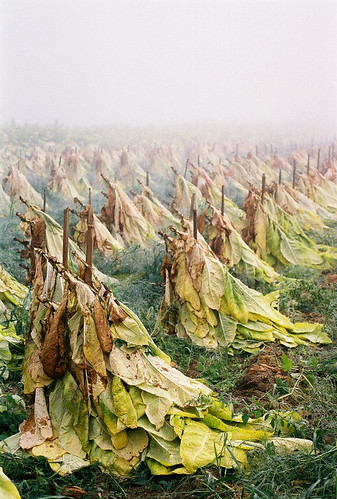
Air Curing is a relatively simple process although it has a few stages. Depending on the climate of where the tobacco is grown (i.e.: how humid or hot the air is plays an important factor), the leaves are simply air dried, either outdoors or indoors in well-ventilated curing barns or champers especially built for them (usually right near the fields). What you see in the photo above is the original method for curing, where the entire plant is cut and placed upside down so that the leaves air-dry straight (more or less). Air curing can also take place indoors, in curing barns with a gradually increasing temperature from 33 to 77 degrees Celsius over a period of 5-7 days. Once dried, the leaves are brittle and fragile; therefore, the doors of the barn are opened on a humid day so that the leaves are soft again and can be removed from the stems and stacked into piles of about 20 leaves per pack. They are left there to fully ferment and develop a uniform brown colour. The process takes about 8 weeks. The result is a tobacco that is light in flavour, and has higher level of nicotine.

Fire Curing occurs indoors in curing barns where hardwood fire is kept for several days to produce a smouldering smoke. This also produces a high nicotine level and is mostly used for pipe tobacco, chewing tobacco and snuff.

Flue Curing is a method that heats the curing barn through pipes, without the exposure to the smoke itself. Flue curing produces a tobacco that has more sugar, and less nicotine, that is used for cigarettes.

Sun-Cured tobacco is the result of leaving the tobacco outdoors and exposed to the sun. After 4-5 days in the sun, the leaves are taken indoors into a well-ventilated barn at 22 degrees Celsius where they will become soft and can be packed. This method is mostly is used in the Mediterrenean region (Turkey, Greece, etc.) to create oriental tobacco, which is used in cigarettes and hooka (sheesha) blends and is low in both sugar and nicotine.

After curing, there is a process of fermentation: The stacked leaves are left to ferment until they reach once the leaves are stacked, and reach a temperature of about 55 degrees Celsius. After a month they will reach a uniform brown colour, and than they are prized which entails pressing the bundles of leaves into big bulks of 1000lb each. The pressure has to be just right to avoid discoloration of the leaves; and often times rum, vanilla or molasses are added as well at this stage.

Labels: , , , , , ,

Tuesday, November 10, 2009

Burning Tobacco, Sans the Smoke


Un jour d'août au champs de tabac, originally uploaded by pfala.

Burning tobacco without the smoke is made possible via Bohem, Gabriel's Aunt scented soywax candle. While it isn't in the least smoky, it has the unique effect of tobacco absolute, smelling simultaneously fresh and deep, warm and woody. It's a rather simple candle yet smells sophisticated because of the unusual choice of notes: tabac blond absolute, patchouli, vetiver and davana, which adds a curiously fruity and herbaceous-freshness to the mix.

Bohem reminds me of a gypsy or a voodoo dance rather than a bohemian smoking den. The raw and unrefined qualities of the materials and the relative simplicity of their orchestration creates an unfamiliar experience that is curiously appealing.

But Bohem is not only a candle. It began as a perfume, and it is the first of Nikki Sherrit's candles to reflect her natural perfume collection. The perfume is more sophisticated, with the fruitiness of the davana even more pronounced. It plays on the contrast between that wine-like fruitiness and the dryness of tobacco, amplified with the other woody notes which later on evolve into a smooth, chocolatey tobacco dry down. Both the candle and the perfume represent the cured tobacco leaf rather than any tobacco product (i.e.: cigars, cigarettes or pipe tobacco); a choice that makes Bohem stand out in this genre. While there are leathery qualities, an inevitable aspect of the tobacco leaf, there is none of the smokiness or imposed sweetness that happens when you light a match to flavoured tobacco.

Notes: Vetiver, Virginia Cedarwood, Patchouli, Tobacco, Allspice, Cassie and Davana.

Labels: , , , , ,

Sunday, July 16, 2006

Habanita


Habanita was the first item I won on eBay - an EDT mini bottle, in the shape of the bottle originally designed by Lalique. And of course – I bought it unsniffed, and completely confident that I will love it, which prove to be true.

Dark, bewitching bottle in a suggestively bold and masculine shape, adorned with embossed figures of bathing naked feminine figures…After all, it is a feminine perfume by Molinard. The screw cap did not readily yield to my efforts to open the bottle, but after my boyfriend lent his helping hand, the genie was finally released from its long captivity in the dark flacon. I was quite surprised to discover that the smell was very familiar, very masculine. It immediately reminded me a scent worn by a man long time ago in my life. The only one I could think of is my grandfather, even though for all I know only used Old Spice after shave and no scent at all...

Perhaps this is why it brings to mind lonely adventures, and radiates a definite confidence of a man aware of his weaknesses and knowing well how to hide them. In a far away country in South America, away from his beloved family, and doing everything to make sure they are safe and constantly prove to them that they are loved… He is keeping a secret, too many secrets, and the weight is heavy on his shoulders. Yet he knows and shows true generosity and is kind to all as much as he can when given the opportunity.

If I could assign any character to this perfume, it would be Alec Leamas, the hero in The Spy who Came in From The Cold. If he ever bothered to put on any perfume before spending hours waiting for his agents to pass the walls separating between Eastern and Western Europe, and smoking packs of cigarettes in the long and cold yearsof post World War II – I am sure it would have smelled like Habanita.

Whether if you are a man or a woman, Habanita possesses all the warmth and protection you need, and can make you feel extremely confident in a most dangerous way.
It’s daring combination of notes makes it extremely masculine and appealing to women at the same time. It is bold and softly enveloping, professional and shamelessly sensual, cool and calculated while warm and sizzling with passion all at once.

Though it was designed for women, I find it to be an ideal scent for men (I should revert to my efforts of convincing my boyfriend to wear it next time I do). For both men and women to wear Habanita would mean being seductive in a dangerous way (and by that I mean an interesting combination of passion and aloofness that perhaps most of us find oddly attractive), sensual and adventurous, mysterious and assertive.

Sniffing it from the bottle, the Habanita top notes are fresh and subtle – a rush of masculine woody notes of mastic (a gum from a Mediterranean bush), juniper berry and cedarwood are accompanied by a generous amount of bergamot, which is citrusy but not in the fruity or eau de cologne sense of citrus – a more refined, green and slightly floral note derived from the bergamot bitter non-edible oranges. This is accentuated by a hint of lavender, which is very subtle and soft, and radiates a certain warmth that is typical to Fougere compositions. Here it is just hinting an adventurous attitude…There is also some leathery, almost smoky note that instantly reminds you of pipe smoke…

The heart note is not quite the main theme in Habanita, but rather assists in bridging between the lighter and somewhat sharper top notes and the dark leather-tobacco base.
The heart has mainly jasmine and rose, which do not make the composition floral in any way. Again, they are there only for harmonizing the blend. There is quite a bit of heliotrope, which has a rich and somewhat powdery vanilla-like aroma, and a bit later you may notice some fruitiness that is quite reminiscent of peach.

The base for Habanita in this case is actually the core and the true heart of the perfume.
A rich tobacco accord, very much like fine Cuban cigar – enriched with full bodied layers of tonka bean and vanilla is the absolute essence of Habanita. It is deepened by a lovely amber, and just hints of oakmoss, musk and perhaps a very tiny amount of vetiver.
The drydown, though still quite the sweet cigar and amber scent, has some chypre and woody qualities to it.

The dry down impression of Habanita is that of a subtle, skin-reminiscent scent. The kind of fragrance that if worn properly may be soon identified by your surrounding as your own natural scent… In that sense it works similarly to Shalimar on my skin, only it is a bit more balanced as the ambery-vanilla sweetness is there only to counterpoint the bitterness of the leather and tobacco notes (and is no the main theme that some find is overly done in Shalimar).

Top notes: Mastic, Cedarwood, Lavender, Bergamot, a hint of Juniper berry, Leather notes Heart notes: Jasmine, Rose, Peach, Heliotrope Base notes: Vanilla, Tobacco, Tonka Bean, Amber, Oakmoss, Musk, Opoponax, Vetiver.


P.s. As you could tell, I did not manage to scan the image I wanted to share with you. In fact, I couldn't even find the photo! One can always blame it on the starts - Mercury in retrograde, blah blah blah. I will have to add the photo later, because it absolutely belongs to THIS post!
P.s.s. Updated October 30th to add the scanned image.

Labels: , , , , ,