Bay Watch
There is a significant number of similarities between Bay Leaf (AKA Bay Laurel), West Indian Bay, Bayberry, Bay Rum, California Bay, and aromatically related there is also Allspice which naturally fits into this mix quite nicely. Let's explore these plants and raw materials, and clear this confusion once and for all.
These plants have a few things in common, one that they are evergreen and either a tall bush. But they come from three distinguished families: The Myricaceae family, the Laureaceae (Laurel) family and the Myrtaceae (Myrtle) family. Besides myrtle, you probably know more members of this family than you may realize: eucalyptus, cloves, tea tree and guava are other highly fragrant members of this family.
But the botanical families are not the only common element. They also share a similar chemical makeup which causes greater confusion and the similar common names they've received doesn't help in the matter either.
Bay Laurel (Laurus nobilis)
This evergreen tree from the Laureaceae family is native to the Mediterranean region, where it inhabits moist habitats such as creekside and the canyons of dry creeks. The essential oil from the very same bay leaf we are familiar with in cooking, has a sharp, spicy medicinal aroma. In ancient Greece and Rome the leaves used to crown war heroes. The root of this custom is the legend of Daphne and Apollo: Apollo fell in love with the river nymph. She was chased by him, and truly feared to lose her virginity - which was very important to her because she took the Vow of Artemis. So she asker her father, the river god Ladon, to save her. He turned her into the beautiful laurel tree. Apollo promised to keep her leaves green forever, and wear them on his head and decorate his lute with. In Ancient Greece and up till this day in modern day magick and Pagan rituals, bay leaf is associated with sun and can be burnt as incense, either alone or with frankincense - the most important solar incense.

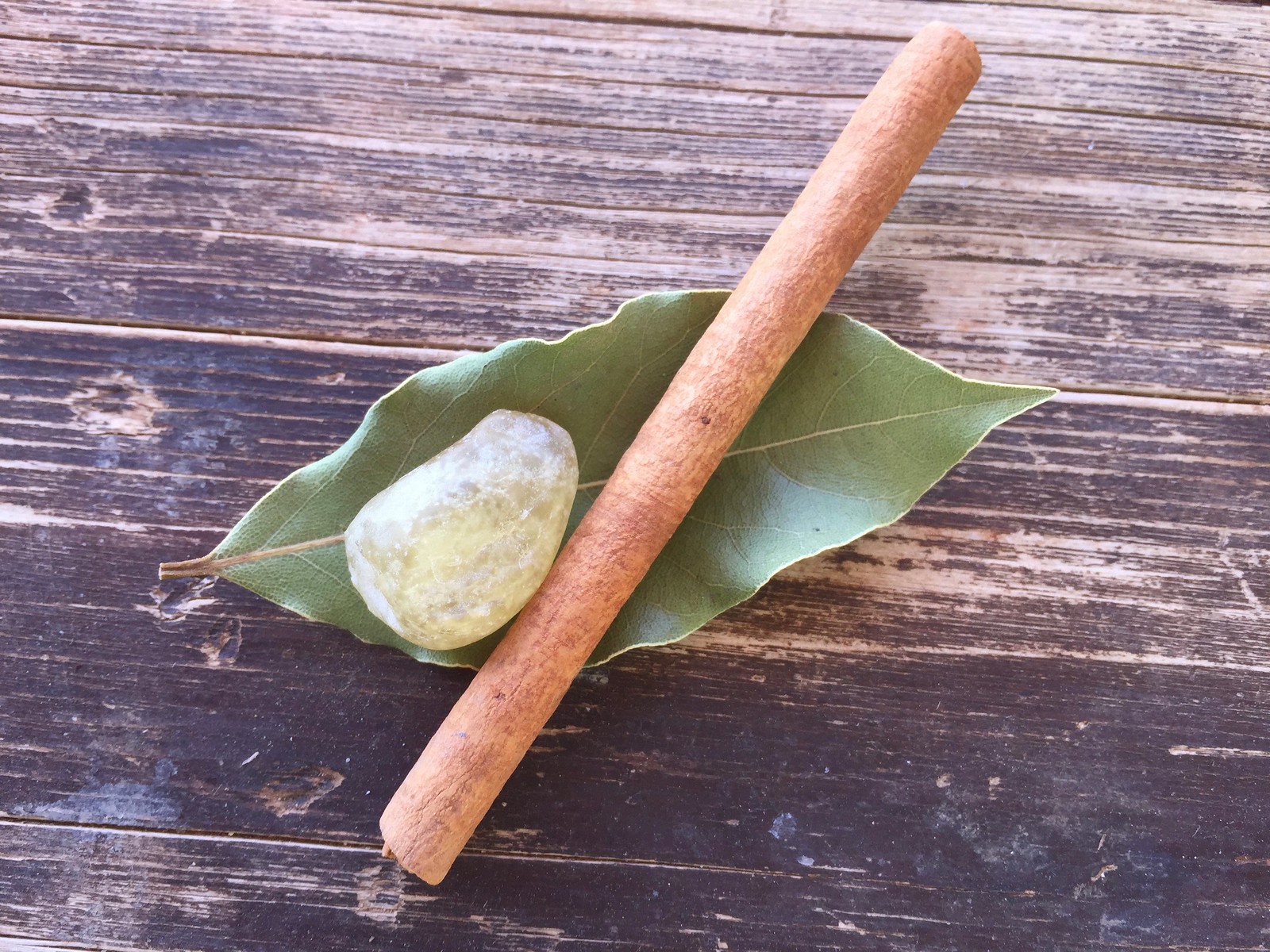
Here is a simple and beautiful loose incense recipe incorporating Bay Leaf:
12 parts frankincense resin, ground coarsely in a mortar and pestle
1 part bay leaf, folded several times by hand and cut into small pieces
4 parts cinnamon bark, broken into small bits (use hands to crumble if using thin bark, or a mortar and pestle)
Break, grind and cut all pieces to a similar size, mix well and sprinkle on hot charcoal in the morning to bring the solar energy into your home.
Bay Leaf essential oil is used in perfumery is mostly for aftershaves, perhaps because of its anti-bacterial properties, due to the presence of phenolic compounds. It is a little underrated in my opinion - and can be used very much like allspice, except it has more pronounced leafy-green character. Can be used in Chypre, Fougere, and Woody or Spicy Orientals to impart these spicy-green warm yet clean qualities.
California Bay (Umbellularia californica)
This handsome tree also goes by other names, such as Oregon myrtle, spicebush, pepper wood, cinnamon bush and more. This is also a member of the Lauraceae family, so the closest relation in this post to the Bay Laurel that grows naturally where I live now. I will never forget my first encounter with it, while hiking in Northern California with Hall Newbegin of Juniper Ridge. He was too late to warn me of its potency when I brought it to my nose. This pungent aroma was already piercing my nostrils with this hyper-manifestation of sharp spicy medicinal notes. It is that particular effect that makes it both peculiar and unbearable to the unsuspecting smeller as I was. The First Nation people in the area where this plant grows (Cahuilla, Chumash, Pomo, Miwok, Yuki, Coos, and Salinan) used the fruits and their pits for food (the fruit can be eaten raw in a specific stage, can be dried and partly consumed later on, while the pit needs to be processed first, usually roasted). The leaves were used medicinally. It is used in many forms, such as poultices to treat rheumatism, nerve pain. Infusions that were applied topically primarily for its disinfectant properties. And drank as tisane for the treatment of colds, stomach aches, sore throat and for its expectorant qualities.
Curiously, the tree is also called "headache tree", because of the experience I described earlier which can often cause headache. This is due to the chemical umbellulone. And even more curious is that the Uki and Pomo tribes used this leaf to cure headache - a true case of "Like Cures Like" which is the key principle of homeopathy.
Because these leaves are so strong-headed, their modern use is limited, though some use them in food (but in far smaller quantities than other fragrant leaves). The wood itself proves to be an excellent raw material for
Bayberry (Myrica genus)
Allspice AKA Pimento Berry (Pimenta diciosa)
Pimento (from the myrtle family) is a key ingredient of the Bay Rum aftershave/scent, and is also very often used in pumpkin pie spice mixes. It smells like a combination of cinnamon, cloves and nutmeg, and is sweet and dry all at once. The essential oil is a heart note, while the absolute is deeper than the oil. Allspice is used in oriental spicy perfumes, and also to spice up other composition such as Chypre.

Berries of an evergreen tropical tree in Jamaica, Cuba and the West Indies. Other names for it are Jamaica Pimenta and Myrtle Pepper.
In its native Jamaica, the pimento wood is used to smoke jerk, or the berries are used as a substitute. The phenols (such as eugenol) are beneficial for preserving meats, so it is not surprising that allspice is used throughout the world in sausage making and other methods of preserving or marinating meats.
Allspice smells like a combination of spices (hence the name "allspice"). In Arabic cuisine it is simply called "Baher", and the spice mixture "Baharat" which is characteristics to Arab cuisine simply means "Spices", and typically has allspice as a dominant ingredient alongside cardamom, black pepper, nutmeg, cinnamon, coriander, cumin, ginger, etc.
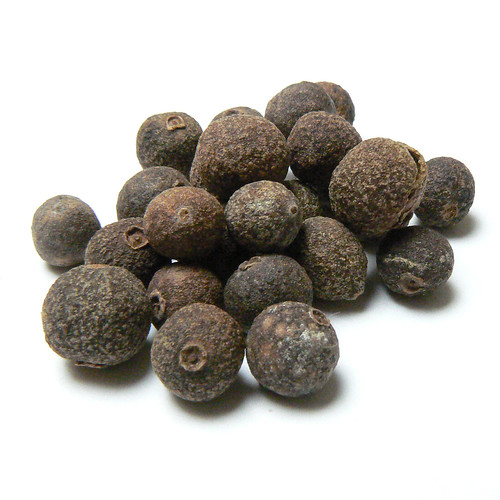
Allspice is also key ingredient in Pumpkin Spice (alongside cinnamon, ginger and cloves); used for pickling, marinades, sauces and stews, much like bay leaf is. Also popular in desserts, especially the traditional winter holiday cakes and cookies (i.e.: honey cake and cookies, spice cake, gingerbread, pfeffernusse and the like), for poaching fruit (pear, quince, etc.).
Principle Constituents: Eugenol (60-80%), Methyl eugenol, Phellandrene, Caryophyllene
West Indian Bay (Pimenta racemosa)
Another tropical plant, this time from the Caribbean is what's used for making Bay Rum eau de cologne or aftershave lotion (more on that later). It has many uses, both culinary and cosmetic as you can see in this video.
Similarly to the bay laurel leaves, these also can be used in cooking.
P. racemosa is often mistakenly labelled as Bayberry or Bay Rum when sold as an essential oil, and like allspice, it also belongs to the Myrteaceae (myrtle) family. As far as the scent goes it is very similar to bay leaf, with the charming green leaf and spicy elements all strewn in together.
The most primitive Bay Rum preparations Pimenta racemosa leaves were steeped in rum and this simple tincture was applied for multiple uses by the above mentioned sailors: as a deodorant, disinfectant and perhaps also as an aftershave (though I have little information about the grooming habits of sailors and whether or not they actually bothered shaving while at sea). In the 19th Century, it has become a fully-fledged commercial product manufactured primarily in the Virgin Islands. Other ingredients added to it were citrus oil (especially that of lime), pimento berry (from Pimenta diciosa), and cinnamon. Another bit of history is found in the book "Perfumes of Yesterday" by David G. Williams, pages 142-143. Here we learn that the Bay Rum preparation was actually a hair-growth product, with the stimulating property of the bay leaf from P. racemosa of increasing blood flow (and therefore nutrients, via the blood stream) to the area it is applied (in this case scalp). From this ensued a variety of "Hair Tonics" and the barbershop connection becomes even clearer than the aftershave usage. A historical formula is provided, using surgical spirit, because in wartime (I'm assuming WWI or WWII), because other types of alcohol were either unavailable or prohibited (for example: industrial methylated alcohol). The surgical alcohol was a solution of castor oil and methyl salicylate and ethyl phthalate, diluted in industrial spirit. For this reason, talcum powder was added to the formulate, as it absorbed the fatty oil from the preparation, and result in a clear liquid. Although the talc will also absorb some of the components of the essential oils (particularly that of the lemon), it was mostly the terpenes, which was considered advantageous in the formula. Another curious addition was a solution of burt sugar as a colouring agent, giving the finished product a dark rum-like colour. The formula provided in that book contains oil of bay, clove, lemon, menthol, tincture of capsicum (what gives chilli peppers their hotness!), acetic acid (the active ingredient in vendors), surgical spirit, water and talc. So we see this is a functional fragrance, with ingredient that are acting as a stimulants for the skin.
Similarly to the bay laurel leaves, these also can be used in cooking.
P. racemosa is often mistakenly labelled as Bayberry or Bay Rum when sold as an essential oil, and like allspice, it also belongs to the Myrteaceae (myrtle) family. As far as the scent goes it is very similar to bay leaf, with the charming green leaf and spicy elements all strewn in together.
Bay Rum
Although related to all of the above, is not a particular plant, but a rum-based cosmetic, which is the Caribbean answer to the European Aqua Mirabillis of yore. Bay Rum is a fragrant, alcohol-based preparation that was first made by sailors in the 16th and 17th Centuries as a way to improve their overall hygiene (which sounds a bit hard to believe for a population that was predominantly male, even if in confined quarters of ships). From what I could gather, shaving didn't become widely spread in this culture till the 19th Century. So let's perhaps they used it instead of bathing and for its disinfectant properties.
The history of Bay Rum is a bit hazy, but it is clear that it originates among sweaty, stinky sailors in the Caribbean, using readily available spirits and spices to counter balance the stench that the tropical climate triggered in their closed quarters.
Dozens of Bay Rum formulations ensued throughout the years, and it is in fact a concoction that can be very easily prepared at home using minimal equipment and readily available raw materials. Although not labeled as Bay Rum, the popular and iconic scent Old Spice is very much based on this historic preparation.
Many recipes for Bay Rum call for infusing the whole spices in rum and then adding other alcohols (such as vodka or grain alcohol), as well as other ingredients that may be beneficial to the skin, such as witch hazel and glycerin. This method is fine as long as no essential oils are added to the recipe. Often times the bay leaf (or leaves) would be kept as decoration within the finished product, which will also continue to release scent well after the bottling stage.
Keep in mind, that if your alcohol base is only one of those beverages, their alcohol content is not high enough to dissolve essential oils, and they will be floating on the surface of the product instead, and burn the skin. I wouldn't put such a product on my wrists, let alone a face that has just been clean-shaven! So before choosing a recipe, use your common sense please... While most recipes online (which linked above) were very specific about using P. racemosa, it is a bit hazy from the recipes that I have found in literature which bay leaf is actually used. Having no access to this particular bay, I am unable to prepare an authentic formula for you to try. But I am curious to improvised with local ingredients I have on hand. And once I am satisfied with a result I promise I will post here an original recipe of my own.
Labels: Allspice, Bay Laurel, Bay Leaf, Bay Rum, Decoding Obscure Notes, Laurus nobilis, Pimenta, Pimenta racemosa, Pimento Berry
posted by Ayala Moriel @ 2:52:00 AM
0 comments