Wednesday, June 12, 2019

Bay Watch

Solar Incense
There is a significant number of similarities between Bay Leaf (AKA Bay Laurel), West Indian Bay, Bayberry, Bay Rum, California Bay, and aromatically related there is also Allspice which naturally fits into this mix quite nicely. Let's explore these plants and raw materials, and clear this confusion once and for all. 

These plants have a few things in common, one that they are evergreen and either a tall bush. But they come from three distinguished families: The Myricaceae family, the Laureaceae (Laurel) family and the Myrtaceae (Myrtle) family. Besides myrtle, you probably know more members of this family than you may realize: eucalyptus, cloves, tea tree and guava are other highly fragrant members of this family.

But the botanical families are not the only common element. They also share a similar chemical makeup which causes greater confusion and the similar common names they've received doesn't help in the matter either.

Bay Laurel (Laurus nobilis) This evergreen tree from the Laureaceae family is native to the Mediterranean region, where it inhabits moist habitats such as creekside and the canyons of dry creeks. The essential oil from the very same bay leaf we are familiar with in cooking, has a sharp, spicy medicinal aroma. In ancient Greece and Rome the leaves used to crown war heroes. The root of this custom is the legend of Daphne and Apollo: Apollo fell in love with the river nymph. She was chased by him, and truly feared to lose her virginity - which was very important to her because she took the Vow of Artemis. So she asker her father, the river god Ladon, to save her. He turned her into the beautiful laurel tree. Apollo promised to keep her leaves green forever, and wear them on his head and decorate his lute with. In Ancient Greece and up till this day in modern day magick and Pagan rituals, bay leaf is associated with sun and can be burnt as incense, either alone or with frankincense - the most important solar incense. 

Solar Incense

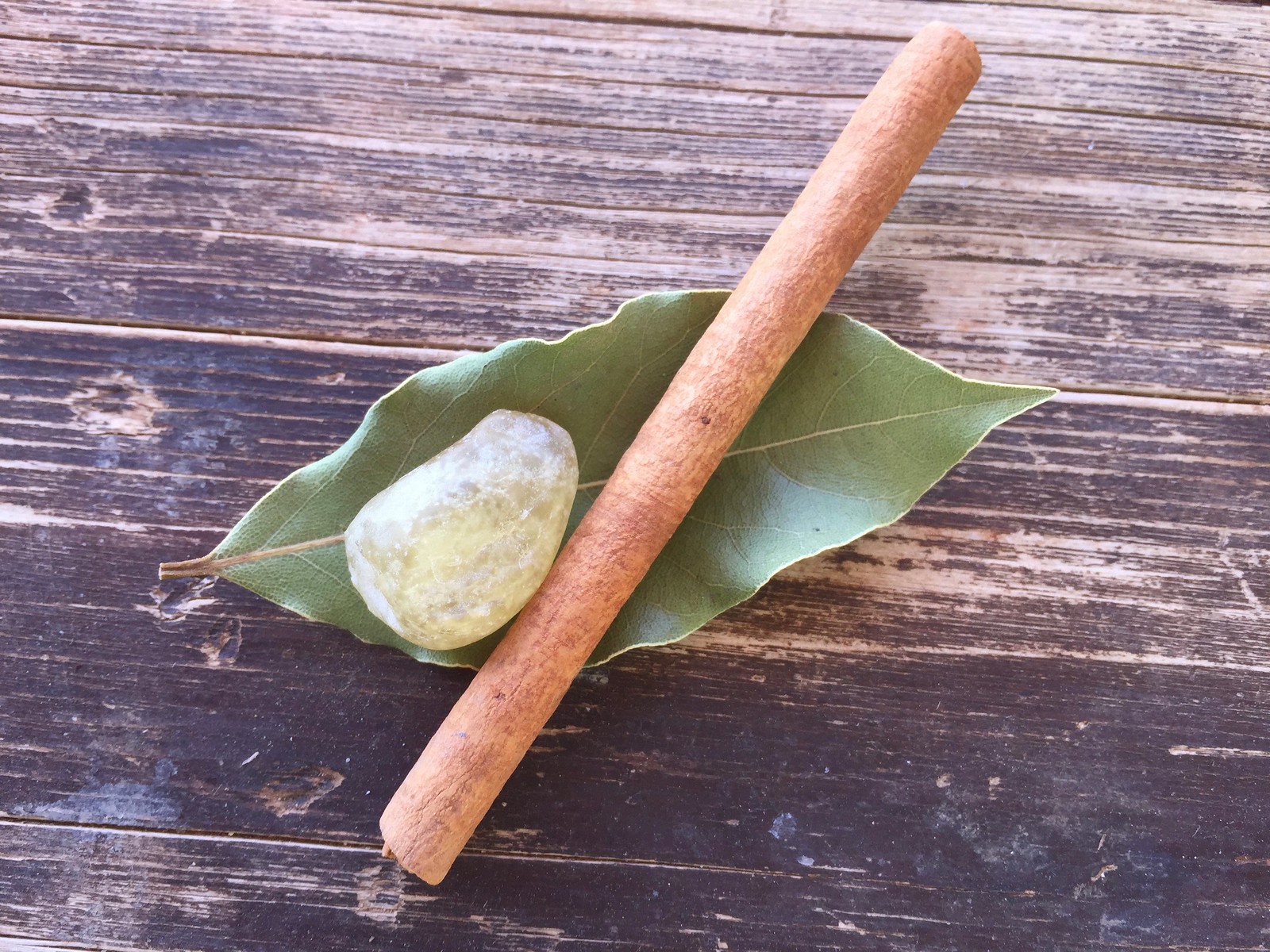
Here is a simple and beautiful loose incense recipe incorporating Bay Leaf: 12 parts frankincense resin, ground coarsely in a mortar and pestle 1 part bay leaf, folded several times by hand and cut into small pieces 4 parts cinnamon bark, broken into small bits (use hands to crumble if using thin bark, or a mortar and pestle) Break, grind and cut all pieces to a similar size, mix well and sprinkle on hot charcoal in the morning to bring the solar energy into your home. Bay Leaf essential oil is used in perfumery is mostly for aftershaves, perhaps because of its anti-bacterial properties, due to the presence of phenolic compounds. It is a little underrated in my opinion - and can be used very much like allspice, except it has more pronounced leafy-green character. Can be used in Chypre, Fougere, and Woody or Spicy Orientals to impart these spicy-green warm yet clean qualities.


California Bay (Umbellularia californica)
This handsome tree also goes by other names, such as Oregon myrtle, spicebush, pepper wood, cinnamon bush and more. This is also a member of the Lauraceae family, so the closest relation in this post to the Bay Laurel that grows naturally where I live now. I will never forget my first encounter with it, while hiking in Northern California with Hall Newbegin of Juniper Ridge. He was too late to warn me of its potency when I brought it to my nose. This pungent aroma was already piercing my nostrils with this hyper-manifestation of sharp spicy medicinal notes. It is that particular effect that makes it both peculiar and unbearable to the unsuspecting smeller as I was. 

The First Nation people in the area where this plant grows (CahuillaChumashPomoMiwokYukiCoos, and Salinan) used the fruits and their pits for food (the fruit can be eaten raw in a specific stage,  can be dried and partly consumed later on, while the pit needs to be processed first, usually roasted). The leaves were used medicinally. It is used in many forms, such as poultices to treat rheumatism, nerve pain. Infusions that were applied topically primarily for its disinfectant properties. And drank as tisane for the treatment of colds, stomach aches, sore throat and for its expectorant qualities. 

Curiously, the tree is also called "headache tree", because of the experience I described earlier which can often cause headache. This is due to the chemical umbellulone. And even more curious is that the Uki and Pomo tribes used this leaf to cure headache - a true case of "Like Cures Like" which is the key principle of homeopathy. 

Because these leaves are so strong-headed, their modern use is limited, though some use them in food (but in far smaller quantities than other fragrant leaves). The wood itself proves to be an excellent raw material for 

Bayberry (Myrica genus)
This fragrant plant genus belongs to the Myricaceae family, and also goes by the name of bayberry, bay-rum tree, candleberry, sweet gale and wax-myrtle, among others. The name Myrica comes from the Greek myrike (μυρικη), meaning "fragrance". Their fruit has a waxy coating that is indigestible by most animals. From it was produced a material called bayberry wax, which was used for making candles (hence the name "candleberry"). Myrica gale in particular is native to Europe and North America, and its leaves are excellent insect repellent. It was used in wedding bouquets for its fragrance, and as spice for condiments and pickling. Since the Middle Ages and until the 16th century, myrica was an important ingredients in the production of Belgian beer, as the flavouring and preserving agent, until the usage of hops has become wide-spread. Another species, Myrica faya, is native to the Canary Islands and Madeira, and has become an invasive species in Hawaii.

Allspice AKA Pimento Berry (Pimenta diciosa)
Pimento (from the myrtle family) is a key ingredient of the Bay Rum aftershave/scent, and is also very often used in pumpkin pie spice mixes. It smells like a combination of cinnamon, cloves and nutmeg, and is sweet and dry all at once. The essential oil is a heart note, while the absolute is deeper than the oil. Allspice is used in oriental spicy perfumes, and also to spice up other composition such as Chypre.

Berries of an evergreen tropical tree in Jamaica, Cuba and the West Indies. Other names for it are Jamaica Pimenta and Myrtle Pepper.
In its native Jamaica, the pimento wood is used to smoke jerk, or the berries are used as a substitute. The phenols (such as eugenol) are beneficial for preserving meats, so it is not surprising that allspice is used throughout the world in sausage making and other methods of preserving or marinating meats.

Allspice smells like a combination of spices (hence the name "allspice"). In Arabic cuisine it is simply called "Baher", and the spice mixture "Baharat" which is characteristics to Arab cuisine simply means "Spices", and typically has allspice as a dominant ingredient alongside cardamom, black pepper, nutmeg, cinnamon, coriander, cumin, ginger, etc.
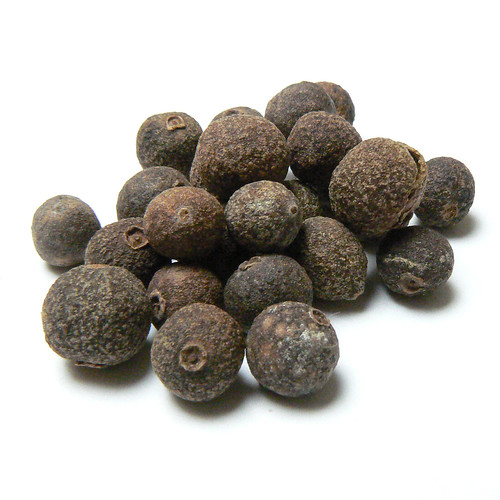
Allspice (Pimenta dioica)
Allspice is also key ingredient in Pumpkin Spice (alongside cinnamon, ginger and cloves); used for pickling, marinades, sauces and stews, much like bay leaf is. Also popular in desserts, especially the traditional winter holiday cakes and cookies (i.e.: honey cake and cookies, spice cake, gingerbread, pfeffernusse and the like), for poaching fruit (pear, quince, etc.).
Principle Constituents: Eugenol (60-80%), Methyl eugenol, Phellandrene, Caryophyllene
West Indian Bay (Pimenta racemosa)
Another tropical plant, this time from the Caribbean is what's used for making Bay Rum eau de cologne or aftershave lotion (more on that later). It has many uses, both culinary and cosmetic as you can see in this video.
Similarly to the bay laurel leaves, these also can be used in cooking.
P. racemosa is often mistakenly labelled as Bayberry or Bay Rum when sold as an essential oil, and like allspice, it also belongs to the Myrteaceae (myrtle) family. As far as the scent goes it is very similar to bay leaf, with the charming green leaf and spicy elements all strewn in together.

Bay Rum
Although related to all of the above, is not a particular plant, but a rum-based cosmetic, which is the Caribbean answer to the European Aqua Mirabillis of yore. Bay Rum is a fragrant, alcohol-based preparation that was first made by sailors in the 16th and 17th Centuries as a way to improve their overall hygiene (which sounds a bit hard to believe for a population that was predominantly male, even if in confined quarters of ships). From what I could gather, shaving didn't become widely spread in this culture till the 19th Century. So let's perhaps they used it instead of bathing and for its disinfectant properties.

The history of Bay Rum is a bit hazy, but it is clear that it originates among sweaty, stinky sailors in the Caribbean, using readily available spirits and spices to counter balance the stench that the tropical climate triggered in their closed quarters. 

The most primitive Bay Rum preparations Pimenta racemosa leaves were steeped in rum and this simple tincture was applied for multiple uses by the above mentioned sailors: as a deodorant, disinfectant and perhaps also as an aftershave (though I have little information about the grooming habits of sailors and whether or not they actually bothered shaving while at sea). In the 19th Century, it has become a fully-fledged commercial product manufactured primarily in the Virgin Islands. Other ingredients added to it were citrus oil (especially that of lime), pimento berry (from Pimenta diciosa), and cinnamon. Another bit of history is found in the book "Perfumes of Yesterday" by David G. Williams, pages 142-143. Here we learn that the Bay Rum preparation was actually a hair-growth product, with the stimulating property of the bay leaf from P. racemosa of increasing blood flow (and therefore nutrients, via the blood stream) to the area it is applied (in this case scalp). From this ensued a variety of "Hair Tonics" and the barbershop connection becomes even clearer than the aftershave usage. A historical formula is provided, using surgical spirit, because in wartime (I'm assuming WWI or WWII), because other types of alcohol were either unavailable or prohibited (for example: industrial methylated alcohol). The surgical alcohol was a solution of castor oil and methyl salicylate and ethyl phthalate, diluted in industrial spirit. For this reason, talcum powder was added to the formulate, as it absorbed the fatty oil from the preparation, and result in a clear liquid. Although the talc will also absorb some of the components of the essential oils (particularly that of the lemon), it was mostly the terpenes, which was considered advantageous in the formula. Another curious addition was a solution of burt sugar as a colouring agent, giving the finished product a dark rum-like colour. The formula provided in that book contains oil of bay, clove, lemon, menthol, tincture of capsicum (what gives chilli peppers their hotness!), acetic acid (the active ingredient in vendors), surgical spirit, water and talc. So we see this is a functional fragrance, with ingredient that are acting as a stimulants for the skin.

Dozens of Bay Rum formulations ensued throughout the years, and it is in fact a concoction that can be very easily prepared at home using minimal equipment and readily available raw materials. Although not labeled as Bay Rum, the popular and iconic scent Old Spice is very much based on this historic preparation.

Many recipes for Bay Rum call for infusing the whole spices in rum and then adding other alcohols (such as vodka or grain alcohol), as well as other ingredients that may be beneficial to the skin, such as witch hazel and glycerin. This method is fine as long as no essential oils are added to the recipe. Often times the bay leaf (or leaves) would be kept as decoration within the finished product, which will also continue to release scent well after the bottling stage. 

Keep in mind, that if your alcohol base is only one of those beverages, their alcohol content is not high enough to dissolve essential oils, and they will be floating on the surface of the product instead, and burn the skin. I wouldn't put such a product on my wrists, let alone a face that has just been clean-shaven! So before choosing a recipe, use your common sense please... While most recipes online (which linked above) were very specific about using P. racemosa, it is a bit hazy from the recipes that I have found in literature which bay leaf is actually used. Having no access to this particular bay, I am unable to prepare an authentic formula for you to try. But I am curious to improvised with local ingredients I have on hand. And once I am satisfied with a result I promise I will post here an original recipe of my own.

Labels: , , , , , , , ,

Monday, June 11, 2012

Steep Ravine Soap

Steep Ravine Soap was inspired by the same trail I hiked last Thursday with Hall Newbegin on one of his Wildflower Hikes.

The soap is redolent of citrusy Douglas Fir (Pseudotsuga douglasii), with its crisp evergreen freshness accompanied by Redwood (Sequioa semprevirens) and California's Bay Laurel (Umbellularia californiac) - a warm, spicy evergreen tree that is 100 times more potent than the Mediterranean variety. A little whiff of that will bring you back to reality with a piercing nasal pain that's worse than horseradish!!!
I'm not kidding!
You got to stay away from it when you smell it, and than you can enjoy it's spicy, warm qualities which have more depth than the regular bay you're familiar with from cooking, but still bears a resemblance to it.

The soap is the usual high quality cold-processed bright green bar that contains the resins and infusions from the plants themselves, not just their essential oils. The saponified oils of palm, coconut, jojoba and olive oil produce a high-lather soap that's good enough to use in shaving, and with a strong scent that's perfect wake-up-call in a morning shower and a relaxing way to end the day if that's when you prefer to bathe. They can also make a great hand soap, and you can be sure that plenty of bacteria will be washed away with all the essential oils that are packed in this soap.

The beautiful packaging (designed in house, by the way) is made of craft paper, and has an etched impression of the trail's rocks, creek and redwoods, and includes an authentic background story and blending notes, that make a good read as well:
Scent notes include redwood, bay leaf, oakmoss and sea mist. And that's what you will enjoy if you hike up (and down...) Steep Ravine. I love the descriptions on each Juniper Ridge product. They are real and evoke true memories from hikes in the wilderness - in this case, a winter hike, picking mushrooms and staying at a cabin on a rainy night. After being there myself this summer, and smelling these plants in their natural habitat, I can enjoy bathing with Steep Ravine soap even more.

Labels: , , ,

Thursday, March 28, 2013

Lost In California

In California by Ayala Moriel
In California, a photo by Ayala Moriel on Flickr.
The best part of traveling is getting lost.
It's the street corner I never intended turn into, the subway I boarded in the wrong direction (easy to fix, but still...), the dangerous neighborhood you somehow managed to get out of safely, the cafe that nobody ever talks about in any travel guide, and might not even be worth mentioning - but was just the right place to sit at after walking an extra hour on those sore feet... And then there is the perfume shop tucked away behind a flower market that you must only visit on Sunday...
Tilden Regional Park Botanic Garden
I had two days for playing tourist in San Francisco, and most of them I actually spent in Berkeley because of a couple of injuries I had to be careful about. The first day was still raining and misty and cool (Wednesday, March 20th), we took the ferry from Jack London Square to the Ferry Building, got our fill of cutesy pastry shops, hopped on a cable car (so we don't need to walk, aforementioned injuries still in effect), and ended up at the wrong side of Powell street (wrong being needing to go downhill). Taking a cab for 5 blocks down Powell, I finally but sought refuge from the pain at Barney's, where I spotted a couple of favourite new perfumes (I'll tell you about them later). It might have not have been fun at the time, but I'm already remembering it fondly. We toughed it out, and survived.
Cactus
The second day (being Thursday, March 21st), the sun finally showed her lovely face on Northern California again, and I decided to be adventurous again and go to the UC Berkeley Botanical Gardens, which I tremendously enjoyed in my last visit to the Bay area. Information about how to get there by public transit is nearly non-existent. But for the record: you should take the Bear Bus, a black vehicle that serves the inter-campus transportation within UC Berkeley. There are clear signs for the bus stops where it does stop; but you actually have to wave it down. Of course, I did not know that at the time, and let a Bear Bus slip by. So I hopped on the No. 65 (from the corner University & Oxford), the line that was promised to be stopping "very close" to the botanical gardens. Somehow the route did not look right. But what else is new with public transit? They are known for their roundabout. I got off where I was told I should, and a lovely lady gave me directions. I was puzzled at how completely different the place was than what I thought I was visiting. Turns out I was heading to the Tilden Regional Park Botanic Gardens, which are "much better", as the lady assured me, "they are free". OK, I thought to myself - this could go either way.
Sonoma Sage  
Sonoma Sage

I walked on following her instructions to the best of my ability. There was no sign in sight for the Botanical Gardens or any gardens for that matter. I avoided the gold course, as per her instructions - only to find myself walking slowly up a hill alongside the very same gold course I was instructed to avoid. After about 20 minutes of walking, and no gardens in sight except for the gold-course fenced-up green, I've decided to stop a car for directions. And we got a lift right to the gate of the gardens from a young gentleman who was driving that way anyway. Upon entering the garden (a vague point in space, when there are no gates or admission) I immediately thought to myself - no surprise this is free. It's just a bunch of native Californian plants growing about, with some plaques stuck every now and then to indicate their botanical names.
Tilden Regional Park Botanic Gardens
Well, that was just the tourist way of looking at that. If you love plants, and especially if you are a perfumer - every garden is a little piece of heaven. This particular one happened to be a perfumer's heaven. A very rustic perfumer, to be exact.

The air was filled with the scent of aromatic plants warmed by the sun - sage (aka artemisia) of all shapes, sizes and kinds. Cacti in full bloom, towering over the sun-warmed lichen-covered rocks. Sweet scent of pollen and the vegetal, surprisingly barely evergreen at all scent of redwood needles. And the opportunity at every corner to just bask in the sun. What more can a tourist ask for?

Redwood Height
Redwoods
Five Fingered Fern
Five Fingered Fern
Lichen

Tilden Regional Park Botanic Gardens

Labels: , , , , , , , ,

Wednesday, March 25, 2009

Blunda Perfume Exhibition No.1: Velvet & Sweetpea's Purrfumery


Laurie Stern of Velvet & Sweetpea's Purrfumerry will be a guest perfumer at Blunda's very first Perfume Exhibit this weekend, opening a series of 8 perfume exhibitions at this unique perfume studio at the heart of Los Angeles.

Meet Laurie Stern, California Bay area perfumer and the founder of Velvet & Sweetpea's Purrfumery, her beautiful line of botanical perfumes, and other aromatic jewels she creates. Laurie will be present to talk about her inspiration, her perfumes, her rose filled bathtub, and any other curiosities you may have.

Join Persephenie and Laurie for an afternoon tea, noshes from local Los Angeles producers, and the opportunity to meet these fine works of art called natural botanical perfumes.


Laurie's perfumes are cruelty free and made of botanical essences only (except for bee products) and are phthalate free. Laurie also uses tinctures from aromatic plants growing in her garden, including many different kinds of scented geraniums.

Spaces are extremely limited, so please RSVP by via email with the title "RSVP for Perfume Exhibition #1 March 28, 2009" and number of people participating or by calling (323) 658-750.

Related press:
Eco Fabulous
Vital Juice
Organic Beauty View


Labels: , , , ,

Wednesday, July 04, 2012

Happy Fourth of July!

Celebrate 4th of July with a good ol' (or new) American perfumes - and we live in exciting times when there is a thriving community of artisan perfumers in North America. Most are condensed in the San Francisco Bay Area and New York City. And there are a few who are scattered somewhere in the middle... If you're not familiar with them, many will be showing their work at the Artisan Fragrance Salon July 8th, 11am-5pm.

Although there is a great variety in the body of work among American perfumers, I always think of American fragrances as being bold, entering with a big statement, and very rarely being subtle. Think of Youth Dew and the entire Estee Lauder line, which is louder than life - and you'll get my drift. Anne Plilska's oriental, although not loud necessarily, has that quality I'm talking about - being decisive and non apologetic, despite all its feminine softness and cozy glam.

And just as America is greatly varied and versatile in terms of climate, culture and heritage - you will find these qualities reflected in the work of perfumers working and living across the States. This little tribute would not and cannot cover all the important perfumers, and is by no means exhaustive. But I hope it will inspire you to support the perfumers in your community and choose locally designed and made olfactory pieces, rather than chasing the big imported labels (not that there is anything wrong with that - but it is true: To think globally, you must buy locally!).

In Brooklyn, Christopher Brosius creates conceptual perfumes in alcohol-free bases such as oil or water (for the spray perfumes). The scents from the "Experience Series" strike familiar memories and include scents such as In The Library, I Am A Dandelion , Burning Leaves evoke such experience with vividness and surprising sophistication. Also in Brooklyn, you'll find natural perfumers Amanda Walker's A Perfume Organic, and Charna Ethier's Providence Perfume.

In the Ohio, Liz Zorn concocts perfumes with many natural ingredients and some with what she coined "mixed media" - using some synthetic in the mix (but still with a very high proportion of naturals). Being a visual artist and a musician in her "past life" adds an interesting dimension to her creations: they have dept, complexity and originality; as well as a distinct style that you will learn to recognize after sampling some of her work. I'm particularly fond of her Waterflower, Oudh Lacquer, Vanillaville and Love Purple Smoke.

And in Boulder, Colorado Dawn Spencer-Hurwitz conceived an eclectic and vast collection of handcrafted perfumes, also imbedded with her love for natural raw materials and her background as a painter.

The Pacific Coast is known for its free spirit and creativity, as well as being green-minded. In Seattle area you will find Rebel & Mercury (founded by the talented, free spirited Nikki Sherritt - who's also the candlemaker at Gabriel's Aunt). Her talent certainly goes beyond candle making and her perfumes are original, wild and sophisticated. And they are all natural too. You won't go wrong trying any of her scent. You're bound to be pleasantly surprised, no matter what your expectations were.

Meredith Smith of Sweet Anthem also went beyond the call of duty and opened a shop last year that not only sells her own line (which is vegan, and uses a combination of naturals and synthetics), but also promotes local talent from the Pacific Coast. And she also teaches classes and hosts other classes (i.e.: candlemaking with Nikki Sherritt last weekend).

And just recently I got acquainted with Christie Meshell of Matriarch who creates all natural perfumes, also in Seattle area.

Travel south to Los Angeles area, and you'll find scent artists that combine their passion for perfume with the area's glamorous silver screen heritage and the city's strange dichotomy between bright sunny climate and dark secrets. The line between dream, reality, facade and truth is blurry in Hollywood; and that is a characteristic I find underlying the creations of the native olfactory talents:

Persephenie's eponymous line is bottled in black, bearing exotic names such as Kildren, Bedouin and Datura (her best seller); yet is balanced by a bright, cheerful lightness and an underlying complexity. Some of her creations are pure botanical, and others have a smidgeon of a synthetic accord to add a special effect.

Alexandra Ballahouti's Strange Invisible Perfumes in Venice are not any more invisible than other perfumes, but definitely walk a fine line between strange and beautiful. Her compositions are known for unusual combinations of notes, such as mint and rose in Black Rosette and magnolia and vetiver in Magazine Street (my personal favourite).

Kedra Hart of Opus Oils is also a natural perfumer, and her Hollywood perfume parlour is a place to discover Hollywood glam and fantasy world through the themed collections - Burlesque, Jutterbug, Island Girl and more.

Keiko Mecheri's stylized bottles (designer by her husband) stand out immediately, and bring together a modern, worldly aesthetic which are the perfect packaging for her niche olfactory compositions, redolent of heavy scents such as incense, patchouli and gourmands, her perfumes allude to the Orient - Japan, Arabia, the Middle East - an influence that is even more apparent in her new Bespoke line. In a way, the cultural olfactory reference across the globe are what makes it so American - the people in the USA are from everywhere in the world, and their culture influences what is "American" - also in perfume terms.

The San Francisco Bay Area is so full of olfactory creativity that there is 100% chances I won't be able to mention all of the perfumers I know in one breath... But here are a few that I know in person and adore their work as well as personality:

Yosh Han of YOSH Olfactory Sense has an amazing design sensibility, and incorporates her spirituality and clairvoyance gifts into her line in a very genuine, non-pretentious way. Each perfume in the line has also a numeric title, besides its descriptive name. If you only could try two of them - make it Ginger Ciao and Sombre Negra.

Parfums DelRae are founded by DelRae Roth, and are made in Southern France. Some of the scents were designed by Michel Roudnitska - whose perfumery style has a signature boldness that is very similar in my mind to what defines American perfumery.

Laurie Stern is a woman with a heart of gold and her Velvet and Sweet Pea's Purrfumery everything you can dream of out of a garden fairytale and beyond. If you can visit her purrfumery in person, all the better. But you will definitely enjoy her whipped body butters and kittilicious roll-ons even if you can only order online.

Hall Newbegin of Juniper Ridge wildcrafts fragrant goodies from California and Oregon's mountains and deserts, and his line now includes limited editions solid perfumes and backpacker's colognes. You can't get more American than that really - his commitment is to pure wildnerenss in a bottle; and 10% of the profits go towards protecting California's wild plants and nature. In his wildflower tours he also teaches which invasive species to destroy in order to protect the native plants and prevent recurring fires.

Cognoscenti is a new line of unisex fragrances by San Francisco architect Danielle Sergent will debut at the Artisan Fragrance Salon this weekend. Her design sensibilities are abstract and the scents have numbers rather than names (yet accompanied by a short description). If bold and subtle could be bound together they will be happily living in one of her bottles. My favourites is the tobacco & tomato leaf scent.

Mandy Aftel or Aftelier Perfumes knows no bounds in her artistic expression, which spills into the culinary world with her book AROMA (co-authored with chef Daniel Patterson). Her signature notes are recognizable in all her creations - an animalic tinge, from this ingredient in the other; but primarily indolic. In her latest creations, Sepia, indole takes centre stage, tinting all the other notes within it - including yellow mandarin, blood orange and blood cedar - with a nostalgic decay.

And here I am, for the 2nd year in a row finding myself in America for Fourth of July. I'm staying with the lovely Lisa Fong of Artemisia Natural Perfume (and her adorable family in Oakland (and also the chickens and Daisy the piglette - hard to believe we're in a city here...). My ears are still buzzing from all the illegal fireworks the neighbours have put up for Fourth of July last night. Oaklanders sure know how to put up a street party ;-) But to the point of this article - Lisa is one of my favourite natural perfumers, and her style has immediately struck me as original, well structured and just all-around lovely. I always adored her

Labels: ,

Tuesday, December 27, 2011

Avocado Oil

Persea americana, native to central Mexico (the state of Puebla), and is related to cinnamon, camphor and bay laurel. It is a very ancient tree that was used by humans for at least 12,000 years. It’s fruit was designed to attract very large mammals which are now extinct (i.e.: ground sloths or gomphotheres). The seed itself is inedible and rather toxic to many animals, and would be spread in the excretions of such large mammals, sprouting easily as it would remain undigested.

Avocado, like olive oil, is a rare case when a vegetable oil is derived from the fruit rather than the seed of a plant. It is cold-pressed from the pulp of the fruit, which may contain between 18-24% oil, most of which is monosaturated fat. Avocados are extremely high in potassium, vitamin E, vitamin K, B vitamins, as well as a high fiber content. It was shown to lower harmful cholesterol level in the blood, and is also studied for its potential anti-cancer properties.

The fruit’s culinary uses are wide and versatile. Because it is easily grown in sub-tropical and Mediterranean climates, and can tolerate cold weather (as low as -5C in some cultivars), it is grown in many parts of the world – Mexico, Chile, in the US (states of California and Florida), Indonesia, Brasil, Israel, Lebanon, South Africa, Australia and New Zealand. And the cuisines that utilized it are versatile and innovative. It is mostly used raw, because cooking making it extremely bitter and inedible (the Haas cultivar can tolerate a small amount of heat and may be used in preparation of “avocado soup”).

Avocado’s high oil content makes it ideal for condiments and in savoury dishes such as sandwiches, condiments and sauces – the most famous of them being, of course, Guacamole (“avocado sauce” - a condiment, dip or sauce made with lime juice or vinegar, herbs, spices and hot peppers). Avocado slices are used in Maki (rolled sushi) – as in California roll or avocado roll, where its fatty contents pair nicely with the fish or substitute it for vegetarian rolls, and it works beautifully in vegetable salads – either sliced or in the dressing.

Avocado’s creamy texture and naturally mildly-sweet flavour make it a perfect component in raw, vegan and vegetarian desserts. Try mashing it with bananas for a custard-like breakfast raw “pudding”, garnished with fresh dates; or add it to milkshakes, smoothing or sliced in fruit salad (be sure not to use overripe avocados - or they will be too mushy and “oily” and not as sweet). You can even make your own vegan “eggnog” using avocados (I made one today with avocado, coconut milk, rum and nutmeg and it was very good and brightly green!).

As for avocado oil itself, which is the real topic of this article, it is particularly fabulous because of its antioxidant nutritional value. High smoking point (the refined avocado oil goes as high as 520°F = 271°C) makes it suitable for cooking, sauteeing, frying and deep-frying. It has a very mild, slightly nutty flavour that is quite easily adaptable.

In cosmetics and body care, avocado oil is prized for its regenerative and moisturizing qualities. It is full of nutrients such as vitamins A, D and E, as well as lecithin, proteins, chlorophyll, glycerides and omega-3 fatty acids. It is a very thick oil, and it’s best not to use more than 25% in a base-oil blend (meaning: you should blend it with other oils if you were to apply it to the skin in a massage oil or a body oil). Avocado oil is also used in soaps to add moisturizing qualities to a soap bar, because some of its contents do not get saponified and preserve their softening qualities. Its thickness also makes it a good addition for body butters and making rich body lotions. It's restorative and helpful especially for dry, scaly skin.

Similarly, use it for hair masks or hair treatment for curly or dry hair and itchy, flaky, scaly scalp. The lecithin is a natural sunscreen, so it’s a good natural protection for both skin and hair from UV rays. You will also find avocado oil in some high-end haircare products such as shampoo, conditioner and masks – but you can also create your own!

avocado by hannah * honey & jam
avocado, a photo by hannah * honey & jam on Flickr.

Labels: , ,

Friday, December 30, 2011

Best of 2011

Oh dear, what a year!
Like 2009, it started all positive and wonderful with fun traveling and adventures, and many creative moments; yet plummeted to the depths of despair towards the end of the summer. I hope this is not how my life is going to be every other year, because honestly I don’t think I will be able to take this on a regular basis. But if it does, I guess I will just have to!

On a more positive note, 2011 had shown me who my true friends are, and connected me to the vibrant and supportive perfume community of the West Coast – most of which seems to be centered around the San Francisco Bay area. I made new friends in this community, and previous friendships have become stronger and more meaningful. So for everything this year has brought my way, I’m very grateful for. Not to mention, in the current economy – which no one wants to talk about – just being able to stay in business and continue supporting myself and my family with my art alone is a huge accomplishment.

This year I’ve made a few lifestyle changes focusing on reducing environmental damage by supporting local. I continue to do the majority of my grocery shopping at the farmer’s market (which requires driving way out of the West End in the winter time, but is well worth it). And I hardly purchase anything else unless it was made by someone I know in person. This seems to go for perfume and body care products as well. I’m just getting less and less interested in anything mainstream. Shopping in major department stores just lost its luster for me. Even shopping in craft shows or trade shows I find exhausting as most of it ends up talking shop and networking. So I would most likely buy if it’s from someone I know while I’m visiting them at their own home or studio.

So in this post, as much as I love perfumers of the world over, I’m dedicating my choices to perfumers and companies that are from the West Coast – and most are even closer to where I’ve been calling home for the past 13+ years: The Pacific Northwest.

Favourite Perfumes in 2011 (in alphabetical order):

Angel’s Trumpet by Ineke
This is from Ineke’s Floral Curiosities collection, created exclusively for Anthropologie. I first smelled it at Yosh’s house in the amazing party she threw for me and fell in love immediately. It is thanks to Ineke, an avid gardener and fellow Canadian indie perfumer (originally from Ottawa, Ontario) that I even know about the existence of this fragrant flower. I’ve first smelled the scent in the accord she created for “Evenings Edged in Gold” back in winter 2008.
Angel’s Trumpet smells exactly like the flowers after sunset – there is a bush I discovered in English Bay and this is as close as it gets to sticking my nose in that long flower and inhaling deeply the citrusy, candy-floss and heliotrope aroma of its intoxicating nightly vapours.

Fleur No. 1 by 1000Flowers
Created in Nelson, BC, while Jessica Buchana was spending time sorting out her return to her new home she’s making in Grasse, France. Fleur No. 1 makes more than a subtle nod to No. 19 – but it has its own Canadian touch with essences such as pine bud absolute. It’s delicate, fragile almost, and brings

Incense Pure by Sonoma Scent Studio
I know it was launched in 2010, but I’ve only discovered it this year, and I love, love, love this take on incense that is like no other. There is the usual suspect – frankincense; yet it’s not Gothic like so many other incense scents are; but rather ambery, smouldering you with resin-y vapour of cistus labdanum and immortelle, which are as thick and sweet as honey, with that interesting herbaceous animlistic undertone.

Oud Luban by Aftelier
Created for the Clarimonde project, this solid perfume is a true agarwood using 8 different varieties. It’s a smouldering, rich, resinous and animalic incense perfume with smoky undertones (from the choya ral) that is only brightened with elemi, frankincense and blood orange. To experience a real agarwood perfume is especially refreshing after the 2-year (or is it longer?) agarwood fad that has been dominated by faux oud notes that are neither authentic nor satisfying in my opinion.

Sombre Negra by Yosh
A dark, woody and spicy-warm dusky vetiver, accented with patchouli, tobacco, choya loban opoponax oakmoss, davana, pink pepper and mushroom. I love how earthy and mysterious it is.

The funniest perfume name:
Eau Pear Tingle
I haven’t tried the perfume, but sifting through the lists of new releases in 2011 on Basenotes.com I stumbled upon this one and thought it was funny – as it looks like a wordplay on “au pair”.

Favourite Teas:
This year was all about white tea for me, and exploring the white teas from which to select the “base” for my Zangvil perfumed tea was a subtle adventure into the world of tea. I especially cherished the help I received from Libby Gibson of Tula Teas in the process.
But hands down, the best tea experience of the year was sharing no less then two teapots of tea – Frankincense GABA oolong and Rose & Ginger oolong with Mandy Aftel at her own studio.

Favourite Incense:
Rose Nerikoh by Perfume Phyto.
This year I had the pleasure to meet to other incense makers (they must be even more crazy then perfumers, because incense making is, in my opinion, ten times harder!) and one of them I even got to meet twice – in San Francisco at Yosh’s and also at my very own studio. Yuko Fukami is a Japanese-born natural perfumer, and studied with Lisa Fong of Artemisia. The
Rose Nerikoh is a ball of various resins, rose petals and rose absolute, and had that luxurious camphoreous woody scents that most Japanese incense posses. It’s not meant to be burnt, but rather warmed in the Japanese kodo style (or you can use an aromatherapy diffuser to achieve the same purpose – just line it first with some aluminum foil as to avoid the resins from sticking to your pot permanently.

Favourite candle:
Winter Moss by Gabriel’s Aunt.
I’m pretty sure this was launched in 2010, but I’m still as smitten with it as I’ve ever been. This candle brings the bitterness of cold winter, snow and crisp moss-covered boughs of conifer in the clean air of the Pacific Northwest to your home without carrying a tree in and without dealing with the aftermess of needless all over the floor. I'm also smitten with pretty much all the candles that Nikki created - they are so much fun and I'm always on the lookout for what new creations come out of her candle lab: Lemon Bar, Royal Couple, Boheme to name a few; and a the new favourite are Southern Tea and Milk & Sugar.

I was also privileged to try the new, beeswax based Apricot & Lemon candle by Aftelier and it's such a delightful, cheerful scent - just the kind of thing one needs in the winter time for a little pick-me-up.

Favourite soap:
Juniper Ridge wild-harvest all their herbs and distill their own oils they collect while hiking in Oregon and Northern California. And their products all have a very authentic, outdoorsy quality.
Big Sur soap – medicinal, like immersing oneself in a tub filled with witch herbs. Siskiyou Cedar is as close as possible to bathing outdoors under redwoods and looking at the stars peaking through the branches.
Neither of these leave my skin dry (and as evidence, I don't even bother using a moisturizer or oil afterwards). Just the kind of soap bar I like.

Favourite Body Product:
Velvet and Sweetpea’s Purrfumery's whipped body frosting (from shea & virgin coconut oil) are a luxury that you must try if you haven’t yet. I’m still savouring whatever is left of the Cashmere Rose and the Tuberose Gardenia ones I’ve bought in Blunda LA back in 2009. They emit the subtle and exotic scent of virgin coconut oil as they melt on your skin, along with the luxurious florals they are scented with. Besides, their maker, Laurie Stern, is such a sweet lady who keeps her own bees (and her honey is delicious!).

Favourite Skin Care Line:
Belmondo’s skincare line is designed and handmade in BC. This organic skincare line made form fair trade ingredients is the brainchild of aesthetician Daniela Belmondo, who provides the best organic facial treatments in town. True to her vision of simplicity and minimalism in caring for one’s skin, and inspired by her own Italian heritage, the line is based in olive oil and is designed to benefit all skin types – providing a simple and healthy regime of cleansing and hydration.

Stunning packaging:
Persephenie’s eponymus line of body care and perfumes (which I’m yet to try). I love how minimalist and luxurious these look.

Promising New Line:
Rebel & Mercury is a new line of natural perfumes by Nikki Sherritt, the creative force behind Gabriel's Aunt. If it's anything like her candles, expect to find surprising gems in this new line. I've already experienced a few of them (Encens Blanc, Bohem) and was instantly smitten.

Favourite Perfume Notes (Raw Materials):
In case you haven't noticed, almost everything I created this year had seaweed in it this way or another. My love for the ocean only grows fonder the older I get; and smelling like seaweed is just my kind of thing it seems. My other obsessions in the world of raw materials have been mimosa, galbanum absolute, and oakwood absolute. But the most surprising revelation is my new fascination of eucalyptus.

Favourite Foods & Spices

This year I've finally become excited about cooking and being more creative with it. And I've been particularly inspired by this book. I also started eating fish, which seems to be just the right thing to do living in the West Coast with very little sunshine. I need to get my vitamin D somewhere... I also finally got the fascination so many people have with red wine, so I've definitely turned into the "other side", and I'm not even able to tell you if this is good or bad... Kale is probably the vegetable of the year for me, and pear the fruit discovery (they usually end up too soft and mushy in this household - from lack of interest). My interest in star anise have definitely increased this year (poached pear, anyone?). But black cardamom is probably the most notable spice that changed my life this year. I'm looking forward to trying it in perfumery next year!

Wishing you all a wonderful, happy New Year in 2012!
May it bring you the courage to do the changes you wanted to make in your life, and may this world become a better place for us all!
xoxoAyala

Visit the other participating blogs in this round of the Best of 2011:

Another Perfume Blog

DSH Notebook

EauMG

Perfume Shrine

Scent Hive

The Non Blonde

Best of 2011 image by Roxana of Illuminated Perfume


Labels: