Monday, November 23, 2015

Musk Malabi Fundraising Campaign for Syrian Refugees


Musk Malabi, my fundraiser perfume to support Syrian Refugees, was launched a couple of years ago. There was only marginal interest in the cause, unfortunately, so I was unable to make any substantial contribution to this cause. 

Now that the refugee crisis has come to the forefront of the media - I hope you can help me raise enough funds to help sponsor refugees who are arriving to Canada in these tough times. For every 15mL bottle sold, $50 will be donated to a community-sponsored family; and from each mini bottle, $20 will be donated.

If you are in Canada, I urge you to find a community-sponsorship as well, or initiate one yourself in your community or workplace. According to Canadian law around sponsorship of immigrants, groups such as religious community associations (i.e.: non-profit NGOs) and community based organizations (i.e.: mosques, churches, synagogues, etc.) but also corporations can sponsor refugees, and any group of 5 or more Canadians that can provide a feasible settlement plan for the refugees. That is one way to guarantee the safe asylum of a family fleeing the horrors of the Syrian civil war, and much more meaningful way to invest smaller amounts of charitable money than to support a huge organization in which whatever contribution I could make will just be a drop in the bucket.

Of course, if you wish to donate to larger organizations - there are some that are more effective than others and which will utilize your donations more efficiently. Do your research first. For example, charities that are recommended for maximum help in the ground zero of the Syrian refugee crisis and that have a minimum administrative costs are listed in Charity Intelligence (Canada) and Charity Watchdog (USA).


Below is an excerpt from the original press release (March 2014) and the updates regarding pricing and donations policy.

Inspiring Peace & Harmony with Musk Malabi’s Olfactory Love Triangle
Vancouver, Canada, March 5th, 2014. Get caught in a love triangle with Musk Malabi Ayala Moriel’s newest limited-edition perfume Musk Malabi. Released to coincide with the spring equinox and Persian New Year, Musk Malabi is an intoxicating floral confection. Unabashedly feminine, subtly exotic and hopelessly romantic - the fragrance evokes the sensory experience of a passionate love affair.
Inspired by the traditional Middle Eastern dessert of the same name, Musk Malabi centers itself around rich, milky musk. Having grown up in Israel, the sights, sounds, and smells of the Mediterranean have always been a source of inspiration for Ayala Moriel, the company’s in-house perfumer. “What has always captured my imagination about malabi is its soft, evocative sounding name, and its unique fragrant combination of rosewater and neroli water”, explains Ayala. “Rose and orange blossom are such noble flowers yet oh so different.”

At the heart of the fragrance, neroli and rose come unexpectedly together with musk to create an unusual and mesmerizing triad. Musk plays cupid, pulling all the strings in between and drawing the lovers (rose and neroli) together. Designed to smell as close as possible to deer musk, the botanical musk brings an effortless fluidity to this magnetic fragrance. A company that prides itself on being all-natural and free of animal cruelty, all of Ayala’s fragrances are created using botanical essences.
With spicy notes of cardamom and coriander as the opening act for voluptuous rose and prudent neroli, the top and heart notes rest on a silky bed of atlas cedarwood, botanical musk and Tahitian vanilla. Light-hearted yet mysterious, Musk Malabi is a fragrance unlike any other and will transport one effortlessly to the exotic Middle-East, jet-lag free.
Top notes: Bitter Orange, Cardamom, Coriander, Blood Orange
Heart notes: Turkish Rose, Bulgarian Rose, Tunisian Neroli, Egyptian Orange Blossom
Base notes: Atlas Cedarwood, Botanical Musk Accord, Tahitian Vanilla

Available in eau de parfum 4ml ($69) and 15ml ($180) via www.ayalamoriel.com. For every 15mL bottle sold, $50 will be donated to a community-sponsored family; and from each mini bottle, $20 will be donated. 


Labels: , , , , , , , , , , , , ,

Tuesday, May 26, 2015

Fragrant Rose Bouquet for Sale

Fragrant rose bouquets for Mother's Day
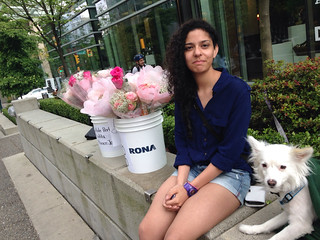
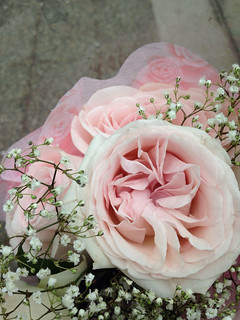
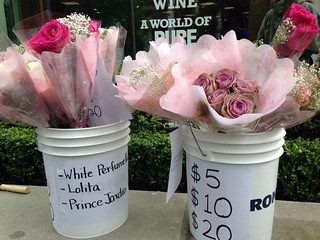
Most of the roses bred for the cut-flower industry smell anemic and lack character in that arena - in exchange for longer vase-life and easier transport. So imagine my delight at finding real scented roses on Mother's Day! The flower girl's name is Sabrina, and she has a cute dog and pretty roses that are not only affordable ($10 for a bouquet of five roses). Most of them are scented and might look quite ordinary (the pink ones) but smell divine, a little sweet-vanilla-like and violetty, and definitely Tea-Rose-like; very much like Bulgari pour Femme, actually.

I was so dumbstruck that I actually asked Sabrina at first which perfume they sprayed on the roses... It was that extraordinary!
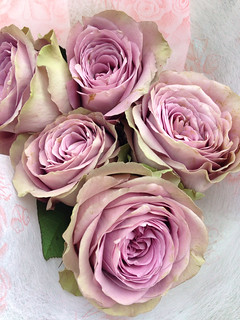
It was not until she showed me their unscented varieties (the green trimmed purple roses below - which actually were so pretty that almost seemed to be worth buying despite their fragrant shortcomings).
Fragrant rose bouquets for Mother's Day
{Fragrant}

Fragrant rose bouquets for Mother's Day

{Not fragrant}

Fragrant rose bouquets for Mother's Day
My daughter bought me a bunch of the fragrant pink ones with her weekly allowance (simply because I had no change in my wallet - I secretly put it back in her piggy bank).


Labels: , , , , , ,

Wednesday, March 04, 2015

Tarnished Silver

Naming has the power of brining our attention to the subtle qualities of a scent. In Tarnished Silver, botanical extract expert Dabney Rose brings forth the metallic qualities of violet. I've been fortunate to experience several of Dabney Rose's innovative botanical enfleurage of hyacinth, which she added to my order of hydrosols, and have also traded a copy of my book for her gorgeous pommades of tuberose breathtaking butterfly ginger which I have recently reviewed here. Tarnished Silver is the first perfume blend I'm experiencing from this talented lady. This time it arrived in my mailbox completely unannounced (though most welcome!) alongside a beautifully assembled collection of handicapped Kyphi incense. They all arrived right before I left for my trip, and I left them behind, knowing I will not have the appropriate conditions for incense burning on my travels.

Tarnished Silver, however, was tucked in my carry-on and I'm enjoying it immensely. I am now riding the train to the north part of Israel - the Western Galilee. Stretches of fields, meadows, orchards, and factories pass by the window, and glimpses of the Mediterranean sea delight the spirit as the train gently rocks and hums its way to our destination. There is wi-fi here (which I won't easily come by when I reach my home village, and off-the-grid hippie haven). So here I am again with a dab of Tarnished Silver on each wrist, enjoying the scenery.

It opens with a melancholy tinge of violets: at once sweet yet also bitter. Sharply green yet soft and diffused, almost powdery. It's amazing that fresh violets can be captured so beautifully with this vegan enfleurage - truly a labour of love. To the sweet ionone facets are added some other notes though subtle: honey, perhaps a tad of hay or flouve as well or something else that gives it a bitter sweet coumarin undertone. A touch of rose and oaks give it a very vintage feel, like Chypre from the turn of the 20th Century.


Labels: , , , , , , , ,

Friday, November 14, 2014

Coriandre


What can one expect from a scent with a name so unassuming as Coriandre? Would it be green? Rustic? Funny? Refreshing? There is nothing particularly intriguing, mysterious or fashionable about that. You just have to try it on your skin to find out.

Coriandre is a great perfume, which I have overlooked for years. Despite the many good things I've heard of it, it did not appeal to me when I tried it for the first time. It simply didn't register. Years later, I came across it on the forgotten shelves of the neighbourhood parfumerie; and noticed that they had some stray old bottles pre-IFRA reformulation frenzy. Which is always a good news for a scent that is very likely to rely on oakmoss for its appeal, being green and all.

Well, as it turns out - IFRA or no IFRA - it would have probably not made much of a difference. Unless what Robin is saying is true, and this is already been reformulated beyond recognition by the early 90s.

Coriandre is not really a Chypre in the classical sense of the word. I don't even think I would classify it as a Chypre at all. Nor would I classify it as green, either. To me, Coriandre is a big, dirty, dusty rose. Maybe not that big either. And if it smells like any colour at all, it would be brown, not green. It is brown. And bitter.

Unbeknown to it, it is the mother of all of those godless, oakmossless modern "Chypres" - Agent Provocateur, Narciso Rodriguez, SJP Lovely and Chloe. A Chypre that relies on musk, patchouli and vetiver to tell its dry, bitter jokes and poke fun at rosy-cheeked naïveté, all the while being doused in rose itself. If you're into herbaceous, earthy floral perfumes, such as Aromatics Elixir- Coriandre is a very good (and affordable) substitute. It can be had for $38 for a 30ml bottle (and that's probably a rip-off, actually, comparing to how cheap you can get it elsewhere).

Top notes: Coriander seed, Angelica Heart notes: Rose, Jasmine, Orange Blossom
Base notes: Musk, Patchouli, Vetiver, Sandalwood

Labels: , , , , , , , , ,

Tuesday, January 14, 2014

Musk Malabi

Malabi by Tom lahat
Malabi, a photo by Tom lahat on Flickr.
If Sahleb is the royal treat of winter, then the rosy, rubbery Malabi (see recipe below) is the queen of summer in the Middle East. Served cold in every other corner and almost every kiosk and restaurant of any caliber, this chilled milk-pudding captures the eye with the contrasting rosy-red syrup oozing all over the white, petri-plate-like to-go containers it comes in. I was never a big fan of its texture (ditto in regards to Rahat Loukum, also unjustly made with corn starch instead of better quality materials), but I adore its fragrance!

What always captures my imagination about malabi was its soft, evocatively sounding name, and its unique fragrant combination of rosewater and neroli. Rose and neroli are such noble flowers yet oh so different. Rose is open, voluptuous, sweet and feminine. Neroli is prim and proper, restrained, clean, ethereal and otherworldly. It's incredible that such a thing even grows from the earth, as has such a heavenly character.

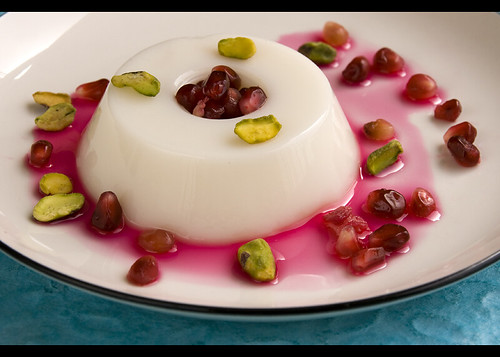
Malabi with pom syrup by Dan Bar Dov
Malabi with pom syrup, a photo by Dan Bar Dov on Flickr.
The balance of these two strong-willed floral elements that inspired the creation of my new, limited edition for Valentine's Day 2014. Titled Musk Malabi, this perfume is a holy triad of sorts, between voluptuous, velvety and soft rose; airy, clean and cerebral neroli, and the pulsating animalic energy of musk. The musk is, in a most profound way, what makes these two oppositional flowers harmonize rather than compete with one another. It is told in the Koran that Mohammed's breath was as sweet as rose, and that he considered musk to be the purest of all perfumes. Musk grains were even mixed with the mortar in the construction of several Eastern mosques and retained their musky scent for years. The botanical musk in Musk Malabi was designed to smell as close as possible to deer musk, and most importantly, act like one: it plays cupid pulling all the strings between and drawing the lovers (rose and neroli) together. It doesn't need arrows, and plays the harp better than cupid, doing all of this work gently and with effortless fluidity. 

Malabi by shai.wininger
Malabi, a photo by shai.wininger on Flickr.

Musk Malabi is a limited edition for Valentine's Day 2014, which is just a month away from today! 
Love it, and it will love you back.

Top notes: Bitter Orange, Cardamom, Coriander, Blood Orange
Heart notes: Turkish Rose, Bulgarian Rose, Tunisian Neroli, Egyptian Orange Blossom
Base notes: Atlas Cedarwood, Botanical Musk Accord, Tahitian Vanilla

Labels: , , , , , , , , ,

Wednesday, January 08, 2014

Bal à Versailles

Versailles by Ayala Moriel
Royal Boudoir, a photo by Ayala Moriel on Flickr.
Smelling Jean Desprez's Bal à Versailles is what I can imagine Jean-Louis Fargeon (Marie Antoinette's personal perfumer) would concoct especially for her: in his dusty apothecary in Paris, he would measure into the beaker with much abundance the costliest of all extracts: tuberose, jasmine and jonquil enfleurage from Grasse, attar of rose from Morocco, shipped across the Mediterranean, aged orris root tincture, tincture of vetiver, oakmoss from the Albanian forests, collected by wolverines in the moonlight, and every animal extract he could get a hold of: Ambergris? you got it! Tonquin musk? Oh yeah. Civet? Sure, but only a little bit...

Although I've been reading a lot of reviews that go on and on about the civet being the star of the show, I beg to differ. Bal à Versailles, although I still think agree that it could have been more aptly named - my suggestion would not be "Orgie de Versailles" (which is what it would have been if civet were the star of the show - as it is in Tabu, for instance), but rather more delicately, as in "Boudouir de Versailles".

The Eau de Toilette I have on hand is vintage, probably from the 90's, or late 80's at the most. It is redolent of black pepper, opulent flowers and dry, musky oakmoss. While it has a definite carnal energy about it, it is not due to civet, but rather, musk and white flowers. I was scratching my head for a while trying to recall what it reminds me of. And when I got it, I was a bit surprised - more than anything at all, it reminds me of my very first version of Schizm, when I was so naive that I thought that the "black musk" that was sold at the Persian Arts jewellery and antique store in Pacific Centre were in fact vintage perfume bases (hence containing synthetic musks, including the defunct musk ambrette and deliciously animalic musk ketone). The old Schizm was just like this - a surge of pepper, tuberose, narcissus, oakmoss and musk, with a bit of cedarwood accentuating the dry aspect at first, and turning into something sweet (taken over by the oakmoss) in the end.
And sure enough, the drynenss of oakmoss' top notes, the cedar and pepper bows and lets the sweeter song of raspberry-lined musks to make their coiffed entrance, powdered wigs and all. Vanilla, dark and real, is not too loud but makes its presence known, like a seasoned seductress partly hiding behind a black laced fan. And just like this confident woman in black, which does not need find the urge to flash her assets to be noticed, you'd also find a hint of the leathery, a nuance of fur and purring with its dry breath of isobutyl quinoline.

This early version of Schizm was never sold commercially, therefore I realize this comparison is not the most relateable. To give you a more familiar point of reference, I'd say that Bal à Versailles, despite it being a child of the 60's (launched in 1962) reminds me of the good old Caron fragrances: it has the same dry-peppery feel as Poivre and the delicious muskiness of Parfum Sacré
(well, this is not really old, it's from the 90's yet it has the same vintage feel), yet at the same time an underlining dark, almost dirty, boudoir feel of Nuit de Noël. In short: don't let it scare you. While very old-fashioned in feel, it is neither dense nor overbearing. It is very easy to wear, although I would definitely reserve it for special occasions, or at least for the evening, when you can truly savour it, sipped slowly like a glass of spicy Syrah.

Top notes: Black Pepper, Cedarwood, Citrus 
Heart notes: Tuberose, Jasmine, Orange Blossom, Narcissus, Orris Butter
Base notes: Oakmoss, Musk, Patchouli, Vanilla, Amber, Leather

Labels: , , , , , , , , , ,

Sunday, September 29, 2013

The Joys of Floral Hydrosols

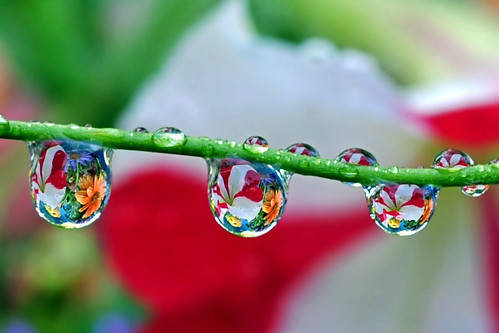
Grand Opening: new "water drop bouquet" grow, harvest and delivery service
Water Drop Bouquet, a photo by Steve Wall on Flickr.

Treasure hunting is one of my favorite aspects of going on vacation. Surprisingly, Mayne Island, a tiny island off the coast of Vancouver Island, is my favorite place to find unique knick-knacks, books, jewellery and food. Mayne is truly my heaven on earth and my home away from my home. Everything about it is comforting, from the sights, sounds and smells (briar roses, broom, salty ocean air, spruce, and sun-warmed blackberry bushes) to the people. The island's population is tiny - approximately 900 people and is like a village. Everyone is treated like a friend, doors are unlocked, and local farmers will leave produce unattended on the side of the road next to a jar to put your money in. Now that is what I call trust (something that is relatively foreign in big cities). The local artisans and artists who reside on Mayne are not only extremely talented but genuinely care about each of their crafts and love spending time with customers helping them choose products that they will be happy with and that will suit their personalities and lifestyles.

I get a huge thrill out of scouring the few shops and thrift stores whenever I am there. Almost everything to be found is one of a kind or few of a kind. My big find this year was a six dollar bottle of Rose Geranium Floral Hydrosol. For those who don't know, hydrosols are the distillate water that is produced when plant materials are steamed or hydro-distilled to create essential oils. Hydrosols contain the water-soluble fragrant molecules from plant, unlike essential oils which are what floats on top of the water, and represents only some aspects of a plant or flower. Hydrosols are a pure luxury  and have many properties and applications, their most prominent use being in skin-care.

If you ever tried your own steam-distillation, you can also create a low-tech hydrosol in which the essential oil (non-soluble in water) are not separated from the distillate water, producing a more rounded aroma profile and preserving many of the therapeutic properties of the plant. These can be found among artisan distillers, usually made in very small batches and often from plants that were wild-harvested or collected in their own garden (if you're interested in distilling your own hydrosols, you can find a small copper still and learn this ancient art from renown aromatherapy teacher Jeanne Rose, who is the eldest pioneer of modern-day's natural perfumery.

Though very aromatic, these artisanal hydrosols are much more gentle than essential oils (their essential oil content would be less than 5%) when used for skin care and can be utilized in enhancing your complexion in skincare products, in body care, home fragrances (linen sprays are such example), as well as in food and beverage.

Lavender

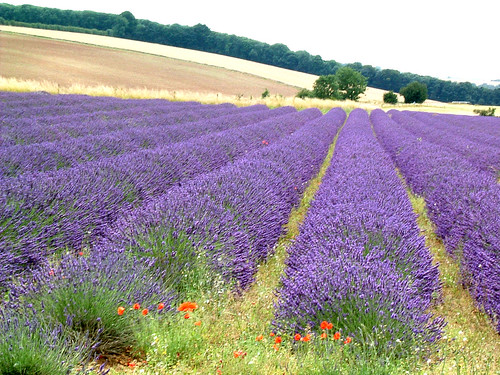
Lavender hill mob
Lavender Hill Mob, a photo by Billy Reed on Flickr

Lavender (Genus: Lavendula, a purple-flowering plant related to mint), is very well renowned throughout the world, not only for its delicate, sweetly herbaceous aroma, but also for its remarkable abilities to soothe and heal the body and mind and its almost miraculous power in healing burns, cuts and wounds. Lavender hydrosol contain full emulsified plant essences (including the water-soluble coumarin) and have a great deal of benefits to the skin and to one's emotional and mental state. Gentle and versatile, lavender is suitable for every skin type, soothing inflammation and providing a cooling sensation when spritzed on the skin. It has regenerative effects on damaged, irritated skin and when combined with oatmeal creates a gentle, deep-cleansing mask. Lavender hydrosols can be used as a cleanser, toner or makeup remover, after shave, air freshener or as a calming facial mist.

Rose

Rose Bush
Rose Bush, a photo by Nesha's Vintage Niche on Flickr

Roses have a fragrance that is immediately recognizable and universally loved. Renowned for centuries for their ability to calm the senses and for their positive effect on various aspects of physical health. Roses provide many benefits in terms of skin care. They have a balancing effect of the PH level of one's skin, can help increase circulation and therefore the distribution of nutrients in the skin, and help to regulate the production of sebum in the skin (the oil that skin naturally produces to keep itself healthy and protected, but that in excess can cause breakouts and dermatitis). Rosewater has a lovely, delicate floral flavor and is used in beverages and baking. It is used extensively in Middle Eastern and East Indian desserts. Many people swear by rosewater as a remedy for premenstrual syndrome (PMS) for its ability to balance female hormones. Some people even find it helpful in soothing sore throats.

Rose's antioxidant properties make it most suitable for mature and dry skin. Rosewater and glycerin are a classic apothecary preparation that can be found to this day in most pharmacies, and is applied to either face or hands as a simple lotion. Spritz rosewater every night on your face as a nourishing toner and moisturizer, either alone or layered with a rosewater based lotion or a rose-scented facial serum or rich cream.

Rose Geranium

Rose Geranium
 Rose Geranium, a photo by hello_imac3 on Flickr

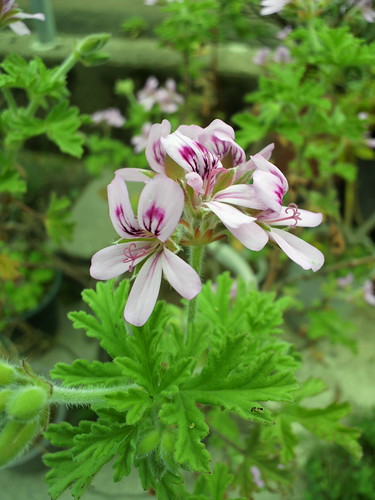
From the flowers and leaves of Pelargonium capitatum, this is my personal favorite hydrosol. I love rose geranium for its uplifting, slightly green, almost lemony aroma. This particular hydrosol is great for combination, oily, or blemish-prone skin, and helps to quickly and effectively restore the skin's balance. This was especially beneficial for me in the summer time when the increased exposure to the sun caused my skin to become a little bit more oily (a common side effect of many skin types in response to sunburn and dryness). Rose geranium hydrosol's can be used as a facial mist, toner, cleanser or even as an air freshener. A natural anti-inflammatory and coolant, rose geranium is also helpful for use on sunburns and summer rashes.

Roman Chamomille

Roman Chamomille
Roman Chamomille, a photo by noriko stardust on Flickr

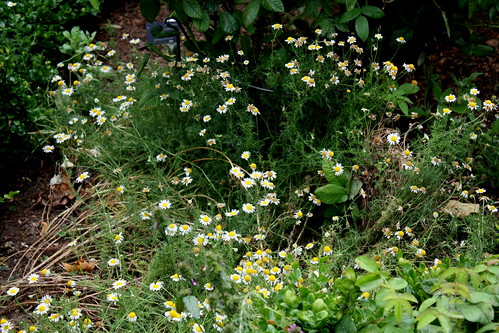
Wonderfully soothing, Roman chamomile (Matricaria chamomilla) hydrosols are great for most skin types and are perfect for skin that is extra sensitive, like babies' skin. Incredibly relaxing, Roman chamomile is renowned for its ability to soothe one's jangled nerves and balance the senses. It can ease muscle cramps and can be taken orally to help with intestinal cramps and spasms. It can be used on the skin to ease any kind of inflammation, as a facial toner or spray. It is also a great enhancement when added to a moisturizer or facial mask.

Orange Flower

Neroli
Neroli, a photo by Starry Raston on Flickr

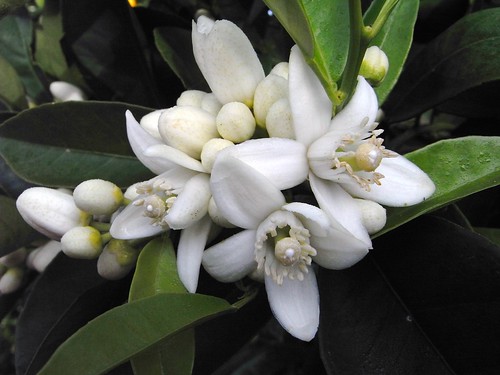
Orange Flower Water (Neroli water), from the flowers of the bitter orange tree (Citrus aurantium subsp. amara or Bigaradia) is one of the best for reducing stress, with its citrusy floral hydrosol. Very astringent, this floral hydrosol is best for oily and acne-prone skin. For those with normal, dry or sensitive skin, this water should be combined with a more hydrating water such as rose or lavender. This water is optimal for blemish-prone skin when combined with an oil-absorbing clay mask. It should also be used as a toner or as a spritz (when used sparingly as to avoid excessive dryness) to balance skin and to calm anxiety. Orange Flower Water are also very popular in the Middle East, in both desserts and savoury dishes. Along with rosewater, it perfumes many famous confections such as Rahat Loukum, Malabi, and a wide assortment of syrup-soaked baclavas. It will also make a fragrant salad dressing or marinade for poultry or fish, providing a fresh-floral top note.

With so many options out there in terms of beauty products it is very important to research what is best for your skin type and body. Floral Hydrosols are great in that they are one hundred percent natural, affordable, and serve the skin in a multitude of different ways. They are also great for aromatherapy and provide a great deal of emotional benefits. And if you're a foodie - there are countless ways to incorporate them into the kitchen In other words, it is the ideal beauty product for the lover of all things natural, with an appreciation for fragrance.


Labels: , , , , , , , , , , ,

Friday, September 20, 2013

Jimmy

Contrary to my expectations, Jimmy is the most girly of the collection titled Bruno Fazzolari Editions. Fuzzy and milky peach accents a classic bouquet of rose, jasmine and ylang ylang, thinly cut by a blade of green grass. It reminds me very much of AnaisAnais - fruity floral yet green and a tad soapy, and a little of Yvresse - with which it shares a somewhat old fashioned, bubbly aldehydic fizziness.

It's not my personal favourite from Bruno Fazzolari Editions, but I am certain those who are in favour of fruity florals and powdery effervescent roses will approve!

Top notes: Green Notes, Ylang Ylang
Heart notes: Rose, Rose Geranium, Jasmine, Violet Leaf
Base notes: Sandalwood, Heliotrope, Oakmoss

Labels: , , ,

Saturday, May 18, 2013

Rose Berlin

How about a visual review for a change?With Serge Lutens' newest perume release for 2013, La Fille de Berlin, I was expecting this:
Makani Terror by _MissAgentCooper
Makani Terror, a photo by _MissAgentCooper on Flickr.
But got this instead:
Hybrid Tea Rose 2012 by neggatiff
Hybrid Tea Rose 2012, a photo by neggatiff on Flickr.

What will lure you in immediately are the distinctive tea rose with only the slightest soapiness - the iconic and familiar sharpness of the Perfumers' Workshop Tea Rose immediately comes to mind. Once it touches your skin, La Fille de Berlin quickly turns into an uber-sweet tea rose and violet-candy affair, reminiscent of the sweet-spoken Bvlgari pour Femme, only with a higher price point and slightly intriguing spice to stop it from being as cloying. Musky woody notes at the base give this retro theme a more current flavour; and a hint of leathery saffron note is the only thing that gives it a “niche” edge. Other than that, Serge Lutens’ La Fille de Berlin is a crowd-pleasing 2-syllables rose, obvious and leaving no room for guessing. The dryout is continously rosy, changing into plum-like damascones and raspberry-jam darkness that's reminiscent of Ivoire's dying words; and a very subtle animalic aspect of sandalwood against the smooth-warm-cool wood of Moroccan cedar lurks underneath, very subtly and surprisingly does not embody what you'd expect from Lutens - or from a Berlin girl. I really expected some more thorns and instead got a very conventional, although well-made sugary rose.

Top notes: Tea Rose, Black Pepper
Heart notes: Rose, Crystallized Violet, Safranal
Base notes: Musk, Atlas Cedar, Raspberry, Sandalwood

Labels: , , , , , , , , , ,

Monday, February 11, 2013

12 x Roses

In the last few months, I find myself constantly reaching for roses. Be it fresh, simple rosy body products, rice milk pudding with rosewater and orange flower water (otherwise known as malabi), rose chai, or full-blown romantic and mysterious rosy perfumes - I'm there. And with Valentine's Day a mere couple of month away when all this rose obsession took possession of me - I've decided to invite a few of my perfume blogging friends over for a big, rosy blogfest!

1. Parfum Sacré was the first Caron that I fell for. And hard did I fall. It stroke a deep chord with me, the way only really great perfume can do. That feeling of familiarity and magic; a lost memory not only being retrieved but being re-lived. In this case, my first perfume of all times, coinsiding with my first true love: Abishag (made by the Israeli Museum in Jerusalem, and shortly after its introduction was discontinued). Parfum Sacré  got nothing in common with the latter's green top notes, but a very similar base and dry down. It's surprising that something so luxurious came out of a very sparse period as the 1990's. It has all the characteristics of days of yore, when no one ever suspected that musk ketone might someday become illegal...

2. Nuit de Noel, also by Caron (but from a much earlier period when its founding perfumer was still alive) has all the makings of a great love story: beautiful pitch-black bottle, the enigmatic Mousse de Saxe accord which relied on isobutyl quinoline - one of the very first man-invented synthetics (aka: not naturally occurring); and more importantly: the innovation and genius of Ernest Daltroff coupled with the love of his life, Félicie Vanpouille, whose fondness of Christmas Eve is told to be the inspiration for this perfume. But what I find most inspiring is how dedicated was this couple (who never married, despite Daltroff's repeated proposals) to the art of modern perfumery in the West, which they pioneered. From the perfume design itself, where Daltroff incorporated bold, uncommon, innovative, and often difficult to work with raw materials - to the bottle and box design - these two worked together to create what I feel was authentic multi-media pieces of art. Nuit de noel is one rose that will I will always keep in its ink bottle on my desk: If I were to ever write a love letter this would be my ink.

3. Tocade
 by Maurice Roucel for Rochas is a flirty, easy to wear but not as easy to forget scent. The delicacy of roses is played up here with notes of magnolia (Roucel's signature note, reappearing in many of his creations). It has such a distinct, recognizable character that is the definition of a good perfume. And it's one of the first linear compositions, abandoning the serious evolution from top to base through heart for a structure that is more in line with the fast paced modern lifestyle; yet without compromising innovation and originality. There's a lot to learn from Tocade!

4. Agent Provocateur was one of those intriguing scents - a little too much of everything. Yet somehow it just works: saffron, rose and musk - all in large doses, and although this might sound "oriental" or even with an Arabian theme - the result if one of the early Pink Chypres, also known as the hard-to-believe phenomenon "The Moss Who Wasn't There". Well, while I find such a notion to be sacrilege - perfumes such as Agent Provocateur, that do it well, do deserve respect. The musk teams up with dry, woodsy vetiver and sweaty coriander to create a bombshell, Femme Fatale fragrance that  should be reserved for special occasions (example: blogging about Valentine's Day perfumes, or something more risque if you live outside the computer).

5. Kashmir Rose Whipped Body Butter by Velvet & Sweet Pea’s Purrfumery is just like they say - you have to feel it to believe it. It's like dessert for your skin. And with only the best things on earth: virgin coconut oil, cocoa and shea butters, and, of course - pure rose essence from Kashmir. Just goes to show you that mother nature does not need a lot of help to be amazing and nourishing.

6. Bedouin by Persephenie is a simple, elegant, pure rose - with a twist. But of course! Otherwise I wouldn't love it so much. And that twist is cardamom, and botanical musk from ambrette seeds. Bedouin smells luscious, fruity almost, distinctively rosy yet not nearly as boring or sharp as so many rose soliflores tend to be. "Not your garden variety", as they say...  Another great example for how simpler feels more luxurious.

7. Royal Couple candle Gabriel’s Aunt is as good as it gets. And it's true, it's not all roses - there's jasmine too! Nevertheless, when it comes to candles, this is about as rosy as you can find. And like everything that Nikki Sherritt makes - it's all natural, and made with love. If someone were to turn Joy into a candle, this is how it would have smelled.

8. Rose Bohème by Providence Perfume Co. improves on the theme of spicy rose patchouli oriental to the point that it's really hard to say anything more than that. The key here is not just using top quality naturals (we already know that's important, right?) - but also the balancing act of making fussy notes such as rose yield to the uncompromising personality of patchouli. And to make this balancing performance even more impressive - there is also exotic saffron and stubborn cloves. Classic spicy oriental at its best.

9. Rose Paka by Persephenie is hands down the best face cream imaginable. And I say so not just because Persephenie is my friend - but because I am very picky when it comes to any products that go on my face. And they most preferably would smell of roses. Rose Paka isn't just wonderfully rosy, and redolent of white chocolate (blame it on the cocoa butter) - but it also is nourishing without being greasy; fast absorbing without being useless. I rarely re-purchase creams, as I usually find one flaw or another in them, and easily develop sensitivities around my eye areas. But this is an exception. And what's even better - it doubles as a body moisturizer, which makes travel easier!

10. I did not expect to like Rosewater & Vanilla by Jo Malone. Nor did I expect for it to remind me of anything I'm familiar with. And definitely not to smell Middle Eastern. But it did remind me of malabi - that sickening, chilled dessert that is served with red grenadine syrup. But it made it smell all nostalgic, and actually very pretty. It's nice to discover new loves from time to time. And this is the only one in the "Cologne Intense" series that did not smell like it's trying too hard to smell "niche".

11. Ta'if by Ormonde Jayne
 is a Middle Eastern fantasy from a British perspective. And like all things good and British, it somehow involves floral prints - or gardens. In this case, the noble petals are embroidered with spice and desert fruit: saffron, pink pepper and dates. Somehow along the way - after you hit the drydown, you realize it's a happy medium between Parfum Sacré's spiciness and Tocade's powdery musky sweetness.

12. Qajar Rose by Parfums Lalun gets a notable mention for authenticity in a world that seems to have a lot of wannabes. Perfumer Maggie Mahboubian was born in Iran, and she sourced Persian roses to include in this lovely, mysterious spicy perfume, alongside saffron, cacao, coffee and wine-like fruity notes of pomegranate, strawberry furanone, davana and geranium. Parfums Lalun is an intriguing new line, inspired by Maggie Mahboubian's passion for creating her own natural beauty and cosmetic products - a tradition that was alive in Iran when she was growing up. I hope she continues to do what she does and inspires other women to live beautifully!

Now, I was going to share with you my new recipe for rosewater buttercream sandwich cookies which I served at my Broken Hearts Tea Party (aka my 4th Annual Valentine's Day Afternoon Tea); but I've already picked my dozen roses, so this will have to wait for another post, tomorrow. In the meantime, please scroll over to my perfume blogger friends, and get more rosy inspiration - and don't forget to leave comments with your favourite roses!

All I Am A Red Head
EauMG
Katie Puckrik Smells
The Non Blonde
Perfume Shrine
Roxana Illuminated Perfume
Scent Hive

Labels: , , , , , , , , , , , ,

Monday, October 08, 2012

Noir Patchouli

hypnotic bokeh wallpaper by mav_at
hypnotic bokeh wallpaper, a photo by mav_at on Flickr.
In my recent visit to Scent Bar to pick up a birthday gift for my brother, Laura and Steven have given me a few samples – 2 of them being of patchouli scents with which I’d like to close the patchouli series.

Noir Patchouli by Histoires de Parfums is a more of a study in dry chypre than it is a patchouli per se. It opens with a very perfumey, old-world blast of blushed, rosy cheeks and fatty aldehydes, bringing to mind floral chypres of the caliber of Aromatics Elixir. Yet, there is a dry spiciness to it all that stops it from being cloying.

Coriander and aldehydes are the dominant first notes, underlined by a honeyed, lush rose absolute. The dry patchouli layer underneath it all is always apparent yet not exactly obvious as you’d expect from a perfume of that title. There is also a hint of tobacco leaf, or vetiver, or both; as well as hints of jasmine and indole – giving it an earthy, bitter tonality that at firstshifts its balance from smelling muddy and overcrowded to intriguingly light and well-composed, until it settles on the latter, once a dry musk takes the reins and disperses the rose into like dust particles that lift up from an unused leather seat that’s finally been claimed by its absent owner.

While I do find the initial blast of aldehyes more than a tad overbearing, it is worth trying it on for what’s to become of Noir Patchouli later on: a modern take on the patchouli-rose of yesteryear, updated with contemporary musks and acrid leather-woody notes that both complement the patchouli and bring the rose its due respect. It brings to mind other favourites from the musk-rose-faux-chypre genre, namely Agent Provocateur; yet while the latter demands to be worn by a lady, Noir Patchouli could be quite easily pulled off by a man, as long as they can handle a few mintues of oily aldehydes.

Top notes: Aldehydes, Coriander
Heart notes: Rose, Jasmine
Base notes: Patchouli, Tobacco, Vetiver, Musk

Labels: , , , , ,

Tuesday, July 06, 2010

Rosy Rhubarb Crumble


Summer Fruit, originally uploaded by Ayala Moriel.

As promised, I’m sharing with you my rhubarb crumble recipe. I couldn’t help but add something perfumey to the otherwise quite simple North American classic of rhubarb and summer berries bake – probably owing to the fact that I’m a Middle Easter perfumer, the pairing with rose was just inevitable.

Rosewater and rose sugar complement the tartness and slightly floral nuances in the rhubarb, strawberries and raspberries in this otherwise easy and laid-back recipe. It’s a heavenly summer treat and with reduced sugar comparing to other rhubarb recipes I’ve seen. I think the tartness is refreshing and overdoing the sugar takes away from the flavour (this is true for many recipes – and in fact, I usually cut the sugar in half in most North American dessert recipes – sugar is way overrated and overdosed in our continent!).

For the fruit "filling":

4 stocks of fresh rhubarb

2.5 lbs fresh garden strawberries

0.9 lbs fresh raspberries

2 Tbs. rosewater

2 Tbs. corn starch

½ cup raw cane sugar

1 Tbs. butter for the pan

- Butter a large and deep rectangular pan
- Clean and stem the strawberries and cut into half
- Place in a bowl and add the raspberries
- Slice the rhubarb and add to the berries
- Sprinkle the rosewater and sugar and toss well
- Sprinkle the cornstarch and toss until evenly spread within the berry and rhubarb mixture, and spoon into the prepared pan.
- Preheat the oven to 350F.

For the crumble topping:

1 cup rolled oats

1/2 cup whole wheat flour

1 oz. butter (about 2 Tbs.)

¼ tsp. salt

2 Tbs. rose sugar (reserve 1 Tbs. for topping)

2 Tbs. Demerara sugar (reserve 1 Tbs. for topping)

50 gr. Sliced almonds

- Stir the oats, flour, salt and half of the sugars together.
- Cut in cold butter and mix with fingers or with a hand blender, until large crumbs are formed
- Mix in the sliced almonds
- Sprinkle the crumble topping onto the rhubarb and berry mixture in the pan. Sprinkle the remaining 1 Tbs. each of rose sugar and Demerara sugar on top of the crumble.

- Bake in the pre-heated oven for 40 minutes.
- Serve warm or at room temperature, on its own or with vanilla ice cream, crème fraiche or whipped cream.

P.s. A little note about the crumble topping: since these fly out of the pan pretty fast, I actually double the recipe for the crumble and reserve half for the next batch. The crumble is the only “pastry” like part so that makes the next crumble a no-brainer to whip up even on short notice, as long as you got some fresh fruit around!

Labels: , , , , , ,

Saturday, February 13, 2010

Stop And Smell The Roses


Self Definition, originally uploaded by Ayala Moriel.

How

did the rose
ever open its heart
and give to this world all of its beauty?
It felt the encouragement of light against its being,
otherwise we all remain too
frightened.
- Hafiz

The perfume of rose not only opens the heart of the person smelling it; it also opens the heart of the perfume, making it complete.

The beauty of rose unfurls its spiral-shaped blossom, unfolding each petal as it progresses. There always seems to be more depth to the perfume of rose. Which is why when we stop to smell the roses, we tend to take long, deep breaths... There always seems more to it in the next inhale, and the next one... Just a short whiff won't cut it!

It is impossible to imagine what perfumery would be like without roses. The beauty of rose essences - both the attar (rose otto) and absolutes add an irreplaceable quality to a perfume, making it round and harmonious.

Part of the appeal of roses is their complexity. Rose is one of the most complex botanical essences, of which 540 elements were identified; yet it is still inimitable by means of synthetics. But it is also rose’s complexity that makes it one of the most challenging natural raw materials to work with in perfumery.

As discussed in the previous article, the roses most used in perfumery are the Rosa damascena and Rosa centifolia. Rosa damascena is mostly steam distilled to produce Rose Otto – the best of which comes from Iran (but is hardly ever imported anywhere out of the Arab world). Persian rosweater is used during the prayers in the Hadj in Mecca to cleanse the Kaaba.

Like many natural raw materials, rose essences olfactory profile varies greatly depending on their geographical. On the whole, some generic observations can be made: rose has a typical “rosy” scent, which characterizes this unique flower essence, and is mostly derived from the high percentage of citronellol and geraniol, as well as phenyl ethyl alcohol (in the absolute), which gives the fresh-petal note. In addition, there is citrusy aspect (from citral), and a slightly spicy aspect, from eugenol (which is also present in cloves and allspice, for example). It also contains many trace elements, which vary from species to species (i.e.: ionone, which is much stronger in Tea roses). On a scent strip, rose begins as a fruity, rosy, full-bodied, even wine-like or honey-like, and softens as it dries down, sometimes showing some green aspects (I suspect this is because the flowers’ sepals and base are also extracted in the solvent). It dries down into a woody and even slightly animalic note. Rose is a heart note, but very long lasting, and depending on the context of how it is blended, it may even act as a base note.


Rosas bravas de Arronches, originally uploaded by moitas61.

Bulgaria’s Valley of Roses produces the finest Rosa damascena attar and rosewataer. White rose bushes (Rosa alba) grow at the edges of these fields. After Bulgarian rose otto, the next best quality is of Anatolian rose otto (from Turkey). The Bulgarian otto tends to be more light, and to me smells more true to the fresh flower. Turkish rose otto is heavier, more full bodied and with a certain wine-like and even slightly earthy qualities. Other locals of rosa damascena of lesser qualities come from Russia, India, Pakistan and Uzbekistan. The Indian roses have a peculiar off note that makes them completely different than anywhere else in the world. It’s as if they take with them some of the earthy qualities of the Indian soil. This kind of rose has, of course, its own beauty, but is less desirable for Western perfumery purposes. It lends itself beautifully to more exotic blends, with an Asian or Indian theme.

It’s important to note, that producing the steam distilled essential oil does not capture the entire scent of the rose. The important molecule phenylethyl alcohol, for example, remains in the distillate water, and is mostly responsible for the fine aroma of rosewater.


Rosa centifolia, originally uploaded by Ayala Moriel.

Rose absolute, from solvent extraction, is primarily extracted from Rosa centifolia, (Grasse in France and Morocco are the major growers), and only to a lesser extent from Damascus roses in Bulgaria and Turkey. The absolute captures a fuller spectrum of the living rose. It must be noted, that the rose absolute is so extremely concentrated, it is best to dilute it down to as low as 10% to unfold and release the aroma of fresh rose petals, and fully understand this raw material.

Similarly, too high a proportion of rose in a formula can pose challenges. It can make the perfume too dense and rich. This is particularly true for purely natural perfumes, which are always in danger of becoming cluttered or too dense. Rose is used in all fragrance categories:
In classic colognes, it is used in a very low proportion along with citrus and herbs for a refreshing and light citrus fragrance.
In Orientals, rose has a central role in harmonizing and rounding off the composition, bridging between the rich resinous base notes and the light citrus or exotic spice notes at the top. Rose will have a similar role of bridging and rounding in Chypres. In both cases, rose lends itself readily to being the star of the show, in a rose-dominated Oriental (i.e.: Parfum Sacre) or Chypre (Nuit de Noel). And of course – it is essential in floral bouquets and is the most popular soliflore of the all.

According to Shiseido’s research, fragrant roses can be classified to 6 different categories – all of which seem to be difficult to describe without reference to other roses:

Damask Classic

Combination of the “strong and sweet Rosa centifolia with the exuberant scent of Rosa gallica”

Damask Modern
Similar to the above, but with “more passionate sophisticated scent”.

Scent of Tea
As mentioned earlier, the violet and tea-like qualities of China roses added to the damask or centifolia roses, added a more delicate, graceful, and somewhat reminiscent of tea aroma to hybrid tea roses.

Fruity
Damask Classic or Tea Rose with the added nuances of fruit, such as peach, apricot, apple, raspberry, etc.

Blue Scent
Charcterisics of both damask and tea roses.

Spicy Scent
Damask Classic, with accentuated cloves scent (from eugenol).


rosa_rugosa_3_coin_de_jardin, originally uploaded by JD-roud.
Similarly, just as there are many rose breeds, with various colours, shapes, sizes and odours, even rose-dominated perfumes have a lot of variety within them. Let’s explore some of the main ones:

Fresh Rose
These rose perfumes have a very light, almost realistic rosiness, and are as close as could be to the fresh living flower.
i.e.: Tea Rose, Evelyn Rose, Stella, Rosebud

Green Rose
Often a nearly Chypre type, these green florals excude the briskness of crushed leaves, grass and rose petals.
i.e.: Ivoire, Kelly Caleche, l'Ombre dans l'Eau, No. 19, Grin

Fruity Rose

Fruity, full-bodied, sometimes wine-like, and at times with added fruity notes such as peach, apricot, apple, etc.
i.e.: Grand Amour, Spring Flower

Powdery-Sweet Rose

Roses paired with violet or orris. Soft, powdery and often sweet with a somewhat old-fashioned air to them. Vanilla is also not a rare thing to find in this rosy category.
i.e.: Paris, Bvlgari, Lipstick Rose, N'Aimez Que Mois, Cabaret

Big Abstract Rose
Modern interpretations of the rose have painted it with large strokes and less components than in old fashioned rose formulas, making them less realistic, but not any less romantic, despite their boldness
i.e.: Nahema, Tresor

Animalic Rose
Rose with an intentional animalic base makes it… well, a little naughty. Civet and musk are particularly effective to that extent.
i.e.: Joy, Agent Provocateur, Megumi

Earthy Rose
When paired with earthy notes, such as patchouli, rose grows bigger and stronger; as if on a fertile soil that allows her to fully develop luscious petals. Notes such as patchouli are the most important to that effect and this genre has become quite popular now (especially with the new restrictions on oakmoss). Of particular interest is Alexander McQueen's Kingdom, in which the cumin note adds a sensual earthiness.
i.e.: Kindgom, Midnight Poison, Philtre d'Amour, Taurus

Musky Rose
Rose with a light, musky base. These can often be also quite powdery.
i.e.: Tocade,
Poussiere de Rose

Dark Rose

Often from the Chypre family, dark roses are haunting, mysterious and full of depth.
Dark rose impression is often achieved by pairing it with mosses, spices and animalic notes.
i.e.: Nuit de Noel, Black Rose, Song of Songs

Spicy Rose
Roses have always been paired with spices, both medicinally and for culinary purposes. It is not surprising, than, to find that roses go well with spice in perfumes as well. Spicy roses don’t necessarily need to smell like potpourri. Some are the most luxurious rose perfumes that I’ve ever came by.
i.e.: Parfum Sacré, Ta'if, Fête d'Hiver, Roses et Chocolat

Labels: , , ,

Thursday, February 11, 2010

Unfolding the Hundred Petals of Rose


English Roses, originally uploaded by Ayala Moriel.

The nightingale, and none beside, knows the full worth of the rose for many a one reads the leaf and understands not the meaning thereof
– Hafiz


There is so much to be said about roses. And there is no better time to say it than now: winter is coming to its end, and celebrations of life and love in the form of fertility festivals and chaotic carnivals where everything is possible have now been replaced by Hallmark holidays of subdued emotions, appropriately framed with heart-shaped molds and rose-red hues. Finding ways to express emotions have never been more trying. And saying it with roses, as cliche as this may seem, might be the only way to remain genuine and leave something to the imagination.

Botany
Rose is a perennial flowering shrub from the Rosacea family. The leaves are serrated and most of the rose bushes have thorns on their branches. There are over 100 species of rose. With the exception of some Southeast Asian rose species, roses are deciduous, and lose their leaves in the winter. The fruit of the roses is a berry called rosehip. Roses with many closed petals may not produce fruit at all, as the insects cannot access the pollen. Roses vary in sizes of the plant as well as the flower. There are some climbing varieties, some plain bushes. Rosehips are especially rich in vitamin c (especially those from the dog rose – Rosa canina – native to Lebanon and Israel; and Rosa rugosa, aka Japanese rose).

Cultivars, Hybrids etc.
Cultivated roses are hybrids of various types have more petals (which are, in fact, mutated stamen). The most important modern roses are the hybrid tea roses, which come hybrid of the above species with China roses. The China roses (Rosa chinensis) were less hardy, but produced successive blooms from summer through fall; and also contributed to the shape of modern roses (including the classic “bouquet” roses that we see at the florists); as well as more colour possibilities in hues of coral, orange and yellow.

20th century rose breeders focused so much on the size and colour of the roses, that most of the newer breeds of roses are not nearly as fragrant as the antique garden roses. And roses that are found at the florists usually have no scent at all.

Origins & History
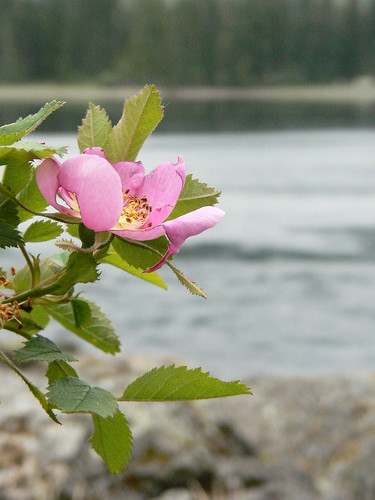
Tidal Rose, originally uploaded by Ayala Moriel.

Most rose species are native to Asia, with only a few native to Europe, America and Northwest Africa. The following species are the ones used mostly in Western perfumery:

Rosa centifolia, originating in Persia, where it is called “Gul”. From there it spread to India (its Hindi name is Gulab-ka-phool); Rosa damascena, originally from Damascus (Syria);
Rosa gallica, the French or the apothecary rose, native to central and southern Europe; Rosa alba – a hardier type, white in colour.


Rosa chinensis mutabilis, originally uploaded by Luigi FDV.

China rose (Rosa chinensis) from the mutabilis variety is most important in breeding the Hybrid Tea roses of both old garden roses and modern ones. They are called that way because they change colours throughout their bloom: vermillion orange buds open to coppery pink flower and later on a deep crimson.

The biochemical makeup of the Western roses is quite different than that of the China roses (Rosa chinensis), as is their colour. Western roses are white, red or pink; while the China roses are yellow or orange. The biochemical implications, simply put, are that Western roses are dominated by geraniol, citronellol and damascones; while the China roses posses various carotenoid biochemicals, such as beta ionone. The result is an aroma that is quite different – sweeter, fruitier and reminiscent of violets and tea.

Myth
and Nomenclature
The name for rose comes from the Latin “Rosa” (red), which originates in the Greek “rhodion” and ancient Farsi “wurdi” (flower). The name “rose” also means pink or red in a number of Romance languages, as well as in Greek and in Polish.

According to Greek mythology, rose origins were in the body of a young nymph found by Flora. Venus (Aphrodite) has transformed it into the rose plant, which was than blessed by Apolo’s sunrays, given a sweet nectar by Bacchus (the wine god) and with fruit by Pomona, and blessed with the most beautiful flowers by Flora and the Celestials (Poucher’s Perfumes, Cosmetics and Soaps, Vol. 2, 1959, p. 205). Rose was originally white, but after the thorns have wounded Aphrodite’s feet, her blood has turned roses red.

War of the Roses
The War of the Roses is a chapter in English history (around the time between 1455-1485), where civil wars between two dynasties (Lancaster and York) competing for the throne, and their supporters took place. Each of the dynasties had a rose symbol -
Red Lancashire rose/ Red Rose of Lancaster
and the White Rose of York. When the Tudors took the throne, the War of the Roses ended, and a new symbol was created, called the Tudor Rose, combining the red and the white, to symbolize union between the two.

Some say there is a reference to that in Lewis Carroll’s Alice in Wonderland, where the cards are painting the white rosebush red, although this is a very shallow interpretation of Lewis Carrol's work.


Religious and Spiritual Rose Symbolism
In the state of union the single beings of other world are one,
All the petals of the rose are together one.

- Muhammad Iqbal

The beauty of rose and her perfume and the complexity of her petals made it a subject of symbolism since ancient times. The only other flower that is known for having an equal breadth and depth of spiritual symbolism is the lotus flower.

Wild roses, like most of the Rosales order (which also includes cherry and almond) have 5 petals, symbolic of the pentagram, or mankind (the 5-pointed star is attributed to the head and the 4 limbs). Symbols of 5-petaled rose are recurring in European art and symbolism (i.e.: the Rosicrucian order’s symbol), who only later on in history were exposed to the cultivated, multi-petal rose. And nowadays, rose is the national flower of many countries, not to mention political parties. White rose was the symbol of a peace movement in Germany during World War II.

The multi-petals of cultivated roses grow give the flower the quality of mystery: it hides the stamens and holds its secrets… These petals also grow clockwise, in a spiral movement. This shape alludes to growth, expansion and is a metaphor to the universe. Spiral movement is eternal to both direction – the microcosm and the macrocosm.

Rose was sacred to the Egyptian goddess Isis.

In Hinduism, rose is considered Lord Krishna’s favourite. Hindus wash their alters with rosewater. According to the chakra system, the heart chakra is green, but when we are in love it turns to a rose colour. Likewise, rose flower grows out of a green thorny plant and represents the most elated state of the species (according to Ivan M. Granger).

In Judaism, rose was mentioned in the Song of Solomon as a thing of beauty found amongst the thorns, and is one of the seven perfumes mentioned in the book. It’s important to note, that there is also a fair amount of confusion between the names “shoshana” (the name for lily in modern days), or “vered” (the modern Hebrew word for rose).

In Kabala, the 22 letters of the Hebrew alphabet are said to form The mystical rose of creation, with the three mother letters forming a triangle in the middle (relating to the three elements – fire, water and air), surrounded by the 7 double letters which are symbolic of the 7 ancient planets, and finally by the 12 single letters, corresponding to the 12 Zodiac signs and the 12 tribes of Israel.

The beauty of rose in Ancient Greece and Rome were attributed to the goddess of love, Venus or Aphrodite. Wild rose was placed on the door of rooms where secret meetings were held. Alchemists considered rose to be associated with the element of earth, with the solar plexus or the heart, and with either the Sun or the planet of Venus.

In Christianity, red roses symbolize the blood of Christ, sacrifice and are associated with the heart. The colour of roses and their sweet, fruity, wine-like scent made them connected to wine, the refined symbol of Christ’s blood.
White roses symbolize the purity and virtue of the Virgin Mary.
Prayer necklaces called Rosaries were made from fragrant rose beads (see recipe here).

The Muslims loved rose above all other flowers. Mohammed’s sweat said to have the scent of attar of rose, and he is known for his love for women, children and perfumes above all things on this earth.

The Sufis practiced meditation in rose gardens, which are the most important theme in Persian art – Persian miniatures as well as carpet designs depict such rose gardens. A recurring theme in Sufi poetry is that of the rose and the nightingale. The nightingale is the lover, longing for the love of the rose, which he expresses in sad love songs through the night. These are of course metaphors to the Sufi in search for closeness to God.

Different Colours, Different Meanings
In the Victorian Language of Flowers, roses of different colours signify different emotions, meanings and messages for their recipient. Some of these meanings remain valid till modern day.

White roses: Purity, innocence, eternal Love, silence, wistfulness, virtue, purity, secrecy, reverence and humility. The white rose in the hand of The Fool tarot card signify that pure innocence and a "tabula rasa" awaiting learning. White roses are often used in bridal bouquets.

Pink roses: New love, happiness, romance, admiration, sweetness. Dark pink roses express gratitude; while pale pink mean joy of life, youth, energy and passion. Light pink roses are of the most popular after red ones.

Red roses: True love, passion, desire. These roses are most used among lovers.
Red roses also appear in The Empress card in the tarot's major arcana.

Yellow roses: Friendship, platonic love, jealousy, infidelity, dying love.

Orange roses were introduced to Europe only later on, and signify a combination of the emotions that both red and yellow coloured roses represent.
Coral hued roses were especially rare, and meant desire, passion and enthusiasm.
Orange roses also mean desire and enthusiasm, but also could mean pride.

Lavender roses: Love at first sight.

Blue roses:
Mystery, attaining the impossible

Black roses (which are really just a very dark red): death, farewell, separation, hatred - or rebirth and rejuvenation (which are really the other side of the coin of endings and death).

Medicinal and Therapeutic Applications

The most therapeutic type of rose is the Rosa centifolia (rose of hundred petals). Interestingly, it’s Sanskrit name, shatapattri, has the same meaning. Rose is used in aromatherapy for its soothing properties. It is a heart tonic and also helps to ease women in labour and helps to balance the hormones.

Ibn Sina (Avicenna) employed attar of rose and rosewater for treating ailments of the digestive tract.

The scent of rose gives one a sense of well being. It is an oil that has the greatest effect on the emotions, helping to cope with loss, grief and promote self-esteem and confidence (especially in women). The latter quality makes it act as an aphrodisiac: when a woman feels confident in her sexuality, she feels more at ease to seduce and engage in romantic relationships.
Gulab Lassi is an Ayurvedic rose aphrodisiac.

In Ayurveda, rose is used to balance the heart. It “balances Sadhaka Pitta, the subdosha of Pitta that governs the emotions and their effect on the heart” (reference here). Rose soothes the heart and the emotions. It also balances the mind, connecting the Sadhaka Pitta to the Prana Vata (the subdosha of Vata dosha that governs the brain, head, chest, respiration, sensory perception, and the mind). Rose is unique in that it balances all three doshas.

Ayurvedic doctors use rose to treat hormonal imbalances that result in amenorrhea; as well as treat migraines and headaches, loss of vision, sore throat, inflamed tonsils; and emotionally – to cope with nervousness, grief. Rosewater can be sprayed onto eyes suffering from inflammation or infection.
Gulkand (a rose petal jam) or Gulkand sharbat (rose syrup) can be eaten on its own, or added to milk or yoghurt, to achieve a cooling effect on the body.
(sources: Kamlesh Ayurvedea, and Medicinal Use of Flowers at Home).

Rosehips are used to treat colds and influenza (because of their high vitamin C content). Rosehips have anti-inflammatory properties, and were used to treats osteoarthritis. They also aid in treating urinary tract problems, and assist in preventing cancer and cardiovascular disorders, because of their high level of phytochemicals such as carotenoid pigments, plant sterols, tocotrienols... (source).

Flavour & Culinary Uses
Roses as a flavour are especially popular in India and the Middle East as an addition to desserts and beverages; and to a lesser extent in Europe, particularly France.

In the Middle East, Persia and India - rosewater is added to sherbets, ice creams and pastries (i.e.: harissa, basboosa, baklawa and rasgulla) as well as to flavour fruit salads. Rosewater confections are also popular in Turkey, Greece and the Balkan (Turkish Delight, for example). In the Ukraine, rose petal jam is paired with vanilla ice cream. Rose petal jam was adopted as an aromatic additive to pastries, pancakes and waffles and pastries such as scones or croissants, and fresh rose petals can be added to crepes.

Rose petals are also used to flavour tea: Chinese Rose Congou tea is made by perfuming black China tea with layers of fresh rose petals. Some of the petals remain in the tea. Royal tea is an Assam black tea blend with dried rose petals and vanilla, often served with milk. I particularly enjoy adding rose petal to a milky Earl Gray tea with vanilla. It turns it into a heavenly affair, a soothing and luxurious elixir.

The rosehips are made into a jam or jelly, as they are rich a relatively high in pectin. They are also very popular as a tisane, on their own or as a base for fruit-flavoured tisanes, particularly berry-flavours, because of their sour flavour.

Cosmetics
Rose otto and rosewater have rejuvenating, moisturizing and anti-aging properties and is an excellent additive to skin-care products and skin-care regime for dry or mature skin. Rosewater tones the skin and gives it a healthy glow, and also is used for cooling the skin in Ayurvedic cosmetics – on the principle that it helps to balance the Bhrajaka Pitta (the subdosha of Pitta that governs the biochemical aspects of the skin).

In Ancient Greece, dried rose petals were ground into a powder and applied to the skin as deodorant (Poucher’s “Perfumes, Cosmetics and Soaps, 1959, vol. 2, p. 206).

Rosewater blended with glycerin is an easy, simple and pure homemade lotion, and can be prepared at home (which will result in a purer product - without the red colouring and any other possible additives or artificial scents used in rosewater & glycerin that is bough off the pharmacy shelves).

Rosehip seed oil is also a wonderful oil to be used in skin care, massage oil and cosmetics. Its high content of oleic, linoleic and linolenic acids, carotenoids and beta-carotene, it has antioxidant and healing properties to the skin, making valuable for cosmetics to prevent dryness and aging, age-spots, wrinkles, as well as for use for various skin conditions such as acne, dermatitis, eczema, psoriasis and more (reference).

Rose oil added to facial elixirs will leave your complexion with a youthful glow.

Tomorrow:
Stop to Smell the Roses - Rose in Perfumery


Labels: , , , ,

Tuesday, August 11, 2009

Joyful Candle: Royal Couple

Tofino was stormy: rainy, misty, cloudy, wavy... One of the things that sweetened the nights when I stayed there was this beautiful travel candle, which is simply scented with only two notes: Indian jasmine and Bulgarian rose.

Rose is the queen and jasmine the king, and when they are together they really need nothing else! This candle was such a joy to burn, and even after extinguishing the flame, the cooled down wax scented the room with its sensual perfume. Rose and jasmine together are truly divine - and the name suits the candle to a tee. It's gentle as to not overwhelm the senses but tenacious enough to scent the entire room. Yet another winner from Gabriel's Aunt - and one of the newest scents in her Just for Fun collection. This scent is also offered in a bath-tea (the rose petals above, soaked in jasmine absolute), bath salts and a solid perfume.

Finding a candle of that quality, not to mention an all-natural scented floral candle, is a real treat: it's authentic and beautiful. The candle artists was generous with the amount of essences she uses, and picky about the quality, and it shows in every hour of burning this candle.

Labels: , , , , ,

Thursday, March 05, 2009

Rose Curry


Emo, originally uploaded by Prithaz.

Rose grabs you by the prick of a thorn. “I'm here! Notice me!”. It’s rosier than possible in real life, bigger and greener and sharp with overtly fruit-like a peach punch - to the point that it stops being a rose, and becomes an Indian curry. Or perhaps, an English take on what an Indian curry is all about. Meaning, a pinwheel curried chicken sandwich nibbled in a dark tea lounge while dreaming of an English rose garden in summertime.

The overripe fruit is intensified with rubbery, boozy opoponax only to be claimed by an earthy undercurrent. Vetiver, patchouli and turmeric are to blame for that effect; and while the imaginary roses shed their petals one by one, earth and curry take over like the sleepiness that follows a heavy meal.

Top notes: Neroli, Bitter Orange, Petitgrain, Rose Absolute from Grasse (Rose de Mai)
Middle notes: Rose abslute from Morocco, India, Turkey, Heather Absolute
Base notes: Vetivert, Vanilla, Plant musk

P.s. I'm experiencing some serious issues displaying the Flickr author information and links. Even though they were entered twice and I can see them in the blog editor, they dont' show on the blog. If you click on the photo you'll see who took it though. Any tips/advice/explanation for why this is happening and how to fix it?


IMGP3555, originally uploaded by elvis_hitler2000.

Labels: , , , ,