Monday, August 31, 2015

Lavender Beauty

#Lavender beauty

LAVENDER IN SKINCARE AND COSMETICS 
Lavender oil has skin-regenerative properties that make it especially appealing for use in cosmetics and body products. It not only cleanses the skin, protects it from bacteria, fungi and microbes - but also helps to prevent scaring, which makes it ideal for acne-prone skin.

It's important to note that most skin conditions are an expression of deeper things that are going on in the organism's life... Stress of daily life included, but also tension (read: deeper, unresolved emotional issues - most of which are unconscious or subconscious). It's interesting to note that often people who have problems such as eczema or acne refer to their skin when experiencing a bad flare-up episode as "angry skin". So if at all possible - taking a mental note of what might be going on in our lives emotionally (and not just what we ate, drank or did to our skin directly) when we first experienced a breakout, and finding ways to express those emotions - might help to resole the issue, and make the skin problems also go away.

Essential oils work not only on the physical, cellular and molecular level in our body (lavender, for example, reducing tension and promoting peaceful, calm emotions). So incorporating these in your self-care works holistically, also supporting you emotionally and assisting the nervous system, not just the skin it touches. When you're applying a lavender-scented mask, bathing in lavender, or hydrating your face with lavender floral water - you're also helping your mind to be more at peace with whatever life might have thrown at you that day.

Here are a few ideas for how to incorporate lavender and its products into your skin care and beauty regime:

Cleansing: 

Lavender, Honey & Yoghurt Mask
This is a gentle, non-drying mask for acne-prone skin, as the antibiotic components in both lavender and honey help to kill off the bacteria that tents to intensify the severity of the breakouts. The friendly Lactobacillus acidophilus bacteria in yoghurt will also help kick those breakouts off the face of the earth, while also adding nutrients to your skin from the milk's fat. Use full milk, thick Greek style yoghurt for best results.
2 Tbs full-fat plain Greek yoghurt, with no additives (avoid those with thickeners such as cornstarch, pectin, etc.)
1 tsp raw honey
1 tsp crushed lavender buds
1 drop lavender essential oil

Apply to your face and leave on for 5 minutes. Pat gently with a warm, wet cloth to remove the mask. Follow with a toner and a moisturizer. You can enjoy this mask 1-2 times a week.

Lavender Hydrosol 
Finding a good Lavender Hydrosols are far and few. Some are not made from true lavender but from Lavandin (L. latifolia), so investigate before you place your order. I had a lavender hydrosol many years ago that I suspect was one of those. It had more camphoreous and coumarin type of scent, and just did not feel vibrant enough. Also, there are two types of hydrofoils: those which are by-products of the distillation process, and only contain the water left off after the oil has been collected. And then there are hydrosols that were made exactly for that purpose, and have all the oils within them still. The latter have a fuller spectrum of the plant's therapeutic and beautifying benefits.

Important note: Hydrosols are a perishable product, and no matter which type of hydrosol is in question, it should be used up within 6 months, and preferably kept in the refrigerator (especially if you're living in a warm climate).

Benefits of full-spectrum lavender hydrosol (according to artisan distiller Dabney Rose herself): "slightly astringent toner for oily skin, but gentle enough for all skin types...other than face, I have used it for after too much sun to take the heat out of the skin, for First Aid spray on cuts and scrapes; it really helps take the edge off the pain (especially for children), and is safe for babies."

I've used up all that lovely hydrosol as a facial toner. I find that floral water are a wonderful way to hydrate the skin, either on their own or to layer facial oil overtop. The added moisture and gentle dosage of healing and beautifying properties in the floral water nourish the skin; while the facial oil seals that moisture and adds nutrient of its own. I usually do that only in the evening (I'm quite low maintenance when it comes to skin care; but if your skin needs more nourishment - a morning spritz of hydrosol will start your day with a reviving yet gentle scent.  You can either pat it dry with a soft towel, or just let it air dry. Layer with a lighter moisturizer, cream or facial serum if your skin is particularly dry or has other problems.

You can also combine lavender hydrosol with other hydrosols for a synergistic effect. For example, in her book "The Aromatherapy Companion", Victoria H. Edwards recommends blending equal parts of lavender, chamomile and artemisia arborescens hydrosols for sensitive skin; for acne equal parts hydrosols of llavender, thyme and orange flower; and for oily skin a blend of equal parts lavender, lemon verbena and artemisia hydrosols. These can be either sprayed on the face or applied with a cotton pad. Another interesting preparation by is of half a cucumber ground in a blender with 1/2 oz lavender hydrosol, 1 oz witch hazel and 2 drops rosemary oil, strained in a coffee filter and kept refrigerated. This is a perishable blend, which I would think needs to be used up within 2 weeks.

Lavender & Vinegar Astringent Toner *
Preparing your own lavender toner is easy, affordable and effective. Natural apple cider vinegar has many benefits especially for oil or problematic skin (i.e.: blackheads or acne prone).
1 oz lavender floral water or orange floral water
1 oz spring water or filtered tap water
2 oz apple cider vinegar
2 drops lavender oil
1 drop neroli

Note: If you can't find lavender hydrosol, you may substitute a lavender infusion for it. Steep 1 tsp of dried lavender buds (Lavandula angustifolia) in boiling water for 5 minutes. Strain and bring to room temperature. Add the other ingredients. Let sit in a covered jar for 24 hours. Filter through an unbleached paper coffee filter, and rebottle in a sterilized airtight bottle.
Apply with a cotton ball or cotton pad to tone your face, and follow with a moisturizer or customized face oil.

Nourishment & Treatment:

Individual breakout can be "zapped" by dipping a q-tip in neat lavender oil and dabbing gently each zit, making sure they stay intact and allow them to heal on their oil. Lavender oil will help speed up this process.

Lavender & Frankincense Face Oil (for oily to normal skin) ** 
15 mL (or 1 Tbs) non-comedogenic (non-clogging) carrier oil such as Sunflower, Argan, Rose hip or Hemp seed oils - or a combination of those
1 capsule Vitamin E
5 drops Lavender oil
1 drop Frankincense oil
2 drops Carrot Seed oil

Lip Care:
Lavender makes an excellent additive to lip balms, and helps to improve the condition of dry, chapped lips.
Here's a delicious recipe with added yumminess and nutrients from cocoa butter and honey.

4 Tbs. almond oil
2.5 Tbs. coconut oil
2 Tbs. beeswax
1.5 Tbs. cocoa butter
1 tsp. honey
1 capsule vitamin E
Up to 40 drops flavouring essential oil, i.e.: 20 drops of lavender and 20 drops of geranium essential oils; or 20 drops of lavender and 20 drops of peppermint. 

Melt the beeswax, cocoa butter and coconut oil in bain marie. add the almond oil and honey. Add the essential oils and pour into little jars or tubes.

Hair Care:
Lavender is renown for its anti-dandruff benefits. While most commercial anti-dandruff shampoos only make the dandruff stick to your scalp, and create a dependency on their product - making your own home remedies is going to at least reduce the symptoms, if not resolve the problem once and for all.

Dandruff, like so many other unpleasant skin conditions are more than likely the result of stress and tension (read: unresolved emotional issues), and possibly some elements that are lacking in the diet - including vitamin D if you're living in a place where natural sunlight is scarce, or other essential fatty acids (for example: including more flaxseeds in your diet might help).
Adding lavender (and other oils that work with it synergistically to eliminate dandruff) to your shampoo, scalp treatment oils or vinegar rinse. Aside from lavender, Valerie Anne Worwood (The Compelete Book of Essential Oils & Aromatherapy) recommends the following essential oils to treat dandrfuff: rosemary, lemon, lime, birch, basil, thyme, allspice, cypress, eucalyptus peppermint, sage and carrot seed. Evening primrose, borage and jojoba oils are good base oils to support that, from you which you can blend an oil and massage into the scalp and leave over night.

Anti-Dandruff Shampoo Substitute 
4oz "Soap stew" or unscented liquid Castile soap. **
18 drops Rosemary
10 drops Lavender
8 drops Sage

Anti-Dandruff Vinegar Rinse
1 Tbs unfiltered and unpasteurized apple cider vinegar
5 drops Lavender oil
5 drops Thyme ct. linalool 
3 drops Sage
5 drops Rosemary
Rinse your hair after shampooing with

Anti-Dandruff Overnight Treatment
Dip your fingertips into a mixture of 15 drops each evening primrose and jojoba oils, to which 3 drops of cypress and 5 drops of lavender have been added. Massage into the scalp before retiring.

Safety and Precaution
Recently, lavender has been under scrutiny by self-proclaimed expert Paula Begoun on the so-called "Cosmetic Dictionary". Incidentally, her website is dedicated to selling her own line of unscented skincare, so she's clearly not a fragrance lover. Now I'm all for keeping my skincare as pure as could be, but why punish yourself with a scentless world if some of the oils are actually greatly beneficial for the skin?
If you share her fanatics of anti-fragrance, knock yourself out. However, if you have a more pragmatic approach, read Robert Tisserand's response, which I find not only reasonable but also reassuring. Even the entirely anti-fragrance lobbyists Skin Deep seem to find lavender harmless.


* Adapted from Valerie Anne Worwood's The Compelete Book of Essential Oils & Aromatherapy, p. 124.

** Adapted from Valerie Anne Worwood's The Compelete Book of Essential Oils & Aromatherapy, pp. 130-131. This chapter has a thorough series of treatments for acne.
*** Use a liquid Castile soap or "soap stew" from boiling castile soap flakes OR soapwort in water.
Adapted from Valerie Anne Worwood's The Compelete Book of Essential Oils & Aromatherapy, pp. 164-165


Labels: , , , , , , ,

Wednesday, July 29, 2015

Pairing Jasmine

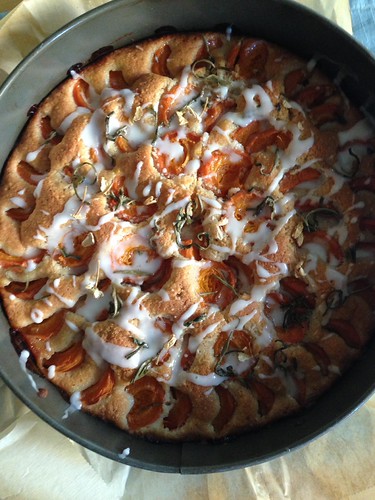
Apricot Jasmine Tea Cake

Most of us are familiar with jasmine teas, but what other culinary uses are there to jasmine?
Because jasmine absolute is so costly and hard to come by for most, and also difficult to work with at the right concentration for food preparation, it is not easy to find recipes that are jasmine-flavoured. The few that are, typically call for infusion of jasmine tea to achieve the desired aroma. 

As far as gourmet cuisine goes, jasmine as a flavour can be mostly found in desserts. Renown pastry chef Pierre Hermé created remarkable macarons that are flavoured with jasmine, and inspired macaron-makers the world over to follow suit. Mango-jasmine macarons are one of my favourites. Jasmine's complex yet light floralcy blends magically with the juicy muskiness of mango. I recommend you try this pairing with simpler mango recipes you may have, i.e. in homemade mango gelato or ice cream. 

Jasmine pairs beautifully with fruit, as it has its own fruity facet due to the presence of some esters and fruity aldehydes. The few jasminey recipes in my cookbook collection include a tropical fruit salad with jasmine tea and chile syrup - a beautiful, simple to make yet innovative flavour combination from Tonia George inspiring little book "Tea Cookbook - sweet and savoury recipes for tea lovers". In his book Aroma, Daniel Patterson (the renown chef of Coi, one of the world's top-notch restaurant), offers a recipe for a jasmine syrup that can be used creatively, either as an addition to fruit salads, or as a base for a fruit sorbetto (he's providing a recipe for White Peach and Jasmine Sorbet in p. 111), using a syrup from boiling together 1 cup sugar, 3 cups of water, and 2 Tbs of jasmine pearls. He's recommending 10min of steeping, but I would be cautious with this timing, as long steeping create a very bitter taste, and not necessarily in a good way. To maximize the flavour of any tea, use the same steeping time you would use for that type of tea; only increase the amount of tea used (that's when you really do not want to be cheap!), and make absolutely sure the tea is very fresh and vibrant with flavour (no older than a year, that's for sure, and for some teas 6 months is all you need to lose their remarkable aroma).

For jasmine tea, I'd say no more than 3-4 minutes steeping time; but use larger amount than this recipe: you normally want about a pearl or two per teacup (which is 5oz), or if you're using green jasmine tea   that is not rolled into pearls - you want to use a teaspoon for each cup; so for a stronger flavour, double that at least. That would come up to 5 teacups for the amount of water Daniel Patterson specified in his recipe (750 mL). For that I would use at least 10tsp of jasmine tea, in other words: 3 Tbs and 1 tsp.

Another step in the syrup technique that I would do differently: I would steep the tea leaves in 2 of the cups (brought to the tea's optimal brewing temperature, for jasmine green tea that would be 175 F), and would create a simple syrup from the remaining one cup of water and the entire cup of sugar. Only once both are ready and cooled off a little, I would blend the strong tea infusion with the simple syrup.

Jasmine has a strong affinity with desserts, and the only savoury pairing that I've seen where to chicken or chicken broth, and while served with dim-sum or Vietnamese pho noodle soup (which is what inspired my verdant Jasmine Pho - a limited edition perfume that is gladly back in stock as of yesterday!). In the same book, Chef Daniel Patterson also offers one savoury recipe, for Jasmine-Steamed Chicken Breast (p. 112). I cannot comment on this recipe because I neither cook nor consume poultry; but I would gladly experiment with jasmine tea within a refreshing, cool version of a noodle salad, or in a creative vegetarian version of the wonderful pho noodle soup. The jasmine tea works well as an accompaniment, so I can't see why it won't work in a simple cilantro broth, being topped with fragrant Thai basil, jalapeño and lime.

IMG_4840

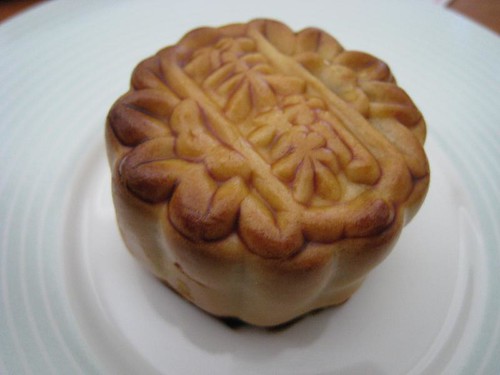
Jasmine tea is recommended for pairing with coconut desserts, and in general all mildly sweetened Asian desserts go fantastically well with it, which is possibly why you'll be served a pot of jasmine tea as soon as you sit down for dim-sum. It is also served to accompany the pho - the deliciously light and fragrant Vietnamese noodle soup, where the jasmine's aroma beautifully complements the fresh cilantro and basil leaves. Jasmine Tea Mooncakes (pictured above) are a traditional food of the Mid-Autumn Festival celebrated in mainland China, Taiwan, Vietnam and among Chinese communities the world over. It's a pastry that is filled a paste or a cream made of taro root or lotus-seed or a variety of other modern interpretations, to which other flavours (such as tea, fruits, nuts, and more recently also coffee and chocolate) can be added.
I've used jasmine absolutes countless of times in my infamous chocolate truffles: Charisma truffles (white chocolate with matcha, jasmine sambac and spearmint), Espionage (both the truffles and the chocolate bar), where it lends a complex, musky depth and helps to smooth out the smoked salt and peppery juniper notes, and countless other experiments. But using absolutes requires: a) access to high-quality, unadulterated jasmine absolute; b) expert hand at blending and knowing the challenges of using such a mind-bogglingly concentrated material: a single drop of jasmine sambac absolute carries the potency of 66 flowers!

The much safer and accessible way in which to incorporate jasmine's flavour creatively in your cooking and baking is with jasmine tea. Here are a few ideas and examples you can play with:
1) Loose-leaf jasmine tea can be easily incorporated into shortbreads and even biscotti, as you've known if you were to attend any of my fragrant afternoon tea parties.
2) Infuse chocolate ganache, pastry creams, custards, gelato/ice cream, sorbetto or créme brûlée with jasmine tea leaves to add a special nuance.
3) Use a simple jasmine syrup as a substitute for the rosewater or orange flower water used to sweeten Middle Eastern pastries (such as harissa, basboosa or baklava). Substitute a strong jasmine tea for the floral water, and only at the very end of the cooking process, once the syrup has cooled down!
4) Find other creative ways to include jasmine flavour in your desserts, for example: chopped up infused leaves inside cakes (as in the Apricot Jasmine Tea Cake recipe I shared with you over the weekend).

Last but not least: Jasmine tea is a wonderful addition to a mixologist's repertoire, as its light colour and crisp aroma works well with many chilled cocktails: it's beautiful with spearmint, so it goes without saying it will be fantastic in a mojito with muddled spearmint and freshly squeezed lime. It will also work beautiful with gin, i.e. in a Jasmine Gin Fizz; other floral liquors such as St. Germain (an elderflower liquor) in Jasmine & Elderflower Martini, with absinthe in Jasmine Tail, with tequila and lime in Jasmine Tea Margerita, or just as a standalone, chilled iced tea with or without a shot of vodka.

Labels: , , , ,

Wednesday, April 08, 2015

The Allure of Charoset


Charoset (or Haroset) is one of those obscure Jewish foods, prepared and eaten only once a year in Passover (mostly just during the Seder), and unlike the beloved Matzoh ball, it is hardly known to non-Jews. 

When I first saw it as a child I was neither particularly enticed by its appearance, nor seduced by the sounds of its name (which sounds like a disease). To make matters worse, it is eaten during the Seder wrapped in an odd looking "sandwich" along with horseradish (Hazeret in Hebrew) - which is also the name for mumps, not to mention a true tear-jerker and a traumatic experience for a child of any age *. 

The most common knowledge for the reason behind eating Charoset is it is representative of the mortar that our enslaved ancestors had to mix by the tonnes in Egypt. Other sages say that the Charoset is a remnant of the Paschal lamb - the sacrifice that commemorates the lamb that was slaughtered in each Jewish household in Egypt on the night of the tenth plague: the killing of the first-born. A bundle of hyssop was dipped in this poor lamb’s blood, and smeared on the door frames, as a sign for the Angel of Death to skip the Hebrew homes and spare the lives of our first-born. Hillel’s Sandwich (which I mentioned earlier) alludes to that symbolism of Charoset, as it represents eating the Paschal Lamb with the Matzoh and the Maror (bitter herbs), as directed in the Torah (Exodus 12:8).

Other sages and rabbis say that Cahroset needs to include all the fruit mentioned in Song of Songs (AKA Song of Solomon or Canticles). This poetic book signifies the unique relationship between God and his chosen people, which is read during Passover, the holiday that signifies the point in history as the birth of the Israelites as a nation. Among the fruit mentioned are apples, pomegranates, dates, figs and nuts. The spices added to the mixture (typically speaking: cinnamon and ginger) represent the pieces of straw that were added to strengthen the mortar. 

Now, Charoset greatly varies between different Ashkenazi and Sephardi Jews. Generally speaking, Ashkenazi Charoset is apple based (occasionally with pears added) and has a consistency of a dip or a spread; while Sephardi Charoset is more date-dominant, and often is formed into balls. And even within these two major ethnic groups, there are many different traditions and recipes vary greatly, for instance: Babylonian Charoset is made from Silan (date molasses) thickened with ground almonds, and I even came across a Moroccan recipe that is a paste of chestnuts, almonds and walnuts spiced with cinnamon and cloves; and some Ashkenazi recipes include raisins, while others use sugar as a sweetener; some call for pears in addition to the apples, and may use additional spices besides the cinnamon (i.e.: nutmeg, cloves, etc.). The Jews of Rome (and Italy) seem to have a balanced mixture of both, as you will soon see in the recipe I’ve received from my Italian sister in law, which was passed on to her from her great-great-grandmother, Nona Silvia Bassano from Livorno, Italy; yet surprisingly does not include any wine - an ingredient that so far has been consistently appeared in all the Charoset recipes I've researched. 

Some say that the use of fruit that brown overtime is the key for making a proper, mortar-looking Charoset. Hence using apples and pears without any lemon juice to avoid oxidation. The Jews of California have taken this one step further by making Charoset with bananas and avocados as well. I cringe to the idea of how this would look like the next day - kinda like leftovers of a smoothie, which I am sure is not a rare sight in raw-food-loving SoCal. 

I have to make a little confession: as much as I love my grandmother’s Ashkenazi Charoset, I was never able to replicate it satisfactorily in my own kitchen and have given up many years ago on trying it again. But someone asked me about Charoset and I got intrigued and looked it up in my library of cookbooks. Once I read about the Song of Songs reference to Charoset (in Phyllis and Miriyam Glazer’s “The Essential Book of Jewish Festival Cooking”), my imagination was immediately ignited, and I had to try both recipes in their book: a Yemeni Charoset and an Ashkenazi Charoset, that was very similar to my grandmother’s, except that it called for chopping the apples rather than grating them.


Ashkenazi Charoset
2 Granny Smith, Pink Lady or Gala Apples, peeled
1 cup walnuts
1/4 cup raisins, soaked in wine for 4-6hrs, or in boiled water for 15min, to soften
1 tsp raw sugar, brown sugar or palm sugar (or none if you are using sweet apples)
1/2 tsp Cinnamon powder
Pinch of freshly grated nutmeg
1-2 Tbs sweet wine

Chop the apples into tiny cubes (almost minced), or use the coarse side of a grater if you prefer a more watery consistency. Chop the soaked raisins. 
Finely mince the walnuts and add to the apples. Add the cinnamon and sugar. Keep refrigerated and use within 3-4 days. 
Can be enjoyed out of the Seder ceremony throughout the Passover week. I love it with Matzoh brei or on a potato kugel.  

Yemeni Charoset 
15 Dates, dried
15 Figs, dried
2-3 tsp Sesame Seeds, toasted **
1 tsp Cinnamon powder
1 Cardamom, freshly crushed with a mortar and pestle
1 Tbs fresh ginger root, grated
1oz dry red wine 
(adapted from Phyllis and Miriyam Glazer’s “The Essential Book of Jewish Festival Cooking”)

Nona Silvia Bassano of Livorno’s Italian Charoset 
1.5 kg Apples, finely grated
1 kg Dates, pitted and mashed
750 gr (3 cups) sugar 
300 gr Almond meal (from blanched almonds)
1 cup water
2-3 tsp Cinnamon powder ***

Boil the water and sugar to make a syrup. 
Add the almonds and continue cooking. 
Add the grated apples, and continue cooking, stirring constantly to prevent sticking to the bottom of the pot. If too watery - continue cooking for more reduction; if too dry, add a little more water. 
Add the cinnamon, and cook until the mixture starts bubbling and puffing. 

* If your parents are of the merciful type, they'll make this very sandwich with lettuce, which is a peculiarly delicious affair, and one of the significant flavours that makes this holiday forever memorable on every person's palate. 

** Optional - if you eat Kitniyot on Passover). I personally found their texture in this context to be annoying, as well as the fig seeds. Next time I am trying this with less figs, more dates and with tahini (sesame paste) instead! 

*** For a more Yemeni-style Charoset, you may add some ground cloves and cardamom, to taste.

Labels: , , , , , , , , ,

Friday, May 09, 2014

Immortelle l’Amour Brunch & Tea (Menu & Ideas for Mother's Day)

Mother's Day is just around this corner (celebrated this Sunday, May 11th in North America). There is nothing as precious as the gift of time spent together. Tokens and luxuries are fabulous to give and receive, but there is nothing  more meaningful and memorable than time spent together. 

Take the time this month to honor those who have nurtured you, loved you and who have helped you grow - as well as yourself, especially if you are a parent, a teacher, or a caregiver. Whether it’s simply a cup of tea that can be shared or a  stroll together, carve out time this May to cherish and spoil those special women in your life.  


A classic mother’s day ritual – brunch is a fantastic way to spoil mom, while spending quality time together.  Inspired by our decadent perfume Immortelle l’Amour: Generous portion of vanilla, maple and rooibos – try out these fragrant twists on  quintessential brunch  recipes, such as eggs benedict on waffles  and other decadent yet nutritious embellishments. The following menu mingles the comforting yet sophisticated flavours of maple, vanilla and cinnamon along with briney, salty touches of sharp cheeses, sour apples, candied salmon, a touch saffron mayonnaise or a generous dollop of yoghurt hollandaise sauce. 

Mother’s Day Brunch & Tea:

Eggs Benedict & Candied Salmon on Cinnamon Waffles
Baked Sour Apple
Sharp Cheddar Cheese
Tea served: Immortelle l’Amour tea, or a rooibos espresso (recipe to follow).
Rooibos Espresso:
Rooibos requires high heat (90-100c and prolonged steeping or even simmering). That's why it's safe to use it in a stovetop mokka machine or espresso machine, to get a heavnely, richly concentrated brew of this smooth, naturally sweet tea. To prepare your rooibos espresso simpley fill the espresso "funnel" with loose leaf plain (unflavoured) rooibos and prepare as you would any espresso. Serve as it is, or with a bit of milk of your choice (i.e.: whole milk or almond milk). 

For the Cinnamon Waffles:
4 eggs
4 Tbs grapeseed (or another non-GMO vegetable oil)
2 cups milk
2 cups whole wheat flour
1 tsp cinnamon, ground
1 tsp pure vanilla extract
1 Tbs brown sugar
2 tsp baking powder
Pinch of salt
- Separate the eggs.
- Whip the whites until soft peaks form.
- Whisk the egg yolks with the sugar, oil and vanilla extract. Stir in the milk.
- In a separate bowl, sift together the dry ingredients (flour, baking powder, salt).
- Carefully add the flour mixture into the egg yolk and milk mixture, one-third at a time.
- Fold the whipped egg whites into the rest of the batter you have just formed.
- Cook in a well-buttered waffle maker according to manufacturer’s instructions.
- Note: The waffles can be prepared in advance and kept frozen; then toasted before serving.

For the Eggs Benedict:
Prepare yoghurt hollandaise sauce
Poach eggs (1-2 per person). Brush the waffles with butter and top with slices of candied salmon. Place a paoched egg on top of the salmon, and spoon over the yoghurt hollandaise sauce. Serve immediately.

Another nice contrast to all this sweet and salty flavour is a baked Granny Smith apple (the only apples that still retain some flavour this season), or a baked rhubarb compote (prepare similarly my Rosy Rhubarb Crumble - but without the crumble and rosewater. The berries are not mandatory either - unless they're already in season in your part of the world!).
Hope you enjoy this lovely Mother's Day brunch with your family!
And if the weather permits, go for a picnic and enjoy Mother Nature. More thoughts on that on the following post...

Labels: , , , , , ,

Sunday, March 30, 2014

Wild Chicory


Wild chicory is unbearably bitter. But it's exactly what your liver needs in springtime, to cleanse and renew itself after the long winter struggle with reduced sunlight, and the body's tendency to go into hibernation mode (i.e.: storing fat, reducing circulation, and general stagnation). It is one of the many wild bitter herbs that pop up in early spring.

Chicory is a useful medicinal plants with several properties and uses. The leaves are mostly known for their cleansing and liver-protecting properties (either when eaten raw or cooked; or when dried and used in teas or other medicinal preparations). Leaves also can be used to redue skin inflammation and swelling.

The roots are often dried and roasted to prepare a coffee substitute, or are even added to coffee to extend its nutty flavour. It's interesting to note also, that chicory root also balances the stimulating properties of coffee.


Aside from the medicinal properties, chicory leaves provide a marvellous culinary experience for those who appreciate wildcrafted foods and the often neglected benefit of bitter flavour. Fresh leaves may be added to salads (use only the tender young leaves). Larger leaves may be steamed or sauteed and prepared similarly to kale, as a warm salad drizzled with olive oil, lemon juice and sea salt. You may feel the need to balance the bitterness with a little sweet touch of Silan (date molasses), honey or coconut palm sugar, or a handful of chopped almonds and raisins.

The Arabic cuisine in the Galilee includes a fascinating pastry, in which simple flatbread layered with with a mixture of steamed chicory leaves (known as "Elt") are seasoned with red chili pepper, salt and fried onion. The dough is than rolled and baked, and served along with other mezze and dips, or as a side dish with more hearty dishes such as mujadarah or lamb stew.

Note: Cultivated types or relatives of chicory include radiccio (also extremely bitter) and endive, which is grown in the dark to keep the leaves pale and tender (and also a little less bitter).

Labels: , , ,

Thursday, February 14, 2013

Broken Hearts Tea Party

Broken Hearts
Here are some photos from my latest event on Sunday, February 10th - the 4th annual Valentine's tea party, with Broken Hearts theme... I hope you'll find some ideas for celebrating today - regardless if you're single, broken-hearted or in a loving happy relationship. By the way - the broken hearts above were part of a game. Guests had to find their "better halves" and the first two who found it won prizes!

Setup by Ayala Moriel
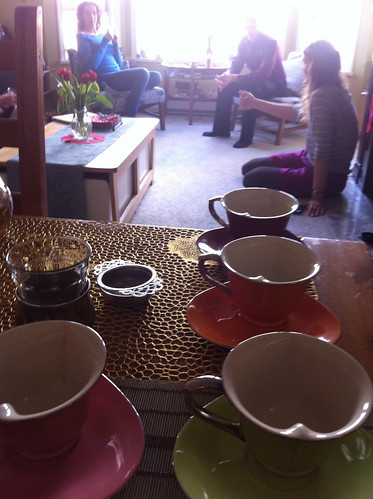
This is the setup - relaxed, casual but still luxurious, and with splashes of hearts and colours. It was an unusually small crowd because of the multiple holidays happening that weekend: Chinese New Year and Family Day long weekend - a new holiday just recently invented so that Canadian kids will get even less education than before. So, many people were away, and I will have to better plan for next year so it doesn't fall on a long weekend again. The good thing was that I got to spend quality time with my guests instead of boiling 20 liters of tea; and also considering I was sick all week I was able to sit down a relax a bit, and have civil conversations with people instead of standing up and running around for 5 hours straight (which is usually my share on my always overbooked Valentine's events).

I also really enjoyed preparing for and presenting perfumes that were inspired by tragic love stories. This will be a part of a separate post though - so please visit again later today. Below are more photos and the menu as well as some recipes you can easily whip up at home tonight for your sweetie or just with a bunch of single friends that don't want to feel sorry for themselves tonight!


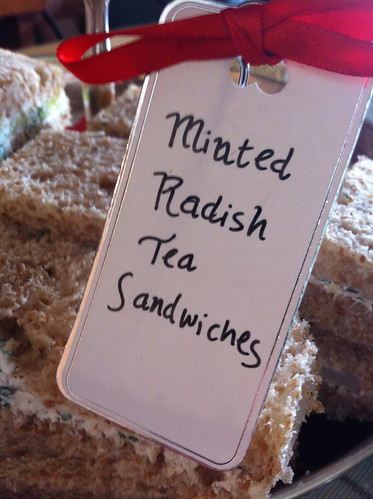
Minted Radish Tea Sandwiches
Minted radishes tea sandwiches - a surprisingly classic combination that never fails.

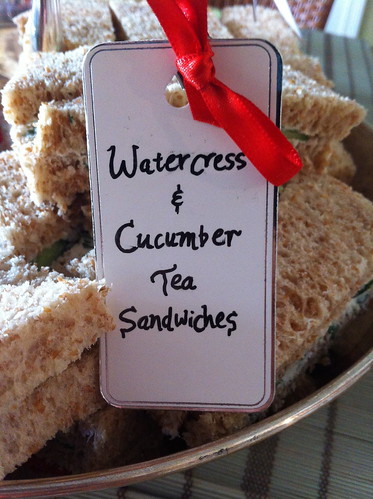
Cucumber & Watercress Tea Sandwiches
Cucumber & watercress tea sandwiches. Another classic.

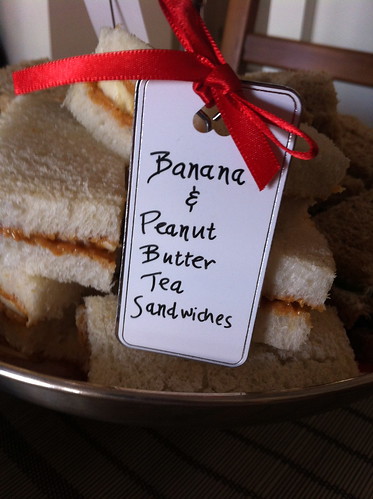
Banana & Peanutbutter Tea Sandwiches
Peanut butter & banana tea sandwiches - not just for kids. Did you know that bananas are an aphorodisiac? And can you guess why?
To make this flavour a tad more grown up, spread a thin layer of hot red pepper jelly on one slice, and peanut butter on the other.

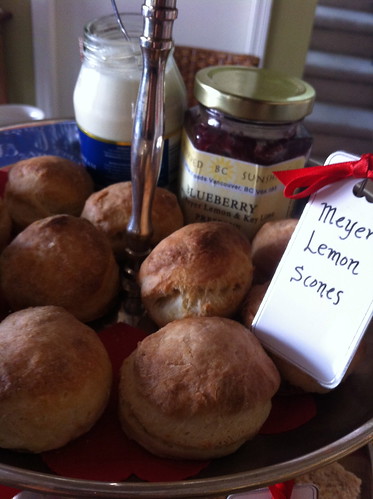
Meyer Lemon Scones + Blueberry & Meyer Lemon Marmalade
Meyer lemon scones - hot from the oven, and promptly served with Devon cream and with a blueberry & Meyer lemon marmalade.

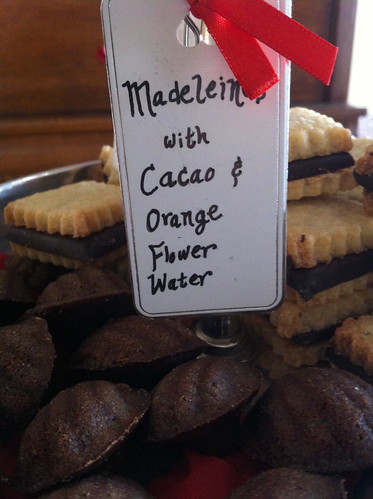
Chocolate Madeleines with Orange Flower Water
Madeleines are fantastic, shell-shaped cross between cookie and a cake. They are dense, moist yet light and are flavourful yet neutral enough to dip in a tea. Might even be superior to shortbreads in that regard, if only it wasn't for the extra work they require. These are chocolate flavoured and are scented with orange flower water. Sounds just like the kind of recipe I will invent; but it is actually from Maxine Clark's excellent book, Chocolate: Deliciously Indulgent Recipes for Chocolate Lovers.


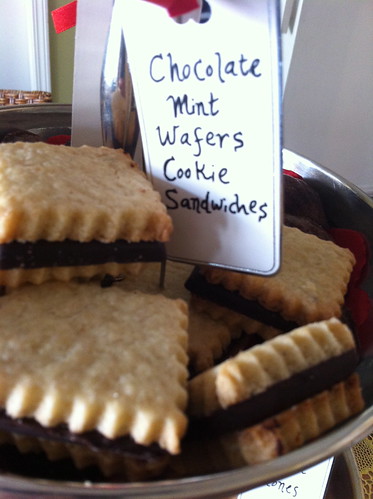
Mint Chocolat Wafers Sandwich Cookies
Chocolate mint wafers, enclosed between two layers of sugar cookies with hint of black pepper. This recipe is so easy, yet so elegant. You have to try it! Use your favourite sugar cookie recipe and cut in whichever shape you like (circle or square works best). Place a chocolate mint wafer in between the cookies while they are still hot, and - voila! You have a cookie sandwich that is flavourful and looks very professional, without ever needing to whip up a filling, and with very little mess to clean...

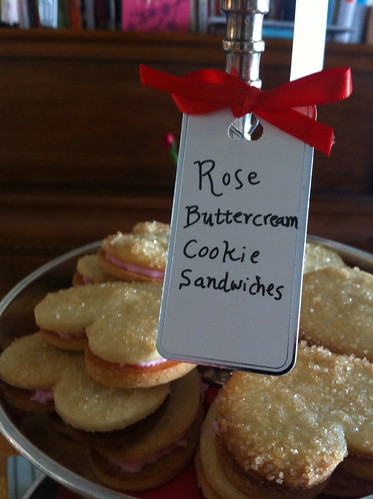
Rosewater Buttercream Cookies
Rose almond sugar cookies with a layer of rosewater buttercream piped in between. Want the recipe? You got it!

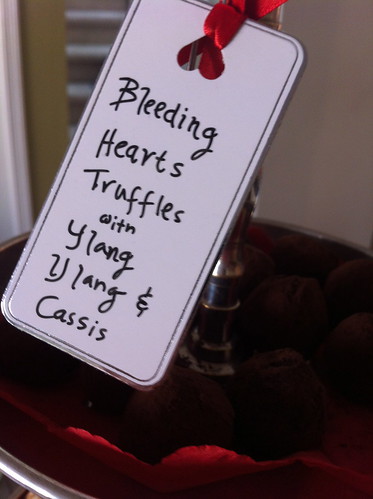
Bleeding Hearts Truffles - with Ylang Ylang & Cassis
The cherry on the top, or the jewel in the crown are always the scented truffles I make for my special events and celebrations. Some were so popular that they've became a timeless chocolate bar (created in collaboration with CocoaNymph). But for the new flavours you will have to visit my studio and participate in these events. You're always sure to be surprised by an unusual, new flavour combination, featuring essential oils and tea infused ganache. This time was my first to experiment with organic ylang ylang oil of the best quality. I paired it with creme de cassis liquor, a combination inspired by Chamade. The result is a melt-in-your-mouth tropical floral experience with a round berry backnote. Introducing: the one and only Bleeding Hearts truffle!

Guests
My lovely guests, customers & friends!
I love to see everyone having good conversation and playing around with the essences and perfumes. Sometimes they don't even need my help picking a scent - they just dive in and smell them all and share their insights with their friends and other guests; and then I know that they are real fragrance lovers.

Guests

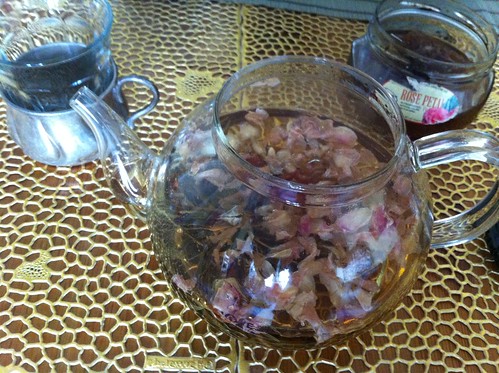
Lovers Tea
Lovers Tea: 1 hand-tied jasmine green tea + 1 teaspoon rose petals. Beautiful visual effect and ever so lovely fragrant cup of tea to sooth the soul and seduce the imagination. It's like a garden in a teapot!
You might want to strain the tea before serving; but I find that letting a rose petal or to through the spout creates a more sensual tea-sipping experience.

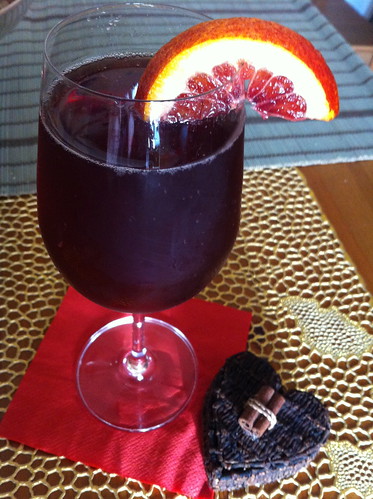
Bleeding Hearts cocktail

Bleeding Hearts cocktail. I'm willing to share my recipe:
1/2oz Creme de Cassis
1oz Hendricks gin
1/4oz Elderflower cordial 

Club Soda
Angostura Bitters
Blood Orance, sliced- Shake with ice. 
- Top with club soda. 
- Add a dash of Angostura bitters. Stir. 
- Garnish with a slice of blood orange.
- Sip slowly, savouring every drop. 

- And please don't drive!


Labels: , , , , , , , ,

Monday, December 03, 2012

Butter & Honey

This weekend we stayed at friends' dairy farm in Langley. It simply made sense rather than commuting two extra hours to and from Vancouver for the double day Bloom Market in Fort Langley.

My friend Miriam (whom some of you met at my studio on various occasions - she co-hosted the holiday soiree this year with me and Jolanta) grew up there, and it was wonderful to get a glimpse into the life of a dairy family farm. It involves a lot of milking and very little sleeping. Just so that we can have milk and cheese and dairy. Wow.

It was also encouraging to see that the cows are treated so much better than anything I've ever seen elsewhere. And there are a lot of sustainable practices all around: the water used is from the family's own well; they grow most of the food for the cows; and they also fertilize the fields with the cow's manure (which is collected and processed as to not contaminate the underground water reservoirs).

I have an interesting book called "The Farmer's Wife" - it's a compilation of recipes from magazine of that name, mostly sent from farmer's wives across America, with their tips on how to feed a crowd of working hands on a farm. Anyone who thinks that being "just" a housewife is obviously out of their mind. It's basically like running a catering company, all day long, preparing 3 meals a day (at least) and very likely with no days "off" (not to mention that modern farmer wives also partake in the farm work, not just the kitchen and household). Somehow they just do it, and remain graceful and beautiful while they're at it.

An extra surprise were the 2 index cards I found in my jacket pockets with recipes for some of the treats my daughter got to bake with Miriam and her mom that weekend: Dutch Botterkoek (butter cake) and honey loaf. Surprisingly, the honey loaf contains absolutely no oil whatsoever. Also, a nice surprise (as Miriam almost frightened me with her description of Dutch cooking, as if they use no spices at all) - it is very fragrant, with the natural honey undertones, accented with anise. Simply divine. We also tasted raw milk for the first time - what an amazing experience! It's amazing how full of flavour and sweetness milk is. Next time I'm bringing chocolate chip cookies.

The botterkoek is something I will need to wrap my head around as it's quite different - it's surprisingly similar to Middle Eastern semolina cakes, as it is flavoured with almond extract which really complements the butter. It is also quite dense and has a thin "skin" of the cream glaze that is brushed on it before baking. But first of all I'm going to try the bran muffins recipe - they were extremely moist and fat free, relying entirely on homemade applesauce. It's amazing how much you can do with such simple ingredients.

Labels: , , , , , ,

Wednesday, October 17, 2012

Asian Pear & Fennel Salad

Asian Pear & Fennel Salad by Ayala Moriel
Asian Pear & Fennel Salad, a photo by Ayala Moriel on Flickr.
Fall fruits are flavourful, fragrant and full of interesting textures. Such are Asian pears (Pyrus serotina) - they absorb the summer sun and turn it into a crisp, crunchy texture full of intriguing subtle flavours reminiscent of pineapple and ripe quince rosiness - yet without that very hard core or need of cooking. Its aroma is subtle yet floral and robust. This must be because of the unique esters in it - which if you get a tree-ripened fruit, will really shine through. The supermarket variety just don't cut it (though they still got the crunchy texture).

I particularly enjoy using Asian pears in savoury salads, as their texture is firm and they hold their shape through the tossing, turning or even marinating that I like to put my sturdy vegetables through. They are also not nearly as sweet as other pears, and are just a little more neutral and readily get along with other flavours.

Asian pears are particularly fantastic with crunchy, fresh fennel bulbs. I slice them as thinly as possible, add some shaved carrots (creative use for your vegetable peeler!) and toss them with pine nuts, goji berries and some pomegranate seeds if I happen to have some. And the best part is that this salad will taste amazing the next day, once the fennel seeds have soaked up some moisture and release more of their licorice-like sweetness. For this particular salad I used fresh, still green fennel seeds, so no marinating was necessary. If you are lucky to have some growing in your garden - or out in the wild - this is a marvelous way to use fresh spice.
I also was lucky to have a jar of marinated sweet & spicy butternut squash around and add it the first time around. I will post a recipe for marinated butternut squash another time!

1 bulb fresh fennel laved or quartered and then thinly sliced
1 ripe and firm Asian pear, cored, halved and thinly sliced
1 carrot, shaved with a vegetable peeler
1-2 Tbs raw pine nuts
2 Tbs dried goji berries
2 Tbs fresh pomegranate seeds (optional)
2 Tbs extra virgin olive oil (I prefer the Lebanese, Israeli or Greek oils; the majority of Italian olive oils that are imported to North America are dull and inferior)
Juice from half a lemon (about 1 Tbs)
1/2 tsp dried fennel seeds


Prepare all fruit and vegetables and toss in a salad bowl with the dressing. Garnish with pine nuts, goji berries and pomegranate seeds (if available). Serve immediately, or the next day (it will taste wonderful each time!).

Labels: , , , , , , , ,

Monday, September 03, 2012

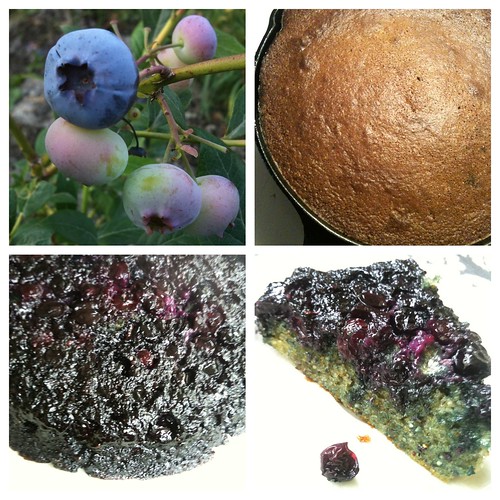
Blueberry Upside Down Cake

Happy Labour Day!

Summer is not quite over yet, so I'm taking advantage of all the flavourful fruit still available, as well as the bit of free time before we switch gears into the fall/winter madness.

This blueberry upside-down cake is adapted from by Bettina Schorman, from her cookbook co-authored with chef Jeff Crump: Earth to Table: Seasonal Recipes from an Organic Farm.
The recipe there is excellent, except that it’s sweetness of way over the top to my taste (and I have a sweet tooth, believe me!). I felt a deep urge to not only reduce the sugar and substitute it for honey in the glaze for the fruit; but also add lemon zest to balance the fruit’s sweetness. Also serving with crème fraiche makes all the difference!

For the blueberry & glaze:
In a 10” cast iron skillet or cast iron pan, melt 3 TBS each of butter and bluberry honey (or any local honey of your choice). Cover with 2-3 cups of fresh blueberries (you want to create about an inch-deep layer of berries at the bottom of your pan). I personally do not own a skillet but simply a cast iron frying pan; so for this recipe – I need to muster to the task my smaller frying pan (7”) as well and divide the recipe between the two.

Pre-heat the oven to 350F.
In the meantime, put together the ingredients for the cornmeal batter:
1cup (2 sticks) unsalted butter
¾ cup raw cane sugar
zest from 1 lemon
2 tsp pure vanilla extract
4 large eggs
1 ½ cups all purpose unbleached flour (preferably organic)
¾ cup purple cornmeal (yellow will do just fine too; but will affect the colour)
1TBS baking powder
½ tsp sea salt
¾ cup buttermilk

Sift together the dry ingredients.
Beat butter and sugar until smooth. Add vanilla extract and eggs – one at a time.
Pour over the flour mixture. Continue beating. Add buttermilk. Pour over blueberries and bake in the pre-heated oven for 30-50min, or until a toothpick (or a cake tester) comes out clean.

Remove cake from oven once ready, and wait 10-15 minutes to slightly cool off. Run a knife around the edges of the cake. While cake is still warm, invert it on top of a plate, tray or cake case.

Serve warm or at room temperature, alone or with a spoonful of crème fraiche.

There is something to be said about fruit desserts. They are the best, in my humble opinion – where the pastry is there solely to present the fruit and highlight its elegance and singularity. In this one the cornmeal adds an interesting colour (you will get a beautifully bright yellow, which will contrast nicely with the purple bluebberries as well) - but most importantly, a slightly crunchy and sandy texture; and a delicious, rustic yet delicately sweet flavour of polenta. Admittedly, sometimes I feel that cheesecakes and anything vanilla flavoured are the best. If you serve this with crème fresh or crème chantilly (vanilla flavoured whipped cream) – you get the best of both worlds, which to me is as perfect as dessert can be.

Labels: , , , ,

Thursday, July 26, 2012

Midnight Violet Cocktail

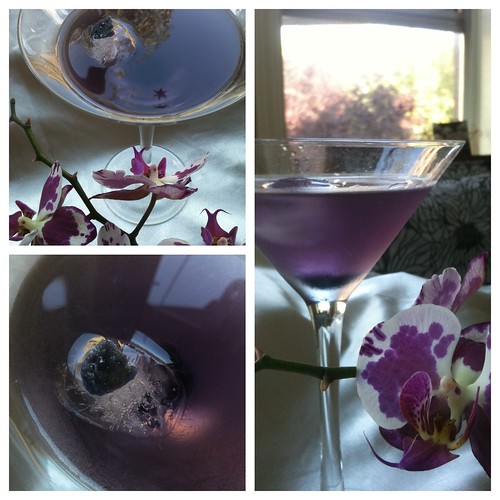
Midnight Violet Cocktail

At long last, my search for available violet liquor in Vancouver have found their victim: Legacy Liquor Store had the last bottle on their shelf of Giffard Violette. Considering that most of this company's products are flavoured syrups for cocktails, it not only not blow my socks off when I tasted a bit on its own. It actually reminded me of a vitamin syrup I had to take when I was little (I think it was vitamin D, but it could have been something else). Not awful tasting, but definitely not what I'd expected a violet liquor to be like. To be perfectly honest, I think I would have been far better off insfusing vodka with my own concoction of violet-like herbs and essential oils. But I had to feed my curiosity and know what the "real thing" is supposed to be like.

So, with much hesitance, I tried my concocting my first cocktail with it last night with my friend Miriam. We looked up some recipes online, and each looked less promising than the next (i.e.: third of each violet liquor, Marachino liquor and heavy cream - no thanks...). We settled on what seemed the most sensible of all, and the least cloying. And voila - a cocktail of our own was born, which was quite enjoyable and with a beautiful blue hue to boot!

1/2 oz homemade elderflower cordial
1/2 oz violet liquor

1 oz gin (we used Hendricks, which has lovely floral backnotes of rose)
Shake with ice and top with San Pellegrino or another unsweetened carbonated water. Garnish with 3 crystallized violet petals for an extra touch of retro feel, and more of that purplish-blue colour.

Labels: , , ,

Wednesday, May 30, 2012

Spring Fling Afternoon Tea

Tea Tray by Ayala Moriel
Tea Tray, a photo by Ayala Moriel on Flickr.

Sights, tastes and scents from my Spring Fling afternoon tea May 27th + a recipe for making your own Asparagus Mimosa tea sandwiches!

This tea party was a first Afternoon Tea & Perfume Sensorium: it's similar to my other afternoon teas, only that guests paid in advance for the afternoon tea and a perfume bottle. So all they had to do was pick which one to get! Personal fragrance consultations for each guest made the process really fun, especially with friends coming to the event together.
ArbitRary and Moon Breath roll-ons seemed to be a hit - as well as the ArbitRary candles!

Tea Cups

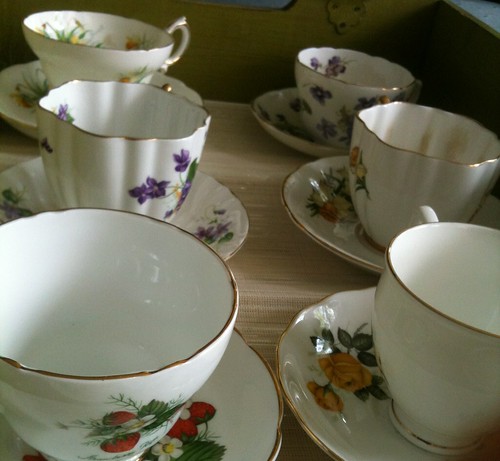
Beautiful vintage floral tea cups to celebrate spring: I was so thrilled to find tea cups decorated with strawberries, violets and narcissus in several antique shops and in Vancouver's flea market. The violet ones I've been hunting for a really long time to no avail; and the narcissus ones were a refreshing surprise - one of them is actually the exact same design as the violet I found later on... Tea cup collecting is a dangerous addiction... But at least they are useful!

Afternoon Tea

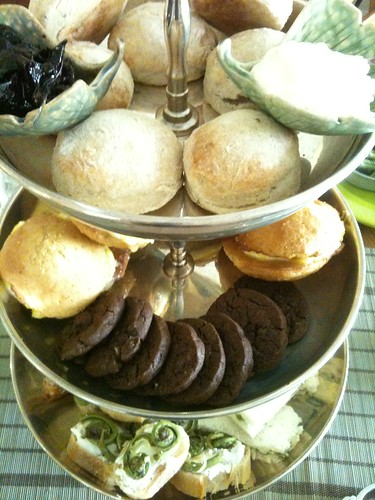
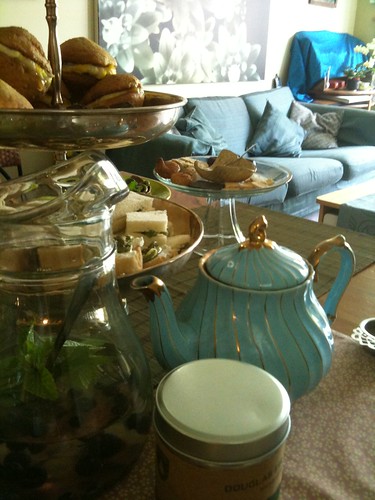
Spring Fling Afternoon Tea

The teas served:

Juniper Ridge's wild harvested Douglas Fir Spring Needle Tip: delicious, citrusy, refreshing and the embodiment of the Pacific Northwest spring!

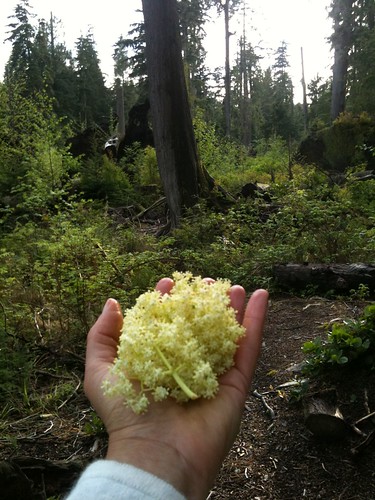
Elderflower cordial - harvested and brewed by yours truly. Another symbol of spring in the Pacific rainforest. I picked them in Stanley park. Served chilled, with fresh mint sprigs and blueberries for a splash of colour.

Jasmine pearl - a classic, and a must for a spring celebration. A taste of the exotic that only a fine jasmine tea can bring. These are actually rolled silver needles (white tea).

Spring Tea Sandwiches

Tier 1: Tea Sandwiches
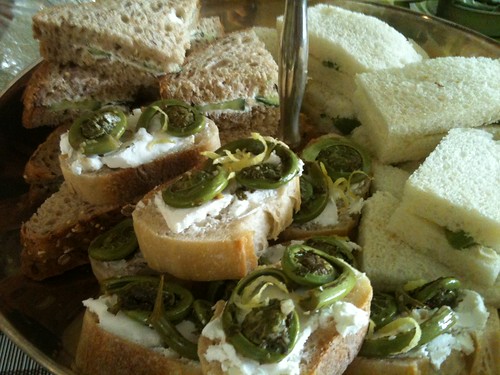
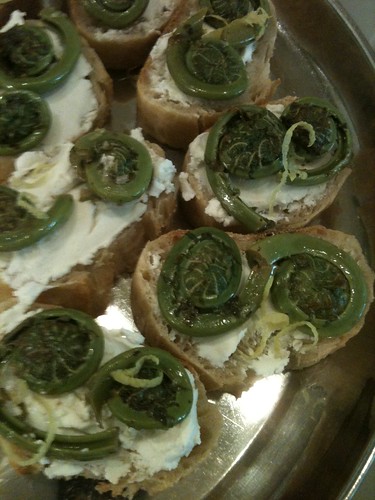
Fiddlehead open sandwiches on baguettes with lemon chevre
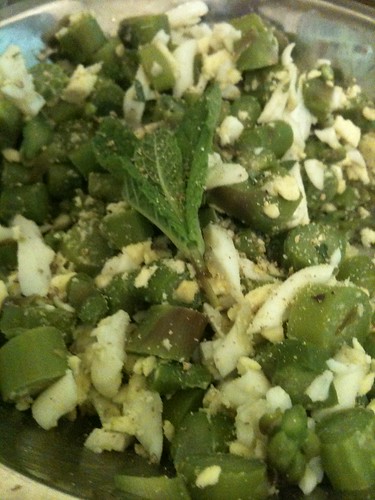
Asparagus mimosa (see recipe below)
Cucumber + Wasabi

Fiddlehead Sandwiches

Desserts
Tier 2: Desserts
Triple lemon whoopies - sandwiched lemon cookies with lemon curd and limoncello cream cheese lemon icing
Korova Cookies (chocoalte icebox) with Rosemary & Fleur de Sel
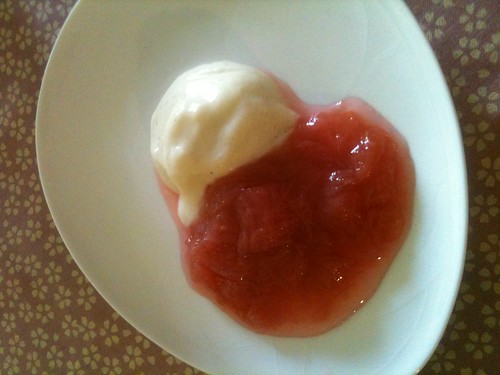
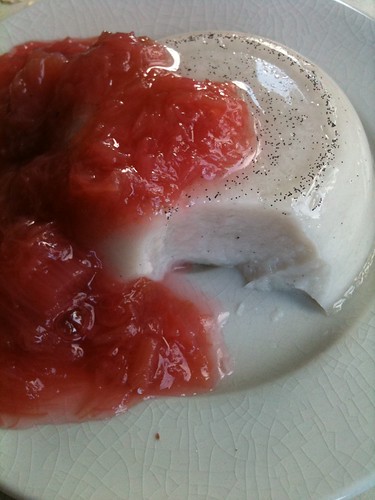
Mini pannacotta with rhubarb flower compote

Spring Pannacotta

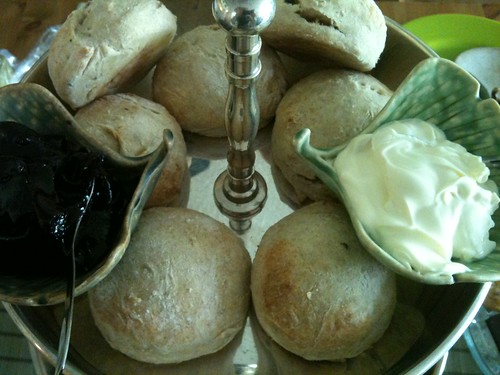
Malepi & Anise Scones

Tier 3: Malepi (Black Cherry kernels) + Anise Scones with wild harvested blackberry & rose petal jelly (by Wild West Coast Rainforest Products) and devonshire cream, of course!

Asparagus Mimosa

For those of you who missed it - you can enjoy some of the recipes on SmellyBlog and make these treats yourselves!

For the Asparagus Mimosa Tea Sandwiches, you will need:
1/2lb fresh asparagus
1 tsp salted butter
freshly ground pepper to taste
1 tsp fresh tarragon leaves, chopped
1 hard boiled egg
Additional butter, at room temperature, for spreading over the bread slices
1 loaf of sliced sourdough bread

For the asparagus mimosa:
Steam the asparagus just until tender and easily snaps (do not overcook it!). It should be bright green, rather than turn into a rancid olive colour... Slice, and add a teaspoon of butter. Grate the hard boiled egg, add the chopped tarragon, and add salt and pepper to taste.

To assemble the tea sandwiches:
Spread softened butter on both slices of bread, sprinkle some of the asparagus mimosa mixture evenly in a thin layer (so that both slices can stick together).
Chop off crusts (if desired) and cut the sandwich into 3 pieces or cross into 4 triangular quarters. Cover in an airtight container up to one hour from serving.

Labels: , , ,

Monday, May 28, 2012

Coconut Almond Pannacotta

here is the promised recipe for the coconut and almond lovers among you (and the vegans who want to try a simple, elegant dessert):

2 Cups Coconut Milk (or cream, if you can find it!)
2 Cups Almond Milk
1/2 vanilla bean, split (or 1 Tbs vanilla paste)
1 Cup evaporated cane sugar
1Tbs agar agar powder
1/4 cup cold water

- Dissolve agar agar with cold water until for about 10 minutes.

- Meanwhile, cook the coconut and almond milk, sugar and vanilla bean until they reach boiling.

- Strain the milk and reserve or discard the vanilla bean (you can use it for infusing sugar!)

- Pour some of the hot milk into the cup with the agar agar

- Pour back into the pot

- Grease 7 ramekins with a little bit of bland vegetable oil (I use almond oil or grapeseed oil). Best way to do this is with a paper towel or a pastry brush.

- Pour the hot milk mixture into a saucer or a spouted dish. Divide evenly among all the containers. I like to place them all on one big tray, pan or tupperware - so nothing spills, and also for easy transportation in and out of the fridge!

- Let them cool, uncovered, in the fridge. Once they stop steaming, you may cover them with a plastic wrap or a close with the tupperware lid.

- Serve after at least 4hrs of refrigeration. This pannacotta is a little more on the jelly-side, as there is not a lot of fat content. It's very delicious, light and refreshing - great to serve on warm spring days, and even on hot summer days.

- Best served with an accompanying compote of your choice, i.e.: Rhubarb Flower Compote.

Labels: , , ,

Saturday, May 05, 2012

Rhubarb Blossom Compote

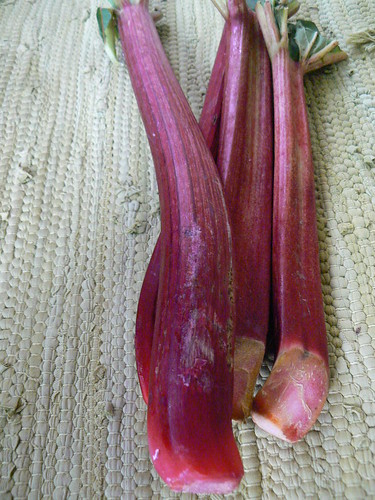
Fresh Rhubarb by Ayala Moriel
Fresh Rhubarb, a photo by Ayala Moriel on Flickr.

This rhubarb compote brings the freshness of both the Canadian and Mediterranean spring, combining the rhubarb tartness with cheerful orange blossom aroma.

1kg fresh rhubarb
1/2 cup evaporated cane sugar
2 Tbs orange flower water *

Rinse rhubarb and discard any green parts (they are poisoneous). Cut into thick slices.
Place in a sauce pan. Sprinkle sugar over top. Cook covered on a medium heat until the rhubarb is soft, about 5 minutes (check on it often to stir and to make sure it does not get scorched, stuck to the bottom, etc.). Add the orange flower water at the end of the cooking, to maximize its flavour.

Bring down to room temperature and pour into an airtight container. Store in the refrigerator up to one week (you can also eat it warm, but it won't taste as "fresh").


Serve with vanilla ice cream, frozen yoghurt, fresh yoghurt or unsweetened whipped cream with a hint of vanilla.

* Orange flower water is the distillation water from making neroli essential oil. It is a very popular ingredient in Middle Easter, Persian and East Indian cuisine - where it is used in countless desserts such as ice creams, confections and pastries.

Labels: , , ,

Thursday, May 03, 2012

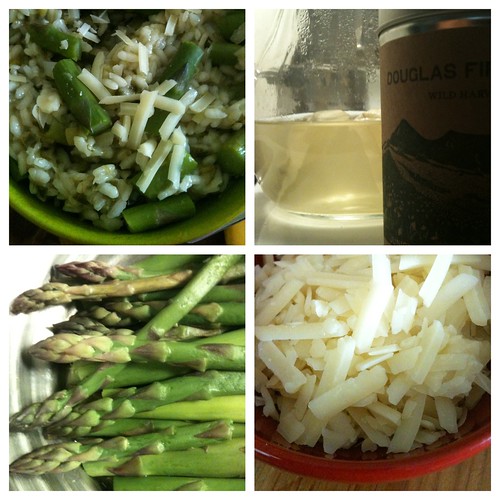
Spring Forest Risotto

Spring Forest Risotto by Ayala Moriel
Spring Forest Risotto, a photo by Ayala Moriel on Flickr.

Yesterday's foraging expedition got me in love with the rainforest all over again. And so I've decided to cook a special risotto for dinner tonight, that uses fresh seasonal vegetables and also makes use of unusual ingredients that spark my imagination.

I got a bunch of fresh, crisp organic asparagus at the farmer's market, and I've been thinking long and hard about what stock would work for an asparagus risotto?

A little voice in my head kept whispering something about green tea. But I couldn't pick the right one (and using the finest green tea I've got in a risotto seemed like a sacrilege...). But I knew that there was something better out there on my tea shelf... And finally it came to me: Hall's Fir Tip Tea!

I set to action, using young organic leeks instead of onions of shallots, sauteeing them in ghee (it's better than butter for cooking, in my opinion, as it doesn't scorch so easily). Then came the carnaroli rice, and quickly I realized that I was out of white wine... And that the white wine would have probably killed the "tea" flavour anyway with it's cheesy, yeasty afternotes. So of course, I used the last few drops of Hendricks' gin I had on hand instead, to much delight, and than proceeded with pouring the infused fir tip tea, a little bit at a time until it absorbs completely into the rice.

To make the fresh, delicate tastes really shine I've added no spices at all except for Maldon sea salt flakes. And the asparagus was steamed on the side and then incorporated into the risotto just before serving, and than topped with parmesan cheese.

The result is a very light, refreshing risotto, full of flavour of the forest and great contrast of textures: crunchy tender asparagus vs the creamy, starchy rice. The forest notes are not overpowering but are definitely there in the best way.

This risotto would go well with a white sparkling wine, the infused elderflowers with San Pellegrino - or, as we had it: with the remaining pot of fir tip tea sipped happily until the very last grain of rice was gone...

Spring Forest Risotto

Ingredients:

2 tea bags of Juniper Ridge's Douglas Fir Tip Tea

1 L Boiling water

1.5 cups Carnaroli rice, washed well and drained

2 young leeks (or 1 large), greens included

2 Tbs butter or ghee (if you're vegan, you may use a light vegetable oil as well, such as grapeseed oil)

2 Tbs gin

Small bunch of asparagus (about 6 stalks), steamed and cut into large chunks

Parmesan cheese

- Steep the tea bags in boiling water

- Cut the leek (greens and all!) into thin slices

- Steam the asparagus until it snaps easily (do not overcook!). Cut into short pieces.

- Sutee in ghee until tender and transparent. Add a pinch of salt.

- Add the washed and drained rice and stir well for about 1 minute

- Add the gin and cook until the alcohol evaporated completely. Add a pinch of salt.

- Begin adding the tea, only a little bit at a time - just enough to cover the rice. Cook till it absorbs, and only then add more of the tea. Add a pinch of salt between each addition of

- Once all the liquids absorbed into the rice, and the rice is tender (not mushy - it should have a consistency similar to an "al dente" pasta), it's ready. Remove from heat.

- Adjust seasoning (salt only if required). You may want to ad a tiny bit of shaved juniper berries as well. Pepper is not appropriate for this dish as it's aroma will overpower the tea infusion.

- To serve - mix the rice with the asparagus pieces, and with Parmesan cheese to taste. Add a few larger pieces on the top for garnish. Add more shaved Parmesan cheese on the top.

- This recipe will go great with wild asparagus as well, of course. You may also use fiddleheads while they'r in season in place of the asparagus.

Labels: , , , , , ,

Fragrant Gift from the Forest

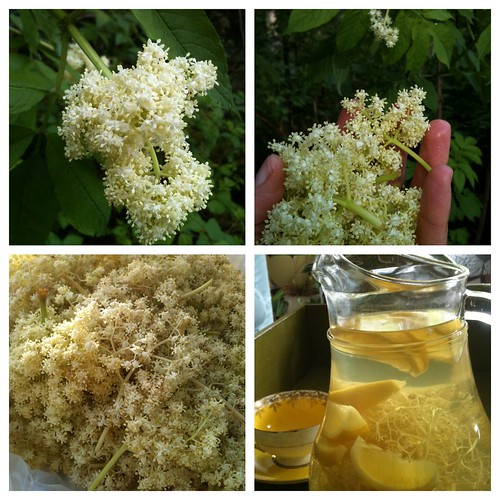
Yesterday we foraged for fragrant elderflowers in Stanley Park. It was a typical spring day: incidivisive weather, ranging from trickling rain, pounding hail and at long came the beautiful sunny afternoon I was waiting for, so I can go pick elderflowers.

Elderflowers are my new fling: we've only just met at the farmer's market on Saturday, and I'm already smitten with its delicate, berry-like aroma. And it took me only one time of enjoying the fresh cordial (or shall I call it iced flower infusion), to be convinced that these are worth traveling the miles for and risking a dirty shirt and a slip in the rainforest swamp for it.

It was beautiful, and I remembered seeing many of the shrubs along the trails I frequent on my weekend strolls; so I went wearing my best clothes without realizing how adventurous humans get when searching for food. White cashmere sweater is not a proper attire for such an adventure; and neither is a skirt; unless you want your bare skin to get kissed by cold wet moss. I was very glad that at least I had the forsight to put on good hiking boots though, which prevented me from slipping into the many mini-swamps that crawl alongside most of Stanley Park's trails.

A few tips about picking elderflowers: shake them well from the many little bugs that inhabit them before you take them home. You might still need to shake them again before using them for your infusions; but it will be a lot less messy.

Elderflowers are supposedly more fragrant before noon. If your weather allows, go for it and head out in the morning. I had to wait till late afternoon and they were still very fragrant and beautiful. Also, I find that the smell better after they are picked than straight on the branches, where at times their honeyed berry scent is overpowered by animalic nuances reminiscent of wet dog coat and skunk spray. Which might be why I never was tempted to forage them till this year. Thank the farmer's market for exposing me to the picked flowers!

As for the uses - you can make cordials and liquors with them, and once you've got your hands on the flowers - the process is simple. You can make it in two concentrations - a concentrated syrup-like cordial, or an infusion that can be drank fresh as it is. Below are the recipes for both:

Making Eldeflowers Cordial

Fresh Elderflower Infusion:

1.5L boiling water

1/2 cup evaporated cane sugar

30 elderflower clusters

2 organic lemons, cut into 8 wedges

Boil the water, and pour into a pitcher over the flowers, sugar and lemon.

Infuse overnight (or for 12 hours), covered in a cloth.

Refrigerate and use within a week (there is no need to strain the flowers and fruit, they will continue to infuse the water with their aroma).

To serve: pour half a glass of the flower infusion through a strainer, and half a glass of San Pellegrino or other unsweetened soda. Add ice cubes if desired. Enjoy!


Elderflower Cordial:

Most recipes call for citric acid (which is a preservative, but also kills the delicate floral aroma, in my humble opinion). My recipe won't last as long, but is true to the flowers.

1.5L boiling water

1kg sugar cane

40-60 elderflower tops

2 organic lemons, cut into 8 wedges

Dissolve the sugar with the boiling water.

Add the lemon wedges and the flowers. Cover with a cloth and infuse overnight (or for 12 hours). Strain through a fine sieve or mesh cloth, and store in sterilized containers, in the fridge.

This cordial may be used to taste (it's very concentrated) in soda water, in addition to iced teas, lemonades, poured over ice cream, and used in cocktails.

You may also use elderflower to make your own elderflower liquor - I haven't yet, but will this weekend, and if it goes well I will share with you my recipe.

Labels: , , , ,

Wednesday, April 25, 2012

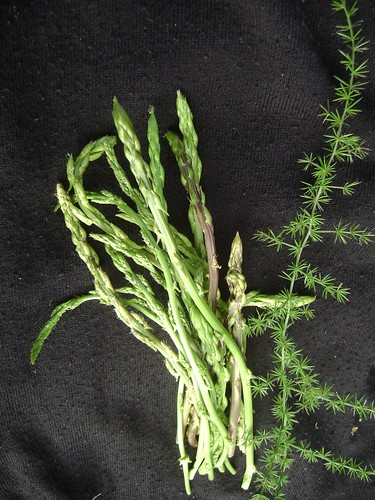
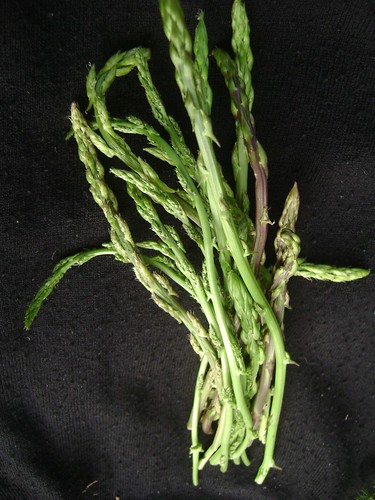
Wild Asparagus

Wild Asparagus

Wild Asparagus, a photo by Ayala Moriel on Flickr.


Yes - you guessed it!

While rummaging through the wadi in Clil with my family, we spotted many buds and new shoots of wild asparagus. It's hard to believe the these shoots are of the same plant - they are so much more plump than the grown branches; their leaves curled in embriotic-like tenderness that recalls none of the porcupine-like prickliness of the mature spiky leaves. But if you see it in real life, the newborn branches developing in the spring, you can understand the connection and marvel at how precious is this moment in life when it is not only edible, but a real gourmet item

Far thinner than the cultivated variety, the wild asparagus has also a more intense flavour, with some intriguing bitterness emerging towards the end of the season. To prepare it, cut the stems only if they don't fit your steaming basket. Steam for a very short period of time, removing from the steam immediately once they've changed into a vibrant green and are easily snapped into two.

Seasoning, as in most top-notch vegetables, need to remain simple to really make the flavour shine: a sprinkle of coarse sea salt or fleur de sel, and a generous drizzle of pure virgin olive oil. Serve and enjoy immediately on its own, or on top of hot pasta or brown rice with shaved Parmesan cheese.

Wild Asparagus by Ayala Moriel

Wild Asparagus, a photo by Ayala Moriel on Flickr.

Labels: , ,

Thursday, February 02, 2012

Sexy Ginger

Naked Ginger by Ayala Moriel
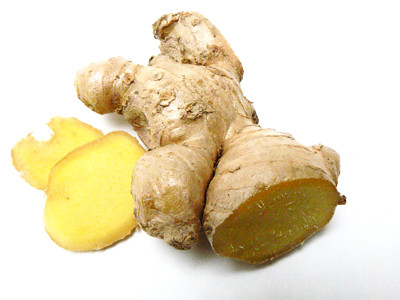
Naked Ginger, a photo by Ayala Moriel on Flickr.

Ginger (Zingiber officinale) is the rhizome of a tropical plant, related to cardamom (as we mentioned earlier), only that it is the rhizomes, not the fruit or seed that is used – in herbal medicine, aromatherapy, as a culinary spice, and in perfume. Native to Southeast Asia, and cultiaved in tropical countries throughout the world - across Africa, the West Indies, Caribbeans, etc.

In Hawaii, the hoola dancers use the fragrant ginger flowers (or "lilies") in their leis along with plumeria, tuberose and gardenia. In aromatherapy, ginger is considered a nerve tonic, especially effective for nervous exhaustion and fatigue, and - similarly to its used in Chinese medicine and Ayurveda - it is used to aid digestion and to fight colds, flu and other "moist and cold" respiratory and gustatory conditions.

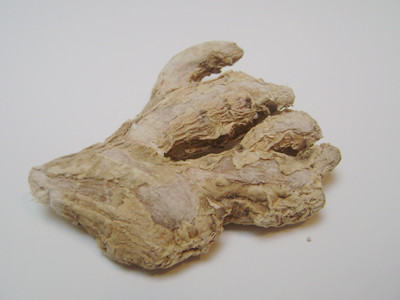
Ginger Dry by Ayala Moriel
Ginger Dry, a photo by Ayala Moriel on Flickr.

The dry roots can be cooked in soups, stews, chai teas and ground for herbal preparations, including some over-the-counter drugs against nausea. In countries where the root cannot be grown - it is mostly the dried rhizomes that were used, as a spice. Throughout North Africa and Arabia, dried and powdered ginger roots found their way to many spice blends such as Hawaij (Yemen), Baharat (Arabia) and Ras el Hanout (Morocco). The Druze in Lebanon, Syria and Israel/Palestine enjoy a warming drink throughout the winter made of dried ginger roots and a hulnejan root, that is believed to protect the body against colds and flu.

However, in European and Western cuisine, the dry roots (usually ground) are more widely used - for practical and historic reason: ginger is not native to those countries, and was introduced to them as a spice, imported from far away tropical countries aboard ships. Therefore - most of these cuisines have used the dried ginger root in spice mixes for breads, bread puddings, cookies, etc. - gingerbread and pumpkin spice being the two most popular and widely recognizable forms of ginger. And only later, as the cuisines of those countries became more versatile and open to the use of spice (with influences from North Africa, India, etc.) - they've also incoporated dried ginger roots in soups, stews and so-called "curry" blends from pre-ground (and usually un-roasted) spices.

The fresh root is better for chai, in my opinion (the dry one having a more musky, peculiar, and somewhat unpleasant after-note), and is used in countless Chinese, East Indian and South East Asian cuisines.

Ginger is good for indigestion, and is wonderful thing to add to bean stews to prevent discomforting gases that are often associated with this excellent-otherwise plant-based source of protein. It's used in countless Indian curries, including Rajam Chawal (beans and rice). Fresh ginger is easily incorporated in any stir-fry and in present in countless Chinese, Korean and Japanese stir-fries, soups, stews and dumplings. And of course - the slices of ginger are pickled in rice vinegar as an acidic accompaniment to sushi and sashimi. Fresh grated ginger - as well as its close relative, the galangal root - are an essential component in Southeast Asian curry pastes along with lemongrass and other citrusy components (kaffir lime leaf and zest, for example) - giving Thai and Malaysian curries their distinct freshness and balanced flavour.

Koeh-146-original

Although for culinary and medicinal use both the dry and the fresh roots are used almost interchangeably, as far as aroma goes – there is quite a big difference between dry and fresh ginger: Fresh ginger oil smells Sharp, peppery, root-like, citrusy-fresh, earthy, woody, dry, a tad floral, grassy. Ginger oil from the dry roots smells rather unpleasant in my opinion - rather sharp, grassy, and even a little oily. However, ginger CO2 from the dry root smells candied, spicy, warm, sweet, overtones with hints of fresh-citrusy, tangy character, resembling closely the sensation when enjoying crystallized or candied stem ginger. Tart, sweet, warm and refreshing are a few of the adjectives that come to mind when experiencing a high quality ginger essence.

As an aphrodisiac, ginger works like most other warming spices – increase circulation and create a warm fuzzy feeling when smelled, inhaled or enjoyed in beverages and delicious foods. Ginger is also one of the main ingredients in pumpkin pie spice - which a famous study found that men found the scent to be most arousing. But most importantly - ginger tones the nervous system and dissolves nervous exhaustion and fatigue, neither is particularly sexy or appealing... In her book "The Fragrant Mind", world renown aromatherapist Valerie Ann Worwood recommends it against sexual anxieties, and recounts the oil's personality as very sexual and confident.

Using ginger in a menu for an aphrodisiac dinner would be a great idea – and also will help ease digestion, so that it does not get in the way of other things later on…It imparts a unique fresh and subtly pungent flavour to masalas, stir fries and curries. The fresh ginger root can be incorporated into beverages - cool or warm. warm ones, such as the classic chai tea or hulnejan I mentioned above, or more innovative concoctions such as Aftelier's Rose Ginger oolong, and my own Zangvil tea. Or cool ones - such as your own aphrodisiac "ginger ale" with fresh ginger juice, some honey or raw sugar and sparkling water and a slice of lemon, or add some ginger juice to a white wine like the Romans did. Ginger juice is quite a revitalizing beverage as long as it's balanced with less pungent fruit or vegetables - try juicing it with carrot, pineapple, orange - or any combination of these four that strikes your fancy!


Ginger Fresh by Ayala Moriel
Ginger Fresh, a photo by Ayala Moriel on Flickr.

And of course - we can't forget about dessert! Besides the usual suspects (pumpkin pie, ginger snaps, candied ginger and ginger-spiked chocolate truffles or bars) - there are also more unusual ones to discover that I would have never dreamed of myself! When I saw Steamed Milk with Ginger on the menu of Sun Sui Wah (one of Vancouver’s finest Dim Sum restaurants), it sounded peculiar – as it sounded more like title of a a hot beverage in a coffee shop. When I finally mustered the courage to order it, I discovered that in fact it’s more like a pudding – and further research into the matter (when looking for a recipe) revealed that it is actually a Ginger Milk Curd - an unusual hot dessert that takes advantage of a chemical reaction between hot milk's proteins and fresh ginger juice, forming it immediately into squiggly, slippery pudding. I strongly urge you to try this at home – it is quite the delicacy, and there are even YouTube tutorials to guide you step by step!

For a sensual aphrodisiac massage with ginger, try this:

1Tbs light (aka unroasted) sesame oil

1 drop ginger essential oil or CO2

2 drops jasmine absolute

3 drops frankincense essential oil

You can may also use this blend to condition and perfume your hair.

For a revitalizing room scent, place in the diffuser one drop of each ginger, jasmine and lemongrass. You may also use this combination for a scented bath, to overcome fatigue - one of the worst mood killers after stress.

And of course - there are some perfumes that were already prepared and ready for you to revel in before you embark on your seductive adventures. Here are a few suggestions for aphrodisiac perfumes with a noticeable ginger note: Bois des Îles (Chanel), Camille (JoAnne Bassett), Classique (Jean Paul Gaultier), Cognac (Aftelier), Eau de Reglisse (Caron), Ginger Ciao (Yosh), Ginger Essence (Origins), L’Herbe Rouge, Lys Méditerranée, Orcas, Réglisse Noire (1000Flowers), Sahar (The Scented Djin), Tilda Swinton Like This (Etat Libre d’Orange), Zangvil.


Labels: , , , , , , ,