Thursday, March 22, 2018

Incense Ceremony for Spring Equinox 2018
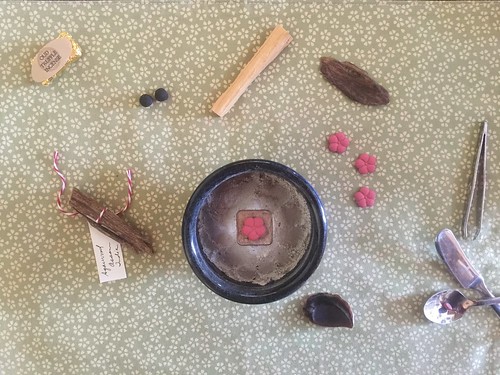
Spring Koh-Doh

Ceremonies are a combination of the meticulously planned steps and procedures, and the chemistry or effect this process has with the people attending. I believe it's the latter who really sets the tone and brings out the essence or spirit of the ceremony and its intent.

Yesterday I conducted an incense ceremony to celebrate the arrival of spring. Things did not go quite as planned in terms of attendance. So I ended up actually having two ceremonies: A prep one with Miss T, my Sister-in-law, 3 nephews, and baby niece, in which we had lots of laughs trying not to blow off the ashes in which the charcoal is buried.
We started off by "warming up" our noses with a few simple ingredients (patchouli, vetiver, sandalwood, ambrette seeds; then we went through all the six ouds I have in my collection and finished off with some special neriko that was gifted to me by incense friends). I spent most of the night before in a sweat lodge and felt it was really important, after all the cleansing and sweating and burning off negativity and challenges - to invite sweetness into the spring.

Here are some brief notes from the ouds we've experienced that afternoon:

Hakusi (spicy/hot incense from Vietnam): Musky, animalic, woody, changes a lot throughout burning. Perhaps can be classified as Manaka.

Ogurayama (sweet incense from Vietnam): Sweet indeed, dreamy and rich. My nephew called out with a big smile: "It's a Garden of Eden for candy".

Kokonoe no Kumo (Indonesian raw aloeswood): Powdery, mild and bittersweet. Reminiscent of marzipan, playdoguh and heliotrope. 

Tsukigase (Vietnamese raw aloeswood): Weak and a little hot/peppery.

Assam Aud (gift from Persephenie): Camphoreous, hot-spicy, yet at the same time dry, yet sweet; or perhaps cool-sweet. Smells a lot like Japanese body incense.

Papua Shimuzu (Gift from Ensar Oud):Desert-dry at first, woody, bitter, acrid and perhaps a little sour to. A little like sandalwood. Perhaps can be classified as Rakoku.

The evening ceremony I actually had to cancel because of too many last minutes cancellations, and still there was someone who did not register at all, and actually was the only one who showed up (!). I forgot those things tend to happen, and feel bad that those who intended to come missed out. We had an impromptu ceremony that was not quite as I planned, but still fantastic. We burned what I felt intuitively was the right materials for her, and we had a pace that was responsive to her experience, in terms of toning down or up the intensity and switching materials when she had an overwhelming reaction to something. We burnt patchouli, vetiver, sandalwood and one type of oud (Papua Shimuzu).

Last but not least, here are the details of what was my intended ceremony. Koh-doh ceremonies are at an interesting cross between oud-binge, poetry reading, calligraphy and olfactory identification games. In that spirit, I planned out an event to celebrate Hanami's anniversary with the poem that inspired it. This poem and the associations I have with it dictated which materials we were going to burn, each symbolizing a particular aspect of the poem:

Metro Station: Vetiver rootlets, for their dusty, cool-woody and somewhat metallic scent

Faces in the Crowd: Costus root, for its oily scalp smell like many people on a train and the forced intimacy that happens in such crowded areas.

Sakura Blossoms: Either a Rose Nerikoh (by Yuko Fukami), cherry blossom incense stick, or ume blossom incense pellets that are shaped as actual flowers (see above photo).

Wet, black bough: Oud of some sort - preferably one with more "watery" or "cool" feel to it, rather than the hot, bitter, sweet ones, etc. For example: Assam agar wood.


Labels: , , , , , , , ,

Thursday, March 31, 2016

Buds

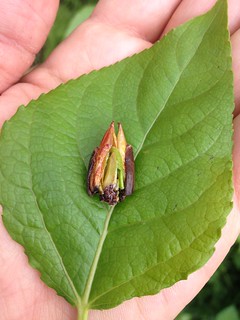
Black Cottonwood Bud

In the wake of the northern spring, the world comes to life in different stages. Some trees burst with flowers long ago and are now in the decaying stages that lead to seed. Others are in the peak of their bloom. And some are still seemingly dead.

As you pass near lifeless-looking trees, a surprising smell may penetrate your nose: the scent of vanilla, resin and honey. Although it's all-around cuddly and cozy, there is also something sharp and green about it, that pierces through the nostrils like blades of grass. To the uninitiated, this smell, coming out of nowhere, is a complete mystery. To those in the know, this heavenly scent is a comforting, familiar reminder of the resurrection of black cottonwood buds, which will soon be covered with handsome, shiny green leaves, and will continue to manage this sweet scent for the months of summer.

Each bud is reddish brown, reminiscent of an insect, and green on the inside, drenched in sticky, drippy reddish-orange resin that is reminds me of propolis and pollen simultaneously. Herbalists prepare an infusion of these buds that has healing properties for muscle pains and skin ailments. I like it just for the scent, so I tincture them in alcohol (you can find this note in Komorebi).


Labels: , , ,

Wednesday, April 08, 2015

The Allure of Charoset


Charoset (or Haroset) is one of those obscure Jewish foods, prepared and eaten only once a year in Passover (mostly just during the Seder), and unlike the beloved Matzoh ball, it is hardly known to non-Jews. 

When I first saw it as a child I was neither particularly enticed by its appearance, nor seduced by the sounds of its name (which sounds like a disease). To make matters worse, it is eaten during the Seder wrapped in an odd looking "sandwich" along with horseradish (Hazeret in Hebrew) - which is also the name for mumps, not to mention a true tear-jerker and a traumatic experience for a child of any age *. 

The most common knowledge for the reason behind eating Charoset is it is representative of the mortar that our enslaved ancestors had to mix by the tonnes in Egypt. Other sages say that the Charoset is a remnant of the Paschal lamb - the sacrifice that commemorates the lamb that was slaughtered in each Jewish household in Egypt on the night of the tenth plague: the killing of the first-born. A bundle of hyssop was dipped in this poor lamb’s blood, and smeared on the door frames, as a sign for the Angel of Death to skip the Hebrew homes and spare the lives of our first-born. Hillel’s Sandwich (which I mentioned earlier) alludes to that symbolism of Charoset, as it represents eating the Paschal Lamb with the Matzoh and the Maror (bitter herbs), as directed in the Torah (Exodus 12:8).

Other sages and rabbis say that Cahroset needs to include all the fruit mentioned in Song of Songs (AKA Song of Solomon or Canticles). This poetic book signifies the unique relationship between God and his chosen people, which is read during Passover, the holiday that signifies the point in history as the birth of the Israelites as a nation. Among the fruit mentioned are apples, pomegranates, dates, figs and nuts. The spices added to the mixture (typically speaking: cinnamon and ginger) represent the pieces of straw that were added to strengthen the mortar. 

Now, Charoset greatly varies between different Ashkenazi and Sephardi Jews. Generally speaking, Ashkenazi Charoset is apple based (occasionally with pears added) and has a consistency of a dip or a spread; while Sephardi Charoset is more date-dominant, and often is formed into balls. And even within these two major ethnic groups, there are many different traditions and recipes vary greatly, for instance: Babylonian Charoset is made from Silan (date molasses) thickened with ground almonds, and I even came across a Moroccan recipe that is a paste of chestnuts, almonds and walnuts spiced with cinnamon and cloves; and some Ashkenazi recipes include raisins, while others use sugar as a sweetener; some call for pears in addition to the apples, and may use additional spices besides the cinnamon (i.e.: nutmeg, cloves, etc.). The Jews of Rome (and Italy) seem to have a balanced mixture of both, as you will soon see in the recipe I’ve received from my Italian sister in law, which was passed on to her from her great-great-grandmother, Nona Silvia Bassano from Livorno, Italy; yet surprisingly does not include any wine - an ingredient that so far has been consistently appeared in all the Charoset recipes I've researched. 

Some say that the use of fruit that brown overtime is the key for making a proper, mortar-looking Charoset. Hence using apples and pears without any lemon juice to avoid oxidation. The Jews of California have taken this one step further by making Charoset with bananas and avocados as well. I cringe to the idea of how this would look like the next day - kinda like leftovers of a smoothie, which I am sure is not a rare sight in raw-food-loving SoCal. 

I have to make a little confession: as much as I love my grandmother’s Ashkenazi Charoset, I was never able to replicate it satisfactorily in my own kitchen and have given up many years ago on trying it again. But someone asked me about Charoset and I got intrigued and looked it up in my library of cookbooks. Once I read about the Song of Songs reference to Charoset (in Phyllis and Miriyam Glazer’s “The Essential Book of Jewish Festival Cooking”), my imagination was immediately ignited, and I had to try both recipes in their book: a Yemeni Charoset and an Ashkenazi Charoset, that was very similar to my grandmother’s, except that it called for chopping the apples rather than grating them.


Ashkenazi Charoset
2 Granny Smith, Pink Lady or Gala Apples, peeled
1 cup walnuts
1/4 cup raisins, soaked in wine for 4-6hrs, or in boiled water for 15min, to soften
1 tsp raw sugar, brown sugar or palm sugar (or none if you are using sweet apples)
1/2 tsp Cinnamon powder
Pinch of freshly grated nutmeg
1-2 Tbs sweet wine

Chop the apples into tiny cubes (almost minced), or use the coarse side of a grater if you prefer a more watery consistency. Chop the soaked raisins. 
Finely mince the walnuts and add to the apples. Add the cinnamon and sugar. Keep refrigerated and use within 3-4 days. 
Can be enjoyed out of the Seder ceremony throughout the Passover week. I love it with Matzoh brei or on a potato kugel.  

Yemeni Charoset 
15 Dates, dried
15 Figs, dried
2-3 tsp Sesame Seeds, toasted **
1 tsp Cinnamon powder
1 Cardamom, freshly crushed with a mortar and pestle
1 Tbs fresh ginger root, grated
1oz dry red wine 
(adapted from Phyllis and Miriyam Glazer’s “The Essential Book of Jewish Festival Cooking”)

Nona Silvia Bassano of Livorno’s Italian Charoset 
1.5 kg Apples, finely grated
1 kg Dates, pitted and mashed
750 gr (3 cups) sugar 
300 gr Almond meal (from blanched almonds)
1 cup water
2-3 tsp Cinnamon powder ***

Boil the water and sugar to make a syrup. 
Add the almonds and continue cooking. 
Add the grated apples, and continue cooking, stirring constantly to prevent sticking to the bottom of the pot. If too watery - continue cooking for more reduction; if too dry, add a little more water. 
Add the cinnamon, and cook until the mixture starts bubbling and puffing. 

* If your parents are of the merciful type, they'll make this very sandwich with lettuce, which is a peculiarly delicious affair, and one of the significant flavours that makes this holiday forever memorable on every person's palate. 

** Optional - if you eat Kitniyot on Passover). I personally found their texture in this context to be annoying, as well as the fig seeds. Next time I am trying this with less figs, more dates and with tahini (sesame paste) instead! 

*** For a more Yemeni-style Charoset, you may add some ground cloves and cardamom, to taste.

Labels: , , , , , , , , ,

Wednesday, March 05, 2014

In Praise of Stinging Nettles

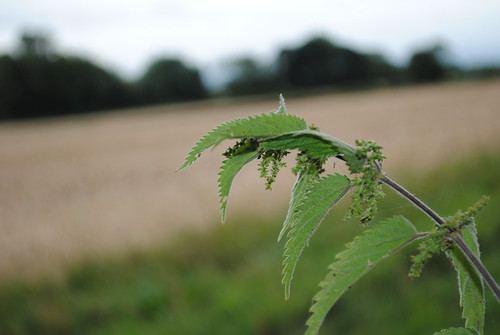
Stinging Nettle by Glover747
Stinging Nettle, a photo by Glover747 on Flickr.
Stinging Nettles are a magical herb. This hardy little plant grows almost everywhere - in the wild, or amidst urban decay, providing those who know its secrets with a the best of wealth: health.

In the Northern Hemisphere it will arrive during the winter or early spring, just when it's needed for its many health benefits. First of all, in a season devoid of greens* nettles provide iron which is much needed to keep our red blood cells count, and keep us strong and energetic. Tea brewed from stinging nettles (fresh or dried) also help in many other aspects, such as cleansing the urinary tract, and combating inflammation. And the best part? It gives your immune system a boost against hay fever, which is everyone's least favourite part of spring!

If stinging nettles scare you, here's the trick: once you blanch them in boiled water, they immediately lose their sting! Of course that does not solve the problem of picking them (use gardener's gloves, unless you are blessed with rough worker's hands or have developed and immunity to the stinging venom in the leaves - something that most regular pickers of nettles develop after repeated exposure). Secondly, if you get them in the farmer's market, you just need to be careful to not touch them until after you blanch them - just pour them into boiling water, like pasta, and wait till they change colour into a dark green and look limp.

If the health benefits alone don't appeal to you all that much, here are a couple of delicious tips recipes using nettles, for any meal of the day:

1) Soup Broth: If you haven't developed a taste for the steeped nettles, you can use the hot tisane in addition to the broth of any soup.
2) Smoothie: The chilled tisane can be used as a liquid in smoothies. Try it with pineapple and kiwi!
3) Fritatta: Chop up a handful of the blanched nettle leaves, and add to 3 whisked eggs. Chop up one scallion, a handful of cilantro leaves, and add a dash of dried chili pepper flakes and 1/4tsp each of turmeric and cumin, and salt to taste.
4) Lentil & Chickpea Soup: In a saucepan, sautee onions, once golden add garlic, sautee for 10 more seconds and add 1Tbs of each cumin and coriander seeds. Sautee for additional 10-20 seconds. Add 6 liters of water and 1 cup each green and red lentils, and 1-2 tsp salt. Cook until the lentils have soften, and add pre-cooked chickpeas (or canned ones). Add chopped up bunch of blanched nettles and chopped fresh cilantro leaves. Serve with lemon juice.

*Go to the local farmer's market to see how little there is of fresh green leaves in the long-nighted months: even kale is quite miserable come February and March).

Labels: , , , , ,

Monday, May 02, 2011

Thawing


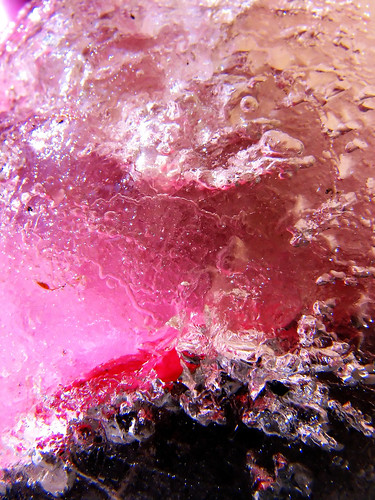
Thawing, originally uploaded by Ayala Moriel.

This Saturday we went for a little hike in Lynn Canyon (which have become painfully touristic, fast becoming only another version of Capilano suspension bridge affair - it's only a question of when they will be charging us to cross the bridge!). Thankfully, the trees and the vegetation and melting snowtops take no notice of who is watching them and the show went on as far as their concern went...


New smells of spring grab my attention this year - especially balsam poplar buds. At least, that's what I think is what I'm smelling. Smells are never easy to describe, and especially not without reference to another smell they resemble (in this case: Sève Exquise). Or it could be the smell of cottonwood trees in bloom, which unlike the latter, was not discontinued. But I'll attempt to put these comparisons aside and try to describe it as it is.

The air of the forest surrounding Lynn Canyon was chilly from the moisture in the air and rushing river of freshly melted snow. But it smelled warm and balmy, graced by a fuzzy warm blanket of honeyed sweetness and wild flowers. It smelled so warm and sweet that it might as well have been the sole cause for the thawing snow capped mountains.

Labels: , , , ,

Monday, March 21, 2011

Happy Spring!


עדת כרמליות פריכה
כסתה כליל את הגופה
שנשארה פה אפופה
בשלג של ריחות פריחה


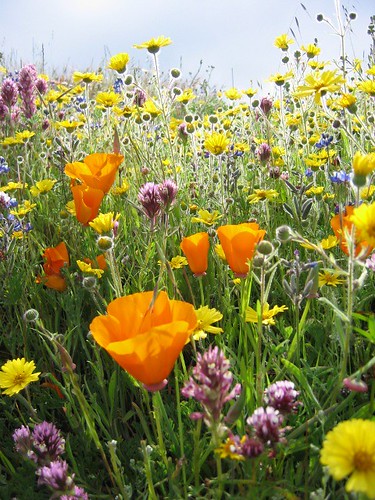
Spring is here, and brought with it a myriad of flowers full of fragrances colours. Spring is different in different parts of the world of course, and for me it is always a dichotomy between my longing to the myriads of wild flowers of where I grew up (the Western Galilee of Israel, which I rarely get to see during this very beautiful season); and my recent acquaintance with the tree blossoms of sakura and ume (Japanese cherry and plum, respectively) that grow in abundance in Vancouver (many of which were a gift from Japan). The flowers above are poppies (not particularly odorous on their own) and some type of a daisy that has the typical bitter scent of the chrysanthemum family. The flowers on top, with the pale purple-pink cross shape, are called "Karmeliyot" and are sweetly fragrant, not as heady as sweetpeas, but nontheless, can become overpowering when it's a dry and sunny spring day. In British Columbia, wild flowers are a far cry from the vivid display of colours, shapes and aromas that is in more extreme weather conditions (such as deserts, prairies or alpine climates). It's mostly just green and boring there... In Israel, all the colours of the rainbow can be found in the wild flowers blooming during the month of March.

Mimosas, an invasive species of tall shrubs that are native to Australia and took over the hills of Provence as well as many parts of Israel. The aroma is very subtle and is reminiscent of stamen, iris, wet wood, powder and green leaves. Their use in perfumery is described in much detail here.

Snow drops, which have a nice and fresh aroma that is strangely hard to detect the closer you get to the flower... But floats in the vicinity where they are in bloom. My apologies for not being able to rotate the photo, it looks so much lovelier with the correct orientation... Will fix when I figure it out!

Plum blossoms, with a subtle, bittersweet and powdery like coumarin, which lace the streets of the West End in Vancouver in very early spring.


Jasmine and Spike Lavender make a strangely appealing combination! Spike lavender (Lavandin) in its fresh form is very green, more than herbaceous, and clean smelling - verging on the soapy. Jasmine's indolic undertones creates an intriguing contrast, not unlike what you'll find at the heart of many leading fougeres fragrances.

Pear blossoms. Not much in the way of scent (very subtle), but their whiteness is striking yet delicate. This is the time for all the orchard trees to bloom and prepare the delicious juicy summer and autumn fruit!

Labels: , , , ,

Thursday, April 02, 2009

Florals? For spring? Groundbreaking.


Miranda Priestly, originally uploaded by bsouza001.

The quote above (- Miranda Priestly, “The Devil Wears Prada”) is perhaps the only way to explain why the number of Spring lists on SmellyBlog is embarrassingly low. Spring has always been my favourite season and I’ve been very careful here not to be overcome by my naïve passion for flowers and get carried away.

For this list, I’ve decided to give you the option of floral or not, depending on where you live and what you are doing this season.

Spring in Vancouver
Cherry blossoms galore, washed by rain and tortured by snow.
My favourites are: Liz Zorn’s Waterflower for brighter days, and KenzoAmour Le Parfum for the cooler snowy ones. And of course my new Hanami perfume, which to me represents botanical beauty in my city and the first spring I was able to appreciate and enjoy here (it was last year and it took me ten years to get there!).

Spring in Israel
Bees are buzzing in the air, orange blossoms everywhere. To blend with this environment I enjoy wearing Zohar, my rather realistic orchard in full bloom soliflore; or for a more abstract and urbane take - Narcisso Rodriguez for Her.

April in Paris
I’m very excited to be visiting Paris this spring, but that won’t be until May. Rather than the obvious Champs-Elysées or romantic Paris, I am thinking of something sophisticated but light hearted like the bubbly Champagne (Yvresse) or more sophisticated and dark, namely Sous le Vent. Which is, by the way, the one and only item on my shopping list to Paris (besides pastries, of course).

Spring Cleaning
Pure Turquoise - nothing gets cleaner than that. You might just be able to skip the cleaning altogether if you wear this!

Easter Celebrations
Vanille Galante - in this Last Feast, heady Madonna Lilies are served with the sweet and salty touch of caramel & fleur de sel.

Passover Celebrations
Hiris by Hermes - starchy but without wheat, to satisfy the Jewish pastry craving during Passover.

The Spring that Never Comes
You know the feeling – spring is just not coming. It’s snowing, or raining, or perhaps the ground is still covered with ice and frozen rain and really dirty compact snow that hides who-knows-how-much dirt. For that I’d recommend a dabbing of Neil Morris Dark Earth – a cold, moist and very earthy perfume that matches its name perfectly. I also heard wonders about Black March, but never quite tried it, so perhaps you could tell me more about it?

Hay Fever
Spring also means green. Green shoots of bulbs and new green grass. And of course tree pollen that makes for runny noses and red teary eyes. To accentuate the sensation of sneezing, why not add to your breath a little bit of Yerbamate, or that fresh cut grass from Demeter’s library, or better yet – the iconic cheerful green of them all: Vent Vert.

Photo: Miranda Priestly, originally uploaded by bsouza001.

Labels: , ,

Friday, March 20, 2009

Spring!


Cherry Blossoms, originally uploaded by Ayala Moriel.

Spring has officially begun this morning, and I'm glad to see that the cherry blossoms are cooperating with the calendar and start creating the beautiful atmosphere that makes this season special, regardless of how cold it may be.

I am busy these days getting interesting print materials for the exhibit at Blunda that will showcase the perfume I created last year for Perfume Inside a Poem project on Memory & Desire blog. I'm putting together a few things with my graphic designer - including a postcard with one of my cherry blossom photographs of last year. The rest of it you will just have to visit Blunda to see for yourself!

From olfactory point of view, the perfume I created for this project is about the contrast between the botanical and the urbane. The images that flicked before my eyes as I was reading the poem were the dusty Metro in Montreal and the humidity of New York City, and in contrast to that – the surprise of discovering the cherry boulevard in full bloom at Burrard SkyTrain station in Vancouver. And because of its stunning beauty at this time of the year it was also chosend to be the centre of the Cherry Blossom Festival in Vancouver.

After much thought, I've decided to call the perfume Hanami. Not so much because it is particularly Japanese, but because Hanami (flower viewing) is totally not what Westerners might expect. It's not about Geisha roaming around in bamboo flip flops and writing haiku about cherry blossoms and playing on koto as the blossoms dust their coiffed hair. Hanami is really more like a picnic where people sit under the cherry blossom trees and drink so much sake they can’t remember a thing. I have to admit that I liked how the name sounds all pretty and romantic but in reality isn’t so. Plus I like the sound of it, and it will be my first perfume starting with the letter “H”.

Labels: , , , ,

Saturday, April 05, 2008

Spring Essentials - Part Three: Beating the Spring Cleaning Challenge

Dust, paint, tax returns... All those hectic things that come with spring cleaning can really throw one off balance. How to handle this without freaking out?! Well, one room at a time for one thing. And one thing at a time as well. Creating a checklist of what needs to be done is an excellent way to cope with the stress, and also make sure everything is done.

In several cultures, the year start at springtime (Persian New Year is only one example). In our hectic lifestyles, it won’t hurt to re-visit our New Year’s Resolutions from a few months back and see what we have accomplished, what we’d like to change, etc.

What I find helpful is to instead of looking at spring cleaning (or any other cleaning, for that matter) as a chore - see it as an act of cleansing. It really does make one feel good to have a tidy and clean space to live in. And just as we enjoy bathing and showering daily, the household “chores” can become a daily ritual of beautifying, cleansing and re-organizing the space.

Some of the aspects of house cleaning that definitely makes a difference is what do you smell when you clean. I noticed that ever since I switched to natural, bio-degradable and naturally scented household products, cleaning has become a lot more pleasant. Not getting a headache from the chemical fumes is definitely a bonus (although I have to note, that every once in while I do need to use a touch of chlorine to get certain stuff “really” clean and get rid of those tough spots...). There are more and more cleaning products available now to choose form that are “green”. You can also make your own mixture of water with anti-bacterial essential oils for surface cleaning. Simply add a few drops to a spray bottle filled with clean tap water. Examples of oils with anti-bacterial actions (that are also very affordable, by the way) are: rosemary, mint, citrus oils, pine, lavender, eucalyptus and tea tree oil.

Once you’ve finished your spring cleaning, you may want to try performing a clearing-space ritual, using incense. There are many variations on this ancient ritual, as many as the cultures there are in the world. Two universal elements seem to be the use of incense burning, and creating a circle in relation to the 4 directions of the wind. The Native North Americans would burn sage, cedar and sweetgrass to clear the space, approaching each direction of the wind and communicating with the spirits; Western cultures used frankincense and myrrh and create a circle protected by guardians of the four elements; also purification with water can be added to the ritual, using rosewater or water with hyssop oil. Weather or not you believe in spirits, angels or any divine forces is not of particular importance (in my opinion, anyway...). Even the most secular and atheist person can benefit from giving attention to every room in the house and fumigating it with incense. These fumes cleanse the air and the attention you bring to each corner stirs up any stale energy that pervaded clutter-zones and replace it with fresh flow of air and energy.

Labels: , , , ,

Friday, April 04, 2008

Spring Essentials - Part Two: Spring Greens


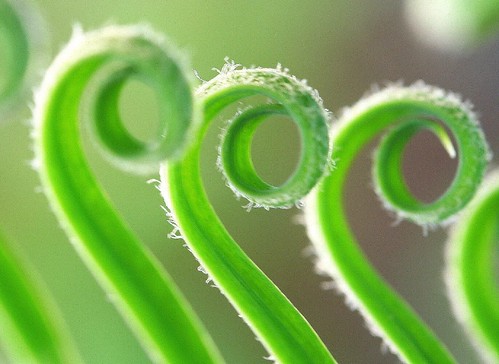
Cycas revoluta leaves uncurling, originally uploaded by Amelia PS.

After the bursts of flowers have been shaken up by storms or sun, and been run down to the grown, little green leaves emerge and cover the trees with what is at first a very pale, transparent green, growing stronger and darker as the sunshine unfolds.

Crushed green leaves are perhaps the second most powerful smell we associate with spring. Perhaps freshly turned soil is another, if you are in the gardening circles. Crushed leaves in perfumery have an interesting double-standard, meaning at once nature at its best - and also class, restraint and well-mannered elegance.

If simplicity, nature or spring cleaning appeal to you, you may enjoy these fragrances more than florals during this time of year. Here are a few leafy-green fragrances that particularly appeal to me.

Clean, sharp and somehow, even 30-something years after its launch it still feels very current. No. 19 is like jeans and pearls and can be equally enjoyed by a nature girl roaming through the forests or a sophisticated urban-bound gal trotting up the street promptly accessorized with a dog and purse to match.

Laura Ashley No. 1 - a scent that is unfortunately discontinued; sophisticated green floral that brings to mind an English garden at spring time with flowering bulbs of lily and hyacinths. It’s lady-like, well-mannered, romantic and only very tiny bit melancholy, a quality which I usually find to underline most green fragrances.

Similarly romantic, and with a more cheerful, fruity and soapy attitude is AnaisAnais by Cacharel. With its fresh galbanum notes, Madonna lily and a mossy base it’s a classic for this season, without being too sharp.

Warming up the florals with its signature Guerlinade of vanilla, iris and tonka bean, Chamade by Guerlain has all that spring has to offer - the sharp galbanum, the heady hyacinth and the mossy base of freshly turned soil.

Lastly, Masakï Matsushïma’s Mintea, a minty green tea scent, with a musky base. What I like about it is it’s freshness that lacks sharpness despite the fact that it is green; unlike most greens, it also stays close to the skin and has a beautifully soft, skin-musk like base.

Labels: , ,

Thursday, April 03, 2008

Spring Essentials - Part One: Florals


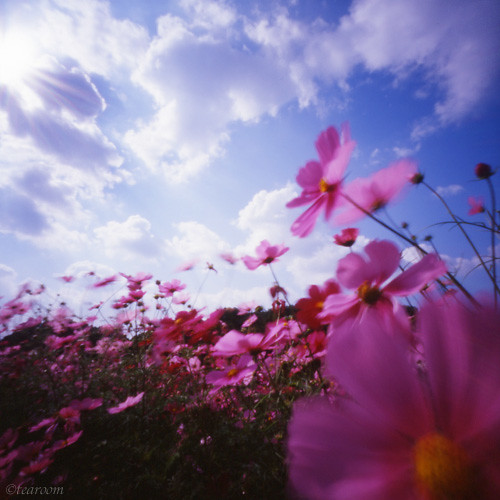
Joy, originally uploaded by tearoom.

Wether the weather agrees with it or not, it’s spring time, and it’s time to enjoy some fabulous fragrances that emphasize the season’s best traits. Some of which are obvious, like flowers and greenery; others are more subtle and elusive, having to do more with the role of spring in revival, resurrection and renewal of both body and spirit.

Spring means flowers. Yes, it’s a cliche but it’s true! And different flowers bloom in different parts of the world, so this can be an opportunity to tune yourself in with nature and adorn yourself with similar scents. There really couldn’t be a better time in the year to douse yourself with a floral bouquet or a single note; preferably of lighter, brighter floral notes. Light white floral notes such as jasmine, orange blossom and mimosa reign my spring fantasies, but it may be different for you depending on your own favourite florals and the particular blooms that inspire your environment.

Back home in Israel, at this time of the year the air is permeated with the heavy blossoms of wild flowers, mimosas and orange blossoms. Wild flowers are difficult to mimic in perfumery, and rarely have been as far as I know. When visiting my home country in the spring, I always make sure I bring with me my orange blossom perfumes - Jo Malone’s Orange Blossom Cologne for its citrusy freshness; the abstract Narciso Rodriguez; the mysterious Orchid from Aftelier; and finally, my very own all-natural perfume Zohar, which is inspired by the orchards in full bloom. As far as mimosa goes - I like mine light and sweet, such as Mimosa pour Moi or Les Nuages de Joie Jaune.

Here in Vancouver, the scents floating in the air are mostly of cherry blossoms, magnolias, blooming bushes and spring bulbs: hyacinths, tulips, daffodils, and Madonna lilies. My Vancouver spring essentials for colder days include KenzoAmour for it’s sweet cherry blossom scent, Farnesiana to remind me of mimosa but in a warm almondy-cherry-like way. Flower by Kenzo is another interesting choice for a warm, powdery floral that is again heliotrope laden (combining vanilla sweetness with a hint of cherry/almond like bitterness). For crisp, bright spring days I may prefer delicate soliflores such as Ofresia (Diptyque’s freesia soliflore) or After My Own Heart (Ineke’s lilac soliflore, underlined with raspberry, heliotrope and musk).
But in no doubt, my favourite floral discovery this spring is the perfectly balanced, all-natural perfume Waterflower by Liz Zorn - a floral that is never too pretty yet oh so delicate and has a balanced underlining sweetness that makes it very wearable in the often less than hospitable Vancouver spring weather.

Labels: , ,

Tuesday, May 29, 2007

Scents to Take You from Spring into Summer


Spring List, originally uploaded by Ayala Moriel.

For those who were wondering how come I’m wearing so many summery scents lately, the reason is simply the relatively hot spring we are experiencing in British Columbia. This is a nice compensation for a long, murky winter that seemed to never leave (until I came back from Israel, and apparently, brought the sun with me!)

It’s interesting to note, particularly when looking back and remembering how the summer almost seemed to refuse to make room for autumn, but turned into winter ever so quickly before autumn was quite finished its speech. It seems as if spring has turned into a British Columbian summer pretty much skipping the nasty cold bit when spring feels like winter yet you know it’s not winter yet. But I am not objective here. I might have just been away for a month when that happened (and yes, it did rain all the time when I was away in April, so there you go).

Here are my “editor picks” style entry for scents that can seamlessly take you from spring into summer. Some are equally fantastic on cool, crisp early spring days (providing a cheerful floral warmth) and others are so deliciously refreshing that they are simply too good to resist even on a steamy hot day. For me this hot spring means a lot of fun: picnics on the beach every evening, dancing, hedonistic dinner parties with close friends, and lots of perfumes to boost and make every occasion even more fun and memorable! And now that spring cleaning and painting is over it's time to have even more fun than before.

Here is where my heart is right now – most of these are what I wear now on a regular basis, and a couple are simply noteworthy even though they are new to me:

Newly discovered floral note:
Ylang Ylang.
I have been wearing my Coralle a lot lately, and really enjoying the juicy, mouthwatering aspects of this humble tropical flower. So creamy, so smooth, and just perfect. You’ll notice it appears in several of my favourites for this spring as well (i.e.: Chamade, Samsara, Tamya and Songes)

Classic spring floral:
Diorissimo
No additional comments necessary...

Most Innovative Hot Weather Gourmand:
Cognac by Aftelier
With notes of olives, cognac and citrus, this may sound more like a margharita than a perfume. However, it is not boozy at all, rather – fruity, green and with that exquisite oily feel of just-picked olives and freshly pressed virgin olive oil, sans the bitterness. This is so surprising you must try it to believe it!

My very own favourite spring & summer scent:
Tamya
In person she is my favourite girl ever (she must be hearing this a million times a day). As a fragrance this is my favourite floriental and a staple in my purse to-go kit. Tamya being equally non-demanding and romantic, floral, fruity yet skin-like I find it easy to wear in any situataion or season. But hot spring and summer days are definitely her favourites, where the yuzu lifts the spirits and the white florals dance glitteringly on the skin.

Favourite lilac fragrance:
After My Own Heart. This is soft, fresh, green, sweet, clean and very easy to wear and versatile.
And it was made by a very rare breed - a Canadian perfumer (now residing in San Francisco), which might partially explain why I have a soft spot for it and a lot of room in my heart...

Floral that impressed me but did not win me over:
Lys Méditerranée
With the scent of Madonna lilies and orange blossom, and a sweet vanillic base, this makes a lady-like spring floral that I’m surprised I haven’t discovered earlier. It’s not quite “me” but is very enjoyable.

The most exotic of them all florals:
Fairchild by Anya’s Garden.
If you are looking for something truly different that nobody smelled before, the steamy-hot, humid floral from Anya’s Garden, including notes of pandanus, champaca tincture, jasmine infusions, ambergris, toasted seashells and seaweed. This is the most genuinely tropical scent that I’ve ever smelled, made from fresh raw materials by a true olfactory artist.

Funnest Body Mist:
Lovely by Sarah Jessica Parker
This is light and subtle, slightly moisturizing and layers well with whatever else you feel like wearing this day. I loved it paired with Spring Flower! Lovely Liquid Satin is also nice to use as an overall moisturizing spray, but it can leave stains on clothing (or so the packaging says), and has a slightly different scent. I love both, personally.

Flirty Scent for a Night Out:
Spring Flower.
This is so cheerful it sets me in a fun mood and is an extra boost for hot dates and daytime fashion expeditions. It’s classy yet modern, effervescent and never too cloying.

Favourite White Floral:
Songes EDT by Annick Goutal.
The eau de toilette is light enough to wear in the heat and a great accompaniment when Latin dancing…

Year-round staple that reminds me of spring:
Narciso Rodriguez for her EDT

Modern Citrus:
Sugar EDP by Fresh.
I didn’t used to think that I love citrus fragrances all that much, until I made my very own Fetish (which has an overall feel of citrus candy)... Now that these notes (read: citrus) are so endangered, their magic (on their own and as a fragrance family) resurfaced for me. I am picking this one (Sugar) because the rich lemony notes in it are really to my liking. At first I thought I wouldn't like it and was a bit worried about the base (once the lemon party is over...). But it is not overly chemical like most of the Fresh fragrances, and the base is soft and reminiscent of cotton candy. Lemon is underrated!

Cheap and Fun:

CocoVanilla by Alyssa Ashley. This can be had for a mere $15 at the drugstore and is a simple yet fun vanilla and coconut scent (surprisingly). Last year it was sold as an alcohol free scent, and the texture was somewhat funky once it dried on your skin. This year it’s alcohol based, and for that price it came with a tube of body lotion. The original price was $25 and probably did not reflect how unpopular this scent is. I am not sure why but I am can’t complain about the price reduction.


Scent for the beach and poolside:
Monoi de Tahiti body mist from Yves Rocher. This is delicious, and wonderfully layers with Songes as well as CocoVanilla.

Re-discovered Summer Floriental:
Samsara EDT (I am almost ready for another bottle!)

Most Exciting Purchase this Spring:
Orchid and Boronia solid perfume duo from Aftelier. Orchid has become one of my favourite orange blossoms scents, and my most favourite natural perfume that was not made by me ☺

And to finish this lineup, it won’t be complete without a...

Classic Chypre:
Chamade, the galbanum-green floral chypre from Guerlain, with the tropical notes of Ylang Ylang the juiciness of cassis and the sweetness of vanilla.

Now it's your turn - What are your spring favourites that lead you gracefully into summer?

Labels: , ,

Saturday, May 13, 2006

Spring Flower


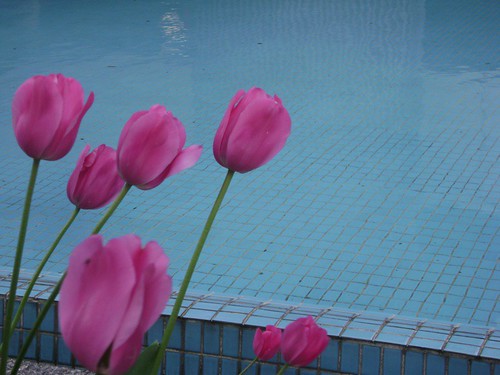
Tulips Pool, originally uploaded by Ayala Moriel.

If a spring of glacier water could be bottled in a perfume flacon – I think it will smell like Spring Flower. It makes me wonder if “spring” refers to the season or to the body of water. I would say it’s a little bit of both.

With its fresh and simple beauty, Spring Flower is sheer happiness in a bottle.
Fresh, optimistic and tranquil with no unnecessary ambition – Spring Flower is nothing short than beautiful. It’s just that – beautiful. The fresh fruity accents are crisp and complement the floral tones that are at the heart of the composition – rose and jasmine. They give off a feeling of water lilies floating above glacial freshwater. The base holds only a tad of sweetness like a soil that promises a longer blooming time.

It’s nothing too deep or serious, just pretty, charming, effervescent and bubbling with vivacity. Spring Flower has surprisingly become one of my wardrobe staples, which is quite surprising – considering the fact that I have hared time with pure and sheer florals, particularly fruity florals. One main reason is that unlike most other fruity florals, it does not quickly transform into a powdery, nose-stinging chemical mess on my skin. Rather, the fruity notes stay fresh forever (a very unnatural characteristic, but in this case most welcome!). As if this is not enough, Spring Flower is the only Creed that truly captured my heart so far!

Spring Flower starts off with a blast of fresh, citrus-fruity notes of lemon, bergamot and peach. There is also a hint of herbal note, almost minty. It is charmingly refreshing and positive. The thing is, that this fresh beauty lasts for a long time!
The heart and base notes still maintain this luscious fruitiness, along with delicate flowers that are neither heavy nor heady, but simply reminiscent of fresh, dew-laden blossom in an early spring morning. Though officially the notes are of jasmine and rose, to my nose it smells like waterlilies. Perhaps it is the combination of the rose and jasmine notes with the crisp apple and watery melon notes that create this light, bright and fluid impression.
The feeling is of inviting cool spring water, so inviting you absolutely have to drink them!

Later on notes of lilly of the valley and a citrus floral note emerges – it is not orange blossom, but actually smells a lot like lemon… Perhaps it is lemon blossom…
The drydown is a tad powdery, with the lilly and melon notes lingering on a base of cedarwood and perhaps a hint of orris as well as musk. It is only slightly powdery, but still has the fruity floral notes persist while maintaining an extraordinary freshness.

Top notes: Peach, Lemon, Bergamot, and I suspect a hint of peppermint!
Heart: Jasmine, Rose, Water lilies, Melon, Apple, Lilly of the Valley, Lemon Blossom
Base: Cedarwood, orris, perhaps benzoin which adds a tad of sweetness without overpowering the top and heart notes, and very subtle musk, amber and vanilla notes.


me, originally uploaded by Ayala Moriel.


Labels: , , , , , ,

Wildflowers and Spring Perfumes

As cliché as it is, Spring always means flowers to me. Especially wildflowers. And flowers are very hard not to love. I am yet to meet the person that doesn’t like flowers in some form – in the garden, in a vase, as a floral print on textile, or their scent (bottled or not).

I am also yet to find a perfume that truly captures the scent of wildflowers in the springtime. So I revert to associating more civilized flowers in the perfume context. My trials of tincturing wildflowers did not bear any satisfactory results. So I will stick to the traditional jasmine, rose, orange blossom, tuberose et al for now, and indulge in exotic scents such as champaca, osmanthus, boronia, kewda and other aromas that I wasn’t exposed to until I became a perfumer.

For a long time, Diorissimo has been my favourite perfume, and was the essence of Spring for me. Although I don’t think any less of it, I have grown to love other scents and feel more comfortable wearing them in the Spring or otherwise – when a flowery mood dawns on me. I am hoping to be able to review some of them here before the Spring turns into Summer!

It seems like I have skipped the chilly, brisk moments of Spring here in Vancouver when I was away on my holidays. For a few days it was indeed rainy and grey and needless to say – not particularly warm. But the sunny days are significantly outnumbering the grey ones now, and you can see the immediate effect on the people around – they simply look more energetic and cheerful, and I am amongst them. A nice continuum to a vacation, I must say, so I am seriously considering an annual pilgrimage to the blooming orchards of Israel!

From the innocent lily of the valley of Diorissimo I have grown to admire the intoxicating orange blossom (as in Fleurs d’Oranger), which is perhaps the one single note that brings Spring and happiness to me in an instant. I also love the youthful cheerfulness of full-bodied and seductive jasmine, the soft fresh petals of roses. For a fresh and green feel – I have extended my affection of the floral lily of the valley to freesia, boronia and most surprisingly – to the cucumber smelling violet leaf and to the even more obscure iris.

Neither soliflores nor floral bouquets been my main interest – both as a perfumer and a wearer. I am a known as a chypre junkie and oriental lover, and generally speaking I seek complexity and evolution in my scents, which isn’t often satisfied by florals. But in the few reviews to follow, I will pay a tribute to some of my favourites that I are really special to me.

Labels: , , , ,

Sunday, April 30, 2006

Citrus Blossoms


Citrus blossom is the quintessential scent of spring in Israel. And if you think that it ends with orange blossoms, you are seriously mistaken. All citrus trees are in full bloom, and if the humming bees don’t waste their time to make honey from all the sweet & tart fragrant nectar, even more so the perfumer and fragrance enthusiast should not miss this fabulous season. I am surprised that the Middle East does not have a tradition of going out to the orchard to admire the blossoms, much like the Japanese admire their Sakura.

The most fantastic thing about citrus blossoms is that the while their scent is distinctively floral, they are also reminiscent of the fruit to come. After all, the fruit is what will come out of the flowers! And as you can see in the pomelo blossom photo above, the little fruit are already starting to emerge.

Orange blossoms

Lemon Blossom

Labels: , , , , ,

Roses in Jerusalem


While Jerusalem is renowned for its ancient stones and holy history, it is much less known for its beautiful gardens. It is probably the most well gardened city in Israel, with an abundance of fragrant bushes, shrubs and trees and plenty of flower gardens that will not embarrass a British gardener. Here are just some of the gardens I have seen, all in the neighbourhoods of Yemin Moshe and Nahalat Shiva. The jasmine and pissosporum photos in the following post are also taken in the same gardens.

Labels: , , , ,

Jasmines

There are so many types of jasmine, and while I haven’t seen many Jasmine grandiflorum or Sambac blooming this spring, a different variety that is totally new to me has captured my nose’s attention. It has a delicate aroma that is lightly peach-like, while being ultimately jasmine.
The yellow jasmine is the least fragrant of all jasmine varieties, and is mostly appreciated for its colour.

Labels: , , , , ,

Pittosporum


This evergreen bush was in full bloom everywhere I went in the cities. But it was especially fragrant in the gardens of Jerusalem, where its exceptional aroma, reminiscent of both orange blossom and jasmine scented the air with its uplifting and delicate scent.

Labels: , , , , ,

Pitango


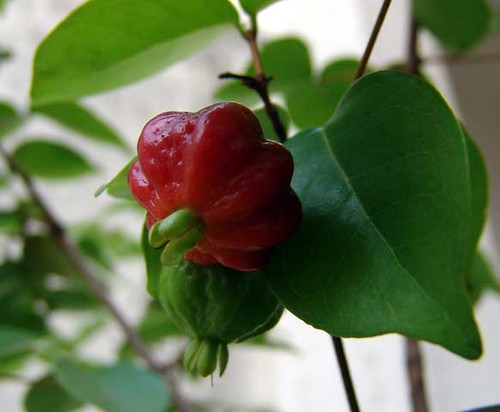
Ripe, originally uploaded by Schröedinger's Cat.

This tiny berry that grows on large bushes, has the shape of little red bell peppers, and a tart flavour with a peculiar aroma that is hard to explain. Like many other tropical fruit, it’s a love it or hate it one. I learned to love it.

Labels: , ,

Loquat


bunch of loquats, originally uploaded by Kaiki X.

This fuzzy Japanese fruit is best eaten fresh from the tree (just like strawberries are best when just picked). By the time they get to the market, their very delicate and barely-there aroma is lost, but their mild sweetness and refreshing moisture is still a delight – not to mention the tactile experience of stripping the fruit bit by bit from its thin skin, just for the fun of it! (The skin is covered with a fuzzy plumage that can be rubbed, the peeling is not quite necessary).

Labels: , ,