Friday, August 25, 2017

5 Rules for Layering Fragrances
Patcouli Layering Ideas

You're not supposed to do it, but I know many of you do. Layering is one way of customizing your scent, making it more personal and also a creative way to make use of your (growing) collection of perfumes.

But I know you're reading this you don't agree with me. But at the same time, I find the drive to do it original and creative, no matter how many times I've met people who do it and take pride in their "blends". And making people feel good when wearing my fragrances is more important to me than being right in this argument.
Knowing that (some of) my audience likes to tweak and make their own "improvements" to what I laboured on long and hard and believe to be the best I can offer - I know that this battle is hopeless from the start. So instead of convincing you why you shouldn't do it - here are the five things you need to know about fragrance layering to make it actually work for you and create that "wow" effect you are after, even though I know just as well that you're going to be more satisfied when you make your own errors and find ways to fix them, all on your own. I also know that rules are probably not exactly what someone who's mixing and matching unrelated fragrances is after - so consider these suggestions, tips, ideas...

1. Simplicity
Choose scents that are simple. i.e.: Soliflores (from The Language of Flowers collection) and single-minded fragrances that are focused around one or two ingredients (such as Vetiver Racinettes or Film Noir) are more likely to create an impact.
If you choose fragrances that are too complex, you are more likely to end up with a rather nondescript scent, or a cacophony of odours. I was tipped by someone on one of the forums (my apologies for not remembering who) to layer Apres l'Ondee with Philosykos. They were right, the violets and fig notes in these two do mix very well together. But I can't imagine two classic Guerlains working well together because these are all a helluva complex, sophisticated fragrances. Adding a little bit of something simple like a single note fig fragrance though creates a surprising results.

2. Weight and Volume
Choose one "light" and one "heavy" fragrances or scents of equal or similar "weight". This is not literally the same as top, heart and base note - but a very similar concept. i.e.: an Oriental or Chypre fragrance is heavier than a citrus. Florals tend to have more of a medium weight (although there are always exceptions to these rules).
Likewise, pairing fragrances that are both very "loud" could clash - both of them competing rather than complementing each other. It's better to have one loud and one more mellow - so they can both complement each other. I wouldn't mix together two very strong minded fragrances such as Angel, Yohji or Lolita Lempicka, for instance. But taking one of those and then adding something light and refreshing such as an eau de cologne or a mellow woodsy fragrance centred around sandalwood or vetiver, for example - might just work.

3. Order of Layering
Your layered fragrance is greatly influenced by the order in which you apply the scents to your skin. The one that goes on first would be less noticeable in the beginning of the wear; but would grow over time to reveal itself as the "base notes" of the fragrance. That is why I recommend you use  the heavier scent first and the lighter scent second. Otherwise, the more fleeting fragrance gets lost in the more dominant or "heavy" one. For example: I would apply Jo Malones Black Vetyver Cafe before Vintage Gardenia in that order - applying the other way around simply buries the gardenia in a grave of earthy vetiver.

4. Method of Application 
It is well known that how you apply the scent (spray, dab, roll-on, or creme/solid perfume) makes an impact on how the scent is perceived - closer to the skin or with greater aura (often called sillage). This of course has a lot to do with the concentration as well.
From my experience, spraying one layer of fragrance on top of another produces poor quality of layering and mingling of the scents. What you'll get instead is the two scents kind of sitting on top of each other without much interaction. The smell will kind of jump from one impression to the other, like a CD track stuck between two notes. After a while, you'll end up with just the first scent noticeable, which kind of defeats the whole purpose. There are several methods I suggest for mixing the fragrances together, depending on the method of application - please note that even though we are aiming for simultaneous application with most of these methods - you still should be applying the stronger or heavier scent first in all these methods.

Spray:
Here you want to employ a simultaneous application, as much as humanly possible. Get both bottles ready with their caps removed. Using your strong hand apply the 1st scent to the opposite wrists, following immediately by the 2nd fragrance. Gently rub the two wrists together so that the scents literally blend on top of your skin while they are still wet (before they get fully absorbed).

Roll on:
Get the caps removed from both bottles. Draw a two parallel lines with the fragrances, and mix together by gently rubbing your wrists. From there you can transfer to your neck, etc. In order to prevent scent contamination between your roll-on bottles, make sure you're not using the roll-on on skin that has scent on it already.

Solid perfume:
With solid perfumes the evaporation is not as critical as with alcohol based fragrances. That gives you a little bit more time between applications (but not enough time to answer emails or go and shower in between!). You could just smear them one on top of each other - and if you are using an applicator that is even give you the freedom to scoop a little bit of each and mix them on your skin the same way you'd blend makeup. This also allows you to apply the scents on many other parts of your skin that don't necessarily rub against each other like your wrists do. I would also recommend applying the two scents on two different wrists and then rubbing them together.

Dabbing (for Extrait or splash bottles):
What's tricky about this method is the high chance of contamination. So dabbing carefully on two separate wrists, or on two close to each other but scent-free areas on your wrists, and making sure the dabber goes back into the right bottles are key. Once you applied a bit of each scent, blend by rubbing your wrists together.

Mixed Methods:
When using mixed methods of applications, use the one that uses skin contact method first (i.e.: roll on, dabbing, creme parfum) and the spray second. Remember to choose your scents carefully - it is still advisable that the first scent is the stronger, heavier, more dominant, and using the ligher, mellower scent on top as to give it a chance to shine at all.

5. Quality and Consistency
Call me a snob, but just like how I don't like creating perfumes by mixing poor quality fragrance oils with top notch floral absolutes from fear of ruining them - I am a bit weary of mixing together fragrances of extreme gap in quality.
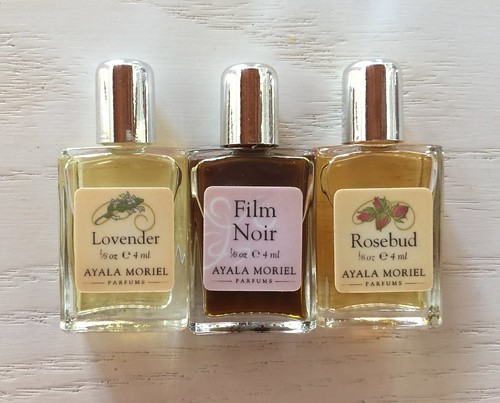
Sarah Jessica Parker may have been lucky when she mixed up her high-fashion fragrance Avignon with drugstore and street vendors' musks. It worked for her but it won't usually work well to mix poor quality fragrances with high quality ones - it is more likely going to ruin the good quality scent and bring it down rather than elevate the inferior fragrance. Although when that happens it must feel like pure magic. Without a proper training for your nose, you may have difficulty pinpointing the quality of different fragrances and raw materials separately from the brand image, price, etc. So this is a bit difficult to give you real guidelines for. While I am not promoting using only scents that were made by the same brand - there is something to be said about layering scents that were meant to be worn that way, as in the case of the Jo Malone brand - and even then, I found only a handful of the combinations to be worth while. And of course, these were discontinued (Black Vetiver Cafe layered with Vintage Gardenia with Cardamom and Myrrh). What I would suggest is that you start with layering all natural fragrances, which are more likely to bring out harmonies. Even that would be tricky... The more I think (and write) about it, the more I realize that this rule I've just made up is just screaming to be broken... So I would be more than a tad curious to hear from you what outrageous layering you've been up to. They can be of any brand whatsoever - but whomever wins this luck of the draw contest will receive three mini perfumes that I absolutely love layering: Film Noir, Lovender and Rosebud. I will talk more about combos from my own line in later posts, a series that is dedicated to layering.

To summarize, while as a perfumer, I strongly feel that perfumers should formulate their fragrances in such way that they provide a stimulating fragrance all around, a complete work of olfactory art that does not require any boost from the outside. That is how I design my perfumes, always, and that is how I think it should be done. The idea of creating something incomplete in advance, in order to sell more bottles seems like cheating to me (and I've discussed it before in my article "Layering Fragrance - with Style"). Though it does pose its own compositional challenges and those, I admit, can be fun. Also I do like the fact that it promotes the customer's own creativity and gives them room for playing and expressing themselves through fragrance.


Labels: , , , , ,

Wednesday, January 14, 2015

Alternative Methods of Application for Sensitive Skin


What if you weren't blessed with a thick skin like most of us? How can you keep scent in your life yet keep skin rash out of it? I was approached by a customer who happened to develop a nasty rash to her favourite perfume (Immortellle l'Amour, thanks for asking). No matter what, she still wants to enjoy it (which makes me equally sad and flattered). It suddenly dawned on me that she may not be the only one who could benefit from tips for how to enjoy scent without ruining your epidermis.

There are several alternatives for wearing scent that I highly recommend you try experimenting with. They can be divided into three major categories: Scenting the hair, scenting the clothing, and jewelry. The methods that can be used also can be further divided into application of liquid perfume (either oil or alcohol based, which you would spray, dab or splash on another object that is worn close to the body but not directly touching the sensitive skin); scenting through incense smoke; or taking advantage of your own body's warmth to coax the scent out of a piece of jewelry it's encased within; and lastly - saturation or immersion by proximity, as with placing scented sachets among the objects you'd like to scent.

HAIR
Hair holds great potential for those who can't enjoy it on their skin. There are ancient tradition world-wide for scenting the hair. Its ability to retain scent makes it especially appealing. In Arabia, women use incense smoke to scent their hair after washing. And in India, women scent their hair with fragrant oils, such as sesame oil from seeds that have been saturated with the scent of jasmine petals, Monoi de Tahiti (coconut oil infused with the island's native gardenia flower) to scent and nourish the hair and protect it from the sun. And if you live in a tropical country - tucking a flower behind your ear is all you'll need - be it a champaca flower as they do in India, or plumeria or gardenia in the tropical islands (i.e. Hawaii and Haiti).

Liquid Perfume Application: Dab a little of perfume on your fingertips, and work it into strands of your hair. Avoid the scalp to prevent skin reaction. It's better to use oil-based perfume on your hair, especially if your hair tends to be dry and frizzy. Scented nourishing hair oils are another great way to enjoy fragrant without affecting your skin, and give your hair an extra boost of nutrients and lock in moisture. If you are using hair oil, it's best to apply them on damp, towel-dried hair before you style it.

Incense Method: Burn your favourite incense, and surround yourself with smoke for 10 - 15 minutes so that your hair will absorb the scent. Be extra cautious that the ember at the tip of the incense stick (or hot bowl and embers if you are burning loose incense on a charcoal) do not touch your hair - it will burn and smell awful!

SCARF or SHAWL:
First of all a word of caution: if your skin is very very sensitive, you might not want to use this method on a scarf you are worn directly on your neck. In this case, a shawl might be a better idea - or a handkerchief (see more below).
Another thing to keep in mind is that perfumes often can stain. So it's best to use this method with dark scarf. Also, natural fabrics from animal origin such as wool and silk retain the scent better than cotton or linen.
Spray: To scent your scarf, spray your favourite scent into the air directly above it. This will reduce staining, and distribute the scent evenly on a larger area of the scarf.

HANDKERCHIEF:
Handkerchief perfumes were very popular, especially among men, in the late 19th Century and early 20th Century. They would carry one, neatly folded, peaking from the jacket's pocket. They were scented with specially formulated "handkerchief perfumes" - usually a bouquet of several floral notes, or soliflores. The advantage of a scented handkerchief is that if you go through a very stinky part of town (or are stuck on a stinky bus) - you can bring it to your nose and escape the stench... In addition, you needn't worry about your skin getting any rashes, but will still enjoy the perfume as it drifts up from your pocket.

Liquid Perfume Application: Dab some perfume or apply a few drops on the handkerchief and place in your pocket.

Saturation Method: Such handkerchiefs can also be placed inside drawers or between your sweaters and clothing or even stationary so that they can absorb their pleasant scent.

CLOTHING:
The result of adding scent to clothing is usually quite subtle, and I won't lie to you and say it's the same as applying it directly to your skin or hair. It's not as intimate. However, it is a wonderful and inoffensive way to add scent to your life, as well as joy. The Japanese, whose scent culture does not include much of skin-application of fragrance, would tuck sachets of fragrant woods and spices into their kimono sleeves (which are very wide, and were used also as pockets of sorts).  Another less known fact about scenting clothes is that while you move, it also moves the scent molecules around, leaving a pleasantly fragrant trail in your wake...

Liquid Perfume Application: Spraying fragrance in the air is usually  more effective (see above re scarf). But even a little dab on your jacket's collar or on the sleeves near the wrists can add some scent to your daily life.

Saturation Method: Place sachets or scented soap between your garments. You can purchase high-end Japanese sachets, that come in either paper bags or fancy silk pouches - or sew your own simple linen sachets of single notes such as lavender buds, patchouli leaves, liatrix leaves, etc. Even whole spices such as star anise, vanilla beans or cinnamon sticks can be placed in drawers or shelves to scent clothes. Some herbs and fragrant woods, such as patchouli leaves and cedar blocks (or balls) also will protect your wool and silk from greedy moth.

JEWELRY:
Women in biblical times (and till this day in Ethiopia) would wear a chunk of myrrh on their neck that would warm up against their body to release its delicate scent. This is what the Song of Songs is referring to "A bundle of myrrh is my beloved unto me; she shall lie all night betwixt my breasts" (Song of Songs 1:13 based on the King James Bible translation). While wearing it directly on the skin might be too risqué for a person with sensitive skin - if it is enclosed in a pouch or a container, the damage may be minimized. Same for solid perfumes: they will warm on your body and release the scent so that you can smell it rising from your chest - even if you can't wear it directly on the skin.

If you have any other tips for enjoying scent without coming into dermal contact with it - please do post a comment! And this is also an opportunity to remind you that we do have a monthly contest here on SmellyBlog. All of your comments during the month will be entered into a draw come February 1st, and the winner will receive a set of vintage minis from the 80s.

Labels: , , , ,

Thursday, February 23, 2012

Why Are Natural Perfumes Short Lived?

After over 10 years in the business, you get used to waking up to emails like this one. This time, I though I'd post it here for the benefits of anyone else doubtful of natural perfumes' supposedly short-lived appearance on the skin etc. Also, I will be updating my FAQ page to cover that as well with this info.

On 23-Feb-12, at 6:11 AM, Ms. C. Wrote:

Hi! First of all, I just want to say that I absolutely LOVE your perfumes and am more than
pleased with almost every single one of the samples I received as a birthday gift. I am unable to wear synthetic fragrances, and would rather go organic / natural anyway, so have recently been avidly searching for “my new scent”.

I would love to be a loyal customer and only buy Ayala Moriel Parfumes from this point on, but my one concern is that none of the perfumes have staying power on me whatsoever.
After 2 hours of applying them, they fade away into nothing. I don’t know if you have any
answers or solutions for me, but I’m very disappointed that after spending so much money on my attempt to find a great organic perfume, that they’re already almost all gone because I have to reapply constantly in order to smell them at all. Please let me know if you have any solutions, because there are several of the sample scents that I’d love to order, but simply can’t spend that kind of money to be inconvenienced by having to reapply all day long.

Thank you,

Miss C.

--------
Dear Miss C:

Thank you for your email and your feedback.
I'm glad you liked the perfumes, and am sorry that they didn't last long enough on your skin.

Since my perfumes are 100% pure natural, they do not contain synthetic fixatives. Therefore, their lasting power varies greatly among individuals - depending on your skin type (dry or oily) and colour (fair or dark, or if it can easily tan) as well as your diet - the perfume will last longer or for lesser amount of time. If your skin is fair and dry, it will last for the shortest amount of time, in which case I recommend you use my oil based perfumes, which are in jojoba oil and also more concentrated (keep in mind that the samples you tried are my EDP - which are between 10-15% essence; while the perfume oils are as high as 30-40%). You can read more on why jojoba oil is so great in making a perfume longer lasting in this article on my SmellyBlog.

Likewise, the type of composition also makes a huge difference. For example: Tamya and Fetish are very light scents, and last even on my skin last only 4-6 hours. Immortelle l'Amour, however, lasts as long as 18hrs (or even more, but that's as long as I've gone without a shower when testing my fragrances).

The last factor I'd like to bring to your attention is the different in quality and personality between mainstream synthetic-packed perfumes and pure natural ones. If you are used to wearing or smelling synthetic perfumes, you probably learned to expect them to pack a punch and leave a strong trail of scent wherever you go. This is now how naturals work, and this is, in my opinion, part of their beauty - they have a softer and gentler sillage (diffusive power) and don't take over elevators, board rooms or any space for that matter. People who are used to a strong perfume will need some time to "wean" themselves from that and get used to the subtlety of natural fragrance. The process can be likened to getting used to eat food with less salt and appreciate the natural flavour of the food on its own; or switching between strong black coffee to ethereal green and white teas; or getting used to eat food with no MSG... You will have to wait a few weeks to get used to the new experience and regain the sensitivity of your sense of smell.

As for the "inconvenience" or re-applying: it's all in the nose of the beholder, so to speak. Some ladies absolutely love the ritual of applying a scent and wouldn't leave the house without a little flask of perfume for touch-ups throughout the day. This is precisely why I offer my perfumes in small packaging - that is easy to transport, and is no larger than a lipstick.

Lastly - re the pricing: Our 8 sample packages go for $50. If you look at the website and the pricing you will see that it's very reasonable, considering that these are made from top quality pure botanical essences and are all hand crafted, labeled and packaged by hand - by myself. In fact, you will see that with the sample packages we nearly giving these at cost with making no profit at all...
A single drop of rose oil, for example, costs more than $1. And you need at least 4 of these drops in, say, a sample of size of 1ml of a perfume such as Rosebud. Considering that there are other scents in each sample you received, and some are even more expensive than rose - you will be able to understand how precious these materials are!

You can read more about why natural perfumes are more expensive than synthetic on my FAQ page (as well as get many other questions answered).

All the best,

Ayala

Labels:

Sunday, June 20, 2010

Put Your Nose Into Use: Father's Day Fragrance Picking

Dior's Eau Sauvage ad
René Gruau


The following is pretty much a summary of the presentation given at my Espionage Tea Party last week. My apologies for taking forever to put this together... I hope you find it useful and wish you all a happy and fragrant Father's Day!

Since it is Father’s Day today, and I’m sure all of you are just dying to finally get your dad to smell nice instead of getting him a tie, a toolbox or an iPad - the topic of masculine fragrances is inevitable. The thing is – we don’t really know what is it about scents that make them masculine. Somehow, we just seem to be able to tell once we smell them, yet without explanation. Is there truly a gender distinction in fragrance? Or is it just that we were programmed that way? Let’s find out.

The entire concept of gender-specific scents did not come into place until recently. India and Arabia, the two most ancient perfume civilizations that have maintined their olfactory culture to this day, pay little attention to such notions and wear whatever scents they find attractive and appealing, flowers included: Indian men love to wear jasmine, and Arab men have always adored roses.

The Western consumers, however, are obsessed with two conflicting concepts when choosing a fragrance: sexuality and cleanliness. The way this translates into the fragrance industry and the products we smell (or not) is quite fascinating. For example: Western perfumes have been for the most part gender-specific for the past 100 years or so, to the point that the world of men’s fragrance seems to have developed their own jargon, separate from the technicalities and specifications that perfumers normally would relate to. For example: you cannot, under any circumstances, expect to call a product “perfume” and expect men to buy into it. Perfume, as it turns out, is perceived as a completely girly and dainty affair. Men would only buy a scent if it’s called “aftershave”, “fragrance” or as it is most often referred to in North America - “Cologne”: a name that has very little to do with the true meaning of the term – which refers to a very light concentration of fragrance, and usually in a citrus-herbaceous category, intended for used mostly for hygienic purposes – and has direct lineage to the “Aqua Mirabillis” of medieval times.

Technicalities aside, the aesthetics of Western “masculine perfumery” pose an interesting challenge for the perfumer. The palette seems to be so much more limited than that which is “allowed” in feminine perfumes. Therefore, masculine fragrances seem to have reached a certain plateau in innovation that is only occasionally shuttered by original or slightly gender-bending scents.

So let’s break a few myths on the topic:

Myth: no. 1: “If a man wears a perfume designed for women, it will make him smell like a girl”.
Reality: Men (or women) who think that way are forgetting the last yet most important ingredient in a fragrance, which is no other than the wearer’s own skin odour!
Each skin has a completely different scent, affected by the diet and metabolism of the person, as well as their own gender’s pheromone makeup. Men and women have a different body chemistry. Therefore, what truly makes a fragrance “masculine” or “feminine” smelling is the person who is wearing it!

By nature, men have a body odour that is more musky and sharp, and women have a body odour that is more ambery and soft. If the perfumer will try to compare these into specific notes, I’d say that the closest notes to a man’s body odour might combine notes such as sandalwood, costus, cumin, hay, patchouli, vetiver, oakmoss and tonquin musk. A woman’s body odour can be best imitated with notes such as labdanum, vanilla, benzoin, civet and honey absolute.

So, don’t forget that your skin is the real “base” for your perfume, and that what matters is how it smells on it! Be adventurous, and if you like the smell of amber, rose, tuberose or violet - don’t be shy and try them on. They will smell completely different than on a woman. Take my word for that.

Myth no. 2: “floral notes are feminine and are best avoided when choosing a scent for a man”.
Reality: Attributing floral notes (or any notes, for that matter), to one gender or another is for the most part culturally based and once presented to an individual from a different culture, will likely lose its meaning (as in the example of rose and jasmine I brought earlier). If Arab men feel comfortable enough with their masculinity when wearing soft and voluptuous roses, I can’t see any reason why to avoid this note (or any other floral note, for that matter), in fragrances designed to be worn by men.

The following are just a few examples of floral notes in perfumes that could be very “masculine” in character.

Rose Geranium - the floral fruity rosy yet minty, green and herbaceous qualities make this note perfect for masculine perfumes, which is why it is used extensively in perfumes from the Fougère family.

Orange Flower Absolute - Great for colognes and citruses of all types, but it can also be used for a more surprising, even a cutting edge oriental masculine fragrance. Orange blossom is often a heart note in tobacco based scents, to add a bit of indolic sweetness, fruitiness and a sparkle to the dry tannin notes.

Jasmine Grandiflorum - sweet and well rounded, widely used in masculine perfumes to bridge between sharp top notes and musky or mossy base notes.

Jasmine Sambac – this variety is more fruity and a tad more green (but in a very delicate way) than the grandiflorum, Sambac is an interesting addition to a men's scent, thought rarely used in Western perfumery.

Champaca - this spicy and heady tea-like and somewhat fruity exotic floral blends seamlessly into masculine compositions, such as Orientals and leathery types. It’s very cost prohibitive which is why you’re unlikely to find it in mainstream fragrances though.

Rose – as I mentioned earlier, rose can be somewhat of a challenge for the Western nose, particularly if trying to use it as a main note. But it certainly has a role in many male fragrances, even if it’s not as noticeable. Up until the late 19th century, it was actually still quite popular in bouquets for handkerchief fragrances for men, including also other soft florals such as violet and iris.

Carnation - a soft spicy floral note that is commonly used in Fougères.

Myth no. 3: “some notes are masculine, and some notes are feminine”.
Reality: As you’ve seen in the previous myth-crushing segment, context is everything. More than individual notes having specific gender, I would say the manner in which they interact with one another and the mood and personality they create is what truly matters. One thing that is true though, is that if thinking of the philosophical terms of what “masculine” and “feminine” mean, we could, perhaps, make the distinction between notes that are “projective” as opposed to notes that are “receptive”. Notes that approach you as opposed to notes that draw you in. This might explain why notes such as citrus, herbs and spices are often considered more masculine and are used in abundance in masculine fragrances (they simply “come and get you”), while other notes – more round and “receptive” so to speak, such as the floral and ambery notes, can be more readily perceived as “feminine”. Still, don’t let yourself forget that what really matters is how all these notes interact with one another. The question you should ask yourself is if the perfume itself “projective” or “receptive”.

For various reasons which I’ll attempt to explain in a moment, the archetypal masculine fragrances of Western perfumery belong mostly to four major fragrance families:

Citrus, Fougère, Woody-Oriental, and the Leather/Tobacco (the latter being a sub-category of the Chypre family – which is mostly feminine otherwise). So, when you smell a scent and recognize an immediate “masculine” character, what you are in fact recognizing is a fragrance family!

There are some historical and cultural reasons for those families being so strongly associated with men’s grooming, as well as some that are founded in the nature of masculine pheromones and men’s natural body odour.

THE ART OF SHAVING
Historically speaking, the art of shaving has a great influence on modern masculine fragrances. The Romans brought men’s grooming to heights that no other civilization have dared to explore before, resulting in a more sophisticated men’s grooming culture, some of which has survived to this day.

Fragrant aftershaves serve the purpose of disinfecting scrapes, cuts and wounds that occur during shaving, as well as sooth, soften and moisturize the skin afterwards. The essential oils of citrus peels, and herbs and spices such as bay leaf, juniper, lavender and allspice have disinfecting properties, as well as softening and conditioning the skin. It is through those associations of men’s shaving and grooming rituals that we learned to associate certain scents with masculinity. For example: Bay-Rum aftershave, which is a spicy concoction of allspice, cinnamon, cloves, bayberry, bay leaves and orange peel steeped in rum has a strong connection to the composition of the classic men’s fragrance Old Spice.

Most aftershaves contain notes such as citrus and herbs, chosen originally for their astringent and antibacterial properties, and later on by association became an olfactory trademark of masculinity, which is most evident in the Fougère fragrance family – which is based on the contrast between herbaceous lavender, musky oakmoss and powdery-soft coumarin; and the citrus-fantasy fragrance family.

FOREST PHEROMONES
There is a reason why woody scents are associated with masculine scents: Sandalwood oil has a unique chemical make up that is quite similar to androstenol – a pheromone found in men’s sweat. But sandalwood is not the only woody notes found in abundance in masculine fragrances – cedarwood comes to mind, with its distinct lumber and pencil shaving aroma. Perhaps we have also learned to associate woodworking with masculinity because most of the manual labour was done by men through centuries? But who cares, as long as it smells good!

Guiacwood, with its smoky and honeyed aroma is also a prominent note in tobacco scents. Other woodsy notes commonly found in masculine fragrances are not necessarily derived from woods, for example: patchouli (the dried, cured leaves of an East Indian herb from the mint family) and vetiver, from the root of a tropical grass which comes in a range of varieties from smoky to clean and nearly citrusy.

SEXY GRASS AND SWEATY CUMIN
Some notes have a pretty literal explanation as far as the origin of their sex appeal, to the point that could verge on the vulgar if it’s not played right. Fresh cut grass resembles the scent of a certain masculine secretion, while cumin resembles the scent of men’s sweat. Both can be very appealing – or repelling, depending on the particular scent they are in and how much you apply.

The fresh cut grass note can be fresh and clean-smelling with a subtext that hints at sexual vigor and fertility yet without sending everyone screaming to the opposite direction… Cumin, with its sweet and musky tenacity, rather than smelling dirty to the point of questioning the wearer’s hygienic habits – will create a comfortable and alluring sense of intimacy.

Labels: , , ,

How To Pick a Fragrance for a Man?

Now to the fun part, and the most challenging of all: how to pick a scent for a man as a gift? This is particularly tricky if you are trying to surprise him, and even more so - if you don't know him very well.

Despite my dislike for making generalizations about large sections of the population, I think it would be safe to say that the majority of men (with the rare exception of male perfumista) won’t readily admit they are interested in scents. It’s unlikely they will wear any fragrance, unless:

1) Their girlfriend (or any other significant female figure in their life) bought them a cologne for Christmas or another special occasion
2) They are deeply convinced that wearing a scent will attract a partner


Therefore, it becomes the women’s responsibility to educate and manipulate the men’s olfactory lives, be it by gifting them with fragrance, or openly commenting on how they happen to smell like.

My male clients are dear to me not only because they are so rare, but also because they have sensibilities about the olfactory world that are different than women’s. In my upcoming tea party I aim to educate my men to take their olfactory life into their own hands, and dare to wear what they like. But for the rest of my clients (admittedly, mostly ladies) – why won't you try to pick a scent that has the potential of captivating your man’s imagination and appealing to his own sensibilities. Men, even if they don’t admit it as readily as women, enjoy and appreciate scent very much, if they are only allowed to believe that it’s important and not overtly self-indulgent!

But how could you tell what they would like?
Part of it is intuition, and part of it is logic. People tend to be drawn to similar types of scents, aromas and flavours in real life, many of which can be found in natural perfumery!

The following tips will give you ideas about how you can gather information about a man’s olfactory preferences, without asking them too many questions. If you know the person for a long time, this might be easier. But if you don’t know him, a quick look around his home and taking notice of his favourite foods and which drinks he orders at the bar might provide you with just enough sufficient information.

When ordering food in the restaurant – does he tend to order spicy or aromatic foods, or is he simply a “meat and potato” kind of guy? If he likes spices, mostly likely he will also enjoy fragrance that incorporate them, e.g.: Spicy Orientals such as Opium, Habit Rouge or Épice Sauvage. If his palate does not seem as sophisticated, you may just want to go with a “safe” classic fragrance from the citrus or Fougère family, i.e.: Azzaro.

If he likes to drink gin and tonic, see how he likes a scent with juniper berries or citrus, such as Arsenal; or if he likes scotch, he probably will also appreciate Espionage’s peaty and full-bodied malty qualities, or enjoy something smoky, e.x. Bvlgari Black. And for the coffee lover – there are quite a few gourmand type fragrances with a pronounced coffee notes, such as Yohji Homme, Thierry Mugler's AMen Pure Coffee - or how about an exotic dermitasse of Finjan, a dark-roasted Turkish coffee scent?

And if you have a chance to spy on his house, see what you find in different rooms about scents and products he uses without raising suspicion.

In the kitchen:

What’s in his spice rack (if he’s got one)? What Herbs does he like to cook with? What kind food or drinks does he keep in his fridge? For example: if he likes herbs such as basil or oregano, it’s likely that he would also appreciate an aromatic Fougère that incorporates these notes, or a citrus with a sprinkle of herbs. If he likes fruity soft drinks, he might also enjoy a fragrance that has a hint of fruit or berries.

In the bathroom:

This is probably where he keeps all his grooming products, fragrance included (although I wouldn’t count on these to determine his personal taste! Like I said, these were probably chosen for him by a girlfriend in high school that thought it was very sexy, and now he’s just stuck with it for life, as well as all his future girlfriends, wives, daughters and granddaughters…). But it’s very likely that the choices he makes about innocent and less indulgent scented products such as shower gel, hand-soap, shampoo, soap bar etc. may give you a better insight into his true scent preferences.

Labels: , ,

Tuesday, June 01, 2010

What To Wear On A First Date?

If you frequent perfume fora like I do, you've probably stumbled upon this question - and it's many varying answers - more than once.

Women may spend hours if not days trying to put together an outfit for a first date. And for perfumistas like us, an outfit is never complete without the finishing touch of a dab or spray of perfume that would make you feel special and confident, and leave a lasting impression.

This is also true for men. Making the extra effort of putting a scent on shows the other person that the man got style. I may be a minority, but I think that even bad style is better than no style at all...

First impressions are very important. Within seconds of meeting a new person, we form an opinion of them – based on their looks, their clothing, their emotional state, eye contact, and their scent (are you surprised?).

Selecting which scent to wear can be nearly as daunting as dating itself and as challenging as finding a perfect mate (can such thing even exist?!). The right scent depends greatly on who you are as well as your particular mood, the date setting, and what impression you want to make when meeting a new person. But rather than go through a long, logical thinking process that will go through all the options, scenarios and the combinations possible, I honestly think you should use your gut feeling and pick something that truly represents the real you. Confidence is not only emotionally healthy traits: they are also attractive. And wearing the right scent can boost your self-esteem and make you more attractive.

Wear “your skin but better” scents, to show them the real you. A skin scent would be a scent that brings the best from your own skin rather than mask your natural scent. Body odour is actually an important factor of choosing a mate, so if you cover up who you are, you are makint the task even more difficult for both yourself and your date.

More than any other scent, I have worn Espionage on most of the first dates I’ve gone on, and it seems it always was a good choice (which I may not be able to say about the dates themselves, but surely the presence of my invisible friend floating on my skin helped me survive them!).
Espionage is the one scent that I feel most comfortable in. I feel it best portrays who I am on different levels and dimensions. You may have your own “signature scent” or a scent you’ve traveled so much with in life that it nearly transcends the time-space barrier, making it suitable for any and all situations, moods and occasions. I just happen to feel that way with Espionage.

Other “skin scents” that I adore include Agent Provocatuer and Kisu (be sure to apply it well in advance – and I mean several hours before to get the maximum effect), and the raunchier Muscs Kublai Khan, with its animalic dark musk and costus. All these scents are suitable for both men and women in my opinion. But of course, you will have to try for yourself and pick the scent that is most compatible with your own body chemistry.

If you want to play it more safe, I suggest you go with Sarah Jessica Parker Lovely or Narciso Rodriguez for Her. Both are the “clean musk” type and have a bit of the fresh-laundry vibe to them, which make them cozy and inviting and non-intimidating. Since both are rather feminine, I feel obliged to suggest a masculine counterpart. For the gentlemen going on their first date, something breezy like Cool Water or Pure Turquoise may not be as adventurous, but it can become quite appealing on the right person; and if you want to be a little more edgy, Narciso Rodriguze for Him might do the trick.

Sometimes your choice for a first date fragrance may have a lot to do with your mood or the season though. What can be more perfect than wearing Spring Flower when going on a brunch date or to scout a flea market on a gorgeous spring day? Or Bronze Goddess (formerly known as Azuree de Soleil) or Terracotta Eau Sous le Vent, or GiGi for a walk on on the sunny beach, and for a man – I think the sexiest genre is that of aromatic fougeres with a higher dose of citrus, such as Annick Goutal’s Eau de Sud.

I’ve worn my Hanami on a what turned out to be a very romantic first date: it was a rainy spring evening and all the cherry blossoms were out, and we had to walk together under the same umbrella as he walked me home.

And don’t be afraid to show a side of yourself that is a little more daring if that’s what you are craving. Even a powerhouse scent like Chinatown, Angel, Habanita or Kouros can be the right choice as long as you don’t over apply!
For stronger scents, it’s better to apply by dabbing whenever possible (i.e.: if you own the parfum extrait, they usually come in a flacon with a dabber); or apply the scent by spraying it to one wrist only, than “sharing” this one spritz with the other wrist and at the nape of your neck or behind the ears. Or, you can transfer a small amount to a roll-on bottle for a more discreet application (and for travel).

Lastly, you’ve got to love them aphrodisiacs, as cliché as they may have become by now. Since men seem to be all into vanilla, this can be an effortless affair, with a classic such as Shalimar, or with something a little less demanding and more gourmand such as L de Lolita Lempicka. And for the men who want to impress us women, how about a perfume that has an overdose of sandalwood, which is the closest thing to the men pheromone. I love how it’s played in Egoiste and Bois des Îles (although neither is too easy to find) as well as Tam Dao.

Have fun with picking a scent for your first date, it doesn’t need to be all that serious. It’s just going to leave a life-long, lasting impression this way or the other… And to summarize, I only suggest you remember these two golden rules:
1) Highlight who you truly are by selecting scents that you feel comfortable and confident wearing.
2) Apply with discretion. Too much of a good thing can have the complete opposite effect than you wish. Remember: a scent is meant to attract and invite people to get closer, not repel them and send them gasping for air in the opposite direction!

What scents do you reach for before going on a date? Recommendations from both men and women would be most welcome. I'd also be curious to hear about your horror perfume-dating scenarios (from either side - wearing it or smelling it!).

Labels: ,

Wednesday, October 22, 2008

A Rose is a Rose is a Rose...Or Is It?


Winter Rose, originally uploaded by Deborah Harroun.

Apparently, this is not always as simple as it may seem. I have received the following from a lady from Transylvania who had really hard time choosing between two very stylized rosy perfumes from Caron:

Hi Ayala,

I would really appreciate some help I am sure you are quite busy and received many emails; I am trying to decide between Nuit de Noël and Parfum Sacré . I seamed to be decided on Nuit de
Noël ( I am a bit partial to it because I am born on Christmas Day and will travel home this winter to Transylvania and it seams to encompass a lit of all the things I miss and cherish) . After reading many reviews on both perfumes I am undecided between the two . My favorite perfume so far has been Amarige by Givenchy. Also I would like to purchase the perfume versus the EDT as it seams to be quite a difference in scents with Caron, is that so is there a big difference?. This will be my first Caron purchase . To tell you know a bit about my style and interests; I am not a girl loves all things pink king of gal:)... I love Marlene Dietrich and Greta Garbo and my biggest interest is ancient Greek and Roman history, I love all things classic and tailored.

Thank you so much for your time and attention,

Antonia


Dear Antonia,

Thank you so much for your email and my apologies for taking so long to reply!

Nuit de Noël and Parfum Sacré are very different from one another, albeit both being dark and rosy.

Personally, Parfum Sacré reminds me more of Christmas than Nuit de Noël. There is something about it that just makes it feel very festive and at the same time - despite all the spices and musk - it feels very, very light. Almost like a caress of snowflakes on your cheeks, if those were warm; or a fuzzy fur collar. I have to say though that my impressions are based entirely on the eau de parfum formulation. I have never tried it in parfum, but I hear it is more peppery than the EDP.

Nuit de Noël is darker and denser and if it has anything to do with Christmas, perhaps it is somewhat like plum pudding. There is a bit of an ink quality to it. It is also more dry than Parfum Sacré (even though the latter is dry and spicy and incensey). If there is any sweetness to it - it's more like licorice than a real sugary sweet.

To summarize - while both perfumes are rosy and dark, Parfum Sacré is more airy, spicy and incensey, light and expansive while Nuit de Noël is darker, denser, deep and more mysterious. It is really about the effect you want to achieve and what you associate more with Christmas - something more contemplative (Nuit de Noël) or more festive and outgoing (Parfum Sacre). Both perfumes are excellent so it's definitely not a question of quality, but taste.

All this being said, the only way you can really make a decision is to try them both. There are plenty of ways to obtain samples of these exquisite Caron fragrances - either call the nearest Caron boutique to you (there is one in Paris and another one in New York) and they might be able to ship samples to your country. And if not - try swapping on the many fragrance boards (Perfume of Life, Make Up Alley, Basenotes, Perfume Addicts, to name the main ones) or order from one of the decant and samples merchants online (from a quick shopping around I can tell you that The Perfumed Court carries many Caron samples)

Warm regards,

Ayala

Labels: , ,

Monday, August 11, 2008

Why No Spray?

Ms. Ayala,

Hope you are doing well.

I would like to know, is there a particular reason as to why natural perfumes are hard to find in spray from? What's your personal opinion in regards to this type of packaging?

Thank you for your time,

Maria


Dear Maria,

Thank you so much for your email and for your interest in Ayala Moriel Parfums!

I can only speak for myself and say that the only reason I do not offer my perfumes in spray form is because I haven't found the right bottles for my company that are spray bottles.
I used to sell my perfumes in either large 1oz or 2oz bottles, as well as small 1/4oz purse spray and I found that:

A. the purse sprays sold the most (most of my customers like to buy more than one perfume at a time)

B. The spray mechanism did not seal the bottle properly, so there was too much leakage and evaporation. I could just not find a bottle to my liking (visually) that would also function well (keep the perfume from escaping the bottle that is).

Other advantages of flacons (bottles with dabbers):

1. More control over the application (which is of special advantage if the perfume contains a staining ingredient, such as saffron or coffee absolute)

2. Many of the natural perfumers create their perfumes by hand and filter them by hand so some particles such as floral waxes may be still present and could clog up the spray mechanism

3. Lastly, the element of marketing and packaging comes into play: since natural perfumes are often made with very expensive raw materials, they are best sold in smaller volume to make them more affordable. The small spray bottles usually look cheap while the flacons with the dabbers make the perfume reflect the elegance and preciousness of the perfume.

Sincerely,

Ayala

Labels: , , ,

Friday, June 13, 2008

News from the Nose: ArbitRary Candle, Vetiver Racinettes and Father's Day

Dear Fragrant Friends,

In this newsletter:

  • Father's Day Celebrations
  • New Arrival: ArbitRary Candle
  • Candle Burning Tips
  • Enjoying Scents in Summer
  • Limited Edition: Vetiver Racinettes

Father's Day Celebrations


Two years ago I was fortunate to celebrate Father's Day with my dad going to the Van Dussen Gardens and enjoying a day outdoors among the beautiful plants. This is where I captured this scene of a child sitting on a tree branch, just like in Oscar Wilde's "The Selfish Giant", waiting to be helped down by someone bigger and stronger.

I was talking to my brother today about scents that reminds him of our father. These turned out to be primarily turpentine and paint thinner. He never wore a fragrance and kept a beard so didn't even use as much as an aftershave by way of fragrance products. This is maybe a bit extreme, but most dads, it seems, would go scentless unless they receive gifts of fragrance. And so this is suppose to be the point where I should have a little spiel in my newsletter convincing you to buy a fragrance for your father. Well, I'll be doomed if that's what I'm suppose to do every year on Father's Day for the rest of my career. I trust that you know what your dad likes, and be it an electronic gadget, hardware or a tie, what will really make him happy is your thoughts of him and spending time together with his children.

So instead of advocating for more fragrance shopping (by all means, go for it if you must...) I just wanted to acknowledge that special day coming up on Sunday June 15th and wish you all a Happy Father's Day. It is a secular holiday that celebrates something that is essential and universally meaningful - parenthood, and thanking our parents for all that they did for us. Aside from that, I highly recommend you read my myth-crashing article titled What Makes a Fragrance Masculine?

New arrival: ArbitRary Candle


Ayala Moriel is proud to present the first perfumed candle in our collection: ArbitRary.

ArbitRary candle is based in food-grade soy wax with pure cotton wick. It has a stunning cold throw that is as refreshing and bright as the perfume itself. It burns with its lovely, refreshing

aroma, filling the room gently with its mélange of basil, lime, lemon
verbena, oakmoss and hay.

Each 8oz candle burns for 50-60 hours and retails for $45. They are now available for ordering and will be in stock next week

In all of our products - perfumes, jewelry, teas and now candles - we put quality, integrity and craftsmanship as a top priotiry. When sourcing production from outside of our atelier, we collaborate with independent artisans who are passionate about their art and value quality and integrity in their business just as much as we do. In doing so, we are committed to creating positive change in our world: we give you the best, pure product we can possibly create and also support like-minded artisans and their businesses. This is our way of creating small change in the way business is conducted around the world.
Our perfumed candles are made with attention to purity, quality and detail: each candle is created and hand-poured especially for us by hand by Nikki Sherritt, the talented and passionate artisan candle maker and the founder of Seattle-based, independent candle company Gabriel’s Aunt. The candle was custom-made especially for Ayala Moriel Parfums, based on the perfume formula of ArbitRary. Nikki and I have been working on adding all-natural perfumed candles to

my line since the fall, and we hope that ArbitRary will be received in the enthusiasm it deserves so that we can create more beautiful candles for you (the next candles are going to be gorgeous!).

Candle Burning Tips


To get the most out of your candle, follow these simple steps:

Safety tips:

- Never leave a burning candle unattended

- Place burning candle away from any flammable materials

- Place the candle away from reach of children and pets; keep matches and lighters away from children as well.

- To avoid large flame, always trip the wick before lighting your candle to the recommended length of 1/8”

- Burn the candle away from open windows

How to care for your candle:

- When burning your candle for the first time, burn it for 4 hours straight, or until there a melted wax pool forms on the entire surface of the candle. This will help avoiding the formation of a hole or a “tunnel” in the middle of the candle.

- To ensure an even burn, always trip the wick before burning, and ensure it is centered.

- Burn the candle away from open windows or drafts to avoid uneven burn and enlarged flame

Enjoying Scents in the Summer

In the heat and humidity of summer choosing the right scent to wear isn't easy. There are many factors that don't work in our favour at this time of the year in relation to fragrance:

Humidity
tends to make scents feel heavy and suffocating. Therefore, try to avoid scents that are already heavy by nature, such as concentrated floral perfumes (particularly the more narcotic notes can come off as overbearing in extreme heat and humidity). Humidity strangely carries the scents in the air and at times even amplifies them. They may not stay for long on your skin with all the sweating but while they do they could linger quite heavily in the air, carried by the moist molecules.
That is why I recommend only the lightest and preferably "dry" scents for those unbearable humid days. Notes such as woods and vetiver, as well as citrus and fragrances with only a light touch of spices and very little floral notes if at all. For example: Bon Zai with its dry vetiver and sandalwood; Lovender's captivating fresh and calming lavender, lemon, sandalwood and iris notes; and last but not least Sabotage - a clean, sophisticated and somewhat soapy concoction of vetiver, tobacco and lemon leaves with a hint of pepper.

Heat increases the evaporation rate of scents and so you may need re-apply scents more often during the summer. Traditionally, citrus and light cologne or eau fraiche type fragrances are worn in the summer. These are very light and not long lasting to begin with and the simple action of applying the scent is perceived as cooling, which adds to their appeal. Aside from using your favourite light summer fragrances you may also want to try using simple floral water to freshen up in the heat of the day. Neroli (orange flower water) and Rosewater are widely available in many Middle-Eastern, Greece and East Indian grocery stores and are fairly inexpensive. Decant some into a spray bottle or a mister and enjoy the cool water on your face, neck and arms. Some other floral waters or hydrosols can be found as well - including sandalwood and vetiver. Likewise, floral waters or pure spring water can be sprinkled on vetiver fans to produce a cooling waft of air.

When it's really hot, I particularly enjoy wearing ArbitRary, with its citrus-herbal notes of basil, lime and verbena; Fetish, bursting with grapefruit, mandarin and rhododendron; and Charisma, with its exotic green-tea, osmanthus and spearmint notes.

Limited Edition: Vetiver Racinettes


Last year, I have conducted an intensive Vetiver Series on SmellyBlog. Aside from articles about the odour profiles of vetiver from different regions, traditional and medicinal uses of vetiver, and reviews of vetiver-centered fragrances - I have shared my own experiences in creating a series of mods for my very own vetiver perfume. One thing lead to another, and after 4 different vetiver versions (Vetiver Blanc, Wilde Vetyver, Vetiver Noir and Vetiver Rouge) - I have finally arrived at a destination that I have never quite planned to find - my very own signature vetiver scent: Vetiver Racinettes.

Vetiver Racinettes was born out of two forces: my curiousity to study this intriguing and versatile note; and a deep need that I can only describe as therapeutic at that time, which lead me specifically to that essence. The result of this vetiver journey is a perfume that contains all of the elements that I've ever loved in the vetiver scents I've tried, as well as my own conclusions from my journey in the route of vetiver. It has the warmth of earth and firey spices and at the same time - the coolness of clay and vetiver curtains sprinkled with water; the medicinal dryness of herbs and grasses and the luxurious tenacity of woods; the sweetness of tarragon and earth with the bitterness of coffee and mud.

Top notes: Black Pepper, Fresh Ginger, Cardamom, Kaffir Lime Leaf
Heart notes: Haitian Vetiver , Nutmeg Asbolute, Coffee, Spikenard
Base notes: Ruh Khus, Indonesian Vetiver, Vetiver Bourbon, Attar Mitti, Tarragon Absolute, Cepes

I had difficult time deciding when to release Vetiver Racinettes; and after consulting with all of my "sniffing bunnies" I have arrived at the conclusion that the summer would be the best time of year to appreciate the calm coolness that it brings while also accentuating the extremist attitude this scent has. And so Vetiver Racinettes is now at your service, as a limited edition for summertime.

Happy Father's Day!

Warm regards,

Ayala

Labels: , , , , , , , , , , , , ,

Friday, April 04, 2008

Spring Essentials - Part Two: Spring Greens


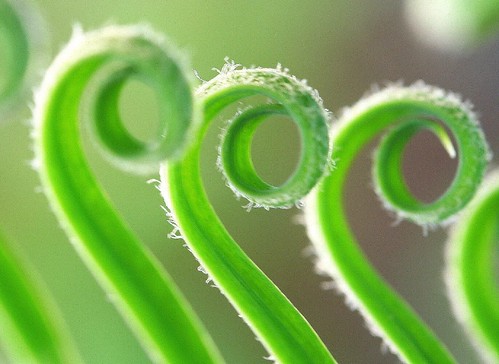
Cycas revoluta leaves uncurling, originally uploaded by Amelia PS.

After the bursts of flowers have been shaken up by storms or sun, and been run down to the grown, little green leaves emerge and cover the trees with what is at first a very pale, transparent green, growing stronger and darker as the sunshine unfolds.

Crushed green leaves are perhaps the second most powerful smell we associate with spring. Perhaps freshly turned soil is another, if you are in the gardening circles. Crushed leaves in perfumery have an interesting double-standard, meaning at once nature at its best - and also class, restraint and well-mannered elegance.

If simplicity, nature or spring cleaning appeal to you, you may enjoy these fragrances more than florals during this time of year. Here are a few leafy-green fragrances that particularly appeal to me.

Clean, sharp and somehow, even 30-something years after its launch it still feels very current. No. 19 is like jeans and pearls and can be equally enjoyed by a nature girl roaming through the forests or a sophisticated urban-bound gal trotting up the street promptly accessorized with a dog and purse to match.

Laura Ashley No. 1 - a scent that is unfortunately discontinued; sophisticated green floral that brings to mind an English garden at spring time with flowering bulbs of lily and hyacinths. It’s lady-like, well-mannered, romantic and only very tiny bit melancholy, a quality which I usually find to underline most green fragrances.

Similarly romantic, and with a more cheerful, fruity and soapy attitude is AnaisAnais by Cacharel. With its fresh galbanum notes, Madonna lily and a mossy base it’s a classic for this season, without being too sharp.

Warming up the florals with its signature Guerlinade of vanilla, iris and tonka bean, Chamade by Guerlain has all that spring has to offer - the sharp galbanum, the heady hyacinth and the mossy base of freshly turned soil.

Lastly, Masakï Matsushïma’s Mintea, a minty green tea scent, with a musky base. What I like about it is it’s freshness that lacks sharpness despite the fact that it is green; unlike most greens, it also stays close to the skin and has a beautifully soft, skin-musk like base.

Labels: , ,

Thursday, April 03, 2008

Spring Essentials - Part One: Florals


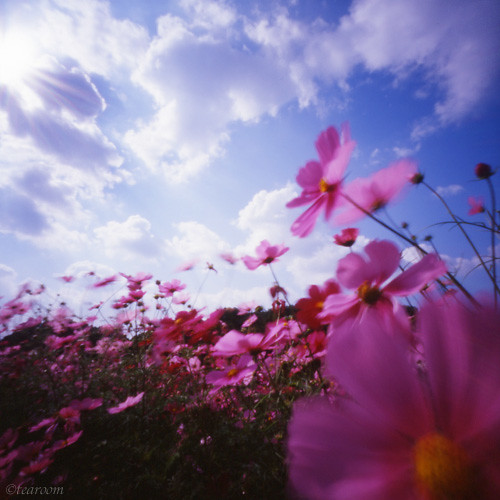
Joy, originally uploaded by tearoom.

Wether the weather agrees with it or not, it’s spring time, and it’s time to enjoy some fabulous fragrances that emphasize the season’s best traits. Some of which are obvious, like flowers and greenery; others are more subtle and elusive, having to do more with the role of spring in revival, resurrection and renewal of both body and spirit.

Spring means flowers. Yes, it’s a cliche but it’s true! And different flowers bloom in different parts of the world, so this can be an opportunity to tune yourself in with nature and adorn yourself with similar scents. There really couldn’t be a better time in the year to douse yourself with a floral bouquet or a single note; preferably of lighter, brighter floral notes. Light white floral notes such as jasmine, orange blossom and mimosa reign my spring fantasies, but it may be different for you depending on your own favourite florals and the particular blooms that inspire your environment.

Back home in Israel, at this time of the year the air is permeated with the heavy blossoms of wild flowers, mimosas and orange blossoms. Wild flowers are difficult to mimic in perfumery, and rarely have been as far as I know. When visiting my home country in the spring, I always make sure I bring with me my orange blossom perfumes - Jo Malone’s Orange Blossom Cologne for its citrusy freshness; the abstract Narciso Rodriguez; the mysterious Orchid from Aftelier; and finally, my very own all-natural perfume Zohar, which is inspired by the orchards in full bloom. As far as mimosa goes - I like mine light and sweet, such as Mimosa pour Moi or Les Nuages de Joie Jaune.

Here in Vancouver, the scents floating in the air are mostly of cherry blossoms, magnolias, blooming bushes and spring bulbs: hyacinths, tulips, daffodils, and Madonna lilies. My Vancouver spring essentials for colder days include KenzoAmour for it’s sweet cherry blossom scent, Farnesiana to remind me of mimosa but in a warm almondy-cherry-like way. Flower by Kenzo is another interesting choice for a warm, powdery floral that is again heliotrope laden (combining vanilla sweetness with a hint of cherry/almond like bitterness). For crisp, bright spring days I may prefer delicate soliflores such as Ofresia (Diptyque’s freesia soliflore) or After My Own Heart (Ineke’s lilac soliflore, underlined with raspberry, heliotrope and musk).
But in no doubt, my favourite floral discovery this spring is the perfectly balanced, all-natural perfume Waterflower by Liz Zorn - a floral that is never too pretty yet oh so delicate and has a balanced underlining sweetness that makes it very wearable in the often less than hospitable Vancouver spring weather.

Labels: , ,

Monday, October 29, 2007

Sexy in the Bedroom - or the Boardroom?

Visit CBC's Living in Toronto to get tips from Marian Bendeth about how to pick a scent for your significant other.
Marian Bendeth is a Canadian Fragrance Expert with an international reputation and the founder of of Sixth Scents.

Labels: , , , ,

Tuesday, October 09, 2007

The Many Colours of White


Gardenias, originally uploaded by Jim-AR.

"Dear Ayala,

First, I would like to say that I very much enjoy your perfumes (Fête d'Hiver is my favorite!) and your blog, and that I hope you are having a blessed holiday.

I know that you are an expert on perfumery, so I would like to ask a question that would settle a debate I am currently having. The question is: Is Lily of the Valley considered a white floral? My friend insists that it is, but I have never thought of it that way. To me, a "white floral" has always meant the heady scents of tuberose, orange blossom, and jasmine, with those wonderful, indolic aromas. Lily of the valley doesn't seem to fit there. I have always thought of it as a fresh floral note.

Thank you so much in advance,

Elizabeth"

Dear Elizabeth,

Thank you so much for your email – I am very pleased to hear you love Fête d'Hiver and are enjoying my blog!
I hope you have a wonderful holiday too!
As for the floral debate - you are right - Lily of the Valley, although white in colour, is considered "green" in terms of its fragrance.
The langugage of perfumery borrows terms from other art forms (i.e.: the “notes” of music) and senses, such as taste (sweet, sour…) touch ( textures such as soft, sharp, powdery) and sight (colours such as green and white).
Green florals tend to be heady and piercing, sharp, with a crystal-clear association to fresh flowers and greenery (as in the flower shop). Lily of the Valley is one of the best example for a “green floral” note. The reknown perfumer Edmund Roundiska described his perfume “Diorissimo” (in my opinion the most true-to-nature rendition of Lily of the Valley) as depicting not only the flower, but also “the forst where it grows”.
Other floral notes of the green floral category are hyacinth, linden blossom (which, like lily of the valley, is high in its farnesol content), neroli (orange flower essential oil), violet leaf, boronia and freesia. Although some of those are still "heady" and some may even have a fair amount of indole, they have very strong fresh and green elements which render them green rather than “white” in that context.

White florals are the indolic, narcotic, heavy and heady floral notes, at times also creamy – jasmine, tuberose, ylang ylang (even though its colour is yellow!), orange flower absolute, narcissus, jonquile (again, this flower is yellow in colour), etc. Lilies are another great example – even though some lilies are pink or orange (like the tiger-lily), their scent is so heavy and narcotic they would be considered white florals as well.

Warm regards,

Ayala

Labels: , , , ,

Thursday, August 09, 2007

Layering Fragrance - with Style

Long time ago in a middle-school far away in the 80’s, 12 and 13 year old teenage girls would create layers of colours in their clothing by wearing their clothes out of order (the short sleeves or tank tops on top of the long sleeves) or folding the undershirt’s sleeves over an overly open necklined sweater to make the colours of the under layers show on top. Layering has since evolved into a far more fun, loose and creative way to mark one’s individual style – turning even the most mundane pieces into something special simply by the way they are put together.

While this works fantastically well in fashion, and is an interesting way to put into use and create a new look out of many different favourites without looking indecisive, the perfume equivalent of layering is not quite as exciting for the most part. Not in my opinion, anyways. For several reasons: One, being the performance of layered fragrances. I feel that just like wearing a long sleeve shirt under a sweater, you see the sweater but you don’t see the shirt. Not quite, anyways (unless the sweater is very loosely knit or has holes). When I layer scents that work well together, I always smell the top one (the last one applied) better than the first one. The first one will remain very much in the background. Perhaps there is too little time for the scents to truly interact and for their molecules to bond and create something new.

Two, and this is the most disturbing one – is that more and more perfumes are released as a collection, exactly with the idea of layering in mind. Part of it could be a way of getting more attention in the very saturated market. But the result is - guess what? - an even more saturated market, with less and less perfumes that stand on their own rights.

To me, a perfume should be a complete entity. An olfactory story with a beginning, middle and end, and unique characters (notes) interacting within. This is scarcely found in collections that were designed for layering. One reason being that in order for the perfumes to interact well with one another without clashing, they should be simple enough to not provoke an olfactory dissonance when blended.
I would like to suggest a different approach to layering. One that is still fun and creative, but a little bit more sophisticated and takes into account that we deserve to wear complex and rich fragrances that can stand on their own. But we are also entitled to some fun and playing with them sometime too!

Instead of layering fragrances on top of each other, in hopes that they will create a new scent – create layers that peak through one another, sometimes overlapping and other times standing on their own so you can enjoy the scent the way it is. This can be done by wearing different fragrances on different parts of the body. I discovered this can be truly fun when I encountered several body products that I really liked their scent, yet seemed mellow enough to accommodate another fragrance on the wrists. Don’t forget to take into account your shampoo or conditioner or any other hair product. Many of them are so highly scented, that they should be considered when you design your olfactory aura for the day…

Azuree body oil goes fantastically well with a light spritz of Chinatown. The two scents have very little in common, but the result of the mix is sultry and exotic.

I find that Lovely body spray or Liquid Satin applied as a body spray is fabulous with Chanel's No. 19 Eau de Toilette applied to wrists and other pulse points. This is particularly fabulous on a hot day.

I’m also very fond of a few of Aveda’s haircare and styling products. Here are a few that have quite a significant scent on their own and a perfume that pushes them to the background to create a mood for a perfumed centerpiece:
Air Control Hair Spray:
This dark and rich spray could be worn as a fragrance if only it wasn’t so sticky (well, that’s how a hairspray works, right?). The dominant note there being labdanum, it is very sweet yet earthy. I like to wear it with Youth Dew parfum dabbed carefully on the wrists and behind the ears. This is best in cooler weather.

Aveda’s Sculp Benefits conditioner has an intense vetiver aroma, and can be a nice way to balance the sweetness of a chocolate based perfume such as Comptoir Sud Pacifique’s Amour de Cacao.

And their Elixir leave-in conditioner smells mostly of ylang ylang and geranium. I like to use it to keep me hair smooth in an up-do when a little black dress, pearls and a dab of No. 5 extrait is required...
Alba Botanical’s Coconut Milk Body Cream serves as an excellent companion to tropical white florals, such as Songes by Annick Goutal.

And Jo Malone’s Vintage Gardenia goes on the skin particularly well with a little caffeine boost from Nyakio's Kenyan Coffee Sugar Scrub. It actually layers quite well with Black Vetyver Cafe too (The only way it makes me close to satisfied with layering these fragrances on top of one another is apply a spritz of Black Vetyver Cafe sandwiched between two layers on the Vintage Gardenia - one on the botton and one on the top). I really wish there was a Black Vetyver Cafe bath oil to use instead...

Crabtree & Evelyn's Lemongrass & Brown Sugar sugar scrub is an interesting combination between a body butter and a sugar scrub. It has a rich lemony scent supported by impressive amounts of frankincense and peru balsam oil. The latter appears also quite significantly in Opium Fleur de Shanghai, which explains why the two are so great together. An interesting combination of freshness and luxurious resins...
I also like to wear the same sugar scrub in a gloomy winter day to uplift my spirits, and add a dab of No. 19 parfum, worn with a mossy woolen sweater...

What I enjoy about these layering combinations is that I've found a way to pair together a scented body product whose fragrance I enjoy, along with a favourite fragrance - yet the two complement each other rather clash together. When wearing them this way, I can always bring my wrist to my nose to smell the perfume alone, while overall, I just smell the two interacting and wrapping around me, creating a new fragrance aura.

* Images illustrating this articles are courtesay of Susie Bubble, AKA The Layering Queen of Style Bubble - the most innovative and fun fashion blog you can find on the net.

Labels: , , , ,

Monday, May 21, 2007

Perfume Advice

The following information was posted on the Fragrance Consultantation page on Ayala Moriel Parfums website. I am posting them below as well for future reference. Hope you find it useful!

Labels: , , , ,

Fragrance Sampling Tips

The following tips will help you experience the scent to its fullest, and be able to decide which scent you like the most.

1. To avoid olfactory fatigue: Smell only up to 5 scents at a time. You may want to inhale fresh coffee beans between sampling the fragrances, to refresh your olfactory sensitivity.

2. Smell the perfumes from the vial or the cap first, to get your first impression. Keep in mind that the initial impression will fade quickly as the perfume interacts with your skin.

3. Using scent stripes or cards: you can apply a drop or spritz of perfume on a scent stripe (a stripe of watercolour paper or other absorbent paper can be an excellent substitute), and note the different dry out stages, and compare the different scents. However, this will not tell you how the perfume will smell on your skin, just how it smells on paper.

4. Apply a small amount of the desired perfume on the pulse points of your clean, unscented wrist (not previously scented!). Let the scent develop on your skin for several hours. This way you will experience the dry out phase, and learn how the perfume interacts with your own personal body chemistry and affects you mood. You want to "live with the perfume" for a day or more before making any decisions.

5. It is recommended that you wear only one perfume at a time on both wrists. This way you will experience the fragrance better.

Labels: , ,

Storing Perfumes and Fragrances

Perfumes are precious and volatile liquids. They should be kept under certain conditions in order to keep the scent lovely and fresh.

1. To open your perfume for the first time, gently twist the stopper counter-clockwise and pul it upwards.

2. When traveling, or if you like to carry your flacon with you in your purse, be sure to close ths topper properly, by applying pressure downwards when closing the stopper, and than twisting slightly clockwise. Doing so will ensure that the flacon is properly sealed, and that no perfume will spill out or evaporate.

4. We also recommend you store your perfume either in its original box when traveling, or inside a little cushioned pouch.

5. At home, your perfume should be stored in a dark, cool and dry area - away from heat, light and moisture. The ideal place would be inside a drawer or a closet.
The worst places in the house to store your perfumes would be the bathroom (steam and heat) and the kitchen (heat, steam and light). If your room is relatively dark, and you use up your fragrance ratehr fast, you may be able to get away with displaying the flacon on your dresser...

Labels: , ,

Fragrance Safety Tips


Following these simple golden rules will ensure you are using perfumes safely and appropriately.

a. Avoid contact with eyes.

b. Keep out of the reach of children and pets.

c. Do not swallow or take perfume internally!

d. Wear perfume by applying the fragrance onto pulse points behind ears and on wrists. If any sign of irritation occurs, stop use immediately.

e. Avoid wearing on areas that are exposed to the sun. Most of the citrus essetial oils present in almost all perfumes can become phototoxic (cause a rash or burning when the skin covered with this oil is exposed to the sun).

f. Keep samples away from heat and sunlight.

g. If you develop any allergic reactions, stop using the product

Labels: , ,

Thursday, April 19, 2007

What to Wear on a Break-Up?


Dark Spring, originally uploaded by Ayala Moriel.

Dear Ayala,

Me and my boyfriend of the past 4 years just broke up. In those last four years not only did I spend the best of my time with him (we lived together), I also became an avid perfume collector. There is not one single perfume in my collection that does not remind me of something we did together and become flooded with emotions or tears. I’m overwhelmed!
What should I wear that will not spoil the perfume for me now that I am so sad and emotional? Should I get a new perfume or stick with the old ones?

Sincerely,

Bewitched, Bothered & Bewildered

Dear BB&B,

I am so sorry to hear of your loss, and it must be so difficult in Spring, the most romantic and cheerful seasons of them all... Many of us experience the end of a relationship almost as tragic as death. It is indeed an end to a part of our life and ourselves that will never be the same again. But remember, when one door closes, another one opens. May this be a new beginning and an opportunity to learn something new and exciting about yourself and discover new strengths within yourself.

As far as perfume goes, the answer to your question is quite complex. Unfortunately, there is no one right way to overcome the challenges that the strong association between memories, emotions and scent evokes. Here are a few ideas, and with a little experimentation, you will find the right thing for this difficult time in your life. Each solution has an advantage and also presents a challenge. I will point out each side of the coin and this way you will be able to make an informed decision based on what you think will work best for you.

1) Wear nothing!
When I am sick or particularly troubled, I tend to shy away from fragrances. The reason: I don’t want to spoil a scent for myself. Besides, I don’t feel like it. This is perhaps the most safe way to cope with the break up olfactory-wise, because this way you are sure to not associate a perfume with the tragic event.
The challenge: While in this approach you are controlling the association between a fragrance and an emotional state and unpleasant memories, you cannot guarantee that there won’t be fragrance associations imposed on you from the environment. For instance: if you move out to a new neighbourhood, and your neighbour or roommate cooks with cilantro every evening, you may associate the scent of cilantro with the break up later on, after this period is over and you can look back on it.

2) Start afresh!
If all of the scents in your perfume wardrobe stir intense memories of the loved and lost one, you may want to try something new. There is an advantage and a disadvantage to doing is: by starting something new, you will be able to remove any fragrance association from your favourite scents and therefore it is more likely that you will be able to come back to them when you are feeling more stable again.
The challenge: you will most likely create an association within yourself between the break up and a particular fragrance. Keep in mind that you may not be able to wear this particular fragrance later on without associating it with the break up.

3) Harp on those strings, rub your wounds with salt
For some of us, coping with loss and pain means experiencing it to its fullest. If you are like this, you may want to come closer to the scents that remind you of your loss most of all – the scent of your partner’s sweater, his/her favourite soap or shampoo, the special perfume you used to wear for him/her… Burry your nose in those smells and let the tears wash your face and lift the pain from your heart.

4) Stick with your favoruites…
When we feel insecure, uncertain, anxious or sad, sometimes what we need best is just a little bit of comfort; be it the cozy familiar bed, comfort foods, or a long relaxing bubble bath – we all have those little things we can treat ourselves to when we need extra moral support (and even more so when there is no one around anymore…). If you have a comfort scent, you may find it to be your best friend in this situation. A scent that you’ve always came back to before for a sense of familiarity, comfort and well-being. It might be a simple as amber or musk, or a powdery vanillic floral– whichever makes you feel better.

5) And to make matter worse…
If you have a scent you particularly dislike, perhaps a scent that makes you particularly moody or melancholic - you may find yourself drawn to it now. This can be another way to put into good use a scent you don’t normally wear. Perhaps a process of catharsis will occur and shed a new light on your view of the scent (and your situation).

I am sending you a big hug, and hope this will make you feel better and less lonely. Sometimes, when you are in an unhealthy relationship you don’t even have yourself as company, and that is the most profound form of loneliness… Remember, as long as you have yourself, you are not lonely, just alone.

Sincerely yours,

Ayala

P.s. Care to share your painful/cathartic experience with which scents you worn in a crisis situation and why? Open your heart and enter to win a miniature of my ultimate comfort scent, Cabaret.

Labels: , , ,