
Pallas Athena

If one looks deeper into the mythology, it is told that Medusa is who she is (meaning: so terrifying that whomever gazes upon her becomes frozen or dead-like) because of a curse Pallas Athena herself cast on her, after Poseidon have raped Medusa in Pallas Athena's temple. So Pallas Athena is not only a warrior but also associated with rage and revenge.
At the same time this makes one wonder “on which side” was Pallas Athena? Was she siding with the Patriarchal rapist god, or the woman who was raped? Was she commemorating her rage in response to the rape, and giving her the means to protect herself? Or was she enraged that a woman would allow such a thing to happen in the holy temple to the Goddess? Or is the temple actually symbolic of the woman's body - her personal intimate temple? I have a few reasons to believe this is all of the above. Medusa has become a part of Pallas Athena, either because she represents her more innocent side that was betrayed and raped; or because she was Pallas Athena's victim. And victims and their perpetrators are forever connected in an embrace that is at the same time a curse, and at the same time the key to their respective healing and redemption.
Is Pallas Athena in a sense is a very Patriarchal female-goddess, a female goddess who is trying to navigate through the new realms of Patriarchy, using masculine tools such as weapons and revenge? Or is she giving women the tools to redeem their frozen, traumatized selves and transform them into powerful magical beings such as Pegasus (the winged-horse that was born out of Medusa after she was beheaded)?
The story echoes an ancient story: The Descend of Innana to the Underworld, a Sumerian myth that is the most ancient written myth we ever found, written in cuneiform on clay slates some 6,000 years ago. In this myth we can peek into the Sacred Feminine and its power before it was tainted with fear, hatred and oppression. Inanna was the Goddess of Fertility and War, just like Pallas Athena reconciles within her Wisdom and War. Some say that Venus or Aphrodite was Innana's later form, being the tame goddess of love, beauty and fertility. But I think that Innana held within her all Sacred Feminine - Pallas Athena and Aphrodite. She was both powerful, just and wise, as well as sensual, sexual and seductive. She is portrayed in that ancient myth as the master of her own self, body, soul, mind, spirit. She has conquered the world on all of its layers - the heavenly and spiritual (the sky or heaven), the earthy and sensual (earth), and lastly the underworld which is the shadow aspect of the world, the unseen, and hidden, the ugly. She is no frozen Medusa when she chooses on her own terms to bring her own death upon her, because a lifeless body and yet she has a plan and she is able to come back to life, buy her way out of the underworld and even seek revenge at those too weak to support her sacred journey. Innana exemplifies a deity that is both dark and light, sensuous and clever, enjoys her body, smart and cunning, and can face her own death and conceive her own rebirth and redemption. She shows us how to be authentic and connected to our entire being on all its levels: light and dark, shadow and self, passive and active, spiritual and earthy and even beyond and underneath this world. And to me this is what I peel away when I look at the myths of Pallas Athena as well.
In her own way, Pallas Athena integrates Medusa, her frozen and frightened self, her lower existence in the shadows, by wearing her as a brooch or perhaps even a trophy on her regalia. But this integration is symbolic and not internalized. Medusa is seen as an enemy; while Innana's descend into the underworld is considered her greatest achievement, after which her lower self and higher self become one and whole; and her decaying carcass, her shadow is embraced and returned back to life and back into the land of the living, to continue leading a life, making mistakes and continuing to learn and evolve. Pallas Athena, without knowing, is forever frozen just as much as her trophy, for not embracing her fully. For not allowing her weaker aspects the space they need to be felt and there for to heal and become whole.
Palas Atena perfume is one of my first creations (2001) and is an Oriental-Spicy perfume with champaca flowers, lavender, neroli and cinnamon over a base of amber, patchouli and sandalwood. It brings me a bit of synenthetic response, seeing the colours of crimson and gold which I imagine the goddess to be wearing. I hope wearing this will enable you to reconcile all those aspects of yourself. When I wear it I feel powerful and smart and sensual. I hope it will do the same to you, and maybe even other things that I can't even imagine.
Labels: Amber, Champaca, Cinnamon, Greek Mythology, Innana, Medusa, Myth, Neroli, Palas Atena, Pallas Athena, Pathcouli, Sandalwood
posted by Ayala Moriel @ 6:59:00 AM
0 comments











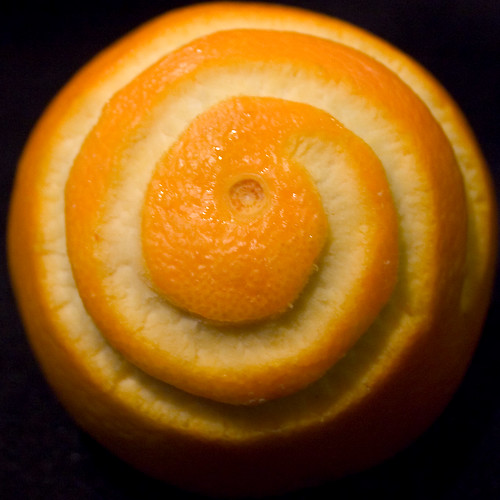






Incidentally, my spring cleaning also revealed some treasures. Literally. I found my lost formula for the 5-spice accord I was hoping to use in some upcoming revolutionary floral (I don't know what would be revolutionary about it but I can feel it). I also found 7 pendants, probably in the same drawer. Which a good thing because otherwise I would have needed to order more!
So, the 5th mod of Ginger & Amber features the abovementioned Magnolia Lily, as well as a hint of Egyptian jasmine grandiflorum absolute (a stellar jasmine if you ask me). I also created a 6th mod, in which there is even more magnolia lily and jasmine, as well as some ginger lily (the root, not the flower). It is still just as juicy and cozy as the 4th mod that I loved, but thanks to the floral heart notes it has less of the hollowness that typifies perfumes based on a top-note & base-note marriage.