Tuesday, January 09, 2018

Mastic Magic


Mastic Wreath
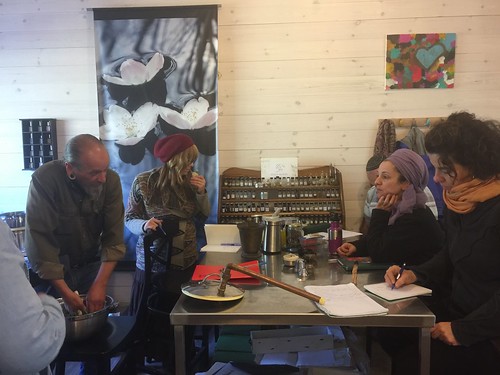
On January 8, 2018, I had the pleasure and honour to co-host a day-long workshop with Dan Riegler of Apothecary's Garden, who came all the way from Canada for some resinous adventures in the Holy Land. Here are some photos from our day together, along with 5 students from across the country.
Mastic Wreath

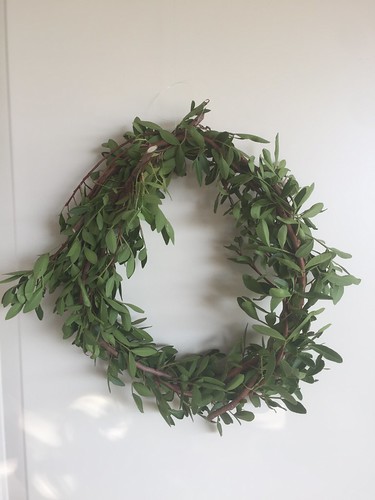
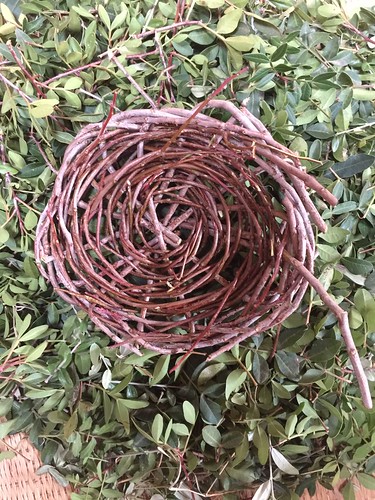
Mastic wreaths, to greet you at the door. Harvesting mastic branches and separating the leaves for distillation was part of the practical side of the workshop. We also dabbled in some very basic basketry related skills, turning these branches into a decorative chain. 
Mastic leaf distillation (Hydrosol)
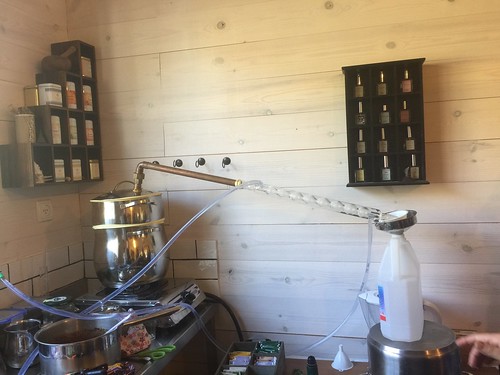
Here is the still (a converted couscousiere) which we used to demonstrate distillation process. We produced only distillate waters (hydrosol). 
Preparing mastic leaves for distillation


Dan setting up the still and crushing the mastic leaves a bit more...

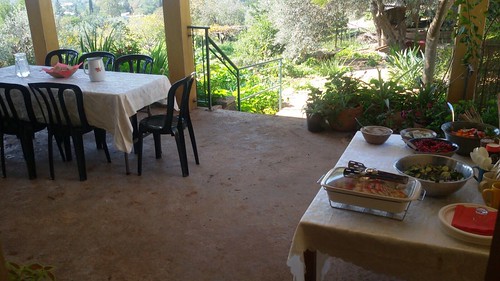
Lunch with a view

We went over to my brother's on our break, to enjoy lunch he cooked especially for us, and enjoy the beautiful view from his porch.

Mastic Branches, Leaves & Resin
Mastic before it's getting crushed and macerated over low heat with olive oil to create a mastic-olive oil infusion. 
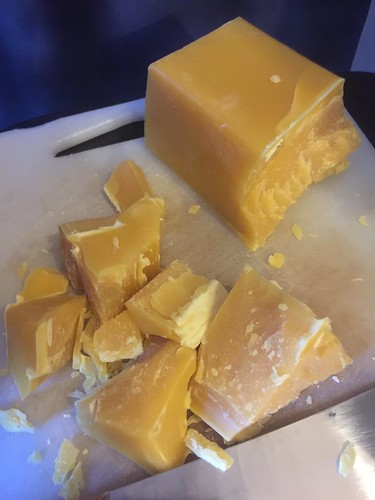
Canadian beeswax - yum!
Beeswax from Canada, which along with the mastic-infused olive oil was handcrafted into a healing salve (great for treating eczema and other skin conditions). 
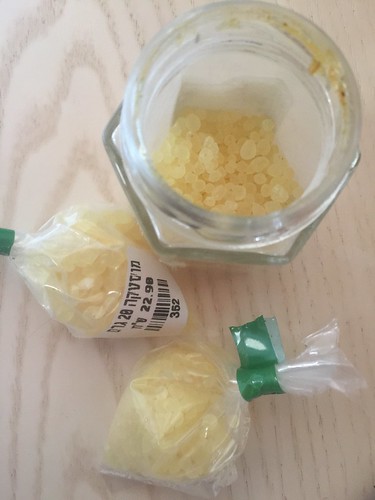
Mastic
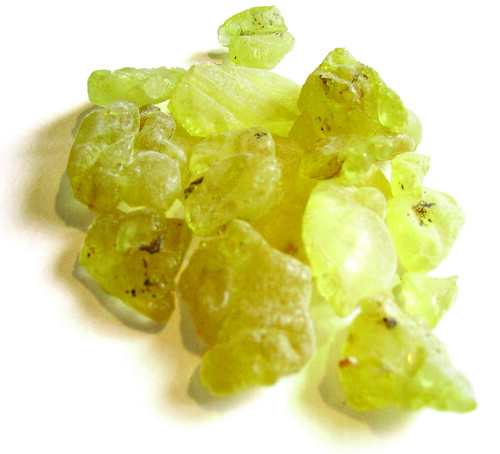
Mastic resin from Chios, Greece. 


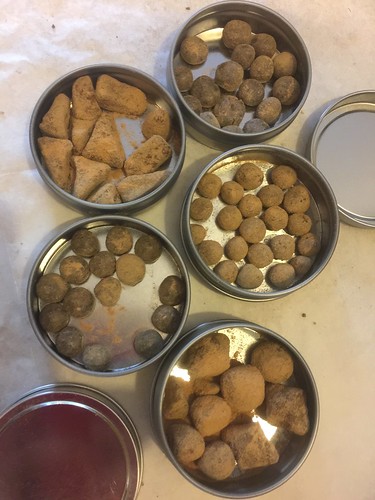
Incense pastilles
Incense pastilles - made from mastic and frankincense tears, to which we've added mastic leaf tincture and other aromatics to create a customized incense "candy". These can be enjoyed by warming them over an electric hot plate or an essential oil diffuser, or placing over a charcoal like you would with loose incense.

Hope to see you next time for another great botanical workshop! 


Labels: , , , , , , , ,

Wednesday, December 28, 2016

Medicines for the Soul

Christmas in Nazareth

On Christmas Eve my brother invited us to go with him on an urban evening stroll in Nazareth, to experience the holiday at the historic birthplace of Christianity. My brother is a tour-guide, so it's always an experience to go for walks with him. He always knows about more than what meets the eye, and has connections with people where we visit that makes every trip with him, even to familiar places, a different experience.

Our experience started on a rather stressful note, being stuck in traffic in a very narrow, one-way downhill street that would make San Francisco's terrain look rather friendly. There was no traffic control despite very heavy flow of visitors to watch the festivities. We were stuck in what should have been a two minute drive for 45 minutes. When we finally found a 3/4 parking spot between a dumpster and another truck and got out, it was drizzling and cold, as it should be in midwinter in the Galilee.

The large square in front of the Church of the Annunciation was festive with an enormous tree-like construction with many lights and a big glowing red star on top and next to it the customary nativity scene. Many people around were wearing Santa Claus hats, blowing little annoying-sounding horns; but thankfully above it all was a recording of Fairuz singing Christmas songs. Christmas in the Middle East is certainly very different than anywhere else in the Northern Hemisphere.

I don't recall ever visiting in Nazareth, even though our family has special ties with the city. My mom's midwife, a Christian-Arab from the neighbouring village of Kfar Yasif is originally from Nazareth. Both our families have five children each (aside from me, my mom has four boys, and her midwife has five daughters). We are all in more or less the same ages. If it weren't for the strange political climate of this country, they'd all be married to each other by now...

Safdi's in Nazareth
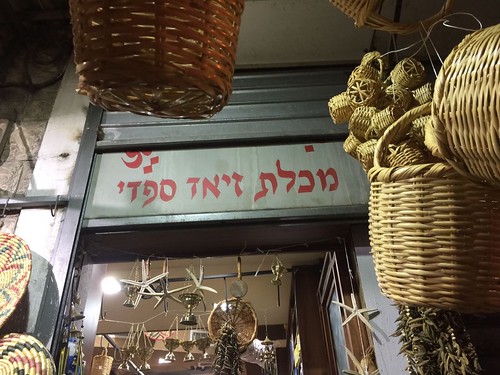
Aside from the religious spots (Nazareth's spring, bath house and historic city centre, Mary's Well and its Church, AKA Greek Orthodox Church of the Annunciation, and the Roman Catholic Basiclia of the Anunnciation (كنيسة البشار  in Arabic בזיליקת הבשורה / כנסיית הבשורה) - we also went into the old souk (market) of Nazareth, which is sadly mostly dormant due to modernization. Very few people have the desire or time to find parking in narrow alleyways that were built thousand years ago and wander between merchants to compare prices and negotiate bargains. It's much easier to go to the mall and pay with plastic cards all in one place, and cart your goods to the car underground. It was very sad to see so many stores closed, behind them are beautiful old shops with arched ceilings. Some of the old apartment buildings - although mostly neglected - were used to be effendi's homes, and their ceilings are made of Cedar of Lebanon, and hand-painted by a Lebanese artist from the time of the Ottoman empire. It's a lost world, and only recently some brave entrepreneurs have taken the initiative to renovate such places and open boutique hotels, hostels and cultural centres in the ancient cities of the country. There was also a little shop in the entrance to the empty souk, full of beautiful local craftsmanship. I hope to see more such things develop.

Meicines for the Soul
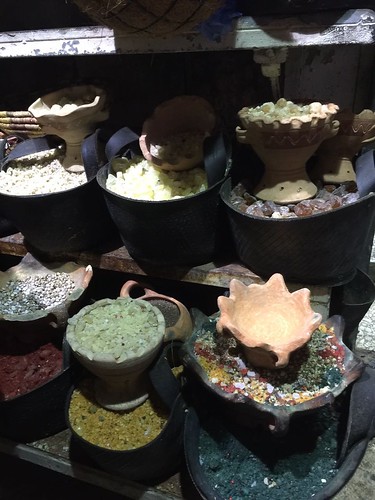
Once we reached the part of the souk that was still alive, I bought a cupful of coal-roasted chestnuts, reminiscing the cold foggy nights in Vancouver when we'd buy them from Yve's Chestnuts and warm our frozen mittens with their starchy, caramel-scented comfort. At the bottom of the hill there were some of the country's best Halawiyat (Arabic patisseries), where one should stop by for kunafeh - even if they don't have time or room in their stomach. But we were in a group with a different agenda than enjoying life on the stop - and instead continued on to Ziad Safdi's grocery store, which is really more of a magical old-fashioned herb and spice shop, that contains many folk remedies for all kinds of physical ailments, a collection of essential oils from local plants that is distilled in Nablus; speculates such as mastic gum, and mastic-flavoured chewing gum; and last but not least - assortment of medicines for the soul in the form of incense (pictured above) to be burned in special clay pots. You could find there anything from frankincense and myrrh to colourful and sparkling blends typically burned in churches.

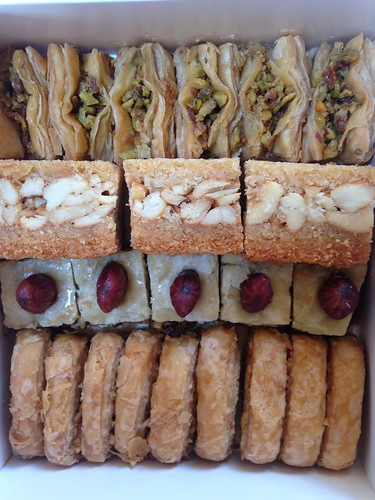
Fine Nazarethi Baclava
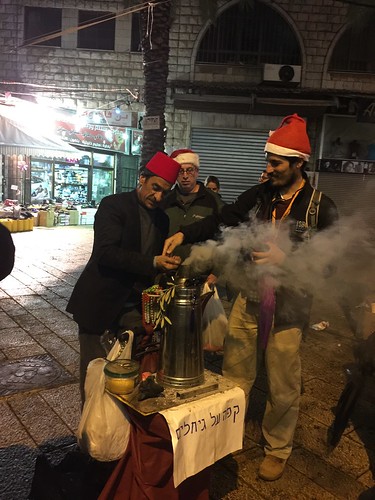
As we continued on, we stumbled upon other interesting merchants, such as this man who brews coffee in a special pot decorated with olive branches and misbaha (prayer beads) that has hot charcoal in a pipe in the middle, and sends impressive steam to the air. We continued to El Babour Mill - Nazareth original steam-powered miller (the name is a mispronunciation of the English word "vapour") -  now more of a live museum for old mills, sieves and pieces of history from the family that keeps this tradition - and a spice and candy shop. I bought there a jar of black-coloured nigella spread, and green frikeh (charred green wheat berries). The tour ended there and once everyone spread to all four direction of the winds, my brother, daughter and I stopped at a more humble bakey and bought some spinach-filled sambusac, date-filled sesame balls, and karakish - savoury cookies that look like hard flatbreads studded with fragrant seeds of sesame and fennel.
Charcoal Coffee

Labels: , , , , , ,

Thursday, December 22, 2016

Mastic

Narcissus and Mastic

Place a piece of brittle mastic resin in your mouth. Notice how the dusty, powdery coating that happened during the commute overseas in a jar turns pliable as it comes into contact with the moisture in your mouth... Start to chew and feel the resinous, slightly smoky, piney aroma fill your palate and nasal cavity... A nostalgic aroma, like tasting "glida mastic" for the first time in Jaffa some late summer night, or like sipping warm sahleb in midwinter - cooked from a packet that your mom sent especially from Israel all the way to Canada, just because you asked her to... The tinctured resin, although smells heavenly like these old fashioned ice creams and above mentioned sahleb (it is also used to flavour malabi, by the way), is very tricky tow work with as it is not 100% soluble in alcohol and leaves blobs of chewing-cum consistency at the bottom of beakers and vials, and sticks to all the utensil one tries to desperately stir it with. Mastic resinoid are also possible to produce, although I've never encountered ones (in those products, greater amount will be alcohol-soluble).

Mastic essential oil, on the other hand, is easy to dissolve but does not smell all that exciting. It comes from the mastic bush leaves and twigs, which are an inseparable part of my childhood's daily aromatic landscape. Those bushes grew everywhere, and we played among them, crushing some leaves along the way and scratching a branch here or there - which also releases a wonderful green, fresh scent. The essential oil, however, does not smell quite so similar to this experience, and is rather more like the rhododendron leaf oil. There is a resinous and slightly funky aspect to it, and hardly any remnants at all to the utter freshness of the living plant.

Mastic Resin

Mastic (Pistacia lentiscus), AKA Mastic lentiscus is from the same genus as the edible pistachio nut, and the other native that is commonly found here - Pistacia atlantica (P. atlantica is often used as a base for grafting pistachio trees). This is a very common evergreen bush that rarely exceeds the size of a bush, but is capable of becoming a small tree (up to 7m tall) if it escapes bush fires, logging and is not continuously consumed by grazing wildlife and goats.

The word mastic derives from the Latin word "Masticare" (to chew), in Greek: μαστιχάω verb mastichein ("to gnash the teeth", the English word comes from the Latin masticate) or massein ("to chew").

Although mastic bushes are in abundance all around the Mediterranean basin, the gum is only produced in a handful of countries - Algeria, Morocco and the Canary Islands. But Greece is the only place where it is grown commercially especially for production of its fragrant gum-resin - especially in the southern part of the island of Chios (close to Izmir, Turkey). The gum is obtained by making incisions in the bush's trunk, and they drip tears which harden over time and become the translucent-yellowish-white "tears" that one can find in Greek stores to be used as a "spice", and can also be used as incense.

Basket from #mastic
Medicinal and Cosmetic Uses:
Mastic is most commonly chewed as a breath freshener, and that's the main thing it is famous for. Mastic resin was used in the original recipe for Egyptian Kyphi - a perfume that was also chewed as a remedy. Mastic is generally used for stomach complaints, especially diorama in young children. Due to the gum's properties, it is used in many cosmetic preparations such as toothpastes, hair and skin lotions, etc.

Culinary Uses:
Mastic was used first and foremost as a chewing gum and breath freshener - before there was any chewing gum. Try it! It really works - nature's own original sugar-free chewing gum.  In the heat of the Middle East, it was a key ingredient in ice creams, to which is added not only a distinctively fresh-resinous flavour, but also a plasticity that helped it resist instant melting.
Mastic is used in several pudding-like and spoon desserts, including the above mentioned sahleb and malabia.
In Greece, it is used in festive pastries such as the challah-like tsoureki and vasilopita (in which a coin is hidden for New Year's Eve).

Flavouring Beverages: 
Smoke from mastic resin is also used to flavour water in Morocco. Finally, in the Levant mastic resin is used as a spice (to a lesser extent) also to flavour poultry and fish dishes, giving them a very peculiar flavour. There are several liquors prepared with mastic resin, such as Mastiha which is native to Chios, as well as a fizzy beverage called Mast.

Role in Perfumery:
Mastic resin is a great fixative, and makes a great addition to mimosa fragrances. The leaf oil is useful in green florals, Chypres, Fougères, etc. Mastic is not a very common ingredient in perfume, yielding only 39 items on Basenotes directory - two of them produced by yours truly (although they are not the only mastic fragrances by Ayala Moriel Parfums). Sahleb is a smooth, buttery orris fragrance; while Virgo zodiac parfum oil is more of a balsamic-woody floral with accessory notes of spicy-green aspects (cardamom and fennel among them).
Other perfumes I perceive as having a mastic note, are Nature Millénaire pour Homme (Yves Rocher, 2000), Kyoto (Commes de Garçon), both having the mastic resin note. As for the mastic leaf and twigs and branches - an allusion to them can be found in green, crisp Chypres (the likes of Eau de Sisley 2).

Religious Uses:
The Greek use mastic in preparation of Myron, an anointing oil used in the Greek Orthodox churches' chrismation ceremony.

Traditional & Practical Uses: 
Oil of mastic is used much like turpentine is in the West, in paint Freshly picked branches of P. lentiscus are a traditional raw material for Mediterranean-style basket-weaving. The abundance of available material and the ease of use (aside from removing the leaves, there is no need for pre-soaking or any other kind of processing prior to weaving).


Labels: , , ,

Wednesday, December 21, 2016

Midwinter

Winter festivities  Bois d'Hiver
It's the shortest day of the year, and the darkest night. So it's no surprise that dark thoughts are creeping on me. Although I was voicing them before  - that is  like why the hell did I pull apart my put-together life and drag my daughter with me into the unknown. Was a change so important to me? Was I really up for adventure in the true meaning of it - which is that almost every possible thing will go wrong? These thoughts were shouted out loud in broad daylight (usually in the context of some family drama, so it had an audience that kblieved I'm only half serious about what I'm saying). There is a different feeling to them - that of despair  rather than anger and rage - and having those thoughts come out of the cold darkness of midwinter. 

We're fast approaching the three months mark here in Israel, and there is no end in sight for the situation in which I am with my daughter 24/7. Not that I'm suffering from her company - but I know that she needs more than what I have to offer in this very stressful time when my attention is divided between maneuvering nastily stagnant bureaucracy, managing a construction site, funding the financing for a renovation project that costs three times more than I estimated, living in a  yurt with not even enough electricity to charge a mobile let alone a laptop or run a wi-fi... I'm tethering on my cellphone which is at 25% battery now and the laptop battery is running out faster than it usually does. As does everything in Israel - money runs out faster (because it's worth less), people's word is not worth much (especially when it comes to money or time commitments), and all electrical devices overheat after five minutes of use, for unknown reasons. In short: I'm at over-capacity, in all regards. When I have free time, I sneak into my brother's house where my suitcase of perfume stock is, fulfill my orders and then drive to the nearby Druze village's post office. And then there are some strange quiet times when I find myself in front of my laptop, blogging at long last. Next week we're going to see another program for her (after everything else I've seen was lacking in too many ways to count), and fingers crossed it will be worth fighting for her to be there. Because the temptation to hop on a plane and go back to the rainy desolation of Vancouver seems pretty tempting at the moment. At least I won't be feeling guilty if I do that. And in my imagination I will have the safety of a home again... 

On some more brighter notion (because I always feel obliged towards my reader to be optimistic in some way) - my house renovations are moving along, and I even got approval for some funding for my business expansion. I've never sought any financing for my business before, so I find this approval to be rather encouraging - and a good sign that it will go well here despite the bumps and hiccups of the move. 

Although I'm not feeling it right this dark moment - I know that the feeling of having a home is very important in midwinter. The yurt is not exactly cozy right now - it's too cold most of the time, and too crowded now too, because we had to move the bed from the little extra room to the mail tent... And there is a big Pilates chair sitting in the middle of the space.

I miss the Canadian festivities this time of year - as much as it is stressful with too many holiday parties, shopping and mailing to do - the coziness of the season's social gatherings is something I sadly miss. I miss having friends stop by and drop in for a visit (it took me years to "train" them to do it - Middle Eastern style! -  and now I left and my Middle Eastern friends are acting all Canadian on me and are too busy to ever get together unless it's for me to teach them Pilates). And unfortunately I've been so up to my ears in survival mode that I've been hard pressed to find time to reconnect with my childhood friends here -and have been largely out of touch with my friends from Vancouver, and that's not easy either. The combination of time difference and the sheer exhaustion that attacks me very early each evening is daunting. 

I don't even have an oven to bake any holiday cookies, so thankfully Chanukah only requires stove-top pan-frying. We got some Christmas lights from Kfar Massif (the neighbouring Arab-Christian village) and lighting them up already cheers me up quite a bit. I found our electric Menorah (but will have to hold off lighting it because the voltage here is way too high for it), and that's also cheering me up a little bit... And to pass the time when all my phones and laptops die, I now got into basket weaving and am making experiments with branches of mastic bush. These are extremely fragrant and even if the basket did not turn out that great - the whole yurt sure smelled amazing! I want to also make wreaths from them and from cypress trees. They should smell quite heavenly together... 

Tomorrow the day will be a few seconds longer... So don't be discouraged by dark thoughts today. Let them pass through you and know that the sadder and heavier you feel today - the lighter and brighter your mind will shine tomorrow with the rebirth of the sun and increase of light.

Labels: , , , , , , , ,

Tuesday, January 14, 2014

Malabi (Recipe)


Malabi by Ayala Moriel
Malabi, a photo by Ayala Moriel on Flickr.
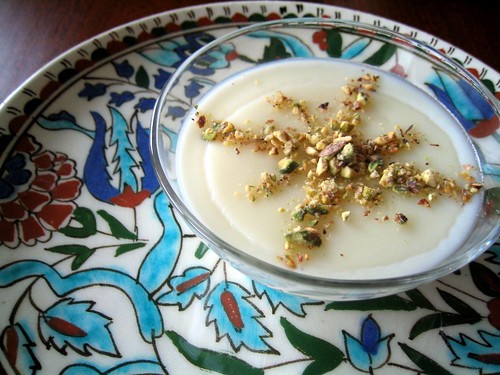
Malabi is a Middle Eastern dessert, a milk pudding thickened by rice flour, which is usually served cold like Panna Cotta. Unfortunately, most of the malabi recipes, as well as what you'll find on street corners and even in restaurants are made with the inferior cornstarch, giving it (what I think is) an unpleasant aftertaste and a rubbery texture.

The dessert is made simply by cooking milk and starch as if to make a pudding. It is only minimally sweetened, if at all, and always must be flavoured with rosewater and orange flower water, which is the only thing that really sets it apart from the old fashioned baby-food that was served in the 1950's (when mothers were convinced that fattening a baby with modified starches is the way to prove that their kid is not malnourished). You may serve it warm; but the traditional recipe is for chilled malabi, which gives you room for many creative serving suggestions (i.e.: using moulds, fancy cups, garnishes, syrups and toppings).

This recipe is adapted from May S. Bsisu's excellent book "The Arab Table" (p. 322) and from Israeli Kitchen. Please note that malabi has many other names and spellings (i.e.: Mohalabia, Malabia, Muhallibieh, etc.). She also offers several regional variations on this dessert (for instance: whole green cardamoms and saffron strands are cooked with the pudding in Saudia Arabia), including the explanation about the Syrian and Lebanese version using rice flour instead of corn starch, which is my personal preference. Note: if you want a more gooey, jelly like consistency, use Sweet Rice flour, aka glutinous rice, which is easily obtained in Asian grocery stores. For a more wholesome variation (which is great especially if served warm) use brown rice flour. Note regarding the mastic: this resin adds to both the flavour and the texture of the dessert, making it more gooey, but also making the flavour a bit different (and it is an acquired taste). 

8 Tablespoons Rice Flour, whisk and dissolve in 1/3 cup of water.
4 tsp sugar
1 L whole milk
1 Tbs rosewater
1 Tbs orange flower water
Pinch of mastic resin (optional).

For the garnish:
Date honey (also called molasses), Pomegranate molasses, grenadine, rose syrup or rose petal jam.
Toasted, crushed, unshelled and blanched pistachios or almonds; OR fresh pomegranate seeds; OR ground cinnamon and cardamom plus crushed nuts. 

 - In a small saucepan, begin heating the milk and sugar.
- Gradually add the rice flour and water and rice mixture, and cook over medium heat and simmer, stirring continuously in order to prevent lumps from forming.
- Add the mastic, if desired. 
- Once the mixture had thickened into a custard-like consistency (in about 5 minutes), add the rosewater and orange flower water. 
- Pour into small ramekins or dessert bowls, a bring to room temperature. Cover with a plastic warp and refrigerate for 2 hours. Serve with a garnish of nuts and your favourite syrup.
- Please note: These do not invert well (like panna cotta), but will have to be eaten out of the ramekins, similarly to a custard or a Crème brûlée. 

Labels: , , , , , , , , ,

Sunday, April 28, 2013

Canadian Perfumers: Conversation with Jessica September Buchanan

Canadian Perfumers by Ayala Moriel
Canadian Perfumers, a photo by Ayala Moriel on Flickr.
The following will be the first in a short series of conversations with Canadian perfumers (there are far and few of us). I met Jessica September Buchanan in Grasse in May 2009. It was one of those rare "Facebook moments": I came back from the rose fields, and found several friendship requests from Spanish people I've never met before, and had a message at the front desk from a Jessica, whom I just learned that week was a student who just completed her full year course at the institute where I was attending a week-long course - and happened to be from British Columbia. A rare coincidence.

A day or two later of attempts to bypass the limitations of roaming charges and weak wi-fi connections, we finally were able to make a Skype conversation and arranged to connect in person, a night before my course was over. I walked up to her apartment - the top floor in an old building (well, pretty much everything in Grasse is rather old), met her friend who just took the train in that day from Italy, had a glass of vino, sniffed some vintage molecules that are no longer allowed to be used in production - dabbed some perfume, and left for the party.

It was a barbecue garden party that took place at a perfumer friend of Jessica, who worked at the naturals department of a supplier house. His house was part of a newly renovated compound that used to be an old perfumery with chimney and all. The moment I met him, I realized he was actually a Facebook friend: non other than Pierre Bénard of Osmoart. As well as nearly all 20 or so guests at the parties, who were mostly students from the flavour & fragrance program in the university of Barcelona... Now all the Facebook action made sense!

Jessica and I remained friends ever since, and we try to meet whenever we happen to be in the same city, which does not happen often enough. I will always remember that night, walking through the narrow and winding stone-paved streets of Grasse - Jessica enveloped in a fine mist of Après l'Ondée
and me with my fresh-from-the-studio Hanami, which I just launched in Los Angeles the previous month. Jessica's love of violet is not limited to classic Guerlains -but is also evident in most of the work I've experienced: ionones are an accent in her Reglisse Noir, and wild violets inspired Fleur No 1.

It is a pleasure and an honour to have Jessica September Buchanan as a guest on SmellyBlog for a rare perfumer-to-perfumer conversation that touches on influences, identity, raw materials, and the long process of birthing an indie brand in a world full of the opposite.
 
Ayala Moriel (SmellyBlog): How did a Canadian nature girl like you end up in the French Côte d'Azur?

Jessica September Buchanan (1000Flowers): Initially I came here with the intention to stay for only one year, while I attended the Grasse Institute of Perfumery.  But then I became quite smitten with the climate and the magic of the place.  Then I also had the dilemma of loving both here and Canada, and feeling somewhat torn as to where I wanted to be. (the true sensation of having a foot in two different worlds). I decided on Grasse, since I thought it would be beneficial for the identity of my business.

Ayala: Torn between two worlds is a feeling I can relate to, being born here but raised in Israel - two completely different environments, from both climate and people's temperament and culture. Do you feel that your perfumery style or themes were affected by the change of scenery?

Jessica: Yes, so you understand completely.  And you chose Canada, rather than your birth country... and I ended up choosing France, rather than my birth country.  There is so much more to learn from a culture other than our own.

Ayala: I was actually not born in Israel, but in Montreal... Being raised there made moving back to Canada feel the same as immigrating, except for the paperwork. I still relate this entire experience as a journey...Over 14 years long, but who is counting? ;-)


When did you start 1000Flowers? How did you pick the name?

Jessica: Initially I started my company in 1998, and it was called Matricaria Plant Essences.  I began with a collection of pure essential oils and several skin care products that I created. (Rain Gel, Mexican Cleansing Grains, and a body oil.)
In 2002, I had a conversation with a Vedic astrologer, and a Sanskrit word kept coming up that translated as 1000 flowers, or 1000 plants, or 1000 medicines.  I was quite smitten with this, and after about a week of reflection, I decided to change my company name.  Soon thereafter, I also incorporated under the same name.

Ayala: That's beautiful and serendipitous - especially with your background of using plants for healing (aromatherapy). And I can't help but asking - are you aspiring to make 1000 perfumes for the line? Or incorporate 1000 of them into your formula? 

Jessica: That is something I've joked about with friends... But I think that may be a bit too ambitious! I think it will remain mostly symbolic in the name... But who knows... We'll have to see how many perfumes I have created by the end of my life!
 
Ayala: What inspires you?  

Jessica: Nature. Love. The sea, the forest, plants, flowers.  Also, certain artists - Picasso, Georgia O’Keefe, Charles Rennie Mackintosh, and Margaret Mackintosh, for example. I love the aesthetics of design, and find inspiration all around me in that regard. I am also inspired by certain perfumes... It is pleasing to smell creations that are balanced and well-constructed with fine materials.

Ayala: Is it true that you designed your own logo and packaging? How do you manage to do all this alone? And do you think there is an advantage to full creative control, or do you sometimes feel the need to "step back" and let someone else handle an aspect of running 1000Flowers (i.e.: marketing, packaging or even just the bookkeeping)?

Jessica: I originally had a graphic designer do a branding project for me.  We worked closely together and she designed the logo and the round seal that is on my website.  Since then, I learned the Adobe Creative Suite, and simply work within the structures that are already there.  Any photography (on my site etc.) are my own.  I enjoy immensely graphic design and photography.

Ayala: What is your vision for 1000Flowers as a brand and a business? 

Jessica: My vision is to develop the brand, and eventually to open a boutique that embodies the identity visually as well as ethically of what 1000 Flowers stands for.  This includes simple and elegant beauty (black, white and grey), and fragrances (based on precious natural materials), that translate my personal expression of the art of perfumery.

In the meantime, I just launched two new fragrances, and have several more in development.  I am working to expand the collection to offer more choices from the brand for perfume enthusiasts.
I am also beginning to offer the service of fragrance design for other companies. 

Ayala: Tell me more about your upcoming scents! I know that Fleur No. 1 is inspired by the spring and snow melting on the mountains of interior British Columbia. Do you find yourself inspired by your current Mediterranean surrounding? 

Jessica: The two new scents are called Love is Sweet, and Ode for Him. They are actually inspired by a love story.  They are an ode to love... it's a personal story as well as an exploration of love and relationships in general.  I wanted to offer an idea that was uplifting and positive.  The world these days needs more of this.


Ayala: Love is always a relevant topic. And especially at this day and age - I feel many of us need a reminder of the sweet part of it. So many of us are left only with the bitter aftertaste when it ends, or forget to appreciate it if it turns into a long-lasting domestic relationship. Thanks for taking that role!

Jessica: I also got a hold of some real oud, so as much as it is a material that has already been explored in many fragrances, I was inspired by such a magical material.  I decided to create an 'Aromatic oud', so a bit different than the usual themes. I suppose this was the touch of Mediterranean influence in the sense that herbs are such a part of this region. 

Also, I have an amazing vanillin isolate, and fell in love with a molecular distillation of patchouli.  So with these materials that I was in love with, I set out to create two fragrances around them-  a pair.  Therefore Love is Sweet is built on vanilla and patchouli, with notes of violets (natural ionones), and rose. It is quite rich and is meant to be reminiscent of more vintage and romantic fragrances.

Ayala: You keep coming back to these violets!
Regarding oud, it’s overdone marketing wise, but the possibilities are not even close to being exploited from the creative perfumery point of view. I’ve been working on an oud fragrance for years now, that is in conjunction with less-well-traveled notes, and although I’m very far from being satisfied with the outcome so far - it’s a worthy journey to travel. I think it’s very befitting that you chose Mediteranean herbs to go with the oud. It is so popular in Arabia, and the herbs are certainly what characterizes the natural aroma of the region's hillsides - aka garrigue.


Jessica: In regard specifically to the Mediterranean, there are so many things that inspire here.  There are flowers blooming from February onward.  The hills covered in mimosa trees in full bloom, the banks of stone walls covered in purple wisteria (or later in summer, jasmine), the citrus trees in blossom, the wild lavender and thyme....etc etc.  It is quite amazing.

Ayala: I adore wisteria! I just smelled white wisteria recently in my visit to Berkeley. Yuko Fukami brought some to the Perfumer's Afternoon Tea and it's stunning! And I will never forget the wisterias in Versailles's gardens.
Orange blossoms are a great inspiration for me and evoke spring more than anything else (see Zohar). And I'll never forget picking mimosas from the side of the highway to Tel Aviv visiting my grandma. It was her favourite flower.


Now on to a question I'm frequently asked by my customers: What's in a name?
And more specifically - are your upcoming perfumes going to be named Fleur No. 2, 3, etc. till 1000? Or will they be more evocative of a personal story like Reglisse Noire is?


Jessica: I think each perfume wile quite different.  I had thought about doing a series to follow Fleur No 1, yes.  And that idea is still active.  I think each fragrance will be quite different and each will have a personal story.

Ayala: What are the challenges you are facing being an independent perfumer in the French industry?

Jessica: The main challenge is that the French population is not really interested in small, relatively unknown brands.  They are accustomed to, and highly value their own known luxury brands, and don’t really step outside the box so much.  They are quite traditional and do not have the sense of adventure that we have in North America, or even in other European countries for that matter.

Ayala: It's true - and especially on the West Coast, the independence and freedom is apparent in the flourishing and thriving movement of independent perfumers-creators. Some even openly call themselves "underground" or "outlaws" in the sense that they are putting the art first and IFRA standards at the bottom of their priority list. Pretty much the opposite of what's happening in Europe.
How are you planning to overcome that?

Jessica: I am not limited geographically thankfully.  Since I sell online, there is no limit.  However, my niche here in France, is that I am a trained perfumer, and I speak English.  So other opportunities are opening up.
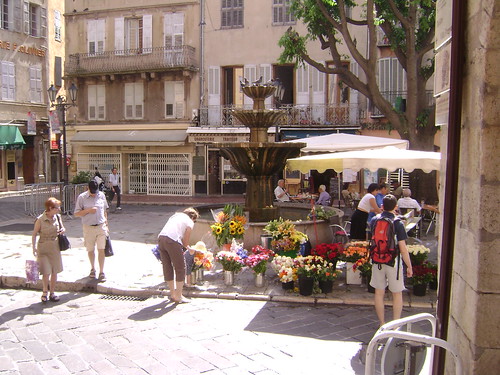
Flower Market in Grasse

Ayala: There is something to be said about the internet. It gives a lot of flexibility and freedom, and opens up the path to very specialized niche audiences in faraway lands.
At the same time - it’s great to hear that Grasse is opening new opportunities for you locally! What are the other advantages in being in Grasse? 


Jessica: The advantages are of course, direct access to the best raw materials, both natural and man-made.  As well, of course, the reputation and mystique of Grasse is important for my brand.  But I think, in relation to actual sales, my market is not here.  That said, there is endless inspiration here in the form of a real perfume tradition with many perfumers and people who work in various facets of the industry, so that offers a real richness professionally.

Ayala: I want to hear more about new raw materials you found in Grasse! Anything exotic or unexpected? I recently smelled fresh Szechuan pepper essence and eucalyptus absolute and am completely in love! 

Jessica: Actually I haven't found anything really new here... other than perhaps Lentisque absolute- which is a shrub that grows here up in the mountains.  But other than that, the best part is that there are many producers here of the best lavenders, clary sage, etc.  So that in itself is wonderful.
That pepper essence sounds amazing!

Ayala: It is amazing! 
Note to our readers: Lentisque is the French name for mastic (Pistacia lentiscus), from which the gum “Mastic” is derived (used in desserts such as sahleb and ice creams as well as chewing the resin as it to freshen one’s breath). There is also an essential oil and absolute - which is a less-known as a perfumery note but definitely worth the attention: green crushed leaf fresh top notes with resinous-balsamic undertones. 

Do you feel that your perfumes have an identity - i.e.: Are they more "Canadian" or "French"? Are they more "natural" , "modern" or "old fashioned"? (just a few rather generic examples to be able to explain your brand a bit more).

Jessica: My fragrances are a fusion of French (due to my education and approach to creation), and Canadian, (in the way I use and gravitate to high proportions of natural raw materials and am deeply inspired by an awareness of health ‘west-coast style’).  They tend to be more in the vintage direction (again due to the naturals and due to my personal taste), but modern in the sense that I keep them quite uncomplicated.  As my collection of fragrances grows, I think that one will find that my style can be eclectic. Especially with the two fragrances that I am just about to launch.  One is a men’s fragrance, and it is leaning a little more in the modern direction due to some of the materials I have used to accent this effect.  As an independent, it is important to not completely exclude the commercial market if one is to survive.

In a general sense, my style is quite gentle and personal. I like the idea of fragrance staying close to the body and being an intimate experience where the wearer invites others in to experience their scent rather than intruding on others with aggressive scents. 

Ayala: How did your background in aromatherapy influence your choice of materials?

Jessica: My background in aromatherapy gave me an in-depth understanding of the naturals in relation to chemical structure, as well as to therapeutic effect and safety concerns.  I do adhere to IFRA (International Fragrance Association) guidelines, but even more, I keep in mind Aromatherapy safety guidelines, which are in fact, more stringent. 

As well, since I know the naturals so well, that I find them easier to work with.  More and more, I am experimenting with merging the different palettes, and learning the traditional art of modern perfumery integrating modern materials.  It is fascinating to write scent compositions with an ever-growing collection to draw from.  It is a life-long process of learning- and deeply challenging. (as much as it is rewarding).

Ayala: Tell me more about your learning experience in GIP. I also recently saw that you're teaching there - how exciting! 

Jessica: The year at GIP was amazing in so many ways.  Technically, the first 3 months were spent studying the raw materials. Then we began to look at actual creation, history, fragrance genealogy, etc.  It was very challenging and I learned a great deal about creation, as well as the industry.  As well, I did 2 internships in large traditional companies (Robertet and Mane), which were incredibly interesting.

Ayala: How exciting it must have been to do internships with these two influential supply houses. You must have learned a lot!

Jessica: As for teaching, I was invited to teach the advanced Natural Perfumery course in summer 2012, as well as a segment of the Level One courses for 2013.  I wrote the curriculum for the advanced level.   I based the course on the Jean Carles method of teaching/learning.  For a 5 day course, it was intensive.

I have also begun to teach a course in ASFO (the training center under the National Association of Fragrance Manufacturers (PRODAROM), that is designed for French who work in the perfume industry who want to learn the perfume vocabulary in English.  The first group to sign up for the course, include people who work in the flavour industry who want to learn more about fragrance, as well as a perfumer who simply wants to improve his english.  Mid-may I will be travelling one day per week to upper Provence to teach the same course in-house to the employees of a company who produces lavender, clary sage, and other essential oils.  I am very excited about this, as I will be able to see some countryside, (it is 3 hours by car from Grasse), and to make some contacts with a company like this directly.
Creating this course is really addressing an important need in this day and age where English is so important. The French are not strong in this language, and since I am trained in France in perfumery, and I speak English as my mother's tongue, I am able teach such a specialized niche course.

Ayala: Thanks so much, Jessica - and wishing you much success with the new teaching projects and the new perfumes!

For those of you who will leave a comment on this post - your name will be entered into a draw for samples of 1000Flowers' Reglisse Noir, Fleur No. 1 and Narcotic Flowers. If you like the descriptions of Ode For Him and Love Is Sweet - you'll just have to splurge on a full bottle (they are both now on special).

Labels: , , , , , , , , ,

Wednesday, October 15, 2008

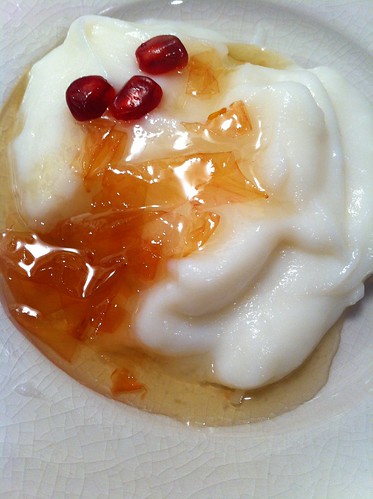
Orchid, Pudding, Perfume: The Sahleb Story


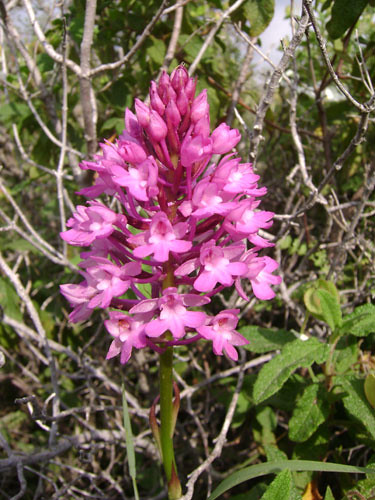
Sahleb Orchid, originally uploaded by Ayala Moriel.

Sahleb perfume was born from three simple elements: Beurre d’Iris, butter essence the obscure and comforting pudding-beverage. It was meant to be a simple comfort scent, with no particular baggage or deep history. The name of the beverage suggests its origin: Sahleb is in Arabic word for orchid (Sachlav in Hebrew). And indeed, Sahleb is made of the ground starchy bulb of a Mediterranean species of orchids: Early Red Orchid (Orchis mascula).

Several orris butters have passed by my nose in my last 8 years of perfumery. But no orris root really fascinated and excited me as much as a particular batch I received from Eden Botanical: Beurre d’Iris (aka orris butter -which really is the essential oil, but with a consistency of crumbly butter or powdery wax). It come stright from Florence, Italy, where the Iris pallida grows, and is the most creamy, smooth and sweet orris I’ve ever encountered. Warm rather than the cool and vague, distant powderiness that most orris butter present.

Orris butter is one of the most precious perfumery materials, currently set at nearly $7,000 per pound. There is much labour involved in the process: the roots need to be washed and peeled by hand and than mature for several years in dark cellars. They are than pulverized before being distilled into an essential oil. Lastly, the yield is relatively low which makes it prohibitive; yet at the same time, the presence of irone, a violet-like molecule similar in its aroma to ionone, makes it invaluable in perfumery. The particular orris butter in question had 15% irone, which is almost the highest irone content one can hope for (sometimes, 20% irone is available).

The butter CO2 is a molecular distillation of this beloved dairy product. If you ever fry your eggs with a bit of butter, or make homebaked crumbly butter cookies or pie crusts - this is the scent of butter CO2. When I first smelled it I was simultaneously repulsed and intrigued by how realistic and potent it was. It simply hits your nose with this burnt-butter sensation, suffocating and comforting at once. Just like a late, fat Sunday brunch.


Sahleb Merchant, originally uploaded by Ayala Moriel.

My constant inspiration comes from home, where I grew up in the Middle East, surrounded by an abundance of flavours and fragrances native to my country. Living in Vancouver most of the year, I miss all of the plants and smells and little edible pleasures of daily life. Especially on days when I go to my neighborhood Middle Eastern deli and there is no sahleb on the shelf (or worse: no tahini! But that’s because my brother probably ate all of the tahini supply in the city in his 12 months stay in Vancouver). On days like this a perfume can help bridge over the physical distance and give the illusion of closeness, and the comfortable certainty of nostalgia.

For those of you who haven’t been fortunate enough to try sahleb (yet), you must know that it is the most comforting beverage you can imagine, and at the same time exotic and intriguing. It is made of ground starchy orchid root powder, cooked with milk and a bit of sugar and rosewater (sometimes ground mastic resin is added too). It is served warm and topped with crushed pistachios, coconut and spice (most typically cardamom and cinnamon). In Café Clil in my home village, it is served with a split banana and some peanuts on the side as well, which is original, different yet appropriate.


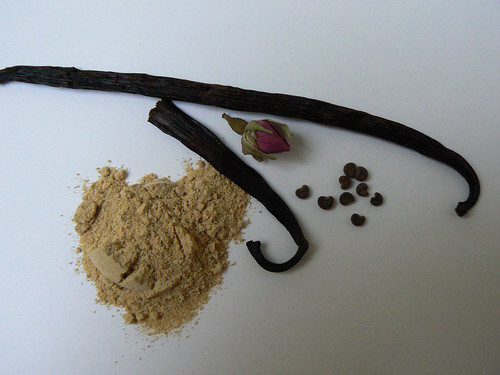
Sahleb Ingredients, originally uploaded by Ayala Moriel.

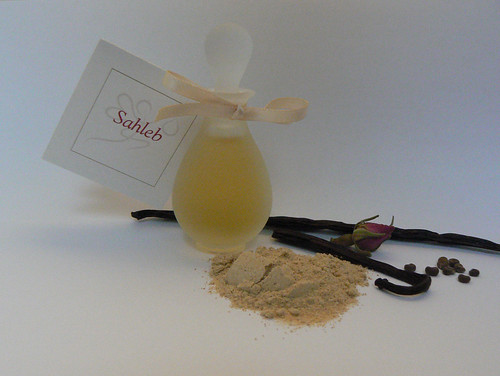
Somehow, it all came together in my mind and I was determined to make a perfume inspired by Sahleb. Sahleb required subtleness and richness and had to be very milky and starchy. So it was only natural that I would use the obviously milky butter essence, and the haunting orris butter with 15% irone. And that how Sahleb was born. Ambrette seed was crucial for the composition’s fatty quality and also to make it more perfumey and skin-like. There is only very little rose in the perfume, as well as a bit of mastic resin tincture which I had to prepare myself. The spices and top notes used also have some starchy quality to them – coriander and rosewood.

Unfortunately, when I was ready to launch Sahleb this season, I learned that my supplier have run out of the orris and were not able to anticipate when this quality iris will be back in stock. I have a feeling that the wave of iris scents that washed us throughout last year (i.e.: Iris Ganache, Infusion d’Iris…) have used up a large portion of the world’s supplies and I am now in a bit of a panic regarding finding quality orris butter for my perfumes.

Therefore, I have decided to launch Sahleb as an exclusive limited edition, which means with a price point ($160) that truly reflects it’s cost, and in very limited run of only 11 bottles (2 of which were already taken). Also, there are no samples offered for Sahleb perfume - aside from samples that I have given out before I knew of this little “orris crisis”, and 5 more that are in stock there will be no samples available.


Sahleb, originally uploaded by Ayala Moriel.

Labels: , , , , , , ,

Wednesday, April 02, 2008

Amber & Ginger, Part Two


rizaulait+gingembre, originally uploaded by auntie_jo.

A month ago, I shared with you my craving for ginger and amber, together. Now experiencing the sequel of the same flu (been traveling around the city I hear, with two phases, thankfully the second is less aggressive than the first) - my ginger & amber craving has come a full circle.
In the last three or four days, I have been wearing my second mod for this amber and ginger perfume concept. This ons is so simple it’s almost ridiculous to even consider it a perfume yet. But it works as a skeletal stage for something bigger and better. I hope.
All it has is my amber base no.3, with organic ginger CO2 and an extra boost of styrax added. Since there is already styrax in the amber formula, don’t even consider it an additional element or note... The amber base includes plenty of styrax, plus benzoin, vanilla, tonka bean and two different labdanums. It’s a sheer sweet amber, simple and easy going.

It wears nicely on the skin, even if a little too soft. I would like to see more of a dichotomy between a zingy bite in the opening, and a deep, rich, caramel-like at the base.

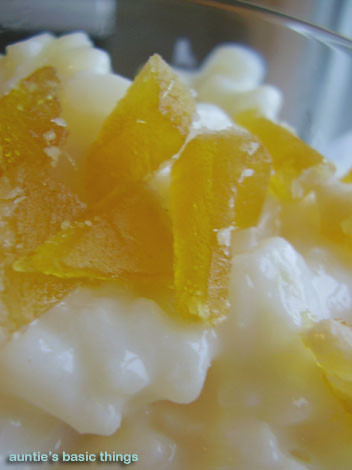
When I was searching for images to illustrate this little entry I came across this rice pudding garnished with candied ginger. It instantly reminded me of the ginger gelato I had in Squamish two weekends ago. It was dotted with caramelized ginger galore. And if you found a teaspoonful that did not have ginger in it, it tasted mostly like mastic, the magical resin used to thicken and flavour ice cream in the Mediterranean region. It is the contrast between the cool ice cream and the hot, spicy ginger that I find most intriguing, and perhaps this is what I’m searching for in my amber & ginger perfume. The sharpness of ginger on the backdrop of buttery-smooth amber is what I envision for it.

Something to think about: adding notes of mastic resin tincture. And amplify the ginger so much so, that it would have an unmistakable initial bite, no matter on how much amber it’s lying.


Labels: , , , , , ,

Wednesday, March 28, 2007

Kyoto, Pagoto Kaimaki and Mastic


Mastic Pudding, originally uploaded by binnur.

In a deserted boulevard at night time in an Arab city, lit by neon street lights, a peculiar company of adults and children were lining up in search for a lost treasure: Gleeda Mastic. The chill of the dessert rolling on the tongue released a strange flavour, familir to the adults who longed for it for years on end; and a new, unforgettable experience to their youngsters who they dragged in their azure-blue Jeep in those streets one summer night in search for a childhood dream from an era long gone.

Comme des Garcons' Series 3: Incense is perhaps one of the most haunting of their entire collection. Amongst the heavily fumed smokes of Avignon and Zagorsk hides a little treasure of sheer light and icy pleasures – Kyoto.

Although it is said to be inspired by Japanese incense ceremonies (Kodo), and named after Japan’s ancient city that cultivates the Japanese traditions of ceremonial arts, Kyoto to me means one thing: “Gleeda Mastic”, meaning Mastic Ice Cream. In Greece this is called Pagoto Kaimaki. The same bush that I have raved about in my last post produces a fragrant gum, transparent pale yellow, brittle and fragile that can be readily powdered to flavour ice cream, puddings and sometimes accompany Sahleb.

Kyoto by Commes de Garcon in a delightful incense scent, that smells more like a steam bath with green leaves than burning and smoke. Although has no mastic listed as a note (according to LuckyScent, it contains notes of incense, cypress oil, coffee, teak wood, vetiver, patchouli, amber, everlasting flower, Virginian cedar), it smells exactly like the resin: sweet-balsamic, fresh, woody-resinous and almost pine-like but less sharp, with hints reminiscent of frankincense yet far less heavy, and a hint of greenness as well. And of course there is the unmistakable “Mastic” odour that has to be experienced on its own, either in the delicious Meditterranean desserts, or simply from the resin itself, which can be easily obtained in most Greek grocery stores. My nose detects also underlining notes of cedar and white musk, but Mastic is definitely the star of the show.

Labels: , , , , , ,

Tuesday, March 27, 2007

Grand Amour

From the first second I smelled Grand Amour, I knew I could not remain indifferent to this perfume. It reminded me instantly of the bushes of mastic where I used to hide as a little girl: either from friends and siblings while playing hide and seek; or from greater horrors imposed on little children by the adults of the world. The scent of the mastic bushes is unique and unmistakable. And although mastic is not mentioned as a note in this perfume from Annick Goutal – the precise makeup of this particular perfume creates the impression of the scent released from the crushed crisp leaves between little fingers of a child hiding in the dense evergreen bushes.

The gum or resin from this bush is the same “mastic” which is used to flavour baked sweets and ice creams in the Middle East and Greece (more about this later). The Latin name of this bush is Pistacia Lentiscus, and it is from the pisttachio family. In ancient times it was used to create a chewing substance (mastic is chewing gum in Arabic and Hebrew), and it is also used as a medicine and a spice. A synthetic substance with similar chemical makeup is created especially for the chewing gum industry.

For those who are unfamiliar with the aroma of mastic, and particularly that of the raw leaves, I would try to describe it as it is in Grand Amour: it is green yet not like grass or leaves, sappy, but not resinous, and with an undercurrent of powdery warmth, while releasing a gently and evenly floral aroma in such manner that no particular flower stands out. It also resembles Chamade in some ways, though I detect none of the galbanum, oakmoss or vanilla notes that are so prominent in Chamade. Perhaps it is the hyacinth, a note that appears in both perfumes.

When I discovered Grand Amour some two or three years ago at The Bay in Vancouver, I immediately lavished myself in it carelessly in excess that can be only explained by my excitement. I was not able to enjoy it very much, the memory of those evergreen childhood hideaways brought a throat-clenching sensation, like the one that visits us just before bursting into inexplicable, shameful tears. I neglected the fantasy of wearing Grand Amour, but haven’t completely given up. I took a vial with me on my trip to Israel this spring, and decided to wear it in the natural environment and compare it to the live bush. I was right about their similarity. But imagine my surprise when I managed to enjoy the juice for three days straight while staying at my Mom’s place, surrounded by the bushes and the spring blooming greenery. In Hebrew we say “Meshane makom, meshane mazal” which means, that when you change location or place, your luck might change too. So true for perfume.

This review is for the Eau de Toilette, which is lovely in my opinion except for the fact that it is not extremely long lasting when dabbed. When sprayed the performance is excellent. The official notes (per the Annick Goutal website) are lily, hyacinth, honeysuckle, Turkish rose, amber, musk and myrtle.


Labels: , , , ,