Thursday, July 21, 2016

Citrus List

Citrus List

Citrus are universally liked, and you'd be hard-pressed to find anyone who does not find citrus notes appealing to at least some degree or another. Despite the fact that citrus trees are rather picky about growing conditions, their protective peel makes them easily transportable and therefore most people in the world, even in sub-polar climates are usually familiar with them. Growing up with a family citrus orchard, I've known many citrus varieties quite intimately, from twig to flower to fruit. Also, I've got plenty of fond memories from citrus-scented herbs that we'd grow in our herb garden and brew as relaxing and delicious tisanes: lemongrass and melissa (lemon balm) and lemon verbena (aloysia citriodora). The latter is perhaps one of my favourite smells from a very young age.

With all that being said - the words "interesting" and "citrus" do not generally go together in my world. Citrus are the one fragrance family that I don't care for - they are short-lived, lack depth and complexity, and generally leave me unimpressed. On days when I choose to wear citrus in the morning, I know that it will be covered with something else by lunchtime or at least early afternoon. They are fleeting, noncommittal, and therefore wearing them should be easy and fun.

Most citrus fragrances are like the fragrance equivalent of ADHD kid in the classroom in the perfume world. They may get your attention quickly with their opening burst of freshness, and may even have a bit of an intrigue from the start; but this will quickly fade away, and give in to a yawn-inducing phase of the fixatives that were used (generally without much success) to make the scent last long(er). These tend to be along the lines of sandalwood, orris, benzoin tonka bean, musk, vetiver and sometimes a bit of deeper notes such as oakmoss or even patchouli. And it is often apparent that this phase was not very well thought through.

Disappointment from the cologne and citrus family can come in many forms, for example - trying to "upgrade" what needs to remain a very simple and humble. The delight of citrus is precisely in their simplicity and utilitarian origins. For example - in my humble opinion, Chanel's Eau de Cologne, which has a very balsamic heart, and a very woody, almost acrid dry down that tries to make it smell "expensive" and fit with the rest of the collection. I don't think this does much to the genre - not really creating anything new (it makes it very clear from the start that it wants you to think of it as an Eau de Cologne - yet pay an arm and a leg for it). Then, of course, there is the horrid modernized approach, loaded with Iso-E Super (Mugler's Cologne took that to the extreme, but it would be a lie to say it's the only one that tries to turn the natural cleanliness of citrus into a chemical treatment). And of course there are the faux high-class colognes, such as Tom Ford's Neroli Portofino, which is exactly how I'd imagined the WWII hookers in Catch-22 to smell like - a cheap cocktail of linalyl acetate and bleached musk, bottled in an icy looking clear blue bottle that makes it look there is more to it.

Last but not least: many modern citrus and colognes are fathomed after the "tea" fantasy accord, and vice verse - many of the so-called "tea" perfumes are more like a different interpretation for the bergamot-linalyl acetate accord that is central to eaux de colognes, only with ionones added to the mix to create that ephemeral tea connotation. This genre gets me less annoyed than others, because there is something elusive about them, and they are so difficult to smell (I must be partly anosmiac to ionones) - and how can you get angry with something you can barely smell?

The following roundup is more than just a citrus list, but generally summarizes ten citrus treatments that work, and themes that I actually find interesting - or at least fun and enjoyable.

1. Orange Blossom Replacing Neroli:
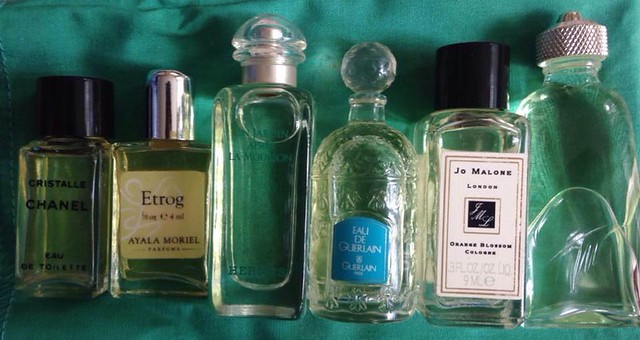
The main challenge I have with eau de colognes is that they are dominated by neroli and petitgrain, two notes that simply don't smell too great on my skin - smelling sharp and overbearing even though they could be quite wonderful when not so dominant. I find that when orange blossom is used instead of neroli, this problem disappears and I can enjoy the citrus more. Also, more depth to the base notes also helps a great deal. Case in point is Jo Malone's Orange Blossom Cologne, which is lovely, and Eau d'Orange Verte with which I fell in love when waiting in Heathrow between flights many moons ago. It remains my favourite citrus, and probably the only one I actually own.

Eau d'Orange Verte is undoubtedly one of the best citrus ever created, and never disappoints. Oh, wait, except that is was reformulated by Jean-Claude Elena to smell nothing like the glorious green bitter orange zest, neroli and oakmoss and cedarwood elegance that it used to be - replacing all this goodness with something flat, synthetic shadow of itself, whose only sorta-redeeming point is some green mango accord, which makes it a bit more interesting. But it is still disappointing nevertheless. Stick to the original!

2. Classic (Read: Old World) Eaux de Colognes: 
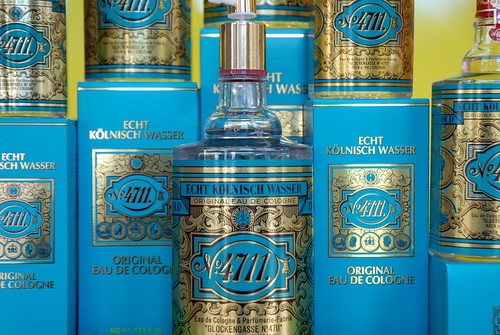
As much as I try to love 4711, it just always smells too sharp, too linen-like on me. But guess what? It is not the only classic eau de cologne that deserves our love and attention, and not all of them are as sharp an dominated by neroli.
Eau de Guerlain is a prime example. It begins very fresh, classic eau de cologne accord with hint of mint. But it has more facets to it than what meets the eye at first. There are some florals in its midst, and the dry down is the famous guerlinade - tonka bean, orris, vanilla and even a tad of patchouli and oakmoss. There is a floral richness to it so if you want a "deep" eau de cologne fragrance, this is it. It lasts for a long time as a result, and also has different stages and evolves on the skin, inviting the wearer for wrist-re-sniffing rather than reapplying. At some stage the tonka bean is more apparent, and at a later stage the orange blossom surprisingly shines through. 
I also fondly remember Eau de Clogne de Coq and Eau de Fleurs de Cedrat - but it's been many years since I've had access to either, so I can't pinpoint now what I liked about them. All I can say is Guerlain sure knows how to make citrus well (and more about that in a bit). 

3. Spicy Citrus:
Citrus and spice are as old as potpourri. But this is not the only way to utilize this bacteria-busting combination.
Florida Water is a modern-ish play on the eau de cologne theme, using New World aromas such as Mexican lime and a healthy dose of cloves and cinnamon to create a mouthwatering, refreshingly disinfectant concoction for the tropics. Florida Water have become also an interesting part of Shamanism practices on North America, and are used for cleansing and multiple other purposes. This past couple of years I've been honoured to work with a Angela Prider, local healer and shamanic teacher and practitioner, and have created an all-natural Florida Water type of fragrance for her, and customizing it for her particular energy work, which is greatly inspired by feminine archetypes from New Mexico, Ireland and Australia. I can't wait to share more with you - but I must wait till her website is up.

4. Citrus Fantasy: 
Whenever I meet a citrus I actually love, I usually discover it really belongs to the "Citrus Fantasy" sub-family. Which also proves that my citrus "problem" These truly are Chypre citrus compositions and can be very different from one another. They all have a prominent citrus top note, of course, but there is also something intriguing in the heart (more floral notes, for example) and of course there's got to be some oakmoss in the base as well (which ultimately contributes to their longevity. Innovative perfumes such as Eau Sauvage and Ô de Lancôme, Le Parfum de Thérèse and Diorella belong to this category.

Eau Sauvage perhaps does not only belong here, because it also can be categorized as a Chypre Fresh. It has plenty of depth and longevity - so all the things that I like to complain about citrus don't apply here. But honestly, I like anything with basil, really (so no surprise that I also like Lime, Basil & Mandarin Cologne by Jo Malone and Aqua Allegoria Mandarin Basilic, and have created ArbitRary with a very similar core of basil, citrus, oakmoss and jasmine). What makes Eau Sauvage so exceptional (before they messed up with the formula and removed all the oakmoss) is the play on hedione (a jasmine-inspired synthetic molecule), which makes up no less than 40% of the formula. It gives the heavy oakmoss, vetiver, hay and patchouli a "lift" and opens them up to receive the airy, fleeting citrus. To this day I find Eau Sauvage jaw-dropping gorgeous, a very similar reaction if your man walked out of a shower with a towel like the illustrations that made it so famous. Other fantastic citrus fragrances of that genre include Ô de Lancôme - but it does not work on my skin quite as well.

5. Citrus Tisane: 
Herba Fresca, from the Aqua Allegoria line, is another proof that Jean-Paul Guerlain really knows how to make citrus and is not afraid of adding depth and complexity to this shallow family, without taking away from their cheerful glee. Herba Fresca always reminded me of the herb garden of my childhood I've mentioned before. It's dewy and green and citrusy all at once. My only problem I have with it is its sharpness. It has a powdery-green-musky element that is just too piercing to my nose - creates an effect that is almost like screeching chalk on the blackboard. So after using it more as a room spray for a while - I had to give it away to my citrus-loving brother. Curiously, he also used it in the same way.

6. Citrus & Greens: 
Another winning combination that makes citrus more interesting is adding green galbanum note to it. It simply makes the citrus smell more alive. One of my favourites from this genre is Artemisia's Yuzu Citrus. It's also in Cristalle by Chanel (which is more complex and floral than your typical citrus - it belongs to the Citrus Fantasy/Chypre Fresh families. And recently I played with this theme in Lost Lagoon (which FYI is more on the Chypre and Floral Green spectrum rather than citrus per se).

7. Citrus Woods
The combination of citrus and conifers is nothing surprising, but it simply works. There is a certain elegance and harmony to it that can't be denied. Limonene is a common molecule and they seem to work well together., effortlessly. But what if the part of the conifer used was the heartwood, rather than the needles? There are several fragrances that rely on this marriage of woodsy notes and citrus, and often (but not always). there is cedar involved.
Citron Citron  (Miller Harris) with its elegant underscore of dry Virginian cedar, and piquancy from cardamom and pepper is a citrus that I find thoroughly enjoyable; and Sweet Lime & Cedar (Jo Malone) breaks free from the classic eau de cologne by using not only a lot of musk, but also petitgrain combava (AKA kaffir lime leaf) and sweet notes of Atlas cedar.
Last but not least, Eau d'Hadrien (Annick Goutal) uses cypress note, which although it is actually distilled from the leaves and twigs - but possesses a very woodsy, dry character that smells like a tree, rather than straight-up coniferous. It is an elegant, clean citrus with a very Mediterranean character. 

8. Sulfur, Yesss!
Pamplelune has always been a controversial fragrance even amongst Guerlain's fans. The reason being that the sulphur is really obvious here, even more than with actual grapefruit oil. The grapefruit is lusciously fruity,  robust and almost velvety; and its floral character is accentuated by ylang ylang and underscored by patchouli - both of which give it a dirty, sultry persona. Other treatments of grapefruit I find to be too masculine and untrue to this delightful zesty note (Jo Malone's Grapefruit Cologne); or too mineral and pretentiously "minimalist" (Hermes' Eau Pamplemousse Rose, which is really a replay of the flinty qualities of Terre d'Hermès). However, when I do crave that mineral type of grapefruit quality, I prefer Pure Turquoise (not technically a citrus either - and categorized as a modern "Chypre") -  which really takes this idea to the extreme with its dryness.

9. Citrus Candy:
When I created Fetish I wanted to create a citrus that isn't boring, lasts a bit longer than average, yet at the same time remains true to the playful and fun attitude of the family. I did that by using lemony heart notes (lemongrass and litsea cubeba) and echoing that citrus quality with fir absolute at the base, which gives the vanilla extra sweetness but also balances it a bit. Later on I also "met" Sugar by Fresh which has a very similar attitude, only with an abundance of musk at the base that gives it more of a  cotton-candy feel.

10. Yuzu & Etrog Mysteries:
The novelty of new scents from faraway lands never fails to surprise and excite, and yuzu is case in point. This Japanese citron is rarely found fresh outside of Japan, and smells like a delightful mix between grapefruit and Meyer lemon, but with much more pizzazz and oomph than either.

Oyédo by Diptyque is dominated by this note, and has an unusual composition with similar structure to traditional eaux de cologne, yet makes a bold, intense statement. Its vibrancy and originality is always nose-catching and enjoyable. What it does is take all the usual eau de cologne elements - wood, citrus and herbs - and amplify them ten-fold. Yuzu is a dominant, unmistakable note to begin with, with a sulphuric pungency not unlike grapefruit's, along with the orange-blossom like floralcy of yellow mandarin; and instead of sticking only to the typically sporty mint - the perfumer also added thyme, which has an unusual bitter and almost pungent bite to it. The base is that of the wonderfully elegant and mysterious Japanese wood, hinoki and has a slightly fruity musk at the base as well.

There are only two fragrances I'm aware of that use the elusive citron fruit: L'Etrog by Arquiste, and my very own  Etrog Oy de Cologne. If I could have my way, there will plenty more of them. Both have more depth and layers than the average citrus - in l'Arquiste's, this comes from a balsamic date-like note, and a woodsy-musky vetiver base.

P.s. Please note that although typically tutored as "summery" scents, citrus oils are highly phytotoxic and should not be worn on areas of the skin that are going to be exposed to direct sunlight.

Labels: , , ,

Tuesday, January 21, 2014

Diorella


Before I begin, I have two announcements to make: First of all, I want to thank the generous Joanna for sharing a decant of vintage Diorella with me. This review is based on my subsequent wearings of this beautiful rendition, prior to the oakmoss banning days. My second confession is that some ten or so years ago, when Diorella was quite widely available (and before oakmoss was so ridiculously restricted) and it did not quite capture my heart. While I liked its freshness and similarity to the brilliant Eau Sauvage, here was something about it that I disliked - a combination of the heaady floral note of honeysuckle, and the soapy aldehydes at the opening. Time perhaps has been kind with Diorella, because she has aged gracefully. Or perhaps it is an even earlier formulation of the same one. But it is certainly different from the scrubbed and lathered version you’ll find on the Dior counters nowadays.

Way before its time, Roudnitska was at ease incorporating fruit salad elements in his fragrances in a most refreshing, light-weight manner... created in 1972, Roudnitska’s fruit has thankfully no affinity with the syrupy, unbearably sweet fruity-gourmand florals of the new millenia; but rather posessed a cheerful lightness paired with complex substance from more earthy and floral notes of natural raw materials. So again, these are far superior to the light, watery fruity-florals of the 90‘s, though these were strongly influenced by the asthetics that Roudnitska developed with the creation of Eau Sauvage, which introduced the concept of space and expansion to modern perfumery.

Diorella is munching on a honeydew melon (or is it a cantaloupe?). It is ripe, juicy yet somehow still crisp, as it is brilliantly paired with citrusy notes of lemon and bergamot and a touch of spicy-sweet green basil. Her peach-toned skin emanates a scent that is similar to white peach’s delicate, milky and slightly nutty aroma, due to the use of peach aldehyde and peach lactone. These unique fruity notes were both brilliantly used in a non-edible way (as Edmound Roudnitska explains beautifully in Michael Edward’s book, Perfume Legends - French Feminine Fragrances). Rather, it brings freshness and a unique texture to the jus. It is brilliantly paired with effervescent, ethereal and soapy honeysuckle, crushed basil leaves and a tad of the oily aldehydic notes backed with ionones, that simultaneously give the clean impression of triple-milled soap, and the dirty allusion to hosiery that’s been worn and sweated in for at least half a day. That dichotomy between anti-bacterial herbs and animal/human secretion seems to be at the core of Diorella.

The oily aldheyde and peach notes fades rather quickly, allowing the basil and citrus notes more breathing room. Orris butter is present yet very subtle, giving a soft-focus background to the composition, and making it somehow smell more feminine. What truly moves to the forefront is jasmine. Pure, unadulterated, indole-rich jasmine at its best. And it is that indole that will accompany Diorella throughout her strut on the skin and the surrounding air - first an ethereal jasmine, and later on a full, unabridged indolic jasmine, with its fruity, jammy peach-like and earthy and animalic character beautifully showcasing this gorgeous phenomenon. The similarity to Le Parfum de Thérèse as well as Eau Sauvage are striking; but what surprised me what the affinity I discovered with Eau d’Hermes. Also a perfume that is all about jasmine, yet from a very different point of view - more warm, sweet-earthy and spicy. It is probably the juxtaposition of jasmine with ionones that creates that olfactory connection for me.

Last but not least, it’s time to talk about the base notes, the foundation of Diorella. No matter how much Roudnitska denies any connection to Eau Sauvage, the similarity is striking, despite the differences. There is definitely oakmoss, but not nearly as much as in Eau Sauvage, which gives it more of a green, dry and woody character rather than a dense, brown-earthy and musky feel. Vetiver also supports it in this direction. Even the patchouli, which appears in both, seems to be toned down and instead of the big-warm-oily patchouli hug you get in some feminine Chypres such as Miss Dior - there is just a single brush stroke of it, done in aquarelle. Last but not least, where Eau Sauvage has a generous dose of hay, which gives it an almost-fougere quality, Diorella has a subtle sprinkle of tonka bean (or perhaps just pure synthetic coumarin - in reality there is a very small difference between the two), giving it a slightly bitter finish, but with that feminine soft-focus that reflects the orris from earlier on.

Diorella is a very Mediterranean perfume, and truly reminds me of Grasse and the surrounding area, including the perfumer’s home and garden (which I visited in 2009). It also reminds me of a perfume that his son, Michel Roudnitska created way into the future - Eau Emotionelle - also playing on the cantaloupe-jasmine-ionone theme, but in oil-pain strokes rather than the sheer aquarelle of his father's. The culture in that area is greatly influenced by Italy and Spain, and there is something very Italian about it, especially in the opening notes. If Diorella was a woman, she would be one with a very outgoing, young spirit. A woman that loves to laugh and enjoy life’s pleasures, and just goes with the flow - but isn’t audacious or dominant by any means, and is very kind, generous and open but without ever being vulgar in the least. There is something truly carefree, open, fun, bursting with life and joie de vivre about it. In case you didn’t know already - it’s a true masterpiece. It has been relatively recently re-introduced along with the other classic retro Dior-fumes: Diorling, Dioressence, Diorama... I’m sure the new version pales in comparison but I’m nevertheless intrigued to find out what they’ve done to it to overcome the restrictions on jasmine levels and the industry’s new (low) standard of avoiding oakmoss at all costs (even though it is still allowed - the washed-down version of atranol-free absolute, and at only very low percentage).

Top notes: Bergamot, Lemon, Basil, Melon, Aldehydes, Peach
Heart notes: Jasmine, Honeysuckle, Hedione, Orris, Violet
Base notes: Oakmoss, Patchouli, Vetiver, Coumarin

Labels: , , , , , , , , , , , , ,

Saturday, October 09, 2010

Agrumes Automnal


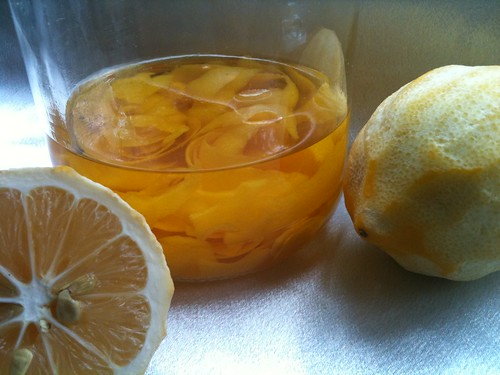
Tincturing Meyer Lemons, originally uploaded by Ayala Moriel.

Citrus is not widely associated with autumn. Except for the Etrog fruit, being a symbolic fruit during Sukkot, a Jewish fall harvest holiday. For me personally, growing in the land of citrus groves, autumn is the season of the return of citrus: the first tangerines, usually unripe, or at least green from the outside even if already juicy and sweet on the interior, are packed for the 10 o'clock snack during recess when the school begins, and the fine mist of the essential oil exploding out of the peel fills the classrooms for a refreshing aroma. It blends quite well with the cedar pencil shaving and new books' smell, come to think of it...

And of course, Etrog has a really special scent, and at times, the fruit will be brought to school for students to study and explore in the early fall. The citrus scents somehow become part of the smells of excitement: new beginnings, transition, new schools, new friends, new teachers, new backpacks (which quickly become contaminated with the stale odour of citrus fruit that was forgotten in the back for the entire week). And for me personally - another scent-memory was added to fall: the birth of my daughter (she will turn 14 years old this October!). When creating her namesake Tamya perfume, which commemorated a magic moment after her arrival back home from the hospital. It was just before sunset in the fall, and everything had that golden glow of a soft autumn sun, shining through olive groves, new wild wheat-grass after the first rain. I used yuzu, a rare Japanese citron essential oil, to give the perfume its uber-citrusy and fruity pizazz, reminiscent of the first autumn fruit that I'm so fond of.

I've been tincturing special citrus this week: Etrog, which received its own post last year; and Meyer lemons, which you can see in the above photo, and I'm tincturing for a whole other project: my New Orleans perfume (more about that later, once I complete my 4th mod).

Meyer lemons are strange fruit, as their name and shape is deceiving: their outer peel is the most fragrant and is reminiscent of yellow mandarins or the first tangerines that I've mentioned earlier. It is really quite heavenly experience to zest or peel this deep yellow fruit!

The pulp, however, takes a disappointing turn. I cannot for the life of me figure out how to use my Meyer lemons after I've peeled them off... They are too sweet for a salad dressing (though can be used in a pinch...) and a little too bland to be eaten as they are. I'm wondering if their personality might shine the most in a marmalade. but having lost the zest, I probably can't use them for that at this point... I'm sure they are full of vitamin C though, so I promise they won't got to waste. However, if you have a good Meyer lemon recipe or idea, I'd be thrilled to hear.

In the meantime, I'm grateful to have a scent that vaguely reminds me of the early tangerines in our family orchard. And I'm really looking forward to finalizing my New Orleans perfume using this precious tincture, which will be ready in exactly 3 days. So stay tuned...

Labels: , , , , , ,

Wednesday, May 16, 2007

The Little Prince Hits a Brick Wall


the little prince brick wall, originally uploaded by Mr.Tooley.

Antoine de Saint-Exupéry’s Le Petit Prince was never really a children’s book. Just because it is about a child does not make it for children. Regardless if the book is accompanied by colourful illustrations. I am sure my parents were not the only ones puzzled by the peculiar gap between their astonishment from the book and the complete non-comprehensive gazing they received from me and the too many questions for a bed time story as a response to this book.

And so, when a disnified collection of perfumes for children inspired by Le Petit Prince came out, accompanied by stuffed animals (sheep, of course), action figures, colouring books and other cutesy paraphernalia (this is clearly TOO MUCH!) appeared on the olfactory horizon, I was equally eager and terrified to try the line.

Eager? Well, one must admit, the packaging for Le Petit Prince Eau de Toilette is stunning. It is simple and true to the original illustrations in the book. One would expect a magical, yet somewhat cerebral concoction of baobab trees, star dust and desert winds and perhaps also a bit of motor oil. However, the perfumer for Le Petit Prince decided to go for the safest unisex cliché of a citrus perfume that gives no particular statement except for being an agreeable, pleasant smell that can please almost anyone. The chosen notes are mainly lemony, and for the most part this alcohol-free concoction smells like sugar-free lemonade. Very pleasant, but it gives nothing new to the imagination and being associated with a book of such importance, this is pure sacrilege. Let’s just be reminded that another book by the same author served as the inspiration to one of the greatest perfumes of all times, Vol de Nuit. This thought alone makes me shudder.

Le Petit Prince Eau de Toilette is alcohol free*. It is also free of any imaginative thought or creativity (except for that which went into the exquisite packaging). The official notes include citrus, tarragon, lemon verbena, cedarwood and oak. I smell mostly lemon and lemon verbena, which I love. But I can also find these without getting my plane grounded in the desert and insulting the olfactory intelligence of children (who, I am most certain, will be quite open to try some new notes that they are less familiar with).

Interested to learn more about the literary phenomenon? Visit the official site of the Le Petit Prince fragrance line. Visit there and you'll see what I mean about commercialism. However, if this what's going to get children to read the book (and perhaps understand it), than so be it. The only problem is that whatever understanding they might reach would be tainted with commercialism. But who cares? We live in the 21st Century now, and commercialism is all that matters.

* This is usually achieved by mixing the essences with hydrogenated castor oil first, and than mixing this with water; this particular castor oil is water coluble)

Labels: , , , , , ,

Saturday, May 12, 2007

Sugar by Fresh


How to Interview a Cupcake!, originally uploaded by cupcakequeen.

While the name suggests sweetness, the flavour of this perfume is more tart than sugary. First we sip Lemon Drop martini garnished with lemon zest; Of course there is the sugar-rimmed goblet, to sweeten the sour lemonade. And underneath it all lies the sugar that have sunk to the bottom of the drink, which first appears in the form of a buttery lemon cupcakes with campy bright colour icing and an occasional bite of candied lemon peel. Caramel notes do not appear until later on, fluffy and fuzzy like cotton candy cushioned with the milky warmth of musk. As you can see, the sweetness here is not overly done and is balanced with plenty of lemony components.

The main component here are lemony citrus notes, primarily the familiar lemon peel, but also the intensely sweet, green, floral and lemony litsea cubeba – a berry from the May Chang tree, which is a middle note (rather than a top note like most citrus oils are). There is some floralcy at the heart, which is there more to create balance than impose a floral bouquet.

Of all the Fresh line, Sugar Eau de Parfum is by far my favourite*. Citrus fragrances are not my type generally speaking. I much prefer the complexity of other fragrance families. However, when I first smelled Sugar I was in awe as to how similar it was to my own (and personal favourite) citrus fragrance, Fetish. The two are different, of course, but share the combination of sweet and tart, fleeting freshness based in a solid sensual gourmand which incorporates vanilla and florals (jasmine, vanilla and fir absolute in Fetish), and both have the thread of the litsea cubeba note, lemony, tart, green, sweet and floral all at once.

Sugar is original for presenting a sweet theme in a sour environment, or rather – creating a citrus fragrance that is not “clean” or “soapy” or just “fresh” – but rather, a delicious, mouthwatering, sensual lemon scent.

Sugar can be found at Beauty Mark in Vancouver (where they sell the separately the leftover 30ml bottles from the Christmas gift packages for $35 CAD), and online via La Te Da Beauty Bar, which lists the notes for this fragrance as follows:


Top notes: Lemon, Bergamot, Brazillian Sweet Orange
Heart notes: Petitgrain, Heliotrope, White Lily
Base notes: Vanilla, Caramel, Musk, Marjoram


- I can’t smell any orange or petitgrain or marjoram in here (definitely not as a base note), but I thought I’d share this pyramid with you for your amusement. To me, Sugar is comprised mostly of lemon, litsea cubeba, vanilla, caramel and musk.

There may be a tad of herbal note there (perhaps there is some marjoram, but I sense none of the petitgrain green-astringent qualities there) but it couldn’t possibly be at the base, I just don’t smell it there (and it isn’t a base note usually). I can’t detect specifically a white lily note either, though there is a certain floralcy at the heart as I mentioned earlier, just enough to make it a perfume rather than a cleaning product. As for the heliotrope – if it’s there at all, it is very subtle, and surely contributes to the fluffy feeling of the base. The lemony notes must mute down the heliotrope tremendously, or else it must be present in very small quantities.

* The majority of the line I find to smell overtly synthetic, in a way that disturbs my pleasure from the unusual pairing of delicious aromas and fruits (the synthetics in this line often make me sneeze; in Sugar I found this effect to a far lesser degree, and no sneezing occurred; the other “Sugar” variants – i.e. Sugar Blossom, Lemon Sugar – have more of the fuzzy synthetics which prevent me to enjoy them completely).

**Image of Sugar EDP bottles is from Beauty Mark's website.

Labels: , , , , ,

Thursday, May 10, 2007

4711 Echt Kölnisch Wasser


4-711, originally uploaded by cool_colonia4711.

As mentioned earlier, the earliest alcohol based perfumes were the Aqua Mirabillis – the miracle water taken both internally and externally. The most famous of them all, even if not necessarily the best, is 4711 Echt Kölnisch Wasser.

The story
about how this perfume formula came to Muelhens’ (the founder of 4711) hands has become a cliché: in 1792, a Carthusian monk gave this formula of Aqua Mirabillis to Muelhen and his bride as a wedding gift, asking only that they will treat it with the regard it deserved. Muelhens did not underestimate its value, and founded a company to manufacture this formula, in the city of Koln (Cologne) in Germany. In 1796, when the city was occupied by the French, all the houses on the streets were numbered, and the house of Muelhens’ factory was numbered 4711. In 1875 this number was trademarked as the company’s name.

It is hard to say what is it that made the perfume so successful: whether if it clever marketing or a true genious of the fragrance itself, or, alternatively, a karmic blessing from the monk who created it. But all we know is that 4711 has become a staple in almost any household. My grandmother (born in Berlin, 1924) recalls her both her grandmother and mother using it. I also never heard her complain that the fragrance have changed. So perhaps there wasn’t any significant change in the formula, although I won’t be surprised if some synthetic fixatives have made it in. I wouldn’t drink it now, that’s for sure…


eau de cologne automat, originally uploaded by deedeee.

As for the scent itself – nowadays it seems neither particularly interesting nor original. It’s a simple, refreshing citrus cologne centered around neroli and petitgrain, which are the key notes here. It is cool and refreshing, with a hint of honeyed sweetness from the nerli, further accentuated by the sweetness of orange and bergamot top notes. Yet, it also has a distinctive astringent, dry and almost minty quality from the petitigrain and the herbal notes of rosemary and lavender. The base is mostly sandalwood and musk, which explains why I never took on to liking 4711 personally. Sandalwood smells terrible on my skin, particularly when paired with neroli. If your skin doesn’t suffer this bias, this would be probably the most valuable staple for hot summer months, as it is sold for very decent price and can be easily found almost in any drugstore, and in Germany you an even find these in an automatic vending machines! You can even still get the Eau de Cologne in those huge original vast of 800ml, where it definitely looks more like a drink than a toiletry. Salut!


07B_5506, originally uploaded by skintype.

Labels: , , , , , , ,

DIY Eau de Cologne Formula


Antiseptic, originally uploaded by eurutuf.

This is an "Aqua Mirabillis" type formula, very similar in fragrance to the classic Eau de Cologne. In case all the bad predicaments prove true, and there will be no citrus to be found in commercial perfumes, this might work as a DIY substitute for 4711.

Classical Eau de Cologne

Base notes:
20 drops Benzoin
4 drops sandalwood

Heart notes:
10 drops Neroli
6 drops Litsea Cubeba

Top notes:
2 drops Rosemary
4 drops Lavender
4 drops Petitgrain Bigarade
20 drops Bergamot
10 drops Lemon
8 drops Grapefruit

Measure the oils drop by drop into a glass bottle filled with 50ml 200 proof grain alcohol (at least 94% alcohol in volume) or denatured alcohol (perfumer's alcohol). Let it mature for 30 days and than apply as desired.

Warning: Do not copy what the man in the photo is doing! This is really NOT meant for drinking...


Labels: , , , ,

Friday, May 04, 2007

Pondering Citrus:

ORIGINS, HISTORY, CULTIVATION AND USES OF CITRUS


pondering citrus, originally uploaded by lorrainemd.

HISTORY AND ORIGINS
We drink our orange juice in the morning without a second thought, squeeze lemon to a salad dressing, and grate citrus rind to flavour cakes and breads; We clean our homes with products that usually contain a large amount of citrus essential oils, and enjoy the cheerful freshness of their scent in many colognes and perfumes. But do we ever stop to ask ourselves where all this citrus fruit actually come from?

The citrus are a genus of many different small (5-15 meter tall) evergreen fruit trees, from the family of Rutaceae (the ruh plant is from the same family too, by the way) and one of the most important cultivated trees in the world. The thick peel protects the juicy pulp and creates a perfect container that can endure travels across the planet. Citrus has become such a staple in so man cuisines – can you ever imagine Mexican green salsa without the lime? A Greek salad without lemon juice & olive oil dressing? A Grand Marnier liquor without the orange essence? Norwegian rye bread without the orange rind? Or any bar that respects itself that is NOT serving a Harvey Wallbanger, Tequilla Sunrise or a Screwdriver? This just shows you how important a staple citrus has become around the world.

Although most of the citrus fruit of the world is exported from Spain, Brazil and some parts of the USA (Florida and California), the origins of the citrus trees are most likely from South-East Asia. The first citrus seeds are believed to have been brought from Asia to Europe and North Africa by Alexander the Great. This is believed to be the citron - genus Citrus medica L. , which was recorded by Theophrastus, in 350 BC.
It is interesting to note that the very same citron fruit, Etrog in Hebrew, was mentioned in the bible as one of the 4 species that are used as symbols in the Jewish holiday of Sukkot (along with a young palm leaf, myrtle and willow branches), which may controversially suggest a different date of writing the bible.

There are many archeological references that show that citrus have become a part of the Meditteranean cultures (the Greeks and than the Romans) for a very long time - i.e. in the remains of Pompei, a ceramic tile showing citrus was found.

Further in history, the citrus seeds were spread by the religious and colonial invaders: the Christians and tha the Muslims spread citrus to the areas of the world that had adequate conditions for the cultivation of citrus – Spain, Portugal, Southern France, Israel, and later on to Africa as well. Columbus brought with him citrus seeds to America, and so did the Portuguese who spread the citrus even further into South America, and from than on colonialism spread it to innumerous islands under their control.

CULTIVATION
Citrus fruit need conditions of a humid and sunny climate, a colder winter and sufficient supply of water (rain or regular watering). The fruit needs the cold months in order to develop the colour and turn from green to yellow or orange shades. Many of the citrus fruit are picked when the peel is still green and develop their colour after being stored in refrigeration during shipping and prior to consumption. The citrus trees do not usually tolerate cold and freezing tempreratures, and those who do survive these conditions will not produce high quality fruit. The citrus industry in the US started to shift from Florida to California after the freezes in the gulf states in the 1960s destroyed many of the orchards in Florida.

Citrus trees readily lend themselves to hybridization by grafting to achieve the desirable performance of the particular fruit (i.e.: flavour, size, colour, juiciness, etc.) and enhance the durability and health of the tree itself (i.e.: resilience against disease an dinsects and hardiness in colder weather conditions).

Citrus trees are grown extensively in warmer countries around the world, and in particular in the Mediterranean Basin (i.e.: Spain, Portugal, Israel), South America (Brazil is one of the main exporters of orange juice, and Mexico is one of the main growers of lime), the USA (mostly California, Florida and Texas), South Africa and Australia.

Hybrids
There are many hybrids of citrus. Their fruit vary in size, shape, skin colour, skin thickness, and flavour. Here is a list of some of the most important from perfume and culinary perspectives and with which I am familiar with:
Bergamot orange
Bitter orange (Seville orange)
Blood Orange
Citron (Citrus Medica)
Clementine
Grapefruit (Citrus Paradisi)
Kaffir Lime
Key Lime
Kumquat
Lemon
Lime
Mandarin Orange
Orange (Sweet) – Citrus Sinensis
Pomelo
Satsuma
Tangerine (Citrus Reticulata)
Yuzu

USES OF CITRUS

Culinary
The citrus fruit are made of an outer skin, containing myriads of glands that are full of essential oils and is either green, yellow, or orange, sometimes with a bit or red (as in pink grapefruit and blood orange). The inner peel is white and spongy and is often bitter in flavour. The inner pulp is made of tiny sackets of juice, contained within membrane-covered segments. Each segment often has seeds in the centre. The pulp of the citrus fruit varies in flavour and in juiciness between the different fruit (Pomelo and citron are extremely dry while most oranges and tangerines are very juicy). The flavour ranges form sour and/or bitter to sweet.

The sweet citrus fruit are usually eaten fresh (peeled, scooped) or squeezed into juice. The more tart or tangy are often used as an additional to cooking, condiments, salad dressing, baking, etc.

The unique flavour of citrus peels makes them a popular additive as a spice in many baked goods and sweets. An alcoholic tincture of the oil (along with glycerin as a stabilizer and usually some food colouring) are often sold in lemon and orange flavour (Respectively yellow and orange in colour). The rind of oranges, lemons and limes is often grated to create a fresh, exotic effect in sweets, cakes, cookies and breads, or even in rice pillafs. Citrus leaves can be used in stews, soups and curry dishes – and the particularly infamous for that are the Kaffir lime leaves, often used in Thai curries and soups. The Thai curry paste recipes often call for lime or lemon rind as well.

Candied citrus peel is made by rinsing out the bitterness of the peels in boiling water, than simmering it in sugar syrup. The finest candied citrus is made of citron and pomelo, from the spongy white peel, which is particularly thick in these two fruits and has a unique aroma of its own (none of the outer peel is used as it is way too bitter). Citrus peels are also made into marmalades and lemon juice is often added to jams for its high pectin content (to achieve a jelly-like consistency in the jam). Lemon juice is also drizzled over cut fruit and fruit salads to avoid browning (due to its acidic, anti-oxidant properties).

Medical
Lemon juice can help relieve insect bites.
The vitamin C in citrus fruit helps to prevent Scurvy. The explorers used to carry with them lemons in their ships to prevent that unpleasant disease (lack of vitamin C prevents the body from producing collagen, a protein that accounts for a high percentage of the mucous membranes of the body connecting the different parts - which in this disease results in the body literally falling apart – gradually, of course). So eat your oranges every day keep the doctors away ☺

The citrus essential oils are renowned for their anti-bacterial and antiseptic actions. They are used in cleaning agents and soaps to blast off bacteria, and are also used in aromatherapy practices to strengthen the immune system. A little of citrus oil in a burner or a light-bulb ring during the winter times may help you to keep colds away.

In the early days of perfumery, when the new use for alcohol was discovered, citrus peels, along with astringent herbs, were tinctured into what was called than “Aqua Mirabillis” AKA Miracle Water – a “two-in-one” product: both a cure-it-all beverage/medicine (you got drunk, so you forgot you were sick LOL!) as well a toiletry (and a substitute for bathing, which was considered unsafe back than). One of the most famous of all these Aqua Mirabillis is Muhllens Kolnish Wasser 4711 – a phenomenon that lasted more than 215 years and is about to become extinct, as mentioned earlier on this blog.

Cosmetic and Beauty Uses of Citrus
Lemon juice can be used as a skin tonic. It may burn invisible cuts but it will leave your skin smooth and soft. You can also use the peel of a half lemon that was already squeeze and rub it on your elbows to treat dry, chapped “elephant skin” on your elbows.

Many citrus oils are beneficial for treating acne and oily skin, particularly lemon and neroli hydrosol (orange flower water).

Grapefruit is an excellent oil for treating cellulites when applied to the skin in a bath or a massage or in a body lotion (and also helps to curb the appetite).

* Please note: When using essential oils of citrus on your skin, be sure to not get exposed to the sun afterwards: most citrus oils contain high contents of feranocoumarins, a type of molecule that causes the skin to discolour and/or burn when exposed to the sun. The oils that are particularly known for that are bergamot and lime (in which the feranocoumarins are often removed, partially). In any case, use a very low dilution, and be sure to consult a reliable aromatherapy book on safety considerations and suggested dilution levels.

Importance of Citrus in Perfumery
The importance of citrus essential oils in perfumery is tremendous: the essential oils from the citrus peels are usually obtained by expression (rather than distillation, which would destroy the delicate and volatile oils and oxidize them before their time). That means that the peels are pressed to express the essential oils stored in their glands. These citrus oils (from the peels of the fruit) are often (but not always) a by-product of the juice industry.

These are all top notes, which evaporate very fast. The citrus peel essential oils contain high levels of naturally-occuring aldehydes – highly diffusive molecules that give the perfume a sparkling, effervescent, sweet, refreshing and invigorating aroma, which invites the wearer to a pleasurable olfactory adventure. The citrus top notes (from the peels of the various citrus fruit) has played a significant role in the citrus cologne types fragrances, naturally, but also not any less importance in adding a sweetness and bright contrast to the heaviness of oriental, ambery, resinous, spicy and incensey compositions, and the sparkling harmony of chypre compositions. Not to mention its appearance in too many floral perfumes than we can ever count, fougeres, and practically almost every single fragrance in the world has at least some citrus component to it.

Another important contribution of the citrus trees is their leaves and twigs, often extracted for the creation of a petitgrain oil. The most common petitgrain oil is that of the bergamot tree. However, on lesser scales, other petitgrains are also produced, which have a unique aroma: petitgrain lemon, petitgrain cedrat (citron) and petitgrain combarva (kaffir lime). The petitgrain oils all have a distinctive citrus aroma, reminiscent of the fruit, yet at the same time also possess a certain leafy greenness. Another important thing to know about the petitgrain oils is that they have a more lingering scent – they are usually heart to top notes, and are slower to evaporate than the citrus peel oils. The petitgrain oils are often used in green compositions and in many cologne type fragrances.

Last but not least – the flowers!
Some of you may be familiar with orange flower water or neroli essential oil. These are obtained from the flower of one particular variety of citrus: citrus aurantium – the bitter orange. This is similar to bergamot, only has orange coloured fruit. From these tiny qhite flowers that bloom in the spring, a few precious essences are procured: Neroli oil, through steam distillation; orange flower water (a by product of the neroli production, which is used for cosmetics and also has culinary uses); orange flower absolute by solvent extraction of the flowers; and orange flower water absolute – by alcohol washing of the orange flower water. These essences are used in high class perfumery, mostly in floral, oriental and of course – in citrus colognes. The aroma of these essences is unique in that it is both indolic and fresh, both floral and citrusy.

Labels: ,

Tuesday, May 01, 2007

Eau d'Hadrien


Valdorcia, paesaggio., originally uploaded by creativik67.

The mundane meets the magical in Annick Goutal’s Eau d’Hadrien*. There is nothing particularly original about this fragrance, which pairs a few intensely astringent citrus notes with a woody base. In fact, the particular accord of grapefruit, lemon, ylang ylang, patchouli and cypress reminds me of a particular aromatherpeutic synergy which left so little impression on me that I completely failed to remember what it was or where I smelled it. Upon research, I discovered that this particular combo if essential oil would result in a synergy for menopausal varicose veins and cellulitis**…

The initial citrus overload can be likened to getting sprayed by grapefruit essential oils right from its pores when attempting to peel it – resulting in two things: grapefruit juice dripping down your wrists and arms, and teary eyes. It will leave those tangy, tingling residues on your tongue for hours to come, and your fingers will remain bitter for the day. The citrus monopoly gradually becomes tolerant to soft, woody, powdery-sweet floral note of ylang ylang (I believe it’s the third grade of the essential oil by the smell of it), and underpinnings of sappy-green, bitter and warm-woody notes of cypress and patchouli. Cypress and lemon are one guaranteed way to smell like cleaning agents. For some reason, in l’Eau d’Hadrien this does not bother me.

Yet, the non-ambitious banality of Eau d’Hadrien is precisely what accounts for its charm: it gives you the same satisfaction of thoroughly cleaned house, fresh acrylic paint fumes still emanating from the walls, the carpets are still moist and exhaling that intensely orange aroma, the beds are made with fresh white sheets, and all you need to do is light a little candle and put your cold (and damp) feet up and relax while your bath tub is getting filled up with a pine-scented bubble bath.

I’ve been ignoring Eau d’Hadrien for many years, solely because it is a citrus. I mostly smelled lemon and a few herbs on the few occasions when I tried it, but I never really worn it properly (i.e.: on my skin, for an entire day). But I did enjoy tremendously the Eau d’Hadrien shower gel and lotion, which I found to be quite different from what I remembered Eau d’Hadrien to be: Sappy, green, citrusy, fresh, woody, brisk, bitter, sour, astringent, herbal. It does not feel mudnane at all. In fact, it has that sappy, resinous leafy feel reminiscent of Grand Amour's mastic. I really love it.
I even lit the candle last night and today (you guessed it, my place and my studio are being painted... I can now enjoy the fruit of my - and other people's - labour). The candle has a gentle throw, which fills the whole house with a delightful green tea and citrus aroma. It is significantly sweeter than the Eau de Toilette, and has the balsamic leafy tonalities of the body products.

Top notes: Lemon, Grapefruit
Heart notes: Citron, Ylang Ylang
Base notes: Cypress, Patchouli

* This review is for the Eau de Toilette, by the way. I haven’t tried the Eau de Parfum yet, but I’ve heard it is softer and sweeter, with the ylang ylang more pronounced and the cypress mellower. The lasting of the Eau de Toilette is excellent – it lasted on my skin for a good 7 hours, and there were still traces of citrus in the dry down.

** With no disrespect to aromatherapy at all, so please don't get me wrong; I do, however, lack the knowledge of understanding how a synergy such as that would work, so my knowledge is based on the separate actions of each of those oils and what they have in common, not being able to predict beyond that...
Both cypress and grapefruit oils are good for treating cellulite and water retention; Lemon and cypress help reduce varicose veins; cypress and ylang ylan gare excellent in helping to cope with menopausal symptoms, as well as menstrual crapms and PMS symptoms; and both cypress and citrus oils in general are stringent and disinfectant, which might explain why they are used so often in household cleaning products.

*** This is the first in a series of citrus-based perfumes, before they disappear on us completely. Let's hope not!

Labels: , , , , , , , ,