Monday, September 15, 2014

Provencal Protest in the Lavender Fields


Finally, French farmers have had enough with EU regulations, and have taken to the fields to protest the discriminatory European regulations that are due to come into effect in 2018. If we sit around and let the EU bureaucrats continue ruining perfume's historic and cultural uses and heritages, the beautiful lavender fields that are an iconic site in Provence will be no more. In addition, traditional herbalism and aromatherapy are also going to hurt as a result, if the fragrance industry's demand for lavender will tumble down. Article and image via AP.

"Lavender has been used for thousands of years," said  Francis Vidal, honorary president of APAL, an organization of lavender essential oil producers. "We never heard of any serious problems. Instead, we know that lavender oil helped save tens of thousands human lives."

How can a plant that saved and healed thousands of lives can now be considered a "chemical hazard" and require red & black warning labels by 2018? EU regulators got their priorities backwards. And their facts. As long as they have their little bureaucratic jobs, they will keep the lives of growers, distillers, aromatherapists, manufacturers, perfumers and consumers a s difficult as possible.
I'm sure it makes them feel self-importance and worthy. But this has got to stop. Southern France will not be the same without lavender, and neither will the rest of the world!!!

Please share widely, and support the Provencal lavender farmers!

Labels: , , , , , , , ,

Monday, April 06, 2009

The Boy who Cried Wolf


The Boy who Cried Wolf, originally uploaded by bris1969.

The Boy who Cried Wolf, originally uploaded by bris1969.

Rather than let panic rule my actions, reactions and emotions, following the Perfume Shrine's intelligent commentary on the supposed threat on oakmoss and perfumery as we know it, as well as personal correspondence from Helg for an official statement, I decided to visit again one of my favourite websites - IFRA.org, to check out the status on Oakmoss. I also immediately contacted my suppliers to see if they know of any change in the supply of oakmoss in the near and not so near future.

As of the end of last year, neither of my oakmoss suppliers were no longer carrying complete oakmoss absolute. The sensitizing elements were removed, as per IFRA's regulations. Which is not surprising, since oakmoss is grown and harvested in the EU (mostly in former Yugoslavia), and most of the perfume industry at large is still concentrated on that continent. To my pleasant surprise, even at this manipulated state, oakmoss still presented the full spectrum of performance it always had, and was just as good as ever for creating chypres, fougeres and adding nuances to florals, orientals and citrus (oakmoss, in case you didn't know, is used in all fragrance categories for both its fixative qualities, and its fragrance profile - adding a dry, salty, mossy, earthy and edgy nuance to any composition) and having a powerful diffusiveness.

According to IFRA's "Fragrance Material Specifications" on the Oakmoss pages in the 43rd amendment:

"Oak moss extracts used in fragrance compounds

must not contain added tree moss, which is a source of resin acids.
Traces of resin acids may be carried over to commercial qualities of oak moss in the
manufacturing process. These traces must not exceed 0.1% (1000 ppm) dehydroabietic
acid (DHA) in the extract.
The concentration of resin acids in oak moss can be measured with an HPLC Reverse
Phase – spectrofluorometry method.

Further, levels of atranol and chloroatranol should each be below 100 ppm in oak moss
extracts".

Another interesting point is, that oakmoss was last reviewed in 2008, and the next review date is scheduled for 2013. If IFRA is planning anything drastic for changes in oakmoss regulations in 2010, they surely aren't saying anything about it on their 43rd ammendment.

For all I know and care, oakmoss will still be in production and in use by the perfume industry at large at least until 2013, although its designation as a restricted substance (meaning: for many applications oakmoss canbe only used in 0.02-0.1% concentration, depending on if it's used for products that have skin contact or not). While this certainly has implications on the economy of oakmoss production, making harvesting and distilling less feasible - this is not the end of this building block as it is still so widely in use (even if to a lesser concentration), and it's importance indispensable. And since I don't live in Europe, I intend to keep using oakmoss the same way I've always have. This is the least I can do to support the oakmoss distillers and to ensure that they can keep producing oakmoss absolutes and that entire families of fragrances will not be erased from the face of the earth.

What I found may be enough to comfort you oakmoss lovers (and chypre and fougere wearers in particular); but as much as I agree with the author this time (and this it would have been a great response IF indeed oakmoss levels were to be further lowered next year) - also leaves one with puzzlement about the motives for posting such doom and gloom claims in a magazine. Bad news do sell more papers though I heard.
Or perhaps, just like in the story about the boy who cried wolf, eventually no one will listen and that's when oakmoss will quietly disappear? I will leave this to the conspiracy theorist to figure out.

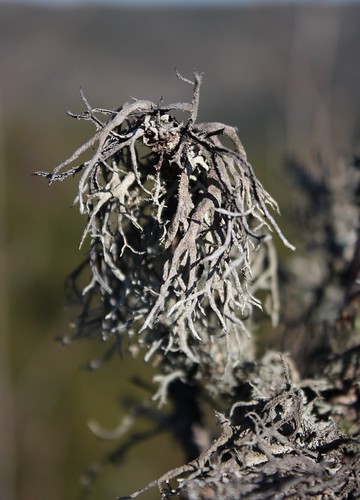
Evernia prunastri (Oakmoss lichen) (?), originally uploaded by OK Thomassen.

Labels: , ,

Tuesday, March 06, 2007

Industry Trends: The Future of Perfumery


Those of you who followed closely the recent developments of Cropwatch’s petition and actions to restrain IFRA’s threats on the use of natural materials in perfumery recently may have already read IFRA’s public statement of their support of synthetics and promoting them as the main (if not the only) means to add scent to our lives.

If you managed to delve thus far into these recent developments, you are probably now left wondering what is the future of perfumery and where is the industry going. As it stands now, I made a few observations and speculations and I can only hope that regardless of how the mainstream perfumery is going to smell like, you, who love perfumes, will be able to at least make your own choice about how to smell and what to put on your skin.

IFRA’s official position on synthetics and against natural is going to create a clear schism in the industry. Natural vs. Synthetic will no longer be a theoretical debate in books, on blogs and perfume forums. It will be real separation between the industry of perfumes made only of synthetics, and perfumes made only of natural. There will be no in-between as we observed last century, with classics such as Jicky, No. 5 and others. There will be a complete dichotomy in the industry. These classics will most likely be gradually reformulated to include only synthetic substitutes, and more likely – will be replaced by new perfumes that call for no naturally sourced building blocks in their formulation.

Despite the power of the big fragrance & flaovour corporations, and organizations such as IFRA which stands behind the aromachemicals industry and support its efforts to ban naturals and vanish them from the face of the earth, I would like to be optimistic and say that this will not happen. While those mega-corporations are all plastic-happy in an excitement that resembles the love for lino floors and plastic jewelry in the 50’s – a vast portion of the consumer world (and the most educated, I must add) is moving towards the use of natural and organic materials in their life, and is trying to stay away from artificial, man-made materials, genetically engineered and pesticide-sprayed foods.

And so, intelligent consumers will soon collaborate with niche perfumery houses that care to keep using natural aromatics, and together they will support growers and distillers of natural essences around the world so these traditional crops will be maintained and cared for, and those precious essences that have been friends to mankind since the birth of civilization will be nurtured and preserved.

While the large companies are producing more and more perfumes that are less and less satisfying as a whole – the consumers are left to take matter to their own hands. We’ve seen the growing demand for bespoke and custom perfumes, and this is only going to grow. After all, in a fragrance market that adds more than 500 fragrances each year (I heard that this year it will be even 700 or 800!), it may be a lot more convenient, time efficient and cost effective to commission a personal perfumer rather than spend the year trying three fragrances a day until you find the right one…

Furthermore, perfume consumers will lean more and more towards creating their own personalized scents and scenting their own body products. This concept has been quite popular for many years, but now it will make even more sense than ever. People have been mixing and matching perfumes for a long time, and many companies have been trying to cash on that and launch elaborate lines of incomplete perfumes for that purpose (sold, of course, for more than an average, “complete” perfume would), and encourage over spending on behalf of the customer. I think more and more people will now be curious to learn how to blend their own perfumes instead of relying on the pre-mixed, often under-satisfying concoctions of such lines.

Will the prices for naturals go higher? Will the decrease because of the lack of demand from the large fragrance houses? We are yet to see. I am not an economy expert, but this situation could lead to interesting developments in the industry and the marketplace that I find very difficult to predict. But I think either way, the result will be extreme and will make a mark that will be hardly forgotten in the history of perfume.

You are invited to partake in this discussion and tell us what you think will happen to perfume in the future. Is there any hope? Are we going to have a choice as consumers? Are perfumers becoming mere puppets of large money-driven corporations? Are we going to be able to afford quality perfumes with natural essences in the future? Are ntural essences going to become completely extinct? Tell us what you think, we will listen and publish your comments.

Labels: , , , ,

Friday, February 23, 2007

Must Read: Tony Burfield's Article on Basenotes

Don't miss Tony Burfield (Cropwatch's co-founder) article on Basenotes:
Tony Burfield speaks of the current events in the perfume industry regulation and how they affect consumers and perfumers. This article is extremely relevant and touches upon very important issues in the perfume industry today, as well as its future.
The article is supplemented by explanations to the various acronyms discussed in the article, provided by Anya McCoy (Artisan Natural Perfumers' Guild director). For more information about the issue, click on the FAQ on this page (scroll down to the bottom, and it will download as a PDF; if you have problems reading a PDF, feel free to contact me).

Labels: , , , , , , ,

Wednesday, February 07, 2007

IFRA vs. CROPWATCH Poll Results

The Poll results are positively in support of Cropwatch in regards to the 40th amendment. You can view the results here, on the Perfumer & Flavorist Magazine.
This is not good news yet - but it means the opening of a discussion on the topic in the industry (the magazine is the largest and most influential in the industry), possible changes to the 40th amendment in the future, which will hopefully to some changes in the regulation & legistlation in Europe.

Labels: , , , ,

Tuesday, January 23, 2007

Cropwatch Launches a Campaign to Boycott IFRA's 40th Amendment

As a response to IFRA's 40th Ammendment, Tony Burfield of Cropwatch is now leading a boycott and a petition. Click here to read a letter of IFRA as a response to Tony Burfield's letter. The first time in history that IFRA needs to defend itself.

I urge you to cast your vote for Cropwatch vs. IFRA in the poll run by Perfumer & Flavorist Magazine (it appears on the bottom left corner of the homepage). The results will be published in the February 7th issue of the magazine. Wouldn't it be fantastic if consumers will once and for all have an impact about these regulatory decisions instead of those being made for them?

It seems we have reached a point where taking action is in place.

More updates later, as the campaign proceeds, as well as more explanations about IFRA, the 40th amendment, saftey, and what it has to do with us - perfumers, perfume connoisseurs and consumers.

For now, here is a quote from Tony Burfield:
"The Pro-Synthetics Stance of the EU Cosmetics Sector.
The ongoing policy direction of the Cosmetics section of the EU Commission then, is effectively condemning EU cosmetic/fragrance consumers to a synthetic chemical future, via the progressive & continuous assaults, often on dubious toxicological grounds, on the freedom to use, formulate with, & to buy, products which contain natural aromatic ingredients. These regulations against natural ingredients are biting deeper & deeper, such that incoming new perfumers do not have the skills to create fragrances with natural materials any more, as they are only expert in synthetic (Corporate) perfumery.
Cropwatch believes the right for EU fragrance consumers to choose natural perfumes composed entirely of natural ingredients, is a basic human right, and this principle should be tested in law. The current demand for 100% natural perfumes - and now even a demand for 100% organic perfumes - is high in the EU marketplace. However perfumery companies cannot legally place many traditional natural perfume types on the marketplace (e.g. citrus colognes, fougeres etc.) because of existing regulations and red tape which work against formulation with natural ingredients. But fragrance consumers don’t want 100% synthetic perfumes – they have noticed that they smell unfinished, ‘chemical’ & disgusting - they want perfumes composed either of both natural & synthetic ingredients, or of 100% natural ingredients, and Cropwatch can’t see why EU fragrance consumers shouldn’t have them."

Another interest read: I also recommend you read this article.

Labels: , , , , ,