Sunday, April 21, 2019

Resurrection Incense

Myrrh Resin Enfleurage with Hyacinth Blossoms
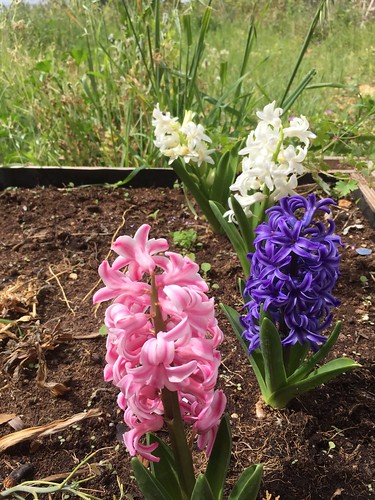
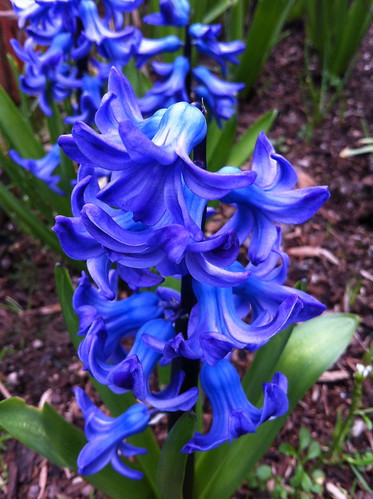
When the hyacinths were at their peak, I had enough flowers to make a dry enfleurage of Ethiopian Commiphora myrrha resin. Just as it seemed intuitively appropriate to pair the sunny brightness of frankincense with that of grapefruit blossoms, there was something about the contrast between the cave-like depth and catacomb-like mustiness of myrrh with the energy of a spring bulb flower. It smells like such a strong metaphor for spring's deep spiritual meaning rebirth, that is so strongly apparent in the natural world.

In winter, the bulbs are dormant in the ground. In spring they spring forth with a life force and push through the frozen earth towards the sun. Yet, I had an anterior motive for doing so. I made this very special incense as a spirit medicine for a young mother I know, who lost her baby only a few days after giving birth to her. The immense joy at the end of a difficult labour, the hope and happiness of becoming parents for just a few days all cut off so abruptly inspired me to create this incense medicine, as a reminder that even from the depth of myrrh's deathly grip one can emerge with a renewed life and bloom again like the hyacinth.

Happy Easter!

Labels: , , , , , , , ,

Thursday, March 21, 2019

Happy Norouz!

Persian Chickpea Shortbread & Hyacinths for Noruz

Happy Spring Equinox! Happy Norouz! Happy Purim Eve!

So many thanks to celebrate in one day... And as if that's not enough already, today is also the official 18th anniversary of Ayala Moriel Parfums.
As if to celebrate with us all this beauty, life and abundance - millions of butterflies were migrating yesterday through our skies,
Thank you for being my customers and readers for so many years, and supporting what I do. It means to me more than I can express to each and every one of you personally.
As a symbol to my gratitude, I am offering you an 18% discount with the code Chai18 when you order online. This offer will continue till the end of March.
Persian Chickpea Shortbread Cookies for Noruz
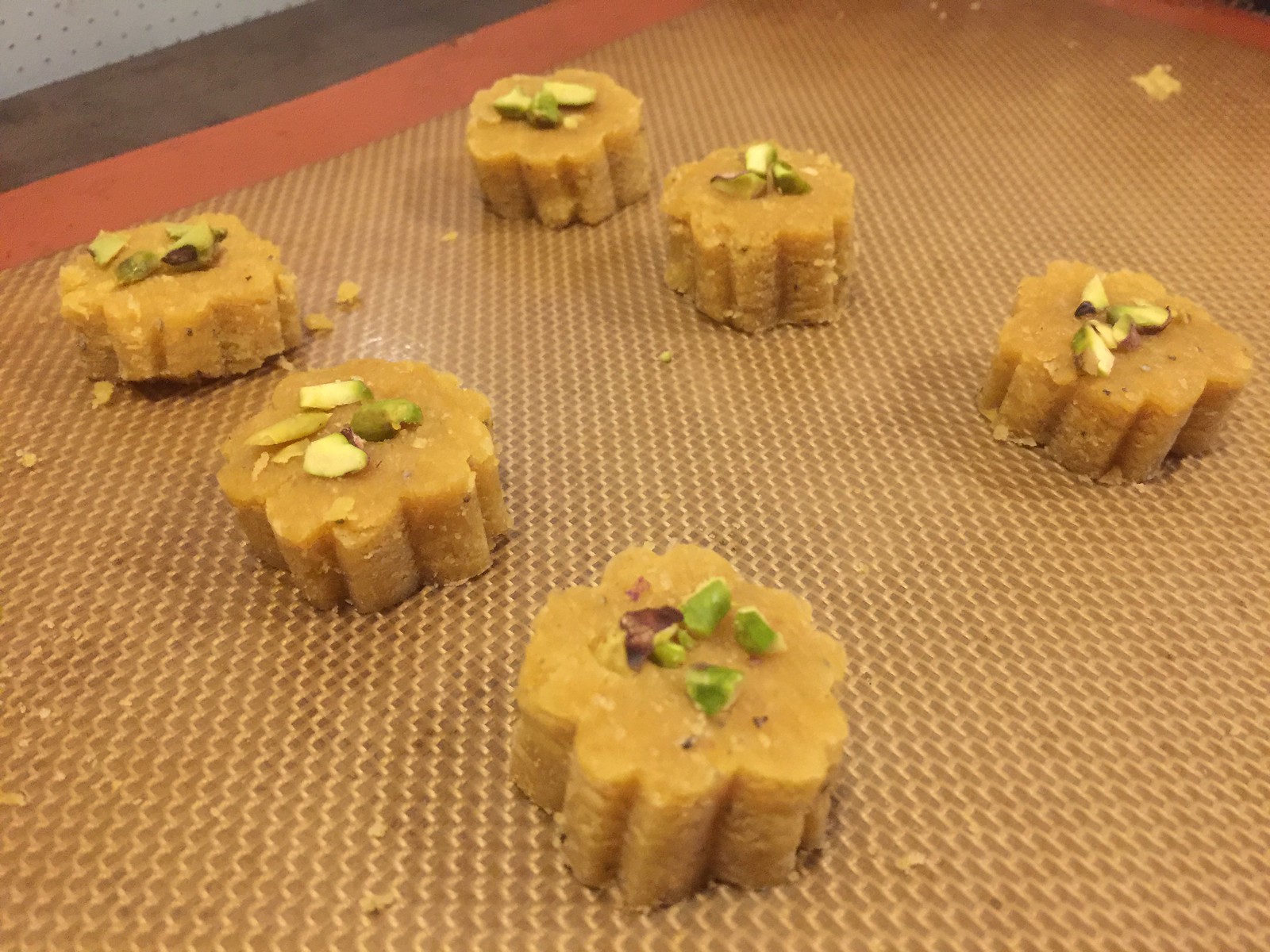
P.s. The above cookies are Nan-E Nokhochi (Persian chickpea shortbreads), which I am still looking for a good recipe for. Mine came out a little sticky but the flavour was amazing, with cardamom, pistachios and a splash of rosewater. They are gluten free and should be melt-in-your-mouth marvellous!


Labels: , , , , , , , , , , ,

Wednesday, March 21, 2018

Happy Vernal Equinox!

Happy Hyacinths
Happy Vernal Equinox! Happy Norooz (Persian New Year) to those of you celebrating!
On this first day of spring, when the light is beginning to grow stronger than the darkness, I pray for perseverance, strength of heart and healing for us all.

May we always have the power to discern between that which is healing and beneficial to us, and what may bring us malaise. May we be able to cleanse and purify ourselves, and shed the layers of darkness and confusion. Please ourselves from habits that hold us back and bring us pain and misery, and move forward with power and perseverance carrying actions and building habits that bring healing, light and love to our lives and to the world around us.

Burning sweet-smelling oud incense to invite sweetness into the beginning of another season...

Labels: , , , ,

Monday, February 26, 2018

Wild Hyacinth & Veronica

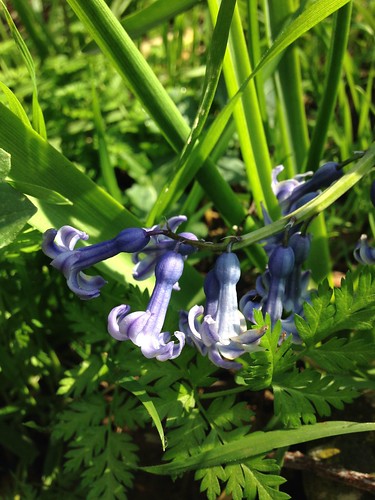
Wild Hyacinth (Hyacinthus orientalis)

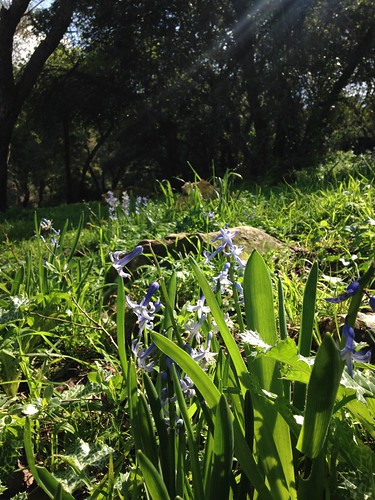
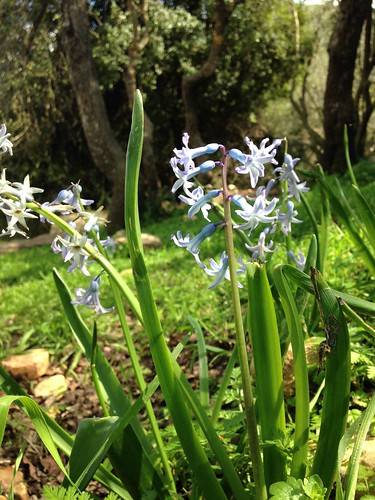
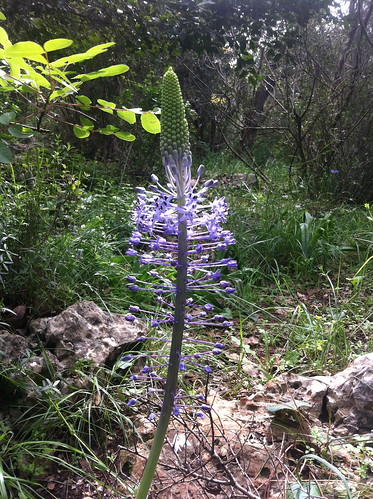
Clusters of wild hyacinths (Hyacinthus orientalis) greeted us when arriving at the foothill of Mt. Meron. And they kept accompanying us as we climbed up towards to peak (Elevation over 1,200m). This has easily became a favourite hiking trail, which is a satisfyingly challenging two hour round trip (not too long and not too short), and always full of flora and fauna delights. It's a unique mountain because it has many rare plants that don't grow anywhere else in Israel, for example wild peonies. Other plants maybe grow elsewhere but still attract floral pilgrimages that I compare to the Japanese tradition of flower viewing (I already told you about the Sternbergia).
Wild Hyacinth (Hyacinthus orientalis)
This time I came especially for the oriental hyacinth, the forefather of the cultivated grape hyacinths. I already wrote a little bit about wild hyacinths on this blog, but this is the first time I'm seeing them and smelling them in person. And I was not prepared for their smell at all. Cultivated hyacinths have a sharp green, heady, sweet perfume. Similar scent was observed at the bottom of the mountain - with the hyacinths having the typical green-sharp fragrance, a little sweet and white-wine-like, with forest-floor nuances and more than a sulphuric hint of green onion or chives. On the other hand, the hyacinths on the top of the mountain trail had a surprisingly tropical aroma, bringing to mind lilies and even suntan lotion (!).

Wild Hyacinth (Hyacinthus orientalis)
Several molecules were found responsible for hyacinth's character: 3,7 dimethyl-1,3(E),5(E)-octatriene-7-ol (AKA beta ocimene, which has a tropical, green, woody, vegetal scent) and (E)-cinnamic alcohol (which gives it the spicy, floral-green, powdery, balsamic and slightly fermented character), and ethyl 2-methoxybenzoate (AKA benzoic acid or ethyl ortho-anisate, which gives it the fruity-floral aroma, also present in grapes). It must be a different ratios of these molecules that created the difference in the aroma profiles in hyacinths in different location.

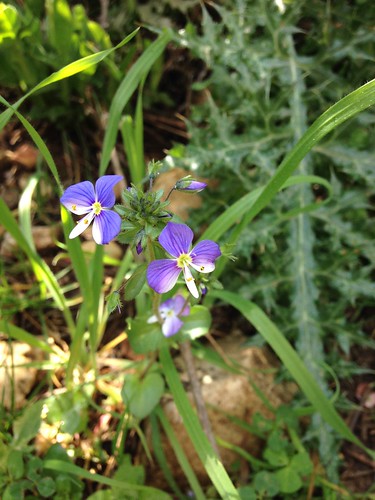
Veronica syriaca
Just a few steps from the first cluster of hyacinths on the trail, a meadow of Syrian Veronicas (Veronica syriaca) ignites the imagination, visually looking like a dream perfume pairing. They look a little like violets, with a striking line that separates their blue-purple top from the bottom white colouring. I didn't notice any special smell about them, because I was too preoccupied with their looks and taking pictures of them. They are so delicate and yet outstanding. It's interesting how on the foothill of this mountain, two plants of such different lore grow next to each other: Veronica is named after St. Veronica, who tended to Jesus on the cross giving him a handkerchief to wipe his brow; and Hyacinthus - a pretty Greek lad whose preference of the Sun God Apolo as a lover over the West Wind God  Zephyrus brought upon his untimely death. To avoid sending his body to Hades, the Underwold God, Apolo turned his blood into this lovely and fragrant blue flower.

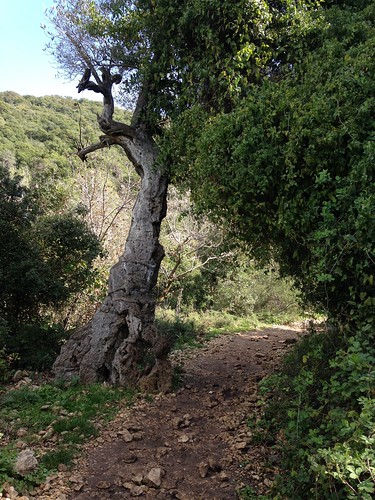
Cubist Olive Tree
Cubist looking ancient olive tree at the beginning of the trail.

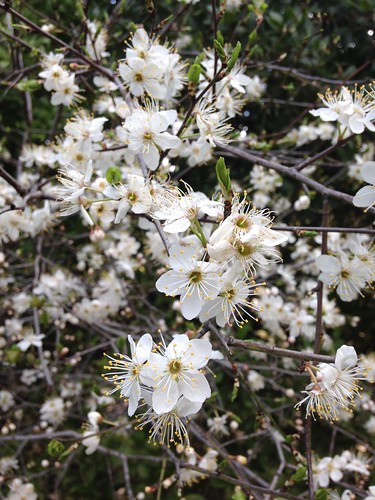
Bear's Plum (Prunus ursina)

And yet a few steps from there - a wild plum, called Bear's Plum (Prunus ursina), which smells very much like ume (Japanese sour plum), and will ripen sometime during the summer. There was a surprising number of wild plum trees dotting the mountain, which is simply an endless source of inspiration.

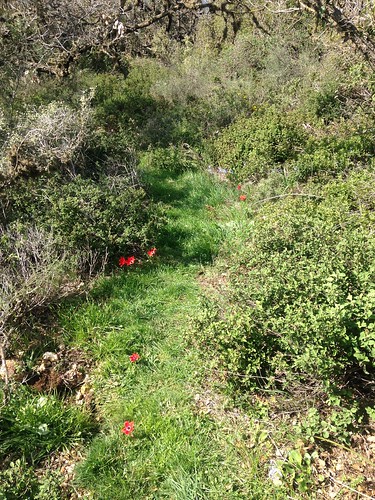
Wild Anemonies & Hyacinths Trail
A gorgeous trail of wild red anemones and blue hyacinths higher up the mountain. 

Labels: , , , , , , , , , , ,

Thursday, March 20, 2014

Vernal Equinox & Hyacinths

Wild Hyacinth by Ayala Moriel
Wild Hyacinth, a photo by Ayala Moriel on Flickr.
Happy Persian New Year!

Today is the vernal equinox, where the Persian New Year begins. Hyacinth is one of the symbols of this ancient holiday, and I’m excited to share a photograph of a related beautiful wild plant: the Hyacinth Squill (Scilla hyacinthoides). It may not be as fragrant as the grape hyacinth found on the altar of most Persian homes, but it is a strikingly beautiful flower to find in the wild, in the mountainous Mediterranean woods.

Sonbol (Farsi for Hyacinth) is one of the Haft Seen (7 S’s), and symbolizes fertility and continuation - and brings the blessings of life and beauty to the new year. Think about it: a bulb has been buried in the dirt since last year, survived the dry summer, storing its energy for the right timing. A flowering bulb is an act of faith in life and renewal; but also an act of madness. There is no guarantee that the hospitable conditions that triggered the blossom will continue long enough for it to come into seed. The creation of new life requires gambling one’s own life, in other words: risking death.

Life and death take different faces, shapes and forms as the cycle of seasons evolve. Winter might seem like a deep sleep (if not death itself) in the colder parts of the world, while summer is bursting and buzzing with life; while in the hotter and dryer countries, the harshness of the sun is lethal and only the rainy winter season will bring relief and encourage any growth... In the transitional seasons, it’s a balancing act between the two: life giving way to death in the autumn, as fruit rot and allow the pure essence (seed) to preserve itself. In springtime, the force of life is so strong it will push through anything - ice, frozen earth and even flood - in order to renew the cycle with the visual and fragrant botanical orgy also known as wild flowers.

The aroma of hyacinth is sadly not one that is easily found in natural perfumery. I’ve been fortunate to have had hyacinth absolute on my palette at some point; but those days are long gone. The absolute had a very different character than the fresh flower, as it was sweeter and deeper. But that’s no longer a surprising result for me in the world of extraction. I’ve used it in more formulations than I should have (Rainforest, Tamya, Song of Songs, Sagittarius), but was somehow able to recuperate once my supplies ran out.

Wild hyacinths can be found in the eastern Mediterreanean region (i.e.: Israel, Lebanon, Turkey). There are far fewer flowers on the wild plants, while the cultivated variety (aka “Grape hyacinth”) has very fleshy flowers, filled with water, and with an almost overbearing heady aroma that is both green, sharp yet balsamic-sweet and with fruity, full-bodied undertones. The fresh hyacinth flowers owe their scents to several odorants, including 3,7 dimethyl-1,3(E),5(E)-octatriene-7-ol and (E)-cinnamic alcohol and ethyl 2-methoxybenzoate.

Since the pioneer days of Vent Vert by Balmain (1947), the use of hyacinth note in perfumery was secured in green florals and green-aldehydic Chypres. It is therefore no surprise that hyacinths have been in vogue int he 1970’s, when this genre was at its peak. Notable perfumes with a hyacinth note include mostly these two genres, with the occasional heady white floral such as the original Chloe and Fracas:

Amazone (Hermes), AnaisAnais (Cacharel), Chamade (Guerlain), Cristalle Eau de Toilette, Deneuve (1986), Envy Gucci (1997), First Van Cleef & Arpels (1976), Fleur No. 1 (1000Flowers), Laura Ashley No. 1, No. 19 (Chanel), Ombre de Hyacinth (Tom Ford), Parfum d’Ida (Neil Morris), Pêche noir (Envoyage Perfumes), Private Collection (Estee Lauder), Safari (Ralph Lauren), Silences (Jacomo) and Wrappings (Clinique). Oltremare (Bois 1920) presents an unusual context for hyacinth, comprising of woodsy musks and tea-like nuances.

Labels: , , , , ,

Wednesday, March 20, 2013

Happy Spring Equinox!

Spring Equinox

Happy Spring Equinox, and Happy Persian New Year!
I've spent the last few days on the road, taking the train to Portland, where I stayed with the lovely Trish of ScentHive and her equally lovely family. It was an unusually dry and bright sunny day, and we strolled through the famous Rose Gardens which were only beginning to send red-green tender leaves, full of promise for happy summer.

Violets & Moss

Her neighborhood is filed with gardens, which are at least one month ahead of Vancouver's spring weather: the daffodils were in full bloom and there were gorgeous sweet violets (which I can't even find in a nursery in Vancouver, and don't bloom till the summer if anyone is even growing them!).

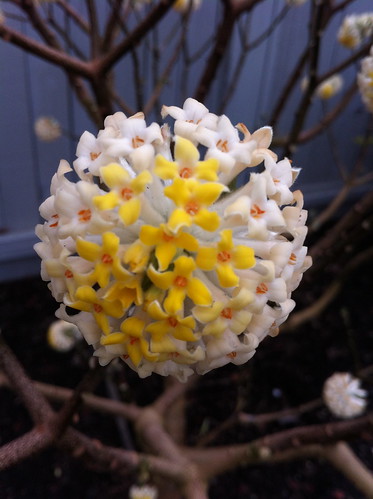
And I even met a new flower - Edgeworthia chrysantha, related to daphne, and beautifully scented to boot. Its delicate scent filled the damp and ever so slightly warmer spring air, with a delicate, clean floral scent, with hints of citrus overtones and clean-woody undertones.

Edgeworthia chrysantha

And then of course there was a classic Portland garden moment like this:
Mad Tea Party

And a street corner like that - which pretty much sums up the culture of Portlandia - wooden ATM booth, food trucks, wacky architecture in the background, and across from it were two very rad stores - one for making your own terrariums, and another that is stuffed with glowing gnomes of all sizes, Easter eggs, Day of the Dead skeletons, and just blatantly mismatched paraphernalia of all ends of the spectrum from hideous to Disney-kitsch.

Quintessential Portland Street Corner

And now I'm in Berkeley, preparing for an afternoon tea for all the perfumers in the area, and those attending the 2nd annual Artisan Fragrance Salon. It is hosted at Alembique - and up and coming boutique for the art of perfumery, just off the beaten tracks near Gourmet Ghetto. Miss T is here to help and just overall keep the morale up for this rather ambitious operation (i.e.: hosting a tea party a day before a big show, and all very far away from home!). We are soaking up the Bay goodness (although so far we've mostly seem to have broken the drought in the area and began our stay with 2 days of rain!).

Labels: , , , , , , ,

Sunday, April 29, 2007

Chamade


I Surrender, originally uploaded by Ana Santos.


Chamade. A perfume like no other. Green. Fruity. Floral. Aldehydic. Mossy. Balsamic.
When I first read about it in the Guerlain pamphlet I received at The Bay, I did not expect to like it at all because it was described as an aldehydic floral. But to sum it up as belonging to one category or another would be missing the whole point: Chamade is Chamade. You must enjoy it for what it is rather than attempt to classify and categorize it. This would be likened to locking a beautiful songbird in a cage, or a free spirited woman in a house and tell her what to wear, eat or do. If you love Chamade you should know better than that!

Yet, the magic of Chamade is not so much in the fact that it is so versatile, but rather, in the unusual assembly of notes that are so different, yet harmonize perfectly with one another. Notes that seemingly contradict each other so much you wouldn’t think they’ll get along at all: the briskness of galbanum and the caramely sweetness of vanilla; the fruitiness of black currant buds and the acrid oakmoss; Not to mention the florals and aldehydes in between which on the paper create an unresolved olfactory mess.

Yet in the Cupid’s arrow-stricken reversed heart bottle, these elements form a balanced tension that leads from the briskness of galbanum and fruity sharpness of cassis to an oily-urinal aldehydes combines with the above mentioned berries. Creamy and hot, pulsating floral notes of ylang ylang mingle with the powdery, green yet sweet hyacinth creating an impression of a flower warmed in a sunny spring garden. And this all leads to a base that is first mossy, slightly acrid-bitter-dry-woody of sandalwood and oakmoss. Hourse later, the magical vanilla that only the dynasty of Guerlain could use so appropriately without making it seem banal or overdone. The same vanilla of Shalimar parfum – dark, resinous-sweet and sexy in the most intimate, close-to-the-skin tastefulness of the classic parfum extrait of this house.

I’ve been fortunate to wear Chamade in a few concentrations and vintages: vintage EDT from the generous Char (I won a contest, can you believe it?), a Parfum Extrait from eBay, in a pristine 30ml sealed bottle; and of course, a brand new EDT, which is delicious and quite true to the original I think (though this will probably change any minute because of the strict oakmoss regulations in the EU and by IFRA). The new Chamade of course smells fresher, and the top notes are more apparent. It shows its vanillic face faster than the vintage I would say. Yet I can still feel the same Chamadeness beating in there. The vintage EDT is fantastic, the top notes are less pronounced, but you can still feel them, and overall the perfume feels much softer, rounder, and goes form phase to phase seamlessly. The powderiness of the aldehydes and ylang ylang is more pronounced, and there is also a bit of a note that I can only liken to the Mousse de Saxe of Caron, or otherwise to Peru Balsam essential oil (rather than the balsam itself). The parfum extrait is a completely different story altogether. It has such pronounced notes of rose and jasmine (and wow! what a jasmine!) that is barely resembles what I learned to know as Chamade from the other two versions. There is some of the galbanum though, but hardly any cassis (if at all) or ylang ylang at first. Which makes me think, it was probably reformulated after all, though I will not be able to give you any dates. The reformulation primarily seems to be downplaying the rose and jasmine to insusceptible quantities and replacing them mostly by the more cost-effective ylang ylang (probably from Guerlain's own plantations; I wonder in which year they got these...).


Top notes: Galbanum, Black Currant Buds, Aldehydes

Heart notes: Ylang Ylang, Hyacinth

Base notes: Oakmoss, Vanilla, Sandalwood


A few words about the timing for this perfume: designed by Jean-Paul Guerlain, the last in the line of the Guerlain heritage of exemplary high-class perfumery (which lasted for almost two decades and was brutally interrupted only in recent years by globalization and greed). The timeless beauty of Chamade only got to show you that Jean-Paul did not lack inspiration before LVMH got into the picture (rather, stole the picture) and perhaps than it was finances that designed the fragrances more than its own talented nose. Chamade was launched in 1969, marking the beginning of the 70's, which in the perfume world was significantly characterized by the emergance of soapy and green compositions, such as No. 19, Private Collection, Silences, Ivoire, Diorella, and very much influenced AnaisAnais which launched almost a decade later, as well as the much later excellent celebrity perfume Deneuve by Catherine Deneuve.

Labels: , , , , , , , , , , , ,