Sunday, December 08, 2019

Weaving Incense

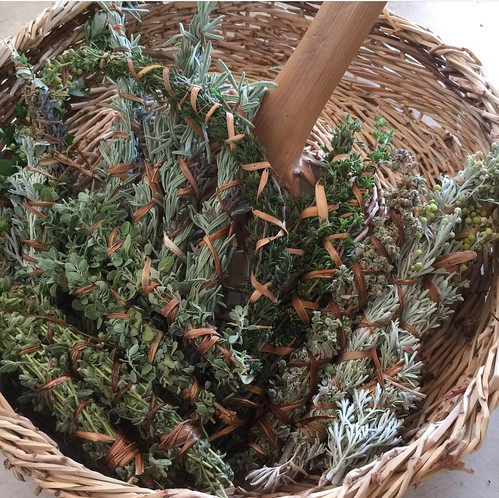
Incense Wands Harvest, August 12th, 2019
What happens when my passion for incense and weaving come together? Smudge wands!

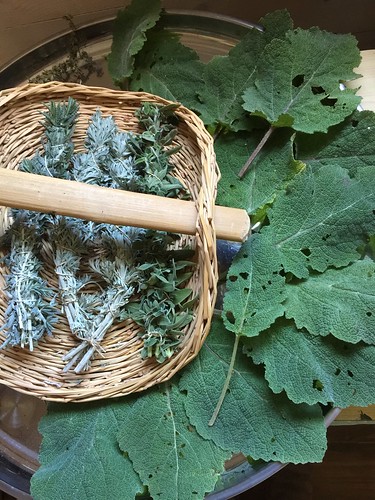
This summer I've started preparing incense wands from the many medicinal herbs from my garden on the mountain, bound with botanical fibres from magical leaves. I've prepared several types from practically all the aromatic medicinal plants I grow. Each is bound with a long leaf that resonates with its properties, and creates a more sustainable wand than you'd get from binding them with cotton, for example (cotton takes up a lot of water to grow, and is mostly grown in desert-like areas where water is very much needed, such as Israel and Egypt). 

There is a reason for preparing these wands from local plants, rather than using the traditional First Nations plants such as sagebrush, cedar leaves or white sage. It actually aligns much more authentically with the First Nation philosophy of using the local plants that are available to us in our environs. These are the medicine we need for this time and place. Here are a few words about the smudging properties of each:

Biblical Hyssop AKA Za'atar (Origanum Syriacum)
The most incredible cleansing medicinal herb we have around. Ezov (the Hebrew name for the plant) was mentioned in the bible as a cleansing and protective herb more than once.  When burnt it produces an incredibly clean aroma and balanced that is one of the most pleasant-smelling smudging I've experienced. It is clean burning also because it burns thoroughly. You will actually need to put this out if you don't want the whole wand to go on fire in one sitting. 
Three-Lobed Sage (Salvia fruticosa) 
The local variety of sage burns like many sages - with a lot of smoke and an earthy, somewhat pungent smoke. It is definitely the answer for whenever white sage (Salvia apiana) is called for. Although the scent is less delicate than za'atar, it is invaluable for whenever a space needs to be cleared and protected, and also provide grounding for the people in its presence. 
Sharp Varthemia (Chiliadenus iphionoides)
Resinous and earthy, sharp varthemia is an incense on and of its own. Musky, earthy, ambery-sweet, and, well, incense-like! It is a medicine for the heart, both literally and metaphorically. Use it as a soothing balm in that sense.  
Satureja
Similar aromatic and healing properties to Za'atar, but sharper and earthier. Satureja also contains large amounts of thymol, and is an anti-fungal and anti-microbial herb. It also burns a little slower than za'atar.
Rosemary 
Creates a reassuring, warm-herbaceous and slightly animal note when burnt. Rosemary is known as a powerful aid for memory and a clarity of mind. Its lesser known property is assisting in dealing with painful emotions from the past, and supporting the process of embodiment, which is key in healing traumas associated with the body or emotional trauma that has gotten stuck in the body.

Marjoram (Origanum marjorana)
Also cleaning and clean-smelling, in the same genus as the common oregano and the za'atar (Biblical Hyssop), but also shares properties with that of tea tree of all things. It is simultaneously a fungicidal, anti-microbial and anti-viral. The scent is a bit more floral than tea tree, and also goes well with lavender (so you could burn the two simultaneously). 
Lavender
More refined and floral than the other herbs. Lavender has a clean, woody-floral aroma that transfers surprisingly well even into this primitive form of incense burning. Clears the mind and spirit and creates a calm, peaceful space.  
Wormwood (Artemisia arborescense)
Very pungent and produces a lot of smoke. This is the local answer to sagebrush, and just as potent. Use it mostly outdoors and it is extremely smokey (wormwood branches have a long history of use for firewood in the Mediterranean region), and when you need to ward off extremely unpleasant or aggressive energies.  
Mugwort (Artemisia vulgaris)
Also known as Motherwort, mugwort (Artemisia vulgarisms) is related to wormwood but is much milder and less smoky and pungent. Strongly associated with the moon and with feminine energies. 


Labels: , , , , , , , ,

Monday, February 04, 2019

Four Sages Incense Cones

Clary Sage & Incense Wands
An order that came in for my Four Sages incense cones prompted me to make more. I only had a few left which I made with my dedicated student cum friend Jenny Amber. She is the one who gifted me with much missed aromatics from BC (Sagebrush, Coastal Mugwort, Redcedar Leaf, and more). This incense blend feels very special to me as it combines sages of both the West Coast and the Western Galilee - the two regions that I call home.

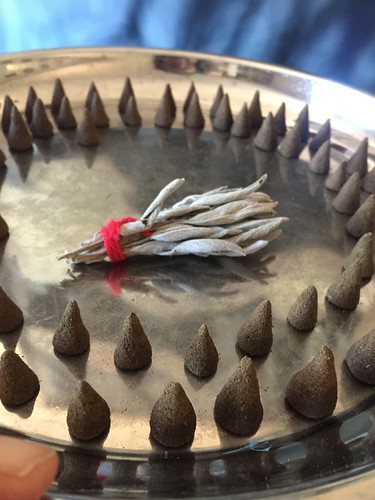
I was a bit unwell when the order came in so had to wait till I felt better. And even then I felt like I needed a little energy boost - rolling incense cones is labour intense and sometimes it is much more enjoyable in good company. So I summoned my brother Yotam to the task. We sat on the eastern deck this morning, enjoyed the gentle yet warm, wintery morning sunrays, listened to his choice of Ceremonial music and rolled the cones you see in the picture below.
Four Sages Incense Cones & Smudge Bundle
These are potent cones, small yet pack a punch and seem to clear any negative energy within minutes.  They contain Coastal Mugworth, White Sage (Sagebrush), which are both types of artemisia, a pinch of wormwood and clary sage from my garden, and of course - three-lobed sage that is the iconic scent of the Galilee.
The cones are now available and in stock again and you can order however many you wish via the online boutique.

Labels: , , , , , , , , , ,

Wednesday, September 03, 2014

The Modern Sage: A Case Study


Sampling Wood Sage & Sea Salt this weekend instantly reminded me of Fig Leaf & Sage. The new limited edition offering from Jo Malone inspired me to bring up the topic of sage: an herb that is near and dear to my heart. Growing up with it, it has been used in my household to treat any ailment you can imagine - from sore throat and upset stomach to mouthwashing and hair-rinsing. Therefore, I never cared for it so much as an herbal tea - it has too strong of a medicinal association for me in that format.

Another story altogether is safe as fresh or dried leaves in the wild, as well as its uses in cookery (sage leaves in butter, anyone?), or even baked goods (sage & blackberry thumbprint cookies are now a family tradition). I remember the first time when I had sage inside a pasta sauce. It was at a wedding of one of my mom's cousins, who owned a catering company at the time. Her brother asked me what I thought about it, and I was kinda cynical... It's just like the herbs on our mountains", I said. "We drink it all the time". I did not enjoy it at the time, but years later, sage has become a staple herb in my kitchen, both dried and fresh, to give more depth to simple roasted vegetables (butternut squash, potatoes) or pasta sauces. It just takes those dishes to the next level... Personally, I find the whole leaf is a little more complex and intriguing, and somehow bypasses the medicinal association.

Ditto for its use in perfumery. It is one of my favourite accessory notes, actually. Thank God my mom's herbal medicine practices didn't ruin it for me completely... Sage is an integral part of some of the perfumes I'm most proud of, especially from the Chypre family: Ayalitta, Autumn. I also fell in love quite late with Clary Sage (but that's another story). When done correctly and artfully, what sage does to a perfume is something that's inexplicable. It normally does not really smell like sage at all - but rather creates a full-bodied smudging effect, akin to smearing your fingers forcefully over a thick line of pastel crayons. It has a bold presence, but it does not really come across as an attention seeker. Rather, brings out the brave voices of otherwise demure notes such as jasmine, rose or amber.

Now, there are several types of sage, but the one discussed here is the common sage, Salvia officinalis. It grows wild in the Mediterranean region, and has a very warm, earthy, herbaceous scent. According to Julia Lawless' Encyclopedia of Essential Oils, the principal constituents are thujone (about 42%), cineol, borneol, caryophyllene and other terpenes. Borneol is an alcohol that gives it a camphoreous character, and cineol is another alcohol, characteristics of eucalyptus and rosemary - camphoreous but also a little warm or even spicy if you will.

Thujone, on the other hand, is a ketone and a monoterpene, and its scent is well known as white cedar, yellow cedar or arborvitae (Thuja occidentalis), and is native to the northeastern parts of Canada and the USA. It is not a true cedar, but actually belongs to the cypress family (Cupressaceae). in wormwood (especially in Artemisia absinthium), and also in juniper, mugwort, tansy and oregano.  Thujone is controversial in aromatherapy and liquor preparations: It is a GABA receptor inhibitor (or antagonist). It can cause side effects such as anxiety and insomnia. In high doses, it's toxic to the brain, liver and kidney, and can causes convulsion, and can even be lethal. The are liquor regulations in Europe and North America that control the level of thujone in liquors such as Absinthe.  However, when used cautiously and in moderation (for example: as an herbal tea, or in very low dilutions within an essential oil such as common sage), it can help strengthen the immune system, and help in situations such as colds and viral infections.

Now, the reason I discussed thujone so much here, is because in the three modern sage-centred fragrances I am testing today, what I'm really smelling is thujone, not so much sage. Thujone has simultaneously a fruity but also a strong and quite sickening woody-coniferous smell on its own. And indeed, sage has that effect of creating an illusion of fruitiness in a perfume, as you shall see. 

Fig Leaf & Sage by Kiehl's is an original yet approachable, marketed as a non-committal cross between a scented ancillary product (body spray) and perfume. Fig Leaf & Sage is simultaneously fruity yet not exactly sweet, with an herbaceous-dry sage notes and a certain tart, almost green undertones reminiscent of green figs (perhaps not quite ripe yet). It's certainly a duet, at least for the first hour or so of wearing - tilting between green figs and sage like an airplane that hasn't decided yet where to land. I find this to be quite an unusual fragrance; but I also find the drydown to be way too musky and synthetically ambery scent to my taste. Nevertheless, I keep coming back to it, so I won't be surprised if a small sized bottle will end up joining my ever growing collection of fragrant marvels...

Wood Sage & Sea Salt Cologne by Jo Malone smelled at first just like how I remembered Fig Leaf & Sage. Must be the thujone. It really comes across strongly at first. As expected from this brand, it's a lot more tame, and also a lot more transparent. And also about 5 times the price. It last only a couple of hours on the skin (and not much longer on the scent strip). At first, there is a burst of musky, fruity sage-ness; but paired with very light citrus notes. And marine notes. And also a reminiscence of their Black Pomegranate - kinda fruity, dark yet transparent woody-leathery note that is I suspect the modern answer to isobutyl quinoline, and a rather insipid answer I'm afraid - lacking the depth and intrigue of the former, and leaving you high and dry with a flat, sterile smoky-wood finish. While sweet at first, it dries down rapidly, if I may emphasize my point. And there is a coconutty, yet also fake marine-like quality in there that is not appealing at all to me (though much more pleasant and creamier in the matching body cream).

Lemongrass Sage Hand & Nail Cream is not a perfume per se, but it's the scent of this product that I like, and the first one of this type of "sage" scent that I came across (while killing time for a connection at SEATAC airport). Again, the thujone is more dominant than it is in actual sage oil. And it's slightly fruit-like ketone quality added a lot to the lemongrass - an oil that often smells dull, as it is too commonly distilled from the dried leaves instead of the fresh ones (and sometimes not the freshest quality either).

Labels: , , , , , , ,

Thursday, March 28, 2013

Lost In California

In California by Ayala Moriel
In California, a photo by Ayala Moriel on Flickr.
The best part of traveling is getting lost.
It's the street corner I never intended turn into, the subway I boarded in the wrong direction (easy to fix, but still...), the dangerous neighborhood you somehow managed to get out of safely, the cafe that nobody ever talks about in any travel guide, and might not even be worth mentioning - but was just the right place to sit at after walking an extra hour on those sore feet... And then there is the perfume shop tucked away behind a flower market that you must only visit on Sunday...
Tilden Regional Park Botanic Garden
I had two days for playing tourist in San Francisco, and most of them I actually spent in Berkeley because of a couple of injuries I had to be careful about. The first day was still raining and misty and cool (Wednesday, March 20th), we took the ferry from Jack London Square to the Ferry Building, got our fill of cutesy pastry shops, hopped on a cable car (so we don't need to walk, aforementioned injuries still in effect), and ended up at the wrong side of Powell street (wrong being needing to go downhill). Taking a cab for 5 blocks down Powell, I finally but sought refuge from the pain at Barney's, where I spotted a couple of favourite new perfumes (I'll tell you about them later). It might have not have been fun at the time, but I'm already remembering it fondly. We toughed it out, and survived.
Cactus
The second day (being Thursday, March 21st), the sun finally showed her lovely face on Northern California again, and I decided to be adventurous again and go to the UC Berkeley Botanical Gardens, which I tremendously enjoyed in my last visit to the Bay area. Information about how to get there by public transit is nearly non-existent. But for the record: you should take the Bear Bus, a black vehicle that serves the inter-campus transportation within UC Berkeley. There are clear signs for the bus stops where it does stop; but you actually have to wave it down. Of course, I did not know that at the time, and let a Bear Bus slip by. So I hopped on the No. 65 (from the corner University & Oxford), the line that was promised to be stopping "very close" to the botanical gardens. Somehow the route did not look right. But what else is new with public transit? They are known for their roundabout. I got off where I was told I should, and a lovely lady gave me directions. I was puzzled at how completely different the place was than what I thought I was visiting. Turns out I was heading to the Tilden Regional Park Botanic Gardens, which are "much better", as the lady assured me, "they are free". OK, I thought to myself - this could go either way.
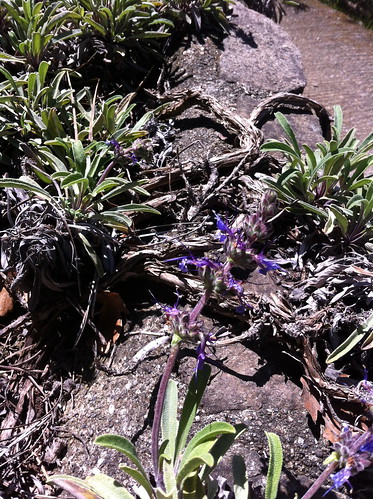
Sonoma Sage  
Sonoma Sage

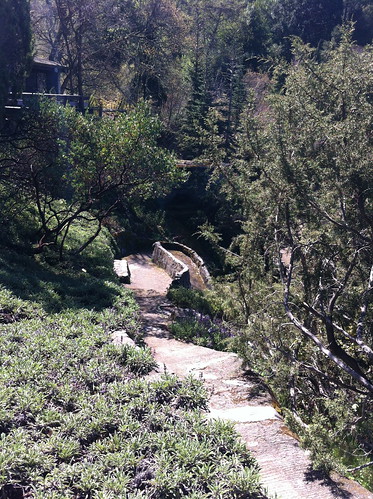
I walked on following her instructions to the best of my ability. There was no sign in sight for the Botanical Gardens or any gardens for that matter. I avoided the gold course, as per her instructions - only to find myself walking slowly up a hill alongside the very same gold course I was instructed to avoid. After about 20 minutes of walking, and no gardens in sight except for the gold-course fenced-up green, I've decided to stop a car for directions. And we got a lift right to the gate of the gardens from a young gentleman who was driving that way anyway. Upon entering the garden (a vague point in space, when there are no gates or admission) I immediately thought to myself - no surprise this is free. It's just a bunch of native Californian plants growing about, with some plaques stuck every now and then to indicate their botanical names.
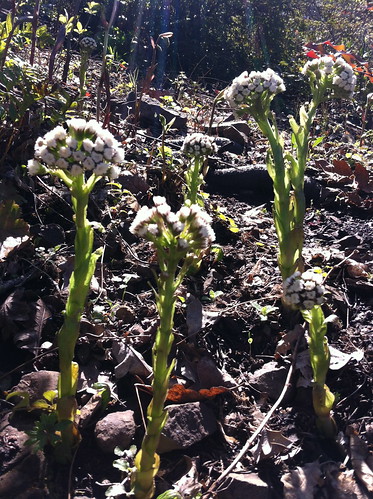
Tilden Regional Park Botanic Gardens
Well, that was just the tourist way of looking at that. If you love plants, and especially if you are a perfumer - every garden is a little piece of heaven. This particular one happened to be a perfumer's heaven. A very rustic perfumer, to be exact.

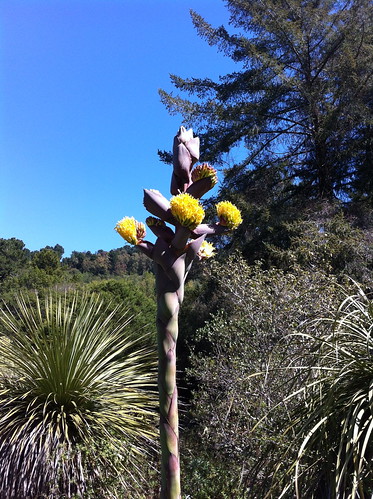
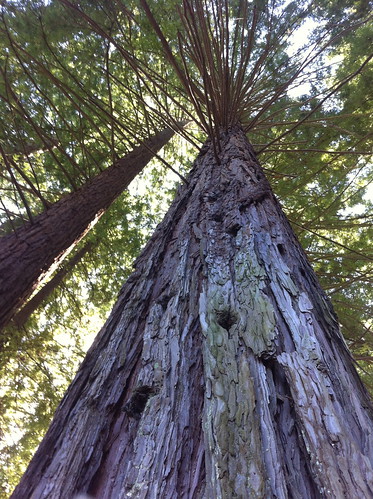
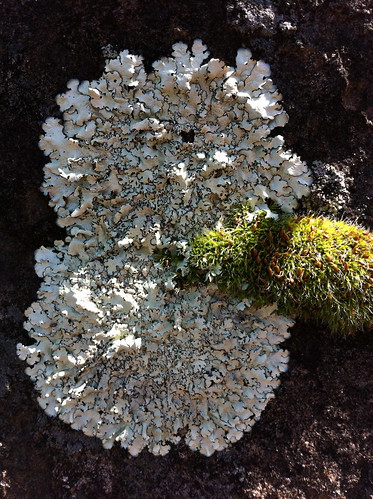
The air was filled with the scent of aromatic plants warmed by the sun - sage (aka artemisia) of all shapes, sizes and kinds. Cacti in full bloom, towering over the sun-warmed lichen-covered rocks. Sweet scent of pollen and the vegetal, surprisingly barely evergreen at all scent of redwood needles. And the opportunity at every corner to just bask in the sun. What more can a tourist ask for?

Redwood Height
Redwoods
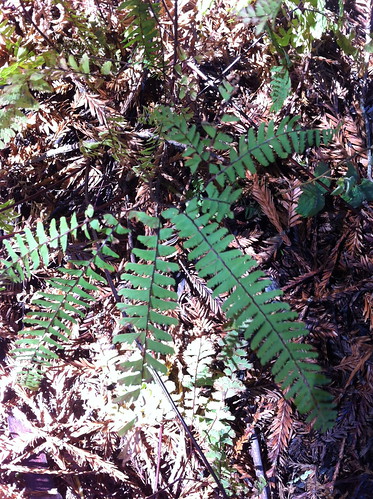
Five Fingered Fern
Five Fingered Fern
Lichen

Tilden Regional Park Botanic Gardens

Labels: , , , , , , , ,

Sunday, November 06, 2011

Butternut Squash & Sage Scones

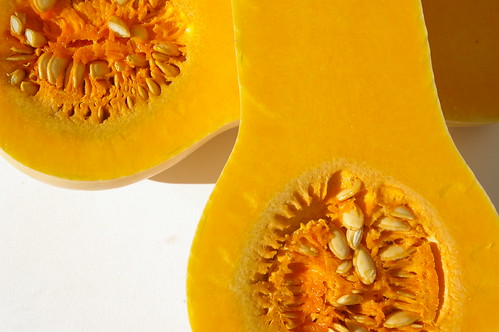
I'm a sucker for pumpkins. If it wasn't for their humungous size, and my inability to store them properly after slashing them open, I would be making something with pumpkin every week. That's why I love butternut squashes so much: they are usually small enough that I can easily use them up even in my small household of two. In addition, they have less water content, more flavour, and a creamy texture that makes them versatile for both savoury and sweet dishes and pastries. The following recipe is adapted from The Joy of Baking pumpkin scones recipe (which is really good as well!).

Ingredients:
2 cups all purpose flour

1/3 cup cornmeal (fine, not grits!)

2 Tbs light brown sugar

1/2 Tbs sage leaves, dried and rubbed (or 1 Tbs or fresh, chopped sage leaves)

1/4 tsp ground dry ginger

1/8 tsp Nutmeg, grated

1/4 tsp Allspice, ground

1 teaspoon baking powder

1/2 teaspoon baking soda

1/4 teaspoon salt

1/2 cup (113 grams) cold unsalted butter, cut into pieces

1/3 - 1/2 cup (80 - 120 ml) buttermilk

1/2 cup (120 ml) cooked and pureed butternut squash

1 teaspoon pure vanilla extract

Egg Wash:

1 large egg

1 tablespoon milk or cream

How to:
- Preheat oven to 400F (200 C)

- Blend dry ingredients together

- Cut butter into dry ingredients

- Whisk the eggs and mix with the butternut squash and buttermilk

- Add to the dry ingredients and stir

- Knead briefly, just to form a soft, pliable dough. It should be soft but not too sticky (add flour if necessary)

- On a lightly floured surface, pat down or toll to about 4cm thick. Cut with a medium sized cookie cutter. It helps to dip the cookie cutter in flour in between scone-shaping.

- Place the cut out scones on a baking sheet lined with parchment paper or a Silpat sheet.

- Brush with egg and milk mixture. Sprinkle with allspice, some sugar and a hint of nutmeg.

- Bake for 20 minutes, or until golden brown and a toothpick insterted in the middle comes out clean.

These scones are quite versatile in how they can be enjoyed - if you want them for an afternoon tea with other sweets, serve with Devonshire cream and a peach or apricot jam, orange marmalade or light honey.

For dinner or lunchtime, they make an excellent accompaniment for a hearty soup; or as a snack of their own with a slice of sharp cheese.

Labels: , , , ,

Monday, October 25, 2010

Garrigue


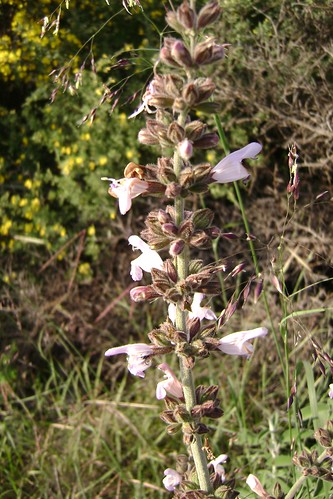
Flowering Sage, originally uploaded by Ayala Moriel.

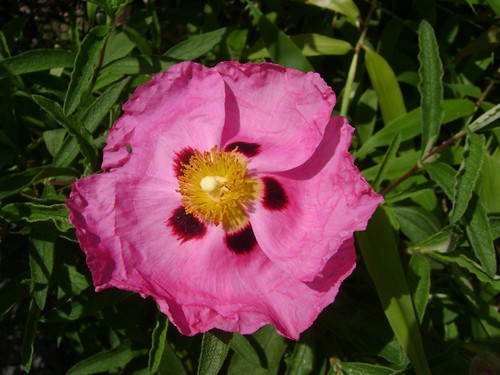
Climbing up the mountain called "Abaya" fills your lungs with clean, dry air that is redolent of oak leaves, arbutus berries, and the stronger and more prominent presence of sage, labdanum and hyssop bushes that rub against your legs with every step. In different seasons, the intensity of those odours varies. In the winter, the musty and refreshing scent of wet soil and newly wild weeds make the air feel clean and pure. Rockroses usually bloom in the winter, but their scent is nothing to write home about (there was none last time I checked).

In the spring, the sage blooms, as well as thorny bushes from the broom family, that fill the air with an intoxicating yellow aroma of wild flowers and honey. This makes for quite an intoxicating hike up the mountain trails and possibly induce a headache or a trail of sneezing: the air is over-saturated with yellow pollen (you can see these in the blurry background of the blooming sage photo above).


Rockrose Pink, originally uploaded by Ayala Moriel.

By the time spring is over, the weeds and grasses are promptly dried up into a muted-coloured straw, and the sun becomes so strong it overheats the ground and the grass, releasing a scent that you would't think could be there. Even the rocks have a scent and it rises up to the air and radiates heat and a spicy warmth. This aroma lingers till fall time, because even though it's still positively sunny - the sun is just a tad more gentle and graceful. The aroma of sun-baked flint and sediment rocks, some covered in dead moss, and of wild herbs (hyssop, sage, thyme and white mint) that set roots in the rocks cavities or grow with less restraint in the small meadows of the mountaintops - they steep into the air like tea...


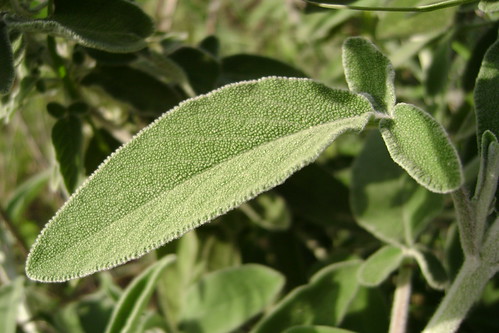
Sage Leaf, originally uploaded by Ayala Moriel.

This is just an experience you associate with the mountains and hills of the Mediterranean, but does not have a name in our language whatsoever. But as it turns out, there is a name for it in French (this language is particularly descriptive and precise when it comes to the senses). And so, the 6th part of our Aromas of Autumn Series is dedicated to Garrigue, a term that is new to me. I became aware of it thanks to one of my customers and SmellyBlog readers known as odysseusm.


Zaatar, originally uploaded by Ayala Moriel.

In our region, we eat, drink and breathe garrigue... For example: the za'atar bread is a flat bread similar to pita or cheese-less pizza, that is covered with a mixture of wild hyssop, thyme, sesame and sumac mixed in olive oil.

Garrigue is resinous, warm, earthy spicy aroma, herbaceous in part, and I suspect greatly impacted by the presence of cistus or rockrose on the mountains. Garrigue perfumes are those who got a prominent cistus and herbal presence - such as Song of Songs, Ayalitta and Autumn. The latter two are Chypres and both with sage. The first one is an oriental, but with so much labdanum that once applied to the skin, and especially the anointing body oil - makes my entire being smell of sunbaked mountainous rocks and roses.

Garrigue wines are redolent of baked earth and warm herbs and are full-bodied and aromatic. So it is only fitting that the winery in my village is called Abaya Winery. Winemaker and founder Yossi Yodfat explained garrigue to me as "a combination of thyme, sage, "kida" (these are the broom-related bushes mentioned earlier), "ela" (mastic), and some difrent kinds of grass. The scent changes with the season, and its more green and fresh in the winter, more herbal in the spring, and more dry, and sharp (like dry grass) in the summer".

Copyright Yossi Yodfat/Abaya Winery

Abaya Winery uses only grapes grown in the region and are suitable for the drought conditions, warmer and shorter winters, lower elevation and close priximity to the sea. They use grapes such as Sirra and Carignan. Yossi himself is a lighting designer and involved in the art community. So the space, built just next to a Medieval fortress (Mivtzar Yechiam) is used beyond winery functions - it is also an art and culture centre, and they promote emerging artists. For example: a young visual artist, Noam Dehan was commissioned to design the wine labels. Each vintage has a new set of labels.

Copyright Yossi Yodfat/Abaya Winery

Abaya's wines are red, strong and full of character. Moon-A 2008 is squeezed from Sirra, Cabarnet Sovignon and Petit Verdot grapes, aged 12 months in French oak barrels to produce a soft body, balanced acidity, and pronounced yet not overpowering woody presence and an even diffusion on the palate.

Le Rouge 2008 is made from Cabarnet Sovignon, Carignan and Petit Verdot grapes, and is also aged for 12 months in French oak barrels. This wine has a burgundy colour, a stable body, high but not exaggerated acidity, and a non-overpowering woodsiness. It is an elegant wine that is very suitable for accompanying meals.

Midsummer's Eve 2007 combines Carignan and Sirra grapes with a little bit of Cabarnet Sovignon. "It reminds me that summer scent of dry grass and summer fruits", Yossi explains how he picked the name for this limited edition wine (there are just a few bottles left). It's a massive, thick wine with deep, nearly opaque burgundy hue. It has the sweet aroma of ripe fruit, roasted coffee and earth. Rich and with a hint of spicy clove. It is warming like a midsummer's eve.

Copyright Yossi Yodfat/Abaya Winery

Labels: , , , , ,

Wednesday, March 04, 2009

Lady in the Dark

Spotlight on Wild Sage - Image by Jane Siet © All Rights Reserved (published here with photographer's permission) jane.siet on Flickr

Oeillet takes me to times when taking a bath by the candle light was not a luxury but a necessity. Once a week, the “Geyser” was turned on to full-blast to heat up enough water for the entire family of 7 (this is not the natural phenomenon, but the name of an archaic gasoline-operated boiler that had such a tall chimney it looked like a rocket ship). One after the other, we went into the tub tired and dirty (the week was long but Friday seemed even longer with all the hard to get ready for the Sabbath); and we came out purified and rejuvenated.

Before my bath, I would pick a dozen branches of mountain sage and steep it to make the darkest tea possible to rinse my hair. The tea was so dark it nearly stained the bathtub. And it was so strong it made my hair smell of sage for the next couple of days (when it was rinsed again, but this time with whichever water temperature the tap had to offer).

Oeillet is dusky, dark, earthy and seductive. It reminds me of rinsing my hair with sage tea on those Friday nights but also more in general the winter life in our electricity deprived village - oil lamps and candles lighting the room and me and my little brother cutting citrus peels into strange shapes and than burning them in the fireplace.

Oeillet opens juicy and citrusy and with a definite hit of sage, cistus and galbanum absolute that gush out and breathes like drips of blood and wine on earth. Spicy heart of carnation is set against an earthy and musky backdrop of inky patchouli absolute.
Although oiellet means carnation in French, this is not a simple carnation soliflore. I don’t think of it as a floral perfume either; I would classify it as a herbaceous, spicy oriental. Original and vibrant to the point that it’s hard to believe all these plant essences aren’t real living and breathing animals.

Top notes: Galbanum absolute, Clary sage absolute, Bergamot, Indian Carnation Absolute
Heart notes: Cistus absolute, Basmati flower, Heliotrope absolute,
Base notes: Patchouli absolute, Plant musk

Scent Systems' Oeillet perfume is made of natural ingredients only and was designed by George Dodd.

Labels: , , , , ,