SJP is running a survey to help with the development of yet another new scent. This new perfume will be packaged as a fashion accessory and is supposed to represent Sarah Jessica's unique fashion style as well as her funky NYC context.
It's a really fun survey and I hope that those filling it are going to ask for something new, surprising and original (I certainly did). So if you are into a new, original and surprising scent from SJP than please contribute your opinion by answering the survey questions. If you are into more fruity florals from celebrities please don't answer it at all, as I'm sure you will get a lot more of those on the shelf without ever asking!
Next time you stumble upon Halle Berry, check out her bag. In an interview for Access Hollywood, Ms. Berry reveals her less-known-to-the-public perfumista persona, mixing fig and mimosa perfumes in her very own bathroom; and declares her loyalty to her new fragrance created for her by Coty. She's so happy with Halle the fragrance that she'll never be caught dead without a copy of it in her handbag (and on her skin). This is a refreshing attitude in a market segment that seems to care mostly about advertisement and the bottom line and hardly about the jus itself.
Aside from the fig and mimosa as top notes (that do sound promising), “there’s also olibanum root which is an African root that gives it a little spiciness and then there’s a sort of a creamy sandalwood that sort of brings it all together and smoothes it out.” (quote from Halle's interview - you can see the video there), as well as pear blossom, freesia, hibiscus, driftwood, cashmere musk, and sensual amber. I'll be sure to look for it when it widens distribution (it's only at JCPenney and Kohl’s for now) and makes an appearance in my local drugstore.
Urgent Call to Stop the FDA Global Hamonization Act of 2008
Dear SmellyBlog Readers,
Not often do I like to make assumptions about my readers. But this time I will make an exception. I have a feeling that most of us, besides our love for fragrance, have a few more things in common:
We care about the products we are using on our body. We want them to be safe and healthy. At the same time, we also care about the small, independent and family-owned businesses and many of us prefer to support these businesses and the people behind them - rather than give our money to gigantic faceless corporations. Hey, many of us actually own our own business and earn our living from that.
Well, enjoying these beautiful products and supporting those businesses as well as being able to open and run an independent beauty business in the USA is now at risk due to the proposal of the FDA's Global Harmonization Act of 2008. This act proposes such threat to the existence of small businesses, and instead of protecting the consumers it will simply eliminate their choice and make the concept of free market and open competition completely invalid. By posing heavy burdens of fees and bureaucracy on every product released to the market, it will leave the USA devoid of any small businesses and free choice for consumers.
I ask you all to please view this short clip and sign the petition by adding a comment to this blog post:
To sign the petition, please leave a comment on Donna Marie's Indie Business Blog.
And if you are a USA citizen you can take further action to stop this unfair act from manifesting: 1) Print up the letter posted in the above link (or write your own) 2) Mail and/or email it to the State legislator requesting that this act shall not be passed
For more information about how to take part in your legislation process, visit Knowledge as Power, who will in a few days bring us more tips on "everyday democracy" and how you can get involved in the legislative process to take part in it and have a say in what bills will climb up to the higher stages of the legislative procedure, and what bills will be aborted for either lack of public interest or public opposition.
This month, the Natural Perfumers Guild is celebrating one year to its re-opening. The Guild was originally founded by natural perfumery pioneer and author Mandy Aftel and was called "Artisan Natural Perfumers Guild". In June 2006, the Guild was passed on to natural perfumer Anya McCoy, also a pioneer in the field who initiated and run an educational natural perfumery discussion group for 5 years now. In celebration of the Guild's re-opening anniversary, the name was shortened to Natural Perfumers Guild and the new logo was launched, to reflect the spirit of the members of the organization - bringing together ancient traditions into modern times. Tune here next week, for an interview with the Natural Perfumers Guild director, Anya McCoy.
Citrus perfume ingredients are set to disappear, according to Cropwatch’s recent report.
The EU regulatory boards are hitting again with draconian regulations to an essential natural component of the fragrance industry. This time it is citrus oils, present in almost all perfumes today. In another mind-blowing act, without public consultation, the EU cosmetic regulatory board have decided to pull the rug under all citrus oils, because the alleged danger of their furanocoumarins (FCF) contents. On April 4th 2007, Sabine Lecrenier, EU’s Head of Unit for the Cosmetics Sector reported to Cropwatch that by the end of this month (April 2007), both bergapten (5-MOP) and xanthotoxin (8-MOP) (either individually or additively) will be restricted to 1ppm in all finished products, even when naturally present (meaning: in natural essential oils such as citrus and angelica).
It has been known for along time that furanocoumarins (that are found largely in citrus oils) present a risk of phototxicity (burning and pigmentation of the skin when the area covered with the oil is exposed to the sun). This risk is fairly low when the low levels of citrus oils in the composition are maintained, and is even further lowered when citrus oils where the furanocoumarins have been removed is used (i.e.: bergapten-free bergamot essential oil). Furanocoumarins are also present in high levels in other oils than citrus, for instance: angelica. Furthermore, when talking about fragrance, the risk is particularly low when the fragrance is applied to specific areas that are not typically exposed to the sun, such as the wrists and behind the ears.
The reasons behind this decision could not be just safety. There must be a hidden political agenda behind this move, which is remained to be revealed – and is most likely going to benefit the mega corporations of synthetic aromachemicals.
It’s far away, in Europe, you say? Why should we care? If you think that way, I suggest you glipse quickly at the “made in” lable on your perfume bottle. It will mostly likely be a country in Europe, France in most cases. If you think this won’t affect you because you live somewhere else, you are terribly wrong! Besides, the mega corporations that produce most of the perfumes for all the mainstream labels are probably not going to bother and formulate a different fragrance according to different regulations in each country. They are probably going to go on the safe side and just go ahead and blindly comply with the EU regulations.
And what’s more disturbing, no one has asked the consumers what they want. No one asked the perfumers if they will be able to handle (or want to) such restrictions on their creativity. Citrus notes are such an viable part of the perfume world that it’s going to be feel very lonely and depressing to see them removed from my organ… Thankfully, I am my own boss.
And last but not least worrying of all - the entire industry of citrus growers, distillers, wholesalers, traders is going to suffer so badly – just imagine the loss of jobs, world wide, just because of the greed of the aromachemical companies. Perhaps only the dryout of petroleum will stop their greed from growing on the expense of others. We’ll just have to wait and see.
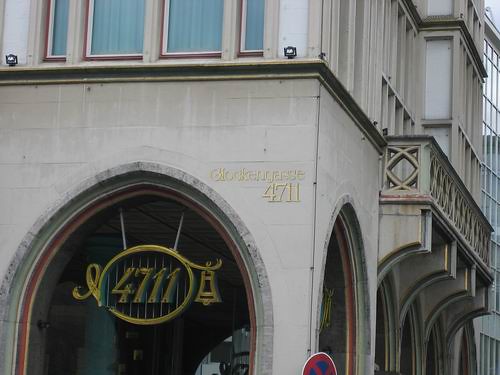
A few words about the importance of citrus oils: Citrus essential oils have been an essential component of the modern fragrance industry for centuries. The first alcohol-based perfumes were made of citrus peels tinctured in alcohol along with herbs and spices. These early perfumes were called “Aqua Mirabillis” (Miracle Waters), and were used both internally as a medicine and externally as a refreshing perfume. You may be familiar with famous names of aux such as Carmelite Water, Florida Water, Eau de Cologne, Hungary Waters, and others. Such perfumes will no longer be manufactured if indeed this new regulation is to be realized. So stock up on your 4711 and Eau Imeriale!
This is without mentioning many other perfumes that would have been completely different without the use of pure citrus oil – Shalimar would be come a sickeningly artificial vanilla & lemon pudding, the Chypre family, already suffering from a large reduction of the oakmoss content, would now become even further compromised (can you imagine!). When I look at all the formulas of my perfumes, there are only very few that have no citrus in them - Film Noir and Epice Sauvage, and that’s about it. Citrus notes add an aldehydic and a cheerful fruitiness to many compositions, from all the fragrance families – Oriental, Chypre, Floral, Woody – and of course, the entire fragrance family that is named after them for a very obvious reason – Citrus.
To finish off this depressing post, let’s try to find some hope. There is something you can do. You, as a consumer, have a lot more power than you may like to think. You can protest, you can write letter to the EU regulatory boards, and you can join Cropwatch’s Campaign for Real Perfume by emailing Cropwatch and expressing your interest in joining the campaign and be able to decide for yourself what you use – real perfumes, containing the richness and beauty of real botanical essences, or completely artificial fragrances, made only of test-tube molecules.
Don't miss Tony Burfield (Cropwatch's co-founder) article on Basenotes: Tony Burfield speaks of the current events in the perfume industry regulation and how they affect consumers and perfumers. This article is extremely relevant and touches upon very important issues in the perfume industry today, as well as its future. The article is supplemented by explanations to the various acronyms discussed in the article, provided by Anya McCoy (Artisan Natural Perfumers' Guild director). For more information about the issue, click on the FAQ on this page (scroll down to the bottom, and it will download as a PDF; if you have problems reading a PDF, feel free to contact me).
Ayala Moriel, the Nose and the founder of Ayala Moriel Parfums, creates natural artisan and bespoke perfumes that are inspired by her deepest emotions and memories from her childhood landscapes of the Mediterranean.