Saturday, February 13, 2010

Stop And Smell The Roses



Self Definition, originally uploaded by Ayala Moriel.

How

did the rose
ever open its heart
and give to this world all of its beauty?
It felt the encouragement of light against its being,
otherwise we all remain too
frightened.
- Hafiz

The perfume of rose not only opens the heart of the person smelling it; it also opens the heart of the perfume, making it complete.

The beauty of rose unfurls its spiral-shaped blossom, unfolding each petal as it progresses. There always seems to be more depth to the perfume of rose. Which is why when we stop to smell the roses, we tend to take long, deep breaths... There always seems more to it in the next inhale, and the next one... Just a short whiff won't cut it!

It is impossible to imagine what perfumery would be like without roses. The beauty of rose essences - both the attar (rose otto) and absolutes add an irreplaceable quality to a perfume, making it round and harmonious.

Part of the appeal of roses is their complexity. Rose is one of the most complex botanical essences, of which 540 elements were identified; yet it is still inimitable by means of synthetics. But it is also rose’s complexity that makes it one of the most challenging natural raw materials to work with in perfumery.

As discussed in the previous article, the roses most used in perfumery are the Rosa damascena and Rosa centifolia. Rosa damascena is mostly steam distilled to produce Rose Otto – the best of which comes from Iran (but is hardly ever imported anywhere out of the Arab world). Persian rosweater is used during the prayers in the Hadj in Mecca to cleanse the Kaaba.

Like many natural raw materials, rose essences olfactory profile varies greatly depending on their geographical. On the whole, some generic observations can be made: rose has a typical “rosy” scent, which characterizes this unique flower essence, and is mostly derived from the high percentage of citronellol and geraniol, as well as phenyl ethyl alcohol (in the absolute), which gives the fresh-petal note. In addition, there is citrusy aspect (from citral), and a slightly spicy aspect, from eugenol (which is also present in cloves and allspice, for example). It also contains many trace elements, which vary from species to species (i.e.: ionone, which is much stronger in Tea roses). On a scent strip, rose begins as a fruity, rosy, full-bodied, even wine-like or honey-like, and softens as it dries down, sometimes showing some green aspects (I suspect this is because the flowers’ sepals and base are also extracted in the solvent). It dries down into a woody and even slightly animalic note. Rose is a heart note, but very long lasting, and depending on the context of how it is blended, it may even act as a base note.
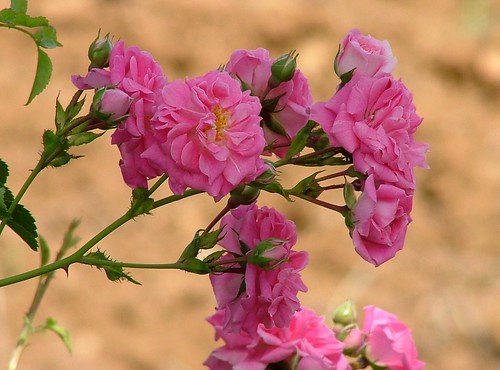

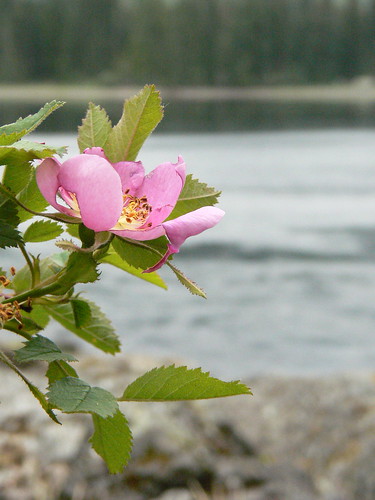
Rosas bravas de Arronches, originally uploaded by moitas61.

Bulgaria’s Valley of Roses produces the finest Rosa damascena attar and rosewataer. White rose bushes (Rosa alba) grow at the edges of these fields. After Bulgarian rose otto, the next best quality is of Anatolian rose otto (from Turkey). The Bulgarian otto tends to be more light, and to me smells more true to the fresh flower. Turkish rose otto is heavier, more full bodied and with a certain wine-like and even slightly earthy qualities. Other locals of rosa damascena of lesser qualities come from Russia, India, Pakistan and Uzbekistan. The Indian roses have a peculiar off note that makes them completely different than anywhere else in the world. It’s as if they take with them some of the earthy qualities of the Indian soil. This kind of rose has, of course, its own beauty, but is less desirable for Western perfumery purposes. It lends itself beautifully to more exotic blends, with an Asian or Indian theme.

It’s important to note, that producing the steam distilled essential oil does not capture the entire scent of the rose. The important molecule phenylethyl alcohol, for example, remains in the distillate water, and is mostly responsible for the fine aroma of rosewater.
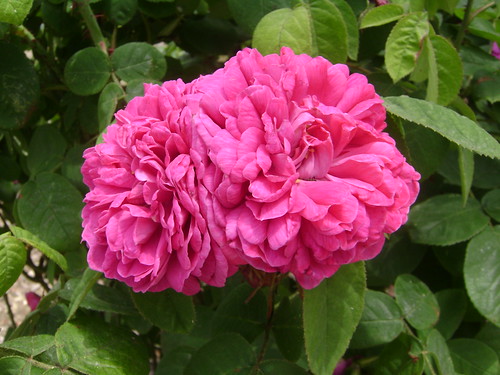

Rosa centifolia, originally uploaded by Ayala Moriel.

Rose absolute, from solvent extraction, is primarily extracted from Rosa centifolia, (Grasse in France and Morocco are the major growers), and only to a lesser extent from Damascus roses in Bulgaria and Turkey. The absolute captures a fuller spectrum of the living rose. It must be noted, that the rose absolute is so extremely concentrated, it is best to dilute it down to as low as 10% to unfold and release the aroma of fresh rose petals, and fully understand this raw material.

Similarly, too high a proportion of rose in a formula can pose challenges. It can make the perfume too dense and rich. This is particularly true for purely natural perfumes, which are always in danger of becoming cluttered or too dense. Rose is used in all fragrance categories:
In classic colognes, it is used in a very low proportion along with citrus and herbs for a refreshing and light citrus fragrance.
In Orientals, rose has a central role in harmonizing and rounding off the composition, bridging between the rich resinous base notes and the light citrus or exotic spice notes at the top. Rose will have a similar role of bridging and rounding in Chypres. In both cases, rose lends itself readily to being the star of the show, in a rose-dominated Oriental (i.e.: Parfum Sacre) or Chypre (Nuit de Noel). And of course – it is essential in floral bouquets and is the most popular soliflore of the all.

According to Shiseido’s research, fragrant roses can be classified to 6 different categories – all of which seem to be difficult to describe without reference to other roses:

Damask Classic

Combination of the “strong and sweet Rosa centifolia with the exuberant scent of Rosa gallica”

Damask Modern
Similar to the above, but with “more passionate sophisticated scent”.

Scent of Tea
As mentioned earlier, the violet and tea-like qualities of China roses added to the damask or centifolia roses, added a more delicate, graceful, and somewhat reminiscent of tea aroma to hybrid tea roses.

Fruity
Damask Classic or Tea Rose with the added nuances of fruit, such as peach, apricot, apple, raspberry, etc.

Blue Scent
Charcterisics of both damask and tea roses.

Spicy Scent
Damask Classic, with accentuated cloves scent (from eugenol).


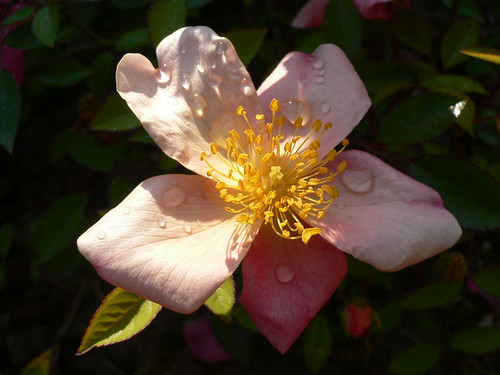
rosa_rugosa_3_coin_de_jardin, originally uploaded by JD-roud.
Similarly, just as there are many rose breeds, with various colours, shapes, sizes and odours, even rose-dominated perfumes have a lot of variety within them. Let’s explore some of the main ones:

Fresh Rose
These rose perfumes have a very light, almost realistic rosiness, and are as close as could be to the fresh living flower.
i.e.: Tea Rose, Evelyn Rose, Stella, Rosebud

Green Rose
Often a nearly Chypre type, these green florals excude the briskness of crushed leaves, grass and rose petals.
i.e.: Ivoire, Kelly Caleche, l'Ombre dans l'Eau, No. 19, Grin

Fruity Rose

Fruity, full-bodied, sometimes wine-like, and at times with added fruity notes such as peach, apricot, apple, etc.
i.e.: Grand Amour, Spring Flower

Powdery-Sweet Rose

Roses paired with violet or orris. Soft, powdery and often sweet with a somewhat old-fashioned air to them. Vanilla is also not a rare thing to find in this rosy category.
i.e.: Paris, Bvlgari, Lipstick Rose, N'Aimez Que Mois, Cabaret

Big Abstract Rose
Modern interpretations of the rose have painted it with large strokes and less components than in old fashioned rose formulas, making them less realistic, but not any less romantic, despite their boldness
i.e.: Nahema, Tresor

Animalic Rose
Rose with an intentional animalic base makes it… well, a little naughty. Civet and musk are particularly effective to that extent.
i.e.: Joy, Agent Provocateur, Megumi

Earthy Rose
When paired with earthy notes, such as patchouli, rose grows bigger and stronger; as if on a fertile soil that allows her to fully develop luscious petals. Notes such as patchouli are the most important to that effect and this genre has become quite popular now (especially with the new restrictions on oakmoss). Of particular interest is Alexander McQueen's Kingdom, in which the cumin note adds a sensual earthiness.
i.e.: Kindgom, Midnight Poison, Philtre d'Amour, Taurus

Musky Rose
Rose with a light, musky base. These can often be also quite powdery.
i.e.: Tocade,
Poussiere de Rose

Dark Rose

Often from the Chypre family, dark roses are haunting, mysterious and full of depth.
Dark rose impression is often achieved by pairing it with mosses, spices and animalic notes.
i.e.: Nuit de Noel, Black Rose, Song of Songs

Spicy Rose
Roses have always been paired with spices, both medicinally and for culinary purposes. It is not surprising, than, to find that roses go well with spice in perfumes as well. Spicy roses don’t necessarily need to smell like potpourri. Some are the most luxurious rose perfumes that I’ve ever came by.
i.e.: Parfum Sacré, Ta'if, Fête d'Hiver, Roses et Chocolat

Labels: , , ,

Thursday, February 11, 2010

Unfolding the Hundred Petals of Rose


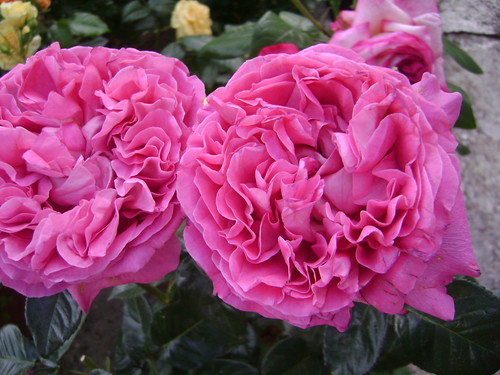
English Roses, originally uploaded by Ayala Moriel.

The nightingale, and none beside, knows the full worth of the rose for many a one reads the leaf and understands not the meaning thereof
– Hafiz


There is so much to be said about roses. And there is no better time to say it than now: winter is coming to its end, and celebrations of life and love in the form of fertility festivals and chaotic carnivals where everything is possible have now been replaced by Hallmark holidays of subdued emotions, appropriately framed with heart-shaped molds and rose-red hues. Finding ways to express emotions have never been more trying. And saying it with roses, as cliche as this may seem, might be the only way to remain genuine and leave something to the imagination.

Botany
Rose is a perennial flowering shrub from the Rosacea family. The leaves are serrated and most of the rose bushes have thorns on their branches. There are over 100 species of rose. With the exception of some Southeast Asian rose species, roses are deciduous, and lose their leaves in the winter. The fruit of the roses is a berry called rosehip. Roses with many closed petals may not produce fruit at all, as the insects cannot access the pollen. Roses vary in sizes of the plant as well as the flower. There are some climbing varieties, some plain bushes. Rosehips are especially rich in vitamin c (especially those from the dog rose – Rosa canina – native to Lebanon and Israel; and Rosa rugosa, aka Japanese rose).

Cultivars, Hybrids etc.
Cultivated roses are hybrids of various types have more petals (which are, in fact, mutated stamen). The most important modern roses are the hybrid tea roses, which come hybrid of the above species with China roses. The China roses (Rosa chinensis) were less hardy, but produced successive blooms from summer through fall; and also contributed to the shape of modern roses (including the classic “bouquet” roses that we see at the florists); as well as more colour possibilities in hues of coral, orange and yellow.

20th century rose breeders focused so much on the size and colour of the roses, that most of the newer breeds of roses are not nearly as fragrant as the antique garden roses. And roses that are found at the florists usually have no scent at all.

Origins & History

Tidal Rose, originally uploaded by Ayala Moriel.

Most rose species are native to Asia, with only a few native to Europe, America and Northwest Africa. The following species are the ones used mostly in Western perfumery:

Rosa centifolia, originating in Persia, where it is called “Gul”. From there it spread to India (its Hindi name is Gulab-ka-phool); Rosa damascena, originally from Damascus (Syria);
Rosa gallica, the French or the apothecary rose, native to central and southern Europe; Rosa alba – a hardier type, white in colour.


Rosa chinensis mutabilis, originally uploaded by Luigi FDV.

China rose (Rosa chinensis) from the mutabilis variety is most important in breeding the Hybrid Tea roses of both old garden roses and modern ones. They are called that way because they change colours throughout their bloom: vermillion orange buds open to coppery pink flower and later on a deep crimson.

The biochemical makeup of the Western roses is quite different than that of the China roses (Rosa chinensis), as is their colour. Western roses are white, red or pink; while the China roses are yellow or orange. The biochemical implications, simply put, are that Western roses are dominated by geraniol, citronellol and damascones; while the China roses posses various carotenoid biochemicals, such as beta ionone. The result is an aroma that is quite different – sweeter, fruitier and reminiscent of violets and tea.

Myth
and Nomenclature
The name for rose comes from the Latin “Rosa” (red), which originates in the Greek “rhodion” and ancient Farsi “wurdi” (flower). The name “rose” also means pink or red in a number of Romance languages, as well as in Greek and in Polish.

According to Greek mythology, rose origins were in the body of a young nymph found by Flora. Venus (Aphrodite) has transformed it into the rose plant, which was than blessed by Apolo’s sunrays, given a sweet nectar by Bacchus (the wine god) and with fruit by Pomona, and blessed with the most beautiful flowers by Flora and the Celestials (Poucher’s Perfumes, Cosmetics and Soaps, Vol. 2, 1959, p. 205). Rose was originally white, but after the thorns have wounded Aphrodite’s feet, her blood has turned roses red.

War of the Roses
The War of the Roses is a chapter in English history (around the time between 1455-1485), where civil wars between two dynasties (Lancaster and York) competing for the throne, and their supporters took place. Each of the dynasties had a rose symbol -
Red Lancashire rose/ Red Rose of Lancaster
and the White Rose of York. When the Tudors took the throne, the War of the Roses ended, and a new symbol was created, called the Tudor Rose, combining the red and the white, to symbolize union between the two.

Some say there is a reference to that in Lewis Carroll’s Alice in Wonderland, where the cards are painting the white rosebush red, although this is a very shallow interpretation of Lewis Carrol's work.


Religious and Spiritual Rose Symbolism
In the state of union the single beings of other world are one,
All the petals of the rose are together one.

- Muhammad Iqbal

The beauty of rose and her perfume and the complexity of her petals made it a subject of symbolism since ancient times. The only other flower that is known for having an equal breadth and depth of spiritual symbolism is the lotus flower.

Wild roses, like most of the Rosales order (which also includes cherry and almond) have 5 petals, symbolic of the pentagram, or mankind (the 5-pointed star is attributed to the head and the 4 limbs). Symbols of 5-petaled rose are recurring in European art and symbolism (i.e.: the Rosicrucian order’s symbol), who only later on in history were exposed to the cultivated, multi-petal rose. And nowadays, rose is the national flower of many countries, not to mention political parties. White rose was the symbol of a peace movement in Germany during World War II.

The multi-petals of cultivated roses grow give the flower the quality of mystery: it hides the stamens and holds its secrets… These petals also grow clockwise, in a spiral movement. This shape alludes to growth, expansion and is a metaphor to the universe. Spiral movement is eternal to both direction – the microcosm and the macrocosm.

Rose was sacred to the Egyptian goddess Isis.

In Hinduism, rose is considered Lord Krishna’s favourite. Hindus wash their alters with rosewater. According to the chakra system, the heart chakra is green, but when we are in love it turns to a rose colour. Likewise, rose flower grows out of a green thorny plant and represents the most elated state of the species (according to Ivan M. Granger).

In Judaism, rose was mentioned in the Song of Solomon as a thing of beauty found amongst the thorns, and is one of the seven perfumes mentioned in the book. It’s important to note, that there is also a fair amount of confusion between the names “shoshana” (the name for lily in modern days), or “vered” (the modern Hebrew word for rose).

In Kabala, the 22 letters of the Hebrew alphabet are said to form The mystical rose of creation, with the three mother letters forming a triangle in the middle (relating to the three elements – fire, water and air), surrounded by the 7 double letters which are symbolic of the 7 ancient planets, and finally by the 12 single letters, corresponding to the 12 Zodiac signs and the 12 tribes of Israel.

The beauty of rose in Ancient Greece and Rome were attributed to the goddess of love, Venus or Aphrodite. Wild rose was placed on the door of rooms where secret meetings were held. Alchemists considered rose to be associated with the element of earth, with the solar plexus or the heart, and with either the Sun or the planet of Venus.

In Christianity, red roses symbolize the blood of Christ, sacrifice and are associated with the heart. The colour of roses and their sweet, fruity, wine-like scent made them connected to wine, the refined symbol of Christ’s blood.
White roses symbolize the purity and virtue of the Virgin Mary.
Prayer necklaces called Rosaries were made from fragrant rose beads (see recipe here).

The Muslims loved rose above all other flowers. Mohammed’s sweat said to have the scent of attar of rose, and he is known for his love for women, children and perfumes above all things on this earth.

The Sufis practiced meditation in rose gardens, which are the most important theme in Persian art – Persian miniatures as well as carpet designs depict such rose gardens. A recurring theme in Sufi poetry is that of the rose and the nightingale. The nightingale is the lover, longing for the love of the rose, which he expresses in sad love songs through the night. These are of course metaphors to the Sufi in search for closeness to God.

Different Colours, Different Meanings
In the Victorian Language of Flowers, roses of different colours signify different emotions, meanings and messages for their recipient. Some of these meanings remain valid till modern day.

White roses: Purity, innocence, eternal Love, silence, wistfulness, virtue, purity, secrecy, reverence and humility. The white rose in the hand of The Fool tarot card signify that pure innocence and a "tabula rasa" awaiting learning. White roses are often used in bridal bouquets.

Pink roses: New love, happiness, romance, admiration, sweetness. Dark pink roses express gratitude; while pale pink mean joy of life, youth, energy and passion. Light pink roses are of the most popular after red ones.

Red roses: True love, passion, desire. These roses are most used among lovers.
Red roses also appear in The Empress card in the tarot's major arcana.

Yellow roses: Friendship, platonic love, jealousy, infidelity, dying love.

Orange roses were introduced to Europe only later on, and signify a combination of the emotions that both red and yellow coloured roses represent.
Coral hued roses were especially rare, and meant desire, passion and enthusiasm.
Orange roses also mean desire and enthusiasm, but also could mean pride.

Lavender roses: Love at first sight.

Blue roses:
Mystery, attaining the impossible

Black roses (which are really just a very dark red): death, farewell, separation, hatred - or rebirth and rejuvenation (which are really the other side of the coin of endings and death).

Medicinal and Therapeutic Applications

The most therapeutic type of rose is the Rosa centifolia (rose of hundred petals). Interestingly, it’s Sanskrit name, shatapattri, has the same meaning. Rose is used in aromatherapy for its soothing properties. It is a heart tonic and also helps to ease women in labour and helps to balance the hormones.

Ibn Sina (Avicenna) employed attar of rose and rosewater for treating ailments of the digestive tract.

The scent of rose gives one a sense of well being. It is an oil that has the greatest effect on the emotions, helping to cope with loss, grief and promote self-esteem and confidence (especially in women). The latter quality makes it act as an aphrodisiac: when a woman feels confident in her sexuality, she feels more at ease to seduce and engage in romantic relationships.
Gulab Lassi is an Ayurvedic rose aphrodisiac.

In Ayurveda, rose is used to balance the heart. It “balances Sadhaka Pitta, the subdosha of Pitta that governs the emotions and their effect on the heart” (reference here). Rose soothes the heart and the emotions. It also balances the mind, connecting the Sadhaka Pitta to the Prana Vata (the subdosha of Vata dosha that governs the brain, head, chest, respiration, sensory perception, and the mind). Rose is unique in that it balances all three doshas.

Ayurvedic doctors use rose to treat hormonal imbalances that result in amenorrhea; as well as treat migraines and headaches, loss of vision, sore throat, inflamed tonsils; and emotionally – to cope with nervousness, grief. Rosewater can be sprayed onto eyes suffering from inflammation or infection.
Gulkand (a rose petal jam) or Gulkand sharbat (rose syrup) can be eaten on its own, or added to milk or yoghurt, to achieve a cooling effect on the body.
(sources: Kamlesh Ayurvedea, and Medicinal Use of Flowers at Home).

Rosehips are used to treat colds and influenza (because of their high vitamin C content). Rosehips have anti-inflammatory properties, and were used to treats osteoarthritis. They also aid in treating urinary tract problems, and assist in preventing cancer and cardiovascular disorders, because of their high level of phytochemicals such as carotenoid pigments, plant sterols, tocotrienols... (source).

Flavour & Culinary Uses
Roses as a flavour are especially popular in India and the Middle East as an addition to desserts and beverages; and to a lesser extent in Europe, particularly France.

In the Middle East, Persia and India - rosewater is added to sherbets, ice creams and pastries (i.e.: harissa, basboosa, baklawa and rasgulla) as well as to flavour fruit salads. Rosewater confections are also popular in Turkey, Greece and the Balkan (Turkish Delight, for example). In the Ukraine, rose petal jam is paired with vanilla ice cream. Rose petal jam was adopted as an aromatic additive to pastries, pancakes and waffles and pastries such as scones or croissants, and fresh rose petals can be added to crepes.

Rose petals are also used to flavour tea: Chinese Rose Congou tea is made by perfuming black China tea with layers of fresh rose petals. Some of the petals remain in the tea. Royal tea is an Assam black tea blend with dried rose petals and vanilla, often served with milk. I particularly enjoy adding rose petal to a milky Earl Gray tea with vanilla. It turns it into a heavenly affair, a soothing and luxurious elixir.

The rosehips are made into a jam or jelly, as they are rich a relatively high in pectin. They are also very popular as a tisane, on their own or as a base for fruit-flavoured tisanes, particularly berry-flavours, because of their sour flavour.

Cosmetics
Rose otto and rosewater have rejuvenating, moisturizing and anti-aging properties and is an excellent additive to skin-care products and skin-care regime for dry or mature skin. Rosewater tones the skin and gives it a healthy glow, and also is used for cooling the skin in Ayurvedic cosmetics – on the principle that it helps to balance the Bhrajaka Pitta (the subdosha of Pitta that governs the biochemical aspects of the skin).

In Ancient Greece, dried rose petals were ground into a powder and applied to the skin as deodorant (Poucher’s “Perfumes, Cosmetics and Soaps, 1959, vol. 2, p. 206).

Rosewater blended with glycerin is an easy, simple and pure homemade lotion, and can be prepared at home (which will result in a purer product - without the red colouring and any other possible additives or artificial scents used in rosewater & glycerin that is bough off the pharmacy shelves).

Rosehip seed oil is also a wonderful oil to be used in skin care, massage oil and cosmetics. Its high content of oleic, linoleic and linolenic acids, carotenoids and beta-carotene, it has antioxidant and healing properties to the skin, making valuable for cosmetics to prevent dryness and aging, age-spots, wrinkles, as well as for use for various skin conditions such as acne, dermatitis, eczema, psoriasis and more (reference).

Rose oil added to facial elixirs will leave your complexion with a youthful glow.

Tomorrow:
Stop to Smell the Roses - Rose in Perfumery


Labels: , , , ,

Monday, September 24, 2007

Dark Angel


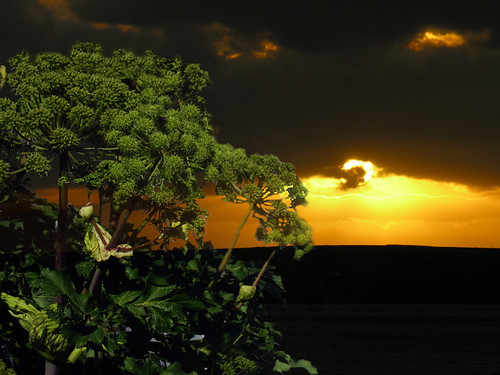
hvönn og sólarlag, originally uploaded by saraella.

Angelica root absolute, on the other hand, is a completely different story. The specimen I will be talking about was not only grown in a different soil, it is also a different species: Angelica sinensis. It was grown in China, where Angelica has been used for thousands of years for its medicinal properties and is almost as important as ginseng. The Chinese doctors use as many as 10 different kinds of angelica, mostly to treat women’s fertility issues but also to strengthen the spirit (Julia Lawless, Encyclopedia of Essential Oils).

This particular angelica absolute is dark in colur and semi-viscous in texture. It has an incredibly musky and smoky fragrance and I can see it working beautifully in spicy and warm orientals and leathers. Another use for angelica is in chypre and fougere compositions, but I feel that the root oils might be more fitting for these uses. Strangely, it shares some similarities to immortelle – living on the borderline between herbaceous and bizarrely sweet.

I’ve used it recently in two of my mods for a perfume called Gaucho which I’ve been working on for the past 7 years. Although it seemed to have provided an interesting counter points to the other elements in that perfume (dry-green and coumarin-bittersweet) it did not provide a breakthrough. Plus I made the mistake of also using the angelica root oil with the celery dryout (which is definitely not what I was looking for!). The angelica absolute on its own might just be the answer for an animalic musky note sans the lactones sensitization issues that costus poses. It’s by no menas a substitute for costus, but it may provide the aspects of costus I am wishing for in this composition. After all, being named after a Gaucho just asks for some animalic elements!

So what's the next step? Perhaps pairing some angelica root absolute with my first mod for a champaca soliflore. Or as a base for a peppery-leathery composition. When the fear of a note is lifted many doors are opened…

Labels: , , , ,

Sunday, September 23, 2007

Bright Angel


Angelica, originally uploaded by *Sakura*.

The species Angelica archangelica is originated in Europe and Siberia, where it is used for various medicinal and folkloric uses. Since antiquity, it was considered to strengthen the heart, stimulate circulation and the immune system and was used in centuries for treating various bronchial conditions such as colds and coughs as well as indigestion and promoting the appetite, relieves rheumatic inflammation and can be used as a urinary antiseptic (Julia Lawless, Encyclopedia of Essential Oils). Candies made of angelica stalks are also popular in France and Spain (in the US they may be found bearing the name “French Rhubarb”). If you are curious about how to make them, there are a few links to recipes below. I even found an illustrated recipe for Angelica Pie!

Candied Angelica Stems Recipe 1
Candied Angelica Stems Recipe 2
Candied Angelica Stems Recipe 3

One of the earliest Aqua Mirabillis recipes, called Carmelite Water (it was originally formulated by the nuns in the Carmelite abbey in France circa 1611). Recipes for Carmelite Water vary, but they all containt angelica and lemon balm leaves and lemon peel and orange flower water, and in addition to that various spices, usually coriander, pepper, nutmeg and cinnamon. It was taken internally as a liquor and also applied on the skin for its refreshing fragrance.

Angelica as I first knew it was peppery green and very intense. Somehwere between over eccentric parsley, horseradish and raw green pepper.This was a steam distillation from the roots, and was grown in France. I’ve used it three times only, which is as I said, very unusual for any note in my collection to be so rarely used.
1) In one of my earliest formulas for Sagittarius perfume (according to certain magical traditions, Angelica is considered a Jupiterian and fiery plant)
2) In an attempt to make a more “perfumey” Carmelite Water, using essential oils rather than tinture the above-mentioned herbs and spices
3) In one accord, in a brave moment where I wanted to just use Angelica and not be scared of it. I blended it with a few notes including cloves, oakmoss, patchouli, vetiver, champaca, rose and clary sage. It turned out smelling like fedjoia – that peculiar tropical fruit that resembles a green passion fruit from the outside and an under ripe guava from the inside. I was left amused and just left it at that.

Few years later, I received a sample of Angelica Root Oil from the same species, only grown in India and distilled from the roots. Needless to say, this is a completely different story: while still being very green, it has far less of the harshness and tenacity that the seed oil I mentioned earlier possesses. It is by no means a “soft” note. It is still sharp. But it’s definitely not the same angelica I met before. This Angelica archangelica root oil is musky, animalic, earthy. It even resembles costus root ever so slightly. I have a feeling that I won’t only be running out of the sample fast enough to justify ordering it any time soon. it has a very appealing, mysterious yet familiar almost paper-like quality that reminds me of a Chinese apothecary, in a good way; I may even use it in a perfume mod or two in the near future.

Angelica seed oil is also produced, but is much harder to come across. It is lighter, fresher and spicier, not as earthy and musky as the root oils are.

Labels: , ,

Saturday, September 22, 2007

Making Peace with the Angels


Þoka og hvönn - Fog and angelica, originally uploaded by Harpa J.

It is no co-incidence that as of yet, angelica is nowhere to be found in a single perfume in my collection. For the longest time, I had the toughest time tolerating being in the vicinity of this particular note.

To the perfumer, each note has its own unique characteristics and can play an important role in a perfume. No building block should be neglected, and a good perfumer should really know better than to impose his own personal preferences on his compositions. I have always followed this principle, creating perfumes from fragrance families that I don’t care for my own personal use, or employ notes that I am not particularly fond of. But when it came to angelica – I have garnered very little success in my attempts to overcome my personal prejudices. It rarely happened to me before with any of the precious botanical essences that I’ve met on my path of perfumery. But angelica has simply made me ill if I got near it. The same feeling I would get just before fainting or “seeing black”; the same near-nausea I got when I was harvesting fava beans, green or dry, and the combination of sun-stroke and blood-drained brain after bending for too long, along with smelling the poisonous fumes emanating from the abovementioned fava beans and other weeds, them too, over exposed to the heat of the sun.

It has been my goal for quite some time now to get over this angelicaphobia of mine. And recently, the opportunity has arose in the form of two new samples of angelica oil and angelica absolute from China, as well as the advanced stages of a fougere type fragrance that I have been working on for nearly 7 years now. I have also noticed some shifts in my own relationships with green notes (which formerly caused me a similar, though not as intense reaction as angelica) – one of the significant changes in me olfactory wise in the past year was the acceptance of No. 19 as one of my favourite perfumes to wear (a perfume which before now caused me deep grief every time I’ve worn it). There is no apparent reason or cause from my own life that I can connect to this shift of change. But I am sure the explanation will surface and I will become aware of it when it’s the right time…

So, the following posts will be dedicated to angelica, as my relationship with this difficult note shifts and transforms. I will discuss some of its characteristics, medicinal and folkloric uses, and the history of using angelica in perfume. Finally, I will share with you bits and pieces from my journey with angelica in my recent creations and experiments.

Labels: ,

Sunday, September 09, 2007

The Bittersweetness of Green


Natural Sources of Coumarin, originally uploaded by Ayala Moriel.


Labels: , , , , ,

Wednesday, May 09, 2007

Bitter Orange or Bergamot - The Giving Tree Award Goes To Whom?

Common knowledge is not always correct, and the main reason this happens with perfumery’s building block is simple: the widespread use of synonyms and various traditional names for particular oils rather than using the more accurate and reliable Latin name of the species of origin.

It is therefore not so surprising that bit by bit, many perfume aficionado as well as amateur DIY perfumers were lead to believe that it is the bergamot (Citrus aurantium var. bergamia) tree that provides the perfumer with the generous palette of oils of bergamot, petitgrain, neroli and orange flower absolute.

This is, however, very wrong! The Giving Tree Medal should be awarded to the Bitter Orange Tree (Citrus aurantium var. amara). Ther names for the bitter orange tree are Seville orange, sour orange and bigarade orange.

This citrus subspecies is very resilient of disease and therefore is used for grafting other citrus subspecies (i.e. sweet oranges). It bears very sour and bitter fruit that is inedible for the most part (except for use in marmalades, because of its high pectin content).
Despite its very limited culinary use, bitter orange is held in high regards from an olfactory point of view, supplying the perfumer’s organ with a few priceless essences:

1) The unusually floral, sparkling bitter orange oil from the fruit’s peel, which has a dry, bitter aroma with sweet undertones. It has excellent uplifting qualities and blends beautifully with forals, showcasing their beauty like no other citrus does. This oil is expressed from the peel (though in some countries, after the expression the peel will be submitted to further extraction by steam distillation, which provides a very poor oil, often mixed with the expressed bitter orange oil to adulterate it).

2) The middle note of petitgrain bigarade, steam distilled from the leaves and twigs of the tree after they are pruned. This is a fresh, dry, aromatic, astringent green-leafy yet citrus note, most prized for its astringent presence in colognes and aftershaves. Other petitgrain essential oils are available in far lesser quantities, such as: petitgrain lemon, petitgrain combarva (from the kaffir lime tree) and petitgrain cedrat. The majority of petitgrain oils available though are from the bitter orange tree.

3) Orange flower absolute – produced by solvent extraction from the same flowers of bitter orange. This produces an essence that is a base to middle note, and is very deep, rich, honeyed quality. It shares some similarities to the more indolic jasmine absolute, yet with a very distinct citrus tartness. A complex building block that is valued for its balance between sweet and tart, floral and fresh. It is used in colognes and many men’s fragrances to add a warm yet fresh body to the fragrance. It is also used in many floral bouquets and oriental compositions, adding a sensual complexity and vivacity.

4) The heart to top note of neroli – this is the steam distilled essential oil from the flowers of the tree. Neroli essential oil is one of the most expensive essential oils. It was named after the princess of neroli, who favoured this scent like no other, and used it to scent herself and all her belongings. Neroli essential oil has unique calming effect on the mind, and was therefore used to reduce the anxiety of (virgin) brides (it is also traditionally used in bridal bouquets). Neroli has a sweet yet clean and dry ethereal quality, it’s very delicate and light. It is often used in colognes as well as floral composition to add a light floral lift.

5) Orange flower water is a by product of the neroli production: some of the aromatic elements of neroli are water soluble, and therefore stay in the water in the process fo distillation. The same process happened with the steam distillation of roses, which in turn provides us with rose water. Orange flower water is used mostly in food (to flavour sweets and baked goods, particularly in the Middle East, Mediterranean region and India) cosmetics (it makes a fantastic gentle tonic on its own, for oily skin or acne prone skin, yet without causing any harm or drying; it is also used as a base in lotions and other cosmetic preparations). It can be also used to top off various Eaux (Eau Fraiche, Eau de Cologne and Eau de Toilette), and can be used as a fragrance on its own in warm weather. Click here for an excellent recipe for the Basbousa cake – a semolina cake made with yoghurt and an orange flower water flvaoured honey-syrup.

6) Orange flower water absolute is a further process of the orange blossom water. It is similar to orange flower absolute, but is more sheer, honeyed and somehow smells watery as well. It is used as a heart note.

Bergamot orange, on the other hand, provides us only with the oil of the fruits’ peel, which has the disctinct bergamot aroma – green, floral, peculiar yet citrusy, and very heady. It is used extensively in flavouring the Earl Grey tea, and that’s how bergamot is most known to the public. It is also used in Italy and Greece in certain marmalades and candied, but this is not very common.

Images are courtesy of Wikipedia.

Labels: , , , , , , , , ,

Saturday, April 28, 2007

Flower of Flowers


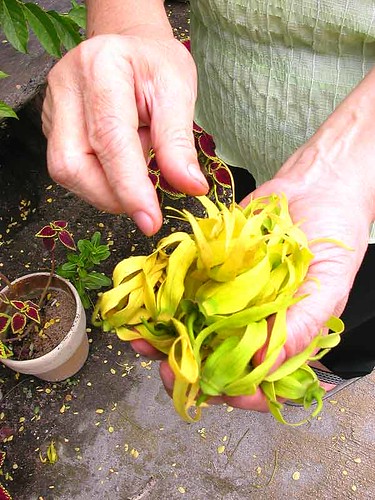
ylang ylang flowers, originally uploaded by chotda.
Background and Origin of Ylang Ylang:
Ylang Ylang is an evergreen tropical tree, remotely related to the Magnolia family (they are both from the Magnoliales order), native to Indonesia and possibly also the Philipines. It grows wild in many tropical countries, and is cultivated for its essences mostly in Nossi-Be, the Comoro Islands, which produce about 80% of the worlds’ production Madagascar and to a lesser extend in the Phillipines, Indonesia, Zanzibar, Madagascar and a few of the French South Pacific islands.

The trees grow very fast, and therefore they are pruned in such a way that they start growing horizontally after they reach 7 feet in height. This way, the blossoms can be easily picked by hand. The flowers are green at first, and have little or no scent, and only start to develop their intense aroma when they are fully mature and have turned yellow in colour (some varieties are mauve or pinkish, but their aroma is considered inferior to that of the yellow variety).

The essence of Ylang Ylang is unusual amongst the florals, because it has an extremely high yield and therefore has a much lower price than any other floral essence. The flowers are most commonly steam distilled, and to a lesser extent are solvent extracted to produce an absolute. The trees bloom all year around, which further contributes to the relative abundance of this oil in comparison to other floral essences.

The scent of Ylang Ylang is considered an aphrodisiac. The flowers are spread on the bed of newly wed couples in Indonesia, and are used to adorn the hair and in lays with jasmine sambac flowers (Sampaquita) in the Philippines.

Aromatherapy uses of Ylang Ylang:
Ylang ylang is considered to have aphrodisiac, euphoric, anti-depressant, and stimulant effects on the nervous system. It is recommended to use for conditions such as depression frigidity, nervous tension, and is generally considered an elevating yet soothing aroma.
Hair: Rinsing the hair with Ylang Ylang encourages the hair’s growth
Skin: Acne, irritated & oily skin, insects bites and general skin care
Circulation: Helps to regulate high blood pressure

My Experience with Ylang Ylang:
Ylang Ylang essential oils vary tremendously in quality and character. A good quality Ylang Ylang essential oil should smell creamy, fruity, tenacious, and headily floral but in a very pleasant way. A poor quality ylang ylang can be so terrible it can give a bad reputation to the essence altogether. My first impression of Ylang Ylang was terrible, because I was first introduced to a very poor quality oil. Even though it was graded an “Extra”, it had an unbrearably unpleasant odour that was sharp, heady and almost peppery-dry. This is not how ylang yang is supposed to smell like! Once I explored different oils from different suppliers, I discovered that I actually like this essence a lot. Enough to make an entire perfume dedicated to it – a Ylang Ylang soliflore!

The Ylang Ylang essences I work with now are many and vary, but they all have a very distinguished, soft, exotic, sweet, full-bodied aroma. Some are more heady than others, but they are all so beautiful. Even though Ylang Ylang is yellow in colour, I consider it to be a "white floral". Yet, my association with it are quite colourful - tropical fruit such as mango and pitango, creamy coconut, lays of flowers, and the many colours of corals - orange, red and pink hues... Besides my new Ylang Ylang soliflore, Coralle, I also used fair amounts of Ylang Ylang in White Potion and Tamya, where it plays a key role in the composition (coupled with tuberose in the first and jasmine sambac in the latter); and lesser amounts in Viola (an excellent example of Ylang Ylang's bouqueting abilities) and Autumn. (a Chypre to which the Ylang Ylang adds a fruity nuance)

Ylang Ylang Essences and Grades:
Ylang Ylang essential oil is distilled into several different grades, which are collected in several stages during the distillation:

Ylang Ylang Extra – Contains almost half of the yield of Ylang Ylang. This grade is characterized by a tenacious, sweet, balsamic, fruity odour. It is the most similar to the absolute, but with a lighter, airy opening reminiscent of lilacs, lilies and linalol. Upon drydown it can even be a tad soapy.

Ylang Ylang 1 - I have yet to encounter this grade (or fraction) of ylang ylang as it is most commontly found blended with Ylang Ylang 2 to form the so-called "Ylang Ylang Complete" (see below).

Ylang Ylang 2 - I have encountered only one specimen of Ylang Ylang 2 from a reputable supplier that sells high quality and organically grown oils for aroma therapeutic purposes. This particular specimen is good enough to pass as an "extra" until you hit the dryout and some sharp, slightly green and almost horseradish-like notes appear.

Ylang Ylang 3 – The third and last portion of the distillation. This grade is suave and sweet and full bodied. It also reveals some of the more woody aspects of this complex raw material.

Ylang Ylang Complete – this is suppose to be a mixture of all the four other grades, or an unfractioned distillation of the ylang ylang in its entirety. However, nowadays a Ylang Ylang complete is most likely to be composed of the less desireable grades – Ylang Ylang 1 and Ylang Ylang 2. Because of the unpopularity of these two middle grades (1 & 2), there is, unfortunately, frequent adulteration of Ylang Ylang essential oils by the different grades – either “upgrading” or “downgrading” them (i.e.: mixing the Ylang Ylang 2 with Ylang Ylang 3, to lable it a “Ylang Ylang 3” and the Ylang Ylang 1 with the Ylang Ylang Extra to label it an “Extra”).

Ylang Ylang Concrete is produced by solvent extraction of the flowers. This is an unusual, hard to find floral concrete, and well worth it if you can find it. It is ever so smooth, creamy, sweet, tenacious and warm. It has a unique fruity and creamy nuances, reminiscent of bananas. Unlike most concretes, which are waxy or semi-solid due to the content of floral waxes, ylang ylang concrete is completely liquid, deep amber coloured, with what seems like little waxy particles floating in it.

Ylang Ylang Absolute is obtained by alcohol washing of the concrete. Again, the yield is extremely high (75-82% of the concrete). It is similar in appearance to the concrete, less the waxy particles, although I have encountered some specimens with an olive green colour. It is similar to the ylang ylang extra, only deeper, richer, sweeter, and with less “top notes”. It is more spicy and fruity, presenting the eugenol and cinnamyl acetate; with fruity notes suggesting banana and mango; and animalic-jasminey-like tonalities as well as creamy buttery qualities. But most notably, it feels like a perfume on its own right, with layers upon layers of silky depth and warmth.

Ylang Ylang's Role in Perfumery:
The importance of Ylang Ylang essences to perfumery is tremendous. It blends well with almost everything, and has a particular importance in almost all floral bouquets and compounds, including: hyacinth, lily of the valley, violet, sweet pea, narcissus, lily, gardenia and many, many more. It blends particularly well with jasmine, rose, vetiver, peru balsam, sandalwood, cassie, vanilla, citrus notes and rosewood. It also plays an important role in oriental compositions, lending a sweet, warm, soft bridge between the heavy bases and the spicy top notes. Ylang Ylang is often used in soap bases, and you may be interested to know it plays a key role in perfuming face powders!

Principal constituents of Ylang Ylang:Benzyl acetate (25%)p-cresyl methyl ether (20%) – which is what gives ylang ylang its distinguished fragrance, though on it’s own it does not smell pleasant at all.
methyl benzoate
methyl salicylate
cinnamyl acetate
Geraniol
Linalol
Eugenol

Perfumes with Prominent Ylang Ylang Notes:
Arpège
Chamade
Mahora (now called Mayotte)
No. 5
SongesSamsara
(to name only a few...)
A few words about the meaning of the name – up until very recently, I knew it meant “Flower of Flowers”. I now read that in Tagalog it is derived from the words “Wilderness” and “Rare”. If any of you, my dear readers, who is from the Phillipines, can enlighten me with the true meaning of this fantastic flower of your country – I would be most grateful.

Bibliography (besides the sites that are linked to on this article):
Stephen Arctander, Perfume and Flavor Materials of Natural OriginJulia Lawless, Encyclopedia of Essential OilJulia Lawless, Aromatherapy and the MindPoucher's Perfumes, Cosmetics & Soaps Volumes 1 & 2

Labels: , ,

Sunday, April 01, 2007

Acacia, Botanical Invasion and Leather


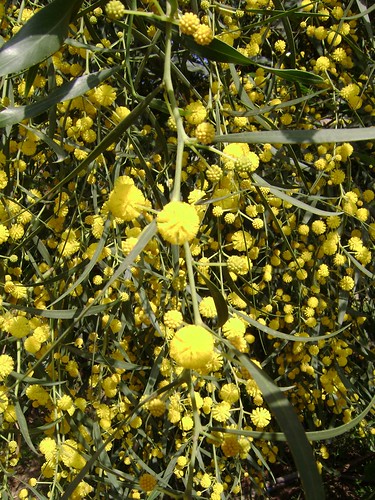
Mimosa, originally uploaded by Ayala Moriel.

In the past two weeks, I’ve been traveling back and forth between Tel Aviv and my little village up north. In one of our rides together, my brother Yotam pointed out to me the dangerous abundance of Mimosas across the country, and the fact that they are now considered invasive species in Israel. Mimosas were sparse and almost exotic way back when, and I remember specific spots along the road where they could be found. When the blooming season arrived, we would pick them for my step-grandmother, who admired them greatly. Now, however, they can be found everywhere, not just in parks and city gardens or along the roads. They can be found in the middle of fields or on hillsides, where they are gradually taking over and use up resources such as space and water, therefore endangering the survival of the indigenous plants.

Now, in springtime, the view of mimosa is glorious and abundant, particularly in full bloom. Otherwise, these bushes embody the mood of desert and negligent greenery scattered in random places where it leaves no impression whatsoever except, perhaps, the gloom of heat and burning sunrays.

Mimosa is from the family of Fabaceae, which also includes the legumes. And indeed it has seeds that are arranged in elongated pods. It belongs to the subfamily of Mimosoideae, which includes also plants, shrubs and trees, some of which perform rapid movement like the “touch me not” plant (Mimosa Pudica).

The Acacia (commonly known as Mimosa) is an invasive species in other parts of the world. Although it is native to Australia, it is cultivated in countries such as Egypt, Morocco, France, Italy, Algiria, Lebanon an India. I suspect it was brought Israel at the turn of the century, along with Eucalpytus trees which exude an equally gloomy appearance where they remain as a statue to lost wetlands or malaria-beaten swamps and marshes that my Zionist ancestors fought vigorously and turned into depressing little forests instead.

The particular mimosa that is widespread in Israel is the Blue Leaf Wattle (Acacia cyanophylla). It is not extremely fragrant like the Acacia decurrens or the Acacia farnesiana (Cassie). But it does have a light, floral powdery sweet aroma wafting about it without making too much effort to leave an impression. I noticed that the scent is more apparent when smelled from distance, rather than sticking your nostrils amongst the pollen-laden wands decorated with the little yellow pompoms.

Mimosa has many uses in the leather industry. The bark as well as the pods are rich in tannins, and therefore make an excellent agent for preserving and tanning the leather. By way of fortune, I had the honour to get some information about the uses of mimosa from Stu Miller, a life long leather tanner and an expert in the field who consulted to leather tanneries across the world. mimosa bark. Mr. Miller’s daughter is known to some of you as Loukumi in Basenotes or Elizabeada in Perfume of Life forum. When she tried my mimosa soliflore, Les Nuages de Joie Jaune, she immediately recognized a familiar scent from her father’s tannery. She was intrigued and assisted me in finding out a little more about the use of mimosa in modern tanning industry, which, surprisingly, still uses many natural and locally grown materials in the tanning process. For instance: Cabracho from Argentina, chestnut extract, and sumac which used to come from Albania but is pretty rare today (sumac, in Hebrew, is called “Og Haburskaim”, which means “Plant of the Leather Tanners”, and grows wild in the mountains of Jerusalem), mangrove. Many tanneries use plants that are rich in tannin that are grown locally, for instance - some kinds of Eucalyptus in Australia, and unknown plants in South America, that are “used to tan fluffy curly white sheep skins that we sometimes see here”.

Mr. Miller’s tannery imported powdered mimosa pods from plantations in Africa and Brazil, which had 40-50% tannin. It was particularly used for tanning saddle leather, which tanned and dyed entirely with vegetable substances. At times, iron is added to mimosa powder to create a black dye: the tannin reacts to the iron and turns black. When asked if the mimosa pods had any smell, Mr. Miller said they just smelled like wood. He suggested that the scent his daughter smelled was a solvent – either butyl acetate (which smells a bit like bananas and is commonly used in the flavouring industry, particularly to create the scent of Granny Smith apples), or butyl alcohol.

The two species of mimosa that are of particular interest from perfumery as well as aromatherapy aspects are commonly called Cassie and Mimosa. Mimosa is the Acacia decurrens (Green Wattle) species. It is a middle to top note, with a scent that is at once watery, powdery, only slightly flowery and woody and very much cucumber-like. The absolute is a thick substance that tends to solidify once exposed to air and become brittle. This absolute is high in Palmic aldehyde, anisic acid, enanthic acid, acetic acid, phenols.
Because of its antiseptic and astringent properties, mimosa in aromatherapy, it is used as a muscle relaxant, skin conditioner, and for skincare of oily and sensitive skin. It also assists in nervous tension, anxiety, stress and insomnia.
Mimosa is mostly grown in Australia, Africa, France, Italy (based on HerbBee).

Acacia Farnesiana, AKA Sweet Acacia or Cassie absolute, is an unusual floral note: it is one of the most rare floral base notes. It has a far more intense, wet quality to it than the mimosa absolute has. It smells green, woody, wet, similar somewhat to violet leaf, yet floral with an intensity that is quite similar to that of jasmine. It is a valuable fixative in floral compositions.
According to the HerbBee, Cassie absolute contains Benzyl alcohol, methyl salicylate, farnesol, geraniol, linalool.
It is considered anti-rheumatic, antiseptic, anti-spasmodic, aphrodisiac, balsamic, and can be also be an insecticide.
In aromatherapy, it is used for rheumatism, dry skin, sensitive skin, increases sexual desire, depression, nervous exhaustion, stress. It is also used in the flavour industry. Cassie is mostly grown in France, Egypt, Lebanon, Morocco, Algeria and India.

Coming up next: reviews of mimosa perfumes.


Labels: , , , ,

Tuesday, October 31, 2006

Licorice Notes

Happy Spooky Halloween!

Today will be dedicated to licorice notes – the notes used to flavour the gooey chewy sticky black candy that is of the signature flavours of this holiday. Licorice notes are strange. They are usually either loved or loathed. Very few people have intermediate feelings about them. The peculiar scent of licorice notes is a reconciliation of contrasts: spicy warmth and minty chill; rough dryness with smooth, mouthwatering sweetness. Perhaps it is the sweetness of licorice that is the most peculiar. I used to chew licorice root as a little girl, and it was a completely sugar-free candy, yet felt very sweet. I am saying “felt” rather than “tasted” because I think the licorice aromas cheat on the senses to create an impression of a sweet taste that is not really there.

Licorice root is not the only source for licorice sorcery. In fact, most licorice candies are flavoured with oils of aniseed, star anise and fennel. Anise is the sweetest of all three, and feels warm and diffusive. Its ability to mask odour only adds to its mystique. Star Anise is a tad more dry, clean and spicy in feel. Sweet Fennel is sweet indeed, with a hint of green. Tarragon is another plant with a licorice aroma, only greener and herbal, with a sense of tangy freshness. Tarragon absolute is a thick, syrupy version of tarragon, accentuating the licorice-candy qualities of this herb.

Here are a few perfumes for the licorice lovers amongst us. These may not mask your body odour when you go fishing or ghost busting, but they sure are olfactory stunners thanks to the mystical presence of licorice notes.

Apres l’Ondee might have been one of the very first scents to use aniseed note “out of the box” and in an unusual context. Here, the obscure quality of anise complements the melancholy of violet and orris.

L’Heure Bleue further expanded on this theme, and here the aniseed note is paired with the almost-gourmand almondy notes of heliotrope, sweet violet, carnation and woods.

Lolita Lempica (Au Masculine) makes a definite gourmand statement that is once again paired with violet. Vanilla and rum add sweetness, and woods and cistus add an underlining pine-like masculinity that is maintained through out the composition. The feminine version is just as high on licorice and anise, again paired with violet, only with a slightly different base (vanilla, tonka, musk and vetiver).

Chinatown takes licorice notes to yet an even more extreme sweetness, as star anise and fennel do in the infamous Five Spice. Like a Five Spice salt, Chinatown creates a strange, sweet and warm sensation, balanced by exaggeration as it is paired with even sweeter white florals and peach juice, and a counterpoint of patchouli and vetiver.

Eau de Reglisse, Caron’s most recent addition to their outstanding collection, takes a different route. Here licorice is taken as it is – the dry root – and infused into a refreshing lemonade drink along with litsea cubeba. The licorice is subtle and is revealed once the sparkling lemon notes of litsea have subsided. It is more like chewing licorice roots than the gooey candy. Eau de Reglisse is an interesting eau, while being cool and refreshing still retains the woody warmth of licorice twigs.

More perfumes with licorice notes:
Anice (Etro)
Anisia Bella (Guerlain)
Jean-Paul Gautier Classique (aniseed top note)
Piper Nigrum (Lorenzo Villoresi)
Salvatore Ferragamo for men
Rive Gauche pour homme
Silver Rain
Indigo
Black Licorice
And two of my Zodiac perfumes: Sagittarius and Cancer

Licorice Recipe: CHOCOLATE & LICORICE LIP BALM

A fun activity that is easy to make. Young children will love making it - and using this fragrantly sweet lip treat.

Ingredients:
4 Tbs. almond oil
2.5 Tbs. coconut oil
3 Tbs. beeswax (unbleached), grated
1.5 Tbs. dark chocolate (at least 85%), preferably unsweetened
1 tsp. honey
1 Capsule Vitamin E
10 drops aniseed oil
10 drop sweet orange oil
(or any mixture of these two oils)


Measure and mix all the ingredients except for the essential oils and vitamin E.
In a Bain Marie (double boiler), melt them all down over low-medium heat.
Once all the ingredients have melted, remove from heat and let it slightly cool off.
Add the essential oils and vitamin E, and pour immediatley into containers. Make sure the consistency is neither too liquid nor too hard to touch and use.

Labels: , , , , , , , , , , ,