Tuesday, January 14, 2020

Pallas Athena

I've always admired the Greek Goddess Pallas Athena, since I first read about her as a young child in the Argonautica. Her wisdom, strength and poise impressed upon me that women can also be heroes. She always appears in warrior regalia: helmet and a spear. Her other symbols are the owl, the snake and she is often depicted with a symbol of the snake-haired Gorgon Medusa's head, either held in her hands, or placed upon her sash or shield. Pallas Athena is the one who have sent Perseus to bring Medusa's her to her, with full instructions on how to do so without turning into stone, which is the fate of anyone who gazes upon her terrible face. 

If one looks deeper into the mythology, it is told that Medusa is who she is (meaning: so terrifying that whomever gazes upon her becomes frozen or dead-like) because of a curse Pallas Athena herself cast on her, after Poseidon have raped Medusa in Pallas Athena's temple. So Pallas Athena is not only a warrior but also associated with rage and revenge. 

At the same time this makes one wonder “on which side” was Pallas Athena? Was she siding with the Patriarchal rapist god, or the woman who was raped? Was she commemorating her rage in response to the rape, and giving her the means to protect herself? Or was she enraged that a woman would allow such a thing to happen in the holy temple to the Goddess? Or is the temple actually symbolic of the woman's body - her personal intimate temple? I have a few reasons to believe this is all of the above. Medusa has become a part of Pallas Athena, either because she represents her more innocent side that was betrayed and raped; or because she was Pallas Athena's victim. And victims and their perpetrators are forever connected in an embrace that is at the same time a curse, and at the same time the key to their respective healing and redemption. 


Is Pallas Athena in a sense is a very Patriarchal female-goddess, a female goddess who is trying to navigate through the new realms of Patriarchy, using masculine tools such as weapons and revenge? Or is she giving women the tools to redeem their frozen, traumatized selves and transform them into powerful magical beings such as Pegasus (the winged-horse that was born out of Medusa after she was beheaded)?

The story echoes an ancient story: The Descend of Innana to the Underworld, a Sumerian myth that is the most ancient written myth we ever found, written in cuneiform on clay slates some 6,000 years ago. In this myth we can peek into the Sacred Feminine and its power before it was tainted with fear, hatred and oppression. Inanna was the Goddess of Fertility and War, just like Pallas Athena reconciles within her Wisdom and War. Some say that Venus or Aphrodite was Innana's later form, being the tame goddess of love, beauty and fertility. But I think that Innana held within her all Sacred Feminine -  Pallas Athena and Aphrodite. She was both powerful, just and wise, as well as sensual, sexual and seductive. She is portrayed in that ancient myth as the master of her own self, body, soul, mind, spirit. She has conquered the world on all of its layers - the heavenly and spiritual (the sky or heaven), the earthy and sensual (earth), and lastly the underworld which is the shadow aspect of the world, the unseen, and hidden, the ugly. She is no frozen Medusa when she chooses on her own terms  to bring her own death upon her, because a lifeless body and yet she has a plan and she is able to come back to life, buy her way out of the underworld and even seek revenge at those too weak to support her sacred journey. Innana exemplifies a deity that is both dark and light, sensuous and clever, enjoys her body, smart and cunning, and can face her own death and conceive her own rebirth and redemption. She shows us how to be authentic and connected to our entire being on all its levels: light and dark, shadow and self, passive and active, spiritual and earthy and even beyond and underneath this world. And to me this is what I peel away when I look at the myths of Pallas Athena as well. 

In her own way, Pallas Athena integrates Medusa, her frozen and frightened self, her lower existence in the shadows, by wearing her as a brooch or perhaps even a trophy on her regalia. But this integration is symbolic and not internalized. Medusa is seen as an enemy; while Innana's descend into the underworld is considered her greatest achievement, after which her lower self and higher self become one and whole; and her decaying carcass, her shadow is embraced and returned back to life and back into the land of the living, to continue leading a life, making mistakes and continuing to learn and evolve. Pallas Athena, without knowing, is forever frozen just as much as her trophy, for not embracing her fully. For not allowing her weaker aspects the space they need to be felt and there for to heal and become whole. 

Palas Atena perfume is one of my first creations (2001) and is an Oriental-Spicy perfume with champaca flowers, lavender, neroli and cinnamon over a base of amber, patchouli and sandalwood. It brings me a bit of synenthetic response, seeing the colours of crimson and gold which I imagine the goddess to be wearing. I hope wearing this will enable you to reconcile all those aspects of yourself. When I wear it I feel powerful and smart and sensual. I hope it will do the same to you, and maybe even other things that I can't even imagine.

The image is of Pallas Athena Attic red-figure kylix painting from c. 480-470 BC showing Athena observing as the Colchian dragon disgorges the hero Jason


Labels: , , , , , , , , , , ,

Tuesday, April 23, 2019

Neroli Tincture

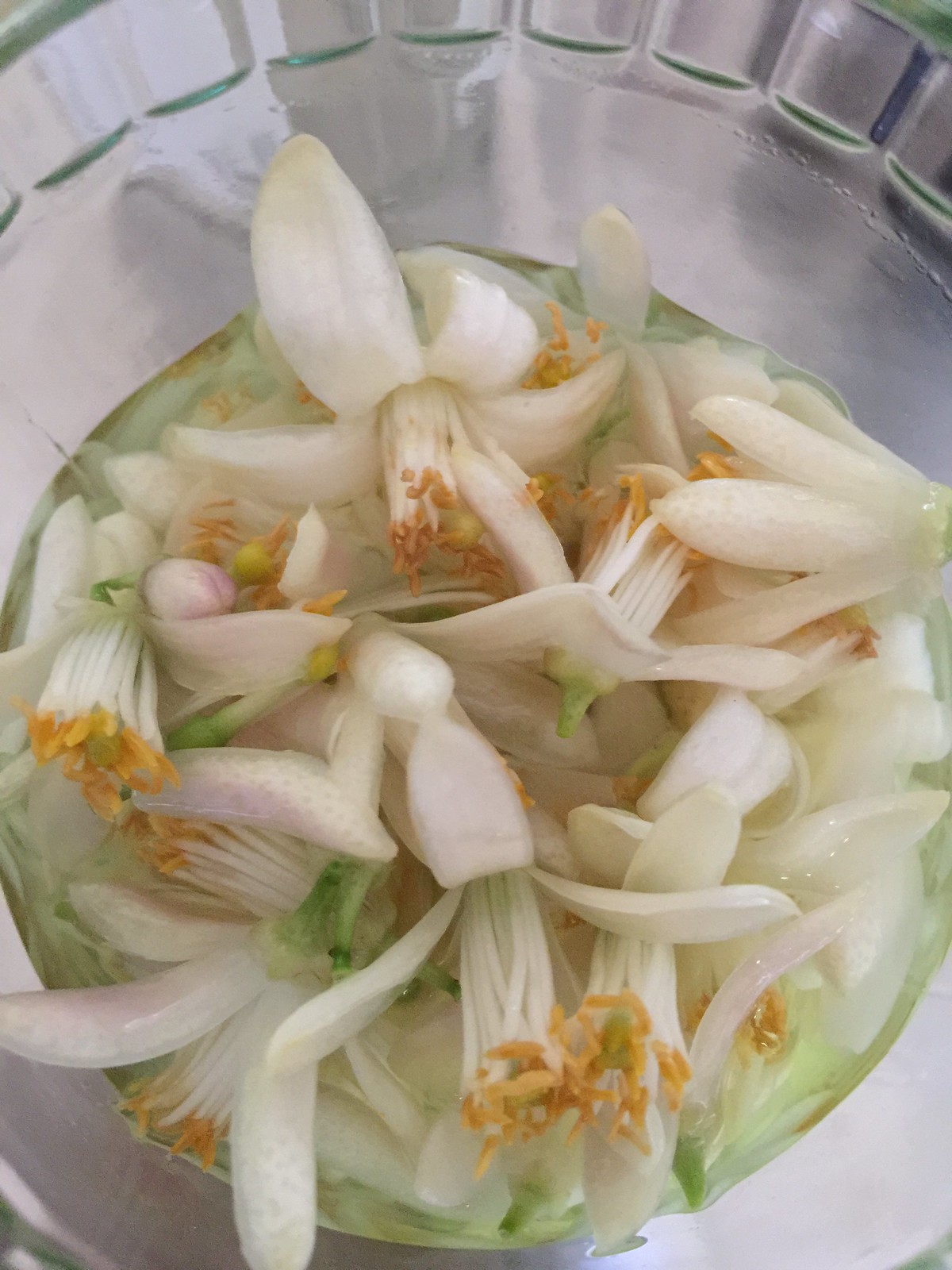
Bitter Orange Flower Tincture
Often I'm asked if it is possible to make orange blossoms tincture. My snarky response is that you can tincture anything. Can't guarantee the results though... Fresh flowers, generally speaking, don't let themselves well to alcoholic tincturing. That is why enfleurage and solvent extraction techniques were invented in the first place. Otherwise why bother with such sophisticated process if it is possible to make such an easy homemade extraction with alcohol?

There are a few problems at play. One is the water content in the flowers. Once the flowers sit in the alcohol, it dries them up completely, which means it sucks all the moisture out of them. That's what alcohol does. It readily bonds with the water. This dilutes the alcohol's solvent powers. 

The other problem is that the alcohol dissolves also less desirable aspects of the plant matter, resulting in a very vegetal smelling tincture. It may be fine for medicinal purposes (which is the the main objective of most fresh plant matter tinctures). For fine perfumery - not so much. 

Bitter Orange Flower Tincture

Either way, one needs to watch out for over-steeping when preparing tinctures. Less is often more. Meaning, it is better to recharge the alcohol several times with the flowers until the desired odour strength is achieved. This is akin to steeping tea: Steeping the same amount of tea over a longer period of time will definitely give you a stronger tea, but not as fragrant and delicious as one that you've paid attention to preparing according to the appropriate steeping time and amount of tea leaf. When wishing you prepare a stronger tea, there is no way around using more tea. This is not the time or place to be thrifty with your raw materials. Remember the time and effort taken to grow, harvest, clean and infuse your plants. Remember how much you paid for that 96% alcohol. Don't waste these resources. 

So, with all that being said, the neroli tincture (bitter orange blossoms steeped in alcohol) smelled nice enough. I was smart enough to strain it before turning vegetable. It wears ok on the skin. But needs another recharge or two. In my opinion, aside from the cache of using something from my own orchard in my perfume, it does not offer anything more than what my high quality neroli oil and orange blossom absolutes have to offer. But we shall see once I use it within a composition. I will include some in my upcoming batch of Zohar (my orange blossom soliflore). Maybe it will transform into something more WOW inducing then. Either way, the process was fun. But I a more inclined to stick to traditional raw materials with these flowers and get a still ASAP to make my own orchard hydrosoles and perhaps even oils some day soon. 

Labels: , , , , , ,

Monday, November 23, 2015

Musk Malabi Fundraising Campaign for Syrian Refugees


Musk Malabi, my fundraiser perfume to support Syrian Refugees, was launched a couple of years ago. There was only marginal interest in the cause, unfortunately, so I was unable to make any substantial contribution to this cause. 

Now that the refugee crisis has come to the forefront of the media - I hope you can help me raise enough funds to help sponsor refugees who are arriving to Canada in these tough times. For every 15mL bottle sold, $50 will be donated to a community-sponsored family; and from each mini bottle, $20 will be donated.

If you are in Canada, I urge you to find a community-sponsorship as well, or initiate one yourself in your community or workplace. According to Canadian law around sponsorship of immigrants, groups such as religious community associations (i.e.: non-profit NGOs) and community based organizations (i.e.: mosques, churches, synagogues, etc.) but also corporations can sponsor refugees, and any group of 5 or more Canadians that can provide a feasible settlement plan for the refugees. That is one way to guarantee the safe asylum of a family fleeing the horrors of the Syrian civil war, and much more meaningful way to invest smaller amounts of charitable money than to support a huge organization in which whatever contribution I could make will just be a drop in the bucket.

Of course, if you wish to donate to larger organizations - there are some that are more effective than others and which will utilize your donations more efficiently. Do your research first. For example, charities that are recommended for maximum help in the ground zero of the Syrian refugee crisis and that have a minimum administrative costs are listed in Charity Intelligence (Canada) and Charity Watchdog (USA).


Below is an excerpt from the original press release (March 2014) and the updates regarding pricing and donations policy.

Inspiring Peace & Harmony with Musk Malabi’s Olfactory Love Triangle
Vancouver, Canada, March 5th, 2014. Get caught in a love triangle with Musk Malabi Ayala Moriel’s newest limited-edition perfume Musk Malabi. Released to coincide with the spring equinox and Persian New Year, Musk Malabi is an intoxicating floral confection. Unabashedly feminine, subtly exotic and hopelessly romantic - the fragrance evokes the sensory experience of a passionate love affair.
Inspired by the traditional Middle Eastern dessert of the same name, Musk Malabi centers itself around rich, milky musk. Having grown up in Israel, the sights, sounds, and smells of the Mediterranean have always been a source of inspiration for Ayala Moriel, the company’s in-house perfumer. “What has always captured my imagination about malabi is its soft, evocative sounding name, and its unique fragrant combination of rosewater and neroli water”, explains Ayala. “Rose and orange blossom are such noble flowers yet oh so different.”

At the heart of the fragrance, neroli and rose come unexpectedly together with musk to create an unusual and mesmerizing triad. Musk plays cupid, pulling all the strings in between and drawing the lovers (rose and neroli) together. Designed to smell as close as possible to deer musk, the botanical musk brings an effortless fluidity to this magnetic fragrance. A company that prides itself on being all-natural and free of animal cruelty, all of Ayala’s fragrances are created using botanical essences.
With spicy notes of cardamom and coriander as the opening act for voluptuous rose and prudent neroli, the top and heart notes rest on a silky bed of atlas cedarwood, botanical musk and Tahitian vanilla. Light-hearted yet mysterious, Musk Malabi is a fragrance unlike any other and will transport one effortlessly to the exotic Middle-East, jet-lag free.
Top notes: Bitter Orange, Cardamom, Coriander, Blood Orange
Heart notes: Turkish Rose, Bulgarian Rose, Tunisian Neroli, Egyptian Orange Blossom
Base notes: Atlas Cedarwood, Botanical Musk Accord, Tahitian Vanilla

Available in eau de parfum 4ml ($69) and 15ml ($180) via www.ayalamoriel.com. For every 15mL bottle sold, $50 will be donated to a community-sponsored family; and from each mini bottle, $20 will be donated. 


Labels: , , , , , , , , , , , , ,

Tuesday, January 14, 2014

Musk Malabi

Malabi by Tom lahat
Malabi, a photo by Tom lahat on Flickr.
If Sahleb is the royal treat of winter, then the rosy, rubbery Malabi (see recipe below) is the queen of summer in the Middle East. Served cold in every other corner and almost every kiosk and restaurant of any caliber, this chilled milk-pudding captures the eye with the contrasting rosy-red syrup oozing all over the white, petri-plate-like to-go containers it comes in. I was never a big fan of its texture (ditto in regards to Rahat Loukum, also unjustly made with corn starch instead of better quality materials), but I adore its fragrance!

What always captures my imagination about malabi was its soft, evocatively sounding name, and its unique fragrant combination of rosewater and neroli. Rose and neroli are such noble flowers yet oh so different. Rose is open, voluptuous, sweet and feminine. Neroli is prim and proper, restrained, clean, ethereal and otherworldly. It's incredible that such a thing even grows from the earth, as has such a heavenly character.

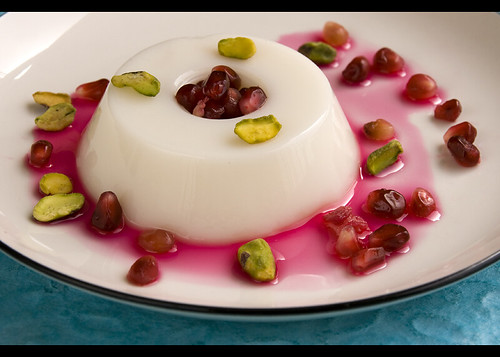
Malabi with pom syrup by Dan Bar Dov
Malabi with pom syrup, a photo by Dan Bar Dov on Flickr.
The balance of these two strong-willed floral elements that inspired the creation of my new, limited edition for Valentine's Day 2014. Titled Musk Malabi, this perfume is a holy triad of sorts, between voluptuous, velvety and soft rose; airy, clean and cerebral neroli, and the pulsating animalic energy of musk. The musk is, in a most profound way, what makes these two oppositional flowers harmonize rather than compete with one another. It is told in the Koran that Mohammed's breath was as sweet as rose, and that he considered musk to be the purest of all perfumes. Musk grains were even mixed with the mortar in the construction of several Eastern mosques and retained their musky scent for years. The botanical musk in Musk Malabi was designed to smell as close as possible to deer musk, and most importantly, act like one: it plays cupid pulling all the strings between and drawing the lovers (rose and neroli) together. It doesn't need arrows, and plays the harp better than cupid, doing all of this work gently and with effortless fluidity. 

Malabi by shai.wininger
Malabi, a photo by shai.wininger on Flickr.

Musk Malabi is a limited edition for Valentine's Day 2014, which is just a month away from today! 
Love it, and it will love you back.

Top notes: Bitter Orange, Cardamom, Coriander, Blood Orange
Heart notes: Turkish Rose, Bulgarian Rose, Tunisian Neroli, Egyptian Orange Blossom
Base notes: Atlas Cedarwood, Botanical Musk Accord, Tahitian Vanilla

Labels: , , , , , , , , ,

Sunday, September 29, 2013

The Joys of Floral Hydrosols

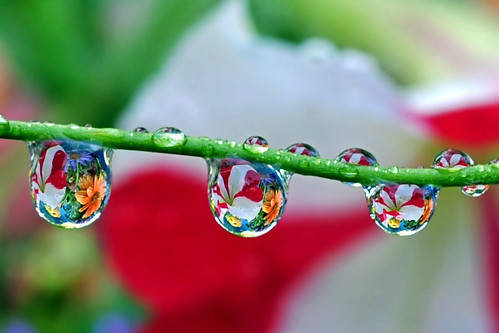
Grand Opening: new "water drop bouquet" grow, harvest and delivery service
Water Drop Bouquet, a photo by Steve Wall on Flickr.

Treasure hunting is one of my favorite aspects of going on vacation. Surprisingly, Mayne Island, a tiny island off the coast of Vancouver Island, is my favorite place to find unique knick-knacks, books, jewellery and food. Mayne is truly my heaven on earth and my home away from my home. Everything about it is comforting, from the sights, sounds and smells (briar roses, broom, salty ocean air, spruce, and sun-warmed blackberry bushes) to the people. The island's population is tiny - approximately 900 people and is like a village. Everyone is treated like a friend, doors are unlocked, and local farmers will leave produce unattended on the side of the road next to a jar to put your money in. Now that is what I call trust (something that is relatively foreign in big cities). The local artisans and artists who reside on Mayne are not only extremely talented but genuinely care about each of their crafts and love spending time with customers helping them choose products that they will be happy with and that will suit their personalities and lifestyles.

I get a huge thrill out of scouring the few shops and thrift stores whenever I am there. Almost everything to be found is one of a kind or few of a kind. My big find this year was a six dollar bottle of Rose Geranium Floral Hydrosol. For those who don't know, hydrosols are the distillate water that is produced when plant materials are steamed or hydro-distilled to create essential oils. Hydrosols contain the water-soluble fragrant molecules from plant, unlike essential oils which are what floats on top of the water, and represents only some aspects of a plant or flower. Hydrosols are a pure luxury  and have many properties and applications, their most prominent use being in skin-care.

If you ever tried your own steam-distillation, you can also create a low-tech hydrosol in which the essential oil (non-soluble in water) are not separated from the distillate water, producing a more rounded aroma profile and preserving many of the therapeutic properties of the plant. These can be found among artisan distillers, usually made in very small batches and often from plants that were wild-harvested or collected in their own garden (if you're interested in distilling your own hydrosols, you can find a small copper still and learn this ancient art from renown aromatherapy teacher Jeanne Rose, who is the eldest pioneer of modern-day's natural perfumery.

Though very aromatic, these artisanal hydrosols are much more gentle than essential oils (their essential oil content would be less than 5%) when used for skin care and can be utilized in enhancing your complexion in skincare products, in body care, home fragrances (linen sprays are such example), as well as in food and beverage.

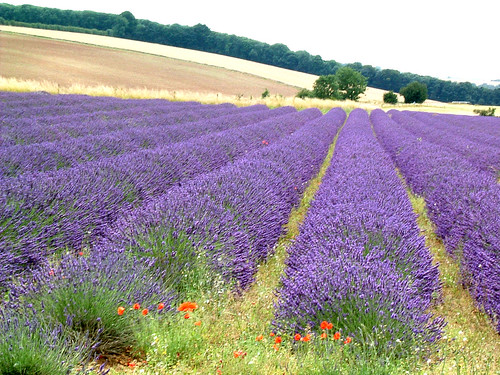
Lavender

Lavender hill mob
Lavender Hill Mob, a photo by Billy Reed on Flickr

Lavender (Genus: Lavendula, a purple-flowering plant related to mint), is very well renowned throughout the world, not only for its delicate, sweetly herbaceous aroma, but also for its remarkable abilities to soothe and heal the body and mind and its almost miraculous power in healing burns, cuts and wounds. Lavender hydrosol contain full emulsified plant essences (including the water-soluble coumarin) and have a great deal of benefits to the skin and to one's emotional and mental state. Gentle and versatile, lavender is suitable for every skin type, soothing inflammation and providing a cooling sensation when spritzed on the skin. It has regenerative effects on damaged, irritated skin and when combined with oatmeal creates a gentle, deep-cleansing mask. Lavender hydrosols can be used as a cleanser, toner or makeup remover, after shave, air freshener or as a calming facial mist.

Rose

Rose Bush
Rose Bush, a photo by Nesha's Vintage Niche on Flickr

Roses have a fragrance that is immediately recognizable and universally loved. Renowned for centuries for their ability to calm the senses and for their positive effect on various aspects of physical health. Roses provide many benefits in terms of skin care. They have a balancing effect of the PH level of one's skin, can help increase circulation and therefore the distribution of nutrients in the skin, and help to regulate the production of sebum in the skin (the oil that skin naturally produces to keep itself healthy and protected, but that in excess can cause breakouts and dermatitis). Rosewater has a lovely, delicate floral flavor and is used in beverages and baking. It is used extensively in Middle Eastern and East Indian desserts. Many people swear by rosewater as a remedy for premenstrual syndrome (PMS) for its ability to balance female hormones. Some people even find it helpful in soothing sore throats.

Rose's antioxidant properties make it most suitable for mature and dry skin. Rosewater and glycerin are a classic apothecary preparation that can be found to this day in most pharmacies, and is applied to either face or hands as a simple lotion. Spritz rosewater every night on your face as a nourishing toner and moisturizer, either alone or layered with a rosewater based lotion or a rose-scented facial serum or rich cream.

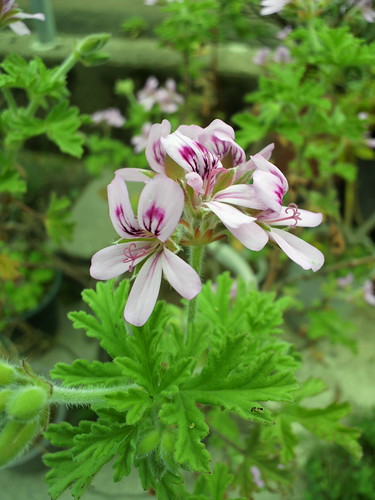
Rose Geranium

Rose Geranium
 Rose Geranium, a photo by hello_imac3 on Flickr

From the flowers and leaves of Pelargonium capitatum, this is my personal favorite hydrosol. I love rose geranium for its uplifting, slightly green, almost lemony aroma. This particular hydrosol is great for combination, oily, or blemish-prone skin, and helps to quickly and effectively restore the skin's balance. This was especially beneficial for me in the summer time when the increased exposure to the sun caused my skin to become a little bit more oily (a common side effect of many skin types in response to sunburn and dryness). Rose geranium hydrosol's can be used as a facial mist, toner, cleanser or even as an air freshener. A natural anti-inflammatory and coolant, rose geranium is also helpful for use on sunburns and summer rashes.

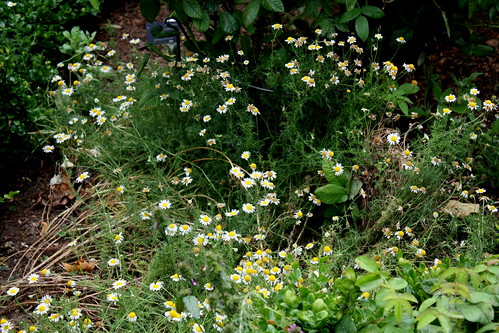
Roman Chamomille

Roman Chamomille
Roman Chamomille, a photo by noriko stardust on Flickr

Wonderfully soothing, Roman chamomile (Matricaria chamomilla) hydrosols are great for most skin types and are perfect for skin that is extra sensitive, like babies' skin. Incredibly relaxing, Roman chamomile is renowned for its ability to soothe one's jangled nerves and balance the senses. It can ease muscle cramps and can be taken orally to help with intestinal cramps and spasms. It can be used on the skin to ease any kind of inflammation, as a facial toner or spray. It is also a great enhancement when added to a moisturizer or facial mask.

Orange Flower

Neroli
Neroli, a photo by Starry Raston on Flickr

Orange Flower Water (Neroli water), from the flowers of the bitter orange tree (Citrus aurantium subsp. amara or Bigaradia) is one of the best for reducing stress, with its citrusy floral hydrosol. Very astringent, this floral hydrosol is best for oily and acne-prone skin. For those with normal, dry or sensitive skin, this water should be combined with a more hydrating water such as rose or lavender. This water is optimal for blemish-prone skin when combined with an oil-absorbing clay mask. It should also be used as a toner or as a spritz (when used sparingly as to avoid excessive dryness) to balance skin and to calm anxiety. Orange Flower Water are also very popular in the Middle East, in both desserts and savoury dishes. Along with rosewater, it perfumes many famous confections such as Rahat Loukum, Malabi, and a wide assortment of syrup-soaked baclavas. It will also make a fragrant salad dressing or marinade for poultry or fish, providing a fresh-floral top note.

With so many options out there in terms of beauty products it is very important to research what is best for your skin type and body. Floral Hydrosols are great in that they are one hundred percent natural, affordable, and serve the skin in a multitude of different ways. They are also great for aromatherapy and provide a great deal of emotional benefits. And if you're a foodie - there are countless ways to incorporate them into the kitchen In other words, it is the ideal beauty product for the lover of all things natural, with an appreciation for fragrance.


Labels: , , , , , , , , , , ,

Thursday, September 26, 2013

Lemon & Verbena Cupcakes

Lemon & Verbena Cupcakes by Ayala Moriel
Lemon & Verbena Cupcakes, a photo by Ayala Moriel on Flickr.
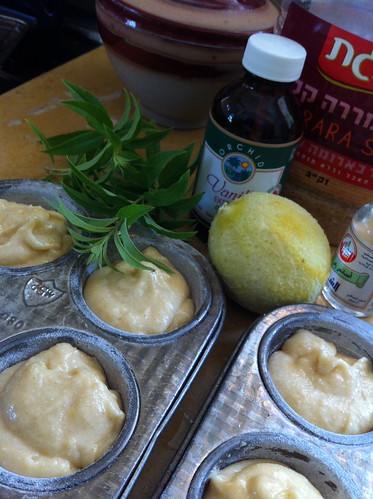
That wonderful lemon verbena in the gardens in the village where I was staying truly inspired me to make a verbena-soaked lemon loaf. But I didn't have my loaf pan, so I made cupcakes instead! I used a bit of semoline instead of all-flour as you'd find in most cupcake recipes. This adds a nice grainy texture, and interest to what is otherwise a very simple yellow batter. However, it is also packed with lemony tartness and aroma, from both the juice and the zest.

For the glazing, I've used both lemon verbena tisan (brought to room temperature, of course), and along with the vanilla sugar, it had an intense lemon-candy flavour, just like that of the classic Israeli lemon popsicles (which are amazing). Must be all that citral and vanillin. Mouthwateringly delicious, and would make a great addition for a Shabat afternoon tea. Shabat Shalom! 
For the batter:
1/2 cup (1 stick) unsalted butter, softened to room temperature
1/2 cup granulated sugar
2 eggs
2 teaspoons vanilla extract
1 cups all-purpose flour
1/2 cup semolina (cream of wheat)
2 teaspoons baking powder
1/2 teaspoon salt
1/2 cup milk * 
zest from one lemon
1 Tbs lemon juice

Lemon Verbena Glazing:
2 Tbs strong tisane from fresh** lemon verbena leaves
2 cups icing sugar, sifted
1 Tbs lemon juice
1 package vanilla sugar

- Preheat oven to 180C (350F)
- Butter and flour a dozen-cup muffin tin (or use paper cupcake liners)
- Cream together the butter and sugar
-  Add and beat the eggs, one at a time until light and fluffy
- Add vanilla, lemon juice and lemon zest, and beat just until incorporated
- Sift together the flour, semolina, baking powder and salt
- Add half of the flour mixture and mix just until incorporated.
- Add half the milk and continue stirring
- Add the remaining two halves of the flour and milk, gently folding mixing until fully incorporated 
- Bake for 20 minutes, or until a toothpick inserted in cupcake comes out clean
- In the meantime, prepare the glazing by beating together the lemon verbena tisane, lemon juice and vanilla sugar. Gradually add the icing sugar and continue beating until smooth and runny.
- When the cupcakes are ready and have cooled down, brush them with the glazing.
- Serve warm or at room temperature. Do not refrigerate!

* Of your choice, can be dairy or non-dairy
** Substitute with dry leaves if you don’t have them.

Labels: , , , , ,

Wednesday, March 14, 2012

Aphrodisiac of the Day: Orange Blossom

Orange Blossom by Ayala Moriel
Orange Blossom, a photo by Ayala Moriel on Flickr.

"When Adar comes in - happiness is increased" (mi'she'nichnas Adar marbin be'simcha).
Adar is the 6th month of the Jewish calendar (or the last... Depending if you start counting from Rosh Hashana or Passover!), and it's when Purim is celebrated. It also has a very close name to the Hebrew name for citrus - Hadar.

And - low and behold - it's also the season for citrus to bloom in the Mediterranean region where I come from. At this time of the year - end of March and all through April - orange flowers and all things citrus permeate the air with their euphoric aroma, making even the gloomiest of souls feel all cheerful and optimistic.

Orange blossoms are a long-known aphrodisiacs, and they are the only flower I've chosen for the series this year, because although they are an exquisite and costly perfume, they are also readily available in their edible version: orange flower water. These are be readily sought at most Middle Eastern, Greek and Persian as well as East Indian grocers, and should be stored in the fridge of every foodie and perfumista and anyone seeking for pure natural beauty. I use these beautiful waters to spritz on my face every night (and also in the morning or during the day when it's really dry - for example: when traveling by air). The fragrance is reviving, soothing and will make you feel 400% better than before applying it... Use it on its own after you cleansed or simply washed your face with water; or before applying your usual hydrating concoctions (I use my own handmade facial elixir of nourishing botanical oils).

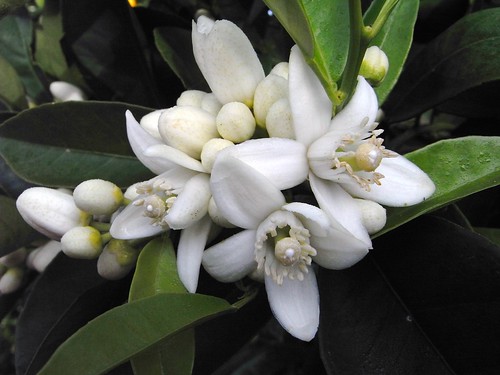
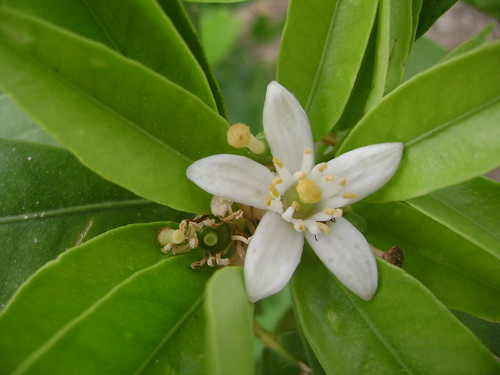
All citrus blossoms smell heavenly, but the species used for perfume are from Citrus aurantium - the same tree that provides us with bitter orange peel oil (through expression of the zest), petitgrain bigarade (steam distillation of the leaves, twigs and often also the buds), and Neroli (the steam distilled essential oil of the same flowers). Furthermore, the distillate water (orange flower water) which I have just mentioned are processed with a solvent to produce an unusual product called orange flower water absolute. It's a most resourceful tree, as you can see!

The absolute is floral and citrusy all at once, but richer, sweeter and warmer than the fresh and innocent, honeyed Neroli. It is opulent, intoxicating and considered one of the "white florals" along with tuberose, ylang ylang, jasmine and narcissus.

Orange blossom absolute shares some qualities with jasmine absolute (due to presence of both indole and methyl anthranilate) and is round, soft and slightly tart - in my opinion is very true to the fresh orange blossoms, with some herbaceous and rich, honeyed undertones. It is an extremely versatile essence, and is used in both Oriental and floral compositions for women, where it's luscious, narcotic floral qualities are accentuated; and is also a wonderful floral for masculine scents as well as fresh and dry Eau de Cologne types.

Orange flowers have been traditionally used to scent bridal bouquets, and Neroli perfume was "prescribed" to brides on their white-wedding night to reduce the stress and anxiety before losing their virginity. It's relaxing and stress-relieving qualities are also put into use with children - in the south of France children drink a concoction of steamed milk with honey and orange flower hydrosol to induce a restful sleep.

At another time, neroli was used so often by Italian prostitutes, that the smell became extremely associated with promiscuity (similarly to how White Musk has become in the 80's and 90's)... Thankfully, those days are over and we can enjoy orange blossom's seductive qualities with no negative associations.

There are countless recipes for orange flower water in desserts and beverages. It is widely used in various Middle Eastern pastries (baklava) and spoon desserts (Malabi), not to mention many halva and various East Indian sweets. Another creative way to use orange flower is in fruit salads (try it over strawberries or cantaloupe!) and even in vegetable salad vinigraitte for a refreshing yet surprisingly floral aroma.

Aphrodisiac perfumes containing notable amounts of orange blossom: Amaranthine (Penhalligon's), Bois d'Hiver, Chinatown (Bond No. 9), Fleurs d'Oranger (Serge Lutens), Jean Paul Gautier Classique, Jitterbug (Opus Oils), La Chasse aux Papillon (l'Artisan Parfumeur), For Her (Narciso Rodriguez), Obsession (Calvin Klein), Opium (YSL), Orchid (Aftelier), Parfum Privé (Aftlier), Popy Moreni, Private Collection (Estee Lauder), Razala, Schizm, Silences (Jacomo), Tolu (Ormonde Jayne), Vent Vert (Balmain), Zohar

Labels: , , , ,

Wednesday, May 09, 2007

Bitter Orange or Bergamot - The Giving Tree Award Goes To Whom?

Common knowledge is not always correct, and the main reason this happens with perfumery’s building block is simple: the widespread use of synonyms and various traditional names for particular oils rather than using the more accurate and reliable Latin name of the species of origin.

It is therefore not so surprising that bit by bit, many perfume aficionado as well as amateur DIY perfumers were lead to believe that it is the bergamot (Citrus aurantium var. bergamia) tree that provides the perfumer with the generous palette of oils of bergamot, petitgrain, neroli and orange flower absolute.

This is, however, very wrong! The Giving Tree Medal should be awarded to the Bitter Orange Tree (Citrus aurantium var. amara). Ther names for the bitter orange tree are Seville orange, sour orange and bigarade orange.

This citrus subspecies is very resilient of disease and therefore is used for grafting other citrus subspecies (i.e. sweet oranges). It bears very sour and bitter fruit that is inedible for the most part (except for use in marmalades, because of its high pectin content).
Despite its very limited culinary use, bitter orange is held in high regards from an olfactory point of view, supplying the perfumer’s organ with a few priceless essences:

1) The unusually floral, sparkling bitter orange oil from the fruit’s peel, which has a dry, bitter aroma with sweet undertones. It has excellent uplifting qualities and blends beautifully with forals, showcasing their beauty like no other citrus does. This oil is expressed from the peel (though in some countries, after the expression the peel will be submitted to further extraction by steam distillation, which provides a very poor oil, often mixed with the expressed bitter orange oil to adulterate it).

2) The middle note of petitgrain bigarade, steam distilled from the leaves and twigs of the tree after they are pruned. This is a fresh, dry, aromatic, astringent green-leafy yet citrus note, most prized for its astringent presence in colognes and aftershaves. Other petitgrain essential oils are available in far lesser quantities, such as: petitgrain lemon, petitgrain combarva (from the kaffir lime tree) and petitgrain cedrat. The majority of petitgrain oils available though are from the bitter orange tree.

3) Orange flower absolute – produced by solvent extraction from the same flowers of bitter orange. This produces an essence that is a base to middle note, and is very deep, rich, honeyed quality. It shares some similarities to the more indolic jasmine absolute, yet with a very distinct citrus tartness. A complex building block that is valued for its balance between sweet and tart, floral and fresh. It is used in colognes and many men’s fragrances to add a warm yet fresh body to the fragrance. It is also used in many floral bouquets and oriental compositions, adding a sensual complexity and vivacity.

4) The heart to top note of neroli – this is the steam distilled essential oil from the flowers of the tree. Neroli essential oil is one of the most expensive essential oils. It was named after the princess of neroli, who favoured this scent like no other, and used it to scent herself and all her belongings. Neroli essential oil has unique calming effect on the mind, and was therefore used to reduce the anxiety of (virgin) brides (it is also traditionally used in bridal bouquets). Neroli has a sweet yet clean and dry ethereal quality, it’s very delicate and light. It is often used in colognes as well as floral composition to add a light floral lift.

5) Orange flower water is a by product of the neroli production: some of the aromatic elements of neroli are water soluble, and therefore stay in the water in the process fo distillation. The same process happened with the steam distillation of roses, which in turn provides us with rose water. Orange flower water is used mostly in food (to flavour sweets and baked goods, particularly in the Middle East, Mediterranean region and India) cosmetics (it makes a fantastic gentle tonic on its own, for oily skin or acne prone skin, yet without causing any harm or drying; it is also used as a base in lotions and other cosmetic preparations). It can be also used to top off various Eaux (Eau Fraiche, Eau de Cologne and Eau de Toilette), and can be used as a fragrance on its own in warm weather. Click here for an excellent recipe for the Basbousa cake – a semolina cake made with yoghurt and an orange flower water flvaoured honey-syrup.

6) Orange flower water absolute is a further process of the orange blossom water. It is similar to orange flower absolute, but is more sheer, honeyed and somehow smells watery as well. It is used as a heart note.

Bergamot orange, on the other hand, provides us only with the oil of the fruits’ peel, which has the disctinct bergamot aroma – green, floral, peculiar yet citrusy, and very heady. It is used extensively in flavouring the Earl Grey tea, and that’s how bergamot is most known to the public. It is also used in Italy and Greece in certain marmalades and candied, but this is not very common.

Images are courtesy of Wikipedia.

Labels: , , , , , , , , ,