Sunday, June 17, 2018

Intimate


There is a box of decants that I kept from the days when perfume trading was fun and exciting, and collecting more vials than I will ever need in my lifetime didn't feel burdensome. There was the thrill of the hunt, and the wonderful feeling of being taken care of when someone you only knew by their screen name and fragrance wardrobe sent you a surprise in the mail with vintage perfumes that smelled like nothing you ever smelled before... That was of course, before I smelled too many perfumes, before each year offered over 500 new releases, and I became too jaded and selective about what I put under my nose.

In a moment of olfactory boredom last night, I unearthed a roll-on with vintage Intimate in its vintage form (Revlon, 1955). The concentration is not specified, but judging from it lasting well into the next morning, I imagine it's at least an eau de toilette.

Intimate is a softly-spoken echo Miss Dior's green-floral-animalic-Chypre; a hazy mirror image of its New Look glam. There are green aldehydes at the top, but they've lost their sharp edge (possibly through aging and mellowing, but even still, comparing to the vintage Miss Dior I have they are less intense).

Intimate is definitely from the same genre (Chypre Floral Animalic, and sporting some definitive green notes), yet has a softer, powderier character right from the the start (a trait that is only evident in Miss Dior if you really pay close attention somewhere around the second act). It has edgy, woody-herbaceous notes peeking underneath, making the greenery less obvious. There is an aldehdic wisp at the opening as well. Mingled with the orris this creates a blending illusion, like smudging and blending pastel crayons that obscures the shapes of jasmine and rose that were just drawn moments ago. One can't quite tell when the jasmine and rose end and the oakmoss, sandalwood and cedarwood begin. The woods create a dry feel, a sort of temporary cleanliness. An animalic power roars from underneath, with the carcass of castoreum and the concentrated piss of civet create a dark, musky-sweet epilogue.

This phase dissipates faster than I would have liked it to, turning into a vintage Revlon lipstick scent, like the ones I would try on from my grandmother's dresser. My grandma always dressed elegantly, so lipstick was the only way to tell she's going somewhere importatn (work included, and she worked well into her 70s, and continued freelancing even after she officially retired). And if it was somewhere social, there will also be a dap of perfume or some Eau de Cologne splashing. I never was happy with any of her shades of lipstick - they were either too red or too nude, and most importantly, made my lips dry and tasted awful. The smell is nice and nostalgic, but synthetic fatty-violet-rose-aldehydic floral is not something I'd like tasting on my lips for too long.

The drytdown (as observed the next morning) has a sweet and smooth amber and a musk compound that bears some fruity, berry-like qualities. Oakmoss is still there as well as a hint of greenery. Overall, there is a soft, close-to-the-skin feeling that's exactly what I would like in a perfume from the night before: a sweet reminder that something wonderful happened last night, but without having all your clothes reeking of it or making you want to wash it off. You could easily apply something else on top, or go for a second round.

Intimate is beautifully constructed and elegant, and smells sexy in a down-to-earth kind of way. If I didn't know who made it I would think it is a French perfume - it skips the loud statements that American fragrances so often have (both in sillage and tenacity) and instead offers a more nuanced perfume that even if it isn't a groundbreaker for its time, it is very well done and wonderfully enjoyable. The bottle in the ad shown perfectly conveys its style and class, which will be evident even if you are blindfolded and can't see it. So while many perfume advertisements are total utter nonsense, this seems quite truthful indeed.

Top notes: Green Aldehydes, Bergamot
Heart notes: Jasmine, Rose, Orris, Cedarwood, Sandalwood
Base notes: Oakmoss, Civet, Castoerum, Musk, Amber

Labels: , , , , , , , , , , , ,

Thursday, May 30, 2013

New OOAK Perfume: Tubereuse et Violette

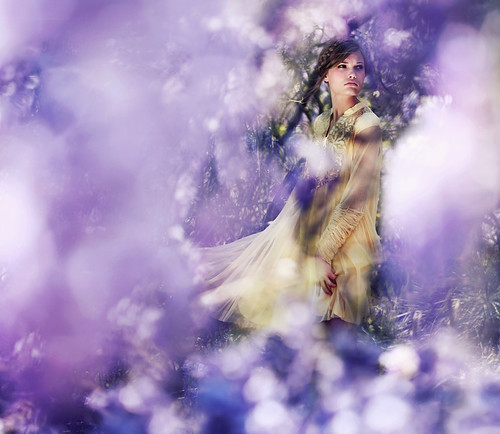
Awaken, spring. by alexstoddard
Awaken, spring., a photo by alexstoddard on Flickr.
This morning I've completed a new OOAK perfume today - Tubereuse et Violettes that has been aging since 2004...

Tubereuse et Violette is a Green and tender variation on tuberose, reminiscent of green fig and milky iris. Its inspiration was the majestic and extravagant perfumes of the Royal French courts at the time of Marie Antoinette when European perfumery became more sophisticated and extravagant, with the addition of flowers extracted by enfleurage.

Top notes: Black pepper, Mimosa, Rosewood, Ginger Lily
Heart notes: Tuberose, Violet Leaf, Orris Root (butter and tincture), Jasmine, Rose de Mai
Base notes: Opoponax (oil and tincture), Vanilla tincture, Tonka Bean, Vegetale Musk

Labels: , , , , , ,

Sunday, May 05, 2013

Sweet Breath

Illusioned by Diana Pinto
Illusioned, a photo by Diana Pinto on Flickr.
Anima Dulcis (Sweet Soul in Latin) was one of those rare things in the perfume world: love at first sniff. And that first sniff began intriguingly with cumin, a note so rarely used in perfume, and when it does is considered a daring choice. It's not-always favourable association with sweat is precisely what makes cumin compelling to me. It makes it more human and accessible on a personal level.
The love at first whiff is not so much because of the cumin, but more so with how it is orchestrated with iris and earthy-ambery base that brings to mind non other than the reformulated Femme de Rocahs (1989). In the latter, there is something audaciously over-the-top and a tad plastic-y.
Anima Dulcis, however, is everything I could hope that version of Femme would transform to on my skin and better. The cocoa plays greater role in the ad copy (a Mexican theme of chocolate and chilli) than in the perfume: it's merely in the background, creating a layer of soft-focused dusting to complement the powdery orris, indolic jasmine and liberating hedione, and leading to a sensual, earthy finale of dark patchouli of the best kind and the bitterness of arcane myrrh resin.
Discovering it was like meeting an old friend I was searching for a long time. A consoling moment. And to me the name is more of a suggestion that there is an echo to our soul somewhere, whether or not we're aware of it.

Top notes: Cumin, Black Pepper, Ylang Ylang
Heart notes: Jasmine, Cinnamon, Orris Root
Base notes: Vanilla, Patchouli, Benzoin, Myrrh, Cacao

Labels: , , , , , , , ,

Saturday, November 22, 2008

Boutique Exclusives


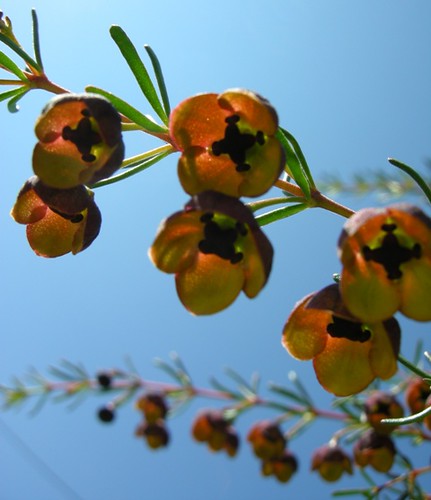
Boronia, originally uploaded by Helen Boronia McHugh.

Recent increases in rare floral essences prices have forced me to do something I don't like doing, but have to: increase the price on selected perfumes from my collection. I don't like the snobbish attitude this may imply, but if I want to be able to continue buying the materials to make these perfumes, logic forces me to follow what the numbers request.

The perfumes subject to the increase are those containing precious essences such as boronia, broom (the latter has increased its price significantly this year, and is now about $500 per ounce) and jonquille. Also, the ones that I will probably not be able to get for a long time if at all - such as ambergris and East Indian sandalwood (I have enough in stock to make Gigi for a whilte).

The price for the following perfumes are exclusive to Ayala Moriel's boutique as they can only be produced on a small scale. Their price have been increased to $160 per 9ml flacon:
Gigi
Grin
Indigo
l'Écume des Jours
Razala
And of course, Sahleb and the upcoming (2009) perfume The Purple Dress will bear the same price, reflecting the high concentration of rare essences that goes into their disctinc scent (orris with 15% irone and ambrette seed in Sahleb and red & golden champaca in The Purple Dress).

Labels: , , , , , , , ,

Thursday, October 16, 2008

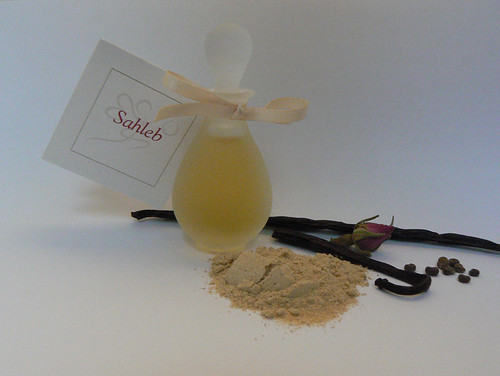
New Perfume: Sahleb


Sahleb, originally uploaded by Ayala Moriel.

A flower and a dessert… Sahleb is the stuff dreams are made of. Flavoured with rosewater and crushed mastic resin, Sahleb (orchid in Arabic) emerges from every street corner in steaming copper caldrons. The creamiest orris root is the core of this buttery-smooth perfume; complete with rosewater, vanilla and butter and topped with coconut, cardamom, mastic and nutty ambrette – Sahleb is ready to seduce you into winter.

Ayala Moriel is proud to introduce Sahleb: the perfume version of a Middle Eastern winter favourite. This scrumptious pudding beverage, flavoured with rosewater and crushed mastic resin is offered by street vendors straight from a copper caldron throughout the cooler seasons across the Middle East. Served warm and topped with coconut, pistachio and cardamom, Sahleb has become an essential part of winter and a way to make even the gloomiest street corners cozy and home-like.

The creamiest orris root from Italy was used to create the smooth texture of this starchy and soothing pudding-beverage. A hint of the finest rose otto from Turkey, coconut and butter essence and crushed mastic resin complete the exotic flavour, and finished with a hint of vanilla and nutty ambrette seed Sahleb is ready to seduce you into winter!

Top Notes: Coriander Seed, Rosewood, Mastic Resin Heart Notes: Orris, Rose Otto, Butter Base Notes: Ambrette Seed, Coconut, Vanilla Absolute
Fragrance Family: Floral Powdery, Gourmand

*Available in Parfum Extrait (9ml flacon $160; 1ml sample $17)

Related links:

Buy Sahleb Perfume

Consumer Reviews of Sahleb on MUA

Travel Memoirs: Instanbul Part 3 (Perfume Shrine)

Now Smell This new perfume announcement

Labels: , , , , , ,

Wednesday, October 15, 2008

Orchid, Pudding, Perfume: The Sahleb Story


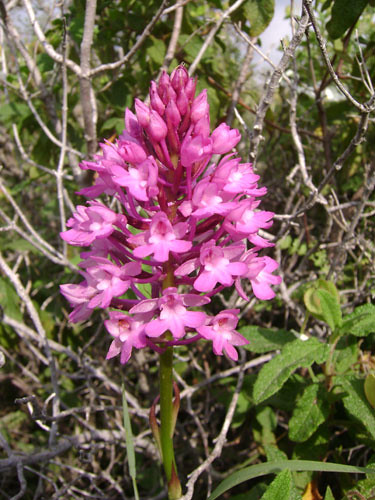
Sahleb Orchid, originally uploaded by Ayala Moriel.

Sahleb perfume was born from three simple elements: Beurre d’Iris, butter essence the obscure and comforting pudding-beverage. It was meant to be a simple comfort scent, with no particular baggage or deep history. The name of the beverage suggests its origin: Sahleb is in Arabic word for orchid (Sachlav in Hebrew). And indeed, Sahleb is made of the ground starchy bulb of a Mediterranean species of orchids: Early Red Orchid (Orchis mascula).

Several orris butters have passed by my nose in my last 8 years of perfumery. But no orris root really fascinated and excited me as much as a particular batch I received from Eden Botanical: Beurre d’Iris (aka orris butter -which really is the essential oil, but with a consistency of crumbly butter or powdery wax). It come stright from Florence, Italy, where the Iris pallida grows, and is the most creamy, smooth and sweet orris I’ve ever encountered. Warm rather than the cool and vague, distant powderiness that most orris butter present.

Orris butter is one of the most precious perfumery materials, currently set at nearly $7,000 per pound. There is much labour involved in the process: the roots need to be washed and peeled by hand and than mature for several years in dark cellars. They are than pulverized before being distilled into an essential oil. Lastly, the yield is relatively low which makes it prohibitive; yet at the same time, the presence of irone, a violet-like molecule similar in its aroma to ionone, makes it invaluable in perfumery. The particular orris butter in question had 15% irone, which is almost the highest irone content one can hope for (sometimes, 20% irone is available).

The butter CO2 is a molecular distillation of this beloved dairy product. If you ever fry your eggs with a bit of butter, or make homebaked crumbly butter cookies or pie crusts - this is the scent of butter CO2. When I first smelled it I was simultaneously repulsed and intrigued by how realistic and potent it was. It simply hits your nose with this burnt-butter sensation, suffocating and comforting at once. Just like a late, fat Sunday brunch.


Sahleb Merchant, originally uploaded by Ayala Moriel.

My constant inspiration comes from home, where I grew up in the Middle East, surrounded by an abundance of flavours and fragrances native to my country. Living in Vancouver most of the year, I miss all of the plants and smells and little edible pleasures of daily life. Especially on days when I go to my neighborhood Middle Eastern deli and there is no sahleb on the shelf (or worse: no tahini! But that’s because my brother probably ate all of the tahini supply in the city in his 12 months stay in Vancouver). On days like this a perfume can help bridge over the physical distance and give the illusion of closeness, and the comfortable certainty of nostalgia.

For those of you who haven’t been fortunate enough to try sahleb (yet), you must know that it is the most comforting beverage you can imagine, and at the same time exotic and intriguing. It is made of ground starchy orchid root powder, cooked with milk and a bit of sugar and rosewater (sometimes ground mastic resin is added too). It is served warm and topped with crushed pistachios, coconut and spice (most typically cardamom and cinnamon). In Café Clil in my home village, it is served with a split banana and some peanuts on the side as well, which is original, different yet appropriate.


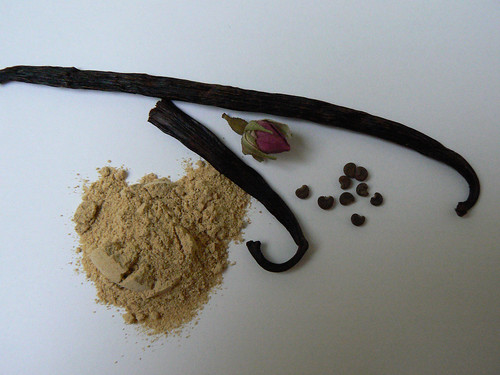
Sahleb Ingredients, originally uploaded by Ayala Moriel.

Somehow, it all came together in my mind and I was determined to make a perfume inspired by Sahleb. Sahleb required subtleness and richness and had to be very milky and starchy. So it was only natural that I would use the obviously milky butter essence, and the haunting orris butter with 15% irone. And that how Sahleb was born. Ambrette seed was crucial for the composition’s fatty quality and also to make it more perfumey and skin-like. There is only very little rose in the perfume, as well as a bit of mastic resin tincture which I had to prepare myself. The spices and top notes used also have some starchy quality to them – coriander and rosewood.

Unfortunately, when I was ready to launch Sahleb this season, I learned that my supplier have run out of the orris and were not able to anticipate when this quality iris will be back in stock. I have a feeling that the wave of iris scents that washed us throughout last year (i.e.: Iris Ganache, Infusion d’Iris…) have used up a large portion of the world’s supplies and I am now in a bit of a panic regarding finding quality orris butter for my perfumes.

Therefore, I have decided to launch Sahleb as an exclusive limited edition, which means with a price point ($160) that truly reflects it’s cost, and in very limited run of only 11 bottles (2 of which were already taken). Also, there are no samples offered for Sahleb perfume - aside from samples that I have given out before I knew of this little “orris crisis”, and 5 more that are in stock there will be no samples available.


Sahleb, originally uploaded by Ayala Moriel.

Labels: , , , , , , ,

Saturday, July 05, 2008

Figue-Iris

Figue-Iris opens with sweet but crisp fig notes. It’s more of a purple fig than a green one. The iris is there from the start, first crisp and paper-clean, chiming with the fig in a harmony that brings to mind the melancholy of peach skin and lilacs in early summer rain, and makes me wonder if Figue-Iris hasn’t by any chance taken its inspiration from Apres l’Ondee (and do I detect some anise there as well or was it just a ghost in my imagination?) and with the underlining heliotropine it also gives an obvious wink to l’Herue Bleau. But this is only in the beginning. Once the top notes fade out all we are left with is a toned-down version of what used ot be the glorious Guerlinade – an accord of iris, tonka and vanilla that can be found in some proportion in nearly all Guerlain’s perfumes. In this case it’s a modernized version, and gives off a linear impression, losing the initial interest and intrigue.

That being said, I find Figue-Iris to be one of my more favourable Aqua Allegoria installments, and one that is more balanced and easy to wear. My previous favourite, Herba Fresca was most original, but unfortunately it was too sharp and therefore unwearable for me. Another favourite of mine from the line is previous year’s Mandarine-Basilic.

Figue-Iris was almost a love at first sniff. However, what started up promising – both fig and iris are favourite notes of mine – lead to a disappointment. I was ready to pull out superlative sentences that I was saving for a long time for the house of Guerlain – but I suppose I will have to wait for something else to come up. For now I will just say that this is for me the most easy to wear Aqua Allegoria albeit not the most interesting in the way of the dry down, which is a little sweeter and a lot more generic than I hoped for. Still, it is so much better than nearly anything else that has come out recently, and even though I think the idea could have been executed differently and create a thoroughly original fragrance – I think it is one that deserves your attention, especially if you like either iris or fig or are just a die-har Guerlain fan. It may pale in comparison to the Guerlain classics of yesteryear, but it is so much better than Insolence and any of the sticky-fruity Samsara flankers.

On the positive side, thanks for Jean-Paul Guerlain (the nose behind Figue-Iris) for using this opportunity to remind younger audiences of Apres l’Ondee and l’Heure Bleue. I’d like to think that the disappointing dry down was a commercial compromise imposed by Guerlain’s marketing department.

Labels: , , , , , ,

Monday, June 05, 2006

Hiris and Harissa

HIRIS may seem aloof at first, cool and with a paper-like texture. It pairs two of the most dangerously anosmiac notes – orris and musk – and therefore it may not be as satisfying as it could be to some individuals. The first thing I noticed about Hiris is that it’s a really bad idea to try it on paper – even more than other perfumes. It smells like paper, and the scent becomes completely camouflaged on the scent stripe. The second thing I noticed was that when applied to my skin, it smelled surprisingly of cedar (and slightly green at that), and at the same time also very gourmand – like flour, or more accurately, certain Morrocan semolina cookie that my step-grandmother used to make (she called them “sweet patties” but I don’t know the real name and can’t find anything about it at the moment; I will need to find a good Moroccan recipe book next time I am in Israel). These cookies are only slightly sweetened with honey, and flavoured with coriander and a tinge of fennel. The spices strangely complement the interesting, sand-like gritty texture of the cookie, as the semolina crumbs don’t-quite-dissolve in your mouth while the butter and honey melt on your tongue… I love perfumes that smell gourmand but are not really sweet. I only wish this gourmand phase could have lasted longer in Hiris…


The initial introduction of flour and rice paper moves to the background faster than I would have liked it to be, and reveals a delicate scent of tiny blossoms – a delicate, almost fragile lily of the valley, in which the scent of the flower’s stems and leaves provide an underlining cool greenness such as of dew-laden flowers in early morning, when the scent is not at its peak yet. The result is so remote from lily of the valley that it is easily interpreted as the scent of white iris petals unfolding after the rain and releasing their scent surrounded by damp branches and dried stems which are found near a pond, where the iris rhizome develop their strange, watery-coolness and aloof powdery-earthiness.

The dry down (which arrives faster than expected), is musky with a hint of opoponax and slightly vanillic, which makes it warm and a lot more approachable than it may be expected. The only downside of this perfume for me is it’s unsatisfactory lasting power. I need to reapply almost every hour to be able to notice it’s there. But also let’s not forget that I want to remember biting into those cookies again, and again, and again…

Top notes: bergamot, mandarin, coriander, rosewood
Heart notes: orris, lily of the valley, jasmine, ylang-ylang, rose
Base notes: cedar, musk, vanilla

The pastries in the photo above are nothing like the "sweet patties" (which I could find no image of recipe of yet) in their barely-there sweetness and the interesting spices, but nevertheless are another favourite Middle Eastern semolina pastry which I love its flavour as well as texture - and happen to know how to make. It is called Harissa, of all things. Like many other Middle Easter pastires (i.e.: baklava), this pastry is baked without sugar, and is sweetened only after baking (and while still hot), by soaking it in Honey Syrup.
So here comes the recipe:


HARISSA
Sweet Semulina and Honey cake from the Middle East


For the Honey Syrup:


1 ½ cups Sugar
½ cup Water
1 Tbs. Lemon Juice
1 ½ Tbs. Rosewater (or Orange Flower Water)
75gr. Butter

- Boil the wataer, sugar and lemon juice until it thickens and covers a spoon. Remove from heat and melt in the butter. Add the rosewater. Set aside and cool down to room temprature.s

For the Dough:
2 ½ cups Semulina (aka Cream of Wheat – yes, the same one used as a breakfast cereal in the West, but be sure to not get the “healthy” variety, with the bran… It should be as white as sand in Hawaii)
1 cup finally shredded coconut (unsweetened)
½ cup all-purpose unbleached white flour
1 Tbs. pure vanilla extract
1 Tbs. baking powder
75 gr. Butter
1 ½ cup Buttermilk
Blanched almonds for decoration

- Preheat oven to 180 Celsius
- In a large bowl, mix together the dry ingredients (flour, semolina, coconut, and baking powder)
- Cut the (cold) butter into small pieces and add to the dry mixture
- Rub with your fingers until the little crumbs form
- Pour in the buttermilk and vanilla extract, and mix well until a dough forms
- Line a 9” round spring-pan with parchment paper, and press the dough evenly in the pan
- Cut the unbaked cake (before baking) into diagonal lines, to create diamond shapes
- Press one blanched almond onto each diamond
- Bake in the oven for 40 minutes (or until the edges of the cake turns gold)
- When the cake is still HOT, pour the cool syrup onto the cake, gradually – to allow all the syrup to soak in evenly and thoroughly


Labels: , , , ,

Friday, March 17, 2006

Decoding Obscure Notes Part IV: Violets - Purple or Green?

Violets have been long regarded for their delicate and sublime aroma. Although for the most part they are considered a shy, lady-like scent and are associated with Victorian times, when violets were most popular in history. Violets are also considered aphrodisiacs – though usually a “proper” and “well mannered” aphrodisiac. There is a hidden darkness and duskiness about violets that does not come through in all violet fragrances.

A quick visit to the most infamous violet scents will lead to the conclusion that there are no two violets that are the same. There are some green ones – such as Verte Violette, Ormonde and Viola; There are powdery ethereal ones such as Apres l’Ondee, and there are others that are sweet and floral with no question about their violetness, such as Violetta and Meteorites (a Guerlain limited edition).

The differences lays with the fact that the part of the plant that is used commercially is the leaves. However, the nostalgic scent that was so prized in Victorian times was the flowers themselves. These are sweet and powdery at once and quite unusual; Their unmistakable scent is very delicate – in fact, almost invisible in the fresh flowers themselves. Since violet flowers are for the most part man made compounds, the interpretations are limitless, ranging from powdery to green, floral and even gourmand-like, inspired by candied violets.

Violet Flower Absolute
Although violet flowers can be distilled into an absolute, the process is labour intense and non-cost-effective. When I use violet flower note in my perfumes, it is a compound made if various oils that are rich in ionone - such as orris root, violet leaf absolute, boronia along with other floral oils or absolutes to round off the accord and give it a soft flowery impression.

Violet Leaf Absolute
This dark green liquid from the violet leaves smells cool and green, just like cucumber. When diluted, it exposes its powdery and floral characteristics, rather than leafy green.

Boronia Absolute
Boronia comes from the shores of Tasmania, and is one of the most precious absolutes. It contains a lot of ionone – a key component in violet and orris. It has undertones reminiscent of sandalwood and hay, a yellow freesia and violet like body and a slightly fruity, almost like cassis and apricot top notes. More than anything else – it is reminiscent of fresh yellow freesias - fruity, green and spicy all at once.

Orris Butter
Orris has an important role in the creation of violet flower compounds. As much as orris root butter is expensive – it is far more cost effective than harvesting violet flower absolute. Along with chemicals from the ionone family, it helps to duplicate the delicate scent of violet flowers.

Lavender
Besides its innumerable roles in perfumery and aromatherapy alike, lavender has affiliation with violets. It is floral, herbaceous, powdery and sweet all at once and also, well, purple. The softness and warmth of lavender promotes the powderiness of violet compounds.

Costus
I have already mentioned before, in the article about musks, the unique characteristics of costus. However, it’s dusky, dark and slightly oily quality is not only valuable for creating vegetale musk accords, but also as a deep and delicately sweet and rich foundation for violet accords – especially when seeking a dark, more mysterious (rather than purely innocent) violet.


Labels: , , ,

Sunday, March 12, 2006

Shalimar

Comparing to the multi-faceted masterpieces Mitsouko, Vol de Nuit and l’Heure Bleue, Shalimar is in danger of being the most obvious – a purely seductive indulgence. Even the bottle shows off with it’s fountain-shaped stopper – or is it the feathered crown of a peacock’s head? It is a grandiose show-off of sensuality and passion – not unlike it’s inspirational tragic love story which resulted in the bombard grave known to us as Taj Mahal.

In fact, Shalimar is almost too good to be true. There is nothing in this perfume that is not pleasantly dripping of sweet softness and curvy sensuality. From the sweet and fresh bergamot and curiously smoky top notes through the rose petals and jasmine blossoms softened by powdered iris, carnal base notes of castoreum, musk and opoponax sweetened with amber, tonka and affectionate doses of vanilla. The real beauty, however, and where the genius of Shalimar lies, is in the final dry down – a soft and delicious just-kissed skin,fondled and worshiped by a lover.

From the most memorable creations of Jacques Guerlain, Shalimar is least complex, despite its incredible richness and expressiveness.: it sends a clear message of an indefeasible aphrodisiac. It’s beauty lies in the uncompromising hedonistic attitude and the absence of ambivalence in it’s total romanticism and sensuality.


Top notes:
Smoky leather notes, Bergamot, Orange

Heart notes:
Rose, Jasmine, Orris

Base notes:
Vanilla, Amber, Opoponax, Musk, Patchouli, Castoerum


p.s. The only concentration I recommend for Shalimar is the Parfum Extrait. It may be different with vintage Shalimar, but the newly produced ones in other concentrations are a far cry from the love song that is the pure parfum.


Illustration from Karin Kuhlman’s Peacock fractal

Labels: , , , , , ,

Saturday, March 11, 2006

l'Heure Bleue


L’Heure Bleue is one of the true masterpiece by Jacques Guerlain. I see it as standing hand-in-hand with its sisters Mitsouko and Vol de Nuit. There is certain quality that underlines those three masterpieces and makes them even more than an amazingly beautiful-smelling perfume to wear - but truly a work of art.

L’Heure Bleue is sophisticated and anigmatic, and yet has a unique melodramatic peacefulness that definitely does not lack reflective, philosophical melancholy…
When you realize, once the last dusky lights are giving themselves away to the first stars, how beautiful the day was, and how wonderful the deep blue night is, and the world is so vast and immeasurable and so full of beauty that it may even make you want to cry…
This moment of beauty is so eternal that it makes you feel your mortality in a painful way. Still, you are content with yourself and your life that you know if it will be taken from you that moment, you will feel complete and in perfect harmony with the universe…

You breathe in the silent fresh air of your warm summer garden… The night blooming jasmine is beautiful and intoxicating… The grass that has been just watered, full of murmurs and insects’ summer-songs… The orange blossom flowers are just folding themselves for a long, peaceful night sleep. You pick a late blooming rose, a deep, velvety-purple-crimson rose, her petals already soft after warming up in the sun for the past three days. You hold the rose and fondle the petals and hold them against your cheeks to sense the warm scent of a mature rose releasing the peak of her last fragrance into the night air... And it is all part of you now, there is no need to hold on to it.

Those beautiful, magical notes interweave with each other so gently that it is hard to tell one from the other. Together they create one impression that in my mind I visualize as a very earthy brown colour, though somewhat rich and copper like. I simply cannot see a deep blue when smelling l’Heure Bleue, though the different notes on their own make sense and tell the story of this time of the day:
There are the subtle citrus and anise top notes that are there to accentuate the soft florals, including violet flowers, and link them to the deeper base notes.
The root of the composition, apparent from first application, is a soft and bittersweet heliotrope, combined with tonka bean that accentuates the softness, yet also possesses the bitter-almond-like undertones. Vanilla and orris root are also present, to support the overall powderiness and soft, mature and philosophical nature of l'Heure Bleue.

The drydown is somewhat more smooth and ambery (though it is hard to see l’Heure Bleue as an oriental per se –it has such a unique individuality and perhaps deserves not to be categorized at all…Just like Vol de Nuit and Mitsouko, I am afraid it does not quite fit into categories…)– The drydown is a bit less powdery, with a vanillic accord. It also has some woody notes in the drydown – I suspect vetiver, but cannot quite pin point it. I will not be surprised to find some oakmoss in it either, though not in a chypre context but an oriental context, and perhaps some underlining spices that are subtle and are not meant to be recognized but rather create a warm undernote to support the rest of the scene.

There is something in it that totally reminds me, surprisingly, of Mitsouko – the fruitiness that is quite dry, bittersweet (dry peach like notes in Mitsouko, and the cherry-like notes in l’Heure Bleue); and a certain dark woodiness at the base that is interesting, mysterious, hard to grasp – but once you get it you are totally captivated!
The fruitiness of l’Heure Bleue lasts much longer though – as it originates in the heliotrope base notes, rather than the peach top notes in Mitsouko (that most people find they fade just a bit too quickly after been exposed…).

Top notes: Bergamot, aniseed
Heart notes: Jasmine, Orange Blossom, Rose, Violet, Carnation, Orris root
Base notes: Heliotrope, Tonka Bean, Vanilla, Vetiver, Woods, Spices

L’Heure Bleue is probably the most incredible inspiration one could have ever found for a perfume – the name is beautiful, captivating, alluring, enchanting...
Initially, the fragrance itself did not do the same thing to me - It seemed to be extremely sweet, with a dominant, bittersweet heliotrope note in it, and dries down to a rather interesting and comfortable ambery-powdery vanilla. It wasn’t until I tried l’Heure Bleue in pure parfum that I got to enjoy, understand and appreciate it more – although I believe I only touched the surface of this aromatic mystery. It smelled intensley of jasmine when I smelled it directly from the bottle, and from there the images started flowing...

When I first heard about l’Heure Bleue I was so fascinated with the inspiration for it that I decided to create my own interpretation for such a magical hour. It immediately made me think about my mother – an enigmatic lady (I am still trying to figure her out…), she is an aquired anosmic who always loved anise and velvet. I created for her the perfume Indigo, an enigmatic concoction of anise, caraway, bergamot, boronia, orange blossom, jasmine, violet, spices, incense and amber. To be honest, there is hardly anything in common between the two fragrances, left for a few notes and the insipration. Indigo is soft and cool as satiny-velvet, and smells like a nightfal in the Wadi – the dried riverbed, full of luscious greenery and vegetation, and the sounds of frogs and crickets.

I only learned about l’Heure Bleue’s sweetness after creating Indigo (I didn't find l'Heure Bleue until after I created my own interpretation for that inspirational and magical hour). So, once I actually smelled the original creation I must admit I was somewhat confused and initially, perhaps a bit disappointed: it was not what I expected, it did not make me think about the blue hour – until after I worn it several times in the parfum form, which unfortunately is becoming harder to find by the minute…Like Mitsouko, I think it takes rare personality to carry it through easily and without tapping into it first…

Now that I have given l’Heure Bleue a chance, and tried it several times, I must confess that I understand why this classic has survived two world wars as well as the currently overwhelming age of perfumery.

p.s. Although the other concentrations are nice too, the pure parfum is for sure the best one. The Eau de Parfum is quite true to the parfum, while the Eau de Toilette is more similar to Apres l'Ondee. The other concentrations will be reviewed later.

Artwork: Frank Holmes - Blue Twilight

Labels: , , , , , , ,

Monday, March 06, 2006

Après l'Ondée

Rain shower may leave a trail of scent behind, or may draw an invisible curtain hanging in the air; suddenly brightening the spirits and reviviving the thirsty plants and soil. Suddenly, one becomes aware of the possibility of other realities, of luscious greens and patience and calm. After the first rain in the dry lands, the earth releases a special scent emitted by the myriads of organisms inhabiting the upper layer of the soil – a musty and clean scent of wet earth. However, in places blessed with rain all year around, those scents are less than evident except for those times when the earth had enough time to dry and lust for water.

When I first heard of Après l'Ondée, I was longing to try it and could not find a trace of it anywhere until a few years later. However, I was so fascinated by the idea of it, that I immediately set to design a perfume as an homage to the scent after the first rain in my home village. The result was Rainforest – ironically a scent that is more similar to the rainforests of the West Coast, the exile in which rain bares no precious values. Nevertheless, it gives on the feeling of a veil that have been lifted after the first rain to reveal life and hope, while also portraying the wild greenness of the West Coast rainforests.

Après l'Ondée paints a completely different post-rain olfaction scenery, one that was for the most part foreign to me, until I traveled to countries where rain showers appear uninvited in the midst of summer, shuttering the delicate and fluffy blossoms of tiny purple flowers. Après l'Ondée is shy and quiet, like the cyclamen flowers hiding in the hollows of grey rocks, as if to escape the raging thunder storm.

The cool and distant powderiness of orris and violet is soft and obscure, warmed by anise and carnation, and underlined with a quiet resonance of jasmine and subtle vanillic accord – like a dreamy summer-stroll along the dusty paths of a flower garden that suddenly was given away to a gently showering overcast, a reminder of the intimate closeness between beauty and melancholy.

Top notes:
Bergamot, Aniseed

Heart notes:
Violet flower, Jasmine, Rose, Carnation

Base notes:
Iris roots, Vanilla, Heliotrope

Labels: , , , , , , ,

Powdery Incense Recipe - inspired by Après L'Ondée

2 Tbs. orris root powder
2 Tbs. sandalwood powder
1 Tbs. Frankincense tears, ground or crushed
1 Tbs. Siamese benzoin
1 Tbs. Sumatran benzoin
2 Tbs. lavender buds
30 drops lavender essential oil
20 drops Aniseed essential oil
10 drops jasmine absolute (optional)
1⁄4 tsp each: finely and freshly ground mace, nutmeg, coriander
1⁄2 tsp. Aniseed, finely and freshly ground

Measure the dry ingredients. Crush or powder the ingredients in a mortar and pestle or a coffee grinder. Stir well with a fork or chopsticks. Store in an airtight container and let the oils soak in well into the powders. After one week, you can use as an incense (burn a charcoal pellet and place a pinch of incense on top; refresh as needed. You may also use this to fill sachets.

I love to use the traditional mortar and pestle for grinding my spices, made of marble. Brass and wooden ones may be used as well. Coffee grinder will require less work, but is incomparable to the pleasure of seeing the spices and resins gradually crushing while slowly releasing their extraordinary aromas. Orris root and sandalwood are readily available in powdered forms, and so is Siamese benzoin. These can be found in herbal stores. Frankincense and other incense are available in many Catholic church stores.

Labels: , , ,

Wednesday, March 01, 2006

Decoding Obscure Notes Part II: Iris, Skin and Powder

The subtlety of musks and their similarity to the scent of the human skin is not unique to musks alone. There are other notes that possess similar qualities – the oiliness of orris butter is reminiscent of the soft and sweet odor of a newborn baby’s head. At the same time, it has a cool, watery and even slightly earthy aspect to it.

Orris root absolute is one of the most precious perfume materials. The roots need to be peeled and aged for a long time before extraction and distillation. It is invaluable in perfumery, for its powdery and delicate aroma and its role in floral compositions (especially those which require a violet-like touch). Orris is also used to soften woody, floriental and oriental compositions. Orris is one of the notes that make the Guerlain perfumes so soft and unique – it is one of the notes in the infamous Guerlinade. It’s role is of particular importance in Apres l’Ondee, Shalimar, l’Heure Bleue and Samsara. Recently, an orris theme has been receiving more attention by niche houses – Hiris (Hermes), Iris Poudre (Frederic Malle), Iris Silver Mist (Serge Lutens), Bois d’Iris (The Different Company), Iris Nobile (Aqua di Parma), Hirisa (Creed), and even the more mainstream Dior Homme released last year by Dior.

But orris is not the only note that has a distinct powdery and soft character that resembles the human skin. Some on their own – and others give this impression off only once they become part of a more complex accord.

Guiacwood
From the wild jungle tree of Argentina and Paraguay. The oil is waxy, fatty, almost skin-like, slightly smoky and with a unique tea rose scent. It is often used in tobacco or leather compositions as well as in masculine spicy and woody orientals. I have yet to smell a distinct guiacwood note in a perfume that is not my own, though I am certain and it is not officially listed as a note in very many perfumes.

Mimosa
Delicate and powdery, from the abundant yellow blossoms of the mimosa bush has a fragile top note that is somewhat soapy, reminiscent of cassie and slightly honeyed. Despite its powderiness, it is far smoother and more subtle than orris.

Cassie
A relative of the mimosa, cassie has a more pronounced floral-powdery scent, and is very delicate floral base note. It is warm, powdery and slightly spicy, herbaceous and warm.

Cabreuva
Cabreuva are extremely hard woods from Paraguay, Argentina and Brazil. Cabreuva has a very unusual watery, delicate floral note reminiscent of cassie, lily of the valley and mimosa. It has a scent that I cannot describe better than “watery”. When I smell cabreuva, I feel as if it gently rinses my brain with water… It feels clear and clean, and strangely soft and warm all at once. It adds those characteristics to perfumes as well – giving off a soapy, clean, watery feel…

Rosewood (Bois de Rose)
A by product of the rosewood furniture industry (steam distilled from rosewood dust). Rosewood contains a lot of linalool, a bright, clean, heady yet soft aroma chemical. Rosewood is a light and floral top note, powdery-smooth and slightly rosy (henceforth the name) and is not unlike lavender, but less herbal and slightly dried than lavender – and indeed often accompanies lavender to create a soft, powdery effect in fougere scents.

While orris and guiacwood have the oily, skin-like and powdery qualities on their own – notes such as mimosa, cassie, cabreuva and rosewood are more often used either as a theme or as a supporting note in a floral composition. Nevertheless, they are responsible for making a heady floral more personable by adding a pulsating suggestion of human bare skin – either freshly showered, or warm and smooth – either way, pulsating with sensuality that is strange and familiar at once…

Labels: , , ,