Sunday, April 21, 2019

Resurrection Incense

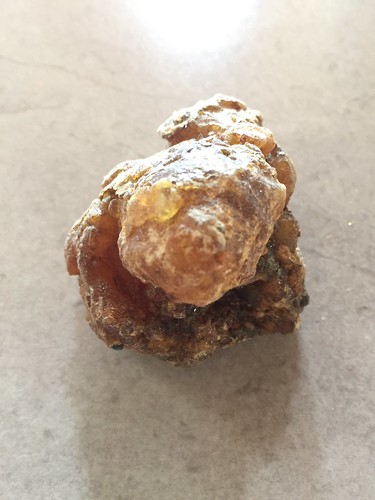
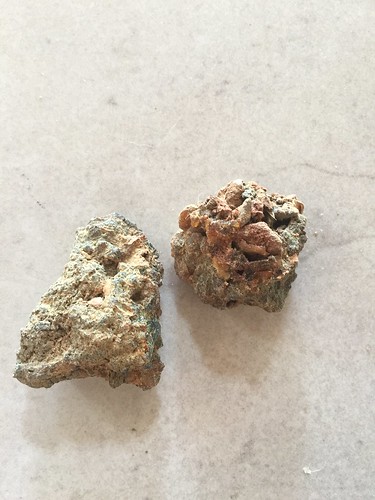
Myrrh Resin Enfleurage with Hyacinth Blossoms
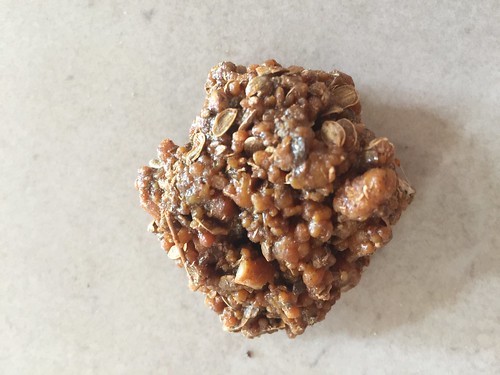
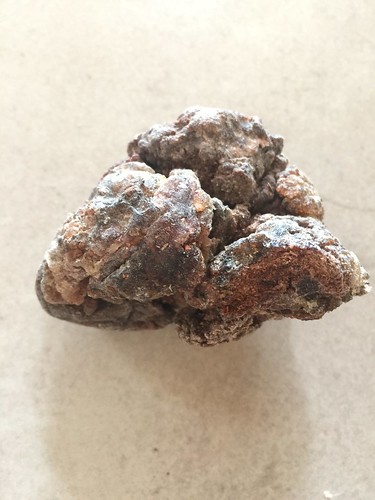
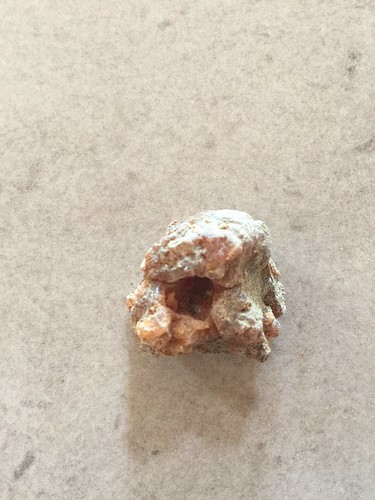
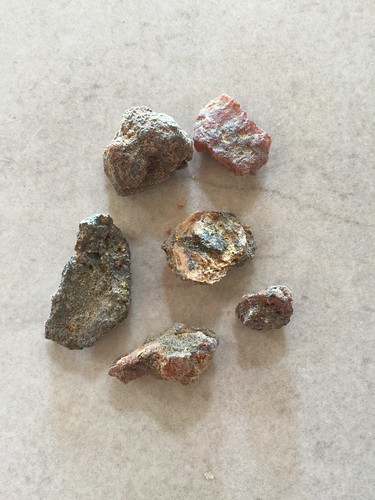
When the hyacinths were at their peak, I had enough flowers to make a dry enfleurage of Ethiopian Commiphora myrrha resin. Just as it seemed intuitively appropriate to pair the sunny brightness of frankincense with that of grapefruit blossoms, there was something about the contrast between the cave-like depth and catacomb-like mustiness of myrrh with the energy of a spring bulb flower. It smells like such a strong metaphor for spring's deep spiritual meaning rebirth, that is so strongly apparent in the natural world.

In winter, the bulbs are dormant in the ground. In spring they spring forth with a life force and push through the frozen earth towards the sun. Yet, I had an anterior motive for doing so. I made this very special incense as a spirit medicine for a young mother I know, who lost her baby only a few days after giving birth to her. The immense joy at the end of a difficult labour, the hope and happiness of becoming parents for just a few days all cut off so abruptly inspired me to create this incense medicine, as a reminder that even from the depth of myrrh's deathly grip one can emerge with a renewed life and bloom again like the hyacinth.

Happy Easter!

Labels: , , , , , , , ,

Wednesday, October 11, 2017

Summer Sage & Honey Soap

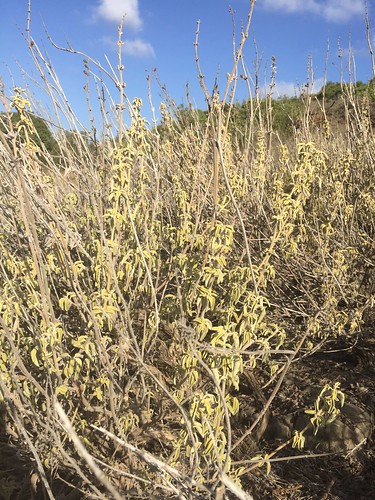
Summer Sage Harvest
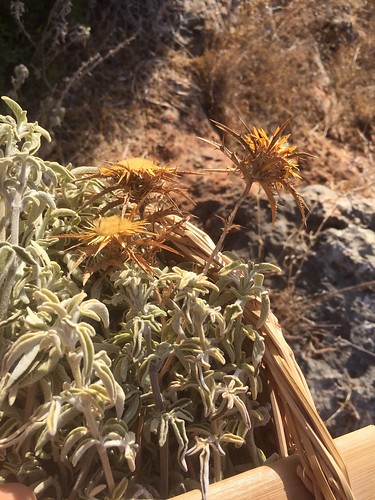
In the harsh summer conditions, certain plants developed a defence mechanism that prevents them from complete dehydration in the long drought conditions. The Three-Lobed Sage (Salvia fruticosa) is one of them. Naturally, the leaves in the summer produce a different aroma, and seem more concentrated to me. When not covered totally in desert dust, the leaves have a beautiful silvery-yellow-green colour, and are crinkly and "closed". They open in the winter after they get a few gulps of rain; and then will become larger and greener, with the texture turning from dry suede into fresh velvet.

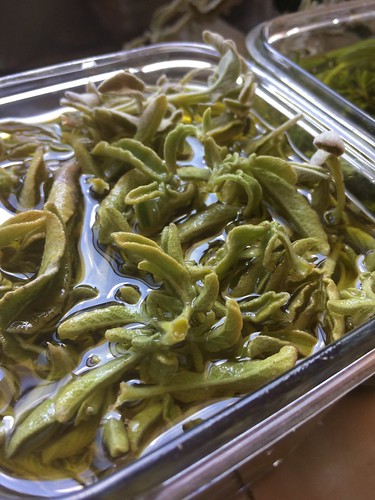
Sage harvest and olive oil infusion (for use in handmade soapmaking)

This particular sage (in Hebrew it can be translated literally into "Triangular Sage" because of its leaf made of three sections), shares many similar actions and properties with the garden/common/culinary sage, or as we call it in Hebrew, מרווה רפואית - literally translated as "medicinal sage" (Salvia officinalis), which is native to Europe. Our sage is actually gentler and safer than the latter, especially because of the lower thujone levels. Thujone interfers with the hormonal activity in the female body especially; and also has neorotixic and hallucinogenic influences when used in high dose.  Thujone in the wormwood plant is what gives the liquor absinthe its hallucinogenic properties.

Sage infusion in olive oil
Sage (S. fruticosa) is one of the most valued plants in the region, and so it is only natural that I wanted to include it in one of my concoctions. It is used for myriads of ailments, mostly using its antiseptic, expectorant and "drying" properties to treat colds, and is also an aid for women who wish to wean their babies from nursing - it dries the milk and saves the agony of breast infection in the process. It also helps with menstrual cramps and pain, and in all matter of indigestion. It also helps to clear and prevent Nephrolithiasis (kidney stones) and to fight fungal infections. It helps to calm the nerves, and used to treat headaches (especially as synergy with other local cure-alls such as za'atar and mint, in an oil infusion rubbed onto the temples). It is also used for anxiety and depression - the latter treated by the flowers, a less-known use of the plant.
As for its skin-related properties - it's a valued antimicrobial, astringent, cleansing and purifying plant, which is good against fungal and bacterial infections, but also eczema and psoriasis. Sage tea is excellent rinse for the scalp and will improve colour for dark hair, as well as give a shine and body to it if used instead of a mainstream conditioner.

Spent Sage Leaf
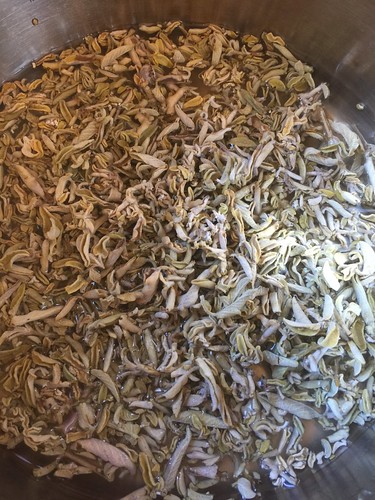
After I infused the leaves for one month in organic, local, cold-pressed olive oil, I strained the leaves (and composted them, of course).
Late Summer Sage
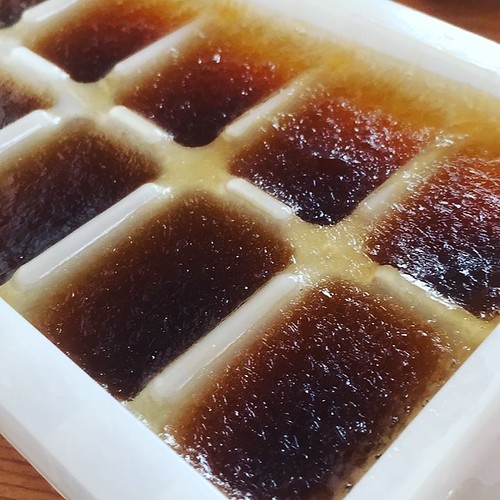
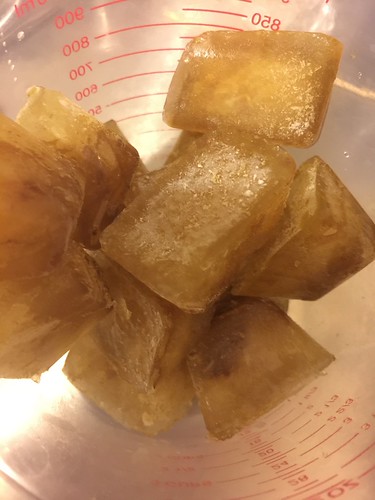
Another batch of leaves I brewed into a very strong tea, and made into ice cubes. If I didn't do that, all the nutrients and plant matter in the tea would get scorched by the caustic soda in the process of making the lye water.
Sage Tea Ice Cubes

Sage Tea Ice Cubes

Bringing on the Lye!
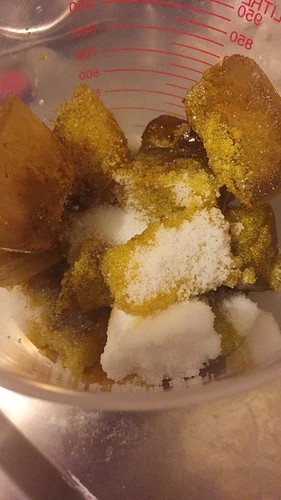
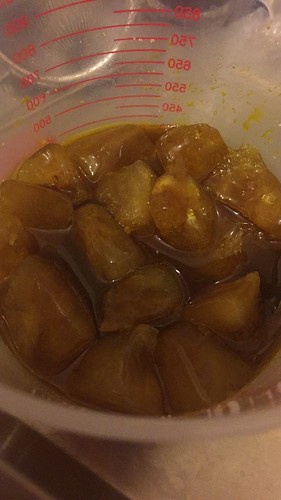
Once the caustic soda comes in contact with the water, a chemical reaction begins to take place, which generates heat very fast, and melts the ice cubes. Because i used only ice cubes, this lowered the temperature of the lye dramatically, which also results in less damage to the oil phase (once these two are mixed together).
Sage Lye Ice Tea...

Frankincense Tears

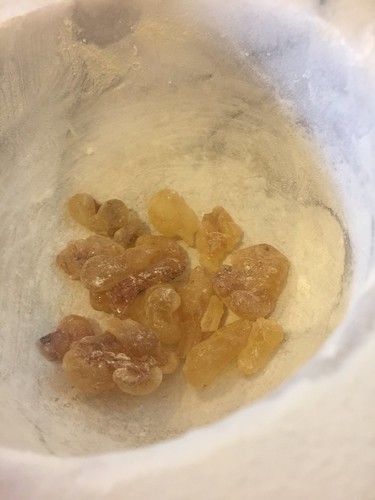
Frankincense tears, about to be ground up for the purpose of scenting and complementing the sage & honey soap. Myrrh is very beneficial for the skin, healing wounds and dehydrating. Frankincense also has healing benefits and both prevent the skin from aging prematurely.

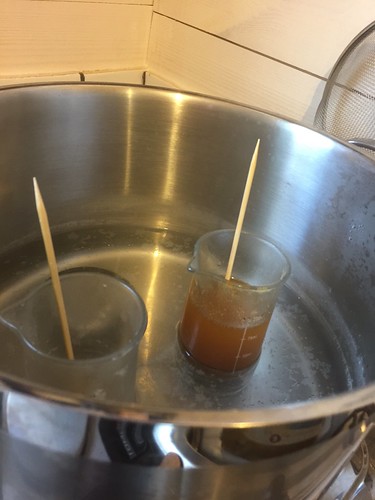
Myrrh in Bain Marie

Frankincense and myrrh getting a Mary's bath (Bain Marie means being marinate in a bath, actually). They are both melting slowly into the olive oil... An excellent infusion on its own, by the way. A simple remedy and concoction for skin healing, massage and perfume.

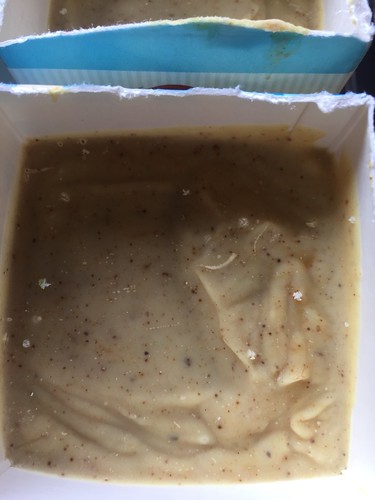
The other oils I used in this particular soap are the same as all my soaps - a winning formula of olive oil, coconut, palm and castor oils. To this I added oil-infusion of myrrh and frankincense resins (added at the very end of the saponification process, which prevents their demolition by the lye), and honey. This was left for 48 hours before unwrapping the moulds (I use 1L milk cartons as my moulds - a great way to reuse something that would have otherwise be thrown directly to the trash; an also saves me miles of wax paper and rinsing and washing).
Sage & Honey Soap
I panicked at first because of the white crystals that formed on the top. I was certain that they were lye flakes that didn't melt. After consulting with my soap mentor, and testing, I was much relieved to learn that they are just soap crystals.

How this soap bar smells was a big surprise to me: it smells almost edible, in an earthy, wholesome kind of way. Not like candy but a little bit like honey cake. If you love a bar of soap that smells sweet and spicy but not in a conventional Christmas candle or cinnamon bun style - this is definitely for you!
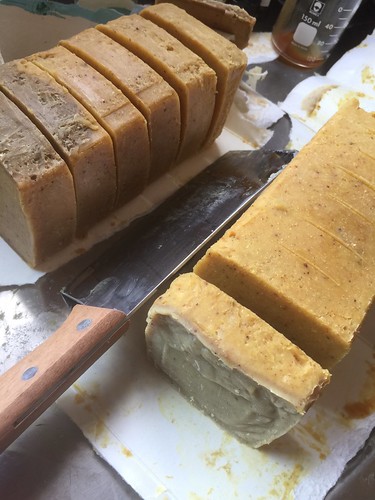
Sage & Honey Soap Bar with Frankincense & Myrrh Resins
The soaps are hand-sliced and left to cure for a month. They will be ready a month later, on November 10th. You can pre-order them online though - I only have 16 bars so if you love sage and honey and incense, you want to make sure you got one set aside for you!

Labels: , , , , , , , , , , , ,

Thursday, August 03, 2017

Burning through the Desert

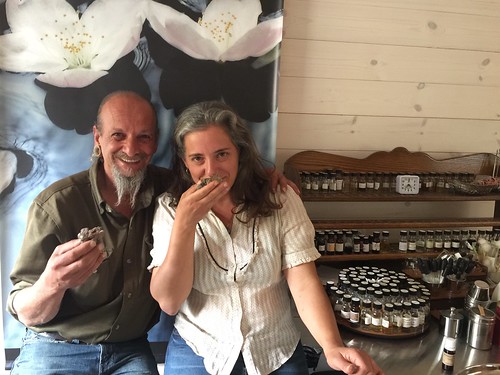
Dan Rielger & Ayala Moriel

A few months ago (the last day of April, to be exact, which was also the first day of my Orientals week-long course), I had the pleasure and honour to host a special guest throughout the day: Dan Riegler of Apothecary's Garden - a purveyor of fair trade resins from around the world - especially frankincense and myrrh that are wild crafted in the traditional methods in countries such as Somalia, Yemen and Kenya. He also sources Cretan labdanum, and other rare raw materials, and sells resin-centrered products that he concocts himself, which you can find on his online shop. One of them being a highly fragrant moustache wax which basically surrounded him with a cloud of frankincense - so obviously he made an instant good impression on me!

We started the day at the Baha'i Gardens in Akko (which deserve a full post dedicated to them) and then went to my studio to make incense - and burn a bunch too. Little did I know what I was signing up for. On top of the usual things I burn for this class (palo santo chips, sandalwood incense sticks, one type of myrrh and frankincense resins and my own rendition of Egyptian Kyphi) - Dan had a trunk-load of resins that he just imported from Africa, and was immensely kind and generous to share with us the most incredible incense resins with me and my class. We spent the afternoon burning rare myrrh, olibanum, and also some gums I never knew existed, namely Sandarac and Ammoniacum, the latter of which totally blew my mind.

I learned so much from Dan, about the resins (and the other raw materials he curates and sells), how they are harvested and collected, the chemical makeup of the resins and how it affects the stages of burning (it turns out that incense resins also have top, heart and base notes) - and this post is just a little taste of all the beautiful resins we burnt when he was here. I'm looking forward to meeting him again on his next visits in Israel on the way to the African continent.

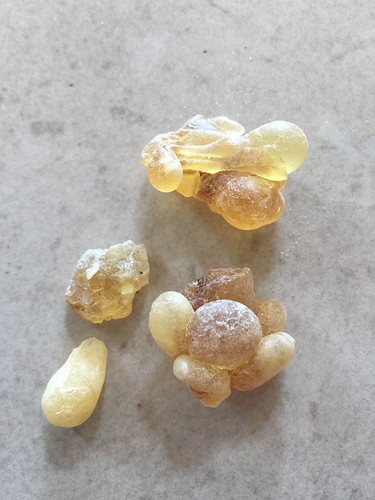
Boswellia carterii
Frankincense usually comes in "tears" shape as this Boswellia carterii - but not always. Below is a specimen of the less known B. neglecta that look more like a chunk of resinous granules. B. carterii has the characteristic, most unmistakable scent of frankincense - beginning with sweet citrus notes of lemon drops and orange candy and continuing into more resinous, woody and even balsamic, caramel-like nuances as the incense burns on the charcoal.

While looking pretty much the same, other frankincense species provide further nuances and a whole frankincense burning comparative study (or incense games a-la Japenese Koh-Doh) can easily occupy half a day. Compare this to Maydi (Boswellia frereana) which albeit its slightly herbaceous (sage-like) opening, is more subtle, woody and perfumey. In fact, it smells almost powdery like violet and iris. Ethiopian frakincince (Boswellia papyrifea) is even finer with its suave, light perfume notes, slightly sweet and with notes of burnt sugar at the end of the charcoal burning process.

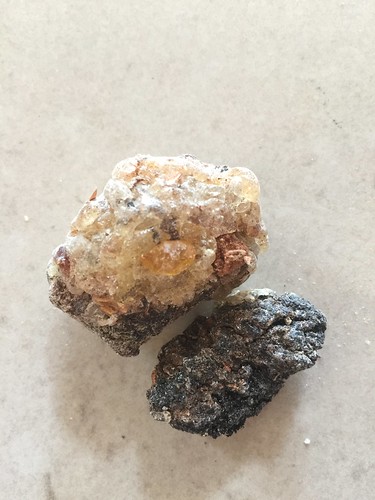
Boswellia negoecta - black and white

Boswellia neglecta is endemic to north Kenya and comes in white and black forms (as you can see in the photo) and is not widely known. The white and the black smell significantly different. The white begins resinous-green, piney and mysterious, surprisingly juice like crushed leaves with hints of parsley, galbanum and ammonia (smells a lot like amoniacum).  It has a hint of sweaty note, a little like coriander seed. The final burning moments bring to mind the smoke coming out of autumnal piles of fall leaves.

The black neglecta smells completely different - you wouldn't think it came from the same plant: it smells dark and looming, like moss, mushrooms, decaying fall leaves, peat, forest floor and hints of campfire. It's surprising and magical that a resin can possess so many different facets.

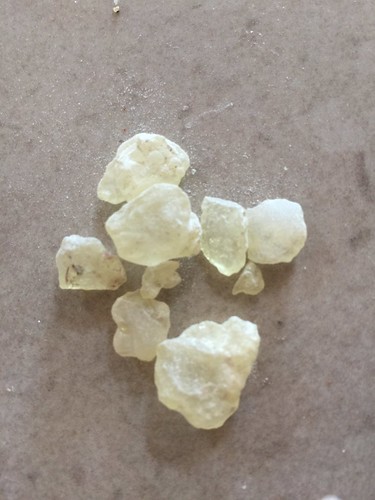
Sandarac
Sandarac (tetraclllyris) comes from Malta and just like its pure milky appearance, burns clean with a woody-balsamic-resinous scent that is fine and very pleasant. It's a little bit like elemi, a little like mastic but not quite. There is a tiny hint of seashore to it that I only detected after many times of burning. It is quite lovely, even if underwhelming at first impression.

Ammoniacum
Ammoniacum is intense and pungent, like a mixture of galbanum, asafoetida, sulphur, greens. It it a very interesting odour but I suspect it would have better effect in magic and exorcism ceremonies rather than contemplative incense rituals.

Commiphora confusa

Commiphora confusa, as the name suggests, is a type of myrrh that is hard to identify, and for several reasons: the flowers look different on each plant, the resin looks different as well - and the most surprising of all: it smells more like frankincense than myrrh.

Commiphora myrrha

Commiphora myrrha (from Ethiopea) has the characteristic bitter, rubbery scent when burnt, and is what I'd imagine the Queen of Sheba to wear on her neck when seducing King Solomon.

Commiphora karat

Commiphora kataf (from Kenya) has pieces of wood in it (which would change the smell of the smoke depending on which chunk you burn). It has a strange, sulphuric-sweaty odour. I guess you could call it spicy, as it has a hint of cumin in it too. Overall it reminds me more of the smell of food than incense - barbecuing kebabs comes to mind.

Commiphira holziana
Commiphora holtziana does not smell like myrrh at all to me. It's more woody than C. myrrha, and a tad fresh to start with. Dan describes it as briny and sea-like but I'm not getting it.

Arabian/Yemeni Myrrh
Arabian/Yemeni Myrrh is by far the most incredibly beautiful myrrh resin I've ever burnt. Although it came in a strange looking chunk, containing pieces of the plastic bags used by the collectors, and even a piece of wool yarn, it has the most fantastic scent, like a perfume on its own accord. It reminds me of the unique "version" of frankincense that B. papyrifea offers. I would love to have this as an essential oil and create a perfume with it.

Labels: , , , , , , , , ,

Sunday, May 05, 2013

Sweet Breath

Illusioned by Diana Pinto
Illusioned, a photo by Diana Pinto on Flickr.
Anima Dulcis (Sweet Soul in Latin) was one of those rare things in the perfume world: love at first sniff. And that first sniff began intriguingly with cumin, a note so rarely used in perfume, and when it does is considered a daring choice. It's not-always favourable association with sweat is precisely what makes cumin compelling to me. It makes it more human and accessible on a personal level.
The love at first whiff is not so much because of the cumin, but more so with how it is orchestrated with iris and earthy-ambery base that brings to mind non other than the reformulated Femme de Rocahs (1989). In the latter, there is something audaciously over-the-top and a tad plastic-y.
Anima Dulcis, however, is everything I could hope that version of Femme would transform to on my skin and better. The cocoa plays greater role in the ad copy (a Mexican theme of chocolate and chilli) than in the perfume: it's merely in the background, creating a layer of soft-focused dusting to complement the powdery orris, indolic jasmine and liberating hedione, and leading to a sensual, earthy finale of dark patchouli of the best kind and the bitterness of arcane myrrh resin.
Discovering it was like meeting an old friend I was searching for a long time. A consoling moment. And to me the name is more of a suggestion that there is an echo to our soul somewhere, whether or not we're aware of it.

Top notes: Cumin, Black Pepper, Ylang Ylang
Heart notes: Jasmine, Cinnamon, Orris Root
Base notes: Vanilla, Patchouli, Benzoin, Myrrh, Cacao

Labels: , , , , , , , ,

Tuesday, September 18, 2012

Who Needs a Boyfriend?!

When Boyfriend perfume came out, the story behind it as I recall was that Kate Walsh (not sure who she is - Comedian? Actress? Singer? All of the above?) longed for a long gone boyfriend's smell and thus created a perfume that will remind her of the shirt he leaves behind.

It's comforting to know that not only I sniff old boyfriend's sweaters (blush); and also, unlike the endless possibilities of cheesy videos that a perfume with such name could have rendered - I think it has a brilliant marketing campaign: It walks the tightrope of being nostalgic and emotional to a fault yet laughs at oneself while at it. Which is a healthy balance when delving into the dangerous world of romance. Even the packaging is well done - the bottle, engraved with a long list of popular Anglo-Saxone names (if you haven't dated them all, please circle the one that best applies). The only thing they overlooked in that regard is a big red marker to circle around the boyf's name/s that apply to you... I suppose I will have to source mine elsewhere.  But either way - the bottom line is that the whole campaign made me have a good laugh. Which is most welcome when it comes to the most "serious" matters of the heart... 

I guess all in all, I was the perfect target for this product: endlessly single gal in her 30's, career oriented, pretty hopeless when it comes to romance, and pathetically smelling old boyfriend's t-shirt when nobody's watching... Well, mine has gone stale long ago. I was so worried that the perfume will disappoint me that it took me another year to come closer to it (responding with a big smiling recoil at the daring dose of patchouli). And remembering that, I had to come back for a real try this week to complete my patchouli series.

Boyfriend begins with a robust fruity notes of dark plum, underscored with massive amounts of resinous benzoin - a sheer foundation for the most popular amber personality of the decade - "crystalline amber"*, whose sweetness can only be forgiven as it's anchored in a woody, dry, musky notes: bitter myrrh, reminiscent of the tears of sacrificial love that every woman worth her salt has put into a relationship only to find out that yet again, it isn't working; patchouli, to reminisce after his patchouli-lade Eau Sauvage aftershave (I'm just making things up... If I met a man who uses Eau Sauvage aftershave I would be single no more!). Vanilla kicks in shortly after the myrrh, but it's rather full-bodied and thick, bringing to mind real vanilla extract with a powdery heliotropin finish.

And lastly, Boyfriend dries into a clean patchouli and musk cocktail, that is not too uncommon for present day, but quite nicely done - a clean skin scent that is not unlike Pure Turquoise, though with a much warmer beginnings.

Boyfriend is surprisingly well-done, not just in comparison to other celebrity scents, but even just as it is. It's refreshing to see a celebrity taking her scent so seriously and bringing so much humour to a rather sore subject - kudos to her! Please don't kill it with meaningless flankers! (too late...?).  

*Crystalline amber is the kind that is light on the sweet resinous animalic aspects of labdanum, rendering its amberiness from fraction distillation of labdanum, which are more transparent, woody and clear in colour as well - plus some synthetics that I won't get into right now)

Labels: , , , , , , ,

Tuesday, February 14, 2012

Aphrodisiac of the Day: Myrrh

"Birth of Adonis" by Picart

"L" is for "Love" - and also labdanum and licorice – a couple of aromatics we can demonstrate affection with. However, labdanum is not easily obtainable and has very little other use besides perfume (not to mention very sticky and frustrating to work with if you are just starting out); and licorice, despite being recently found as the most arousing scent for women (along with, ahum, cucumber...) - technically speaking it is more of a flavour with a strange sweet sensation, whose fragrance is borrowed from star anise and aromatic seeds such as anise and fennel.

Therefore, we'll quickly proceed to the letter "M", where both musk and myrrh assert their aphrodisiac properties over men and women alike. And we'll further narrow down our investigation to that of myrrh, since musk is not legally obtained throughout the world and have become a nearly extinct perfume material.

Myrrh comes from Commiphora myrrha, a desert shrub that grows in North East Africa and South West Asia - in other words the areas surrounding the Red Sea (Yemen, Somalia and Ethiopia). When the bushes’ bark is injured, they produce tear-shaped gum oleoresin which is harvested by the nomads (they also make their own incisions in the bark to produce more resin).

Interestingly, the Greek myth of Myrrha tells the tale of a the young beautiful daughter of the king of Cyprus (his identity is not entirely consistent), who refused all her suitors since she was deeply in love with her father. Devastated with her forbidden love, she decides to take her own life, only to be found by her nurse. In order to save her life, the nurse promised Myrrha to help her pursue and seduce her father, which she did on the next opportunity, keeping Myrrha’s identity in the dark (literally). The affair took place over several days (or months, depending on which version of the myth), until one day the father’s curiousity got the best of him and he hid a lamp in the room in order to reveal her identity. When realizing it was his own daughter he was having an affair with – he drew his sword to kill her. Myrrha fled and ran away, saving her own life, as well as the unborn child she was carrying – her own father’s son. She wondered in the deserts of Ethiopea for nine month, until it was time to give birth. Begging the gods for help they took mercy on her and turned her into a tree, who shortly after split open and with the aid of the goddess of childbirth gave birth to Adonis. The tree's resin are Myrrha's tears, the only remainder of her human form.


Myrrh is steam distilled and also is alcohol extracted to produce a so-called “absolute”. The oil resinifies easily with exposure to air and is a clear, orange-amber colour, and a bitter, rubber like aroma (very much like balloons), that also has strong medicinal connotations as it was used in preparations for soaking dressing for injuries. Wine mixed with myrrh was given as an analgesic, and also to highten one’s consciousness for prayer and meditation. It was given to convicts before their execution. But myrrh's odour profile does not end with the bitter-rubberiness. It reveals diffusive, warm, dry woodsiness and a peculiar sweetness that has depth and sophistication rather than being sugary or balsamic (aka vanilla-like). It is a component in countless perfumes, though its influences are often subtle and it has never asserted it's spot in this family as obviously as some more aggressive materials (i.e.: patchouli or cloves).

There are other related species from the Commiphora genus which yield a fragrant resin (C. gileadensis is the elusive “Balm of Gilead” that is mentioned in the bible – also known as “Balsam of Mecca”, which is native to Southern Arabia and grows wild in the Judea desert of Israel and Palestine. Another notable species is C. guidotti, C. opoponax and C. holtziana - aka Sweet Myrrh or Opoponax, which is a less bitter and medicinal and has more of a musky animalic character with hints of celery/lovage nuances (please note: there is a fair amount of confusion regarding the true identity of opoponax – something that I should dedicate a whole article to).

Myrrh is not an obvious aphrodisiac. It is far better known for its significance in religious rituals as well as it's medicinal applications. Myrrh is the first ancient resin found in Sumer that was used as incense, perfume and medicine. In ancient Egypt, it was burnt in temples at high noon, and is associated with Isis - the lunar goddess of fertility, and the most important feminine archetype in Egyptian mythology. While frankincense was associated with Rah, the sun god, and considered to have a a masculine, or projective energy; myrrh represents female, or receptive, energy. Myrrh is also one of the key elements in Kyphi - the complex Egyptian incense with 16 or more aromatics that is considered to be the most ancient perfume of them all (Kyphi was worn as personal perfume, burnt as incense and ingested for its medicinal and therapeutic qualities).

Another known use for myrrh in ancient Egypt was in the mummification process - this is what was used to stuff the stomachs of the deceased Pharaohs, along with cassia. Myrrh is mentioned in the New Testament first as a gift to baby Jesus from the three magi; and towards the end of his human life it was brought by the three women at the foot of the cross to ease his suffering (another reference to myrrh’s analgesic properties).

In the Torah, myrrh is one of the key ingredients to prepare the holy incense burnt in the temple as well as the holy anointing oil for all the temple’s tools and altars. However, surprisingly enough, it is in the Jewish holy scripts where myrrh has the most erotic and suggestive connotations – most notably in the Song of Solomon (Song of Songs or Canticles) where it is mentioned seven times:

“A bundle of myrrh is my well-beloved unto me; he shall lie all night betwixt my breasts” (Song of Solomon 1:13) – a chunk of myrrh would be worn as a pendant in its native desert countries where the water is rare – and as the sweat streams down one’s neck, it will melt some of the resin and give its wearer a cleansing scent. It might also be one of the references that points to Queen of Sheba as the female character in this piece (she also repeatedly refers to herself as dark-skinned).

“I arose to open to my beloved, and my hands dripped with myrrh, my fingers with liquid myrrh, on the handles of the bolt” (Song of Solomon, 5:5).

“I am come into my garden, my sister, my spouse: I have gathered my myrrh with my spice; I have eaten my honeycomb with my honey; I have drunk my wine with my milk: eat, O friends; drink, yea, drink abundantly, O beloved” (5:1)

“His cheeks are as a bed of spices, as sweet flowers: his lips like lilies, dropping sweet smelling myrrh” (5:13).

And there is no more puzzling and elaborate beauty ritual than the one that Queen Esther had to go through to be accepted by King Achasverosh:
"... for so were fulfilled the days of their anointing: six months with oil of myrrh and six months with sweet fragrances..." (Megillat Esther, aka Book of Esther, Chapter II, 12)

Like frankincense, myrrh resin can be easily obtained in many church stores, and you can burn it on charcoal in a most primordial way that will connect you to how this precious perfume was used thousands of years ago.

For seductive applications of myrrh oil, make your own anointing body oil by placing 7 drops of myrrh in 1 tablespoon (1/2oz or 15ml) of cold pressed almond or olive oil. Use for a slow and sensual full-body massage with your lover, proceeding from head to toe.

Aphrodisiac perfumes with a prominent myrrh note: Azuree de Soleil/Bronze Goddess (Estee Lauder), Bois d'Hiver, Champaca (Ormonde Jayne), Dark Season (Neil Morris), Epices d'Hiver (DSH Perfumes), Film Noir, GiGi, Incensi (Lorenzo Villoresi), l'Ether (IUNX), l'Eau Trois (Diptyque), Immortal Mine (Cherry Bomb Killer Perfumes), Incense Pure (Sonoma Scent Studio), Opium and Opium Fleur de Shanghai (YSL), Mahjoun (DSH Perfumes) Parfum de Maroc (Aftelier), Le Parfum d'Ida (Neil Morris), Piper Nigrum (Lorenzo Villoresi), Razala, Sacred (Ava Luxe), Séxual (Michael Germain), Song of Songs, Vintage Gardenia with Cardamom and Myrrh (Jo Malone), Untitled No. 1 (Yosh), to name just a few...

Labels: ,

Monday, March 09, 2009

Myrtle & Myrrh

"... for so were fulfilled the days of their anointing: six months with oil of myrrh and six months with sweet fragrances..." (Megillat Esther, aka Book of Esther, Chapter II, 12)

The story of Purim is dotted with puzzling anecdotes about the royal life that on the surface do not seem to make much sense. One of them being the 12 months beauty treatment that Esther, the heroine of the story, has to go through before being seen before the king. Before being shown before the King Ahasuerus in a “beauty contest” for the crown of the Queen of Persia, the virgin contestants had to undergo an elaborate beauty treatment: Six months of immersion in myrrh was not enough (and some say only served the purpose of purification); it was followed by another six months of perfuming the body with perfumes. And we can only but guess what these might have been. I’d like to think they had rose and saffron in them, two fragrances that are so strongly associated with Persian culture. So the girls had to spend an entire year getting ready for this “date” with the king (or shall we say a one-night-stand?), until he finds the right woman to bear the Persian crown.

As the story goes, the winner of the contest was Hadassah (Hadass is Hebrew of myrtle), a Jewish woman who as per her cousin and guardian Mordecai’s instruction had to hide her identity and heritage. She changed her name to Esther - meaning star in Persian and supposedly referring to the star-shaped myrtle flowers. And because of her virtues of modesty, selfless kindness and devotion to her people - the Jewish people of Persia have survived a possible genocide, and the custom of dressing in disguise in Purim was born.

I think it is particularly interesting that Hadass (myrtle) symbolizes a person who does good deeds but is ignorant. Hadassah (or Queen Esther) used her will and wit to save her people. But she neither chose to be in that position (she was taken to the palace on the king’s order and against her will); and did not know that her people are in danger only until she was asked to come to the rescue. According to Western mystical traditions, associated with the planet of Venus and Aphrodite - the goddess of beauty and love. Myrtle is an evergreen bush and is used to decorate gardens in the near east both for this quality as well as its refreshing and potent aroma.

In contrary to the myrtle’s freshness, when Hadassah is transformed into her new role as Queen Esther, she undergoes a myrrh-cleansing ritual that has parallels to that of embalming the dead*. The reference to death can be seen as a passage and transformation, or as an ending to that beautiful fresh star-laden plant. In contrary to the fragrant evergreen myrtle leaves, myrrh is a desert tree that when gets hurt produces resin "tears" with a bitter, penetrating aroma ("marr" means "bitter" in Hebrew and is the root for "morr", the Hebrew name of myrrh). In ancient Egypt, myrrh represented the lunar goddess Isis and later on the Western mysteries associated myrrh with receptive, feminine powers, attributed to the planet of Saturn and the element of earth; and in the New Testament, myrrh was one of the three gifts of the Magi to baby Jesus and symbolizes the sacrifice of death that he was to go through later in his life; and was also used to ease Christ's pain on the cross (myrrh is an analgesic), so we see myrrh is repeatedly associated with death and suffering. On the other hand - in ancient Egypt, myrrh was burned in the temple of Rah (the Sun God) at high noon to mark the position of the sun - so the symbolism of myrrh in Queen Esther’s story could mean reaching of the peak of her power, when the sun is shining in all its might.

Perhaps I found the Purim perfume - with myrtle and myrrh. Something to think about for next year when I run out of ideas for a costume, as usual.

* The other two parts of the article Feminist Aspects of Megillat Esther are quite an interesting read if you are familiar with the story. Here are the links to part 1, part 2 and part 3.

Labels: , , ,