Thursday, July 19, 2018

The Different Company's Osmanthus

Linden Blossom

Sometime in the spring, I took the train to Tel Aviv for a day of fun with my daughter. Among other things, we went to Individual in Neve Tzedeq, a new perfume boutique that carries only niche brands, among them Different Company. It was a chance to revisit Osmanthus, a fragrance that from my memory captured best the elusive scent of this tiny flower while it's still intact on the bush. The absolute does not portray an accurate picture, although it is gorgeous on and of itself. I only had a chance to smell white osmanthus one evening in San Francisco at Ineke' private fragrant garden. It's the kind of scent one could ever forget. The osmanthus incense my friend Noriko brought me from Japan also comes pretty close to it, and does not smell terrible artificial even though it is.

The shop owners at Individual are evidently passionate about perfume, and know how to sell it (not being pushy is crucial, as is giving samples to try at home several times). I've revisited the sample of TDC Osmanthus over the course of a few months now, and I'm still on the fence if to get it or not... But before I launch into describing my experience with this scent, a word of caution to any perfumer trying to recreate this scent or even attempt to compose with osmanthus absolute: it is extremely challenging. That is not to say that there aren't any gorgeous perfumes with that scent, or that it's impossible to work with, or to discourage one from trying; but the results are more often watered down florals that lack body or character, except for a very artificial and synthetic feel (the examples for this genre of osmanthus approach are many, from to the swimming-pool clean l'Eau d'Issey or whitewashed Pure White Linen to the fruity-shampoo persona of Nuit de Cellophane). Some of the natural and niche perfumeries have churned up descent or interesting perfumes in which osmanthus is the star of the show - Osmanthus Oolong and Un Crime Exotique are two of my all-time favourites.

TDC Osmanthus starts realistic and promising, with that mysterious, fruity yet powdery, diffusive and  delicately ephemeral live osmanthus on the bush; yet there is a slightly oily element which interrupts this harmony. This is not uncommon in osmanthus absolute, by the way. There could be a tad of a rancid oil off-note. As long as it's just a hint, that's okay. Then it becomes  bit more honeyed and before you know it - it turns into realistic rendition of living linden blossoms in mid-June. Like  whiff of blue skies on a cool summer morning. Bright and fresh like crisp linens off the laundry line, with hints of iced tilleul tea. It is pretty, but I'm missing some kind of a darkness or body or a contrasting point that would make it more interesting and less linear.

Labels: , , , ,

Sunday, August 21, 2016

Approaching Coal Harbour

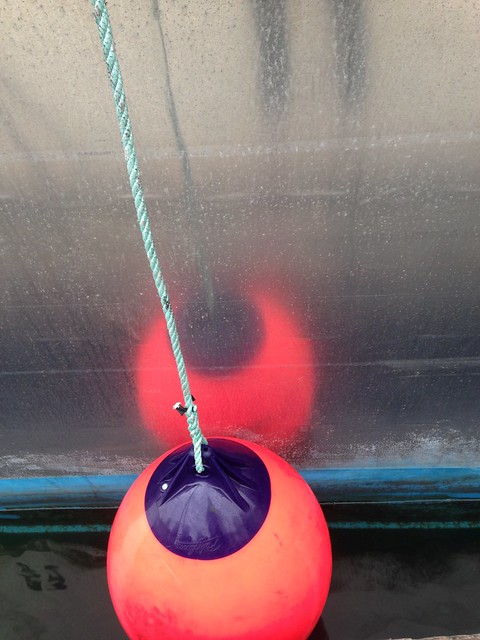
Buoys

This week I've finally created a batch of Coal Harbour, which I intend to close the Perfume4aPlace series dedicated to my favourite spots in Vancouver. However, the concept of Coal Harbour perfume predated all the other scents. In fact, it was in one of those morning walks about five years ago in Coal Harbour that I knew I would soon have to leave the city. Walking there and watching the aquaplanes take off and land on water I felt a pang of melancholy, knowing how much I love the marine aspect of the city. And so I promised myself to make a Coal Harbour perfume before I leave, as a goodbye present to the place I've called home for nearly 18 years.

This idea of course was the seed of the entire collection. And as the time to leave approached, I began rolling out the scents. I felt reluctant to launch Coal Harbour, because deep inside I knew that would mean the last farewell. So I did this gradually, with one perfume in each season... Komorebi in the fall of 2015, Sunset Beach in the winter of 2016, Lost Lagoon in the spring, and finally Coal Harbour for summer.

The scent is now maturing in the vat - a concoction that echoes the juxtaposition of natural aromas in their urban surrounding, contrasting marine notes, fresh cut grass and linden blossoms with the penetrating aroma of jet fuel.

The perfume is still in the maturing phase, but you can pre-order a sample (or, if you know you like marine-leathery-green scents, an entire bottle in your choice of eau de parfum application - mini splash bottle, roll-on and larger spray bottle.

Labels: , , , , , , , , , ,

Monday, June 30, 2014

The Smell of Freedom - 2014 Edition of "Smells Like Canada"

MRS. LANDINGHAM: Consumer Reports rates it very high. It's very safe. And when you get inside, there's this... (Mrs. Landingham gestures, trying to find the right word).
BARTLET: Smell? MRS. LANDINGHAM: How did you know?
BARTLET: It's the smell of freedom...and the chemicals they treat the dashboard with.

(Aaron Sorkin, "The West Wing", S2 E21 "18th and Potomac")

I've covered almost any scent that I consider Canadian in the last 2 years since I've started "Smells Like Canada". Douglas fir, maple syrup, rhubarb, tobacco, mildew, snow, artemisia (known in this parts of the world as "sage" even though it's not), elderflowers, Canadian gin, cherry red cedar, and castoreum from the Canadian beaver. To that list I can only add two more scents that somehow got ignored in previous years:
 
1) Black Locust (Robinia pseudoacacia) aka False Acacia - a native to the Eastern parts of the continent; and which smells like a sweet blend between heliotrope and orange blossom.

2) Linden blossoms (Tilia vulgaris) which although are not native to here, are in full bloom at this very moment, and line many of the streets and boulevards of Vancouver, painting the city's olfactory landscape with the colour of clear, blue sky.

3) Sweet Grass (Hierochloe odorata), aka Holy Grass or Vanilla Grass -
neatly braided and ceremonially burnt by the prairie First Nation people for its coumarin-sweet character to invite positive energy into the circle (after it's been cleansed with sage).

This year I want to focus on what freedoms smells like. To the fictional American President Bartlett it's the smell of new car. What is it to you?

To me it's the smell of chlorine as you approach the pool in the summer. The smell of hay stacks on which you can jump and free-fall with complete oblivion to any risk of injury. The scent of saltwater and marine life at low tide - complete with fermented seaweed, muscles and barnacles and jet fuel and boat fuel. And the knowledge that for the next few hours the world's worries will come to a halt because you're at the beach. The smell of coconutty tanning oil and tropical sunscreen won't hurt either. But now I'm really getting carried away...

No matter what smell association freedom, summertime or Canada has to you - freedom itself is priceless. And the commitment to this value is what makes this country so special. Of course it doesn't hurt that we're not really at war with anyone, at least not at our borders. Which of course makes for a lot less conflict of interest between "freedom" and "safety". Something that a lot of Canadians are either not aware of - or just haven't ever needed to experience that kind of conflict.
To be a Canadian means to live in peace, in a country where everyone is indeed considered equal, and where the mandate in public schools is to educate our young children to accept the other without prejudice. As long as public schools are open (which is a whole other issue...). Additionally we get to drink clean water and breathe pure air. Or at least cleaner and purer than many other countries - both industrial and third world ones. Yes, we can be better, but that does not mean we should not appreciate what we do have going for us. Not to mention we don't need to worry about our kids getting kidnapped, or murdered, by terrorists, and that pretty much tops it all, doesn't it? 
We are truly blessed.

And now, to this year's contest: What does freedom smell to you? Add your thoughts in the comment section, or add any Canadian smells that I might have missed.
Winner gets a mini of my Gaucho perfume, which is the closest thing to the smell of sweetgrass; and incense cones that are inspired by the First Nations ceremonial smudging. It has tobacco leaf and sage (true sage from the Mediterranean, not the white sage grown locally). It smells amazing, and I only share this with very few people.

Labels: , , , , , , , , , , , , ,

Wednesday, August 01, 2012

Eau du Ciel

Eau du Ciel is all about linden blossom, and has one of the more realistic rendition of the ephemeral scent that wafts in the air when walking under linden trees in mid summer: the honeyed blossom, green twigs and tender leaves swaying in the cool summer breeze of late June.

The initial honeyed, characteristic linden blossom note is quite realistic, yet very fleeting, and quickly subsides. Here enters neroli, with its cool, elegant and slightly woody character. Petitgrain contributes to the dimension of crisp tree foliage. And underneath it all, a bittersweet, slightly powdery aroma of coumarin (new mown hay) softly brushes at your ankles. The final dryout notes also are reminiscent of green tea.

Eau du Ciel is very aptly named, as it is as spacious as the blue sky and light as feather clouds on a sunny summer day.

Labels: , , ,

Tuesday, July 31, 2012

Lime vs. Linden

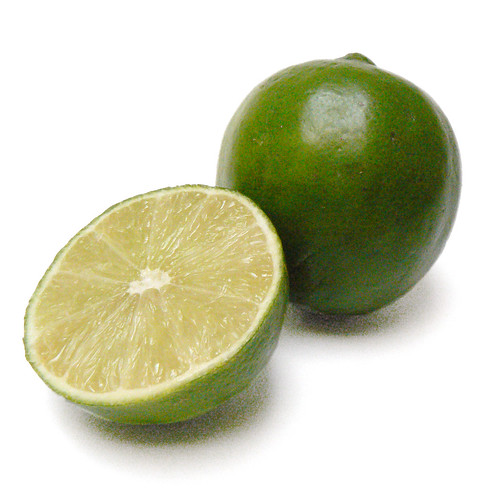
Lime by Ayala Moriel
Lime, a photo by Ayala Moriel on Flickr.
Linden is often referred to confusingly as “lime blossom” (which is its common name in Britain) It should not be confused with the citrus lime (Citrus aurantifolia), which bears the green lemon-like fruit that you might know from Mexican cuisine.

The two thing the two have in common in the confusing nomenclature; other than that - they share nothing in common, neither botanically nor olfactory wise.
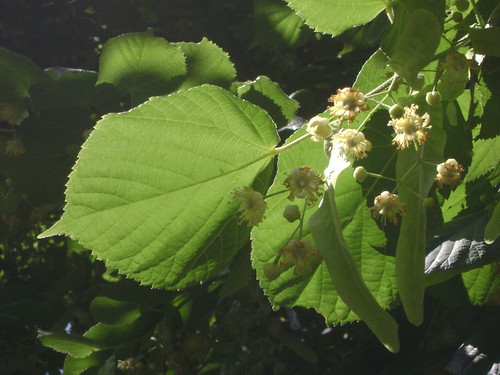
Linden Blossom

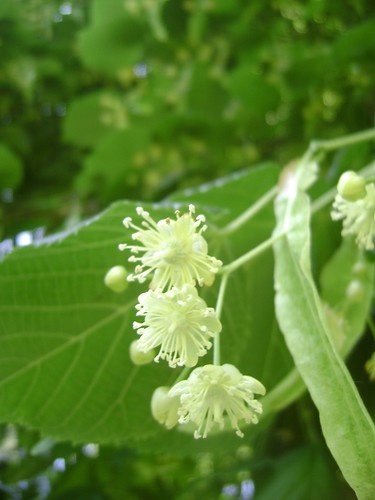
Linden Blossoms (Tilia vulgaris) tree are prized for the flavour they lend to honey, and are also used as an herbal remedy when steeped in hot water to make a tisane often called “tilleul”. Linden blossom are very calming and are used in folklore and herbal medicine to treat conditions such as hysteria, anxiety, cold and fever, palpitations and migraines. Similarly, it is used in aromatherapy to treat insomnia, migraine and other stress related conditions. Also used for cramps, indigestion and liver pains.

Linden absolute is solvent extracted from the dried flowers and the "leaf" attached to it. It is thick and sticky, dark green semi-solid mass. It is hard to work with and has to be diluted in alcohol for its aroma to be fully appreciated. Linden absolute is mildly sweet and herbaceous, dry, dry grass and hay-like, and somewhat floral and honeyed, reminiscent of a sweet herbal tea.

There is also a CO2 that is harder to come by, that is clear, with more intense honey notes, lighter yet sweeter, and less reminiscent of hay (in both scent and appearance).

Use in perfumery, the aroma of Linden Blossom is unusual and rarely used. It adds a honeyed, green, floral-herbaceous and slightly wine-like note and helps to balance sweet florals such as jasmine and tuberose, as well as sweeten and mellow green, citrus and herbal accords.

The principle constituent of linden blossom is farnesol. This may explain why it is not commonly used in mainstream perfumery. Farnesol is significantly cheaper as a synthetic than the linden blossom absolute (and obviously is often used to adulterate the true absolute...). Therefore, it is not surprising that linden blossom as a note is fairly rare overall. A few perfumes that incorporate linden blossom are mostly delicately green, fresh, light floral, for example: Dawn Spencer Hurwitz’s Goddess, Fresh’s Violet Moss (1997), L’Artisan Parfumeur’s La Chasse au Papillons , Ormonde Jayne’s Frangipani Absolute (2003) and Parfums Delrae Début (2004).

Linden Blossom Soliflores are far and few, and are not nearly as popular as other soliflores:
Aftelier’s Linden Blossom (discontinued, but available through their website as special order through the Product Archives page), D’ORsay Tilleul (1995), Jo Malone’s French Lime Blossom (1995) and l'Artisan Parfumeur L'Été en Douce (2005) and Annick Goutal's Eau de Ciel (1986).

Natural Perfumes Containing Linden Blossom:
JoAnne Bassett’s Le Voyage (2000), Aftelier’s Linden Blossom (see above) and FiFi finalist Honey Blossom (2010), Ayala Moriel’s Kinmokusei and now discontinued soliflore Tirzah.

Lime (Citrus aurantifolia, and on rare occasions also a type called Citrus limetta will be found - which is the finest of the all) was probably originated in the East Indian archipelago, from where it made its way to South America, and also spread to Iran, Arabia and East Africa (where it is often called "Persian Lime"). Lime is more often than never produced from the green, unripe fruit (if you are ever picking lime at the store and want sweetness - get the yellow ones!). Lime is a unique and unusual citrus notes in several respects, and is extremely versatile in its uses in the flavour and fragrance industry (both fine and functional). It is produced in two different methods - expression and steam distillation, producing two slightly different profiles:

Expressed lime oil is the preferred raw material for perfumery, since it has more complexity and also has better tenacity. Expressed lime oil is produced by either hand-pressing the peels only; or expressing the entire fruit with special machinery (the peel is very thin, and the fruit is quite uneven in size and shape) and separating the essential oil from the juice with a centrifuge. The two methods will be slightly different smelling, and the yield lower than that of distilled lime: It has has a full-bodied, green, spicy, woodsy aroma, with sweet, lactonic undertones. It is complex, featuring much less of the characteristic citrusy limonene molecule (which has a mild lemon-orange scent) than is noticeable in other citrus oils; and has woodsy-coniferous character (from both alpha and beta pinene), slightly medicinal/green aspect from 1,8-cineole (the main constituent in Eucalyptus), and other peppery-spicy molecules. Curiously, it also contains methyl anthranilate (grape-wintergreen smelling molecule that occurs in many "white florals"), as well as coumarin, which gives it a lactonic, coconutty finish that makes it so suitable for tropical beach scents. On another more technical note, the combination of methyl anthranilate and aldehyde rarely occurs naturally. It is what is called "Schiff's Base", which most perfumers try to avoid, as it creates discoloration and odour-changes down the road.

Steam distilled lime oil is produced either from the acid juice of the unripe fruit, or from the crushed peels. It is most commonly used in flavouring, and the distillation process is not only cheaper, but also preferred for this use because it takes off some of the characteristic bitterness and "dry mouthfeel" that expressed lime oil (from the peel) has. Its "sweet" character is probably due to oxygenated compounds such as citral, aliphatic aldehydes (C-8 to C-10). The freshness comes mostly from limonene.

Most people will probably prefer the distilled lime oil over the expressed one because it smells more familiar from the flavoured lime products we are all exposed to: You will probably notice right away the similarity of the aroma of this oil to that found in many soft beverages (i.e.: cola) and lime flavoured candies or bubble gums. Steam distilled lime essential oil has the same distinctive lime fragrance as the expressed, only that it is sweeter, rounder and less green upon opening. The dryout, however, is less sweet and refined than the opening and becomes dry, woody, almost rough textured upon drydown.

You would find lime oil in many applications for household use (because of its solvent and anti-microbial properties). Most commonly - blended with pine and lemon oils and their derivatives for bathroom cleaners of the "Pine-Sol" type. And, as I mentioned earlier, it's a huge hit in soft beverages like cola (along with cassia and cloves), citrus-flavoured sodas (ginger-ale, 7-Up, etc.).

In fine fragrances, you're like to find lime in many masculine fragrances, where its woodsy personality blends so well with the typically masculine woodsy bases, as well as in fougere (it adds an extra dose of coumarin to the mix, along with tonka bean, hay or synthetic coumarin), and has interesting effects in Chypre, Coniferous and even floral compositions, where its brisk freshness serves a contrast to other more intoxicating notes.

Examples: Dior's Eau Sauvage (1966), Miller Harris' Citron Citron (2000), Ayala Moriel's ArbitRary (2001) and Lime & Cacao; Jo Malone's Blue Agava & Cacao (2006), Parfums Delrae Début (2004), Parfums de Nicolai's Eau d'Été (1997), Aftelier's Haute Claire (2011), Rochas Moustache (1949), JoAnne Bassett's Napoleon (2006), Diptyque's Oyedo (2000), and too many others to count.

Do you have any favourite lime scents? Or cocktails? We will be happy to hear about anything linden or lime related in the comment section of this post!

Labels: , ,

Tuesday, July 24, 2012

Linden and Linen

Laundry on the line by MarleneFord
Laundry on the line, a photo by MarleneFord on Flickr.

L'Été en Douce (meaning Soft Summer, formerly known as Extrait de Songes - or the Essence of Dreams) is as light as a cloud and as fleeting as the aroma of linden blossoms which wafts through the streets in midsummer.

Reminiscent of fragrant twigs and freshly soaped skin, l'Été en Douce is light and ethereal and I find it wears better on fabric than on my skin. On fabric it unfolds with the subtle honey nuances of linden and orange blossom with hints of petitgrain; where as on skin, the clean "white musks" and synthetic "white woods" notes are taking over. And there is also an underlining bitterness, reminiscent of almonds but not quite - the mark of coumarin (hay is listed among the notes, but there is non of its delicious sweetness, so I think it's just coumarin - adorable all the same, but just a little flatter).

I'd enjoy it more if it was real summer here, and would wear it in the halo-method, when you spray it in the room and walk into its mist. Preferably while wearing white linen attire or gauzy white cotton shirt. But I'm enjoying just as much after accidentally spilling half of my sample all over my denim dress pants and silk blouse...

Olivia Giacobetti is the nose here, and like most of her creations - she used a very light hand, which makes for an easily wearable (and over-spilled) summer scent, a little abstract and obscure, but very true to its name.

Labels: , , , , , ,

Thursday, July 28, 2011

Smells of Summer, or Something Like That... + GIVEAWAY

Linden & Rain by Ayala Moriel
Linden & Rain, a photo by Ayala Moriel on Flickr.

It's been a lousy summer in Vancouver. There, I said it. Please don't hate me. July is almost over and we barely had a week and a half of descent weather. It's been rainy, cold, and even felt like October at times.

On the bright side, the linden blossoms are having an extra long blooming season. There are linden trees all around Vancouver, and usually they bloom in mid to late June. This year, they bloom from mid to late July, and probably will keep scenting the air well into August... Linden blossoms and rain... Mmm... And I'm now feeling inspired to work with the Linden Blossom CO2 that I got from Mandy Aftel when I visited her studio in Berkeley in late June. Wait - that was exactly a month from today!

So, no beach pictures to illustrate what should have been a cheerful "Best of Summer" type of article here on SmellyBlog. You'll just have to tough it out with this strange collage of linden blossom branch that I found on a wet newspaper stand last Saturday, as I was getting ready for my Orcas tea party. I brought the branch home to decorate the place, which turned out to be an innocent act of luring ants into my house... They simply love linden trees, and they love everything about my house. I should add "ant killer" (as well as "cacti killer") to my resume.

Even the rhubarb had a super short season (hardly even three weeks...!) so my new love of last summer is all forgotten, in hopes that it will return next year stronger and brighter, with its fabulous calone smell.

Today was the first day I actually sat in my porch and write while burning incense and drinking iced match latter that I fixed for myself instead of lunch. I've avoided my porch for months now, due to the horrific weather AND the roofers constantly scouring the area. There was one roofer peeking through my porch at one point, but I think I managed to scare him away, simply by taking him by surprise...

Thankfully, there were still lilacs (for a very short time) and the peonies this year were as pretty as ever. The roses, on the other hand, don't seem to be doing too well this year... All of these are smells that I've learned to associate with summer in Vancouver. But, alas, as previous summer's memories are replaced by a new summer, for better or for worse - here's how my summer smells like:

Basil, Nectarines & Blueberries - better together, in a green salad.

Wild Salmon, which I've finally succumbed to eating after 13 years of lack-of-sun, abundance-of-rain. I was born and raised vegetarian, but now I eat local fish. And there's nothing better than BC's salmon (the smoked one is to die for).

Pinot Noir and other strange red wines I stumble upon when in Sonoma county. Like the fish, this is new to me, because the only wine I could somewhat enjoy till recently was white.

Sweet Peas, with whom I fell in love all over again after spotting a bouquet in a little antique shop in Graton.

Sugar Peas, which when grown properly (cold, wet summers make for ideal conditions), are the perfect beach snack, all on their own. They have a fragrant crisp green yet sweet smell. Not a substitute for green string beans (a summer favourite that I terribly miss and that have been absent because of the lack of sun and heat in BC to grow them).

Watermelon with Feta Cheese - well, when the local fruit is lacking (the cherries this year - also not so great...) - then there is no choice but to get some not so local fruit, and pair it with creamy, uber-salty Macedonia feta.

Perhaps I will just have to create my own summer, in a bottle... So here's a partial list, which I admit to be extremely biased as it mostly contains perfumes that I made myself, and most of them are more on the greener side (Orcas and Smiling Country and Grin body oil is how you should expect me to smell these days). What else can you wear in a summer with constant April showers?!

The others are made by other perfumer friends/colleagues of mine. In the light of the previous article, my sentiments towards handcrafted perfumes are becoming increasingly fonder.

Fleur No. 1 by 1000Flowers - green, delicate floral that begins boldly with galbanum and surprised with pine bud and narcissus absolute. At its base are quiet musks, moss and the haunting violet of alpha ionone.
But I must confess that even more than Fleur No.1 I was touched by another creation of Jessica Buchanan, which is not officially released except for among friends who are privy to this beautiful, all-natural concoction of white flowers and resinous base. It's very cheerful and sensual - so perfect for those rare hot days we're getting this summer...

Honey Blossom by Aftelier - bright, delicate floral focused on the tea-and-honey notes of organic linden blossom CO2.

Parfum Privé by Aftelier - with precious aromatic treasures such as beach harvested ambergris, osmanthus, orange flower and ambrette. I love its muskiness and overall rich roundness.

Le Parfum de Thérèse - basil, jasmine, melon and under-ripe plum - for me there's no summer without this masterpiece by Edmond Roudnitska.

Ineke's Angel's Trumpet from her new Floral Curiosities collection for Anthropologie - if it wasn't for Ineke I would have never paid attention to this curious plant - whose flowers turn into citrus candy heaven only after dark.

Incense Lily by Sonoma Scent Studio* - I understand this perfume has been out of production for a while, but I have a feeling that it will make a come back... Someone at Estee Lauder must have spied on Laurie when they created their Azuree de Soleil, because it's a dead ringer to that. Except that it's hand made with much care and love by Laurie Erickson.

Sombre Negra by Yosh - dark, smoky vetiver at its best.

What scents make your summer? Post a comment and enter to win a mini of Liz Zorn's Ankhara.
Draw will take place on Friday, August 5th.

Labels: , , , , , , , , , , ,

Sunday, July 26, 2009

Linden Blossom Lost and Found


Linden Blossom, originally uploaded by Ayala Moriel.

This post comes about a month late, as linden (tilia) trees bloom mostly through June. It was about 3 weeks ago that I finally found the tree, twice. The long "leaves" near the flower, which are not really leaves, are a little deceiving. So it's no wonder I missed the tree for so many years even though it was right under my nose. They are actually aprt of the flower structure. The true leaves are heart shaped (and are never used for tea as far as I know).
I first spotted these at the pitch and putt in Stanley Park, took these photos, but didn't notice much of a scent so I was not sure this is really the tree.

Than a week or so later, I walk down Robson Strasse. Somewhere between Bute and Thurlow, there it was: the heady, honeyed-green and clean-woody scent of linden blossom, threatened to fall into oblivion by the hostile aromas emanating from The Body Shop right under it. It's not even trying to compete, so you will have to look for the scent persistently, and go above all the intense street smells to get it.

Labels: ,

Thursday, February 07, 2008

Tirzah Tea Time


Tirzah Tea Time, originally uploaded by Ayala Moriel.

Escaping the wet snow outside, I entered Dawna’s cozy apothecary-kitchen. The table was already set with a bamboo tea tray and a glass plate laden with linden and tiny orange-almond cookies. Through the kitchen window, embraced with a yellow curtain, we could still see the snow falling straight to the ground, uninterrupted by wind.

Tea time with Dawna is always special. And when there is a new tea-blend involved, even more so. This time, the occasion was our shared tea-tasting ceremony of Tirzah – the new perfumed tea blend Dawna have created to accompany my linden blossom soliflore. Back in June 2007, when Tirzah was lauched, Dawna has created a limited edition blend of one tin only which she named Flora Linden (which is now available as a limited edition tea directly from Inner Alchemy Tea Co.) . It was lovely and floral, but we felt that it was time to re-visit this concept and re-create a tea that is more representative of Tirzah’s woody-floral-green freshness.

Dawna surprised me with orange-almond cookies that were made by Elsa’s Story in no other place in the world but Nahariya – a beautiful beach city which happens to be the nearest to my village in the Western Galilee… She also surprised me with some ideas for our next tea collaboration: a yerbamate-based tea blend to accompany Gaucho (to be released in Spring 2008). The beautiful dried herbs she showed me all resonate deeply with the green yet sweet coumarin qualities of Gaucho… Aside from peaking your curiousity, I will say no more.

The kettle boiled, and Dawna carefully measured the temperature of the water to ensure the delicate sencha leaves that create the base for Tirzah will not get overexposed to heat and release too much bitternesss. Moments later the clear glass teapot was filled with a gentle brew of flowers and leaves. The hops flowers blossomed in the water, floating beautifully like little ballerinas with green organza dresses…

The tea was than strained and a pure, light green liquid was poured into the delicate clear-glass tea cups. While we waited until the tea cooled down a bit in the cups (which brings out the flavours better), we enjoyed smelling the gentle steam emanating from the cups and marveling at the connection between the tea and the perfume that inspired it. Both have a delicate, lemon-woody-floral feel to them. The greenness is spring like and fresh, and delicate and gentle rather than brash and sharp as greens can often come across.

The tea is very pure and delicately smooth on the palate. Tirzah has a unique floral bouquet, interlacing linden blossoms and leaves, hops flowers and the honeyed, fruity-apricotness of osmanthus blossoms. While the lemon peel has a definite presence in the immediate experience of the tea, it is more floral and woody than being remotely similar to a lemonade… And the sencha leaves (two different kind of organic green Japanese sencha tea leaves were used) create a sophisticated, delicately-green, smooth and only ever so slightly tannin backdrop to this tea-tapestry.

Tirzah tea is perfect and pure and should be served with no additional sweeteners that will mask the subtle complexity of its floral notes. Though I might add that the orange and almond cookes served on the side were fantastic, they are by no means necessary for enjoying this beautiful tea.

And not just because I can, not just because it's the week of the Carnival in Brazil (the one I missed out on...) but also because I find this music to beautifully portray the peacefulness of the tea... And if you have Caetano Veloso & Gal Costa's album "Domingo", that would be even a better accompaniment for this tea...


Tirzah perfumed tea is a delicate floral blend based in organic Japanese sencha green tea. Ingredietns: Organic Japanese sencha tea leaf, Wild Linden Blossom Wild Linden Leaf, Organic Lemon Verbena Leaf, Organic Lemon Peel, Wild Osmantus Blossom, Organic Hops Blossoms. All botanicals are guaranteed certified organic or wildcrafted in a pristine environment and tested for chemical residues. Each tin contains 50gr of loose leaf tea. To prepare: bring water to a boil. Wait a few moments before steeping the tea leaves. Steep 1-1/2 teaspoons in 8oz of boiled water, for 1 minute (if you prefer a stronger tea, you may steep it for 1-1/2 minutes, but no more than 2 minutes to prevent the tea from becoming bitter). Tirzah tea is best served unsweetened, and its flavour improves even more when it cools down to room temperature. It is an excellent meditation tea as well as a light rejuvenating tea to be enjoyed throughout the day.
We are now pleased to offer Tirzah for an introductory price of $20 (regular price is $30), when you order it along with Tirzah perfume as part of our Tea Time Gift Set.

Labels: , , , , ,

Friday, June 01, 2007

Tirzah: New Linden Blossom Soliflore

Ayala Moriel is proud to announce the launch for our new summery soliflore: Tirzah.
Tirzah is Hebrew for Linden, and the name for the newest addition to my soliflore collection - a linden blossom soliflore! The sweet and tart elegance of linden blossom is at the heart of this light and refreshing summery fragrance.

The timing for the launch of Tirzah couldn’t be better: linden blossoms are in full bloom throughout the month of June, emanating their delicate, honey-like aroma in the air. And what more - Tirzah is particularly suitable for a heat wave, with its top notes of green lemon zest and the cucumber-like mimosa, chilling heart notes of iris roots and a clean woody base of Fokienia with a hint of hay.


Tirzah has a deep green coloured juice and comes in parfum extrait (alcohol base) only. As linden blossom seems to be the favourite of only select few, Tirzah will be only a limited edition for now. It will remain part of the collection only for this summer. If it proves to be exceedingly popular, we will add it to our regular collection. Otherwise, we’ll just bring it in again next summer…

Top notes: Green Lemon, Mimosa, Elemi, Frangipani Absolute
Heart notes: Linden Blossom, Guiacwood, Iris Roots
Base notes: Fokienia (Siamwood), Hay Absolute, Ambrette Seeds


Illustration: Rusalka by Konstantin Vasiliev
(If you're wondering why I picked this image - it best portrays the scent visually in my opinion, just like hiding from the heat of sun among the cool shady trees by the river; and also it has trees from the linden family all over it)

Scene from
Die Trapp-Familie (1956)
The Von Trapps are singing Der Lindenbaum by Schubert, a beautiful Lied about a linden tree, from "Der Winterriser" (D911) Lieder Cycle. It is originally for piano and voice, but I love this a-capela interpretation with the beautiful, innocent children's voice. It really reminds me of the delicate scent of linden...

Labels: , , , , , , , ,

Thursday, May 31, 2007

Fiori di Tiglio

Fiori di Tiglio, originally uploaded by luigi.strano.

Linden Blossoms from the Tilia Vulgaris tree are prized for the flavour they lend to honey, and are also used as an herbal remedy when steeped in hot water to make a tisane often called “tilleul”. Linden blossom are very calming and are used in folklore and herbal medicine to treat conditions such as hysteria, anxiety, cold and fever, palpitations and migraines.

Linden is often refered to as “lime blossom” (which is its common name in Britain) but should not be confused with the citrus lime (Citrus aurantifolia), which bears the green lemon-like fruit that you might know from your favourite Mexican food or your Key Lime Pie. The two share nothing in common, neither botanically nor olfactory wise.

The principle constituent of linden blossom is farnesol. This may explain why it is not commonly used in mainstream perfumery. Farnesol is significantly cheaper as a synthetic than the linden blossom absolute (and obviously is often used to adulterate the true absolute...). Therefore, it is not surprising that linden blossom as a note is fairly rare overall. A few perfumes that incorporate linden blossom are mostly delicately green, fresh, light floral, for example:

Dawn Spencer Hurwitz’s Goddess
Fresh’s Violet Moss (1997)
L’Artisan Parfumeur’s La Chasse au Papillons
Ormonde Jayne’s Frangipani Absolute (2003)
Parfums Delrae Début (2004)

Linden Blossom Soliflores:
Aftelier’s Linden Blossom (discontinued, but available through their website as special order through the Product Archives page)
D’ORsay Tilleul (1995)
Jo Malone’s French Lime Blossom (1995)

Natural Perfumes Containing Linden Blossom:
JoAnne Bassett’s Le Voyage (2000)
Aftelier’s Linden Blossom (see above)
Ayala Moriel’s Kinmokusei and the new perfume, Tirzah (see next post announcing its launch today!)

Labels: , , , ,