Friday, August 17, 2018

Forest Medicine


Mini Witch Cauldron
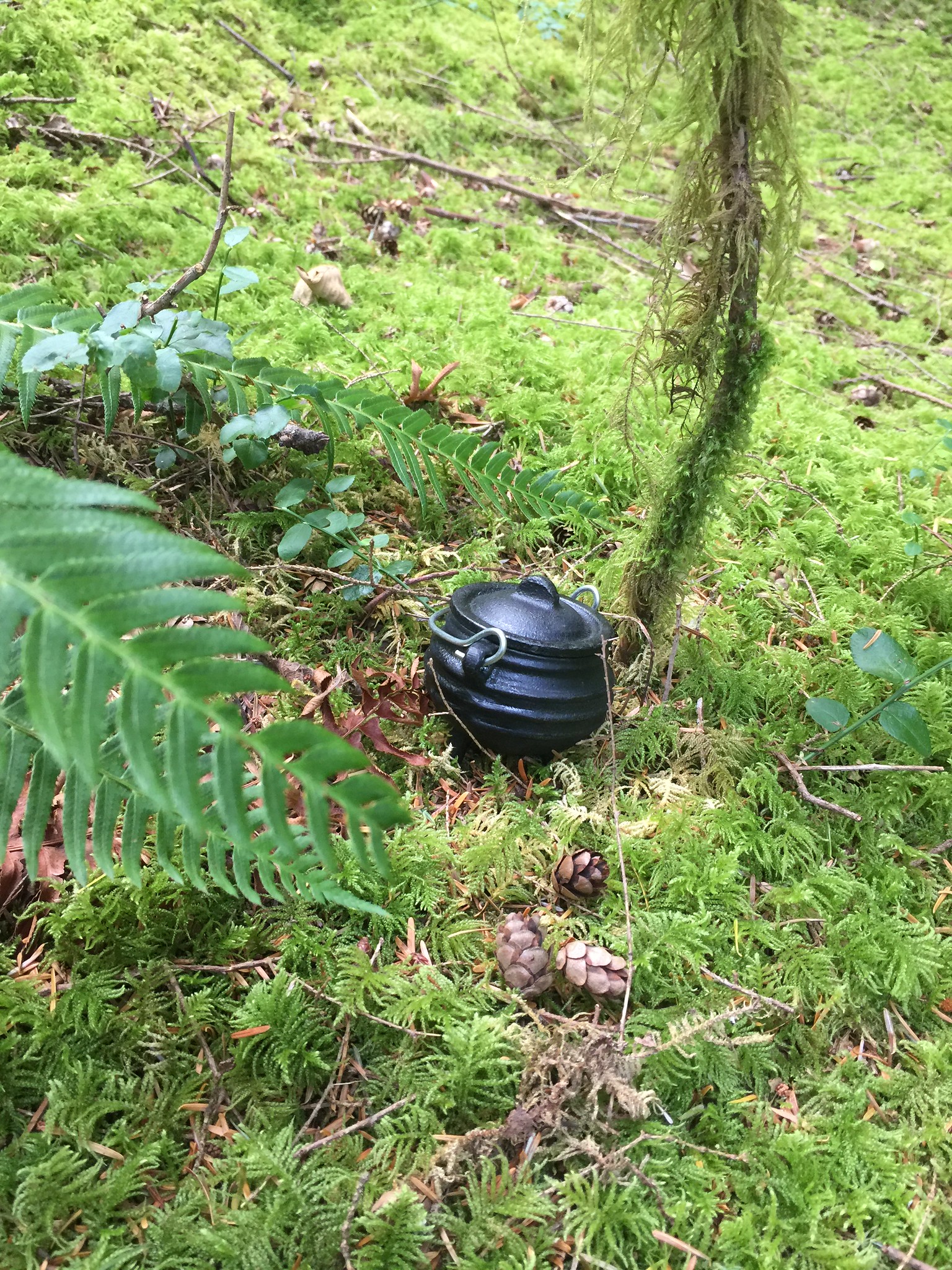
Anywhere in nature, including deep in the woods, the trees teach us self-healing and the plant-teachers provide medicines for body and soul. I brought my little witch cauldron to burn incense (redcedar chips and Palo Santo) without risk of burning the forest with me.
Forest Medicine
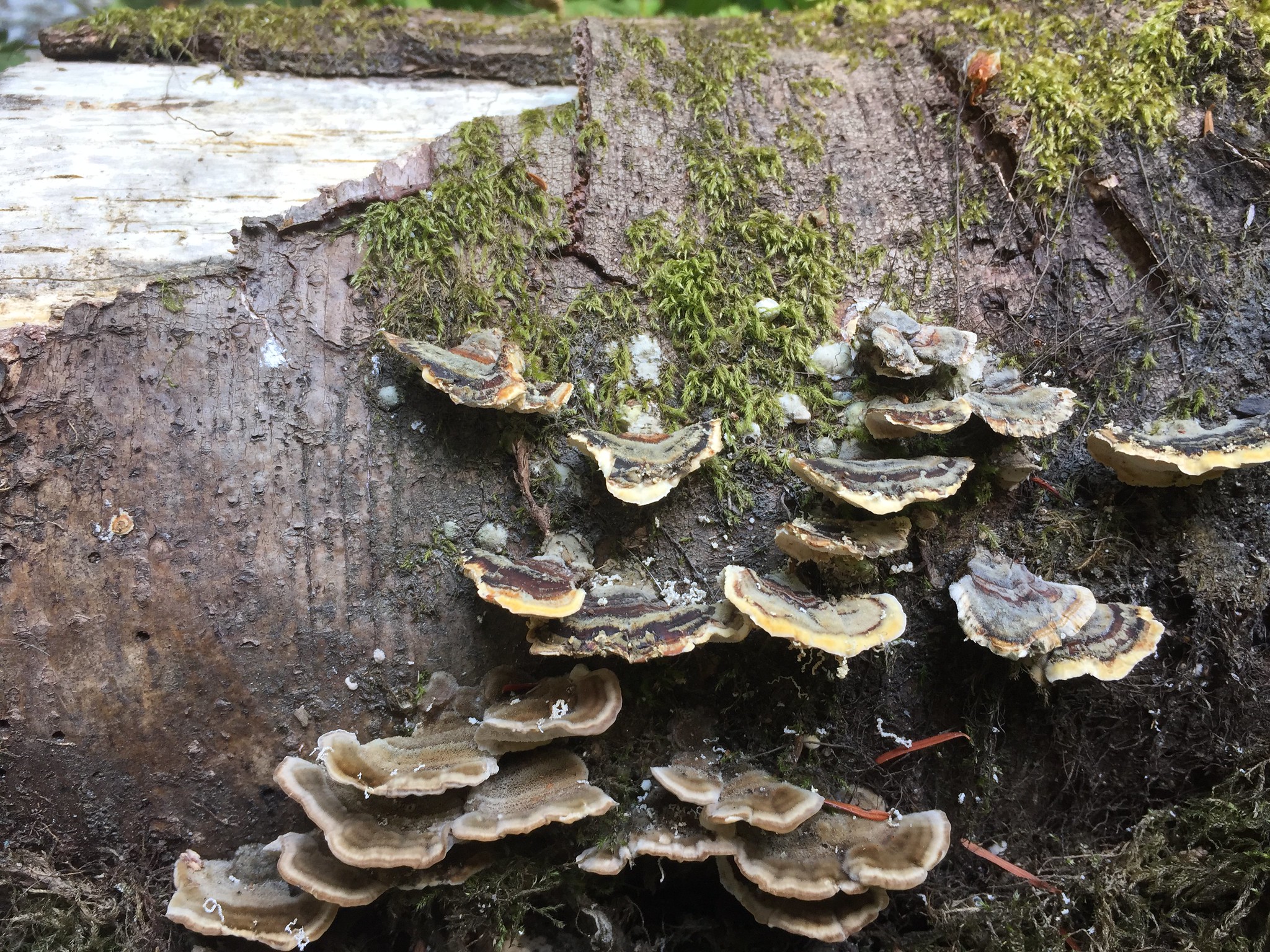
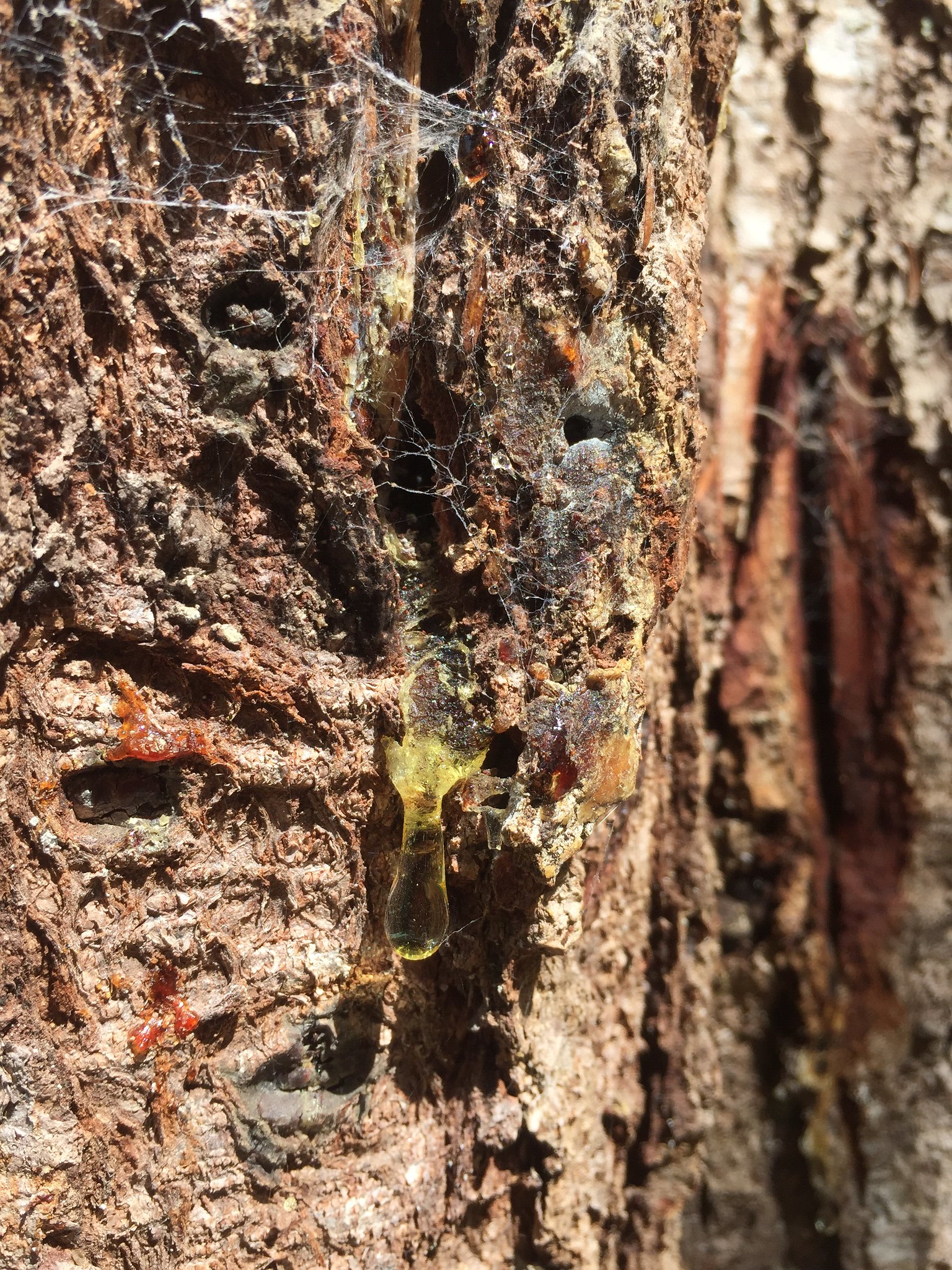
There were so many witch-inspiring finds in the forest, from intimidating-looking fungi (of which I'm yet to know any medicinal properties, but I know some of them do have that gift). To saps dripping from trees' wounds. Reishi mushrooms (Ganoderma lucidum) is a famous one (it is NOT the one in the photograph!), which is used for protecting the liver, for anti-inflammatory conditions, boost the immune system, ureduces anxiety and depression, aids sleep and more. In Chinese it is called lingzhi mushroom, which literally means "mushroom of immortality" and is used by many TCMs. In any case, you should not be foraging it in the woods without getting proper training in mycology, and also use it responsibly with the guidance of an herbalist or trained TCM. 
Forest Medicine
Spruce pitch and sap, for example, can be infused into oil and made into a salve that can be rubbed on the chest and relieve coughs and respiratory infections, and massages onto aching muscles. 
Plant Medicine
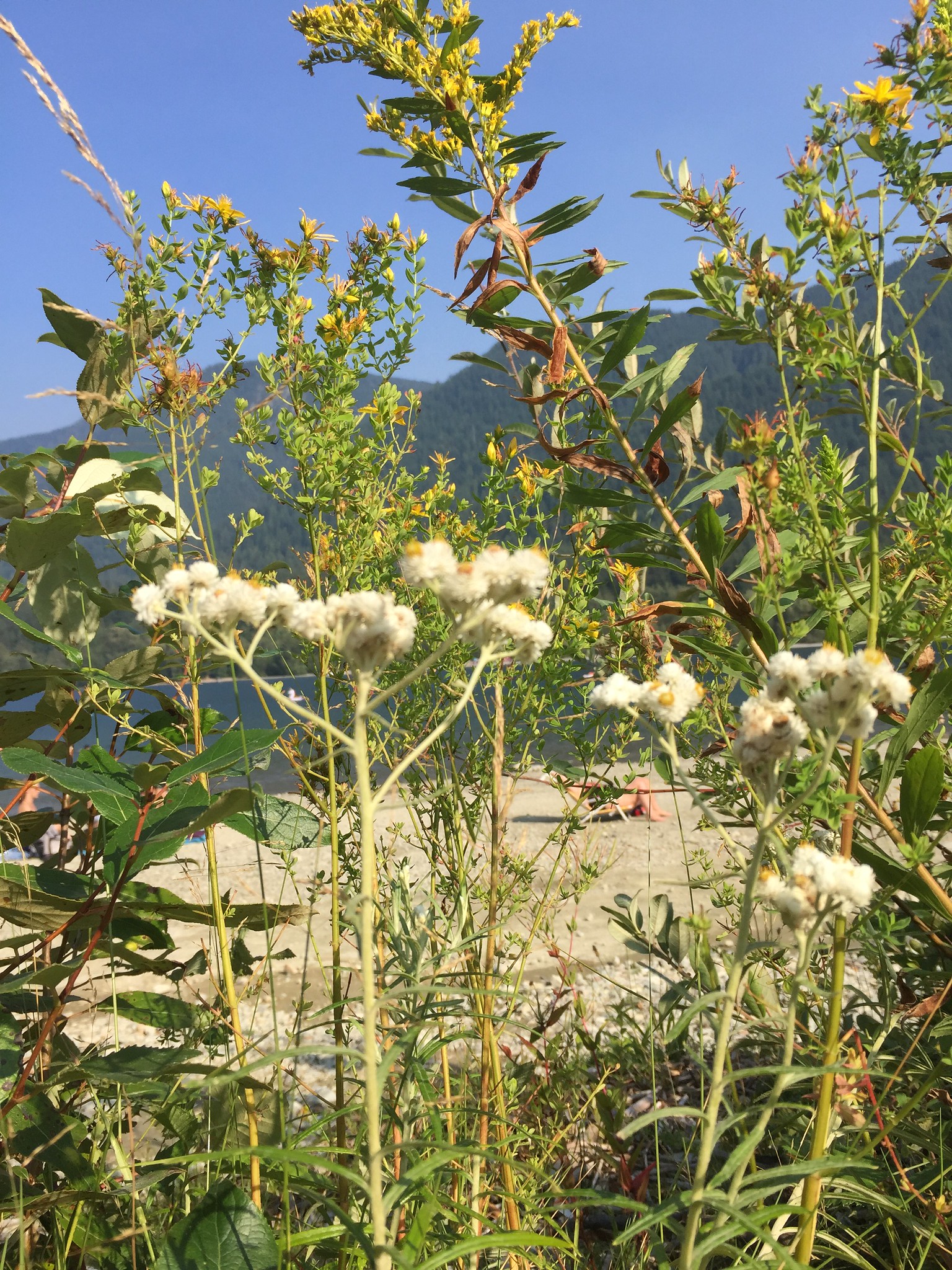
This collection of plants grow side-by-side on Alouette Lake. Can you recognize them all?
Plant Medicine (Pearly Everlasting)
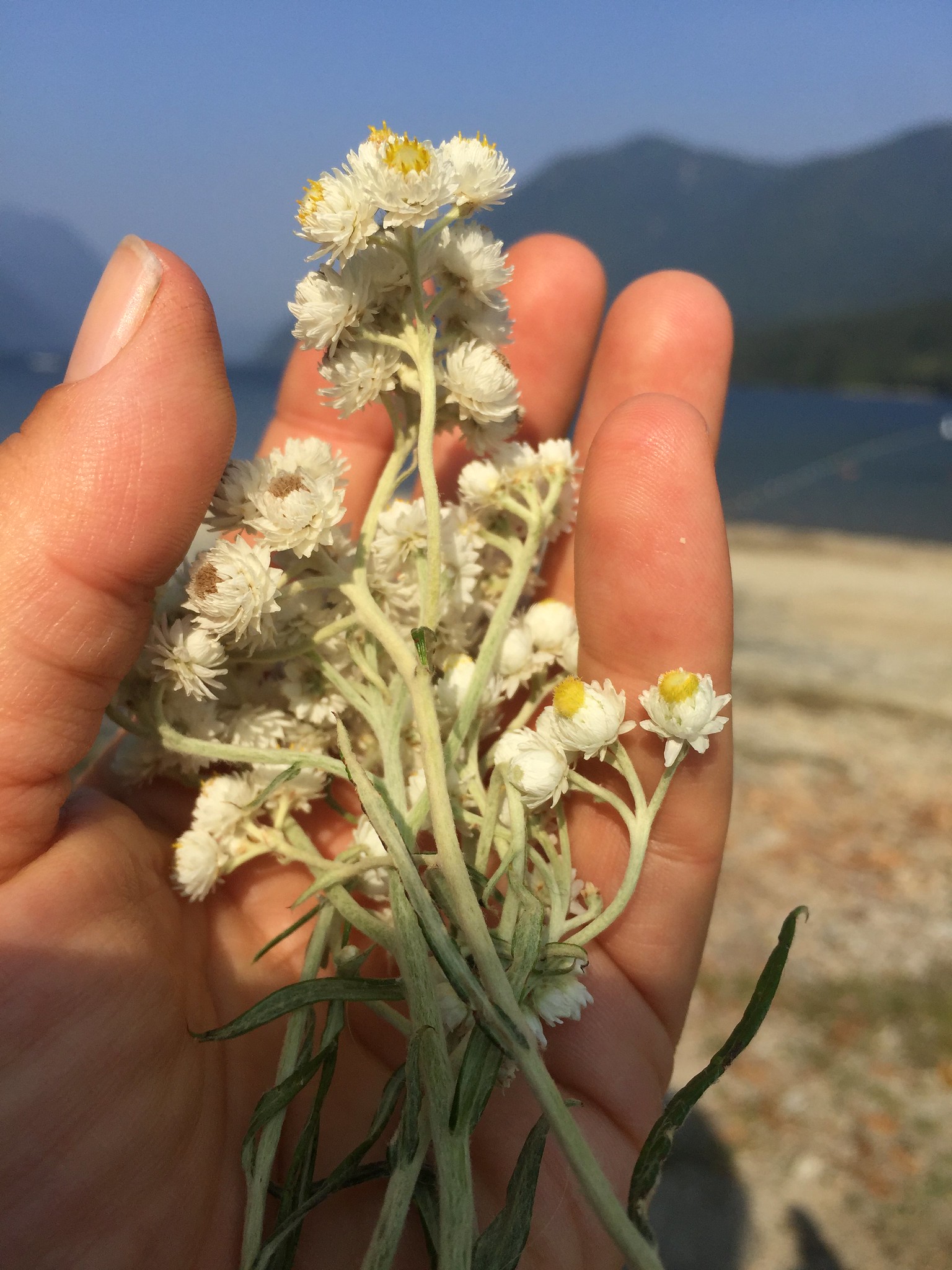
First, as seen clearly on the foreground, there is Pearly Everlasting (Anaphalis margaritacea). Although it is similar in appearance, and also from the Asteraceae family, it is not as closely related to immortelle (Helicrysum). It is not so much in use in Western herbalism or medicine, but was used by First Nations to treat mostly respiratory ailments, including asthma. This is because it has both antihistamine and expectorant qualities. It is also an anti-inflammatory, astringent, diaphoretic and a mild sedative. It is used for treating headaches, colds, fevers, sore throats, allergies and asthma. To read more about how to use it, visit Wildness Within and Natural Medicinal Herbs.  It can also be used as incense - preferably on a hot stone or Japanese Koh-Doh technique on a micah plate.

Next to it also grows St. John's Wort (Hypericum perforatum), the world one and only incredible medicinal plant that can actually treat depression. It is why it is so heavily regulated in the USA, because it's properties would threaten the existence of fluoxetine (or in its famously known brand name, Prozac) and other very profitable antidepressants. Additionally, St. John's Wort oil extract (an oil infusion that has a deep red colour) is used for treating skin diseases such as eczema and also joint pains. This is a powerful plant, and must only be used with the guidance and supervision of a licensed Herbal Medicine practitioner. Some of the side effects known for St. John's Wort are photo-toxicity (burns upon exposure to sun), and counter-acting certain drugs.

Last but not least, the shiny green leaves (more at the bottom of the pic) are those of Black Cottonwood, AKA Western Balsam Poplar (Populus trichocarpa), which contains salicin (the aspirin compound that also present in willowbark). The buds' extract (either in oil or alcohol) is also used medicinally, mostly as an anti-infalmmaroty, especially for joint and muscle pain. A salve can also be prepared from the oil infusion. Also it smells great - sweet-balsamic and ambery, which makes it a good medicine for the soul. I used it in Komorebi perfume to create the beautiful amber-like scent of the rain forest in autumn. 

Labels: , , , , , , , , , , ,

Thursday, August 16, 2018

Anatomy of a Tree

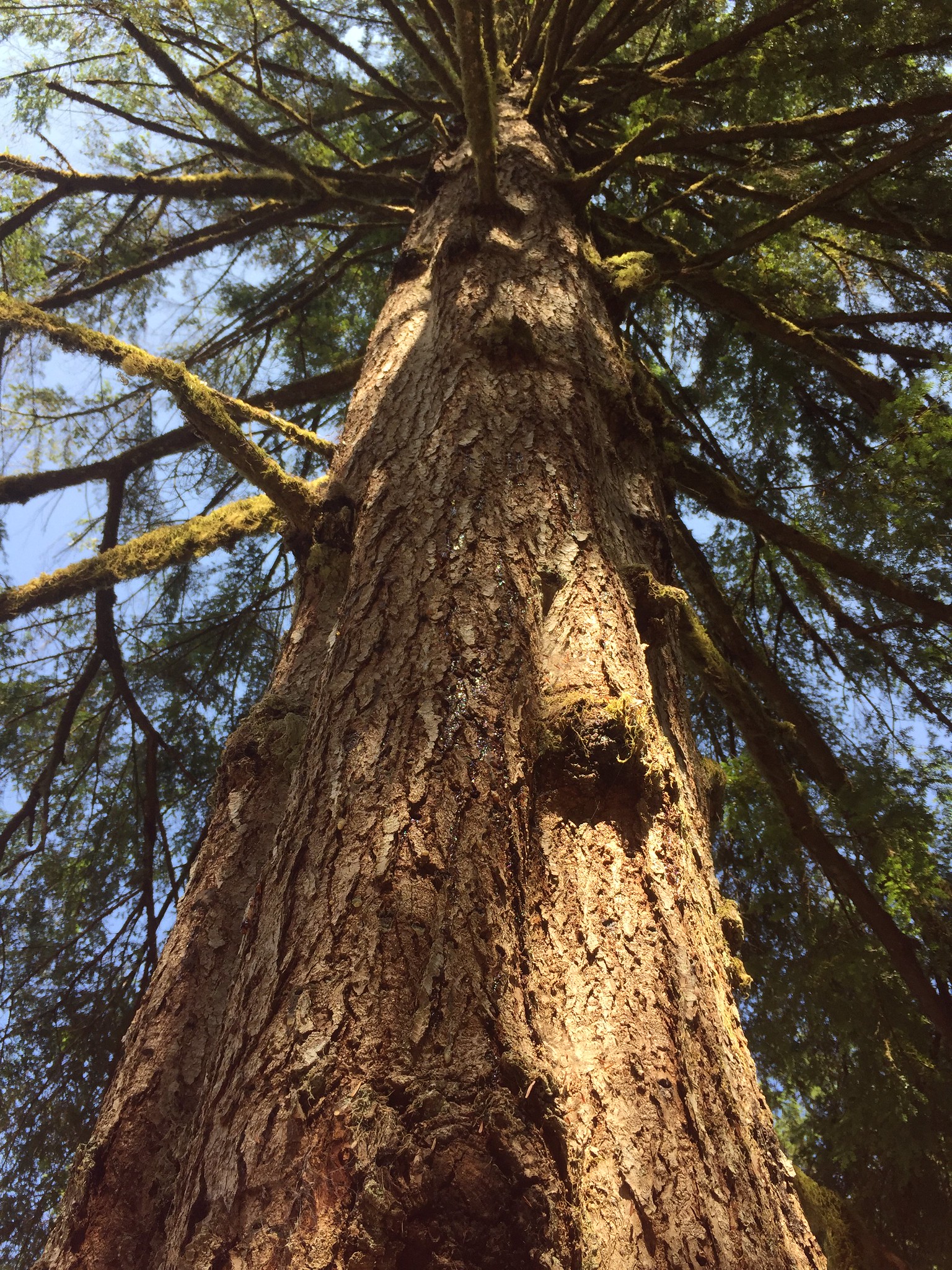
Spruce
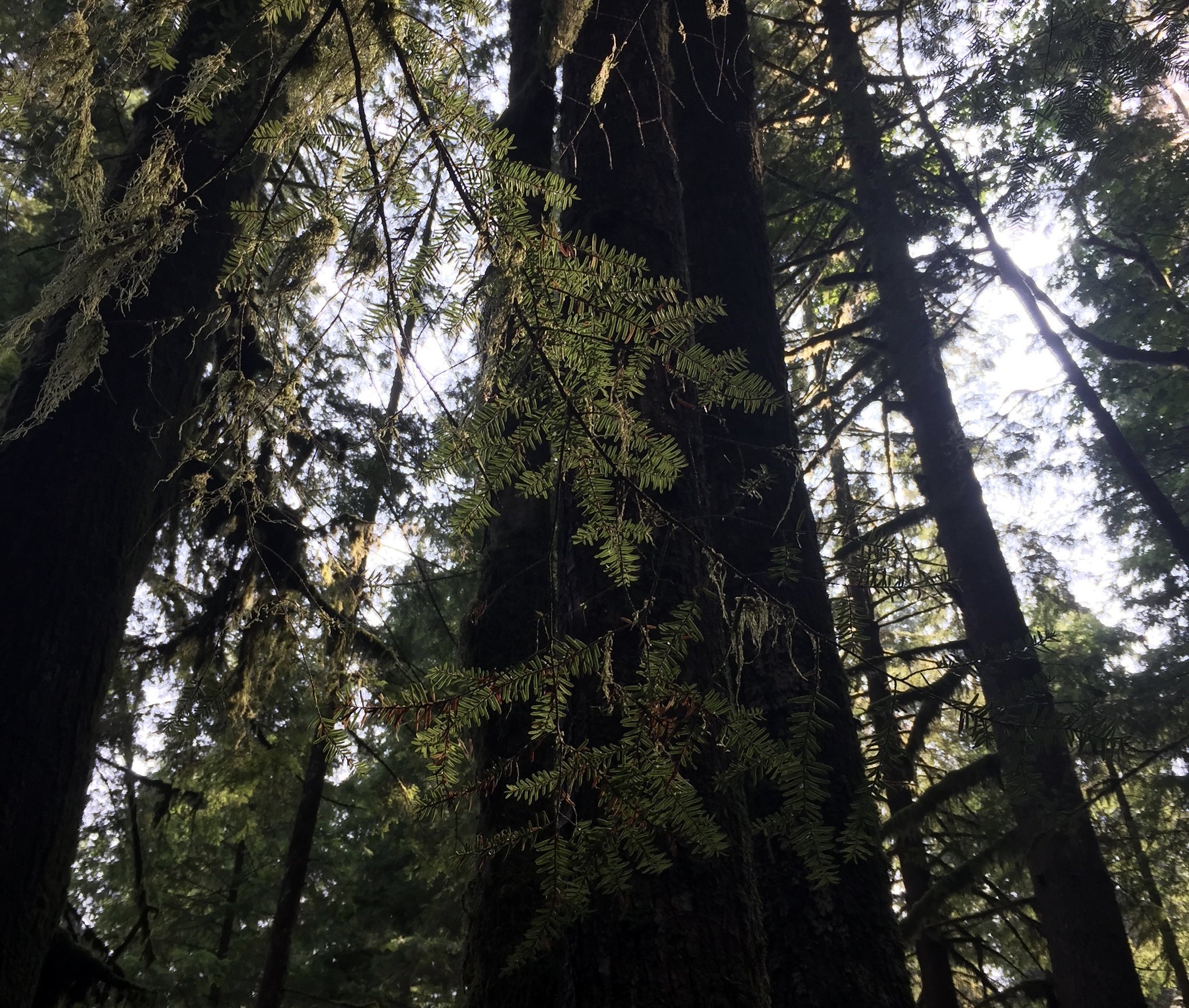
Trees are infinitely inspiring to me. It is not for nothing that trees are used as a metaphor for humans. There are many lessons to learn from the trees and their way of being.

First their leaves, reaching out for the light and photosynthesizing it into energy. For instance - these feathery spruce needles smell divine and I can never go for any forest stroll or hike without rubbing a bit between my fingers and sneaking it into my water bottle. They add a citrusy-forest aroma to the water, and also contain vitamins C.

Like the tree, we reach up and for the light, and aspire to become more than just our flesh and blood. Incorporating light into our life brings an energy that is not possible to obtain by other means of nourishment.

Leaves not only absorb but also filter the light in so many ways, creating Komorebi patterns on the environment beneath them. This is perhaps also a way to protect the areas that cannot handle too much light from blinding the darkest areas. Gentle or dim light is valuable for allowing other life forms to exists, allowing also our shadow parts to develop and express themselves.

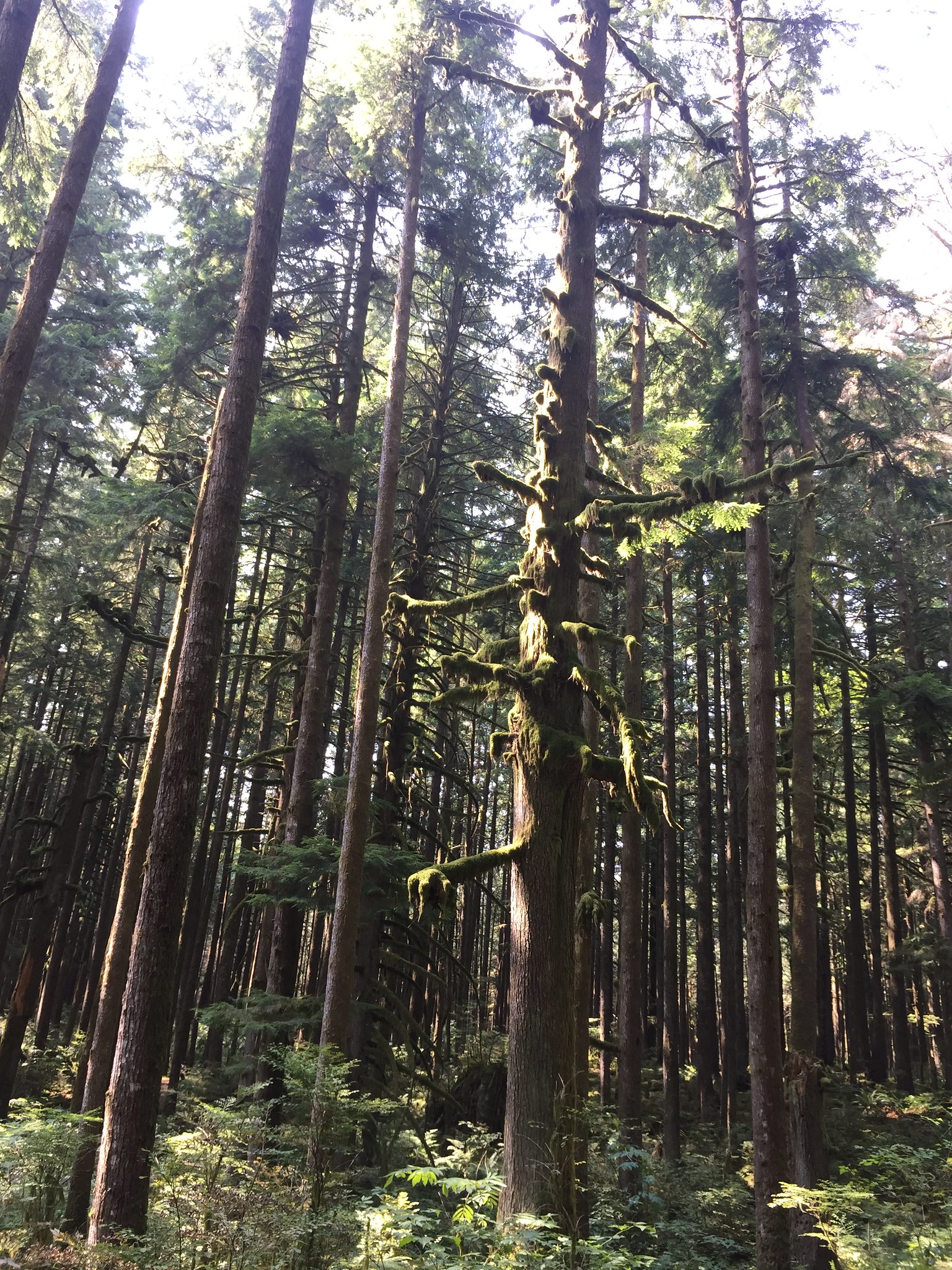
Forest Magic
Tree branches spread their arms as if in prayer or dance, and act as a host for many birds, squirrels, other critters and on their own are like a forest for various lichens, mosses and even ferns! Some of these life forms give nourishment back to the tree, that the tree cannot absorb form the light or the soil on its own.

Our hands are capable not only of creating, but also of nourishing and allowing or enabling others to create and be productive. Our hands not only give but also receive.
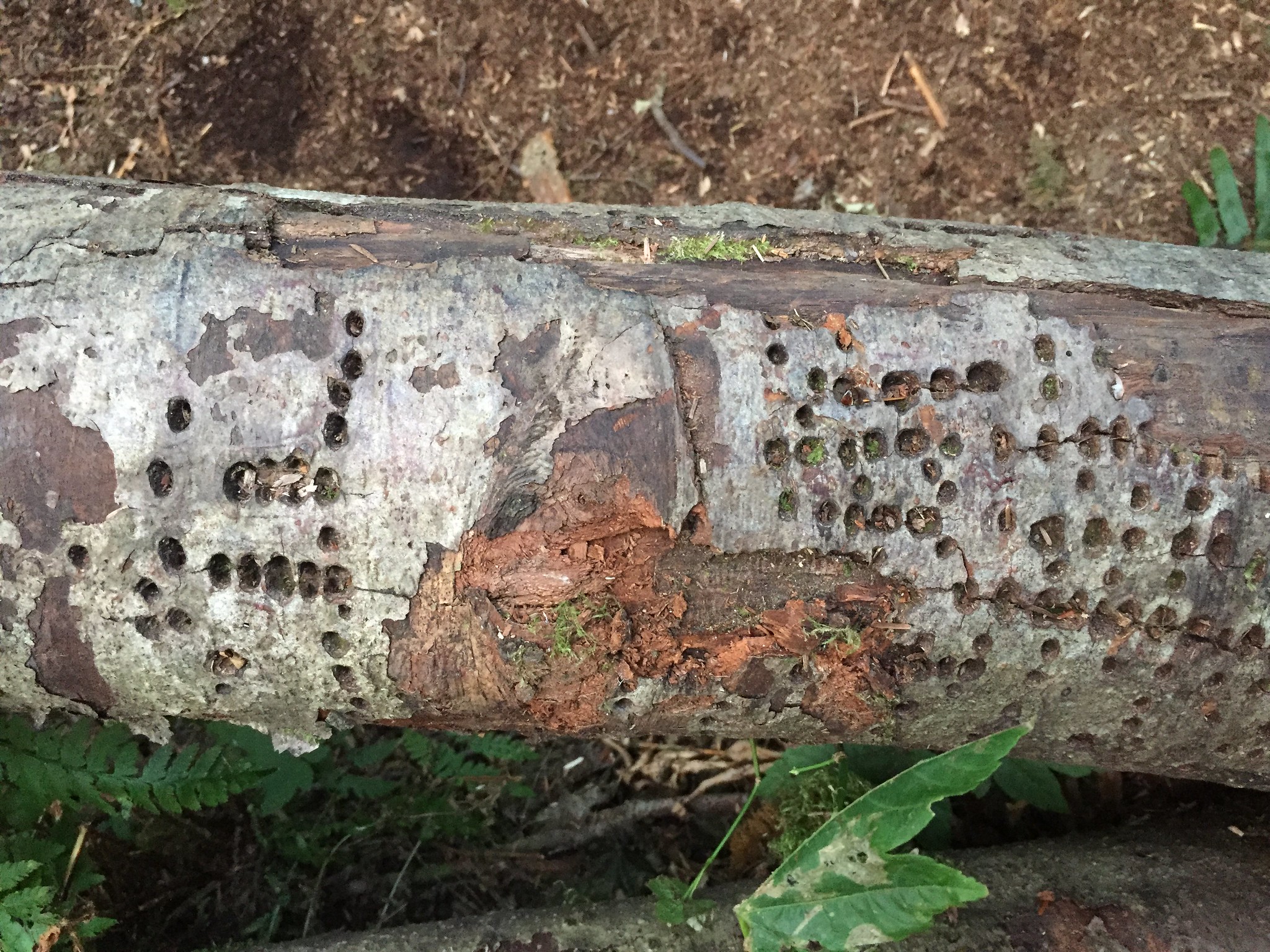
Woodpecker's Braile
This tree trunk was marked by a woodpecker, who searched for bugs within the bark, and while at it writing a whole novel in Braile letters! Different types of woodpeckers leave a different pattern. Can you read what it says?

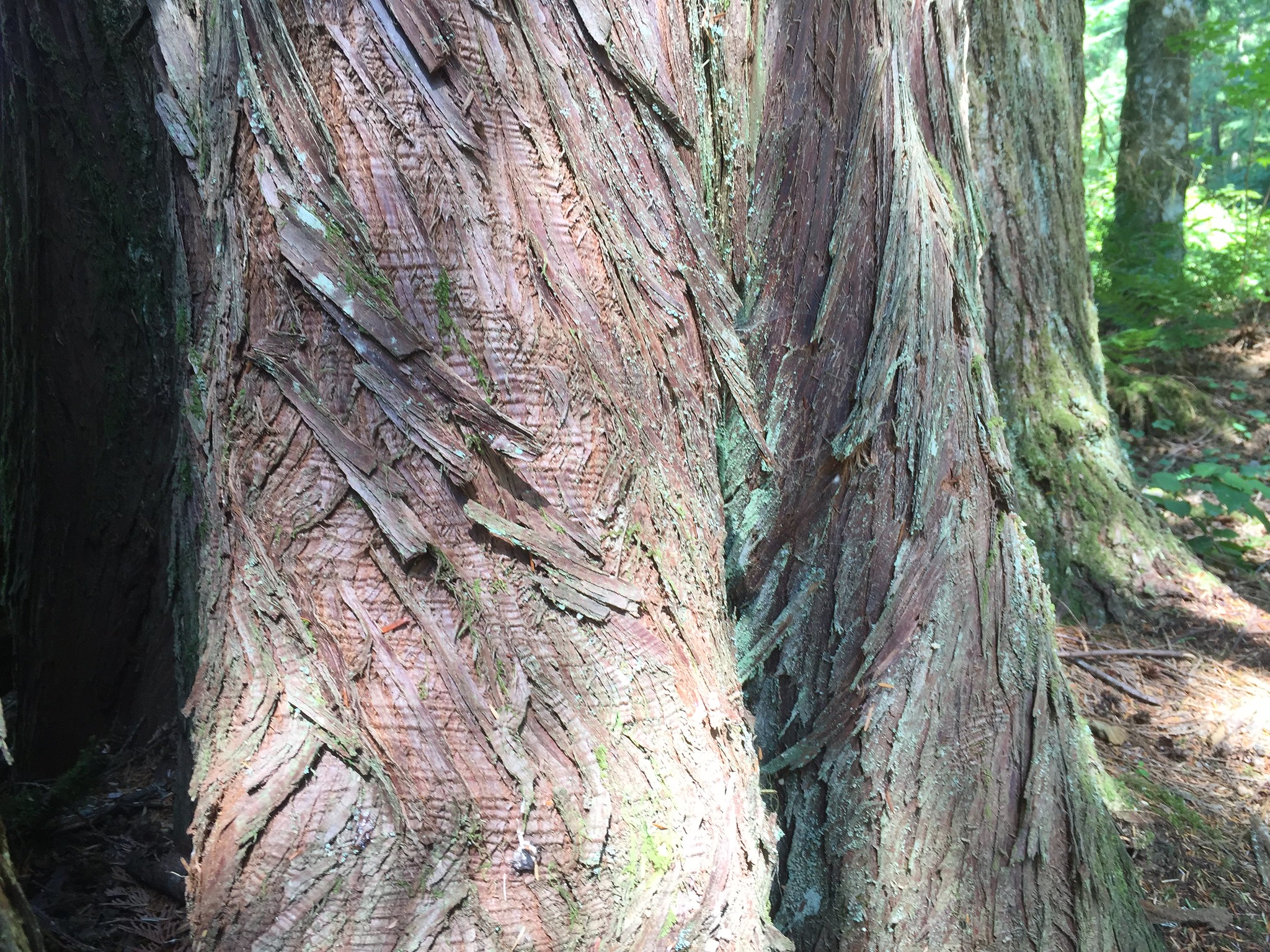
Woven Bark
Redcedar bark is thick, strong and flexible, withstands decay for decades. Strips of inner redcedar bark is used by First Nations of the West Coast to craft many useful artifacts - from ropes and fishing nets to baskets and even garments. Woven into ponchos and hats, they would protect the person wearing them for getting soaked wet. And they also smell wonderfully dry, woody and, well, cedary!

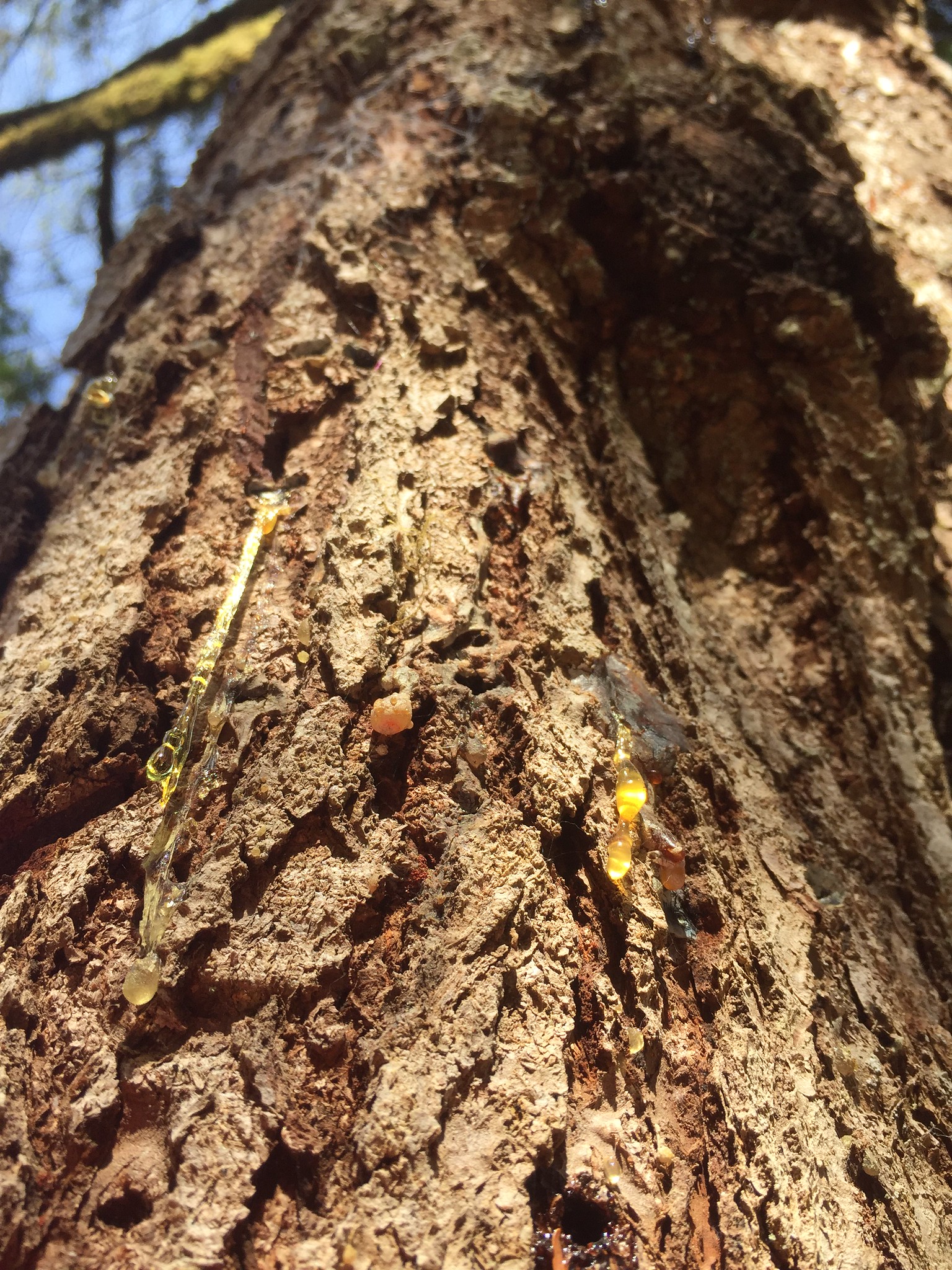
Weeping Spruce
The bark is protective and strong, but when damaged - it oozes healing sap, like this (resin-) weeping spruce. The sap is not only healing for the tree itself - protecting it form dehydration, fungal infections and further decay. It also has healing properties for humans. Spruce pitch is used in various herbal medicine preparations, for example, in a salve to relive chest colds, muscle pains, sprains, and more.

Weeping Spruce
Our tears too are healing. And our wounds, although make us appear damaged, also allow us to open up and give more of ourselves and express our love to the world around us.

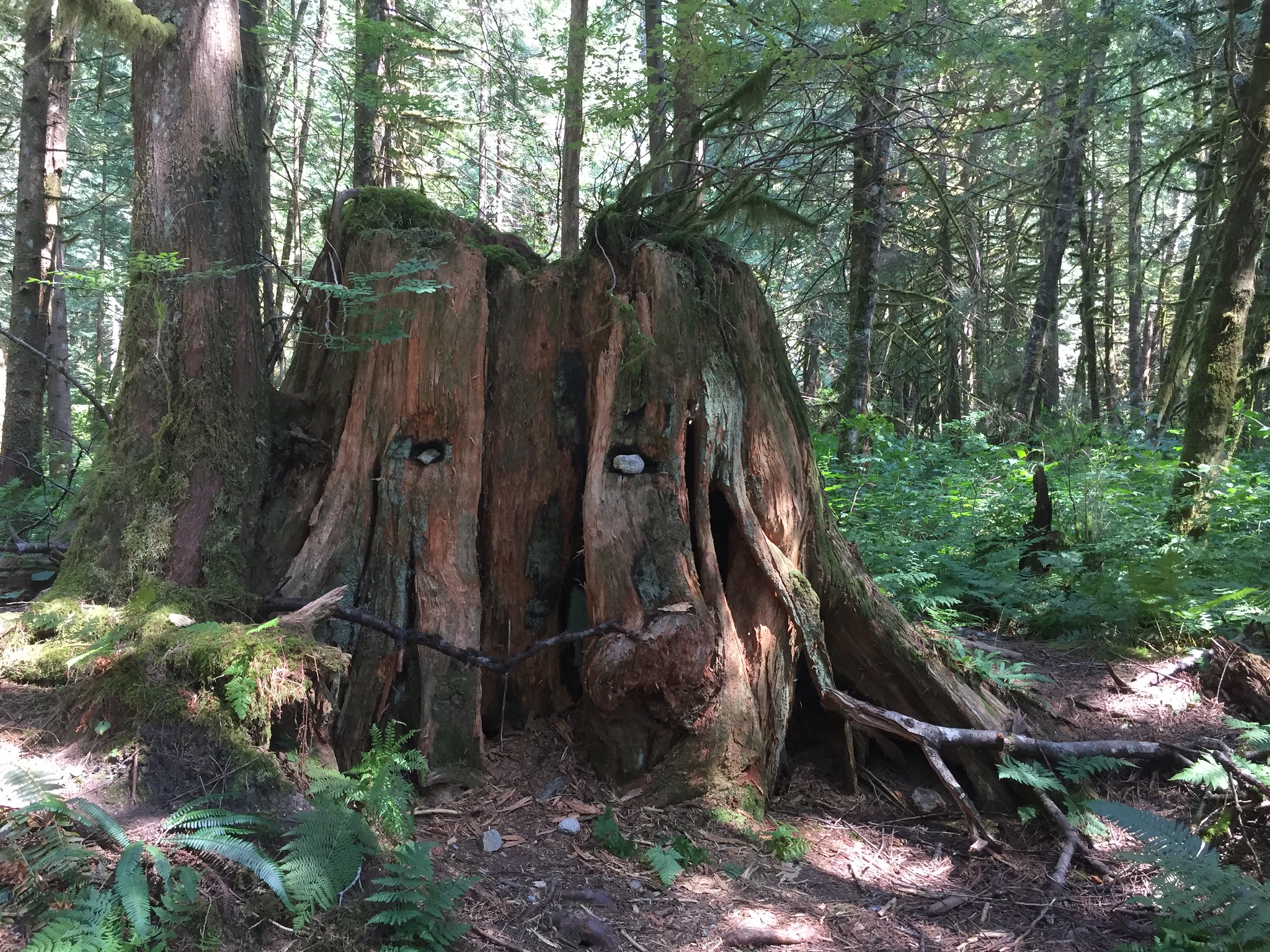
Old Fella
Really old dude... Smiling tree stump.
Even though it was chopped up by ignorant loggers almost a hundred years ago, it keeps smiling. I don't know how one does that, but I sure hope to learn that skill before I turn 100 years old.

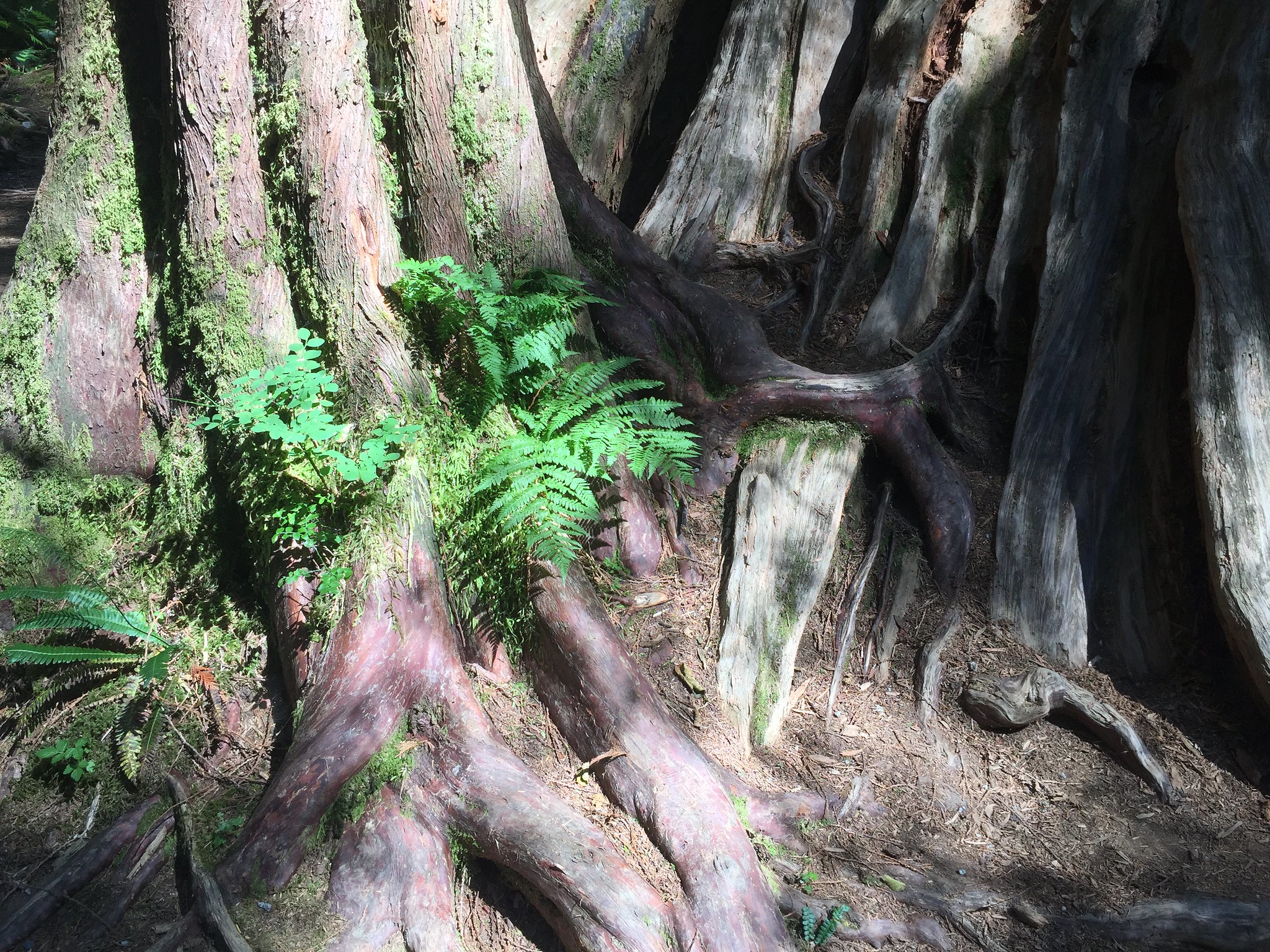
Interwoven

Intertwined roots that seem to have a life of their own, reaching for symbiotic embrace. People can live all their life wondering and exploring, but there is always the deep desire underneath to go back to one's roots. This is not a metaphor, but an essential soul need: the desire to connect to and nourish from the deepest part of our psyche. The one that grounds us, protects us from swaying to far from our truth, and also the part that draws nourishment from the depths of the earth. Our roots, like the tree's, connect us to our ancestors and also to the earth (from which we come and to which we shall return).

Labels: , , , , , ,

Wednesday, August 15, 2018

Water

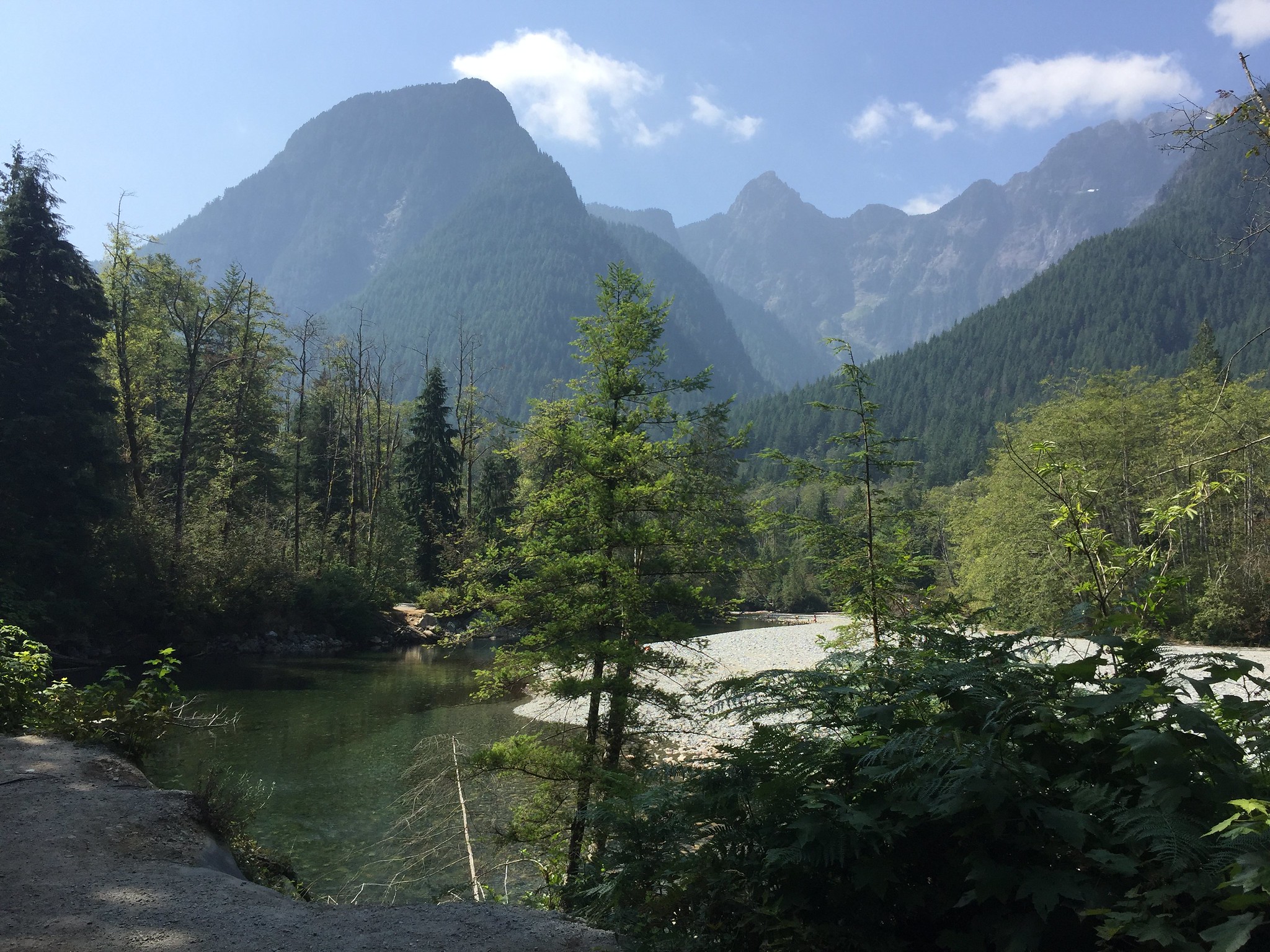
Alouette Lake
The flow of it, the glow of it.. Broken sun rays reflecting on the lake's surface and breaking into glitter, like thousands of golden leaves on an autumn tree. Other times it is ripples of grey satin silk, cool and smooth and in a canoe gliding quietly among fallen tree stumps.
Gold Creek
Gold Creek descending from the Golden Ears, cool and deceptive. Sometimes still, and a few curves away creating violent currents, white water and waterfalls. A deep emerald-turquoise pool carved into the rock, water rushing down its height collecting energy and then dispersing into the rocks... curving lazily among spruce, cedar and fir.

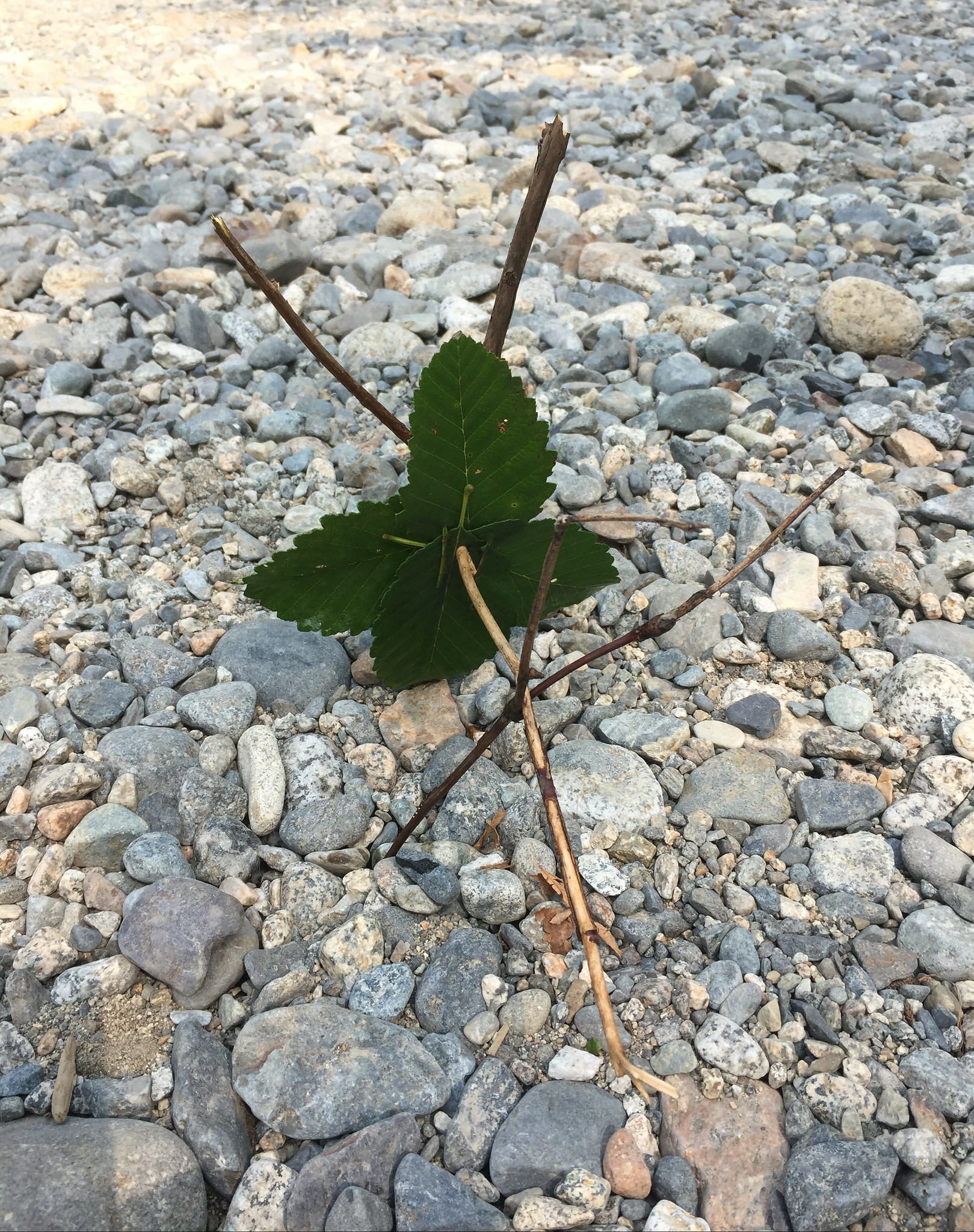
Moomin Watermill

Water-carved quiet creekside beach, with smooth pebbles and wild clay banks, pools where dogs and children swim despite its chilly promise, and little whimsical watermills can be built from leaves, with the kind instructions of the Moomin book. The little things you find time for only in the summertime.

Labels: , , , ,

Saturday, November 25, 2017

Blue Lotus & Mandrake

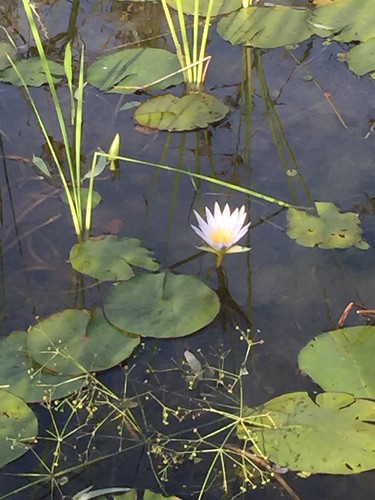
Blue Waterlily AKA Blue Lotus

What do blue lotus and mandrake have in common?
For one thing, I spotted both growing wild in Ein Afek nature reserve, the remnants of the wetlands of the Na'aman river, whose origin springs are just southeast of the beautiful city of Akko. Secondly, both have hallucinogenic properties, and were valued by herbalists, magicians, shamans and witches for thousands of years.

Blue Waterlily
Blue Lotus (Nymphea caerulea) is truly a blue waterlily, highly prized by the Egyptians, who treated this plant that grew in abundance along the Nile Valley. Nowadays, it is a scarce plant that grows in marshes and ponds in that area. The flower blooms only for 3 days, in which it rises 20-30cm above the water, opening around sunrise, between 7:30-8:00am and closing around noon, a cycle that echoes the solar rising and setting.

To the ancient Egyptian imagination, the yellow centre with its shooting yellow stamens set agains the blue flower symbolized the sun set in the azure Egyptian skies, and associated the "sacred lily of the Nile" with the sun god Ra. Blue lotus plays a role in an even earlier Egyptian myth - a myth of creation, which tells how the flower rose from "Nun" - the chaos - even before the sun itself was created.

"I am the pure Lotus which springeth up from the divine splendor that belongeth to the nostrils of Ra. I have made--my way--, and I follow on seeking for him who is Horus. I am the pure one who cometh forth out of the Field." (The Papyrus of Nu).

Garlands of blue lotus were found in tombs and are portrayed and mentioned in the Book of Coming Forth by Day (AKA Egyptian Book of the Dead) - the guide for the soul in the afterlife.  "Transformation Into Lotus" is described in both in the papyrus of Nu and the papyrus of Paqrer. Blue lotus was also found in countless frescos and decorations on various ritual chalices. The priests would steep  the flowers in wine and harness its narcotic and hallucinogenic properties in their rituals to reach a state of ecstasy.  The flower's naturally occurring amorphine, nuciferine and nornufcferine are what give it hallucinogenic properties.

The Egyptians would steep the flowers in wine, thus creating a narcotic concoction that was used for ritual by their priests. Additional ancient mention of lotus' hallucinogenic properties are the Lotophagi ("Lotus Easters") in Homer's Odyssey.

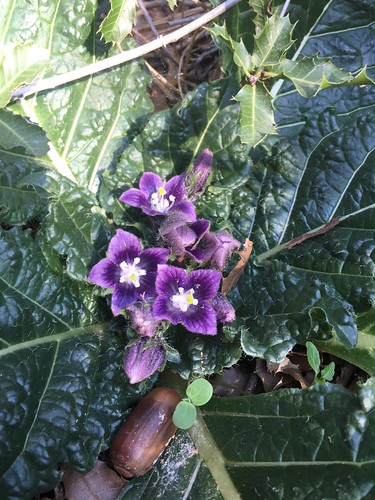
Mandrake Flowers
Few plants are as intriguing as the Mandrake - a highly poisonous plant from the nightshade family that is native to the Mediterranean and most of Europe. The species that grows in Isarel is the Mandragora autumnalis, and it's been mentioned twice in the bible:
“The mandrakes send out their fragrance; and at our door is every delicacy; both new and old; that I have stored up for you, my beloved.” - Song of Songs 7:13

And in the book of Genesis an elaborate story of jealousy and seduction takes place, involving the two sisters (and wives of Jacob) Rachel and Leah. Reuben finds mandrakes in the field and gives them to his mother, Leah. She has been neglected by Jacob for quite some time in favour of her barren sister. And so she trades the mandrakes with Rachel for a night with their shared husband. Rachel agrees, in hopes that the aphrodisiac power of the mandrakes will open her womb. From that night with Jacob, Leah's fifth child is conceived.

It is unclear from the story which part of the mandrake was used. The elaborate root systems of mandrakes, which often looks like a human, has a folklore reputation of solving infertility. There has been much myth about uprooting the mandrakes, without disturbing the little demon underground. A renown technique has been to tie a dog to the plant so that the dog would absorb the plant's curse once uprooted. Reuben must have gone through a lot of trouble to help his mother!

The fruit, on the other hand, have an intoxicating aroma that supposedly is enough to arouse the most frigid person on earth. I am yet to see this golden fruit or smell it in person, but I've been told it smells like pineapple. The fruit is the most edible part of this toxic plant, although one must be careful not to consume any of its peel or seeds. It is for a reason that it's Arabic name is "Tufah el Majnun" - Apples of the Insane.

Finding the mandrakes in such close proximity to the rare blue lotus was inspirational to me and sparks the imagination. Whether if it its their colour or the myth surrounding them, this is a theme I intend to go back to when I'm next brewing in my lab.


Labels: , , , , , , , , ,

Wednesday, October 25, 2017

Saffron Crocus

Saffron Crocus!
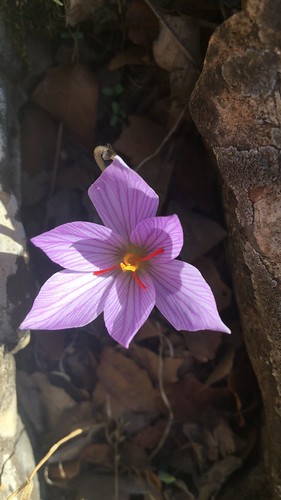
Finding this saffron crocus (Crocus sativus) on Mout Meron was such a delightful surprise!
I'm thrilled to report that the aroma, though unmistakable saffrony, is elusive and different. There is something about the fresh flower that doesn't translate into the dead or dried one. The breath of fresh mountain air that surrounds it. A hint of moss from a nearby oak branch. Maybe even a tiny bit of cinnamon. But most importantly - a generally flowery feeling that you don't get when encountering the spice.

The three orange columns you see at the centre of the flowers are not the stamens (which are the male flower bits that carry the pollen), but the feminine stigma, which in the saffron crocus, unlike many other dual-gender flowers, is located above the stamens, making it a more difficult flower to pollinate.

I've returned to the studio feeling inspired to create a very floral saffron fragrance. Perhaps incorporate it into my existing Tamya perfume, and then work out the autumn crocus theme by adding a hint of saffron. It would be interesting to try to "spice up" this otherwise innocent, fruity-floral fragrance. It's a very uplifting fragrance, and may be exactly the kind of floral surrounding this dusky crocus needs.

Labels: , , , , , ,

Thursday, January 05, 2017

Smoky Narcissus

Narkiss

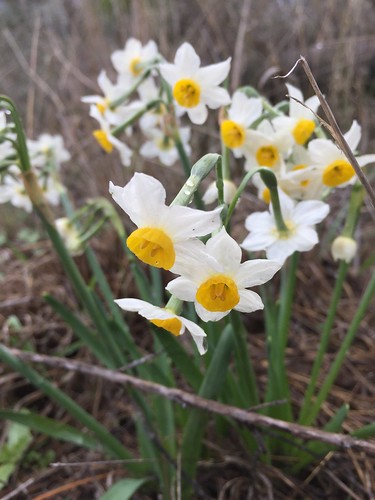
Wild narcissus (N. tazetta) and paperweights (N. 'Chinese Sacred Lily') are growing in my soon-to-be garden and in the mountainous wilderness that is its backyard. The wild one smells a thousand times better, in my humble opinion.... Especially, I've been haunted by its fragrance at night time, mingled with smoke from all the wood stoves used for heating in the village... Smells like a very fancy, smoky-floral beeswax candle burning. Not that this description does it any justice. I wish I could capture it in a perfume. Narkiss has some of the qualities (herbaceous, waxy-animalic) but as always, nature beats us all perfumers to a pulp. Other perfumes along these lines that I recall are Tom Ford's Velvet Gardenia and Shanghai Lily (I must remember to scout a sample size of that soon). Caron's famous Narcisse Noir also belongs to this territory, albeit it's much more aldehyde-heavy and it also has gasoline-like top-notes. Another scent it reminds me is of some of the Feu de Bois candle by Dyptique.

Those surprising moments when you discover a new yet familiar scent in the natural surroundings, truly are the best.

Labels: , , , , ,

Tuesday, October 04, 2016

Return to Sea

Return to Sea

Shana Tova uMetuka to everyone who's celebrating. I've been up to my ears in adjustment mode and taking care of little details to start our new life here that my celebrations have been restricted to the Rosh HaShanna dinner. Otherwise most days just seem to continue merging into one another in one endless loop of tasks that remain undone and problems that are still unresolved. I know I should give myself a break (moving homes alone is one of the most stressful life events, and immigration amplifies this a hundred fold)  - but I have major responsibilities and there are some things I'm absolutely unwilling to compromise about (such as my child's health and well-being, at any age really).

This is a time for new beginnings, and that means a lot of letting go. Before I left Vancouver I returned all the shells I collected over the years to the ocean. To me this was a symbolic way of giving thanks to nature, and the Salish Sea in particular, which gave me much needed comfort throughout the years. The conception of so many ideas - and perfumes - happened to me as I walked along the seawall, in varying weather conditions and lighting degrees. The water helps me reflect on my life and recollect my thoughts. The fresh salty air around the water cleared not only my lungs but also the mind.

I'm thankful for being able to see the Mediterranean from where I live, and  that it is only a 20 minutes drive away. I've never seen a sea I did not like, and returning to my childhood's beaches is one of the most blissful part of this move (on par with my nephews and nieces' enthusiastic welcome and the fact that they remember us even though we didn't visit for a year and a half).

There is a strip of wild sand dunes and lagoons of the northernmost beach spanning all the way from Banana Beach to Rosh HaNikra/Ras El Nakura  - the grottos which are right on the border with Lebanon. I'm curious to see how it behaves throughout the seasons and the sea's mood cycles. There is plenty of wild life there, both in the water and along the shore - fragrant beach lilies included. I'm looking forward to being able to swim and enjoy the sea and its salty water almost year-around (it gets only as cold as the summer temperatures of the Pacific in wintertime; but it's also most stormy then). I can't wait to see what inspirations these waves will bring me.

Labels: , , , , , , ,

Friday, April 10, 2015

Dew


T'filat Tal (Blessing/Prayer for Dew) is a beautiful Jewish prayer that is said only once a year, on the first day of Passover (the morning after Leyl HaSeder). From this point on, the daily prayer for rain is replaced with prayer for dew.

I first heard this poetic prayer last Saturday and was truly moved by its beauty. It is one of those rare Jewish prayers that actually rhymes, and therefore has inspired a number of musical interpretations by various Hazanim (cantors). One of which is the classical historic recording you can listen to in the YouTube clip below (Cantor Yosef "Yossele" Rosenblatt). Both the Tal and Geshem (rain) prayers were written by Rabbi Eleazar Ha-Kallir in the 7th Century. 


I was thinking about this prayer all week. Not only because it is beautiful and timely, but also because it made me think of perfume. Perhaps because of Youth Dew. But also because somehow the prayer made me think of the little droplets of dew on leaves, and that alone is scent-evoking. Then there are dew drops on flowers, collecting in the little demitasse of wild flowers and between the folds of roses and lilies. 

In John Ruskin's "The King of the Golden River", the youngest brother is the one that was able to turn the river into gold because of the kindness of his heart: even though he was shared all his water with the thirsty creatures along his path - there was one dew drop in a lily that grew by the river. And that single drop was so pure, reflecting the boy's selflessness and generosity of spirit - that he was spared the destiny of turning into a rock like his crass older brothers. 

I searched in Basenotes to find out if there are more perfumes with the word "Dew" in them and found them to be surprisingly abundant. From the obvious Youth Dew and its flanker Youth Dew Amber Nude to silly novelties such a the fruity variations on Honeydew Melon (there's also a Honeydew from Dragonfly Blue) and The Body Shop's Dewberry to Demeter's Fragrance Library's Mildew (oops!); and onwards to more romantic names such as Dew Blossom (Love & Toast), Almond Blossom Dew (L'Occitane), seasonal references (The Body Shop's Winter Dew and Oscar de la Renta's Summer Dew) and cliche names such as Meadow Dew and Morning Dew (both by Alyssa Ashley and Annie Oakley). Out of all these names perhaps the only one I am intrigued to try is Montale's Dew Musk

So I was trying to think about three things: Why is dew important? How is it different from rain? And lastly - what perfumes remind me of dew?

First of all, keep in mind that the seasonality of rain versus dew is entirely based on the agricultural needs in the Holy Land - where the rainfall is crucial for livelihood of both people and livestock. Also, in the Omer season (the wheat harvest season - from Passover to Shavuot), it would be a curse to have rain falling as it would spoil the wheat harvest, which needs to dry completely in order to be harvested and stored properly. So any precipitation from Passover till Shmini Atzeret (the last day of Sukkot) needs to be gentle and mild.

According to this article about the Tfilat Tal, dew is the water that the heaven provides as a blessing of abundance to the plant life. Therefore absence of dew is considered drought, and a curse. This is demonstrated by the fact that the valley of Harod (near the Gilboa in Israel) has little dew.  This is the mountain upon which King Saul and his son Yehonata have lost their lives. In his mourning, King David has cursed this mountain to not receive neither rain nor dew (Samuel II, 1:21).

As for the scent of dew - in my mind I associate it with nectar, tiny flowers, green tender leaves and all delicate things. Dew is what gives a garden in the morning its enticing, fresh and crisp yet delicate scent. In all my years collecting answers from readers and customers to what their favourite scents are, this "garden in the morning" is one of the most high ranking answers.


Living in a climate where there is rain in the summer takes away from the surprising effect of experiencing dew. Growing up in Israel, dew was shocking to find time and again when waking up after a hot summer night and attending to the family's vegetable garden. The dew drops will disappear as soon as the sun hits a certain angle in the sky - not that long after rising. Even as early as 7:30 or 8am, you'll find none of it left. I will get wet up to my ankles and knees from the grass and like see it collecting on the unfolding cones of the morning glory vines. But for those early to rise, knowing that there is some precipitation to give the grass, vegetable and flowers - and especially the wild plants and the local fruit trees that don't require watering. All the typically Israeli trees: almond, olive, date, fig, pomegranate, carob - rely entirely on the gifts from heaven.

Dew takes its scent primarily from the plants it lands on. Tomato leaves will give it a funky odour, while sweet scented flowers will give it the taste of nectar. So it's really as versatile as all water: what it touches will transform it.

From my own existing creations, Bon Zai to me is a fragrance that captures the pure, tranquil feeling of early morning dew on pine needles and blades of grass. Likewise, many aquatic scents bring to mind dew, for example: l'Eau d'Issey. But neither are exactly dedicated to the concept of dew. In my early days in perfumery, I created a perfume called Coeli, which was first inspired by the dew on the herb garden in summer, which at this season was abundant with lush lemon verbena, melissa and lemongrass. It was obviously very citrusy at first. I later changed the scent into something entirely different, but still rather dewy. It did not fair very well, because I suppose it was not the bold, retro type of fragrance that my customers seem to be most fond of. It was far more modern woody-aquatic-floral type of scent. In the least few years I've worked on a scent inspired by Harbour Green Park (in Coal Harbour) - the scent of the dew-covered grass in the morning mingled with jet fuel and salty low-tide. Another scent that was also inspired by he same lemony herb garden was titled Clil (the name of my home village) but also had hay in it, which gave it a more bold presence. Perhaps it's time to go back to the drawing board with this scent and re-create my herbal tea garden once more.


Labels: , , , , , , , ,

Thursday, March 28, 2013

Pittosporum & Rain

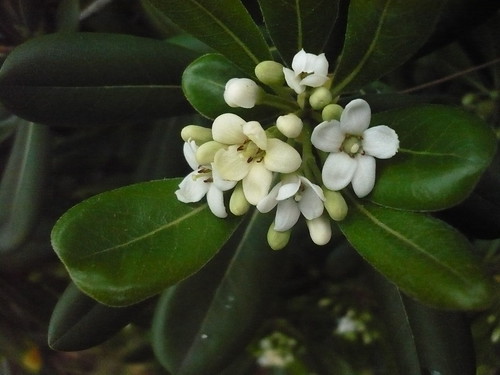
Pitosporum by FOTOGRAFIES CATA
Pitosporum, a photo by FOTOGRAFIES CATA on Flickr.
After our brief Portland encounter, we arrived in Berkeley in the late afternoon of Tuesday, March 19th.
The moment we got out of the rabbit hole and got out, three distinct realizations hit me:
First of all, it was raining, in California - which is a most profound cognitive dissonance for a Vancouverite (and what we supposedly hate the most when on vacation). I didn't only not mind this rain (which was soft, and slightly warm, at least in comparison to its relatives up north). I liked the smell of the rain, which we rarely actually get in Vancouver (where it rains about 90% of the year). Besides, I wasn't exactly on vacation. I had lots of work to do - and the lack of sun would make me feel less like I was missing out on fun.

Secondly, the street dwellers of Berkeley turned out to be the most colorful bunch, and far outweigh their brethren in Vancouver in most categories (except, perhaps, politeness). To prove my point: they were wearing war paints all over their face when we arrived, made probably from flower pollen and exotic spices.

Thirdly and lastly - the air smelled fantastic, and it wasn't just the rain hitting the dry pavement; and it wasn't laundromat either. I spent the remainder of my time trying to find out where the smell came from. And it turned out that the majority of Shattuck Avenue is lined with tall evergreen trees, whose blossoms release the most intoxicating aroma reminiscent of osmanthus, orange blossom and orchid.

A few days later, I learned from Bruno that those trees are non other than Pittosporum undulatum. I'm not sure which kind exactly, but they certainly grow tall, beautiful and fragrant - something you might want to consider when planning your garden!

Labels: , , , , , , , ,

Thursday, February 21, 2013

Hiding from the Muse

Catching Fire by AmyJanelle
Catching Fire, a photo by AmyJanelle on Flickr.
יום אחד זה יקרה"
בלי שנרגיש, משהו ישתנה
משהו יגע בנו, משהו ירגע בנו
ולא יהיה ממה לחשוש.
(...)
וזה יבוא, אתה תראה
הידיים הקפוצות יתארכו
והלב השומר לא להיפגע יפעם בקצב רגיל
זה יבוא, כמו שהטבע רגיל
 ."להיות שלם עם עצמו
(Rita)
 
When does self-expression cross the lines and becomes kitsch? When does pathos stops moving us and becomes overbearing?

An artist is always on the tightrope, finding that balance between the too-much and the too-little. A hint, a glimpse, a beginning of a smile and the words that weren't said are often more important than what shows on the screen.

And sometimes a few minutes of genuine performance, truthful art can inspire you for weeks and give that "natural high"; a strong feeling of inspiration, leading to motivation, leading to the urge to express - create - do.

The relationship between an artist and his "muse" is complicated only if he is too caught up in a narcissistic chase for his own reflection in the lake. True inspiration comes from life, not from being chased (sorry, Jack London, I don't agree with you!).

The muse - or inspiration - is not a lover that needs to be chased or courted. It is the holy spirit that is always there, if we only let it come to us. It's not the muse who is avoiding contact - but the opposite: we are hiding from it; or worse - escaping it.


But that requires patience. Not waiting for the muse; but waiting for oneself to complete the cycle. Wait for the "dry spell" to pass. Because, in truth, there was never a dry season. There was only the time for the rain to collect and condense in the clouds. And when the clouds are filled to the brim, they will pour.

Just like Jonah hiding in the whale's belly, an artist might just need to hide for a while in the mundane, often times plagued by fears of impotence. Rather than fighting it, doing the hard work and fulfilling life's demands in the only cure for losing inspiration. In fact, it is the inspiration.

Labels: , , ,

Thursday, January 31, 2013

Life Is A Struggle

Life Is A Struggle by Ayala Moriel
Life Is A Struggle, a photo by Ayala Moriel on Flickr.
"When we are stricken and cannot bear our lives any longer, then a tree has something to say to us: Be still! Be still! Look at me! Life is not easy, life is not difficult. Those are childish thoughts. . . . Home is neither here nor there. Home is within you, or home is nowhere at all".
- Herman Hesse, Bäume: Betrachtungen und Gedichte [Trees: Reflections and Poems]


If your sense of belonging does not come easy, trailing alongside the trees gives a great lesson and a sense of proportion. A single tree in the rainforests provides oxygen supplies for a year for ten people - in only one season of its existence (Arbor Day Foundation).

"On average, one tree produces nearly 260 pounds of oxygen each year. Two mature trees can provide enough oxygen for a family of four" (Environment Canada). 

As I walk by these ancient creatures of wisdom who've breathed the planet's toxins, listened to the every bird's song, and exhaled serenity and purified air for hundreds if not thousands of years --
I'm awed not only by their stature, but also by what they have silently witnessed, and above all - to their dedication to light and life.

Tutored as the "green lungs" of our blue planet,  we owe 28% of the oxygen we breathe to the rainforests and the trees. It is no wonder that trees have been sacred not only to the native Indians but even in more deserted climates such as the Middle East. There are trees who are worshipped, to this day, with colorful ribbons tied to their branches by pilgrims of religions long gone. It seems increasingly logical to make all trees sacred. Planting trees should become a common practice from young age...

There are 3 main trees in our beautiful Pacific Northwest forests: Douglas Fir (Pseudotsuga), Pacific Red Cedar (Thuja plicata) and Western Hemlock (Tsuga) and Sitka Spruce (Picea sitchensis). I'm still learning how to differentiate between them: they are all so big and often times their needles are so far out of reach that there is no way of examining their needles and comparing their shapes. And then the trees are young it's the opposite problem: you can see the needles, but the trunks are still quite similar in appearance (at least to my untrained eye). These amazing trees can live several hundreds and even well over 1,000 years!

So, as I struggle to find courage, motivation or inspiration between my 4 walls - I step out to my "back yard", breathe deeply - and try to listen to the trees.


Labels: , , , , , , , , , ,

Friday, January 25, 2013

Recipe for Poetry

"Breathe with unconditional breath   
the unconditioned air".   
-  How To Be a Poet By Wendell Berry
A friend of a friend posted a link to this poem on one of the major social networks, and I found it so true and inspirational that I hope you will scroll over there and read it too!


Labels: , , ,