Saturday, July 04, 2015

Poet's Jasmine

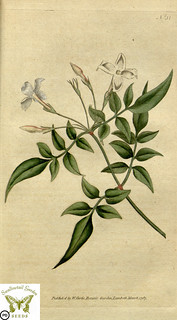
Jasminum officinale, poet's jasmine. Botanical Magazine vol.1, J.Sowerby (1787)

Poet's Jasmine, one of the five fragrances that make up Ineke's Floral Curiosities collection is one of the synonyms for Jasminum officinale - the mainstay household jasmine that has been naturalized throughout Europe through historical routes little known.

Poet's Jasmine opens with a very tame, fruity and light jasmine accord, and hints of tea accents. The fruity body takes over within a few minutes, revealing a summery composition that reminds me first of the candied-flower fragrance of methyl-antrhanilate that is prevalent in Serge Lutens' Fleur d'Oranger; and quickly developed into the amber, ylang ylang and jasmine accord of Annick Goutal's Songes. This phase remains on the skin for an hour or so; and then turns into a skin musk type of scent, the like of the musc and patchouli base that's Crazylubellule and the Poppies' ShanghaiJava Musc & Patchouli. If you dislike the indolic aspect of jasmine, this would be a nice jasminesque scent for you. I also noticed a huge difference between wearing it in cool weather vs the warm weather we're blasted with right now. In the cooler weather it smells more watered-down and distant. I'm happy to report it is much better in the heat, taking on more floriental and dreamy personality.

According to Ineke's website, the notes are:

Top notes: Citrus Fruit, Rosemary, Absinthe, Star Anise
Heart notes: Jasmine, Frankincense, Cardamom 
Base notes: Hinoki wood, Guiacwood 

And it also provides some whimsical images, as always, including this jasmine tea recipe:

"Poet's Jasmine Tea
1 handful freshly picked jasmine flowers and leaves
2 cups boiling water
slices of orange
honey to taste
Place the poet's jasmine flowers and foliage in a teapot, add the boiling water and allow to infuse for about four minutes. 
Remove the jasmine with a strainer, add a slice of orange instead of lemon, and a little honey for added sweetness if you like. 
Serve with a sprig of jasmine flowers and a few bon mots." 


Labels: , , , , ,

Thursday, July 26, 2012

Sweet William

Ineke's Floral Curiosities anthology of soliflores for Anthropoligie continues, and the newest flower in this poetic garden is Sweet William (Dianthus barbatus).

I had the pleasure to smell & wear Sweet William over dinner & Kir with Ineke and her husband Bill - and immediately fell for this delicate, spicy, warm yet fresh composition.

Sweet William opens with fresh balsamic peppery notes that reminded me of another favourite - Si Lolita. It is, however, more dusky and violetty than the latter. Carnation accord being the centre of attention, with complementary strokes of ionones, redolent of candied violets and accompanied by velvety cedar (a wink to Evening Edged in Gold, which also had a rich cedar, fruit and spice accord), which give it a purplish hue and a slightly serious, almost regal personality.

The base notes are those of rich woodsy patchouli and powdery musk, which dries down to a clean, dry patchouli and white musk notes. It is not in the least overpowering, but has an incredible staying power and stays on even after a swim and a shower, with slightly berry like musky notes.

Ineke's soliflore treatment is modern, abstract and rather than just dissecting and replicating Sweet William, she's created a stylized impression of this carnation's particularly sweet-spicy-velvety personality (other carnations have a slightly rosy-green aspect that you won't find in here), and create a memorable scent from an otherwise low-key, modest flower.

The notes, according to Ineke's press release, are peach, cloves, cinnamon, cedarwood, sandalwood, patchouli and bourbon vanilla.

Labels: , , , , , , ,

Monday, July 16, 2012

Hothouse Flower

Flower Parade by yoshiko314
Flower Parade, a photo by yoshiko314 on Flickr.

Ineke's newest addition to her perfume abecadry is Hothouse Flower, which will launch in fall 2012. Inspired by gardenia's finicky and demanding growing conditions, and even more so by its luscious perfume, Ineke brought a plant into her lab in order to study its unique personality and facets.

Gardenia is more known for being a heady, tropical floral (often paired with tuberose, to create a very loud effect (i.e.: Fracas, Carnal Flower, Private Collection Tuberose Gardenia, etc.), or more of a sultry interpretation, where its salicilates are paired with darker, lingering notes (Velvet Gardenia, Cruel Gardenia, Vintage Gardenia with Cardamom & Myrrh). Hothouse Flower takes a path that is neither loud nor sultry. Ineke did here what she knows best: craft a beautiful, pretty gardenia that is easily wearable and adorable - but perhaps too pretty for a dark-person like myself.

The top notes are light and etheral, with hints of green crushed leaves and tea. It quickly unfolds into the more fruity aspects, reminiscent of butter and hints of pink bubblegum, as if the gardenia princess wakes up from a salicylic nap, and gives you a naughty wink to remind us of her lineage (Fracas et al) - than rolls to the other side, waiting for her customary breakfast-in-bed to appear.

The wake up calls arrives soon enough, with cool, dewy leaves and the green. Brisk yet resinous notes of galbanum, cypress and frankincense emerge, and take the edge of whatever you might have thought was too flowery.

Hothouse Flower is rather light for the big floral that it represents. It is very long lasting, however, with lingering light floral notes and clean musk and hints of greenery, not unlike the dryout of Balmy Days and Sundays.

Notes (according to Ineke's press release) include rather unusual pairings for gardenia: earl grey tea, green foliage, cypress, absinthe, gardenia, galbanum, fig, frankincense, guaiacwood, musk and corn silk.

* If you purchased a full bottle from Ineke's website in the past, you will receive a sample of Hothouse Flower in the mail in mid/late August. All the more reason for you to get your favourite scent now! And if you're unfamiliar with the line, order their deluxe sample collection, which will also entitle you to a Hothouse Flower sample once they come out in August!

Labels: , , , , ,

Saturday, July 14, 2012

Visit to Ineke's Garden - July 6th

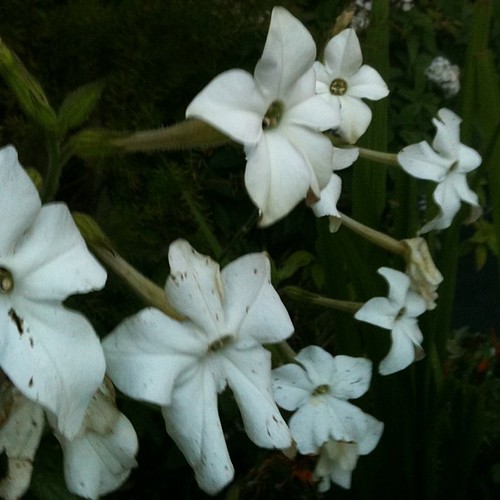
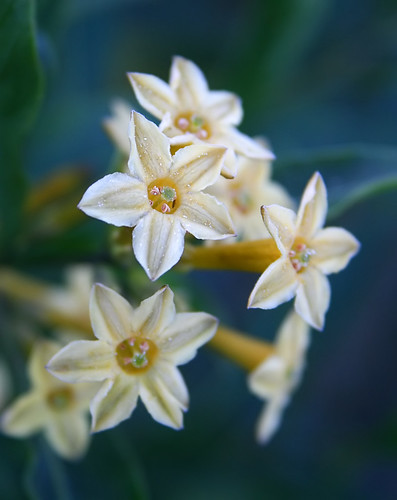
Tobacco flower
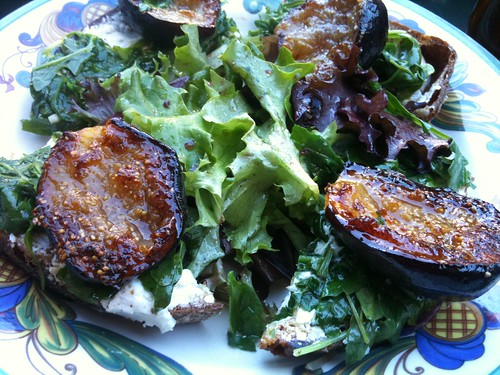
Thursday night, after an afternoon in Golden Gate park with Lisa's family (mostly at the famous Japanese Tea Gardens), I went to meet Ineke & Bill for dinner at Zazie's, where we indulged on grilled Mission figs. As we sat down, I could detect a heady floral note, that reminded me a bit of Ineke's Angel's Trumpet accord. Before short, and way before we could decide what to order, I found myself sniffing a world-premiere of not just one but two perfumes that Ineke will be launching this year. The first one is Hothouse Flower, a green and creamy gardenia which you may have heard of, and was available at the Salon. The second was still a secret, otherwise I would have began my praise before any delay. All I will say for now is that it's absolutely lovely!

Fig Salad

It's always been my dream to visit Ineke's garden, which is a source of inspiration to all of her perfumes - and although it was dusk (hence the very poor quality of the photographs, my apologies!) it was very enjoyable and inspiring. The garden is so pretty and well designed (by Ineke) and tended by Bill (who's got the green thumbs). I also got to meet their two adorable dogs, who seem to enjoy the garden as well.

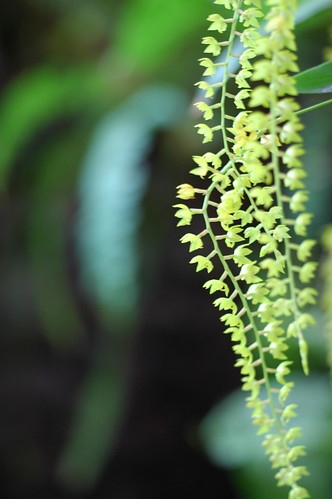
So imagine my delight when smelling the tobacco flower (Nicotiana fragrans - see image above), and discovering all the other lovely flowering plants they collect: Poet's Jasmine
Sweet William (a type of carnation, and the next installation in the Floral Curiosities for Anthropologie), Angel's Trumpet, Osmanthus and Midnight Candy (used in Evenings Edged in Gold), Tobacco Flower (used in Field Notes From Paris), Goldband Lily (Gilded Lily) Honeysuckle, Star Jasmine, Lilac and Heliotrope (appear in After My Own Heart), Magnolia - and, last but not least: inside of Ineke's studio, there was a whole Gardenia bush, which she brought in especially for designing her newest perfume: Hothouse Flower (review of this will follow shortly).


I also was privy to the very new purse-sized atomizers that will be launched by the holidays for "Floral Curiosities" line for Anthropologie. These are beautiful travel-sized interpretation of Ineke's signature bottle, and are encased in a book-shaped box: how very appropriate for Ineke's story-telling style.

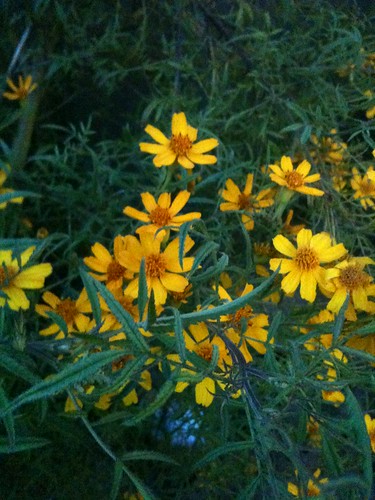
Tagets at Ineke's garden
Tagetes (Marigold) was strangely the plant that left the strongest impression on me. It was a full-grown bush, and very fragrant. Leaves and flower smelled alike: fruity, like fresh green apples, dabbed with citrus and almost chocolate-like undertones. Quite luscious, actually. It would make a very unusual theme for a perfume, for whomever dares to take it on.

Mock orange flower
Mock Orange Flower

Angel's Trumpet at Ineke's garden
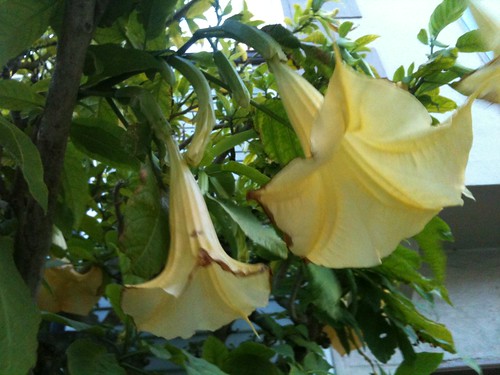
Datura (Angel's Trumpet), whose accord Ineke replicated and used in her perfume Evenings Edged in Gold, and also the main theme of Angel's Trumpet in the Floral Curiosities collection.

The most precious moment though was smelling the osmanthus, although only very few flowers were in bloom at the time I visited. But it smelled exactly like the incense my friend Noriko brought me back from Japan, which she says is the most dead-on imitation of the real flowers. She was right.

Ineke & Bill
Ineke & Bill at their booth at the 1st Artisan Fragrance Salon in San Francisco, July 8th.

Labels: , , , , ,

Friday, November 05, 2010

Gilded Lily


Gilded Lily walks the strange path the flickers between spring and fall, modern and old-fashioned. It has the elements of a modern, screechy floral on the one end, amplified with tart ambiguous fruity notes (rhubarb and pineapple) and an earthy, warm and slightly balsamic Chypre. It reminds me of the bright floral chypres Jour Ensoleillé (Sonoma Scent Studio) and Tiare (Ormonde Jayne). But of course, coming from a different perfumer, it has a personality all of its own.

What makes Gilded Lily refreshing is its non-cloying playfulness. The particular choice of notes - sharp, crisp and bright fruity top notes sets it apart from the modern fruity chypre genre. So it makes a refreshing contrast in comparison to the sickeningly sweet berry and cough syrup notes found in the ever so popular "fruitchouli" genre that was designed to replace real chypres. And unlike so many other so-called chypre, it actually has oakmoss and labdanum in detectable proportions. These notes make an appearance about half an hour into the show. There is the bitter-green saltiness of oakmoss and genuine vetiver, and last but not least and quite surprising in comparison to the brisk opening: patchouli and labdanum with a balsamic, earthy sweetness, and a Miss-Dior-like familiarity that is rare in new perfumes.

If it wasn't for the suggestive bright red glass bottle, I would have never thought of rhubarb in association with this. Peppery elemi and acidic grapefruit remind me of the playful Si Lolita that captured my heart last winter. But this never gets quite nearly as gourmand and powdery. They cuts through the sweetness of the lily and add an interesting sharp edge.

The Japanese goldband lily accord at the heart of the perfume is quite subtle, especially considering that it is the inspiration for this perfume. It's fascinating to see this collection become more versatile, with warmer, richer and more natural bases in the last two perfume (see Field Notes from Paris) in contrast to the very light, musk-base of the first four. Between the elemi, the tart illusion of freshly-sliced rhubarb note and the tried-and-true chypre base, Gilded Lily might turn out to be quite addictive... In the far dry out, the labdanum dissipates completely, leaving only the driest and woodiest nuances (oakmoss, patchouli, vetiver and a hint of clean dry musk) to prevail.

Top notes: Pineapple, Rhubarb, Elemi, Grapefruit
Heart notes: Japanese Goldband Lily
Base notes: Oakmoss, Vetiver, Labdanum, Patchouli

- Posted using BlogPress from my iPhone

Labels: , , ,

Saturday, July 24, 2010

Gilded Lily - New Perfume from Ineke


My friend and collegue Ineke in San Francisco has just informed me of her new perfume to be launched September 2010, titled Gilded Lily. Intrigued by the Goldband Lily of Japan (Lilium aurantium), which is now the basis for many of the modern lily hybrids.

Gilded Lily is a fruity Chypre, with top notes of pineapple and rhubabr, heart notes of goldband lily, and a base of oakmoss, patchouli and amber. I will tell you more about it after I smell it.

Labels: , , ,

Thursday, November 12, 2009

Tobacco Bouquet


Any old weed will do, originally uploaded by aussiegall.

Trust Ineke to find a place for bright florals even in a dusky leathery-tobacco. Field Notes from Paris is a study of the tobacco concept from head to toe, leaves and flowers included. This take gives it more of an American character, which is the origin of the plant, no matter how much of it is smoked in Parisian cafes… To me, it illustrates the life of the plant from growing in the sunshine, being harvested, hanging the leaves to cure and flavour, and finally enjoyed as a guilty pleasure once burnt and smoked to the last puff from a fragrant cigar.

Orange blossom is the star of the show at first, bright and with lavender and rosewood side-kicks it’s almost squeaky clean and with a strong masculine reference. Crushed coriander seeds notes are effervescent and floral but add a hint of dirty woodsy spiciness along with roasted coffee nuances. There is also a distinct fruitiness right from the beginning that smells like davana to me, even though it is not listed in the notes. It could very well be the tobacco flower note, which I can't recall ever smelling - but is described by the expert (Stephen Arctander) as having a scent "somewhat similar to carnation with a fresher note, almost fruity".

As Field Notes from Paris develops on the skin, it becomes more warm, woodsy, full bodied and little tannin with notes of dry cedarwood and patchouli, polished by pollen-like beeswax absolute and the pipe-tobacco flavouring note of tonka bean. The tannins become more apparent in the final dry down, as the cure tobacco leaf, leather and patchouli notes take over, sweetened and softened by vanilla bean and the powderiness of the tonka.

Previous post about Field Notes from Paris includes information about the perfume's inspiration and notes. I would only add that this is the most warm and complex fragrance from the line so far, even more than Evening Edged in Gold and it is my favourite next to After My Own Heart. But there are still a few more letters in the alphabet to cover before we get to know Ineke's full potential...

The scent is available directly via Ineke's website.

Labels: , , ,

Sunday, August 09, 2009

Field Notes from Paris

Come late September, Ineke in San Francisco is due to launch her next fragrance in her alphabetical fragrant anthology, Field Notes from Paris.

Ineke Ruhland, the perfumer and founder of Ineke Perfumes has studied and worked in France before establishing her independent perfumery in San Francisco. Her "F" installation in her alphabetical perfume collection is nostaligic nod to her days of studying in Versailles and living in Paris. Those who visited the city know that every cafe smells not just of coffee but also of tobacco smoke of all sorts. The notes Ineke used in this perfume to capture the mood of sitting in a Parisian cafe in the afternoon are:

Top notes:
Coriander seed, Orange Flower, Bergamot

Heart notes:
Tobacco Flower & Leaf, Patchouli, Cedar

Base notes:
Tonka Bean, Leather, Beeswax, Vanilla

If you are curious about smelling it - you may be pleased to hear that all purchasers of the current Deluxe Sample Collection Volume 2 from Ineke's website will automatically receive a sample of Field Notes from Paris when it is available. Also, one of the first bottles of Field Notes from Paris will be part of a drawing at Takashimaya during Fashions Night Out on September 10th.

More later closer to the launch.

Labels: , , , ,

Saturday, August 16, 2008

Ineke's Garden


Angel's Trumpet, originally uploaded by Ayala Moriel.

It was a cold-gray-wet mid-November day in 2007. Ineke and I sat at the Starbucks across from Vancouver Public Library (the main branch, which Moshe Safdie has humorously designed to resemble the Colosseum and give my city an imposed air of culture). This was my first time smelling Evening Edged in Gold and my immediate reaction was that of familiarity. I couldn't quite pinpoint it at the context, so Ineke mentioned the influence of the grand woody-floriental scents from the 90's - Feminite du Bois and Dolce Vita, both with a pronounced cedarwood and fruity notes.

Months later, Ineke kindly sent me a sample of her new opus (by the way - Ineke has a new and beautifully packaged sampler set, with all her 5 fragrances, titled “Volume 2” and meticulously wrapped and packaged in their miniature matchbox-like case within a larger drawer-type box), as well as the three floral bases used in the perfume. Two of the bases are ones that Ineke has created “from scratch” so to speak, using flowering plants in her garden as a reference and inspiration.

Although these floral bases play a modest role in the formulation percentage-wise (the woody and musky notes play a more dominant role here, accounting for more than half of the composition), they sure are what sets Evening Edged in Gold apart from, say, Dolce Vita and Samsara.

The Angel’s Trumpet (aka Datura) base is reminiscent of lilies and reminds me greatly of the lily-and-orange blossom saturated Lys Mediteranee, yet with a far more pronounced lily-of-the-valley note (most likely from Phenyl Ethyl Alcohol and other muguet molecules).

The Midnight Candy base is a lot less floral that I expected it to be and smells very candy-like indeed, and has a dusky, smooth ripe-plum-like texture which goes very well with the more complex, apricoty-osmanthus base (Ineke used both osamnthus absolute and an osmanthus base for Evening Edged in Gold - I have to say I personally prefer the absolute as it is).

The Angel’s Trumpet I’ve taken pictures of (see above) did not have much of a fragrance (at least not in broad daylight). Keep in mind that I've met in in mid-day; according to Bill (Ineke's husband and business partner), it is at night time when the flower releases it's lily-like scent into the air, and the yellow variety is the one to look for (the bush I've found being peach coloured may not be as fragrant but I'm bound to check out if it's still in bloom this very evening).

Midnight Candy is the flower that “stars” in this fragrance’s packaging. Unfortunately, I haven’t smelled it either. Again, according to Bill this finicky dusky flower will only show off its olfactory capabilities on a hot day after 4pm. In a cooler day it won't be as generous sharing its fragrance. I am very curious to hear if any of you who have tried Evening Edged in Gold are familiar with these two fragrant flowers and could “find” them within Ineke’s perfume. I would love to hear from you more about the plant inspiration for this perfume.

Labels: , , , , , ,

Friday, November 02, 2007

Interesting Read: Interview with Ineke Ruhland

Visit Basenotes to read an interesting interview with San-Franciscan/Canadian perfumer Ineke Ruhland. Ineke is about to launch her new perfume, Evening Edged in Gold, thus adding the letter "E" to her fragrant abecedary anthology...

While still inspired mostly by her garden (this time the flowers of Angel's Trumpet and Midnight Candy), Evening Edged in Gold is meant to be a heavier and sweeter scent than the spring/summery breeze of the rest of the collection - with notes of Golden Osmanthus, Plum, Angel's Trumpet and Midnight Candy and a base of Saffron, Leather and Woods.

Ineke talks about her inspiration, about her perfumery school, and also raises the question - which perfumes are better, the modern ones or the perfumes of yesteryear? Here is a quote:

"Many perfumers cite travels as their main inspiration, but that doesn’t tend to work for me in a direct sense. When I visit a new city, the first things I tend to see are the botanical garden and modern art museum, so perhaps it does work in an indirect sense. I’m also not big on food inspirations, or using historical perfume references. At ISIPCA, we had the historical collection of the Osmothèque stored in the basement and were constantly smelling the classics, but I always had a hard time getting past the density of older compositions, not to mention the prevalent use of civet! I’m not very sentimental about the past, tending to be rooted in the present in terms of my fragrance preferences. I actually think that perfumers today are much more talented and technically proficient than perfumers of the past, and I’m very grateful that we have a multiplicity of raw materials available to us that didn’t even exist fifty years ago."

I would be very much interested to hear what Smellyblog readers have to say about this. Feel free to share your insights by adding a comment.

Labels: , , , ,

Saturday, May 26, 2007

Balmy Days and Sundays

The first thing that crossed my mind this morning as I thought of Balmy Days and Sundays was a walk in an herb garden in an early summer morning, picking spearmint leaves, all the while getting my barefeet all wet on the freshly-cut green grass. Only moments later, the kettle is whistling. As the first sun rays hit the concrete floor of my balcony, my feet start drying and warming up a bit, and so do my hands holding a cup of fresh spearmint tisane sweetened with honey.

It’s my day off, and once the grass dries a bit, I will lay on my back on the grass and let my closing eyes gaze at the warm of the sun. The grass is humming with secret activity: little ants carrying their loot to the nest, bees above hoarding the honeysuckle nectar, and an exhibitionist butterfly poses right in front of me showing off its graceful white wings.

Balmy Days and Sundays is a particularly charming green fragrance, as it combines the the effervescent sparkle of greens alongside a calm warmth. The minty notes offer this contrast on their own, but also the choice of sweet florals paired with grass (rather than the traditional and often cool and sharp jasmine and rose paired with galbanum and orris that are usually found in green compositions), adds to the experience of a summer garden: refreshingly luscious and sun-warmed, a sensual delight to both eyes, skin and nose...
Balmy Days and Sundays starts with a "B" and is the second installation in Ineke’s ABC’s (or a chapter in her olfactory book, if you will).
This is purely a scent for those who love gardening and everything about it, and having met Ineke in person, and learned that she does indeed love gardening, the first two perfumes in her collection make even more sense than ever: the lady likes everything fresh and

Balmy Days and Sundays opens with the sweet greenery of fresh-cut grass and sweet warmth of mint, moves to a heart that is a heady floral (I smell mostly freesia and lily of the valley, but the perfumer also lists honeysuckle, rose and mimosa). The base is somewhat powdery with musk and moss, and like After My Own Heart (and the rest of Ineke’s line), is subtle and clean, yet in a non-sterile manner (think the musk of Lovely). The top notes and the heart notes definitely steal the show here.

The fragrance notes, according to the perfumer’s website, include:

Top notes: Freesia, Leafy Greens, Grass
Heart notes: Honeysuckle, Rose, Mimosa

Base notes: Chypre Accent, Musk

I am not usually in the habit of using the “marketed” images of fragrances (which are too often imposed and pretentious) but in this particular case I think the images so accurately portray the scent, and are so non-pretentious, that I feel it is necessary to use them to give an accurate picture of the perfumer’s intentions, and the same goes for her own words to describe the scent – the little poems or stories that accompany the packaging – from the outer box (and website) to the actual bottles, which is printed with lovely delicate details, words and symbols. When the perfumer-creator is the one responsible for every stage of the process, you get results that are not only stunningly beautiful, but also genuine. And that makes all the difference to me, not to mention that in this case the perfumer is a perfectionist who has an utter sense of visual and conceptual aesthetics besides her olfactory sensibilities.

I may not see the same garden in my mind as Ineke's, but the olfactory impressions and visual and tactile connotations are crystal clear. The mood of a sunny garden is created here, and you just need to step into your own favourite when you smell it. I am very curious to read the next chapters in Ineke's book...

P.s. if you liked Herba Fresca, you are most like to enjoy this one. But also, if you liked some things about Herba Fresca, but found the grass notes there too harsh and the base too chemical, you might find that Balmy Days and Sundays is a more mellow impression of a summer garden (minus the intense citrus notes of Herba Fresca though).

Labels: , , , , ,

Saturday, April 14, 2007

After My Own Heart

I spent the weekend in Jerusalem, and on my Friday’s twilight stroll, I found a bush of lilac in full bloom. The scent of fresh lilacs is dreamy yet also awakening with its subtle green twig nuances. The delicate aroma of the lilac branch I picked ealier, as well as my reunion with my lilac-lover friend Zohar made me crave a spritz of Ineke’s After My Own Heart.

Ineke’s perfumes, unlike their longish titles, are minimalist and calculated. The lilac-bouquet named After My Own Heart is an alphabetized representation of the emotion of longing and romance: a burst of lilac flowers, twigs and all, softly brushing against a blushing cheek in an anticipation for caressing kiss. A promise of love, the buds of passion invoked by hints of indole (I detect distant jasmine and cassie here...) and the luscious juice dripping off freshly picked raspberries. As the crushed twigs and rubbed petals lose their freshness, they make room for rosy and powdery accords, gradually sweetening into a dry out of musk, vanilla and heliotrope.

Lilac perfumes, and particularly ones that capture the imagination as well as the scent of these delicate flowers are sparse and few. Lilac absolute, if it can at all be obtained, is not at all comparable to that of the fresh flowers. Therefore lilac perfumes relay heavily on the use of synthetic compounds that reconstruct the aroma of the fresh living flowers, usually by the means of the headspace technique*. The challenge with lilac as with other flowers that don’t yield themselves well to distillation is to create a genuine impression of the flower that does not feel too artificial and imposed. I’ve smelled this happen with Olivia Giacobettie’s En Passant, where the lilac is chilling, powdery and reminiscent of the blooming twigs and crushed leaves on a foggy day. Ineke Ruhland’s After My Own Heart gives lilac a different interpretation, less abstract and aloof than En Passant. It’s a romantic, dreamy lilac, creating a fleeting yet sensual presence of petals, powder, fruit and musk.

I'd like to conclude with the "transcript" of the little poem in the image above (from Ineke's website):

After and before
Today and tomorrow
Sand becoming a wave
What was it I saw at the top of the world
as I fell asleep last night?
I tried putting lilacs in your dreams
You smiled in your sleep
I hear your words like the wind
whispering in my ear
the most enchanting words
after my own heart

* According to Bojensen.net, nowadays, lilac is often produced with the headspace technique. (E)-ocimene is the most dominant in the makeup of the scent, yet it is the furanoid terpene aldehyde , AKA lilac aldehyde, benzyl methyl ether,
1,4-dimethoxybenzene (hydroquinone dimethyl ether) and indole which give lilac is characteristic odour. The other important odorants which give lilac its characteristic smell. Benzyl methyl ether has an intense fruity-etheral scent which is reminiscent of the top notes of ylang ylang. Lilac headspace also contains minute amounts of anisaldehyde, 8-oxolinalool, cinnamic alcohol and elemicin.

** To read another review of After My Own Heart, visit Legerdenez

Labels: , , , ,