Monday, September 21, 2015

Welcoming Autumn

Equinox

Happy Autumnal Equinox!
Today is the official "back to school" day here with the commencement of Fougère course.
I will probably not be posting much this week. But stay tuned for more posts as soon as this course is over, and enjoy all the lavender and cedar posts from the last few weeks.

Labels: , , , ,

Sunday, August 30, 2015

The Perfumer's Purple

Lavender Soliflores

LAVENDER'S PERFUMERY USES & APPLICATIONS
Lavender on the perfumer's palette provides for a range of purplish-blue hues, metaphorically speaking, of course. The oil itself is clear; and the absolute literally is a turquoise colour.

Lavender Toilette Waters
The earliest application of lavender in perfume is in the classic Lavender Waters - which the English perfected. Many historic recipes can be found for these type of eaux. Another sub-category of which is the lavender-amber waters, which include, in addition to lavender, either amber or ambergris.

Eaux de Cologne
Another important historic use of lavender oils is in the Eaux de Cologne type of fragrances. Here both lavender and lavandin are used extensively. Lavender imparts a softer, more floral nuance, where as lavandin gives a more herbaceous edge, often in synergy with rosemary or mint. Lavender can be found in countless classic eau de clone formulations, such as 4711, Guerlain's Eau de Cologne Impériale (1853) and Eau du Coq (1894) etc. Florida Waters are a New World interpretation of the Eau de Cologne in which lavender takes a more prominent role, and also includes lime, cloves and cassia bark. 


Lavender Soliflores & Gems
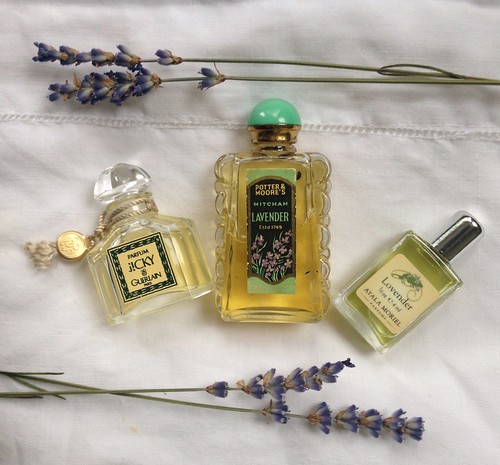
Lavender soliflores are a richer, more developed and rounded version of the lavender waters; or simply a more concentrated form. Classic examples are: Yardley's English Lavender (1873), Lavande Velours (Guerlain), Floris' Lavender, etc. Then there are some more sophisticated, layered and exciting renditions such as Jicky (Guerlain), the liquorice-velvety Brin de Réglisse (Hermes), my own Lovender (part of The Language of Flowers soliflore collection) and let's not forget the underrated, wonderfully vanillic Caron's Pour Une Homme.

Fougère
The first use of synthetic aroma chemicals was marked by the creation of Fougère Royal, a concoction that used for the first time a laboratory-made coumarin. But coumarin is only one of four key components that are crucial for creating fragrances of this genre, the other three being oakmoss, linalool and lavender. One could argue that the bare bones of Fougère place lavender in an even more important place, if you strip it down to an even more simple accord of oakmoss-and-lavender, since the other two components (coumarin and linalool) naturally occur in lavender.
Other famous members of this family are Azzaro, Grey Flannel, Brut, Canoe, Amber & Lavender Cologne (Jo Malone's), Jazz (YSL), Xeryus Rouge (Givenchy), etc.

Labels: , , , , , , ,

Friday, August 08, 2008

Luminous, Bold Lavender


Herbaceous & Bold Lavender, originally uploaded by Ayala Moriel.

My interest in lavender as a theme awoke while researching and comparing the different lavenders, and I felt tempted to construct a lavender-violet perfume, inspired in theory (yet not actual result) by the iconic Gray Flannel. As I've been resurrecting my notes about lavender (later to form a more comprehensive text), I've also dug up and re-blended a couple of old formulas surrounding this spectacular note.

The first one, a masculine fougere utilizing the complex, velvety lavender-confiture of the concrete form (concrete is one stage before the extraction of the absolute, still containing all the floral waxes) contrasted by rosy geranium, sweet vanilla and musky oakmoss - resulting as I recall in a very musky fragrance (even though any animalic notes are deliberately absent). This was designed in 2001 as a sketch for wedding perfumes. Besides being that velvety-smooth fougere with buttery-musky feel to it, it can also work as a fougere base when a touch of fougere complexity needs to be added to a composition.

13.8 Lavender Concrete

10.3 Green Oakmoss Absolute

10.3 Vanilla

10.3 Lavender Absolute

7.1 Clary Sage

13.8 Geranium Bourbon

13.8 Lavender Oil

10.3 Rosewood

10.3 Pine

=====
100

The second one, a custom scent to a dear lady named Branka (also in 2001), in an attempt to bring back the good memories of summer holidays before the dreadful civil war in former Yugoslavia, spent on an island in the Baltic sea - surrounded by cypress and pine trees, sage and lavender. Since this is a custom scent I will not reveal the exact proportions, just the fragrance notes:

Top notes: Pine, Cypress, Bulgarian Lavender

Heart notes: Violet Leaf, Bulgarian Rose Otto, Clary Sage

Base notes: Lavender Concrete, Oakmoss, Patchouli

It is a tad earthy to my liking, and somewhat "muddy" but it does create that rustic summer holiday - and in any case, it was created for Branka, not for me, and as long as it makes her happy it makes me happy too.

The next phase of this experiment was to create a new lavender, that violet-lavender thing I've been creatively craving. I will tell you about this later.


Labels: , ,

Wednesday, November 07, 2007

Jicky


Writing letters to YOU, originally uploaded by !!! Monika !!!.

It’s impossible to write about Jicky (Aimé Guerlain, 1889) out of its historic context. Therefore it is mentioned here as the closing entry for the spontaneous Fougere series that has reflected my train of thought during my work on a particularly challenging perfume.

It was Fougere Royal and Jicky that marked the end of an era of single-note scents, and birth was given to sophisticated perfumes that represented abstract concepts rather than trying to duplicate nature (i.e.: soliflores and citrus/herbal colognes). It was also around the same time that the use of synthetic molecules commenced – first with coumarin, and a little later with vanillin. But you probably know that already… What I would like to mention is how remarkably similar is Jicky to Shalimar. Yes, yes, yes, we all know the story about how Shalimar was supposedly created by Jacques Guerlain dumping a sample of vanillin into a bottle of Jicky. This may or may not be true. But what’s certain is that the two are utterly similar. And more importantly – regardless of Jicky’s role in the birth of modern perfumery, it has, nevertheless, provided the blueprint of future Guerlain masterpieces to come. The structure, evolution, and last but not least – the Guerlinade at its root – are quite familiar, especially when smelled after experiencing scents such as Vol de Nuit, Shalimar, and even later creations as Chant d’Aromes and Chamade. When it boils down to the drydown, you’ll always find the Guerlinade in all the classics designed by the Guerlain dynasty.

Jicky opens with a burst of herbaceous freshness, marked by the presence of lavender and rosemary. Citrus is also an important component at the opening – some bergamot, but mostly - lemon singing in harmony with the underlining sweetness of tonka bean, it’s a luscious sorbet ready to be licked. Vetiver shows a glimpse of itself early on too, than dives back in and disappears into the landscapes of animalic woods. The heart, although containing some florals (rose, jasmine) does not feel floral. Just as in Shalimar – the bouquet’s role is to transform a collection of essences into one seamless olfactory tale. This is where the signature Guerlinade accord of iris, tonka bean and vanilla begins, creating a sensual skin-like warmth underlining what otherwise would have been a herbaceous-citrus cologne-type fragrance. With the animalic vibrations of opoponax, civet and a touch of leather, vetiver and the most miniscule hint of patchouli. When experiencing the parfum extrait the similarities to Shalimar become quite self-evident, from the overall bouquet to the final dry down stages, and with its overall skin-like sensuality.

The mood for Jicky, however, is completely different than Shalimar. While Shalimar takes you directly to the depth of seduction and desire, Jicky does so in a most subtle way. I wore it and wondered how strangely narcotic a lavender is in that context, all the while maintaining its dignified antiseptic qualities. Was it the English lavender that pinched Aimé Guerlain’s heart? Or was it something else he missed about his mythical first love in Engladn? Or, perhaps, it wasn’t meant for a woman after all, but rather for his young nephew who will later on follow his footsteps and unleash many more Guerlain fairytales.
Jicky is said to be initially difficult to accept by women to whom it was created, and was more popular with men. (Mouchoir de Monsieur, created by Jaqcues Guerlain in 1904 was meant to answer to that demand). It may not smell as significant or original at the moment, among the myriads of scents, not to mention lavender scents alone – but its remarkable survival over the past 118 years speaks for itself.

This review is for the pure parfum, which is far more concentrated and less citrusy/herbaceous than the Eau de Toilette.


Top notes: Lemon, Bergamot, Rosewood, Lavender, Rosemary
Heart notes: Vetiver, Jasmine, Rose, Orris Root
Base notes: Tonka bean, Opoponax, Patchouli, Civet, Benzoin


P.s. A couple of words regarding the bottle design: although the same bottle is often used for both Nahema and Vol de Nuit parfums, as far as I know, the champagned-stoppered bottle is the one originally designed for Jicky, apparently by Gabriel Guerlain – Aimé’s brother and Jacques’ brother, who was the manager of the Guerlain company at the time. If you know anything else about the bottle design, please share your knowledge with us.

Interested in reading more about Jicky? Visit:

The Scented Salamander

Bois de Jasmin

Fragrance Bouquet

Labels: , , ,

Wednesday, October 24, 2007

Biche dans l'Absinthe


Astute Deer, originally uploaded by Razzy Raz.

Doe through the Artemisia bushes… Her coat glows in the warm autumnal sun. Freedom is happiness. And the single notion that being is all there is to life.

Victoire Gobin-Daudé, a gifted French independent perfumer, who unfortunately whose line was discontinued, unfortunately, uses only natural essences in the five perfumes she released to the world to enjoy for a limited period of time.

Biche dans l’Absinthe offers yet another perspective to the bittersweetness of green and aromatic fougeres: the pairing of animalic with herbaceous.

Opening with sweaty notes of cumin and the underlining warmth of immortelle, the doe has just paused from a brisk morning gallop in fields of semi-dry hay. It is mid Autumn, and the first sunrays are warming her shiny coat, releasing steam of animal sweat and morning dew from the surrounding vegetation. Citrus notes play a subtle role of diffusing the bitterness of Artemisia (absinthe) while bergamot creates a soft powdery aura, complementary to the cumin.
There is a hint of floral in the heart, alongside the Artemisia. It might be orange blossom, or perhaps neroli. It is very subtle and is present only to soften and blend the phases together. The base is at once dry and sweet – with dried tobacco leaves, the abovementioned immortelle and its animalic yet herbaceouse-dry sweetness, and hay of course, for a good measure of coumarin and nourishment for the doe so she can run freely on my skin for hours to come.

Top notes: Lemon, Cumin, Bergamot, Lemon Leaf
Heart notes: Artemisia (Absinthe), Neroli, Lavender Absolute
Base notes: Tobacco, Immortelle Absolute, Hay Absolute

For more information about this line you can try to contact:
Gobin Daudé Parfums
34, rue de Penthièvre
75008 Paris
Phone : 33(0)142250386
Fax : 33(0)142250669
Email : gobin.daude@wanadoo.fr
Manager : Victoire Gobin-Daudé
Sales contact : Christophe Bourgeois


Labels: , , , , ,

Monday, October 22, 2007

Fougère Recipe, Literally


fougère naissante, originally uploaded by jean.avenas.

Edible Fougere Recipe: Fiddleheads in Lavender Butter

Fiddleheads are the budding, coiled “leaves” of ostrich ferns ferns (Matteuccia struthiopteris). The fiddleheads are present in early spring, and are considered a delicacy. They have a very similar to asparagus in both flavour and texture.

This recipe pays a culinary tribute to the “fougere” family by using an edible fern in combination with lavender.

1 lb (or one large bunch) fresh fiddleheads
3 Tbs. butter
1 Tbs. lavender buds
2 Tbs. white wine
Salt, pepper and nutmeg to taste

In a small saucepan, melt the butter with the lavender buds. Add salt and spices.

1. Boil the fiddleheads in water until tender.


2. Strain the water, and boil again (this will remove bitterness as well as possible toxins such as tannins in the fiddleheads).

3. Strain the butter through a sieve, to remove the lavender buds.

4. In a frying pan or shallow sauce pan, lightly sauté the fiddleheads in the lavender butter, and add white wine. Cook until most of the wine has evaporated.

5. Garnish with dry lavender buds or sprigs of fresh, flowering lavender tops.

6. Serve warm or in room temperature.

Labels: , , , ,

Sunday, October 21, 2007

Concrete


me ~ sitting on some concrete, originally uploaded by striatic.

In contrary to the low expectations I had from Narciso Rodriguez for Her, which lead (after several twists and turns of the plot) to a surprising delight from what seemed to be just another non-descript trendy floral – the launch of Narciso Rodriguez for Him had at least a seed of expectations on my part. One would expect that it would do to Fougere what For Her did to Chypre – meaning: disregard it completely and instead, invent a new modern floral category (abstract musky floral). In the case of fougere (also a composition reliant on oakmoss, this time contrasted with lavender), one would anticipate we’ll see the birth of a musky lavender, something not all that far from Sarah Jessica Parker’s Lovely – but perhaps a bit masculinized.

However, I am sorry to report that none of that happened. I stepped into Holt Renfrew the other night accompanied by my brother Noam - a budding perfumista with a collection that could not embarrass a gentlemen twice his age (of course I will only take partial responsibility over his interest in fragrance). His immediate reaction was disgust (and we are talking about a young man who consents to the title fragrance whore –seriously, there is hardly anything he doesn’t like!).

From the moment For Him was sprayed on the paper stripe, I could not help but think of concrete. The opening notes are bizarre and somewhat disturbing. There is a hint of honey, reminiscent of the honey flower note in For Her. But one can tell right away that there is nothing groundbreaking about this fougere at all. Like most modern fougeres, the lavender is very refined, the oakmoss very subdued. Synthetic notes take over, usually with a metallic coolness that reflects more of the methods the scent was created (by machines) than the human inspiration (if there was any involved).

To me, the scent just confirmed a strong connection to the bizarre choice of colour for the bottle – a concrete gray of the most depressing hue I’ve seen in a long time. If this was fabric, perhaps I would be able to find some comfort in it. But being made of a thick cold shiny glass makes one feel just that – cold and “correctic”. Nothing more. It seems Narciso Rodriguez has simultaneously run out of ideas for his bottle’s colors and the scent of their contents. They say a picture is worth a thousand words. And I think the posted ad for this fragrance says it all: it’s the cliché of a fragrance ad for men – chest exposed medium shot of a young man - nothing surprising, except, perhaps, the extremely dark thick hair and the supposedly-mysterious lack of eye contact.

If it was indeed inspired by the “great fougeres of the 80’s" than we must look back and try to remember these. Cool Water by Davidoff comes to mind, with its antiseptic Jacuzzi cleaner sillage and metal bladed breath. Anything inspires by that (or the 80’s, for that matter) is likely to make me shudder… Considering that real, sophisticated, original fougeres are originated in the 80’s of the previous century, it does make one wonder.

For Him opens with a disturbing bouquet of both dry cement and wet concrete, unrecognizable spices and a honey note. The intrigue dissipates quickly when the scent becomes a familiar, I’ve-smelled-this-before modern fougere accord – a hint of fake herabceous water, some non-descript fruity sweetness that is fortunately not quite nausearing, but just almost (it reminds me quite a bi t of the sweetness of Jean-Payl Gaultier for men, only with the sillage toned down 10 fold); a glimpse of violet leaf coolness and a certain smokiness that my brother describes as ‘ashtray smell” but at the same time he also detects some good smelling fresh herb notes. The dry down settles within about an hour – a close to the skin, rather soft, undecisive mélange of amber and musk (it is also said to contain patchouli, but I can’t say I am recognizing any). Nothing offensive in the drydown, and the sillage is soft and non overpowering – the contrary of what I’ve expected after the magical sillage and staying power of For Her (it has a tendency to stay everywhere after it was applied, and even withstand a laundry – yet it does it with a nice touch of mischevious elegance – almost like Josephine’s deliberate musk contamination before leaving Napoleon’s palaces). The only thing that truly stands out (if you take a very close look) is an animalic ambergris note, somewhat fecal, but with such low-key vibrations it can never offend and unelss you’ve smelled it before it would be very hard to put your finger on it. It reminds me of l’Antimateirer; unfortunately, in this instance one needs to wait a long time for it to emerge. And this might just be its chance for success.

Labels: , , , , ,

Saturday, October 20, 2007

Goats and Lavender


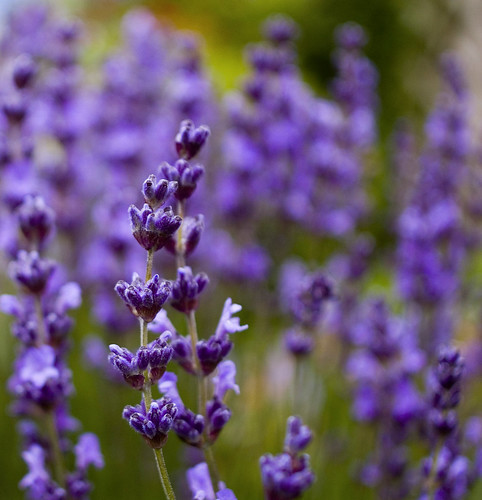
Lavender bokeh, originally uploaded by borealnz.

While Pan perfume takes its inspiration from the fascinating tale of Pan as it’s told over the magical pages of Jitterbug Perfume – the fragrance itself is not as inspirational as it could have been. If the perfume in Jitterbug was designed to mask the carnal, throaty aroma of the goat god with beet blossoms, citron and patchouli - in Pan it is an extract from that exact animal itself that lends the perfume a glimpse of a godly nature.

Pan can be credited to be the first perfume to employ goat-hair tincture (a cruelty-free animal note). Aside from that, it is a straight-forward ambery-fougere, employing the berry-like Seville lavender absolute as an anchoring note, and the required oakmoss absolute as the base to create a fougere reaction. Other notes include cedar, white lotus, beeswax, patchouli and labdanum, and create a smooth ambery-fougere with hints of suede-like leatheriness, mostly resulting from the presence of the above mentioned Seville lavender and labdanum.

Pan is a rather simple, yet very pleasing natural fougere. Aside from the animalic herding-goat note, there are no surprises or turning points within its evolution. This is precisely why it provides a redeeming point from the tropical clutter of Fairchild or the muddy vanilla-citrus of Riverside (now discontinued) from the same perfume house. In the end, it must be its goaty charm that appeals to me the most – growing in the countryside amongst herding goats gave me no option but to take into liking anything remotely goatly. And now only one question remains: will goat hair tincture become a staple on the natural perfumer's organ? And even if it doesn't - what else can be achieved using this unusual raw material?

To read other reviews and opinions of Pan, visit:
Anya's Garden
Perfume Shrine

Labels: , , , ,

Sunday, October 14, 2007

Yerbamate


pennine mate, originally uploaded by itsjustanalias.

My struggle with green fragrance per-se has never been a secret. Yes somehow, Fougères never posed any struggle for me. Their intense complexity, the headiness of herbs tamed by mossy undergrowth and, as I said, the “bittersweetness” of green” makes it easy for me. Fougères make me feel confident. Perhaps it is their intense masculinity (by association or design? This is hard to tell, as we are pre-programmed to believe in the masculinity of Fougère simply by the bold packaging and the fact that most of our fathers – particularly the ones who shaved and bothered with aftershave – smelled like this kind or another of Fougère – and Brut comes to mind effortlessly as an example).

I’ve stumbled upon two unusual, modern, bittersweet greens: Yohji and Yerbamate. The first being more of a green oriental rather than Fougère – combining an unusual dosage of galbanum (to the point of choking! And what’s more – its combined with a weird aquatic top note as well that is almost off-putting at first, until one gets used to the inseparable oddness of the entire composition, which is precisely what makes it so wonderful on those days when you’re in the mood for it). The combination of galbanum, a spritz of ozone, caramel, raspberry and an overdose of coumarin and vanilla at the base, which turns powdery after hours of wearing is unusual, odd, strange and at the same time appealing.

The other scent, Yerbamate, is a lot easier to stomach at first. Starting terribly green, nearly to the point of an Absinthe poisoning, I was always surprised I’ve enjoyed it so. I detect a fair amount of lavender as well as Artemisia, and again a very odd green – this time not only from galbanum, but also from the unusual note of tomato leaf. But what begins astringent and bitter like a very dry Martini suddenly changes direction and turns into an uber-sweet concoction. There is non of the berries or caramel here, yet like most of Villoresi’s scents (I find), it ends with a very sweet amber. This time, the amber is cleverly concealed amongst heaps of dried hay and powdery coumarin. If you think of a hay ride (or a more grown up type of hay ride), this would be a surprisingly soft one. And this is to the point of extreme indulgence in powdery ambery feathery fluff bordering on the dessert kind. The sip of bitter yerbamate was rewarded by sweetness that would have made you forget you might heard that name earlier…

To give you a completely different view of this prestigiously sought-after perfume, I will have to share with you a little story which my perfume friend Alden shared with me – simply because it put a big grin on my face in a much needed moment: “I read so many wonderful reviews about Yerbamate. I adore all things greens. So I was on a quest for perfection. It was first on my list of must-smells last Thanksgiving in NYC. I read the company's description over and over until I was virtually spellbound. So, I go up the sixth floor of Yah-whatever the Japanese department store on 5th Avenue and wander over. I spritz. Smells exactly like Canoe. I giggle and leave with a silly smile on my face. Anyway, I just wanted to share.” Thanks for sharing, Alden!

I haven’t had the opportunity to smell Canoe in recent years (the one time it turned out in the drugstore as a candidate for grandpa’s Christmas gift there were no testers, and that was about 6 years ago), but I can say oe thing about Yerbamate: it’s a fougere. And the emphasis here is on the concept of fougere, of juxtaposing fresh green with dry green (literally – as in dried hay); of bitter and sweet; of sharp and soft. Yerbamate may be the name, but I wouldn’t say it particularly stands out. It just adds to the extremeness of bitters at first, and than disappears like a Gaucho into the night.


Top Notes: Citrus, Tarragon, Tea, Maté, Rosewood, Ylang Ylang, Galbanum

Middle Note: New Mown Hay, Tomato Leaves, Lavender, Tea, Maté

Base Notes: Galbanum, Labdanum, Benzoin, Maté, Vetiver, Sweet and Powdery Notes


* Yerbamate bottle image from Barfumeria.com

Labels: , , , , ,

Saturday, October 13, 2007

Fougère, Coumarin and the Bittersweetness of Green


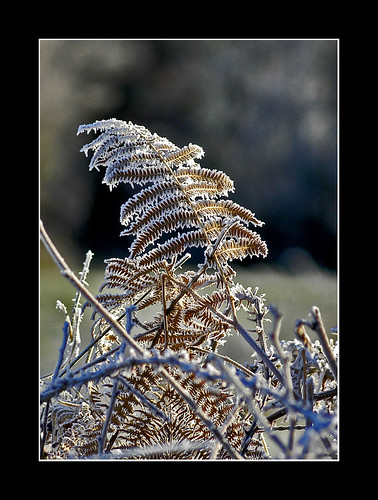
Fougère, originally uploaded by Christian Bachellier.

It is the coumarin that adds the crystalline quality to Fougères, as well as its over all warm bitter-sweetness. Perhaps this is why I enjoy wearing Fougères at this time of year. It has the quiet melancholy of Fall, yet with a cuddly softness added to it.

It was Fougère Royale (1882) by Houbigant that marked the birth of modern perfumery. While many consider Jicky (1889) as the mother of modern perfumery, it was in fact precedent by the legendary Fougère Royale, unlike the prehistoric fern it was named after, didn’t survive as well and the fragrance is no longer in production. However, it’s fame can be measured not by its survival achievements, but by the fact that an entire masculine fragrance family (or perfume genre) is named after it. Despite of that, a closer look at the perfume timeline reveals that the concept of Fougère has existed earlier:

In 1873 English Lavender by Yardley was released, blending notes of Lavender, Bergamot, Rosemary, Eucalyptus, Geranium, Clary Sage, Cedarwood, Tonka, Moss and Musk. Considering that tonka bean contains mostly coumarin, and that all the other important elements of Fougère (lavender, oakmoss, coumarin and herbs) are present, this might have been the first Fougère .

1877 brought Wild Fern by Geo F Trumper (with notes of oakmoss, basil and amber), again with both a name and a composition that suggests a Fougère (but who had smelled it that could confirm???).

Fougère, or Fern in French, is most known for its remarkable botanical versatility and resilience (as I said earlier, it has been probably been around since the days of the dinosaurs, it is such an ancient life form that it reproduces with spores and has no real leaves, but “fronds” ) and little known for its scent. However, ferns have a rich usage in human history for various uses: the dried underground stems of several species used to be ground into a starchy meal-like substance that is nourishing in times of famine (and in particular - Pteris esculenta in the Pacific Islands they have been a staple food); and the ashes of burnt fern in Wales were formed into balls and sold as “Ash Balls” and performed similarly to soap because of their high alkali levels (Poucher, W.A., “Perfumes, Cosmetics & Soaps, Vol.2). Certain ferns might be extracted for medicinal purposes (for their filmarone content – a yellow, amorphous acid which chases away worms).


Natural Sources of Coumarin, originally uploaded by Ayala Moriel.

In perfumery, however, any Fougère composition will have very little power for vermifuge purposes. It is simply a name for a complex blend of an aromatic, herbal nature. The key for compounding a Fougère is using the essential accord of lavender and linalol (either synthetic or from natural source – i.e. Ho Leaf or Rosewood), oakmoss absolute and coumarin (of synthetic or natural source – i.e. tonka bean or liatrix).

There are several sub-categories for the Fougère family:

Fougère Fresh
Dominant lavender freshness and dryness. These Fougères are herbaceous, spicy, fresh and woody. For example: l’Herbe Rouge

Fougère Ambery
Additional vanillic notes may increase the softness, to create a Fougère Ambery fragrance. These are soft and enveloping, and somewhat powdery. Canoe by Dana is an example of such composition, which is further sweetened by tonka and heliotropin.

Fougère Woody
Additional woody notes such as sandalwood, agarwood and vetiver create a cleaner and drier impression.

Fougère Floral
These Fougères are very complex, with the addition of bright florals such as neroli, lily of the valley, and cyclamen. The dryness of lavender and spicy, ambery and woody notes makes these more masculine. Jicky (Guerlain) is a good example for such floral – with neroli at the heart, and a soft tonka and amber base accompanying the Fougère accord.

The Modern “Face” of Fougère
Many modern masculine fragrances are touted as being Fougère. Scents such as Cool Water (for men) by Davidoff are such examples, and so are many others. However, the overdose of synthetic molecules (such as calone and other aquatic aromachemicals) and the declining percentage of important natural such as lavender and oakmoss in those compositions render the Fougère in these perfumes nearly absent. A good fougere in my mind has a balance of those intense, isolated molecules with a good measures of naturals that give it its aromatic flavour.

How To Make A Natural Fougère?
Start with the basics – excellent quality building blocks that are essential for Fougère: oakmoss absolute, lavender essential oil, absolute and concrete, rosewood or ho leaf (for a touch of linalool), and last but not least – a naturally sourced coumarin note, either from tonka bean absolute or liatrix tincture (you can make your own by soaking the dried leaves in 200 proof alcohol). Other useful notes are patchouli and vetiver. To these essentials, you may want to choose additional notes that would add a particular character to your Fougère. The following are suggested notes to choose from for a Fougère composition:

Top notes:
Lavender
Rosewood
Ho Leaf
Rosemary essential oil
Bergamot
Cedarwood, Virginian
Petitgrain, French
Neroli, French
Bitter Orange
White Grapefruit
Juniper Berries

Heart notes:
Lavender absolute
Clary sage
Rose Geranium
Jasmine absolute
Rose absolute
Rosemary absolute
Ylang ylang
Tuberose absolute
Lemongrass
Litsea Cubeba
Orange Blossom Absolute
Clove bud
Carnation absolute
Guiacwood

Base notes:
Oakmoss absolute
Tonka bean absolute (or tincture)
Liatrix tincture (or absolute)
Patchouli
Vetiver
Sandalwood
Agarwood
Cedarwood, Atlas
Vanilla
Benzoin
Myrrh
Cassie
Tarragon absolute
Clove bud absolute

Labels: , , ,

Sunday, September 09, 2007

The Bittersweetness of Green


Natural Sources of Coumarin, originally uploaded by Ayala Moriel.


Labels: , , , , ,