Although the name suggests it to be a night-invoking perfume, I find it extremely summer-like and full of light.
It starts off with a citrus splash of bergamot and tangerine, backed up with a feminine floral notes of jasmine, and a more masculine eau-de-cologne like notes of orange blossoms and a hint of musk, that adds sensuality to that blast of freshness.
As the top notes start to fade, they reveal a luscious fruity note of peach supported by vanilla, which gradually pushes away the dominant orange-blossom and tangerine accord.
The dry down gradually enters with an interesting and surprising accord dominated by a fresh, woody and masculine vetiver notes, accompanied by green notes, orange blossom (softer and more subtle now), and a very modest hint of vanilla and rose.
This perfume is full of surprises, I love the way the stages fade into each other. The overall impression is of freshness and vivacity, mingled with a tad of melancholy, which brings to mind Chopin's expressive piano nocturni.
It’s surprising to see that such an old-fashioned aldehydic floral was launched in the 80’s (1981 to be exact). The perfumer behind Nocturnes is Gerard Lefort.
Top notes: Aldehydes, Bergamot, Mandarin, Green notes Heart notes: Orange Blossom, Jasmine, Ylang Ylang, Tuberose, Stephanotis, Lily of the Valley, Orris, Rose, Cyclamen Base notes: Vetiver, Musk, Sandalwood, Amber, Vanilla, Benzoin
Narcisse Noir is a smoldering femme fatale. Once you succumbed to as much as a single dab on the wrist, you’re in for a big voice declaring unrecruited love with flamboyant stare of black-countered eyes and dramatic uttering of painted lips.
It takes about half an hour of full-on flowery menace, prowling orange blossom and high-pitched tuberose. Painted in oily strokes full of powder and grapey bittersweet salicilates redolent of old rouge compact, vintage lipstick and perfume-stained satin intimates that smell like peering between the sheets of a turn-of-the-century’s escort. But beyond all the dirty scandals and high-maintenance drama lies a surprising secret and her even more dangerous side...
Once the rather sickening flowers dissipate, Narcisse Noir becomes the code name of a World War I spy mistress. She lures the enemy into her bed, and the moment they are charmed by her chalky whispers and softened by her velvety gown – she flips around and becomes the master of torture in patent leather attire, with spurs in her heels that fill the dusty boudoir with incense smoke, cigarette butts and a mysterious, inexplicable animalic presence that is somewhere between a cat and lion. And on the not so rare occasion when her victim becomes aware of her betrayal, she will escape the gunshots with the nostril-pinching scent of burnt rubber tires, leaving long skid marks and an even longer trail of enigma.
Top notes: Bergamot, Petitrgarin, Lemon Heart notes: Orange blossom, Tuberose, Jonquil, Jasmine, Rose Base notes: Leather, Musk, Vetiver, Civet, Sandalwood
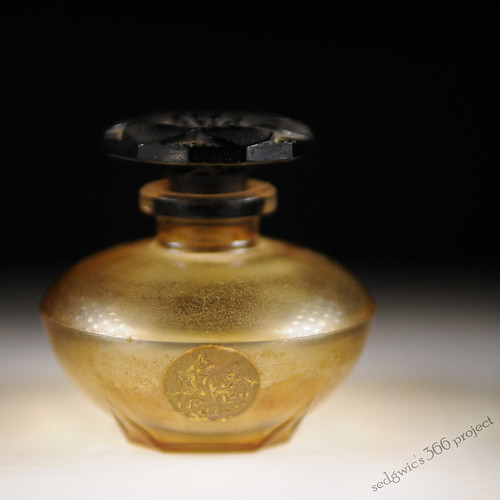
Narcisse Noir is an iconic scent, created in 1911 by Ernest Daltroff (Caron's founding perfumer). The Art-Nuveau bottle is just as
legendary as the scent itself, with its squat jar reminiscent of ink vessle, and a black carved
glass stopper with a flower motif of the "black narcissus". Legends
could be told (or made up) about such flower, and the familiarity of it
as well as the mystery and intrigue came well before "Noir" was so
fashionable... Narcisse Noir is the kind of perfume that inspires
intrigue, writing, and perhaps even films. It's not a perfume I often reach for, yet I don't think it will ever leave my collection.
As an aside note: I've heard mentioned time and over again, that Narcisse Noir or Black Narcissus is mentioned by Gloria Swanson in "Sunset Boulevard". This is the only reference I had confirmed from the film that refers to a scent - tuberose, to be exact: "She'd smell of tuberoses, which is not my favorite perfume, not by a long shot" (filmsite). This could be Narcisse Noir or could be from any number of other tuberose-laden scents of the era. And I won't be surprised if Gloria Swanson was overdosing on that perfume before that scene to get an authentic reaction from William Holden.
Which reminds me of another eccentric theatrical character of similar overbearing presence. Neither ladies might have worn Narcisse Noir; but they sure have the same super-imposing personalities of the perfume. It takes a long time to warm up to them - once you've discovered their volnurability; or in the perfume's case - it's leathery, deep and non-floral aspect.
Pois de Senteur de Chez Moi (1927) has the attitude of a bygone era, when perfumers tried to capture the scents of impossible-to-extract bouquets of flowers. There is nothing light or cheerful about these sweet peas: they are so self-absorbed in their seriousness that they literally smell like they’ve been rotting in their own green leaves for a while once first inhaled.
Green hay note is dominant at first, alongside powdery and sweet-cloying notes that bring to mind old scented lipsticks and face powders from the 40’s, and flowery linden and lilac milled soaps. Like most Caron’s perfumes, it takes some time to unravel the density of what smells like an aldehyde boosted sweet pea absolute (if such thing was to be found). A spicy cinnamon-and-bay-rum note attempts to rise above the bouquet without much success, and only once the hay and aldehydes subside, the almond-and-vanilla of heliotropin nearly take over with very little floral bouquet or greens left. It is similar to Farnesiana but not at all a comfort scent, but a rather uncomfortable and complicated floral bouquet past its prime. Hours later, the orange blossom is revealed, but more as an aspect of heliotrope flower rather than on its own.
These nights, I’m haunted by dreams of aviation. Flying small primitive aircrafts of not-particularly functional structure; descending overtop clouds, green lands and fields of ice stretch beneath me; arriving at unknown continents in unpredictable timing.
In the days when aviation was used mostly as a method of combat and breaking human records, the metallic frame of an aircraft symbolized not a commodity but an experiment on breaking the bounds of the human body and descending into the future. The destination to which the airplane arrived at was less important than the airpath itself. Clouds, winds and painful, misty frosted death were all obstacles that could be felt through the bones rather than speculated by the faint of heart at the leisure of the passenger cabin…
Perhaps this is what brought me to pull out the sample of En Avion I had buried for quite some time. I have never quite given it a try for a prolonged period of time. Perhaps it is my love affair with Vol de Nuit that prevented me to really experience En Avion until now. It’s as if there is room only for one aviation perfume at a time. There is something particularly fascinating about female aviators – take mankind’s artificial abilitly to fly, independence and femininity and put them together on the horizon where a great ocean meets the even vaster skies… That is where magic and mystery prevails. Add to that the interesting life stories and achievements of women aviators such as Adrienne Bolland (1896-1975), the first woman to fly over the Andes; Hélène Boucher (1908-1934), a pioneer French aviator who broke several records including altitude and speed and was one of the first women to perform aerobatics; and Maryse Bastié (1898-1952), the first female aviator to cross the Atlantic ocean in a solo flight. There are many honours after her name
And of course there is the mythological Amelia Earhart (1897-1837), the first woman to fly across the Atlantic in 1928 (and the second to fly it solor after Maryse Bastie), and who disappeared in her flight above the Atlantic but despite her many other accomplishments as a aviatrice, she’s most famous for her mysterious disappearance towards the end of her flight around the world. She disappeared somewhere in the Pacific Ocean, between Lae, New Guinea and Howland Island – the destination Amelia never reached. Of course, this lead to many conspiracy theories, most of which rely on a firm belief that Amelia was in fact a spy, who’s disappearance was either staged by Roosevalt’s administration as to not jeopardize her operation; or, alternatively, was in fact caught by the Japanese while on her espionage mission.
And last but not least, my classmate from high school, who played the accordion and the piano, the beautiful Anat Kalechman, the talleset, shyest and longest-haried tomboy I’ve ever met. She lost her father (a combating pilot in the IDF), and felt compelled to follow his footsteps and become one of the first few young women to train for flying a combat jet plane in the military, and along with 4 other female comrades of that year - defy the many stereotypes about the abilities of women to function in battle. Rather than cutting her career as a pilot short because of sudden death during training, Anat exit combat airforce was through the gate of the most lively dramas of them all – she fell in love with another pilot and got married; an act that many real-life Diana-like goddesses fall for at one point or the other... Instead, Roni Zuckerman has become the first Israeli female fighter pilot in 2001…
So what’s with that and perfume you ask? Well, in the first decades of aviation, when we were all blinded by the glare of heroism and miraculous ascent of human spirit above the clouds, defying gravity and other enemies – aviation has inspired art – including books (Antoine de Saint Exupéry, an aviator, spy and an author, has written several books inspired by the topic). And lastly there are two grand perfumes inspired by aviation – En Avion (Ernest Daltroff, 1932), dedicated to the pioneer female aviators mentioned above – Bolland, Boucher and Bastié; and the infamous Vol de Nuit (Jacques Guerlain, 1933), inspired by the book of the same name by the abovementioned aviator-author, which I have already reviewed on this humble blog.
En Avion opens dark, like all Caron extraits, and with a certain bittersweetness that does remind me somewhat of Vol de Nuit (though I have to admit, the only reason I compare the two is because of their common theme). While Vol de Nuit is green and sharp, herbaceous at first – En Avion starts off more spicy and floral. Carnation is apparent immediately, but so is orange flower, which smells like an echo of l’Heure Bleue with pilot-hat and goggles… Although Vol de Nuit has the signature powderiness from the classic Guerlinade and iris notes engrained within its structure; En Avion takes powderiness nearly into central stage, and in a far softer and lady-like olfactory context: rose, lilac and violet, and underlined with powdery opoponaxs which almost instantly bring to mind the scent of vintage face powder. As for the base of En Avion, it is redolent of Atlas cedarwood with its suave, polished olfactory-texture, a bittersweetness of tonka bean (again, a reminder of of Vol de Nuit; but let’s not forget that En Avion preceded Vol de Nuit’s launch by a year…). There is, however, a subtle presence of burnished leather at the base, however it is not as animalic or leathery as other Caron creations (i.e.: Narcisse Noir, Tabac Blond), it is almost as soft as suede… If Vol de Nuit is a wild, ambitious woman with restrained emotions and top-notch professionalism; En Avion is not any less ambitious woman that secretly displays her femininity even when boarding an airplane for what might be her last flight ever… Underneath the pilot jumper, she is still wearing silk stockings and laced lingerie.
Perhaps En Avion is a bit like Mml. Boucher, who interestingly enough, started her career as a dressmaker, which led to her designing leather gear and accessories for pilots; she than became so fascinated with flying she felt compelled to pursue this dangerous field. I wonder if she was the kind of lady who would take her maquillage with her to the aircraft to get all perked up before performing her aerobatics…
According to Perfume Addicts database, the notes of En Avion include: Top notes: Rose, Neroli, Spicy Orange Heart notes: Jasmine, Carnation, Lilac, Violet Base notes: Opoponax, Amber, Musk, Wood
To that I would add that in the top notes I can smell orange blossom rather than neroli (there is a different between the two!), I can't say I'm particularly smelling orange (there is a citrusy freshness, but it is well hidden with all the additional dense notes); and there is definitely a dry allspice note weaved in, as well as cloves and perhaps even a hint of nutmeg. While I can't say I smell much of the lilac (I would have to go back to it once I'm fully recovered from my cold though...), violet and rose have a strong presence, and so is the carnation. The base is neither particularly musky nor ambery; but there is certainly the animalic powderiness of opoponax weaved into a dry tobacco-leather base that might include castoerum, and the woods in question are the beautiful Moroccan cedarwood from the Atlas mountains.
Of all perfumes, that one that reminds me most of a Northern Christmas isn’t actually Nuit de Noël, but Parfum Sacre. The olfactory connection of Nuit de Noël to Christmas did not reveal itself to me until few days ago. It suddenly dawned on me: Plum pudding and ink!
Nuit de Noël bears the mark of many of the Caron perfumes created by Ernest Daltroff: density, complexity and a vast mystery which is reflected in the seamless connection between the notes. It is not easy to dissect the notes from one another, not to mention categorizing the perfumes.
The dryness of cedar wood is evident at the start, and roses unfold from beneath a dark dress. There is a certain dustiness to it all, as if the perfume was collecting dust for a year before being noticed again. But now that it did, time and age has only improved it. Powderiness is not absent, and in some regards, this perfume is akin to N’Aimez Que Moi in darkness, density and the thread of rose and powder. But what gives Nuit de Noël its distinct character and its important place in the Caron family is Mousse de Saxe.
Apparently, Mousse de saxe accord is what gives many of the Caron scents their dark undercurrent. It is said to include geranium, licorice, leather, iodine and vanillin. In Nuit de Noël, this accord is used in higher proportion to the rest of the composition, making it quite memorable even among the many rose perfumes of its era (not to mention only those from the house of Caron).
Sharing similarities with other powerhouse perfumes, Nuit de Noël is at once rosy, leathery, powdery and sweet. It reminds me of a less sweet, less in-your-face Habanita, a more leathery sister to N’Aimez Que Moi, and an inspiration to daring, feminine yet unsweet rare appearances of present day, such as Agent Provocateur, and even the dry down of Opium Fleur de Shanghai.
The flacon of Nuit de Noël is made of black crystal glass, and looks like a cross between an ink bottle and a hip-flask, adorned with a Charleston-style gold headband. It was said that Nuit de Noël was made for Daltroff’s lover, who loved Christmas. Somehow, I can only envision a very lonely winter night, with Charleston-music playing in a gramophone, and many glasses of red wine and whisky being used up until that lover finally shows up, hours after the family Christmas dinner is over.
While the connection of plum pudding to Christmas is quite obvious, that of ink isn’t. In any case, use Nuit de Noël as an ink for expressing your innermost feelings only when the time is ripe. Otherwise you may need to be dancing more than just one round of Charleston.
Notes: Cedarwood, Rose, Orris, Mousse de Saxe accord (Oakmoss, Licorice, Myrrh, Cedar moss), Vetiver, Sandalwood, Castoreum
Parfum Sacré is a majestic marriage between the Sacred and the sensual. Through a veil of incense smoke and dark peppery dust, a voluptuous rose emerges blushing. The scent wafts around like threads of incense smoke – myrrh, frankincense, pepper and dry rose. Rather than the powerhouse of condensed resins that so many orientals are famous for, Parfum Sacré wraps arounds, wafting in and out as it envelopes you with its dream-like quality.
The rose evolves backwards – instead of blooming, drying and dying, it grows out of the smoke and becomes younger, as if the petals’ thirst was quenched by the mere action of applying a perfume, bringing it to life. Perhaps it is the wearer’s own moisture that is now watering this green, lush rose, with its crisp dewy petals – as notes of violet leaf and iris make it even greener.
The powdery aspect of these notes takes over as the perfume dries on the skin and takes on the texture of a fluffy, powdery snow as it falls on a furry coat and gets caught in curly eyelashes and fluffy plume without melting. After dancing in the snow most of the night, you will wake up the next morning still surrounded by this magic cloud of powdery snow of incense, rose, musk and vanilla.
It’s hard to believe that this creation by Jean-Pierre Bethouart for Caron has happened so recently – 1990. But at least something good happened in the 90’s perfume wise and is still with us!
Top notes: Pepper, Frankincense Heart notes: Rose, Orris, Violet Base notes: Myrrh, Musk, Vanilla
Lately, I’ve been thinking a lot about World War II. Even before it was officially time to think about it because of Remembrance Day. Even now, 62 years after that war has finally ended, we are still suffering its consequences in many ways. Globalization and the conquest of technology over humanity seems to be two major trends that resulted indirectly from this war. But even more importantly – the constant deterioration of sense of community, family and belonging in the Western cultures, that we are experiencing in large and small gestures every day. The Great War has not only shaken the values and belief systems of millions of people, but also the mental structure of the individuals that lived through it and after it, and the result is the many challenges of modern day living – stress, alienation and a general feeling of lack of direction and sense of belonging, among almost all age groups.
And so I finally took the time to experience one of the perfumes of these great wars. Launching a perfume in the midst of World War I (1914-1918) would have been perceived as a clever but slightly macabre marketing stunt, or an act of propaganda if it would have happened nowadays. But back than perfume companies were still rather innocent and perfume played a far more important role in people’s life. Perhaps the fact that there were only about seven other perfumes launched that year (as opposed to 447 in 2007, and the year hasn’t ended yet!) tells something about the preciousness of perfume back in those days… N’Aimez Que Moi (Ernest Daltroff, 1916) is translated into “Love No One But Me”.
According to Caron: “1916: the war is raging on all fronts and young women are languishing after those men that, two years ago, they let go, full of zeal and with the promise that they’d be home very soon. To keep up morale among the troops and their lady friends, CARON launched N’Aimez Que Moi.
A true pledge of faithfulness, young soldiers gave this perfume to their betrothed so that they would renew their vows of love daily until the day when victory came.”
N’Aimez Que Mois’ composition has “Hints of crystallized violets on a wooded amber base.” And is a floral chypre for those in search for gentle and comforting fragrance. Which is precisely what I needed when I chose it tonight, unknowingly searching for comfort from all those heavy and non-optimistic thoughts.
You don’t need to know all this to enjoy N’Aimez Que Moi gives a sense of intimacy and comfort. Despite the fact that it is in a sense “an old fashioned” scent, it is so well made and artfully blended that it is timeless. N’Aimez Que Mois opens dark and dense, as most Caron perfumes do. The rose is nearly hidden in thorns and darkness of notes of cedar, moss and what seems to be the crying out loud of the Caron base… Slowly but surely, fresh roses start to bloom and open up with dewy petals but an almost green intensity. There is something very convincing and real about them – they are just about as close to true rose as I’ve ever smelled. But the roses don’t stand out on their own. The companionship of candied violets and powdery orris softens the green edge of the blooming roses, with a softness akin to kissing a very soft, freshly powdered cheek. And once you’ve reached the dry down, animalic tonalities of both jasmine and civet* create a sensuality and a sense of intimacy and closeness that lingers even longer than a kiss.
Top notes: Cedar, Rose Heart notes: Rose, Violet, Orris Base notes: Civet, Jasmine, Moss
* The drydown is so utterly similar to Joy that I am wondering if N’Aimez Que Moi wasn’t the inspiration for that perfume. However, N’Aimez Que Moi is so much more delicate and wearable for me, with none of the intense sharpness of aldehyde and lily of the valley that Joy attacks me with for the first couple of hours of wear.
Farnesiana is the cream of the crop in the world of mimosa soliflores. It is tastefully decadent, like a buttery almond pastry flavoured with flower essences, Farnesiana is more gourmand than floral.
Farnesiana was recreated by Michel Morsetti from Ernest Daltroff’s notes after his death in 1941. The name is taken from the Latin name for cassie, Acacia Farnesiana, as well as the garden in the Roman palace of Farnese which is the inspiration for Farnesiana. However, there is nothing Mediterranean about it, unless you recall the rich butter-soaked floor of an almond-filled baklava. The sweetness of Farnesiana, however, has none of the burning sweetness of the honey syrup of this Middle Easter pastry. It can be likened to a marzipan flavoured with floral waters, if such a thing ever existed.
In the time it was released in 1947, it was ahead of its time, like an impressionistic olfactory painting. Many gourmands nowadays pale in comparison to Farnesiana’s innovation and class.
Farnesiana opens with mimosa and cassie, but you know right away that this is going to be a very unusual mimosa scent. The heliotrope note peak in right away, with its sweet, fluffy, powdery almondness. The heart is powdery and floral but not as indolic as Mimosaique or Une Fleur de Cassie, as the presence of jasmine is tampered by the lightness of farnesol and linalol in lily of the valley and lilac and the melancholy powder of violets. You won’t smell them on their own, but their effect is felt and adds a certain airy lightnes to what is otherwise a rich, sweet, dark composition. What’s most intriguing in Farnesiana, besides its extreme dessert-like appeal, is its ability to remain so Caronesque, despite the fact that it is dusted mostly with the bright yellow flower of mimosa, ever so light and airy on its own. The most dominant element that creates this Caronesque impression is the presence of opoponax, in addition to the darkly sweet and melancholy heliotrope. It adds a musky, resinous, animalic, daring and unusual touch which is just perfect with the other base notes (vanilla and musk being the most prominent besides the opoponax and heliotrope).
Top notes: Cassie, Mimosa, Bergamot Heart notes:,Jasmine, Lilly of the Valley, Violet, Lilac Base notes: Cassie, Opoponax, Vanilla, Sandalwood, Musk, Heliotrope
Farnesiana is available directly from the Caron bouqitues in Paris and New York. I was very impressed with the excellent customer service of the Caron ladies in New York, Cathy Lilly and Diane Haska. They can also be contacted via their toll-free number: 1-877-882-2766. The package arrived in a couple of days within the US to my aunt’s house, where it rested for a while until my aunt found her way to the post office (which can be easily explained by the fact that she is a busy 50+ mother of twin toddler boys). The long wait just wet my appetite and made me enjoy Farnesiana even more, when I almost forgot I ordered it. It came in the most exquisite silver coloured satin bag, fit for a queen, and accompanied by a few generous parfum extrait samples from the urn fragrances. The presentation made me think instantly of Marie Antoinette, who equally enjoyed pastries and perfumes.
Parfum Sacré is a majestic marriage between the Sacréd and the sensual. Through a veil of incense smoke and dark peppery dust and voluptuous rose emerges blushing. The scent wafts around like threads of incense smoke – myrrh, frankincense, pepper and dry rose. Rather than the powerhouse of condensed resins and spices that so many orientals are famous for, Parum Sacré wrapes arounds, wafting in and out as it envelopes you with its dream-like quality.
The rose evolves backwards – instead of blooming, drying and dying, it grows out of the smoke and becomes younger, as if the petals’ thirst was clenched by the mere action of applying a perfume. Perhaps it is your own moisture that is now watering this green, lush rose, with its crisp dewy petals – as notes of violet leaf and iris make it even greener.
The powdery aspect of these notes takes over as the perfume dries on the skin and takes on the texture of a fluffy, powdery snow as it falls on a furry coat and gets caught in curly eyelashes and fluffy plume without melting. After dancing in the snow most of the night, you will wake up the next morning still surrounded by this magic cloud of powdery snow of incense, rose, musk and vanilla. Top notes: Pepper, Frankincense Heart notes: Rose, Orris, Violet Base notes: Myrrh, Musk, Vanilla
p.s. It’s hard to believe that this creation by Jean-Pierre Bethouart for Caron has happened so recently – 1990. But at least something good happened in the 90’s perfume wise and is still with us!
p.s.s. I have a soft spot for Parfum Sacré and loved it right away, because it reminds me of the dry down of my first perfume, Abishag, from the Israeli Museum. The latter was, unfortunately, discontinued. The top notes also reminds me of my own Fete d'Hiver (also a spice-incense-and-rose-scent, but the total dry down and evolution is quite different).
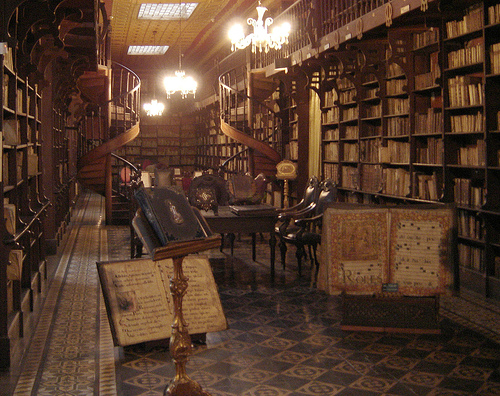
Leather perfumes have so much character, that it’s hard to believe I am having hard time writing about them. Perhaps they have too much personality? Maybe it is because they can all be summed up in one word: Leather. They are not all the same, but they all boil down to some kind of leather – suede, fur, horse saddles and tacks, and so on. Strangely, I find myself associating leather perfumes with things rather than people or emotions. Mind you, very pleasant things, such as old books and libraries, horse saddles, shoes and shoe stores. All things that I don’t really associate with a particular emotional state or memory for the most part, just a simple pleasure of serene rainy afternoon reading an old book or near quiet horses at the stable. So perhaps leather perfumes are the scent of serenity for me, where no complex emotions are involved – just enjoying things, aka objects?
Tabac Blond is the first leather perfume I wanted to write about. It is so original, and as it has been launched as early as 1919, it preceded most of the leather perfumes that followed in the 20th century. First whiff of Tabac Blond immediately reminded me of my old German dictionary that I found in one of my old school’s library giveaways (apparently, nobody read dictionaries at my school except for me). It had the most gorgeous gothic letters throughout, not just the cover, but also inside. I thought that having it in my private library was the most fantastic thing which would make me feel very sophisticated and worldy, not to mention help to enhance my German needed to expressively sing the romantic Lieder by Schubert and Schuman.
That was my first impression of Tabac Blond, and this is how it smells straight from the flacon. Wearing Tabac Blond is a different story altogether though. It unfolds with its rich notes, and every time I discover something different in it. The rich dark and dense notes unfurl and uncurl, open up their dark buds of smudge and resin. They do so slowly and without any attempt to compete with one another.
Tabac blond opens with the notes of old leather bound books in a monastery’s library. It’s dim-lit, and full of studying monks and dark brown robes (perhaps they are Franciscans?). The structure gives away the age, but the building is well preserved – the rocks as well as the burnished wood. As satisfying a note as this may be, it is enriched with other dark notes – starting with the rich, sweet-spicy floral eugenol of carnations, which to me, reeks of luxury. When the carnation wears off a tad, I can sense the sweet clean woody scent of vetiver, and a sweet floral note that could be the ylang ylang, but to me smells more of rose and jasmine, very subdued. The florals are there just to smooth rough corners, as there is nothing really floral about Tabac Blond. The base is a rich, balsamic, resinous mélange of patchouli, vanilla, ambery labdanum, and musk. A base that develops into something that is somewhat reminiscent of Shalimar’s dry down on my own skin…
Top notes: Leather (achieved by castoreum absolute, in my opinion), Linden, Carnatnion Heart notes: Iris, Vetiver, Ylang Ylang Base notes: Cedar, Patchouli, Vanilla, Amber, Musk
As you can see, there is no tobacco here. Not in the listing and none that I can detect with my own nose. Like Narcisse Noir, the name is mostly fantasy. And so is the perfume itself! The reference to tobacco is more likely to have more to do with the twist of history, than with tobacco itself: right after World War I, when women started to smoke more openly in public, amongst other signs of emancipation. I can't smell the linden either, but I won't be surprised to find it there one day, when least expected. And Tabac Blond is indeed an unusual scent for a woman in its time, one that would wear pants, smoke in public, wear her hair short, and insist on having a political opinion strong enough to cast a vote. So it is not surprising that nowadays it is worn and admired by men and women alike.
If you live in North America, but not near any reputable Caron boutique that carries the urn scents, I highly recommend you contact Diane Haksa at the Caron Boutique in New York. She can also be reached by phone on this toll-free number: 1-877-882-2766 The Caron Boutique in NYC accepts credit cards as well as personal cheques. The only draw back is if you live in Canada: you can send a Canadian cheque but you will have to have a kind family member or a buddy in the US that can accept the package and redirect it to you. My aunt in Washington DC will be hearing from me soon... (Well, she hears from me quite often anyways).
Here are the prices for the Urn scents: 7.5ml-$100
15ml-$150
25ml-$180 - Don't be alarmed by the price: these are pure parfum extrait, and are worth every penny! Plus if you buy these you actually are supporting a classic perfume house that is not owned by LVMH and is standing up to it's unique artistic vision for the last century.
Ayala Moriel, the Nose and the founder of Ayala Moriel Parfums, creates natural artisan and bespoke perfumes that are inspired by her deepest emotions and memories from her childhood landscapes of the Mediterranean.