Monday, April 22, 2019

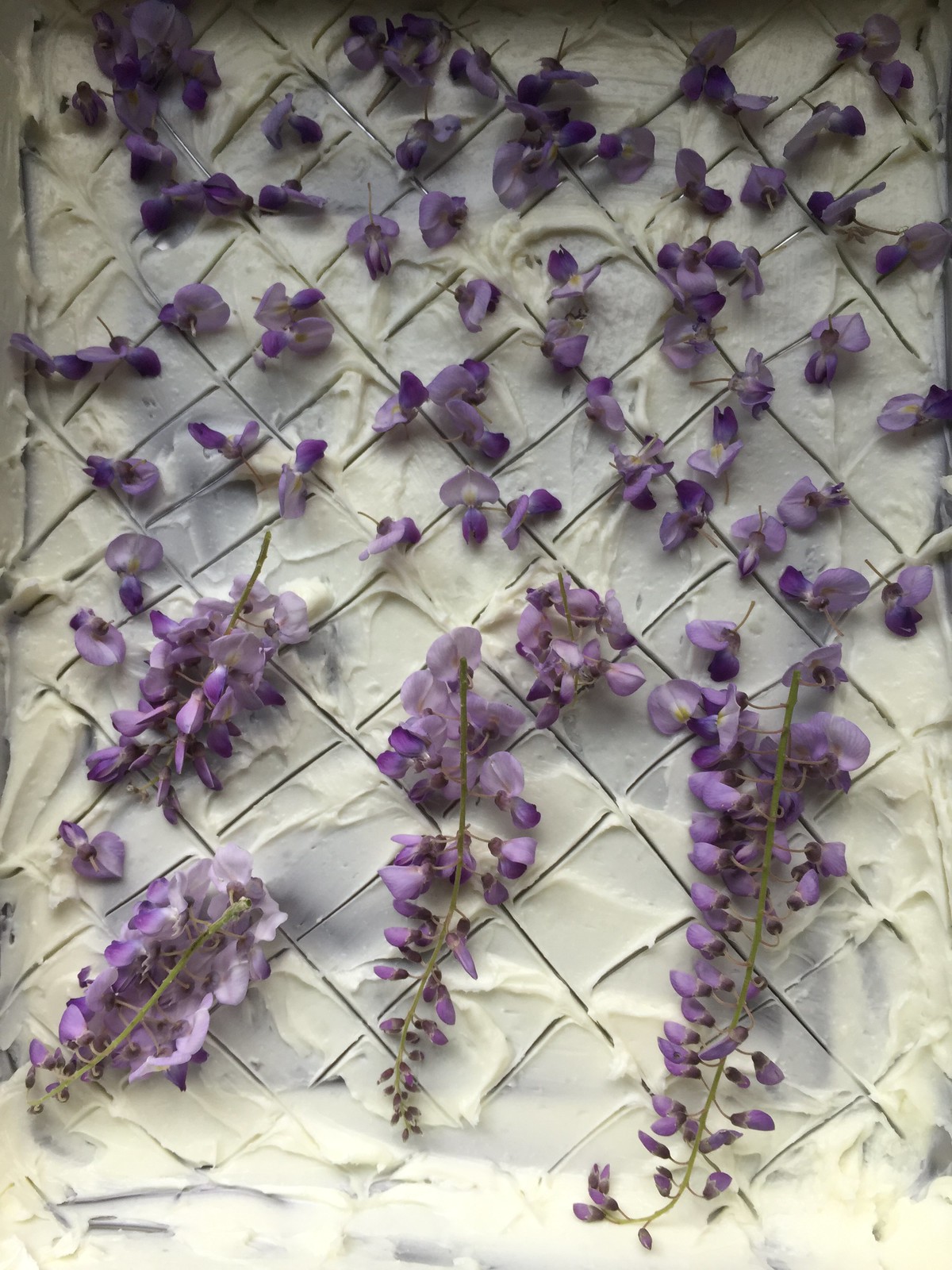
Wisteria Enfleurage

Wisteria Enfleurage
Wisteria is one of my favourite plants. In all season, it has grace and character. The delicate, fragrant and decorative racemes of purple flowers in the spring against the grey branches, followed by copious green and shade-giving foliage it the summertime, changing leaves in the autumn, and even in the winter, when it's dormant, it manages to keep its beauty with the sparse grey branches and trunk that curl around whatever it's climbing on.
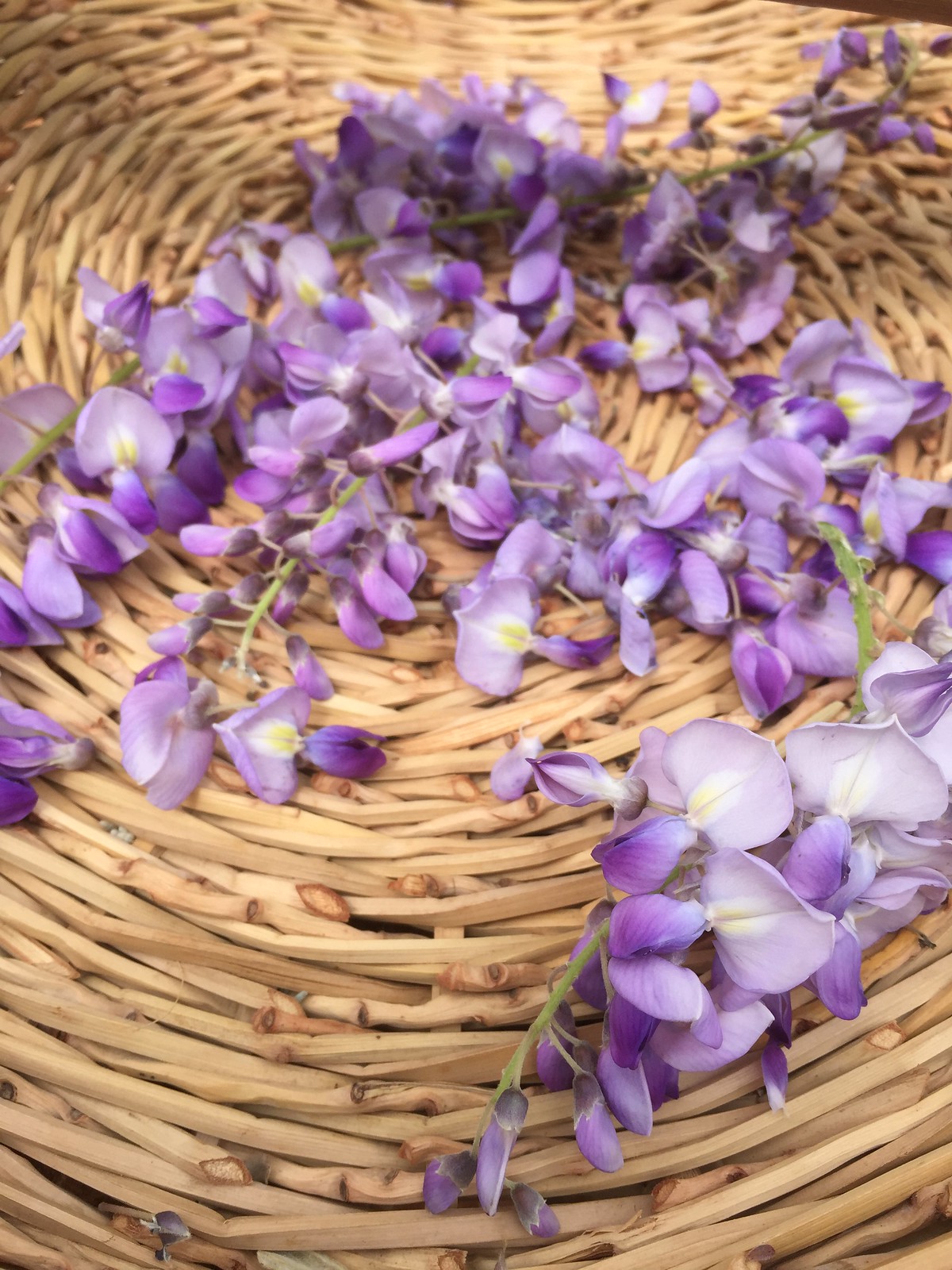
Wisteria Harvest
I planted my wisteria in the summer, to give shade to my eastern window, which is bringing in too much heat in the summer months into the Pilates studio (and there are plenty of those where I am now). In the winter, when it's barren, it will allow the gentle winter sunrays to get through the east window and bring light and warmth to the room.
Wisteria
I was thrilled when the first clusters of buds started showing - but soon enough, there were nasty black beetles with white dots, the same ones that munched away at my roses last year - literally feasting on this and wrecking havoc! To top that damage off, a couple of days of dry east wind, and most of the flowers were gone. I was able to set up about two recharges of enfleurage trays, and it looked promising, but then turned kinda sour and musty smelling. My only consolation is that next year there will be more. And also there is still an abundance of sweet pea flowers to enfleurage, as well as broom. So I will have lots fo sweet smells to play with very soon. Not all is lost!
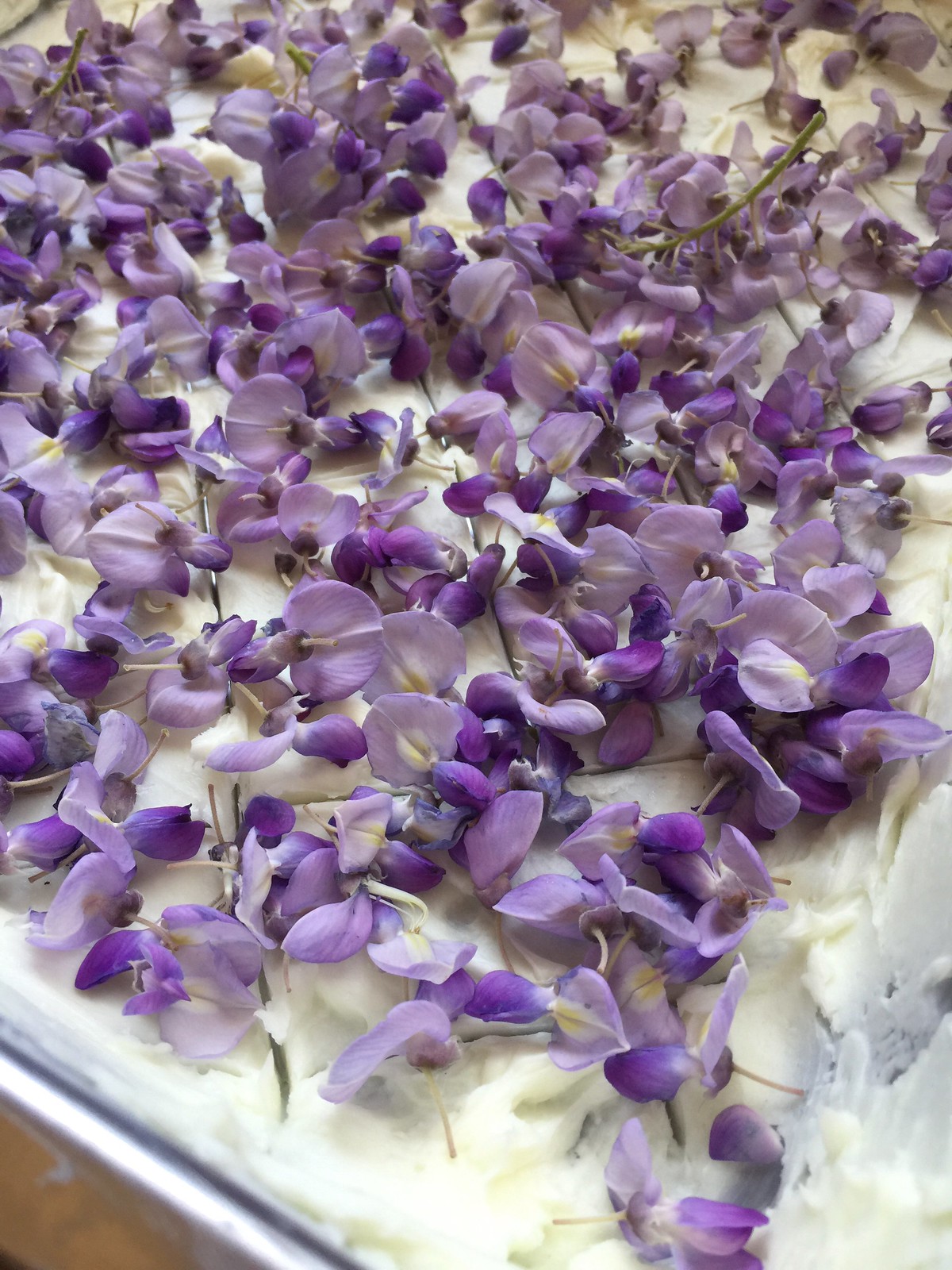
Wisteria Enfleurage
Wisteria (Wisteria sinensis) belongs to the Fabaceae/Leguminosae family, and has flowers like all the other legumes, resembling butterflies and often fragrant, and even edible. Please note that wisteria contains a toxic glycoside in all parts to he plant - wisterin. It will causes all fun digestive nightmares, such as nausea, vomiting, diarrhea and stomach ache. So don't eat it and make sure children don't get tempted to taste it!
The flowers are often purple (though white varieties also exist), with a yellow and white "landing strip" for guiding the insects to the reproductive organs.
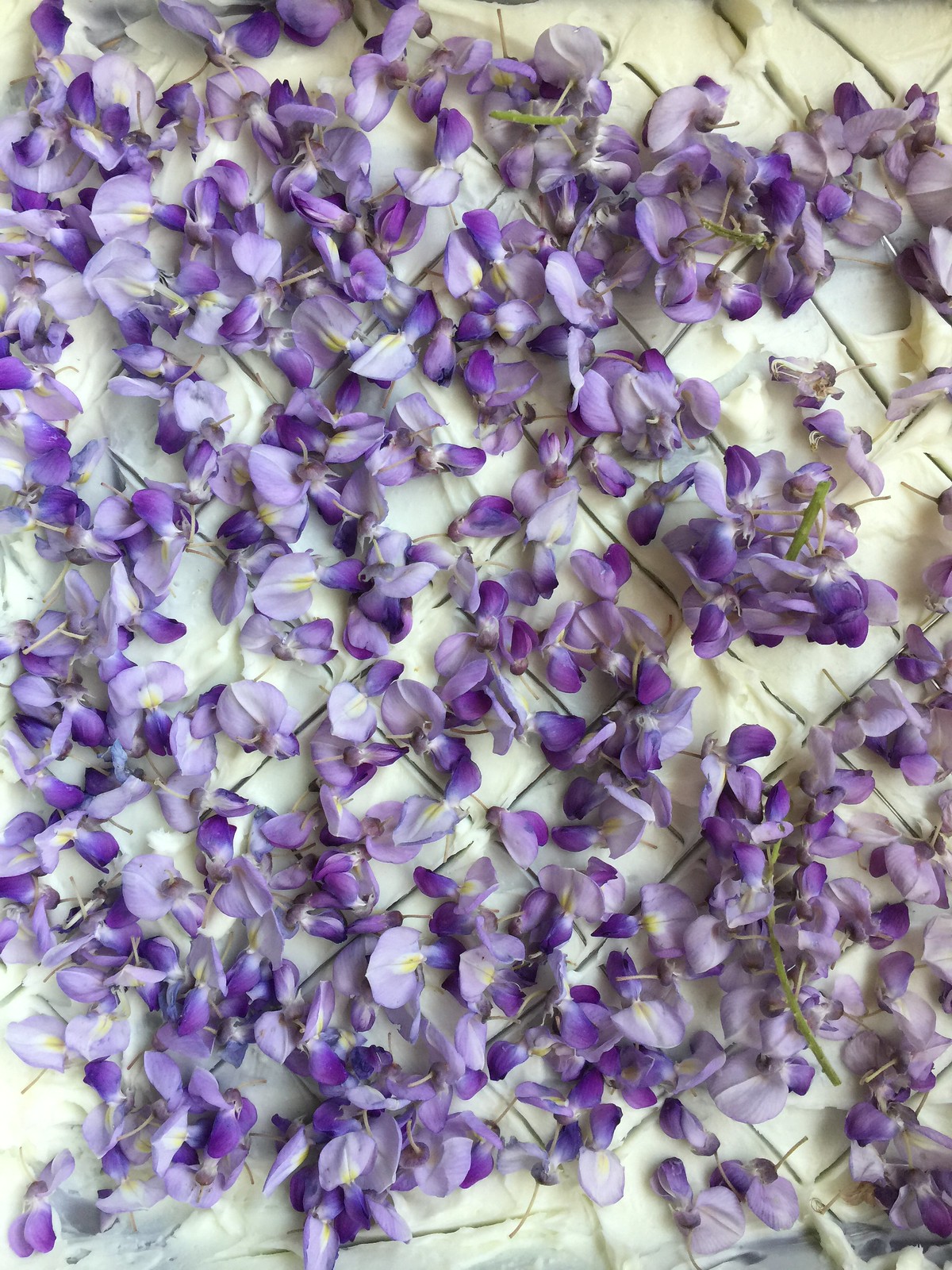
Wisteria Enfleurage
As for the scent itself, it is hard to describe, and in my opinion also not exactly as distinctive as, say, sweet pea. I find  the one growing this year at my garden it to be extremely similar to ylang ylang, with pronounced clove-like scent. It has a lovely creaminess, however I am lost for words describing exactly what is special about it. I remember the ones growing in Vancouver as having a soft-focus personality, more powdery yet also heady. I do not recall them being so clove-like at all. Bo Jensen describes the wisteria scent being "a pleasant, mild, warm and creamy sweetness with rosy, peppery and spicy nuances", and cites Joulain et al. research with the key molecules as being beta-chromenes 7-hydroxy-6-methoxy-4H-1-benzopyran and 6,7-dimethoxy-4H-1-benzopyran, as well as 3-hydroxy-4-phenyl-2-butanone or phenylacetoin.

Poucher's one and only formula for Glycine, No. 1086 (Wistaria) from the rather archaic 1959  edition is spelled with an "a" instead of "e" and includes:
180 Hawthorn, Synthetic
50 Eugenol
100 Methyl iphone
100 Hydroxy citronallal 
70 Ylang oil, Bourbon
80 Rose centifolia, synthetic
190 Jasmine, synthetic
100 Terpineol
40 Coumarin
60 Heliotropin
30 Musk ketone
--------
1000
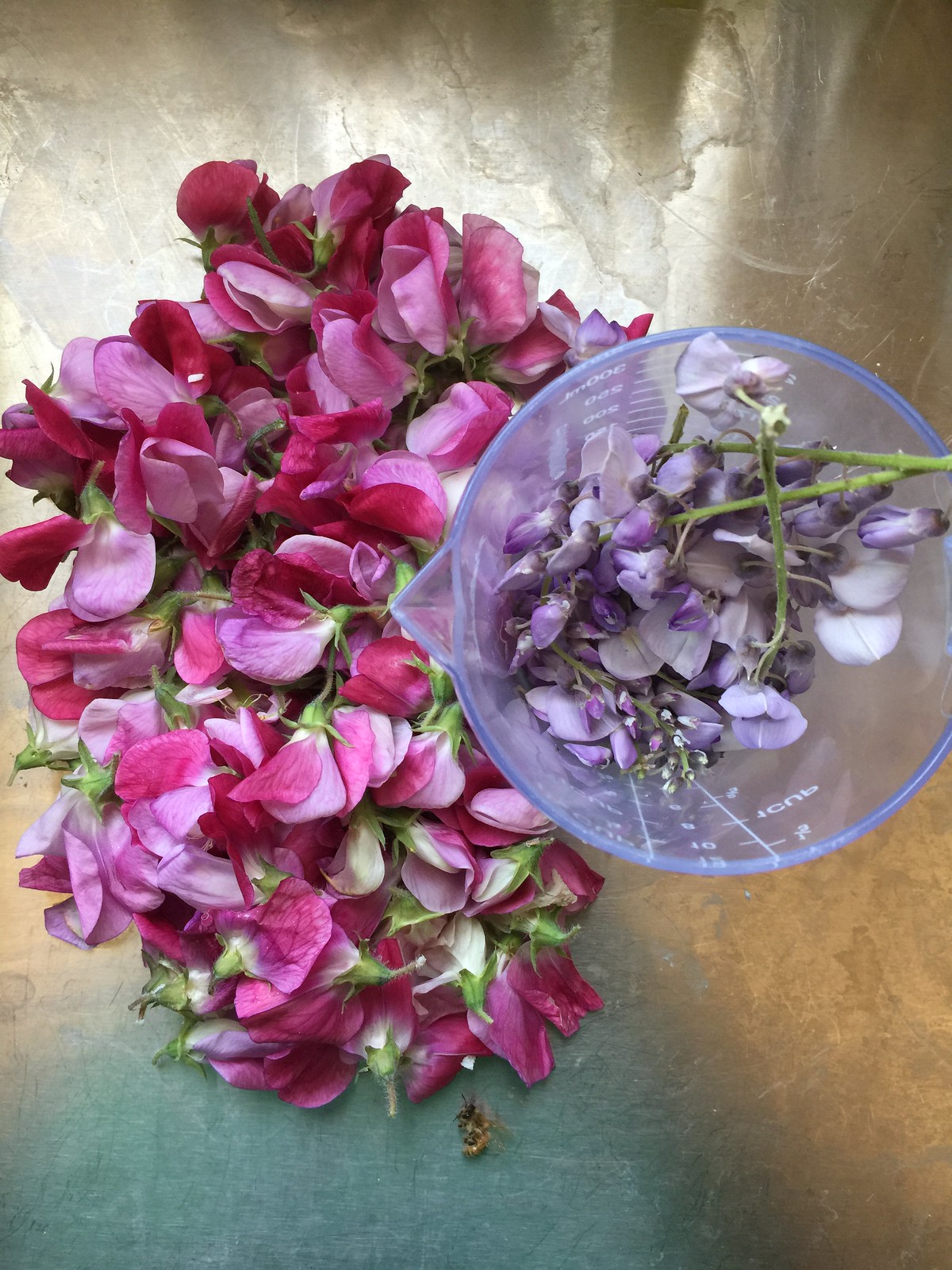
Best Smelling Garbage in the World
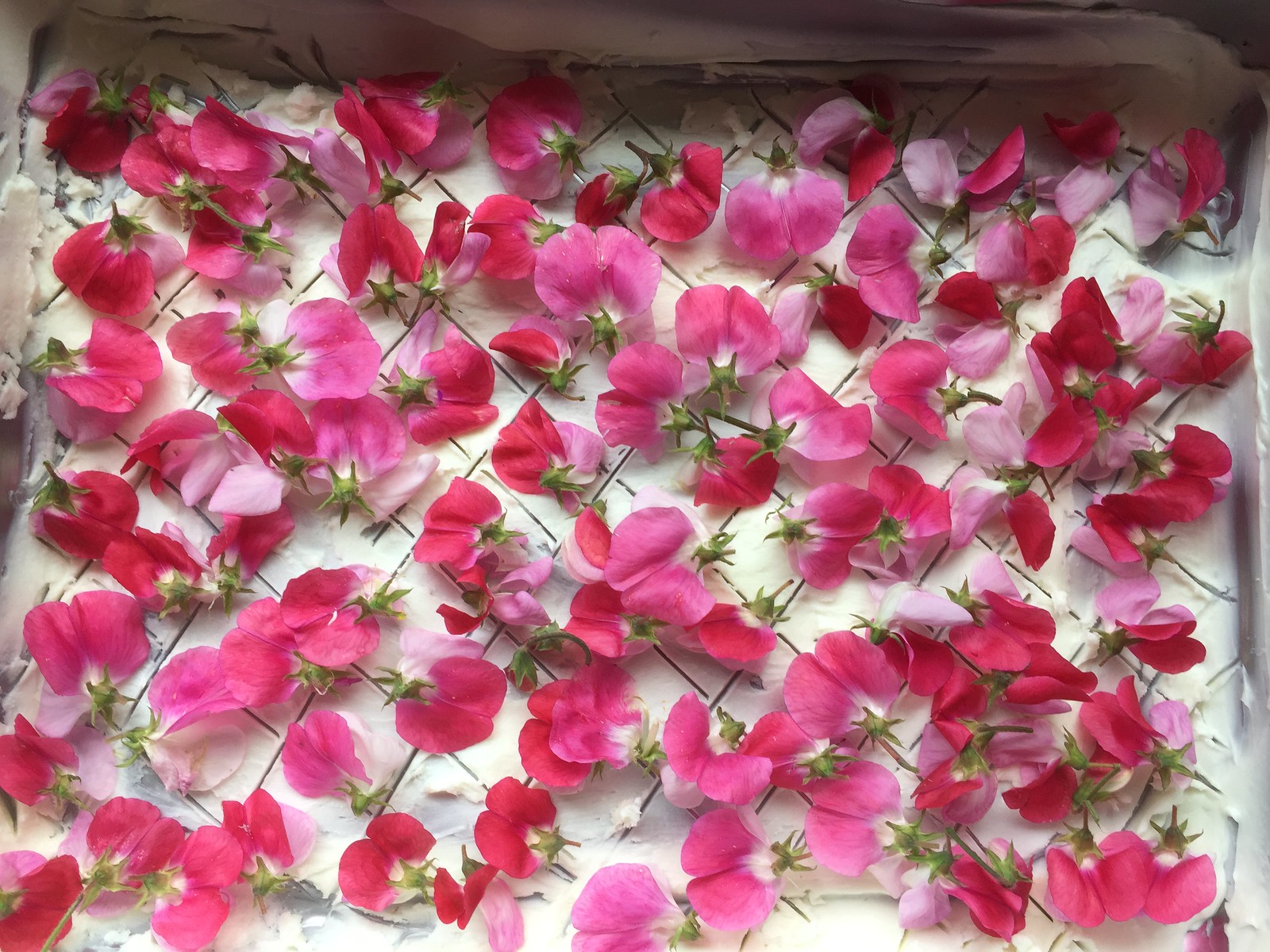
Here you see my post-enfleurage flowers of both sweet peat and wisteria. In other words: Trash. I have not only the best smelling garbage but also the best looking!
Enfleurage Tray
Next year is a blank slate... And I hope I get a better, more robust and abundant harvest, and also that it wouldn't turn on the tray. In the meantime, I'm actually feeling inspired to try and recreate it myself with my current arsenal of extraits from enfleurage. Wish me luck...

Labels: , , , , ,

Sunday, April 21, 2019

Sweetpea Enfleurage

Sweetpea Enfleurage
This spring has been unusually cold and rainy, which meant longer sweetpea flower season. Despite many delays between rain showers, waiting for the flowers to dry, I was able to collect impressive numbers of flowers for several recharges of the enfleurage tray. I think this is by far the strongest enfleurage I've been able to make. I am waiting for some more flowers to dry tomorrow and collect some more flowers for another couple (or more) of recharges before I move this into the alcohol extraction phase. 

Although the fresh sweetpea flowers hav ea very delicate and slightly lemony notes, the recharged enfleurage brings forward some more almonds notes. I think it will be really delicious. 

Sweetpea Enfleurage
Meanwhile, I have been able to make a very meagre amount of wisteria flowers blossoms, because the nasty beetles have eaten most of them. And I didn't have that many clusters to begin with. I'm afraid this was not a successful harvest - but it's the first season for this vine (I only planted it a few months ago). So next year will be better. 

With my enfleurage skills slowly picking up, I am sure I will be able to make broom enfleurage this year. Although it's just another one of the same family as sweetpea, spiny broom and wisteria - each has a different aroma and its own value as a perfume material. The spiny broom was super frustrating as something always went wrong and it is very about intense (and painful) to pick it. After I tried the second time and finding tiny bug droppings everywhere, I decided to give up on that botanical, at least for the time being. Way too much work and very little results. Really looking forward to work with the other fabaceae enfleurage results and composing with them though! 

Labels: , , , , ,

Tuesday, February 12, 2019

Playing in the Orchard

IMG_3756
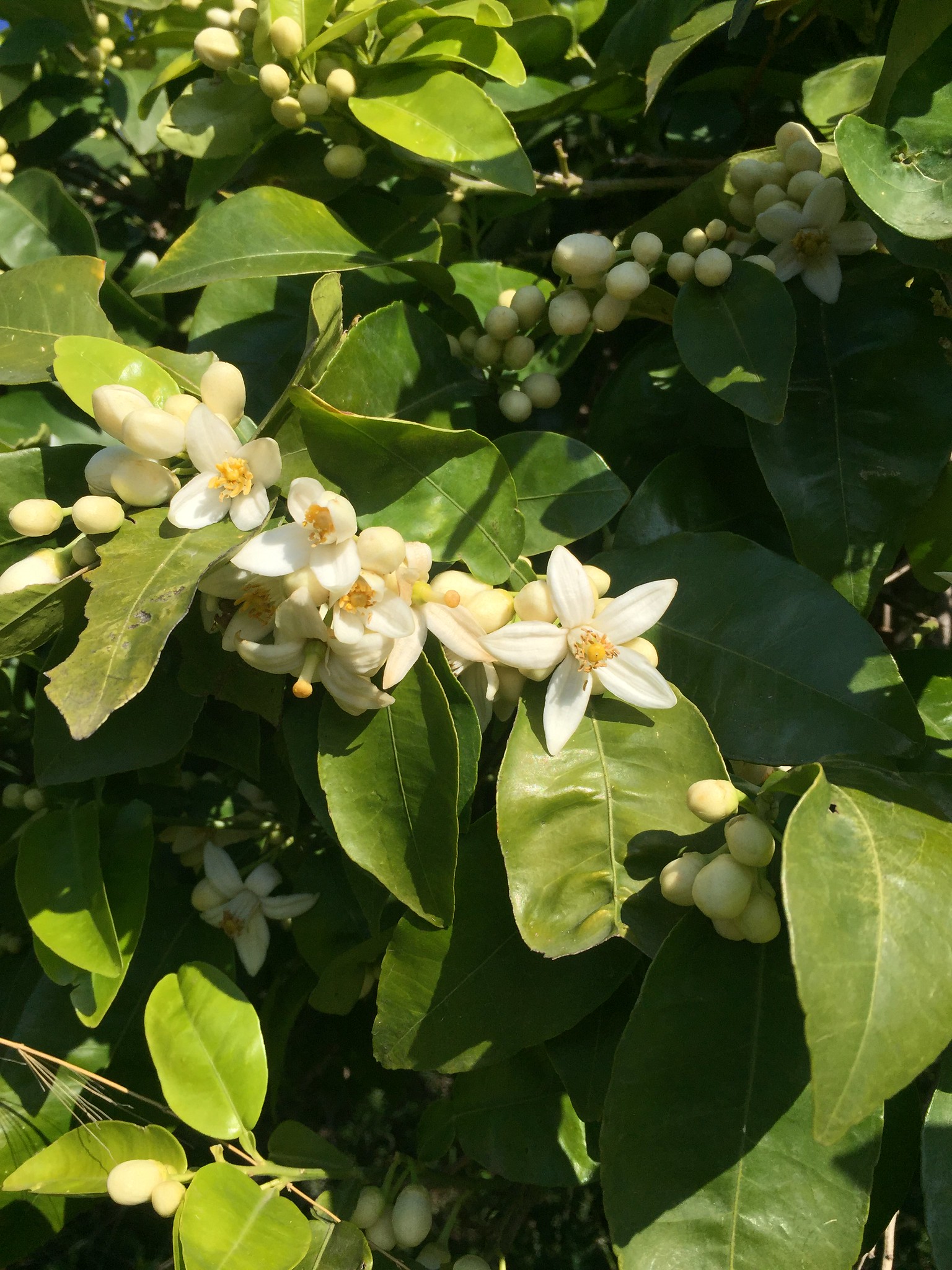
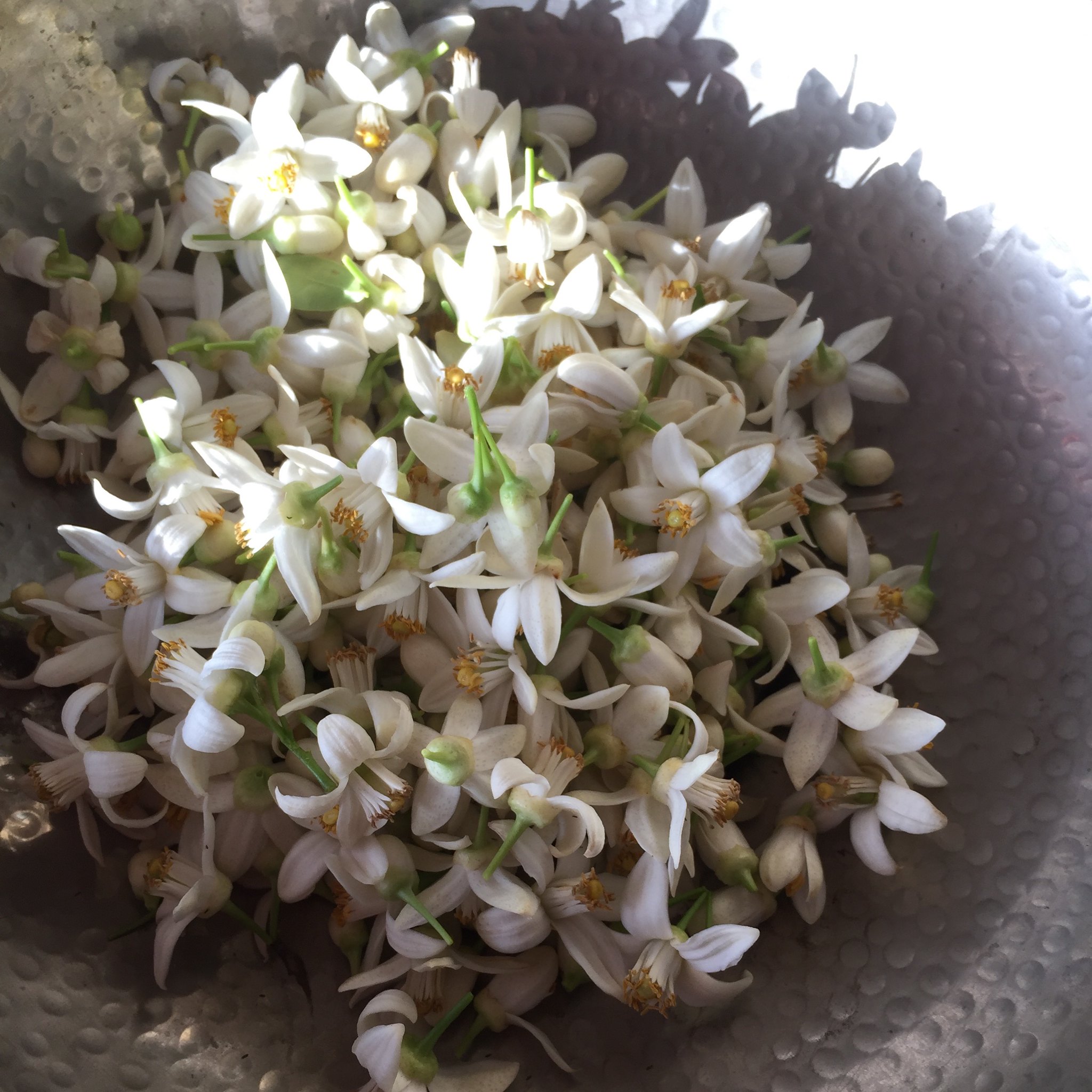
Despite the cold and stormy days (hail, thunderstorms and loads of rain) - Spring is here very early if to judge by the wonderful bridal gowns the almond trees are wearing, and the scent of citrus blossoms emanating from my tiny organic orchard. The copious amounts of blossoms on my organic pink grapefruit tree has been quite staggering, so I did not feel one bit guilty thinning them out and experimenting with them.
Grapefruit Blossoms
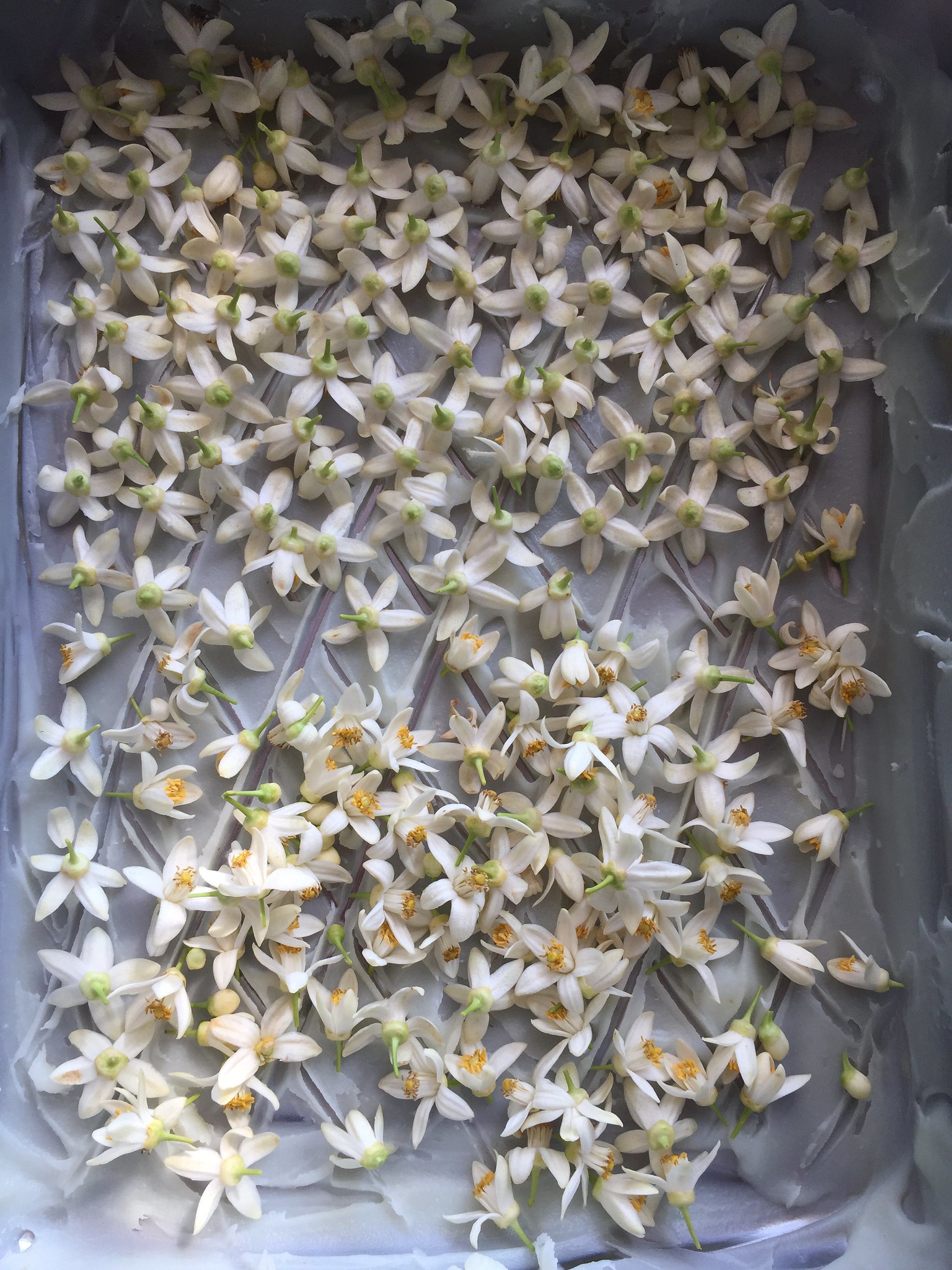
Pink Grapefruit Blossom Enfleurage Experiment
Naturally, I was curious about using the vegan enfleurage technique on them. I'm afraid the results were not particularly impressive. The flowers seemed to have "cooled down" too much in the solid fats and keep the scent to themselves, releasing only the cool and clean notes rather than opening up and releasing their more honeyed and fruity-sweet notes of methyl anthranilate.
Grapefruit Blossom Darjeeling Tea
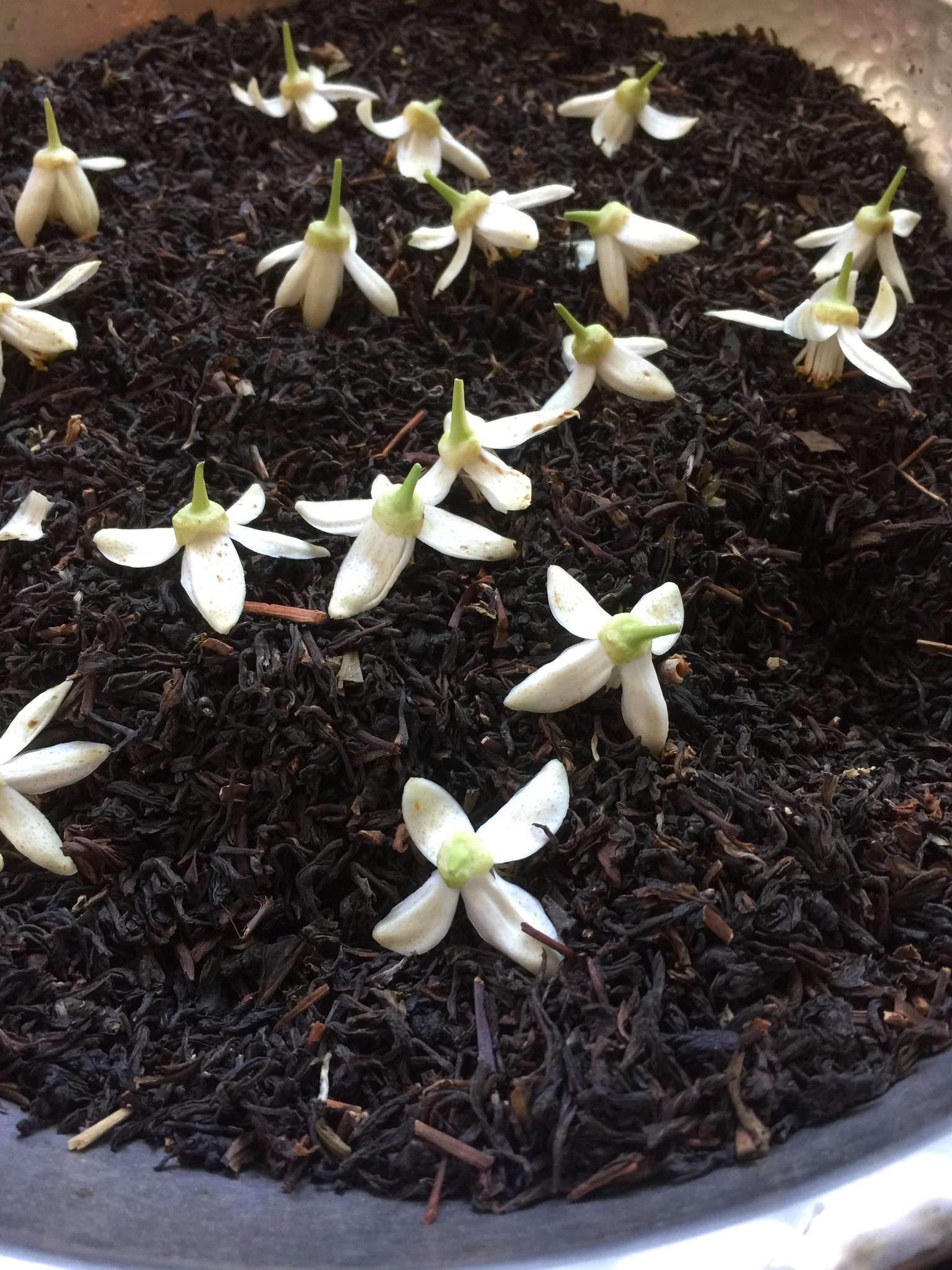
So I kept playing with them, and layered Darjeeling black tea with organic Grapefruit Blossoms. The result here was much better, with the tea allowing them more space to breathe than the fat. I did several charges of the blossom layering. The finished result turned out magnificently springy, astringent and complementary to the floral qualities of the Darjeeling tea.
Frankincense (Boswellia dalzielii) Grapefruit Blossoms Enfleurage
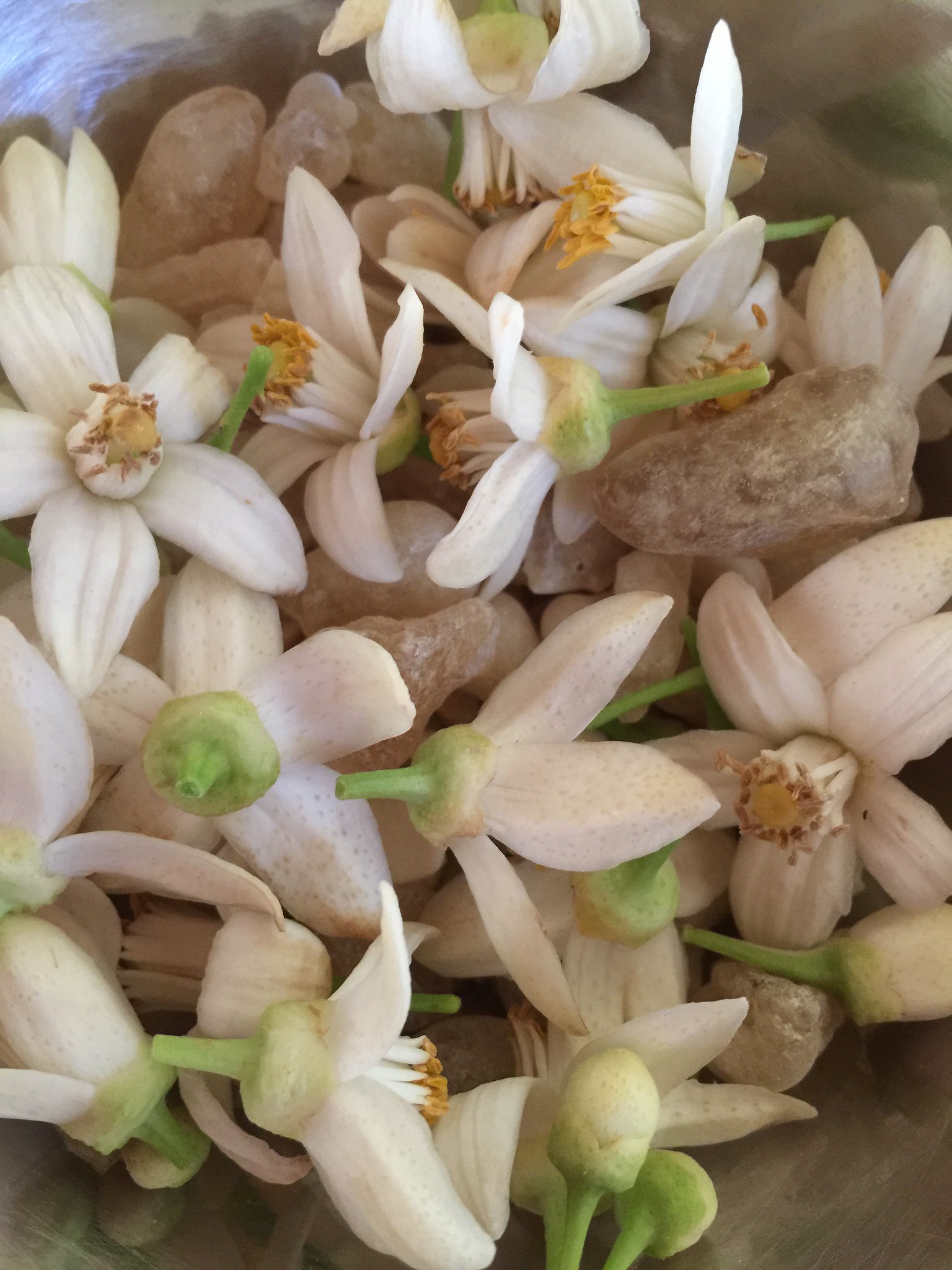
Last but not least, I tried my hand with resin enfleurage of Boswellia dalizielii. I have to see how this will play once burnt, but the resins definitely absorb the fragrance beautifully.

Labels: , , , , , , , , , ,

Wednesday, June 21, 2017

My Rose Garden

The Bench

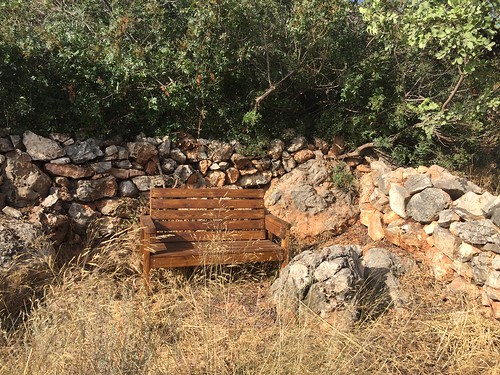
There is still no rose in site, but this is my soon-to-be rose garden.
It has a bench, so what else does it need (well, a few roses wouldn't hurt).
But firs I must do some research and find the exact roses I wish to plant here. First and foremost I am on the hunt for those used extensively in perfumery: Rosa damascena and Rosa centifolia. Then I must find some hardy hybrid tea roses and old English roses that would withstand the hot and dry climate here. And they must smell amazing and also have impressive looks. I would rather wait till I find the right ones rather than plant the wrong ones and waste precious plot space...

The area for the rose garden used to be an enclosed area where some of my tenants (without any permission) built for a little herd of goats. It looked like a disaster when they lived here, and it was hard to kick them out. The tenants that followed were super nice, stayed for many years, and took advange of the freshly fertilized soil to make a little vegetable garden. It only has  two small plots, and is sitting too far behind the house to be practical for a vegetable garden, in my humble opinion. So I planted a vegetable garden right next to my house (on the sunny east side next to the Pilates studio). And these two plots I'm planning to fill with at least six rose bushes. Then I will also add a bird bath or a sundial (or both), and climber roses in all corners. It makes the perfect, hidden, romantic spot to sit on; but also my preferred spot for  for sitting and meditating, burning incense, and enjoying a few hours of shade in the hot summer mornings, and quiet reflection in the evening. Maybe even a moon garden if I find the right mix of plants that won't overshadow the rosiness during the day.

Labels: , , , ,

Sunday, June 18, 2017

My Little Herb Garden

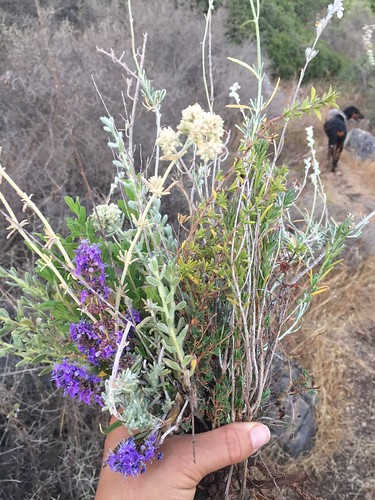
Treasures from the mountain

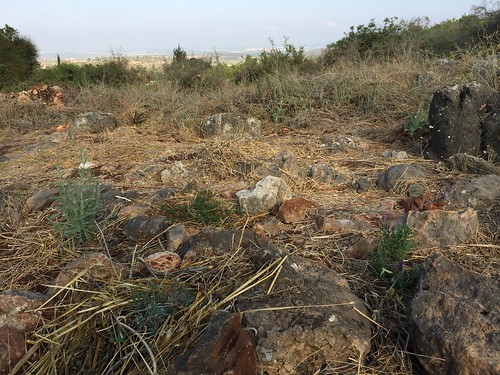
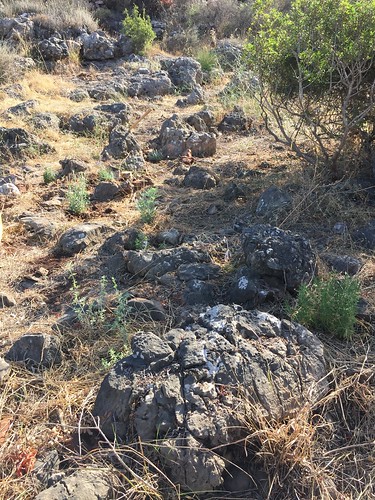
The last two weeks I've delved right into exploring the medicinal wild plants that grow around here. For a short time I had a herbalist to show and share with me some of this wealth of plant wisdom. Now that this guide is gone, I'm lead only by the pleasantly infectious inspiration. There is an overwhelming abundance that is going to provide me with a lifetime of learning (according to Floral Palestina, this land is blessed with close to 2,700 species of wild plants!). I've been hiking in the surrounding areas and conservatively collecting branches for slips and re-planting in my little herbal garden. This of course will is part of the Perfumer's Botanical Garden I'm establishing around the studio.

I'm showing you the early beginning, although they look quite unimpressive on camera. In person they have the charm of new beginnings as well as virgin strip of land and stony terrain and distant view of the Mediterranean; I am also delighted by the gentle healing energy that emanates from the plants for those who connect to these types of being. And for those who find it more difficult to connect to plants that way - the scents that each provide speak for themselves. Even a little stroke on each plant will give off the scent and you can mix and match to create your own "finger perfume".

Morning in the medicinal herb garden

From the wild, I've adopted some amazing plants - both old and new to me, that grow on the mountain behind my house. So all in all, my botanical collection is rapidly growing - even beyond the original wishlist I've created. And I'm rather happy with it.

From my slip foraging, I managed to keep alive a couple of types of germanders - Cretan germander (Teucrium creticum), which looks a lot like rosemary but smells completely different - more like olive leaf, actually, and likewise has an intensely bitter taste; and cat-thyme germander (Teucrium capitatum), which has a sweet, almost resinous fragrant silvery foliage. The latter is highly medicinal and rivals only the local wild sage (Salvia fruticosa), more of the Savory of Crete (Satureja thymbra) and a similar plant, with an almost identical flavour and fragrance that has flowers with a structure similar to Lavandula dentata, which is called Spiked Savoury (Thymbra spicata). It would be difficult to find information online in English on many of these plants because they are unique to Israel.  I've also adopted some cistus plants, although they are not the Cistus ladaniferus I am seeking but two other local species that are not as resinous, yet somewhat fragrant depending on the season. And I am crossing my fingers that two seedlings of bay laurel (Laurus nobilis) that my herbalist guide carefully uprooted from the wadi (dry creek) floor, will also survive and make it to the miniature forest I want to create behind the perfume studio. And most immortally - I am hoping that the two little twigs of Israeli Thyme (Coridothymus capitatus) that we found on the rocky North beach will grow up some roots and flourish. They are quite rare site here inland, and in fact a protected species. They have a striking look when they get mature and an intense yet slightly floral aroma that I love. It truly deserves a post of its own, with photos and all. Along with Origanum syriacum (also grown in my garden), the other varieties of thyme and savoury I mentioned before, some sumac and sesame seeds it forms the spice mixture called "Za'atar" that some of you may be familiar with from Lebanese grocery stores and Middle Eastern restaurants.

Thymbra spicata צתרנית משובלת

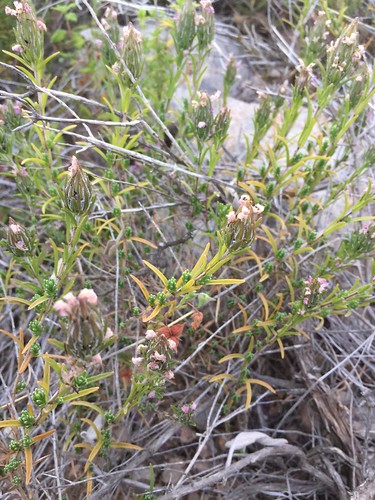
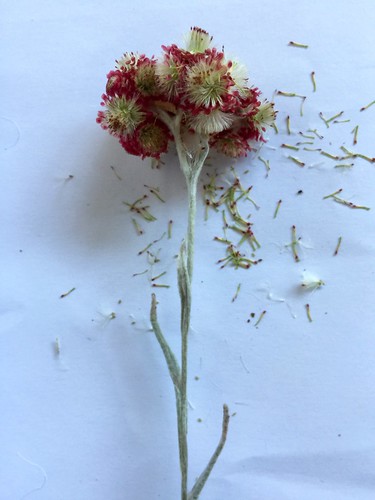
Naturally growing wild in my garden is also white horehound (Marrubium vulgare), a highly medicinal plant that grows in astounding abundance, several mastic bushes and probably more plants that I did not know were medicinal but will find out later. There are also still two plants that I found on the mountain to make slips that I haven't identified yet, so the search is not over. Lastly, I scattered seeds of blood helicrysum, a local wild plant (Helichrysum sanguinum) which I also hope will come out next winter. By that time I hope I will forget about it altogether so it will just be a pleasant surprise...

Dam HaMakabim (Helicrysum sanguinum) coming into seed

Lastly, to be fair and square, I promised to tell you which plants I put in from the nursery (the ones my brother brought me), so that you know if you guessed it right. They were several types of lavender (mountain Savory of Crete (Satureja thymbra), several types of lavender (Lavandula pinnate, L. dentate, L. angustifolia), one artemisia and - to my utmost excitement - two immortelles (Helicrysum italicum), often called "curry plant".

Morning in the medicinal herb garden

Also you should know, that among those who participated in this context, we got two worthy winners who will receive a sample kit of all my herbaceous fragrances,  are Ruby Clover and Melissa Menard. The kit includes ArbitRary for the basil, Ayalitta for the sage, Immortelle l'Amour for the immortelle of course, l'Herbe Rouge for the lemongrass, hay and lavender and Lovender - which is quite obvious. I've also included a sniff-peak of Inbar, my new, wild-oregano infused amber concoction which is not even for sale quite yet :-)

Putting together the kits made me also realize how little attention I've been giving the herbaceous notes.


Labels: , , , , ,

Wednesday, June 07, 2017

Early Beginnings

Perfumer's Garden - Mountain Path

Do not mistake my lack of posting for lack of action. It's been quite the opposite - the most action-packed few months of my life. Here is what I've accomplished - to put your minds at ease and satisfy any curiosity that might have remained among those of you who haven't given up on SmellyBlog yet:

- Designed, planned agonized over and built a new Perfume studio, Pilates studio - and renovated my old home) while making new friends with the builders and architects involved
- Lived in a yurt for 4 months (November through March) while I was at it - and also found myself adopting a cat of all creatures (not intentional, but seems to work out)
- Transitioned my daughter into a Hebrew-speaking high school for another two years of education
- Moved from the yurt to the house
- Adopted a rescued female Doberman (that was a dream come true)
- Taught two Perfumery Courses back to back: Fougere and Orientals (while meeting with Dan Riegler - a Canadian- Israeli from Ontario who gifted me with the most incredible incense resins imaginable - more on that in a separate post
- Became auntie to one more niece and nephew (that was quite effortless!)
- Continue to try and establish my perfumery studio (and Pilates studio) in the new surroundings
- Try my best to be with my grandma, who's 93 years young and had a heart event about a month ago. Every moment with her is so pure and precious.
- Planning and beginning to plant my Perfumer's Botanical Garden, which is truly taking much of my time and is the main reason I haven't been blogging. The photo above is from the section of it that is on the mountain and is dedicated to fragrant Mediterranean plans and medicine herbs.

I spend very little time around the computer (after months of wifi & electricity-free yurt life and bad battery in my laptop - old habits have been broken to little shreds and I only post quick updates via my phone on my Facebook, Instagram and Twitter accounts)
Hopefully I've gotten to the point when I'm settled down to return to regular blogging - as demanding as life has been all these months, I know deep in my heart that it does do me good to write regularly. It's not just a fragrance/perfumery blog, but also functions as a personal journal to me.

Labels: , , , ,

Wednesday, November 16, 2016

Pruning the Orchard

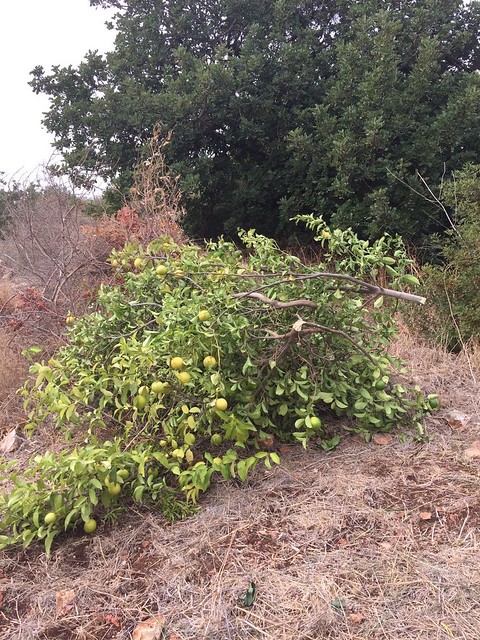
Pruning my bitter orange trees

My mini fruit orchard has been sitting still for 20 years without proper care, and the wild foundation of the grafted citrus has simply taken over, turning all the trees except the grapefruit into a bitter orange tree. From a perfumer's point of view there is no harm in that, but I'd like to have some culinary variety in my village life, and food-wise, there is very little that can be done with bitter oranges.

As I begin to work on my little perfumer's botanical garden near my cottage, I had no choice but to do massive pruning on these trees, and leave only the largest bitter orange tree as is. One had 2 remaining branches of the original lemon; and another will be later on grafted to yield sweet, juicy tangerines. I also would like to plant a lime and a citron tree while I'm at it, but we'll see how much space there is for my rather long wish list of fruit trees. Scattered among this little orchard there will also be bulb flowers, fragrant bushes and other surprises.

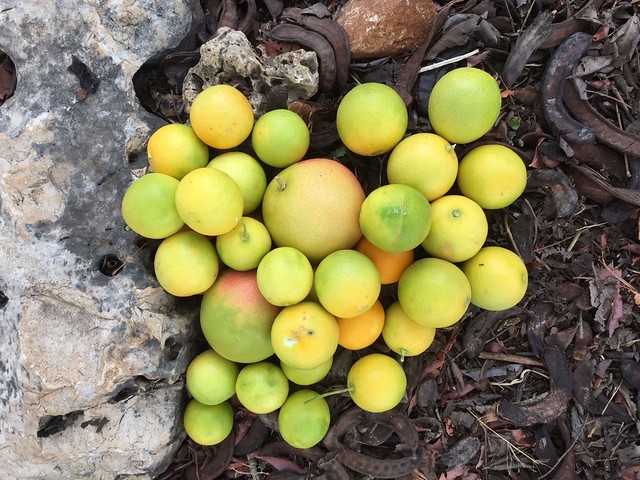
Green bitter oranges

After all the pruning, we were left with a copious amount of unripe bitter oranges. Their smell is heavenly - much more floral and less flat than sweet oranges. So I've decided to peel their aromatic zest and macerate in 100 proof vodka (50% alcohol), and make my own homemade version of Cointreau liquor. Of course this is only the inspiration. I will really play with ingredients I have around and macerate some other herbs and maybe also vanilla to add more depth and interest to the vibrant orange peel.

Labels: , , , , , ,

Monday, September 12, 2016

Moving

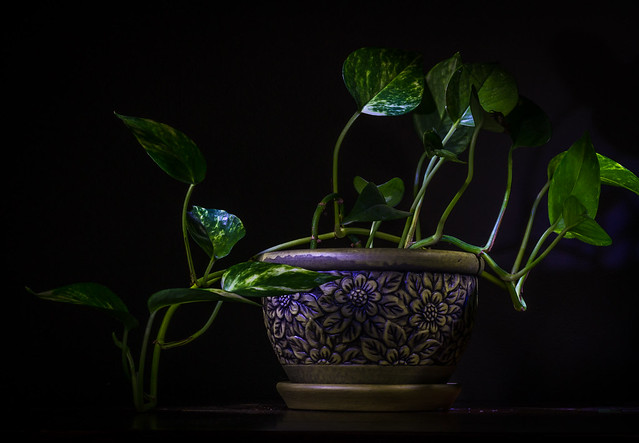
Pathos Still Life

One of the strangest and fondest childhood memories is when me and my mom moved from Jerusalem to our village in her tiny car, whose trunk was filled to the brim with our houseplants. My mom did not trust the movers to handle them gently enough. So I got to enjoy their green grace through this long ride (only two hours, really, but tremendous length in Israeli terms). Their leaves filtered the sun and made the atmosphere cool and comforting. It was like traveling inside a little jungle, that sang a silent lullaby in my ears.

When we arrived at the village, the plants had a special spot in the shade until our cabin was built (we lived in a hut with dirt floor for a while). And I liked to spray their leaves with water and help my mom care for them.

Decades later, I'm returning to the same village only from much further distance. And I don't trust the movers to take care of my plants so I will hope my friends will adopt them. I don't trust the movers to pack my perfumes and raw materials either, so I'm doing it myself, with the help of some mad friends who I have no idea why they would take on such a task; but nevertheless I'm thankful because without them there is no chance in hell that I will be ready to leave in time.

Also in my suitcase are going some seeds I want to saw of fragrant plants, in what I dream to be a miniature perfumer's botanical garden and an part of an educational project for micro-distillation and old-fashioned extortion methods of fragrant plants. I'll start with some violate (Viola odorata) and green shiso (Perilla), and bulbs of lily of the valley, snowdrops and tuberose that I'll have to remember to unearth from my potted plants... The rest I will have to scout and research once I get there.

Labels: , , , , ,

Tuesday, October 15, 2013

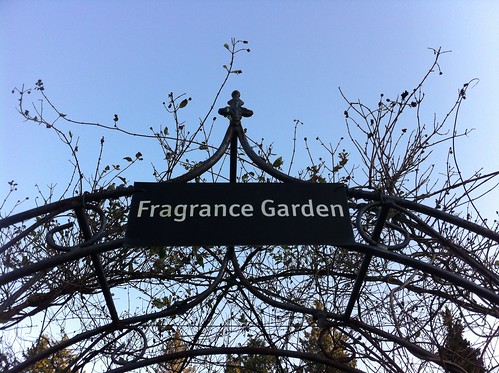
Fragrance Garden

Fragrance Garden by Ayala Moriel
Fragrance Garden, a photo by Ayala Moriel on Flickr.
VanDusen gardens in mid-fall is not quite as glorious as in the beginning, where the summer's abundance is still apparent; nor as majestic as later in the fall, when the leaves have fully changed their colours, painting the horizon with deep red flames of Japanese maple, burnt orange, russet and caramel from the various deciduous trees.

It is somewhere in between - with the last flowers in still bloom (many of which are purple, I noticed), mushrooms popping up here and there - farewell to all that's sweet and abundant before we fold up the picnic and get in for a long dark winter. Our walk ended at the fragrance garden - a tiny plot packed with flowers, shrubs and bushes that exude scent in one way or another.

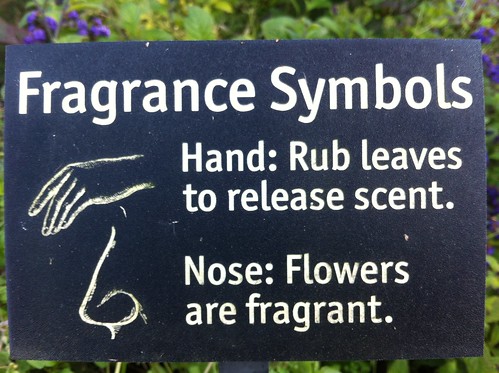
Fragrance Symbols

You can only imagine my delight finding the fragrance garden still alive with some fragrant energy still intact: sweet peas were what truly invited me to the garden, which looked rather miserable as a whole. Sweetpeas have such a delicate perfume that I'm at loss of words to describe except that I'm sure I've smelled soaps that try to imitate it rather well... Their delightful colours are more dense in the petals' edge, like stains of watercolour.

Sweet Pea

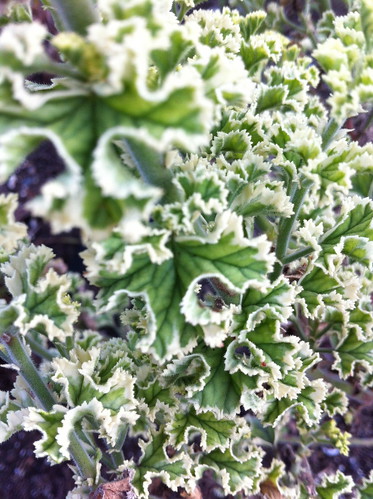
Geranium
Scented geraniums (pellargoniums, really...) including musk and apple scented ones. It's the leaves that are fragrant, so that's where the hand symbol should be (curiously, the nice botanical signage did not include the "Fragrance Symbols").

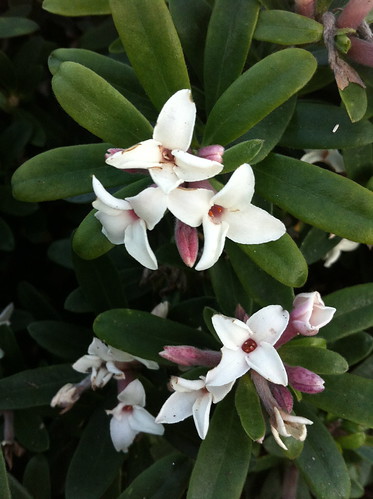
Daphne - smells like ylang ylang
Daphnes, smelling almost exactly like ylang ylang, and somewhat of the lily...

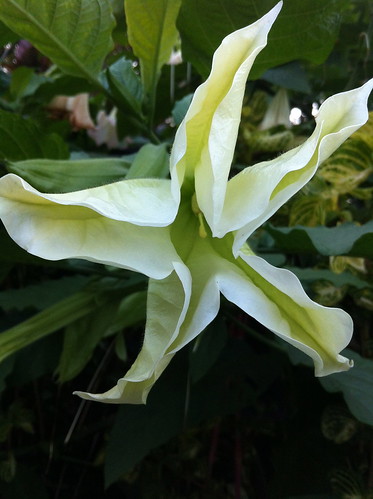
Angel's Trumpet

Purple heliotrope still smelled like baked marzipan. Angel's trumpets, which were still saving their scent for the night, 

Tobacco Flower
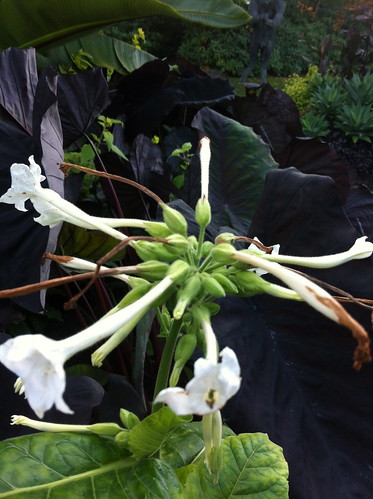
Tobacco flowers were not in this particular garden, scattered everywhere. It is almost tobacco harvest season...

I was very touched to see a fragrance garden at VanDusen. Vancouver is now known for being particularly fragrance friendly, so it's thoughtful that they have planted an area dedicated to perfumed plants. I hope more people will learn to appreciate scent - if not perfume and the many beautiful fragrances that surround us. I am very much inspired to plan and plant my own fragrant garden. I just need a little more land around me, but that's another story... In the meantime, I'm thankful for the many beautiful gardens in my city, and I hope that you are also fortunate to have gardens you can enjoy. They are truly like sanctuaries.

Labels: , ,

Saturday, May 23, 2009

La Bastide du Parfumeur


La Bastide du Parfumeur is a conservatory and a botanical garden nestled between Grasse and Cannes, that has opened just recently - in 2007.

This is an unusual botanical garden. Expect none of the manicured and controlled French garden like those in Paris. What you’ll find here is a wild paradise of fragrant plants and flowers, arrange visually like one beautiful meadow that spills from the hills with endless surprises of unusually fragrant plants (most of which are famous for their use in perfumery, others less known or exotic – such as Seringat and Hymmemosporum). And between them grow in careless abandon unlabeled roses of surprising colours as well as wild oats and other weeds. The beauty of the place is breathtakingly unconventional. And it is arranged according to odour, a classification quite unusual for any garden. You’lld find rustic signs for vanillic notes, woody notes, citrus notes, herbaceous notes, spicy notes and so forth.

The list of sponsors is impressive on its own right (including perfumers such as Le Cristophs for examples), and also from talking to the gardeners I understand that Michel Roudnitska played a key role there in consulting about what plants to use and how to group them together.

Where to find it: 979 chemin des gourettes-06370 Mouans-Sartoux Tél : 04 92 98 92 69

Below are just some of the highlights to hold you over until you go there. Because you must do that.


The garden begins with mint groves that smell more impressive than they look. The Japanese mint is especially green, crisp and sweet and with hardly any camphoreous menthol aspects. And some are more sharp and strange than others. The picture above is of Bergamote Mint, which smells convincingly of bergamote. I'm guessing its the result of high presence of Linalyl acetate.


Next come some spicy and woody notes (I was happy to find Zantoxylum in the raw living form for the first time).
Other beautiful spicy notes belong to the many carnations the trimmed the plots, both pink and white (I spotted 3 types but all photos of one of the fuller-petaled pink ones turned only blurry).


The garden of white flowers included jasmine (not in bloom at the time visited), star jasmine and white roses.

I haven't spotted any plants around the Vanilla notes area, rigth next to the canal at the centre of the garden and across from the white florals - but this sign will give you an idea of how the garden was arranged. Each section had a note category stated by a sign that looked like this:

The fruity notes included sweet juicy strawberry, loquat and Ananas Sage, which is very unusual and mouthwatering with its pineapple-like notes. Of course I couldn't help myself and had a little picnic.


After fruity comes floral...


I really liked how the iris was planted right next to the acacia garden. There are common characteristics for these two notes - powdery, woody and floral and cool. There was only one bush in bloom, since the mimosa season in Grasse is January-February.

This is Seringat, a bush I'm unfamiliar with and am at loss describing its scent. It was floral and a little fruity - perhaps peachy - but I can't remember being able to come up with any other adjectives.


Next come the herbaceous notes, and there are plenty: rosemary, helicrysum, lavender, sage, clary sage, Roman chamomile, etc. and many types of pelargonium, including this strange looking one, Eucaliptus scented pelargonium and one that didn't have a sign and smelled intensely of animalic musk.


This particular helicrysum really smells like curry more than others.

I was surprised at how soft this dangerous plant smells. Sweet and almost coumarin like, despite all the thujone.

Roman chamomile, of course!

The aquaduct is at the centre of the garden and brings a powerful visual element of freshness and coolness, even though the water is neither good for drinking nor for bathing. You have to experience the heat of that Cote d'Azur day to understand it fully...

Notes Hesperide, which is French for citrus notes - here are bitter orange trees with lemon verbena in the space between them. Across from there is a plot with melissa (lemon balm) and lemongrass.
This exotic Australian tree was planted right next to the citrus plants, although it smelled more like a mixture of ylang ylang gand vanilla. There were also many fragrant pittosporums around this area, so judging by the plant's family, this must be the connecting reason. Or perhaps the orange blossom like aroma of some pittosporum blossoms. There is no mention of pittosporum on the garden's map.

Going down to the left side of the garden, there are open fields, less structure, and many wild flowers. I pass by sitting spots, some look sureal and all very beautiful - my favourite being two chairs in the middle of a lavender field. There is one plot for Jasmine (not blooming now), lavender fields and more herbaceous fields including more curry plants, sage and rose geranium. The garden ends with two large plots for Rose de Grasse (Rosa centifolia, aka Rose de Mai), and many wild poppies in pink and red.


Labels: , , , , ,