Thursday, August 27, 2015

Lavender, The Healer

Senanque Abbey
Since ancient times, alchemists sought after the Philosopher's Stone and the Elixir of Life (to achieve immortality), and Panacea, the universal remedy that will treat all ailments and ensure that this eternal life is well-lived. As you'll discover in this article, lavender embodies that cure-all potential, if only utilized with skill, knowledge and respect to the plant.

This ancient medicine plant was mentioned in the writings of the great Greek physicians Dioscorides (also a botanist), Galen and Pliny. In the 13th and 14th Centuries, lavender has become one of the most popular herbs grown in the monastery gardens all over Europe. It is one of the key components of many Aqua Mirabillis formulae, including the classic Eau de Cologne (the basic accord for which contains petitgrain, neroli, lavender and/or lavandin, bergamot, lemon, orange and additional citrus oils, herbs and fixatives of choice), Chartreuse (which was originally a remedy; the ingredients remain a trade secret - but I suspect also contain lavender, chamomile and honey), and later on in the New World - the new interpretation of the cologne formula called Agua Florida - AKA Florida Water - with lavender, lime, cloves and cassia added to the original Eau de Cologne accord.
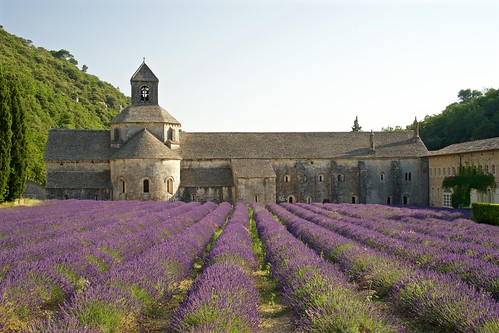
Un après-midi sous le soleil

AROMATHERAPY USES 
"Lavender constrains many evil things, and evil spirits are driven by it".  - Hildegard of Bingen 

A few years ago, lavender oil prove to be a true friend to me. It was the peak of the summer, and I had to take an emergency flight to Israel to care for my then very ill mother. The experience was traumatizing, as to be expected. Add to that being eaten alive by the Israeli mosquitoes and attack of any bug imaginable (they've always liked me there in the countryside...) was the icing on the cake. Every night I smeared my limbs with neat lavender oil, sprinkled a protective circle of lavender oil around my bed, and a few more drops of both lavender and Roman chamomile on my pillow. That helped to keep both the insomnia, nightmares and bugs away for the most part. But whatever bites I did get were not too much of a big deal, because I would just dab more lavender oil on them when I woke up, and that prevents them from developing into an all-day misery, with scabs and all. It made the rather horrid time of my life (even though my trip lasted only two weeks) just a tiny bit more bearable. And for that, Lavender dear, I am forever grateful.

AROMATHERAPY USES 
Lavender is as close to panacea as we'll ever get: No other aromatherapeutic oil is as flexible and useful as lavender. It is used to treat myriads of conditions including physical ailments fighting infections and wounds (it is a natural antibiotic and antiseptic) and mental and emotional challenges such as insomnia, stress, anxiety and depression. Keep lavender on hand to treat ailments pertaining to skin, digestion, hormones, nerves, emotions, mood, and as a general first aid and household weapon to repel insects at bay and keep it clean and fragrant.

According to aromatherapist and author Julia Lawless (Aromatherapy and the Mind), small doses of airborne lavender oil have successfully improved the lives of patients in hospital in England; both improving their overall emotional well-being, reducing anxiety, helping patients find restful sleep, as well as preventing the spread of disease. And it was even used in hospitals for massaging patients. It is also utilized by midwives to calm and reassure the mother to be and ease her labouring process.

Lavender makes a wonderful travel companion for the many hurdles and discomforts that can come your way - from insect bites and sunstroke to insomnia. Below are but a few of the key qualities that can be harnessed for maintaining our well-being.

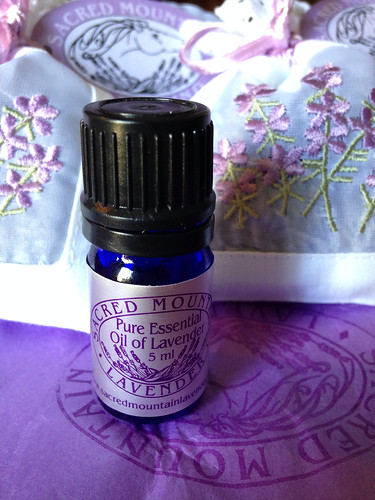
With all that being said, it can never be stressed enough that proper use of essential oils is paramount to their effective and safe outcome. Keep in mind that each drop of lavender represents many flowering tops: if we recall, to produce just 1 lb of oil, between 110 to 150 lb of fresh plant matter is required. To give you a more concrete idea: an acre of lavender can produce between 12-20 lb (5.44 - 9.07 kg) of oil (which, with lavender's specific gravity ranging from 0.870-0.898) translates to at least  6.25-7.89 L depending on how good was the harvest that year). Every time you're using up a 5 mL bottle of lavender, envision you've consumed an entire row of blooming lavender bushes, and be grateful for it!

KEY CHARACTERISITCS OF LAVENDER OIL
According to the Encyclopedia of Essential Oils, lavender acts as:
Analgesic, antibiotic, anticonvulsive, antidepressat, antirheumatic, antiseptic, antispasmodic, antitoxic (detoxifier), carminative, cholagogue, choleretic, cicatrisant, cordial, cytophylactic, deodorant, diuretic, emmenagogue, hypotensive, insecticide, nervine, parasiticide, rubefacient, sedative, stimulant, sudorific, tonic, vermifuge, vulnerary.

FIRST AID
Lavender should be included in any first aid kit: use it to treat burns, wounds, cuts and bites. It reduces the pain in those uncomfortable instances, and also promotes faster healing and reduces scarring.

It also repels insects, and smells much better than citronella but is just as effective in keeping blood-thirsty mosquitos away. When hiking, camping or traveling - there is no better companion than lavender!

Lavender is one of the few oils that can be worn neat on the skin (without requiring dilution) - which is how it should be applied when treating burns, cuts and insect bites. Please note that this method should not be misused to prevent unwanted reactions or side effects. 
Lavender harvest

SKIN  
Lavender oil can be used to treat many unpleasant skin conditions, including: acne, eczema, psoriasis, dandruff, inflammation, sunburn (dilute 1 drop of lavender in a tablespoon of aloe vera gel and apply to affected area), and as mentioned earlier - burns, cuts and wounds.

Lavender oil's restorative properties can be also harnessed for skin care and beauty products, to treat oily and acne-prone skin. Lavender hydrosol makes an excellent facial tonic.

Lavender is also a natural deodorant (try making your own, with baking soda and lavender oil!) and is also popular in talcum powders for the feet and the body. It can be used to treat athlete's foot, and is one of the most favourite additions to foot baths or foot creams, usually along with cooling peppermint.

HYGENE
Because of its antiseptic properties, lavender is a popular addition to soap bars and shower gels. It is also popular in talcum powders for the feet and the body and is an excellent deodorant.

INSECT/PARASITE REPELLENT 
Use lavender to prevent lice infections (especially good in synergy with rosemary), to keep mosquitoes and other bugs away, ringworms, etc. 

DIGESTIVE SYSTEM
Like many other members of the mint family, lavender helps to alleviate nausea and treat abdominal cramps, colic, gas, etc.

HORMONAL REGULATION
Lavender can support women's PMS symptoms, especially when blended synergistically with clary sage. On the flip side: there has been a bit of a controversy a few years ago about whether lavender caused breast development in boys. I haven't found literature that is entirely reliable about this issue, so it could be that these was just anecdotal incidents.
If someone is in risk as a result of increased estrogen activities, it would be advisable to consult a doctor before exposing oneself to this oil (and perhaps also tea tree oil).

NERVOUS SYSTEM
Lavender's reputation precedes it as a cure for headache and migraines. Applying the oil neat on the temples can help alleviate headaches. A foot bath with a few drops of lavender will reduce fatigue, and lavender sprigs placed inside the hat were supposed to prevent sunstroke.

Lavender has a positive effect on the mind in emotional situations such as shock, depression and anxiety and helps to get a good night's rest. It helps to reduce blood pressure, sciatica and vertigo.  All the more reason to bring it on in hospital and clinical environments, if you ask me... 

EMOTIONAL  
Lavender has both reviving and calming qualities. It's almost as if it knows what the person who takes it needs of it - soothing or stimulation!
In her book, The Fragrant Mind, Valerie Ann Worwood describes the "lavender personality" as a perfect balance between feminine and masculine: both nurturing, gentle and powerful. Indeed, lavender's power comes from having a perfectly balanced makeup of elements that like a mother perfectly perceptive to her infant's needs - seem to almost psychically tune into the patient's needs and give them exactly what's missing to promote their well-being. It does so gently but effectively.

Lavender is helpful in bringing a sense of peace of mind, serenity and calm; yet also can help to ward off mental fatigue. It reduces anxiety, and inspires sleep in a wandering mind of the insomniacs. 
But most importantly: it helps to self-regulation emotions, in situations such as mood swings, hysteria and bi-polar personalities, etc.

Visit our blog tomorrow for more lavender beauty tips and simple DIY applications. 


Labels: , , , , , ,

Thursday, February 07, 2013

Sick & Chic

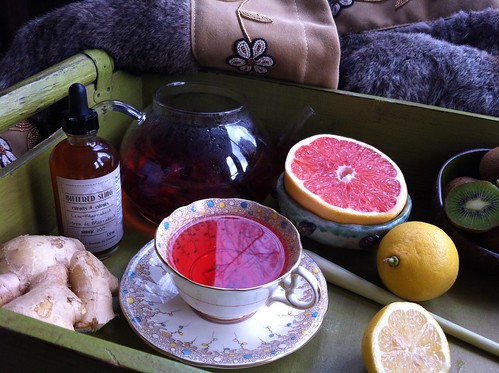
Sick & Chic by Ayala Moriel
Sick & Chic, a photo by Ayala Moriel on Flickr.
I've been struggling with a cold since Sunday, and been trying to keep my cool about it and not feel too sorry for myself (probably the worst part of being ill). That's how I came up with the idea of Sick & Chic - maintaining your dignity through illness.

Of course this is not an easy task when you’re as sick as a dog and can’t even get out of bed. And I don't know that it would be effective or relevant for someone suffering from a serious condition. Nevertheless, just like in healthy living - it’s those little details that make the not-quite-pleasant experience just a little more bearable and ever so slightly less depressing.

Instead of drowning in used tissue, surrounded by empty mugs and 80’s workout attire (I'll be the first to admit that the ugliest clothing tend to be the most comfortable) -- bring out your finest china to drink that medicinal brew, your coziest sweater (or sweater dress), up-cycled cashmere underwear and mukluks and try to be a little bit more glamorously ill... I guarantee it will lift your spirits up. At least a little. And after the spirit, the body will follow - slowly but surely.

While we’re speaking of brews to ward off those flu bugs and chase away the chills: not all medicine tastes awful. Here are a few examples that are easy to brew even if you don’t have a personal nurse or a cook at your disposal. The key is to keep the body warm and hydrated, so it can flush out the toxins and whatever else it's fighting with... So as long as it's not coffee and alcohol - you'll probably benefit from a hot tea or tisane. But some are, of course, more effective:

Fir needle tip tea, which was the aboriginal’s only source of vitamin C throughout the winter months. It has a delicate citrus taste, reminiscent of mandarin oranges. Harvest the new growth needles in the springtime and dry for later use; or purchase from Juniper Ridge.

Another wonderful source of vitamin C is hibiscus flower tea (aka Jamaica), Besides, its ruby-red jewel tones are another reason to bring a smile to one's face. Brew it alone or throw in a few slices of fresh ginger or even a few blueberries (frozen will do) to enhance the flavour and amp up the medicinal properties (ginger is a great warming and anti-microbial brew that's wonderful for chest colds).

If hot water and lemon is your thing, why not spice it up a bit with Bittered Sling Lem-Marrakech? Reminiscent of Moroccan pickled lemon and cardamom, it's sure to add some intrigue to your run of the mill lemon and hot water remedy. Besides, it's got the beneficial "side effects" of relieving fever. 

Ginger, lemon and honey is my long-time go-to whenever I have a cold. It seems to take care of it all - vitamin C, soothing the throat, aiding digestion and warming up the body. Honey also helps the immune system fight foreign invaders, and the whole thing just tastes great, in my humble opinion. Simply slice about a thumb-length of fresh ginger root, top with hot water, add a teaspoon of local unpasteurized honey - and squeeze as much lemon as you can take (up to 1/2 a lemon, preferably organic). You can also slice 1/2 a lemon instead of squeezing it - and eat the entire thing once you finished the brew. It's actually the white pith that contains the most vitamin C in the citrus... 

Sick & Chic

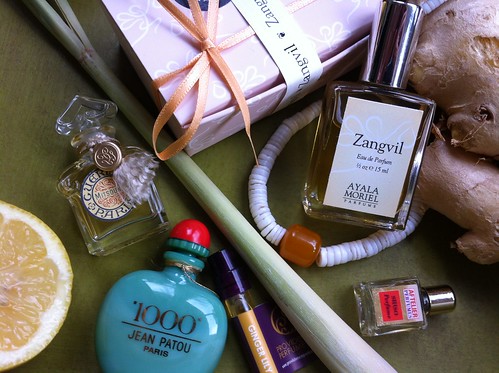
Feeling extra glamorous - and your nose is not 100% plugged and useless? A little perfume won't hurt to lift up your spirits. This is the time for those otherwise in-your-face spicy orientals: they won't feel nearly as overpowering as before (though you still should be careful of overdosing, in case you are surrounded by humans whose noses are not as plugged as yours). Opium, Tabu, Youth Dew - the time is now! And what with their slightly medicinal air of all those oriental spices and patchouli, medicine chests and the Chinese clinic are not an unpleasant association.

Not surprisingly, I'm partial to my Zangvil, which I created exactly when I was feeling cold and sick. It never fails from bringing that feeling of coziness and well-being and just warms me up, with magnolia lily, ginger lily and ginger.

Speaking of ginger lily - it is a rather unusual note that shares some characteristics with ginger root: effervescence, complexity, warmth and sensuality. It started showing up in perfumes such as Dark Amber & Ginger Lily, where it disappears in a blink of an eye and gives way to sheer amber and woodsy musks. In Providence Perfume Co's Ginger Lily, this note is paired with rather bold spices - clove and cinnamon - to create a modern spicy oriental that is all-natural and seductive. But also perfect for those under-the-weather days, when you're not sure if you want a medicine or a perfume.

If your cold has reached the point of needing to steam with eucalyptus or camphor - try a dab of 1000 by Patou, or better yet - Shiso by Aftelier will make you feel glamorous about it. After all, borneol camphor is what the geishas used to scent their kimonos with; and their milky white skins were adorned with a powdered form of incense containing camphor, cassia, sandalwood, agarwood and other sweet spices and herbs. 

Chinatown is one of those powerhouse modern fruity chypres, where more is less (so you might not be as overwhelmed by it when you have a cold!). It also has an unusual concoction of spicy medicinal notes reminiscent of the TCM's clinic, where powdered Don Quai permeates the air, numbing pain an bringing up memories - alongside many other sickeningly bitter herbs.

Mitsouko is another go-to-favourite when things don't go quite so well. It has proven to withstand the test of time (read: bad memories) and even though I was wearing it during a very traumatic time when my daughter was hospitalized - I still enjoy it very much. It's one of those friends that will never leave you, even when all hell breaks lose. It's that good. Besides, it is so perfectly balanced - dry yet sweet, fruity yet spicy, warm yet clean and elegant - that it never fails.

And if nothing at all seems to satisfy you - you can make an aromatherapeutic diffuser blend to keep all those winter bugs at bay, clearing your space while infusing it with a lovely, refreshing smell. You may also use 10-20 drops of this blend in a bath:
20 drops Eucalyptus oil
20 drops Lemon oil
10 drops Ginger oil
10 drops Thyme, Linalool
3 drops Allspice oil

What do you wear when you're feeling ill? Do you just go au-naturelle - or do some scents seem to help you get out of it?

Labels: , , , , , , , , , , , , , , , ,

Wednesday, September 09, 2009

Aromatherapy Basic Travel Kit

As you can see, the basic travel kit differs only slightly from the basic care kit. It includes lavender, peppermint, geranium, chamomile, ginger, eucalyptus, thyme and citronella or lemongrass. The main changes are the omission of cloves and lemon; the addition of ginger oil for it’s aid in upset tummy and nausea; sand citronella (or lemongrass) for their excellent mosquito and insect repellent properties; and replacing the tea tree oil with eucalyptus, which I suppose was done because of eucalyptus’ similar properties to tea tree in some regards (i.e.: help with colds and coughs) plus it has the ability to help with sunstrokes and sunburns, which can definitely come handy if you’re traveling to the hot places in the world (which I usually do). I suppose the cloves was taken off the list based on the assumption that one has taken a good care of their teeth before embarking on their journey.

The “Emergency Reference Chart” on p. 58-60 is really helpful: it gives you many unpleasant situations and the oils that can be used to alleviate the little discomforts or at least be used as a first aid until you get medical help. This kit covers pretty much anything from headache and nausea on the plane to jet lag after landing as well as protection against catching all kinds of bugs on the way. And of course many little tips for how to combat the little discomforts of travel, from insect bites to upset tummy to sunstroke and sunburns.

And just as before with the basic care kit, you must remember that each oil is used differently for different scenarios and conditions. There are many ways to use essential oils - in compresses, baths, steam inhalations, diffused into the air, in massages (added to oil, usually), and only in very rare cases are they ingested or applied neat on the skin. Each ailment calls for a different oil or combination of oils and different method to administer them.

It's important to follow the formulas instructions carefully as overdose of essential oil or a wrong method of administering them may be counter effective. Oils work gently on the body when used properly; but they are highly concentrated compounds and should be used with much care and respect for their precious power. Keep in mind that each drop may represent as much as a kilo of plants that were distilled!

On this note, I've left my kit back home with my family, and I'm preparing them a collection of index cards with recipes and formulas that I think will come handy. In Hebrew, of course.


Labels: ,

Tuesday, September 08, 2009

Aromatherapeutic Basic Care Kit

Continuing on with Valerie Ann Worwoods' aromatherapy kits - starting with the basic care kit she suggests every home will have, as a sort of an aromatic "first aid" kit - not to replace but to complement the usual array of band aids, gauze, emergency blanket etc.

As you can tell from the picture, the basic care kit includes lavender, tea tree, peppermint, geranium, rosemary, thyme, lemon and clove. Below are just the highlights of the functions of these potent oils:

Lavender:
Excellent for healing burns, an antiseptic and can be used neatly on the skin to treat cuts, bites, wounds, etc. as it "promotes healing and prevents scaring" (p. 20) and also aids digestion.

It also alleviates headaches, and has a positive effect on the mind in emotional situations such as shock, depression and anxiety and helps to get a good night's rest.

Tea Tree:
A highly effective non-poisonous antiseptic that takes care of all three types of infections: virus, bacteria and fungi. Really excellent for treating a variety of ailments, including yeast infections and fungi, acne, toothache, sunburn and more.

Peppermint:
Most known for its help in digestion problems and nausea, treating headache and migraines and aiding the respiratory system. It also helps in flu, toothache, fatigue and keeping pests away, including mice and ants.

Chamomile:
Known first and foremost for its calming and anti-inflammatory properties, for both joint pain and various skin conditions (eczema, psoriasis, sensitive skin...). It's excellent for calming babies and children, and also soothing teething babies or ones who suffer from colic and diarrhea.

Eucalyptus:
Extremely versatile oil, eucalyptus is an anti-inflammatory, antiseptic and antiviral and helps with many different conditions, including chest and head colds, sinusitis, coughs, etc. It also has deodorizing properties and helps cool-off in the summer as well as used as an insect repellent.

Geranium:
Rose geranium not only smells wonderful, it also has marvelous therapeutic benefits. It is a nerve tonic and a sedative; helps women in menopause and with uterine problems (i.e.: endometriosis)and is a wonderful addition to skin care products as it rejuvenates the skin and can “make chilblains disappear overnight” (p. 21).

Rosemary:
Stimulates the body and the brain, and helps in treating aching muscles, arthritis, sprains, etc. It also helps the memory and cure headaches; and being an antiseptic it is great for coughs and flu. It is a wonderful addition to haircare products, strengthening the keeping the sculp clean, as well as help combat acne and oily skin.

Thyme:
Thyme is a very potent oil and should be used very carefully. Some thymes are safer to use – i.e. s Thyme ct. linalool (the only kind that can be used for children). It is a very powerful antiviral oil, and also antiseptic, antibiotic and diuretic. When used to scent the room (i.e.: in a diffuser), it can help keep colds away during the winter time. It can also help the body cleanse itself from toxins. And it is particularly helpful in keeping insects and parasites away. Should always be diluted before use on the skin.

Lemon:
While lemon is very much loved for its flavour and aroma in foods, it is particularly effective when added to synenrgies. It can be added to many synerngies, including treating insect bites, cellulite and slimming potions, reducing headaches, getting rid of planter warts, and in wrinkles-reducing skin care.

Clove:
Famous for its analgesic properties at the dentist, clove oil is not just for alleviating toothaches; but also helps to prevents diseases and infections. Also a very potent oil that can easily irritate the skin and should always be diluted before applying to the skin. Disinfectant and also helps with digestion and muscular problems.


With all that being said, it's important to stress that each oil is used differently for different scenarios and conditions. One can't assume that all oils would be used the same way for all ailments. There are many ways to use essential oils - in compresses, baths, steam inhalations, diffused into the air, in massages (added to oil, usually), and only in very rare cases are they ingested or applied neat on the skin.


The book offers many recipes and formulas for synergies for various first aid scenarios, including abdominal pain, abscesses, athlete's foot, burns, catarrh, coughs, constpiation, fever, headache, insect bites, sinusites, sties, tothaches, etc.

It's important to follow the instructions carefully as overdose of essential oil may be counter effective. Oils work gently on the body when used properly; but they are highly concentrated compounds and should be used with much care and respect for their precious power. Keep in mind that each drop may represent as much as a kilo of plants that were distilled!

Labels: , ,

Sunday, September 06, 2009

Liquid Friends

My disappearance from SmellyBlog these past few weeks coincided with my appearance elsewhere on the globe attending to some urgent family matters that needed my full attention (and still occupy a good chunk of it regardless of my return). It was a terrible trip, and save for my one trip to the beach, one prickly pear harvest and reunion with my family (including a brand-new family member, aka my first ever niece) I would have preferred to write-off the entire visit and pretend it never happened.

One thing that helped me somewhat to go through this horrendous visit was this collection of essential oils I've taken with me, in part to assist the usual woes of air travel, followed by the usual midsummer insect attack I experience whenever in the country side, and in part with hopes to relieve some pain and discomfort to a sick family member who was the sole purpose of this unwanted adventure.

The family member in question was in a way worse situation that any essential oil can redeem. And so I only used the oils on that person once, in a gentle massage of lavender and a hint of bourbon vetiver, to slightly stimulate their dying nerves. The bourbon vetiver with lavender was beautiful - not unlike the magic that happens when lavender meets spices. I guess there is something spicy about this partiular vetiver variety. So much so, that now that I'm back I'm set to work on a little experimental lavender-vetiver perfume.

The rest of the oils were used mostly to help us all fall asleep - lavender and chamomile drops were sprinkled on our pillows to help us get some rest. Geranium and lemongrass (as well as the lavender) were mostly utilized to keep away the biting insects and what have you. The presence of these oils is probably the only reason I was able to get any sleep on this trip and get out of it alive. Lavender oil also does wonders to the insect bites that weren't prevented. It make the itch go away in an instant.

And than there was tea tree - which I used for various summer rashes and is great for combating all three microscopic disasters: fungi, bacteria and virus! It also can be used in the hospital (even on the bed) to keep away all three from the patient's bed, and prevent additional infections that are unfortunately so common in hospitals.

On the following few posts I will be talking about the two basic aromatherapy kits suggested by Valerie Ann Worwood in her book Complete Book Of Essential Oils And Aromatherapy.

Labels:

Tuesday, November 06, 2007

"Perfumer of the Year" Contest at Escents Aromatherapy

Vancouver-based Escents Aromatherapy is running a fun contest this month: send your formula for an essential oil fragrance or synergy to sales@escentsaromatherapy.com for a chance to win a $500 Escents gift certificate, and be featured on Escents' newsletter and website in December.

The contest deadline is November 21st.

Labels: , ,

Monday, June 18, 2007

New Tree Mini Chocolate Boxes


New Tree Chocolate, originally uploaded by Ayala Moriel.

I spotted these miniature chocolate packages at Capers yesterday, and couldn't resist getting a couple to try (they were placed right before the checkout, of course, the oldest trick in the book and they still manage to get me!). As you can see, they are $3.79 for a little sample package for a chocaholic on-the-go of three little chocolate tablets weighing 9gr each. These made-in-Belgium chocolates (for the US based company New Tree) are not organic, and rather pricey in my humble opinion.

I picked two to try:

Tranquility (milk chocolate with lavender) and Renew (dark 73% chocolate with cassis). I wouldn't have picked the lavender one unless it was for one of my chocolate truffle workshop students who raved about a lavender infused hot chocolate, and the lavender infused steam milk that she now drinks before bed time. I had to try it just for her!

The list of ingredients on the Tranquility mentioned natural lavender flavour and lime blossoms extracts. The term "natural lavender flavour" seems quite suspicious, especially after tasting it. It was quite awful and I have a feeling that rather than just putting in some lavender extract or essential oil, there is a lot more to it, and it ruins the flavour. It tastes artificial, somehow.

Renew, the blackccurant one, lists "blackcurrant with other natural flavour" and "grape extract". Maybe there is real blackcurrant there, maybe not. It's hard to tell with this kind of labeling. But what I am sure about is that it tasted marvellous.

I am not too keen to try the other flavours, because most of them did not make sense to me so to speak. I absolutlely don't dig their "Forgiveness" - dark chocolate with lemon, which sounds quite unforgivable to me. Ginger in chocolate does not appeal to me either as a flavour, and the other more agreeable and sensible choices were simply non-original (bitter orange with milk chocolate; coffee with dark chocolate or cinnamon and milk chocolate). But the cassis one was quite something, so I may come back for more.

Otherwise, the marriage between aromatherapy and chocolate craving seems quite scary to me...

Labels: , , , , , , ,

Tuesday, May 01, 2007

Eau d'Hadrien


Valdorcia, paesaggio., originally uploaded by creativik67.

The mundane meets the magical in Annick Goutal’s Eau d’Hadrien*. There is nothing particularly original about this fragrance, which pairs a few intensely astringent citrus notes with a woody base. In fact, the particular accord of grapefruit, lemon, ylang ylang, patchouli and cypress reminds me of a particular aromatherpeutic synergy which left so little impression on me that I completely failed to remember what it was or where I smelled it. Upon research, I discovered that this particular combo if essential oil would result in a synergy for menopausal varicose veins and cellulitis**…

The initial citrus overload can be likened to getting sprayed by grapefruit essential oils right from its pores when attempting to peel it – resulting in two things: grapefruit juice dripping down your wrists and arms, and teary eyes. It will leave those tangy, tingling residues on your tongue for hours to come, and your fingers will remain bitter for the day. The citrus monopoly gradually becomes tolerant to soft, woody, powdery-sweet floral note of ylang ylang (I believe it’s the third grade of the essential oil by the smell of it), and underpinnings of sappy-green, bitter and warm-woody notes of cypress and patchouli. Cypress and lemon are one guaranteed way to smell like cleaning agents. For some reason, in l’Eau d’Hadrien this does not bother me.

Yet, the non-ambitious banality of Eau d’Hadrien is precisely what accounts for its charm: it gives you the same satisfaction of thoroughly cleaned house, fresh acrylic paint fumes still emanating from the walls, the carpets are still moist and exhaling that intensely orange aroma, the beds are made with fresh white sheets, and all you need to do is light a little candle and put your cold (and damp) feet up and relax while your bath tub is getting filled up with a pine-scented bubble bath.

I’ve been ignoring Eau d’Hadrien for many years, solely because it is a citrus. I mostly smelled lemon and a few herbs on the few occasions when I tried it, but I never really worn it properly (i.e.: on my skin, for an entire day). But I did enjoy tremendously the Eau d’Hadrien shower gel and lotion, which I found to be quite different from what I remembered Eau d’Hadrien to be: Sappy, green, citrusy, fresh, woody, brisk, bitter, sour, astringent, herbal. It does not feel mudnane at all. In fact, it has that sappy, resinous leafy feel reminiscent of Grand Amour's mastic. I really love it.
I even lit the candle last night and today (you guessed it, my place and my studio are being painted... I can now enjoy the fruit of my - and other people's - labour). The candle has a gentle throw, which fills the whole house with a delightful green tea and citrus aroma. It is significantly sweeter than the Eau de Toilette, and has the balsamic leafy tonalities of the body products.

Top notes: Lemon, Grapefruit
Heart notes: Citron, Ylang Ylang
Base notes: Cypress, Patchouli

* This review is for the Eau de Toilette, by the way. I haven’t tried the Eau de Parfum yet, but I’ve heard it is softer and sweeter, with the ylang ylang more pronounced and the cypress mellower. The lasting of the Eau de Toilette is excellent – it lasted on my skin for a good 7 hours, and there were still traces of citrus in the dry down.

** With no disrespect to aromatherapy at all, so please don't get me wrong; I do, however, lack the knowledge of understanding how a synergy such as that would work, so my knowledge is based on the separate actions of each of those oils and what they have in common, not being able to predict beyond that...
Both cypress and grapefruit oils are good for treating cellulite and water retention; Lemon and cypress help reduce varicose veins; cypress and ylang ylan gare excellent in helping to cope with menopausal symptoms, as well as menstrual crapms and PMS symptoms; and both cypress and citrus oils in general are stringent and disinfectant, which might explain why they are used so often in household cleaning products.

*** This is the first in a series of citrus-based perfumes, before they disappear on us completely. Let's hope not!

Labels: , , , , , , , ,

Monday, February 26, 2007

Vetiver in Ayurvedic Medicine and Aromatherapy

It would not be doing vetiver justice to mention it without taking into consideration its therapeutic properties and the long history of healing trailing behind this note. Vetiver is highly esteemed in the ancient Ayurvedic medicine. It also has many uses in modern Aromatherapy practices.

In Aurveda, vetiver is considered cooling to Pitta (the dosha which is made of fire and water). A vetiver paste may be applied to the skin in order to reduce fevers and cool the body. A self-massage in the morning with the cooling oil of vetiver root in a base of coconut oil (also considered cooling oil) is recommended for balancing the Pitta, and in general, for individuals with Pitta is their dominant dosha.

Vetiver is also esteemed for its pacifying powers to the Vata (the dosha of air and ether). Its actions are considered to bring calm and comfort to the mind. The relaxing aroma of vetiver helps to cope with stress, deepen concentration and acts as a rejuvenating tonic to the nervous system.


Small amount of vetiver oil can be applied to the oil used in Shirodhara – anointing of the “third eye” with a steady, delicate stream of warm sesame oil to the forehead. This oil can be scented or unscented, depending on the purpose of the Shiodhara to the specific individual.

Other ayurvedic uses of vetiver:
- In lotions for women to enhance the breasts, as vetiver is considered to have gentle estrogen-like qualities
- Soothing the muscels after physical strain.
- Treatment of rheumatic pain
- Prevent stretch marks in pregnancy, also a good anti-aging agent for the skin, because of its skin-regneration powers.
- The vetiver plant also seems to have a healing role in the environment, as it has the ability to absorb toxins and therefore purify the environment – the earth and the water – from pollutants.


dewsandwaves.com, originally uploaded by dewsandwaves.

In modern aromatherapy, vetiver is valued for its ability to treat various conditions of the nervous system, skin, muscles, joints and circulation as well as promoting emotional balance. The terpenes in vetiver act as a tonic and an astringent to the nervous system.

Vetiver is calming, grounding, protective, sedative, soothing, toning and uplifting. Vetiver stimulates the circulation and the production of red corpuscles.

The Nervous System and Balancing Emotions: Vetiver is particularly valuable in treating conditions such as insomnia, nervous tension and stress, nervous exhaustion and fatigue, as well as depression. Use several drops in a bath before bed time if you are experience insomnia. A massage with vetiver-scented oil can alleviate stress and bring a feeling of well-being and tranquility.

Circulation, Muscles and Joints: It also helps to relieve rheumatic and muscular pain and stiffness of the muscles and joints, as well as arthritis.

Skin care: Vetiver is also an antiseptic, and can be used in aromatherapy skin products and preparations to treat conditions such as acne, cuts, wounds and sores, and also helps to reduce oiliness of both scalp and skin.

References:
Julia Lawless, Encyclopedia of Essential Oils
Julia Lawless, Aromatherapy and the Mind
Valerie Ann Worwood, The Complete Book of Essential Oils & Aromatherapy
Victoria H. Edward, The Aromatherapy Companion
Jeanne Rose, The Aromatherapy Book

Labels: , , , , , ,